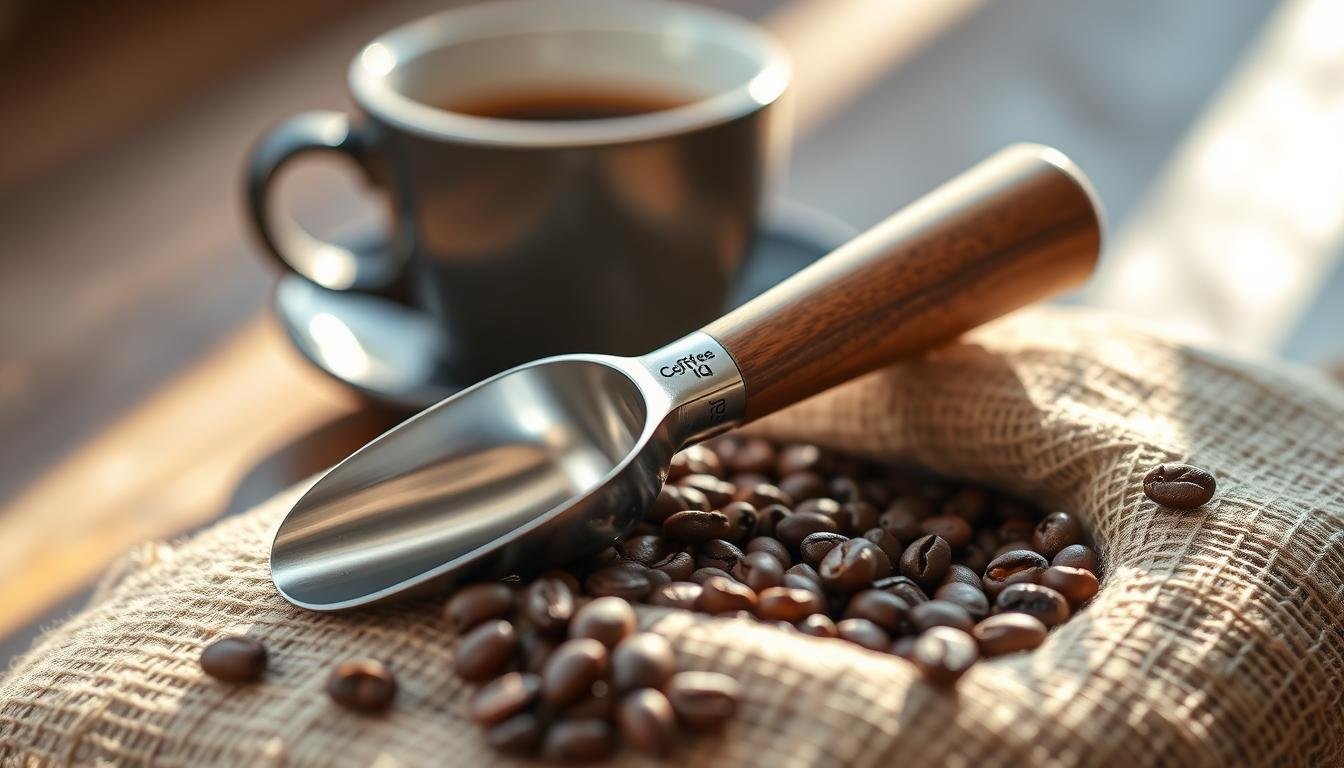
Coffee Scoop Size: How Many Grams Are in One Scoop?
Did you know that a mere 1-gram difference in coffee can drastically alter the strength and flavor of your brew? The right coffee scoop is key for achieving consistent, great-tasting coffee every time. This article will explore the science behind coffee scoop measurements, the importance of using the right scoop, and how to master the coffee-to-water ratio for your perfect cup of coffee. Whether you’re a careful measurer or a casual scooper, understanding these key principles will transform your coffee ritual and improve your brewing skills to new heights.
Key Takeaways
- The right coffee scoop is essential for achieving consistent, great-tasting coffee.
- Understanding the science behind coffee scoop measurements can help you brew the perfect cup every time.
- Mastering the coffee-to-water ratio is key for controlling the strength and flavor of your coffee.
- Adjusting your brewing technique based on grind size and personal preferences can further refine your coffee’s taste.
- Precision in measurements is key; using a digital scale is more accurate than volume-based scoops.
Understanding Coffee Scoop Measurements
For brewing the perfect cup of coffee, the humble coffee scoop plays a vital role. A standard coffee scoop is typically equivalent to 2 tablespoons, or about 0.36 ounces (10 grams) of coffee grounds. This measurement serves as a helpful baseline, allowing you to adjust the amount according to your personal taste preferences.
The Intricacies of Choosing a Coffee Scoop
But, coffee scoops can vary widely in shape, size, and design, leading to confusion when selecting the right one. To ensure your scoop matches the standard 2-tablespoon size, you can simply fill it with water and compare it to a standard tablespoon. If the scoop holds both tablespoons of liquid, it conforms to the accepted standard.
A Deep Look at Coffee Scoop Measurements
The standard coffee recipe typically recommends 2 tablespoons of coffee grounds per serving. This measurement, but, can be impacted by factors like grind size and brewing method. Fine grinds pack tightly, leading to a stronger brew, while coarser grinds take up more space but result in a lighter cup. The brewing method also plays a role, with French press requiring more coffee and espresso needing less. In the end, the coffee-to-water ratio should be adjusted to personal taste preferences, with a sweet spot between 1:15 and 1:18 (1 gram of coffee per 15-18 grams of water) being a good starting point.
Precision in coffee measurements is key for achieving consistent, flavorful results. Using a kitchen scale to measure both coffee and water can help you dial in the perfect ratio, ensuring your brew is matched to your personal preferences.
The Importance of Using the Right Coffee Scoop for Consistent Brewing

Using the right coffee scoop is key for achieving consistent, great-tasting coffee. Even the smallest variation in scoop measurements can dramatically alter the flavor, aroma, and overall quality of your brew. Mastering precise measurements allows you to take control of your coffee experience, ensuring that every cup meets your desired strength and flavor profile. By honing this skill, you can improve your home brewing to rival that of the finest cafés, delivering a rich, flavorful experience with every sip.
A standard coffee scoop typically holds 2 tablespoons or about 10 grams of coffee. The standard coffee brewing ratio is often cited as 1:18, meaning 1 gram of coffee for every 18 milliliters of water. For a 6-ounce cup of coffee, you’ll need about 1 to 2 scoops of coffee when using the common 1:18 coffee-to-water ratio. But, different brewing methods may require varying coffee-to-water ratios:
- Drip Coffee: 1 to 2 tablespoons per 6 ounces of water
- French Press: 1 to 2 tablespoons per 4 ounces of water
- Pour Over: 1 to 2 tablespoons per 6 ounces of water
- Espresso: 1 to 1.5 tablespoons per 1 ounce of water
- Cold Brew: 1 to 2 tablespoons per 4 ounces of water
Consistent coffee brewing is key for achieving the perfect flavor, and using the right coffee scoop is the foundation for this consistency. By understanding the nuances of coffee scoop measurements and their impact on the final brew, you can take control of your coffee-making experience and consistently create the perfect cup.
| Brewing Method | Coffee-to-Water Ratio | Recommended Scoop Amount |
|---|---|---|
| Drip Coffee | 1:17 | 1 to 2 tablespoons per 6 ounces of water |
| French Press | 1:12 | 1 to 2 tablespoons per 4 ounces of water |
| Pour Over | 1:15 | 1 to 2 tablespoons per 6 ounces of water |
| Espresso | 1:2 | 1 to 1.5 tablespoons per 1 ounce of water |
| Cold Brew | 1:15 | 1 to 2 tablespoons per 4 ounces of water |
By understanding the importance of using the right coffee scoop and mastering precise measurements, you can ensure consistent, high-quality coffee brewing at home, achieving the perfect flavor and aroma with every cup.
“Consistency in measuring coffee is key for brewing a perfect cup each time.”
Mastering the Coffee-to-Water Ratio with the Standard Coffee Scoop
Achieving the perfect balance in your coffee brew starts with understanding the relationship between the coffee scoop size and the volume of your chosen coffee vessel. The classic coffee recipe is typically designed for either an 8-ounce or 6-ounce serving, with a standard coffee cup holding about 6 fluid ounces and a typical coffee mug containing 8 fluid ounces. When using larger vessels, such as travel mugs, it’s key to recalibrate your coffee-to-water ratio and measurements accordingly to maintain the ideal balance and ensure a perfectly brewed cup every time.
The “Golden Ratio” for coffee-to-water is typically recommended as one to two tablespoons of ground coffee for every six ounces of water. This ratio is based on the Specialty Coffee Association’s heritage cupping standards, which indicate the optimal water temperature for brewing coffee should be at 195°F to 205°F. By using a standard coffee scoop, you can easily achieve this balanced brew strength control and create a consistent, flavorful cup of coffee, whether you’re brewing for a coffee cup or a larger mug.
| Vessel Size | Coffee Scoop Measurement | Water Volume |
|---|---|---|
| 6-ounce coffee cup | 1-2 tablespoons | 6 ounces |
| 8-ounce coffee mug | 2-3 tablespoons | 8 ounces |
| 12-ounce travel mug | 3-4 tablespoons | 12 ounces |
By adjusting the coffee-to-water ratio and coffee scoop measurements based on the size of your coffee cup vs mug, you can ensure a consistently balanced and flavorful brew, no matter the vessel you choose to enjoy your coffee in.
“The recommended ratio for drip coffee is about 1:18 by weight, translating to 55 grams of coffee per 1,000 grams of water, according to the Specialty Coffee Association (SCA).”
Unveiling the Science of Coffee Scoop Measurements

The interaction between coffee grounds and water is a delicate balance influenced by factors like coffee grind size, water temperature, and extraction time. Grind size plays a significant role in determining the surface area available for extraction, which affects how flavors and compounds are released into the brew. Coarser grinds require a longer brew time to achieve optimal flavor, while finer grinds need a shorter brewing time to prevent over-extraction. By understanding these principles, you can adjust your scoop measurements to ensure a harmonious balance of flavors in every cup.
Grind Size vs. Brew Time
The impact of grind size on brew time is key for achieving the perfect cup of coffee. Consider the following guidelines:
- Coarse grind: 4-5 minutes
- Medium-coarse grind: 3-4 minutes
- Medium grind: 2-3 minutes
- Medium-fine grind: 2-3 minutes
- Fine grind: 20-30 seconds
- Extra fine grind: 1-2 minutes
How to Calculate the Ideal Coffee-to-Water Ratio for the Perfect Cup of Coffee
The quest for the perfect cup of coffee, often referred to as the Golden Cup Standard, begins with understanding and calculating the ideal coffee-to-water ratio as determined by the Specialty Coffee Association (SCA). This fundamental principle is key to achieving consistent, exceptional brews, allowing you to tailor the strength and flavor profile to your precise preferences. By striking the right balance between coffee and water, you open up the full potential of your beans, creating a symphony of flavors that captivates your senses. The ideal coffee-to-water ratio can be adjusted based on personal taste preferences, with most home brewers landing between 1:15 and 1:18, and the SCA Golden Cup Standard sitting at 55 grams per liter, about 1:18.
“The key to a perfect cup of coffee lies in understanding the detailed relationship between grind size and brew time, and mastering the art of calculating the ideal coffee-to-water ratio.”
Coffee Scoop Size: What One Scoop Actually Weighs
Coffee scoop size is usually stamped on the handle: 2 tablespoons. That is a volume. Every ratio worth using runs on weight, and the weight inside that scoop moves more than the handle admits. The 10 gram figure quoted earlier matches a scoop of whole medium-roast beans. Level off a scoop of ground coffee and weigh it, and the number drops. When Maciej Kasperowicz of Trade Coffee weighed level tablespoons, ground medium roast came in at about 4 grams per tablespoon, consistent within a few tenths of a gram. Ground dark roast landed between 3 and 3.3 grams. Whole beans ran heavier: about 5 grams for medium, a little more for light, and under 4 grams for dark. So a level scoop of ground medium roast holds closer to 8 grams than 10. What moves the number:
- Roast level. Darker beans spend longer in the roaster, lose more mass and swell more, so the same spoonful weighs less.
- Grind size. Coarse French press grounds leave air pockets, so a coarse scoop weighs less than a fine one of the same coffee.
- How you scoop. Level and heaping are different doses, which is why one scoop brews differently for two people in the same house.
Coffee scoop to tablespoons to grams
This table uses the level-tablespoon weights above. Light roasts were not weighed ground in that test, so expect them at or slightly above the medium column.
| Scoops (level) | Tablespoons | Medium roast, ground | Dark roast, ground | Medium roast, whole bean |
|---|---|---|---|---|
| 1/2 | 1 | about 4 g | 3 to 3.3 g | about 5 g |
| 1 | 2 | about 8 g | 6 to 6.6 g | about 10 g |
| 2 | 4 | about 16 g | 12 to 13.2 g | about 20 g |
| 3 | 6 | about 24 g | 18 to 19.8 g | about 30 g |
| 4 | 8 | about 32 g | 24 to 26.4 g | about 40 g |
The dark roast column catches people out. To match the grams of a medium roast, you need roughly one extra scoop for every four. Switch to a French roast without adjusting and the pot comes out thinner, even though the bag promised bold.
How to calibrate your own scoop with a kitchen scale
- Set a small cup on the scale and press tare.
- Scoop your coffee exactly the way you do on a sleepy weekday. If you heap it, heap it.
- Tip five scoops into the cup without taring in between.
- Divide the total by five. That is your real scoop weight for this coffee.
- Write it on a strip of tape on the handle, and redo the test when you change roast level or grind.
Five scoops matter because Trade’s whole-bean measurements swung by more than half a gram either way from spoon to spoon. One scoop tells you about that scoop. Five tell you about your habit.
Scoops by brew method, and the ratio each one implies
The table assumes a level scoop of ground medium roast at about 8 grams and 12 fluid ounces of water at about 355 grams. Published ranges come from the NCA’s brewing guides and the SCA’s Standard 310-2021 for home brewers, which sets 55 grams of coffee per kilogram of water.
| Brew method | Water | Level scoops | Coffee | Implied ratio | Published guideline |
|---|---|---|---|---|---|
| Drip machine | 12 oz | 2 1/2 | about 20 g | about 1:18 | SCA: 55 g per kg, about 1:18 |
| Pour over | 12 oz | 3 | about 24 g | about 1:15 | NCA: 1:13 to 1:16 |
| French press | 12 oz | 3 1/2 | about 28 g | about 1:13 | NCA: 1:10 to 1:16 |
| Cold brew concentrate | 32 oz | 24 | about 192 g | about 1:5 | NCA: 1:4 to 1:5 |
- Drip: the NCA’s classic guideline is 1 to 2 tablespoons per 6 ounces of water. Two level tablespoons of ground medium roast is about 8 grams, near 1:22 and weaker than the SCA standard. Reach the 10 gram rule of thumb and you land near 1:18. If your drip tastes thin, look here first.
- French press: coarse grounds weigh less per scoop than 8 grams, so the real ratio runs a little weaker than shown. Our French press coffee ratio guide has grams, cups and scoops for every press size.
- Cups instead of ounces: for a chart from 1 to 12 cups, see our guide to how many scoops of coffee per cup.
When to switch from scoops to a scale
A scoop is fine for one coffee brewed the same way every morning. Switch to a scale when:
- You brew big batches like cold brew, where 24 scoops is a lot of counting before breakfast.
- You rotate between light and dark roasts, since the same scoop can hold up to a quarter less coffee from one bag to the next.
- You are adjusting grind for pour over and want to change one variable at a time.
- Your coffee tastes different from day to day and you cannot say why.
Any kitchen scale that reads single grams handles the calibration test. For a built-in timer, our best coffee scale guide compares the models worth counter space, and the Coffee Rank IQ homepage collects the rest of our brewing guides.
Coffee scoop size questions we get
How many grams is a level coffee scoop?
A level 2 tablespoon scoop holds about 8 grams of ground medium roast and 6 to 6.6 grams of ground dark roast, based on Trade Coffee’s measurements. The popular 10 gram figure matches a scoop of whole medium-roast beans.
Do you need more scoops for dark roast coffee?
Yes, roughly one extra scoop for every four, because a level tablespoon of ground dark roast weighs about 3 to 3.3 grams against about 4 grams for medium. Taste, then adjust, since some people like dark roasts brewed a little lighter.
Conclusion
Mastering the art of coffee scoop measurements is the key to unlocking the full potential of your coffee beans and consistently brewing the perfect cup. By understanding the detailed relationship between coffee-to-water ratios, grind size, and brewing methods, you can take control of your coffee ritual and improve your home brewing experience to new heights.
Whether you prefer a bold, solid brew or a delicate, subtle infusion, the ability to fine-tune your measurements empowers you to craft a coffee experience that perfectly aligns with your unique taste preferences. Embrace the science of precision and start a routine to perfect coffee, one scoop at a time. With the right tools and techniques, you can master the art of consistent brewing and improve your coffee experience to new levels of enjoyment.
Mastering coffee scoop measurements is the gateway to an improved coffee experience, where you can confidently craft the perfect cup every time. By understanding the impact of these measurements on the final flavor profile, you can open up a world of personalized coffee perfection and savor the true essence of your favorite roasts. Embrace the power of precision and let your passion for coffee soar to new heights.
FAQ
What is the standard size of a coffee scoop?
A standard coffee scoop is typically equivalent to 2 tablespoons, or about 0.36 ounces (10 grams) of coffee grounds. This measurement serves as a helpful baseline, allowing you to adjust the amount according to your taste preferences.
How can I ensure my coffee scoop matches the standard 2-tablespoon size?
To ensure your scoop matches the standard 2-tablespoon size, you can simply fill it with water and compare it to a standard tablespoon. If the scoop holds both tablespoons of liquid, it conforms to the accepted standard.
What is the standard coffee-to-water ratio for brewing?
The standard coffee recipe typically recommends 2 tablespoons of coffee grounds per serving. But, this measurement can be impacted by factors like grind size and brewing method. The sweet spot for the coffee-to-water ratio is generally between 1:15 and 1:18 (1 gram of coffee per 15-18 grams of water).
Why is it important to use the right coffee scoop for consistent brewing?
Using the right coffee scoop is key for achieving consistent, great-tasting coffee. Even the smallest variation in scoop measurements can dramatically alter the flavor, aroma, and overall quality of your brew. Mastering precise measurements allows you to take control of your coffee experience, ensuring that every cup meets your desired strength and flavor profile.
How do I adjust my coffee and water measurements for different brewing vessels?
Achieving the perfect balance in your coffee brew starts with understanding the relationship between the coffee scoop size and the volume of your chosen coffee vessel. The classic coffee recipe is typically designed for either an 8-ounce or 6-ounce serving. When using larger vessels, such as travel mugs, it’s key to recalibrate your coffee and water measurements accordingly to maintain the ideal coffee-to-water ratio.
How does grind size affect the ideal coffee-to-water ratio?
Grind size plays a significant role in determining the surface area available for extraction, which affects how flavors and compounds are released into the brew. Coarser grinds require a longer extraction time to achieve optimal flavor, while finer grinds need a shorter brewing time to prevent over-extraction. By understanding these principles, you can adjust your scoop measurements to ensure a harmonious balance of flavors in every cup.
What is the Specialty Coffee Association’s (SCA) recommended coffee-to-water ratio?
The Specialty Coffee Association (SCA) has determined the ideal coffee-to-water ratio, also known as the Golden Cup Standard, to be 55 grams of coffee per liter of water, about 1:18, with roughly 10% leeway either way. This fundamental principle is key to achieving consistent, exceptional brews, allowing you to tailor the strength and flavor profile to your precise preferences.
Keep reading
- Beginner's Guide to Brewing Perfect Coffee at Home
- Best Ways to Perfect Advanced Coffee Brewing
- Choose the Perfect Coffee Mug for Your Brewing Style
- Best Ways To Customize Temperature Settings On The Behmor Brazen Plus Coffee Maker And Improve Your Brewing Experience By Controlling The Extraction Process For A Perfect Cup Of Coffee Every Time
More in How to Coffee guides for beginners, or start from the Coffee Rank iQ homepage.