Organic & Fair Trade Coffee: Benefits You’ll Love
Did you know that more than 60% of consumers recognize the Fair Trade Certified label? This powerful statistic highlights the growing popularity and trust in organic and fair trade coffee options. By choosing these ethically-sourced, sustainable products, you can enjoy a delicious cup of coffee while supporting a more just and environmentally-friendly system.
Key Takeaways
- Organic coffee is grown without synthetic pesticides, ensuring a healthier product for consumers and the environment.
- Fair trade certification guarantees that coffee farmers receive a fair price for their crops, enabling them to invest in their communities.
- Organic and fair trade coffee options promote sustainable farming practices and support ethical business models.
- Consumers who choose organic and fair trade coffee can connect their values with their actions without sacrificing taste or quality.
- Fair trade coffee ensures a stable price for farmers, significantly higher than fluctuating market prices, supporting a different business model.
Understanding Organic and Fair Trade Coffee
For coffee, two key terms that you’ll often encounter are “organic” and “fair trade.” These certifications hold significant importance in promoting environmental stewardship and social responsibility within the industry.
Defining Organic and Fair Trade Coffee
Organic coffee refers to beans that are grown without the use of synthetic chemicals, pesticides, or fertilizers. This cultivation method is governed by organizations like the USDA and the European Union, ensuring the coffee meets strict organic standards.
Fair trade coffee, on the other hand, focuses on ensuring that farmers receive a fair price for their crops and are supported in adopting sustainable farming methods. Fair trade certification is overseen by groups such as Fairtrade International and Fair Trade USA, with a focus on empowering small-scale producers in developing countries.
The Importance of Certifications
Both organic and fair trade certifications play a key role in promoting environmental sustainability and social responsibility within the coffee industry. Organic certification guarantees that the coffee is grown using eco-friendly practices, while fair trade certification ensures that farmers are treated fairly and receive a livable income for their hard work.
These certifications not only benefit the environment, but also have a significant impact on the lives of coffee farmers and their communities. By supporting organic and fair trade coffee, consumers can make a meaningful difference in promoting ethical and sustainable practices in the global coffee supply chain.
“Fair trade empowers producers, improves communities, and protects the environment.”
The Benefits of Organic Coffee
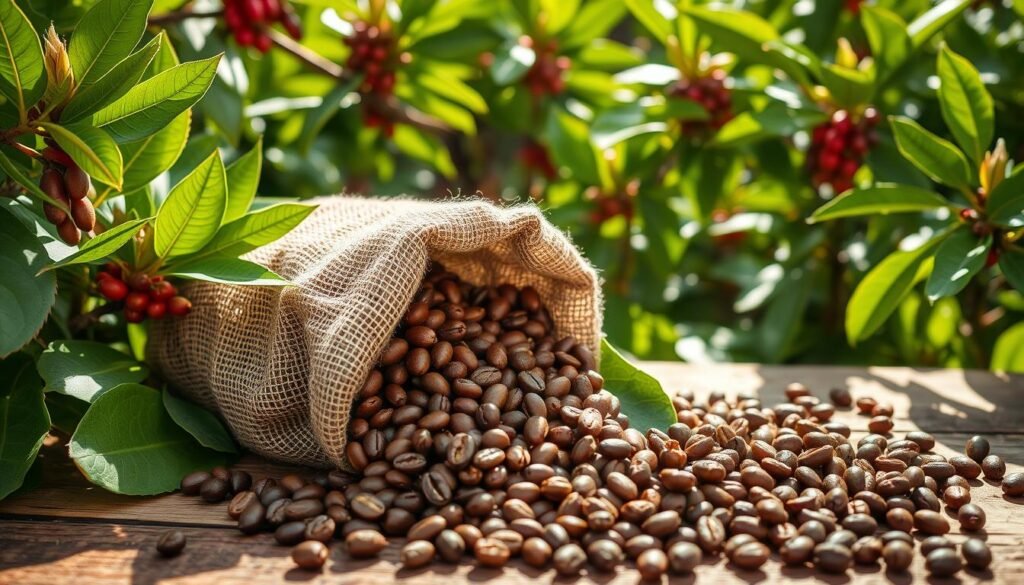
For your daily cup of coffee, choosing organic can make a significant difference. Organic coffee offers a range of benefits that cater to both your health and the environment. By avoiding synthetic pesticides, herbicides, and fertilizers, organic coffee production ensures a safer and potentially healthier brew.
Health Benefits
Organic coffee is free of harmful pesticide residues, providing peace of mind for health-conscious consumers. Studies have shown that organic coffee can contain up to 69% more antioxidants than conventionally grown coffee, offering additional nutritional value. Also, organic coffee is rich in essential minerals like magnesium, potassium, and B vitamins, making it a more nutritious choice.
Environmental Benefits
The benefits of organic coffee extend beyond personal health. Organic farming practices help preserve biodiversity, protect water sources, and maintain soil health. By avoiding synthetic chemicals, organic coffee production supports the long-term sustainability of the environment. This not only benefits the ecosystem but also ensures a more resilient future for coffee growers and their communities.
| Metric | Organic Coffee | Conventional Coffee |
|---|---|---|
| Pesticide-free | Yes | No |
| Antioxidant Content | Up to 69% more | Lower |
| Mineral Content | Higher (magnesium, potassium, B vitamins) | Lower |
| Biodiversity Impact | Positive | Negative |
| Soil Health | Improved | Degraded |
By choosing organic coffee, you can enjoy a healthier, more sustainable cup while supporting ethical and environmentally-conscious farming practices. The benefits of organic coffee are clear – it’s a choice that positively impacts your well-being and the planet.
The Advantages of Fair Trade Coffee
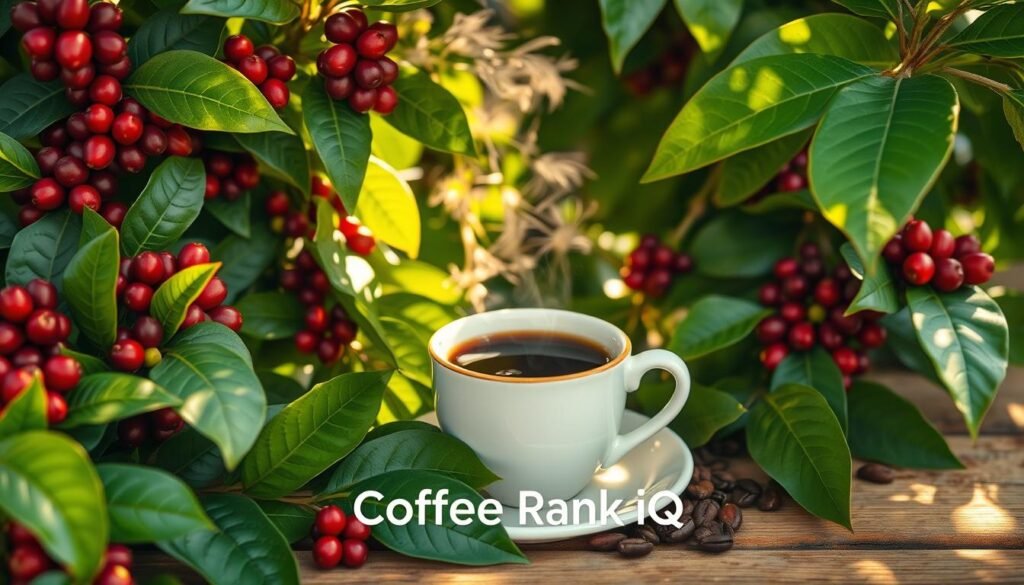
Fair trade certification brings a range of key benefits to coffee farmers and their communities. By ensuring a fair price for their crops, fair trade coffee supports the livelihoods of farming families, enabling them to invest in vital areas such as healthcare, education, and community development projects.
Support for Farmers and Their Communities
Fair trade standards also encourage sustainable farming practices, such as the use of organic methods, which help to protect the environment and preserve the land for future generations. Through fair trade, coffee farmers are empowered to compete in the global marketplace while embracing sustainable and socially responsible business practices.
Fair for Life fair trade certification guarantees fair prices for farmer families, earmarked premiums for community projects, and higher premiums for organic products. Fair trade organizations must demonstrate democratic processes in decision-making on fair trade revenues and investments in community projects.
Sustainable Farming Practices
Fair trade farmers are prohibited from using harmful agrochemicals and GMOs, promoting environmentally sustainable farming methods. Fair trade certification encourages environmentally sustainable farming practices, safeguarding farmers’ health and ecosystems for future generations.
In the context of global trade, fair trade certification helps family farmers in the developing world receive fair prices, improve communities, and protect the environment. Fair trade empowers producers to invest in organizations, community development, and environmental conservation.
| Fair Trade Benefit | Impact |
|---|---|
| Fair Prices | Fairtrade International sets a minimum of $1.80 per pound for washed arabica, rising to $2.00 for contracts signed from December 1, 2026, plus a $0.20 per pound premium and a $0.40 organic differential. Fair Trade USA still uses a $1.40 floor while it reviews pricing. |
| Community Development | Fair trade organizations must demonstrate democratic processes in decision-making on fair trade revenues and investments in community projects, such as preventing illicit drug cultivation, sending local kids to college, and establishing reproductive health programs. |
| Sustainable Farming | Fair trade farmers are prohibited from using harmful agrochemicals and GMOs, promoting environmentally sustainable farming methods that safeguard the environment and farmers’ health. |
“Fair trade certification provides consumers with an independent guarantee of fair production and trade practices, enabling them to support fair trade through everyday purchases.”
the benefits of organic and fair trade coffee options
For choosing between organic and fair trade coffee, there are distinct benefits to consider. Both certifications aim to promote sustainable and ethical practices, but they have a different primary focus. Organic certification emphasizes the environmental impact, ensuring coffee is grown without harmful pesticides and preserving natural ecosystems. Fair trade certification, on the other hand, prioritizes supporting farming communities and ensuring fair prices for producers.
One of the key advantages of fair trade coffee is the guarantee of fair and stable prices for farmers. This allows them to invest in their families’ healthcare and education, reinvest in quality improvements, and protect the environment through sustainable farming methods such as intercropping and avoiding harmful agrochemicals. Fair trade certification also ensures fair labor conditions, prohibiting forced child labor and providing safe working environments.
Organic coffee, meanwhile, offers significant health benefits to consumers. Studies have shown that organic coffee contains higher levels of antioxidants compared to conventionally grown coffee, providing additional nutritional value. Organic farming practices also contribute to the conservation of biodiversity and soil health, promoting a more sustainable agricultural system.
In the end, the choice between organic and fair trade coffee depends on your personal values and priorities. If you’re passionate about environmental protection, organic coffee may be the better option. If your focus is on supporting farming communities and ethical business practices, fair trade coffee could be the more appealing choice. In many cases, there is an overlap between the two certifications, as many fair trade farms also adopt organic farming methods.
“Fair trade certification empowers producers to invest in their organizations, improve their communities, and protect the environment, beyond receiving fair and stable prices.”
Regardless of your preference, choosing either organic or fair trade coffee can have a positive impact on the lives of farmers, the environment, and your own wellbeing. By supporting these ethical and sustainable practices, you can feel good about your coffee-drinking experience.
Ethical Sourcing at Glory Cloud Coffee Roasters
At Glory Cloud Coffee Roasters, we are committed to ethical sourcing and offering both organic and fair trade coffee options to our customers. We work closely with coffee farms and cooperatives that adhere to strict organic and fair trade standards, ensuring that our beans are not only of the highest quality but also ethically sourced.
By fostering strong relationships with the farmers who grow our beans, we are able to contribute to the well-being of these communities and provide our customers with a delicious and socially responsible cup of coffee. Our commitment to ethical sourcing is at the core of our mission, and we take pride in delivering a product that is not only exceptional in taste but also positive in its impact.
Organic Coffee
Our organic coffee is grown without the use of synthetic fertilizers, pesticides, or herbicides, ensuring that the land and the environment are protected. This not only benefits the health of the soil and the surrounding ecosystems but also provides a safer working environment for the farmers. The USDA and European Union (EU) have set strict guidelines for organic coffee certification, and we are proud to offer our customers coffee that meets these rigorous standards.
Fair Trade Coffee
In addition to our organic coffee options, we also offer fair trade certified coffee. Fair trade certification ensures that the farmers who grow our beans receive a fair price for their harvest, have safe working conditions, and have access to resources for community development projects. This not only supports the individual farmers but also helps to create a more sustainable and equitable coffee industry.
By choosing Glory Cloud Coffee Roasters, you can be confident that you are supporting a business that is committed to ethical sourcing and making a positive impact on the communities that grow our beans. Our dedication to quality, sustainability, and social responsibility is woven into every cup of coffee we roast and serve.
“At Glory Cloud Coffee Roasters, we believe that every cup of coffee should not only taste exceptional, but also make a positive impact on the world.”
Fair Trade Coffee Certifications Compared: What Each Seal Checks
Turn over a bag of specialty beans and you might find four logos stacked like passport stamps. Each answers a different question. Fair trade coffee seals cover what the farmer got paid. Organic covers what went on the soil. Bird Friendly covers the trees overhead. “Direct trade” is a promise from the roaster, and nobody outside the roastery checks it.
| Label | What it certifies | Who audits | What the farmer gets |
|---|---|---|---|
| Fairtrade International (Fairtrade Mark) | Price floor, premium, and labor rules for small farmer organizations such as cooperatives | FLOCERT, an independent certifier | $1.80 per pound minimum for washed arabica ($2.00 from December 1, 2026) or the market price if higher, plus a $0.20 premium and a $0.40 organic differential |
| Fair Trade USA (Fair Trade Certified seal) | Similar price and labor rules, open to cooperatives and larger estates | Third party certification bodies such as SCS Global Services | $1.40 per pound minimum for washed arabica, a $0.20 premium, and a $0.30 organic differential |
| USDA Organic | Farming and handling without prohibited synthetic pesticides and fertilizers | USDA accredited certifying agents | No set price; any premium is negotiated |
| Rainforest Alliance (green frog) | Farm practices covering forests, climate, human rights, and livelihoods | Authorized third party certification bodies | A required cash Sustainability Differential above the market price; no minimum price |
| Smithsonian Bird Friendly | Shade grown coffee on farms that are also certified organic | Certifiers approved by the Smithsonian | No fixed premium; access to buyers who pay more for the seal |
| Direct trade | Whatever the roaster says it means; no shared standard | Nobody, unless the roaster publishes its records | Whatever the roaster pays, which can beat every seal above or match none |
Bird Friendly asks the most of the farm itself. The Smithsonian requires organic certification, an average of 40% shade over the coffee, at least ten tree species per hectare with most of them native, and no deforestation in the previous ten years.
The Current Fairtrade Minimum Price and Premium for Arabica
On July 30, 2026, Fairtrade International announced that its minimum for washed arabica, which is more than 80% of all Fairtrade coffee sold, rises from $1.80 to $2.00 per pound for contracts signed on or after December 1, 2026. The Fairtrade Premium stays at $0.20 per pound and the organic differential stays at $0.40.
The minimum is a floor. It only kicks in when the market drops below it, and Fairtrade notes the coffee price has not fallen below $2.00 since March 2024. In a high market, the premium does more of the daily work. It is paid per pound of green coffee, so your 12 ounce bag carries less than a quarter of it, yet Fairtrade coffee cooperatives earned more than €57 million in premium in 2024 and decide together how to invest it.
If you have seen $1.40 per pound in older guides, that number has two lives. It was Fairtrade International’s washed arabica minimum before an increase took effect on August 1, 2023, and it is still Fair Trade USA’s minimum. In an August 5, 2026 update, Fair Trade USA said its current terms stay in place while it reviews pricing for the United States market.
How to Read a Coffee Bag Label for Fair Trade and Other Seals
- Trust seals over adjectives. “Ethically sourced” and “responsibly grown” are marketing copy. No auditor stands behind them.
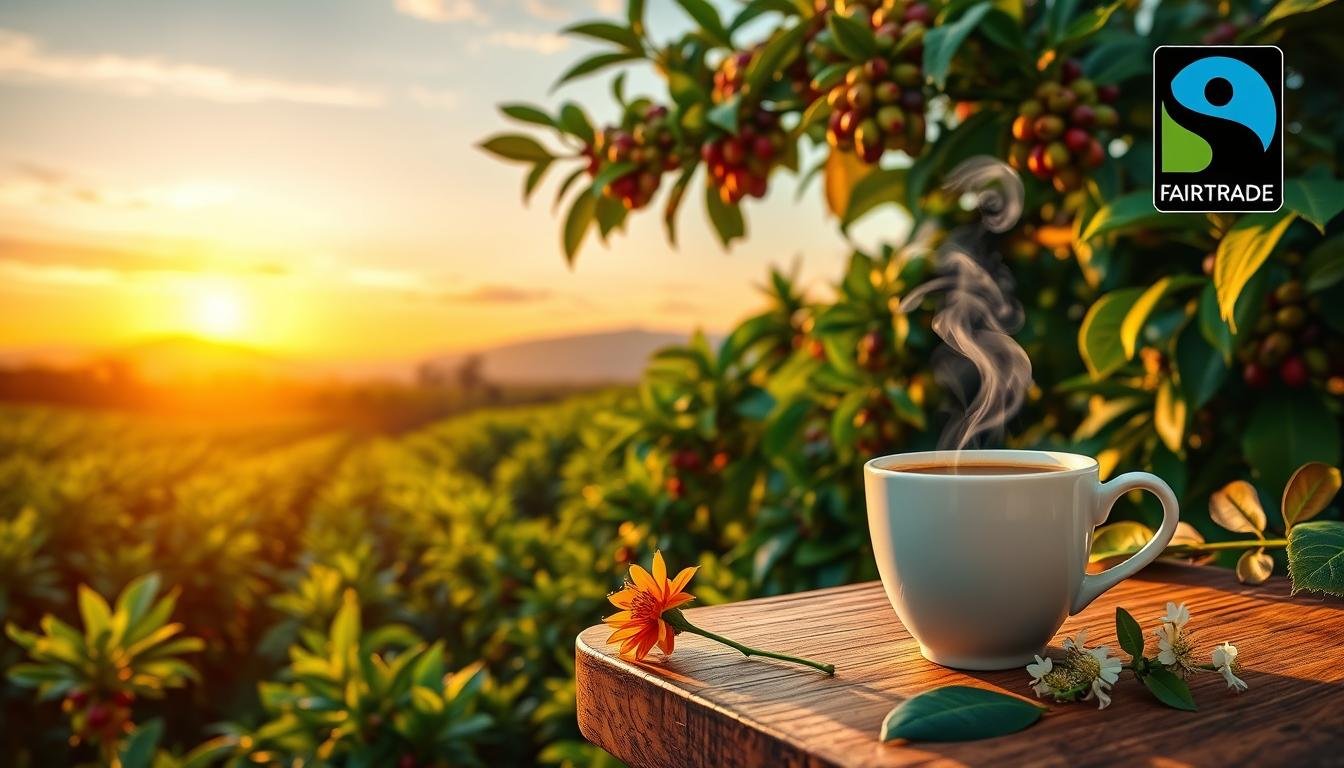
- Check the spelling. “Fairtrade” as one word, with the round Mark, belongs to Fairtrade International. “Fair Trade Certified” as two words belongs to Fair Trade USA. Different organizations, different minimum prices.
- Find the certifier line. A USDA Organic bag also names its certifying agent in small print. No seal and no certifier means the word “organic” is doing all the work alone.
- Spot the frog and the bird. Rainforest Alliance uses a green frog. Bird Friendly uses its own Smithsonian seal. Both hide easily on a busy label.
- Test direct trade for names and numbers. Real direct trade usually names the farm or producer group and sometimes the price paid per pound. A region name beside a misty hillside photo proves nothing about the price.
The Honest Limits of Certification
A seal only covers the coffee actually sold under that seal. In the same Fair Trade USA update, producer organizations named the share of their crop they can sell on Fair Trade terms as their most pressing constraint, ahead of the level of the floor. A fully certified cooperative can still sell much of its coffee at the ordinary market price because not enough buyers asked for the seal.
Audits and fees cost money, so some excellent small farms skip certification and sell on quality alone. Their coffee never wears a logo, and some of it will be the best cup you drink all year.
No seal here grades flavor. A certified bag can taste flat, and an uncertified microlot can taste like apricots. Judge the roast date and tasting notes on their own.
If a guaranteed price floor matters most, buy fair trade coffee with the Fairtrade Mark or the Fair Trade Certified seal. If soil chemistry matters most, our guide to the best organic coffee covers what the USDA seal includes and skips. If the cup comes first, our best coffee beans list names the bags we keep rebuying, certified or not. More buying guides live on the Coffee Rank IQ front page.
More Fair Trade Coffee Questions
Is fair trade coffee also organic?
Not automatically, so look for both seals on the bag. Fairtrade International pays a separate $0.40 per pound organic differential when a coffee carries both certifications, which gives farmers a reason to take on the extra organic work.
Is Fair Trade USA the same as Fairtrade International?
No, they have run separate certification systems since 2012 and now pay different minimum prices. For washed arabica, Fair Trade USA’s floor is $1.40 per pound, while Fairtrade International’s is $1.80 and rises to $2.00 on December 1, 2026.
Conclusion
In conclusion, organic and fair trade coffee offer a range of benefits that make them an excellent choice for coffee lovers. By choosing these ethically-sourced coffee options, you can enjoy a delicious cup of coffee while supporting environmental sustainability, fair wages for farmers, and the overall well-being of coffee-growing communities around the world. At Glory Cloud Coffee Roasters, we are proud to offer a diverse selection of organic and fair trade coffees, empowering our customers to make a positive impact with every sip.
Organic coffee not only promotes environmental preservation but also delivers health benefits, with higher antioxidant levels and fewer pesticide residues. Fair trade certification, on the other hand, ensures that farmers receive fair prices for their beans, allowing them to cover production costs and improve their livelihoods. By selecting organic and fair trade coffee, you can contribute to a more sustainable future for the coffee industry and the communities it serves.
At Glory Cloud Coffee Roasters, our commitment to ethical sourcing is at the heart of our business. We partner closely with farmers and communities to build strong relationships and contribute to a brighter future. Whether you prioritize the environmental impact or the social benefits, our wide variety of organic and fair trade coffee options allows you to make a positive impact with every cup you enjoy.
FAQ
What are the benefits of organic and fair trade coffee?
Organic coffee is grown without synthetic pesticides, fertilizers, or herbicides, ensuring a healthier product and a more sustainable approach to farming. Fair trade certification guarantees that coffee farmers receive a fair price for their crops, enabling them to invest in their communities and adopt environmentally-friendly practices.
How do organic and fair trade coffee differ?
Organic certification focuses on environmental impact, while fair trade certification emphasizes social impact. Organic coffee is grown without synthetic chemicals, while fair trade coffee ensures that farmers receive a fair price and are supported in adopting sustainable farming methods.
What are the health benefits of organic coffee?
Organic coffee is free of synthetic pesticide residues, making it a safer and potentially healthier choice. Also, organic farming methods often result in a richer flavor profile.
How does organic coffee benefit the environment?
Organic coffee production helps to preserve biodiversity, protect water sources, and reduce soil erosion, making it a more sustainable choice. By avoiding the use of synthetic chemicals, organic coffee farming supports the long-term health of the soil and surrounding ecosystems.
What are the advantages of fair trade coffee for farmers and their communities?
Fair trade certification ensures that coffee farmers receive a fair price for their crops, enabling them to invest in healthcare, education, and community development projects. Fair trade standards also encourage sustainable farming practices, such as the use of organic methods, which help to protect the environment and preserve the land for future generations.
How do Glory Cloud Coffee Roasters ensure ethical sourcing?
Glory Cloud Coffee Roasters works closely with coffee farms and cooperatives that adhere to strict organic and fair trade standards, ensuring that the beans are not only of the highest quality but also ethically sourced. By fostering strong relationships with the farmers, the company is able to contribute to the well-being of these communities and provide customers with a delicious and socially responsible cup of coffee.
Keep reading
- Coffee: Health Benefits and Risks Explored
- The Complete Guide To Using CoffeeSock Organic Cotton Coffee Filters
- The Complete Guide To Using CoffeeSock Organic Cotton Reusable Coffee Filters
- Top Benefits Of Philz Coffee Subscription
More in How to Coffee guides for beginners, or start from the Coffee Rank iQ homepage.