Best Coffee Beans I Keep Rebuying…and the Bags I Won’t
Quick Answer
The best coffee beans I keep rebuying share three traits: a roast date inside the last three weeks, a named farm or cooperative on the bag, and a processing method printed somewhere on the label. Counter Culture Big Trouble, Stumptown Hair Bender, Kicking Horse Subtle Earth, and Onyx Coffee Lab single origins have earned repeat orders in my kitchen. Bags I stopped buying were missing at least one of those three details, and the cup usually showed it.
Key Takeaways
- Roast date beats "best by" date. A bag stamped with a roast date inside 30 days is a better bet than one with a vague expiration window.
- Specialty grade coffee scores 80 or higher on the Specialty Coffee Association's 100-point cupping scale, which is the baseline most rebuy-worthy bags clear.
- Price tiers for good coffee beans in 2026 typically run $14 to $22 for a 12-ounce specialty bag, with direct-trade single origins reaching $24 to $30.
- Espresso and pour over reward different roast profiles. Darker, oilier roasts suit espresso; lighter roasts with more acidity suit pour over.
- Low-acid beans exist and are tested, not just marketed. Brands like Kicking Horse publish pH-related claims tied to specific roasting methods.
- Whole beans stay fresher longer than pre-ground coffee because grinding multiplies surface area and speeds staling.
- Warehouse whole bean coffee can be good value, but transparency varies. Shoppers report inconsistent roast dates on some club-store bags.
- Single origin and blended coffee solve different problems. Blends chase consistency; single origins chase a specific flavor story.
Why Some Bags Earn a Rebuy and Others Don't
A bag of best coffee beans earns a second order for one plain reason: the cup matches what the label promised, batch after batch. A bag loses that spot when the roast date goes stale, the flavor drifts, or the price stops matching the quality.
I've bought a lot of coffee over the years, from grocery store shelves to direct-trade single origins shipped the week they were roasted. The pattern that separates a rebuy from a one-time bag isn't the brand name on the front. It's what's printed near the bottom seam: a roast date, an origin, and sometimes a processing method. Bags that skip all three tend to taste flatter and less consistent from batch to batch, according to the buying guidance most specialty roasters and coffee guides now repeat.
That's the filter I apply to every bag before it goes in the cart again, and it's the filter this guide walks through in detail.
Best Coffee Beans
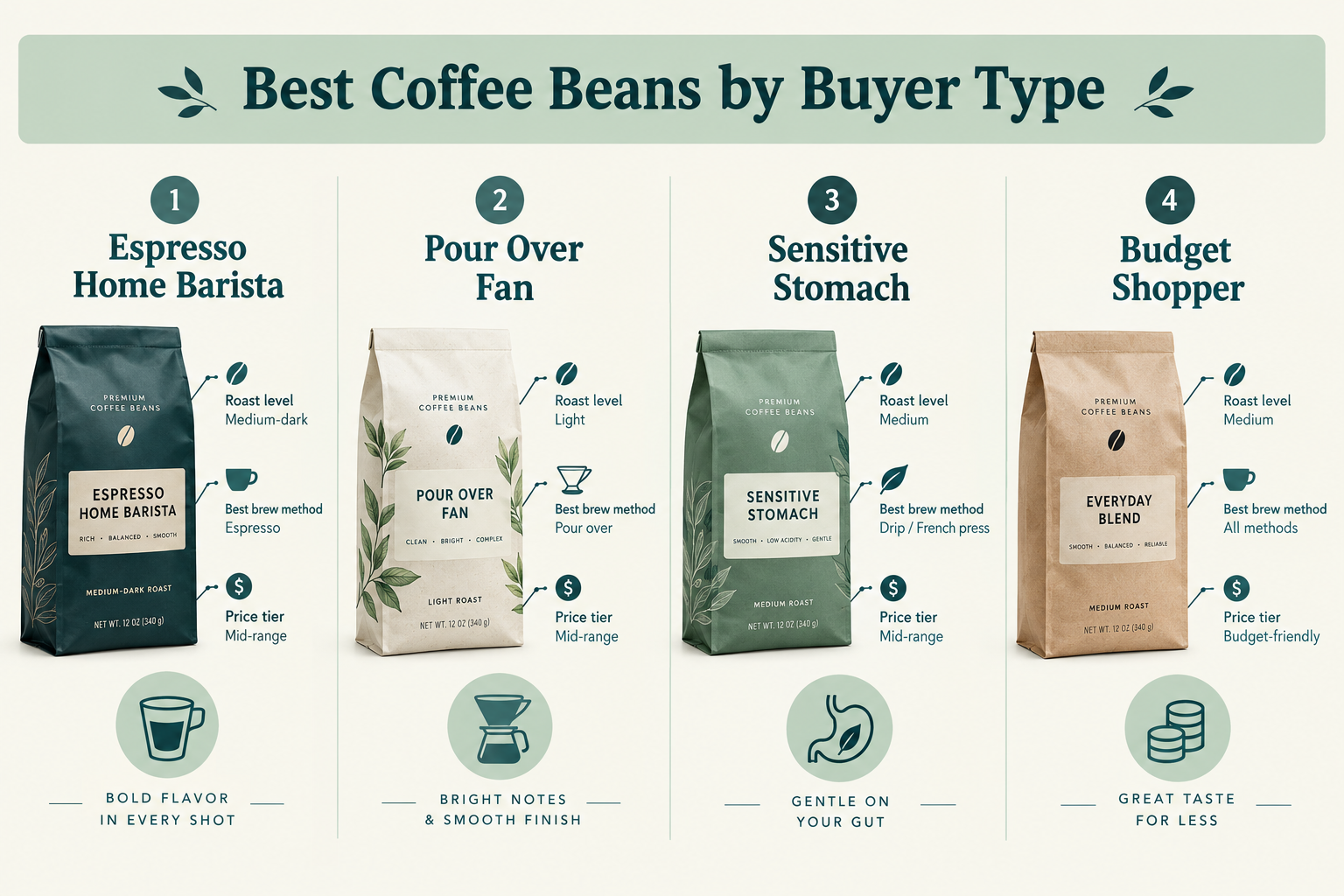
The best coffee beans for you depend on how you brew, how much acidity you can tolerate, and how much you're willing to spend on a 12-ounce bag. There isn't one "best" bag for every drinker, but there is a short list of best coffee brands that consistently deliver a fresh, well-roasted product across multiple orders.
Here's my quick verdict for six common buyer types, based on repeat purchases and what each brand actually prints on the bag:
| Buyer type | Pick | Roast | Price tier | Verdict |
|---|---|---|---|---|
| Home espresso barista | Counter Culture Big Trouble | Medium-dark | $$ | Rebuy |
| Pour over / drip fan | Stumptown Hair Bender | Medium | $$ | Rebuy |
| Specialty single origin fan | Onyx Coffee Lab | Light-medium | $$$ | Rebuy |
| Sensitive stomach | Kicking Horse Subtle Earth | Medium | $ | Rebuy |
| Beginner, dark roast lover | Peet's Major Dickason's | Dark | $ | Rebuy |
| Budget shopper | Lavazza Super Crema whole bean | Medium | $ | Occasional rebuy |
| Novelty/high caffeine seeker | Death Wish Coffee | Dark | $$ | Won't rebuy |
Stumptown coffee earns its spot for a simple reason: Hair Bender is a Central and South American blend built to taste good black or with milk, and it holds up across brew methods. Counter Culture Big Trouble does the same job for espresso specifically, with a chocolate-forward profile that doesn't turn bitter when the shot runs long. Intelligentsia's Black Cat Classic Espresso is worth mentioning too. It's a fine substitute if Big Trouble is out of stock, though I find it slightly brighter.
Among coffee bean brands built for everyday grocery buying, Peet's and Lavazza are the two that consistently show a roast date or a clear "roasted on" window, which puts them ahead of many shelf-stable competitors. Starbucks whole bean bags are widely available and reliable for a mild, familiar cup, but the roast date is often buried in a lot code rather than printed plainly, which makes freshness harder to judge at the shelf.
If you want a deeper breakdown of how to match a bean to your actual brew method, our guide to choosing the best coffee beans for home brewing walks through the tradeoffs bag by bag.
What Makes Coffee Beans High Quality
High quality coffee beans start with the plant, not the roaster. Grading standards from the Specialty Coffee Association score green (unroasted) beans out of 100, and anything above 80 qualifies as specialty grade coffee.
That score comes from a cupping panel judging aroma, acidity, sweetness, body, and defect count. A commercial-grade bag might carry a handful of broken beans, over-ripe cherries, or foreign material per sample. A specialty-grade bag is sorted hard enough to remove nearly all of that.
What this means at the shelf:
- A named farm, cooperative, or region signals traceability, which specialty roasters use as a quality shorthand.
- A stated processing method (washed, natural, honey) tells you how the fruit was removed from the bean before drying, and it changes the flavor more than most people expect.
- A recent roast date matters more than a "best by" stamp, because roasted coffee starts losing aromatic compounds within weeks, not months.
If a bag has none of these details, it might still taste fine. But you're buying blind. For a step-by-step way to judge a bag before you buy it, our home brewing bean selection guide covers the label details worth checking first.
Best Coffee Beans for Espresso vs Pour Over
Espresso and pour over ask different things from the same bean, so the best coffee beans for espresso are often not the best coffee beans for a pour over cone. Espresso rewards a darker, denser roast that can handle high pressure and short contact time without turning sour. Pour over rewards a lighter roast that shows more acidity and floral or fruit notes over a longer, gentler brew.
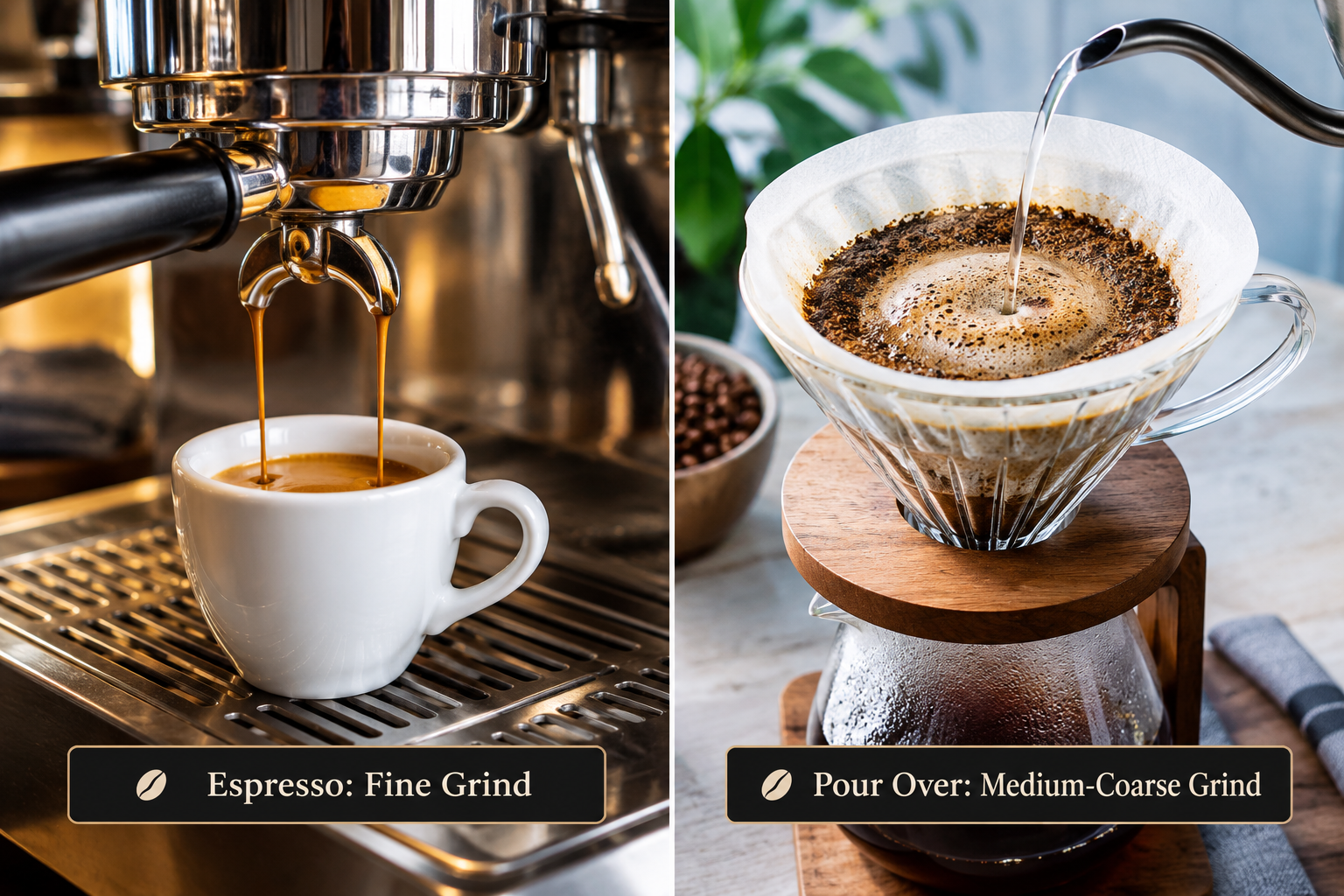
Grind size is where this gets practical. Espresso needs a fine, almost powder-like grind to build resistance against roughly 9 bars of pressure. Pour over needs a medium-coarse grind so water passes through in three to four minutes without over-extracting. A burr grinder with a wide adjustment range handles both jobs; a basic blade grinder struggles with either. Our guide to grinding coffee beans for a perfect brew breaks down the settings for each method.
Choose espresso beans if you own a machine and want a concentrated shot with body. Choose pour over beans if you want a cleaner cup that shows off origin flavor. A bag labeled simply "medium roast" with no method noted will work for both, just not perfectly for either.
How Much Should You Spend on Good Coffee Beans
Good coffee beans for home brewing typically run $14 to $22 for a 12-ounce specialty bag in 2026, with direct-trade or award-lot single origins reaching $24 to $30. Grocery store whole bean coffee, including Starbucks and Lavazza, usually lands between $9 and $14 for a similar size.
Why do some coffee beans cost so much more than others? A few factors stack up:
- Farming altitude and labor. High-altitude arabica grows slower and is often hand-picked, which costs more than machine-harvested lowland coffee.
- Direct-trade premiums. Roasters who pay farmers above commodity price pass that cost to the bag, and many print the price paid per pound as proof.
- Small-lot roasting. A limited harvest from one farm can't be bought in bulk, so the price per pound stays high.
- Award-winning lots. Coffee that places in a Cup of Excellence auction can sell for many times the price of standard specialty coffee.
A $30 bag isn't automatically better than a $16 bag. It's paying for scarcity, traceability, or a specific flavor result. Decide based on what you actually taste, not the number on the label.
Where to Buy Specialty Coffee Beans Online
The most reliable places to buy specialty coffee beans online are roaster-direct websites, because they ship close to the roast date instead of sitting in a warehouse. Counter Culture, Stumptown, Intelligentsia, and Onyx Coffee Lab all sell direct and print the roast date on the shipping label or the bag itself.
Subscription services are worth considering if you drink coffee daily and don't want to keep in mind to reorder. They typically ship within 24 to 48 hours of roasting, which beats most retail shelves by weeks. If you're weighing a subscription against one-off orders, our beginner's guide to choosing a coffee subscription walks through the tradeoffs.
Marketplace listings on general retail sites can work too, but check the ship date and seller, since third-party sellers sometimes hold inventory longer than the roaster intends.
Single Origin vs Blended Coffee: What Changes in the Cup
Single origin coffee comes from one country, region, or farm, while a blend combines beans from multiple sources to hit a consistent flavor target year-round. Neither is automatically better; they solve different problems.
A single origin bag tells a specific story: one farm's altitude, soil, and processing method, tasted on its own. That's why single origin bags carry more detailed tasting notes, like stone fruit or brown sugar tied to a specific washed or natural process. A blend exists because a single farm's harvest changes season to season, and a roaster wants the same cup in March and October. Stumptown Hair Bender and Lavazza Super Crema are both blends built for consistency. Onyx Coffee Lab's rotating single origins are built to showcase one lot at its peak.
Choose single origin if you want to taste a specific place and don't mind the flavor changing with each new harvest. Choose a blend if you want the same cup every time you reorder. For more on how to shop between the two, our advanced bean selection guide covers labeling terms worth knowing.
Best Coffee Beans for Beginners
The best coffee beans for beginners are medium roast, widely available, and forgiving of an imperfect grind or brew ratio. Peet's Major Dickason's Blend and Lavazza Super Crema both fit that description, and neither requires a $200 grinder to taste good.
A beginner-friendly bag should also come with a printed brew ratio suggestion, usually somewhere near 1 to 2 tablespoons of coffee per 6 ounces of water. Starting there and adjusting to taste is easier than guessing. If you're still deciding between a drip machine, a French press, or a simple pour over setup, our subscription guide for beginners also covers how to build a low-cost starter routine.
Skip anything labeled "extra dark" or "bold" as your very first bag. Those roasts hide flaws well, but they also hide the differences between good and mediocre coffee, which makes it harder to learn what you actually like.
How to Tell If Coffee Beans Are Fresh
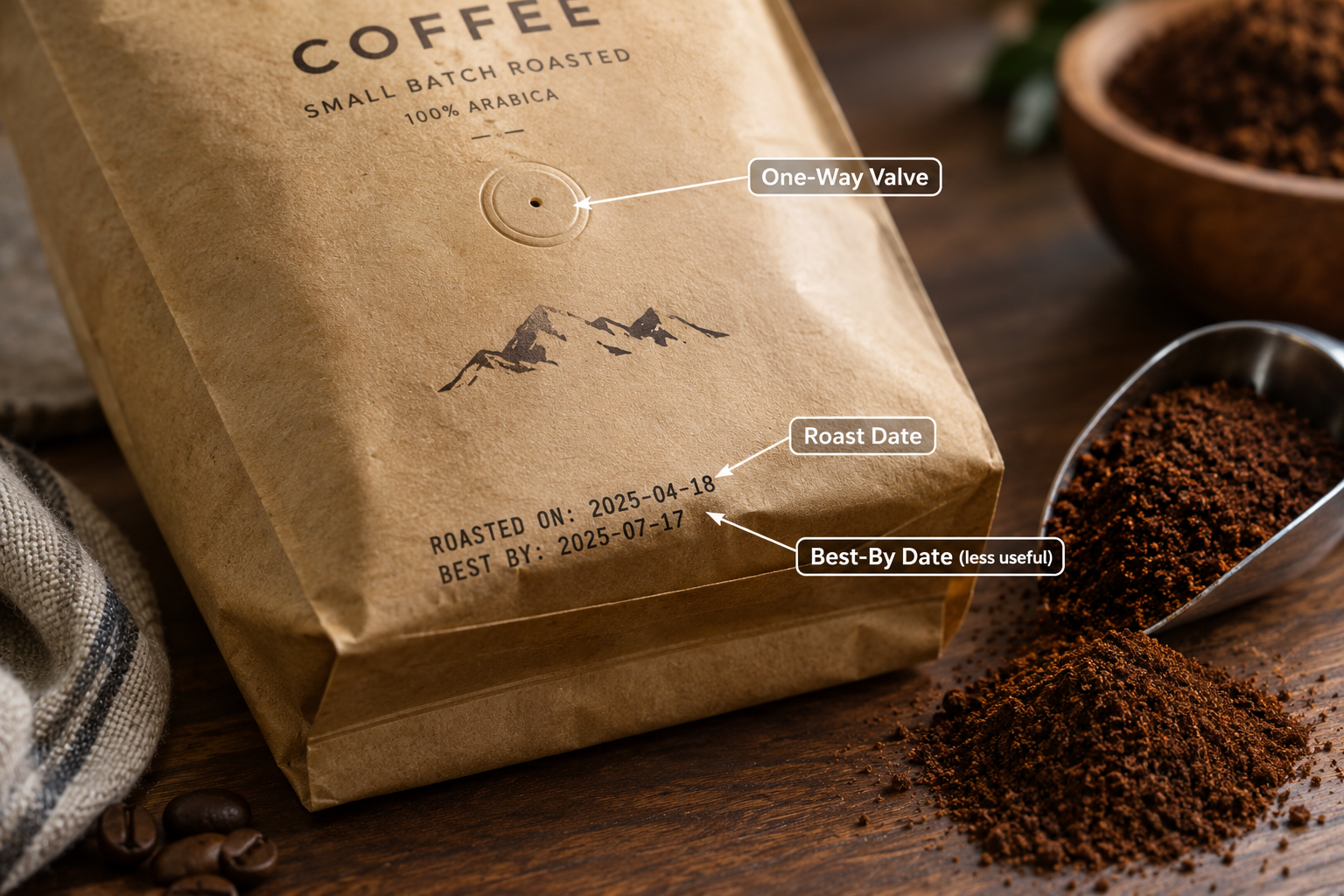
The fastest way to check freshness is the roast date, not the expiration date. Coffee roasted within the past two to three weeks is in its peak flavor window; coffee older than five or six weeks has usually lost a noticeable amount of aroma.
A few practical checks:
- Look for "roast date," not "best by." Best-by dates can sit a year out and tell you nothing about freshness.
- Press the bag. A fresh bag with a one-way valve often has a slight puff from trapped carbon dioxide.
- Smell it. Freshly roasted beans smell noticeably stronger than beans that have sat for two months.
- Watch the bloom. During brewing, fresh grounds release visible bubbles and a rising foam layer within the first 30 seconds. That reaction is carbon dioxide escaping, and it fades as beans age.
If a bag doesn't list a roast date at all, treat it as already a few weeks old.
Best Coffee Beans for Cold Brew
The best coffee beans for cold brew are usually medium to dark roast, because the long steep time (12 to 24 hours) pulls out sweetness and body without needing the brightness a pour over shows off. Stumptown and Death Wish are both common cold brew choices, though for different reasons: Stumptown for balance, Death Wish for caffeine content and a bold, roasted profile that holds up against ice and milk.
Cold brew uses a coarse grind, similar to French press, because the extended contact time would over-extract a fine grind into bitterness. If you're building a cold brew routine from scratch, our full cold brew coffee guide covers ratios and steep times in more detail.
How Long Do Coffee Beans Stay Fresh After Opening (and How to Store Them)
Opened whole bean coffee stays close to peak flavor for about one to two weeks, and noticeably fades by four weeks, even when stored well. Ground coffee fades faster, often within days, because grinding exposes far more surface area to oxygen.
To keep rebuy-worthy beans tasting good:
- Store in an airtight, opaque container. Light and oxygen are the two biggest flavor killers.
- Keep beans at room temperature. Freezing and refrigerating introduce moisture cycles that can damage flavor more than they preserve it, according to most current storage guidance.
- Buy smaller bags more often. A 12-ounce bag used within two weeks beats a 5-pound bag that sits for two months.
- Grind right before brewing. Whole beans hold their aroma far longer than pre-ground coffee.
Light Roast vs Dark Roast: What Changes in the Cup
Light roast beans are pulled off the roaster earlier, keeping more of the bean's original acidity, floral notes, and origin character. Dark roast beans stay on longer, developing more bitterness, body, and the toasted, smoky notes people associate with classic diner coffee.
Medium roast sits between the two, and it's where most of the best medium roast coffee beans live, because it balances sweetness against acidity without leaning hard into either. Stumptown Hair Bender and Peet's House Blend are both medium roasts built for that balance.
Choose light roast if you want to taste the origin clearly and don't mind more acidity. Choose dark roast if you want body and a familiar, bold flavor with less origin nuance. Choose medium roast if you're not sure yet, since it's the easiest starting point for most drinkers.
Best Budget-Friendly Coffee Beans That Still Taste Good
Budget-friendly doesn't have to mean low quality. Lavazza Super Crema and Peet's whole bean lines both sit in the $10 to $14 range and consistently print a roast window, which puts them ahead of unlabeled store brands at a similar price.
Warehouse clubs also carry decent value picks, though shoppers report mixed experiences with roast date transparency on some house brands, based on recent buyer discussion. Check the bag in person before committing to a large multi-pound bag, since a bad batch at that size is a lot of wasted coffee.
For a full breakdown of what to prioritize on a budget, our buyer's guide to choosing the right coffee beans for your recipes covers value picks by brew method.
Coffee Beans to Avoid: Red Flags on Low-Quality Bags
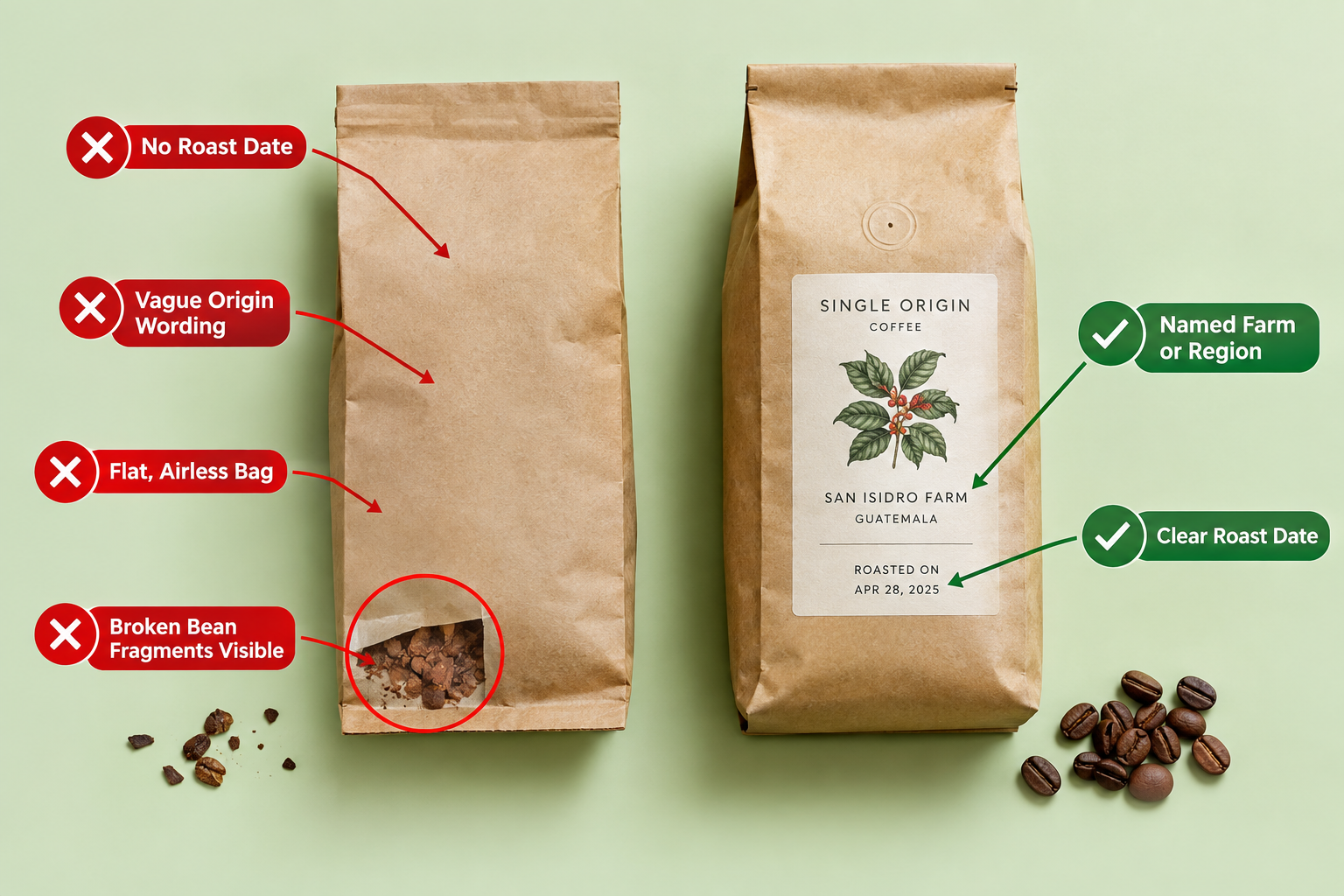
Skip any bag missing a roast date, a named origin, or basic processing information. Those three gaps are the clearest warning signs of a lower-quality bag, regardless of the brand name printed on the front.
Other red flags worth watching for:
- A flat, airless bag. No trapped gas usually means the beans are already old.
- Vague origin language like "imported" with no country listed.
- A price that's too low for the claimed grade. Specialty-grade coffee has a real cost floor; a $6 "specialty" bag is worth questioning.
- Broken or uneven beans visible through the bag window. That points to poor sorting during processing.
Death Wish Coffee falls into a gray area here. It's not mislabeled, but the extreme dark roast and marketing around caffeine content overshadow the actual bean quality, which is why it doesn't earn a repeat spot in my rotation. If you want strong coffee, a well-made dark roast espresso blend gets you there with more flavor. Check the current price on a few dark roast options before assuming "extra caffeine" bags are your best bet.
Frequently Asked Questions
Is Starbucks whole bean coffee good quality?
Starbucks whole bean coffee is consistent and widely available, and it works well for drip brewing. It's a safe, familiar pick rather than a specialty standout, and the roast date can be harder to find than on direct-trade bags.
Can I use espresso beans for drip coffee?
Yes. Espresso roast just means a darker, often oilier profile suited to pressure brewing, but nothing stops you from brewing it in a drip machine or pour over. Expect a bolder, less acidic cup than a lighter roast would give.
How many grams of coffee do I need per cup?
A common starting brew ratio is about 15 to 18 grams of coffee per 8 ounces of water for drip or pour over. Adjust up for a stronger cup or down for a milder one.
Do coffee pods use the same quality beans as bags?
Not always. Some pod lines use the same specialty beans as the brand's bagged coffee, while others use lower-grade beans to hit a lower price point. Check the roaster's own product page rather than assuming.
What's the healthiest coffee bean choice?
There's no single "healthiest" bean. Choosing a fresh, well-roasted bag and brewing it without excess added sugar matters more for daily health than picking one origin over another.
Are dark roast beans stronger than light roast?
Not in caffeine. Dark roast tastes bolder because of roasting compounds, but light roast beans actually retain slightly more caffeine by weight, since less mass burns off during a shorter roast.
Conclusion
The best coffee beans aren't a single winner sitting on a pedestal. They're the bags that keep matching what the label promises, order after order, at a price that makes sense for what you're getting. Counter Culture, Stumptown, Kicking Horse, and Onyx Coffee Lab have earned repeat spots in my kitchen because the roast date, origin, and cup stayed consistent. Death Wish and unlabeled warehouse blends haven't, because something on the bag or in the cup didn't hold up.
Your next step is simple: pull out whatever bag is in your kitchen today and check the roast date. If it's older than five weeks, that's your answer for why the last few cups tasted flat. Better coffee starts with better answers, and most of the time, the answer is printed right there on the bag.
Keep Exploring Coffee Rank IQ
- Coffee Rank IQ home: reviews, brewing guides, and coffee science
- Best Espresso Beans for Lattes, Straight Shots, and Budgets
- Best Decaf Coffee That Still Tastes Like Coffee
- Best Organic Coffee: What the USDA Seal Tells You and What It Skips
- Best Dark Roast Coffee That Tastes Bold, Not Burnt
References
- www.reddit.com/r/Costco/comments/1qng0o8/whats_the_best_whole_bean_coffee_jan_2026
- www.cafegrade.com/guides/best-coffee-beans
- brewgazette.com/best-coffee-beans
- www.smarterranking.com/food/best-coffee-beans-2026
- www.coffeelabadvisor.com/guides/best-coffee-beans
- masteringcoffee.com/best-coffee-beans
- www.cafegrade.com/guides/best-single-origin-coffee-beans
- beanbench.coffee/learn/how-to-buy-good-coffee-beans