Best Espresso Beans for Lattes, Straight Shots, and Budgets
Quick Answer
The best espresso beans depend on what's in your cup. Lavazza Super Crema is the best overall pick for most home espresso drinkers because its medium roast and thick crema forgive an imperfect grind setting. Stumptown Hair Bender is the strongest choice for lattes, Illy Classico wins for Italian style straight shots, and Lifeboost Espresso Whole Bean suits drinkers who want a smoother, less processed cup at a premium price. If you only keep in mind one thing, buy whole bean, check the roast date, and match the roast level to how you drink your coffee.
Key Takeaways
- Lavazza Super Crema is the best budget espresso beans pick under $10 for most bags, and it works in lattes and straight shots alike.
- Medium and medium-dark roasts hold up best under steamed milk. Very light, fruity roasts tend to taste thin once milk goes in.
- Espresso beans and coffee beans come from the same plant. The difference is roast level, oil content, and grind size, not a separate species.
- Roast date matters more than the brand name. Buy beans roasted within the last few weeks, not months ago.
- A basic Breville machine does fine with a 60/40 Arabica-Robusta blend like Super Crema because it doesn't demand a precise grind.
- Single origin beans reward a dialed-in machine and a good grinder. Blends are more forgiving for daily use.
- Bitter shots usually mean over-extraction or stale beans, not a bad bag of coffee.
Best espresso beans: quick picks for every kind of buyer
The best espresso beans for you depend on your machine, your milk habits, and your budget, not on which bag has the fanciest label. Below are seven picks matched to specific buyers, based on published 2026 comparison testing.
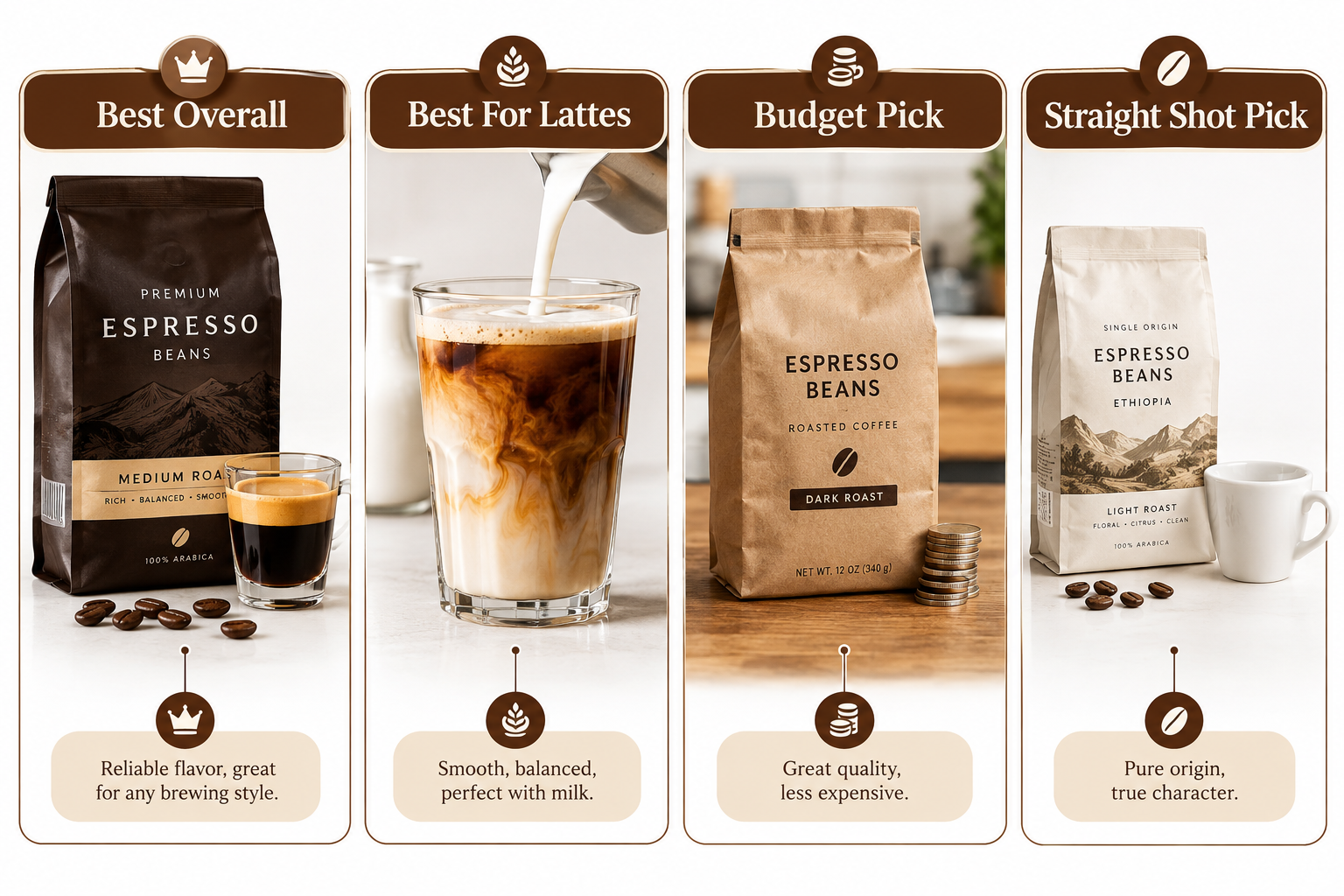
Most people who ask about the best espresso beans are really asking one of three questions: what's reliable, what tastes good with milk, and what won't waste money on a bad bag. Here's a fast breakdown before the details.
- Best overall: Lavazza Super Crema. A medium roast, roughly 60/40 Arabica-Robusta blend that produces thick, forgiving crema even on an average grinder.
- Best for lattes: Stumptown Hair Bender. Stays consistent across different machines and holds flavor through a full ratio of milk.
- Best value for lattes: Lavazza Super Crema again, priced under about $15 per pound as of late September 2026 and strong enough to come through in a 12 oz latte.
- Best Italian style espresso beans: Illy Classico, balanced and consistent on consumer grade machines.
- Best grocery store coffee beans for espresso: Lavazza Espresso Italiano Cremoso, which scored highest for flavor in a 2026 sensory test.
- Best for straight shots and premium flavor: Lifeboost Espresso Whole Bean, a smoother, bolder option for cortados and short straight shots.
- Best milk-forward specialty blend: a caramel and low-acid style blend such as Black Cat Classic Espresso, which becomes more pronounced under milk foam.
Here's the same information as a side-by-side table.
| Bean | Best for | Roast level | Approx. price per lb | Skip if you… |
|---|---|---|---|---|
| Lavazza Super Crema | Overall use, lattes, budget | Medium | $8 to $10 | Want bright, fruity single origin flavor |
| Stumptown Hair Bender | Lattes and milk drinks | Medium-dark | $16 to $18 | Only drink straight shots |
| Illy Classico | Italian style straight shots | Medium | $14 to $16 | Want bold Robusta punch |
| Lavazza Espresso Italiano Cremoso | Grocery store pick | Medium | $9 to $11 | Want single origin complexity |
| Lifeboost Espresso Whole Bean | Straight shots, premium cup | Medium | $18 to $22 | Need a low cost daily bag |
| Black Cat Classic Espresso | Cappuccino, latte sweetness | Medium-dark | $16 to $19 | Prefer light, acidic profiles |
| Counter Culture Forty-Six | Advanced tasters, straight shots | Medium-light | $17 to $19 | Drink mostly milk-based drinks |
If you're setting up your first machine, our buyers guide to choosing the best espresso machine walks through which bean styles pair with which equipment.
What makes espresso beans different from regular coffee beans
Espresso beans and drip coffee beans usually come from the same Arabica or Robusta plants. The real difference is roast level, oil content on the surface, and how finely the beans get ground before brewing.
Roasters push espresso beans a bit darker and longer than a typical drip roast. That extra time in the roaster breaks down more sugar and develops more oil, which is why espresso beans often look shinier than a bag labeled for drip brewing.
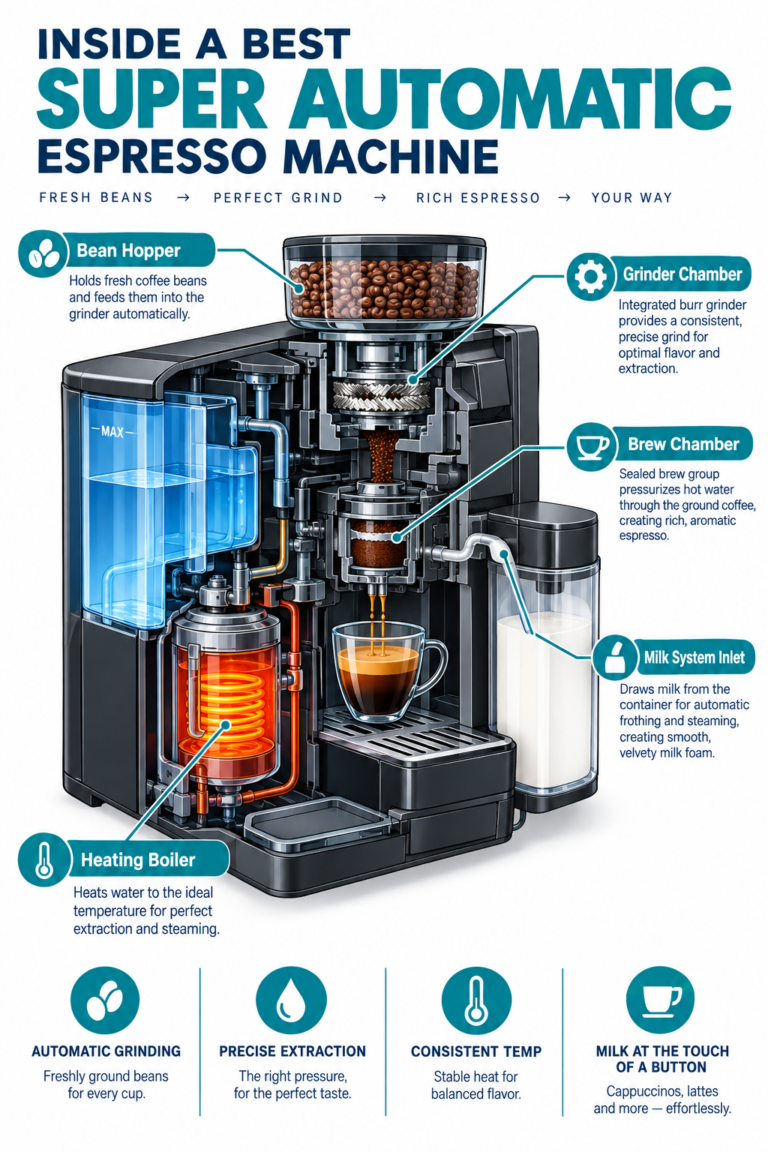
The espresso beans vs coffee beans question also comes down to grind size and pressure. Espresso machines force hot water through finely ground coffee at around 9 bars of pressure, which is far more force than a drip machine ever applies. That pressure needs a fine, powder-like grind to build resistance and produce crema, the tan foam layer on top of a good shot.
Can you use regular coffee beans in an espresso machine? Yes, mechanically it will work. The machine doesn't know what bag the beans came from. But a lighter drip roast ground fine enough for espresso often tastes sharp and thin, because the roast wasn't developed with that pressure and extraction time in mind. If you want a truly satisfying shot, buy a bag labeled for espresso or one described as a dark or medium-dark roast.
Decision rule: if a bag says "espresso roast" or "espresso blend," it's built for the pressure and short brew time of an espresso machine. A bag labeled "for drip" or "for pour over" is built for a slower, lower-pressure method. For more on grind size and why it matters this much, read our guide on what grind of coffee works best for an espresso machine.
Best espresso beans for lattes vs straight shots
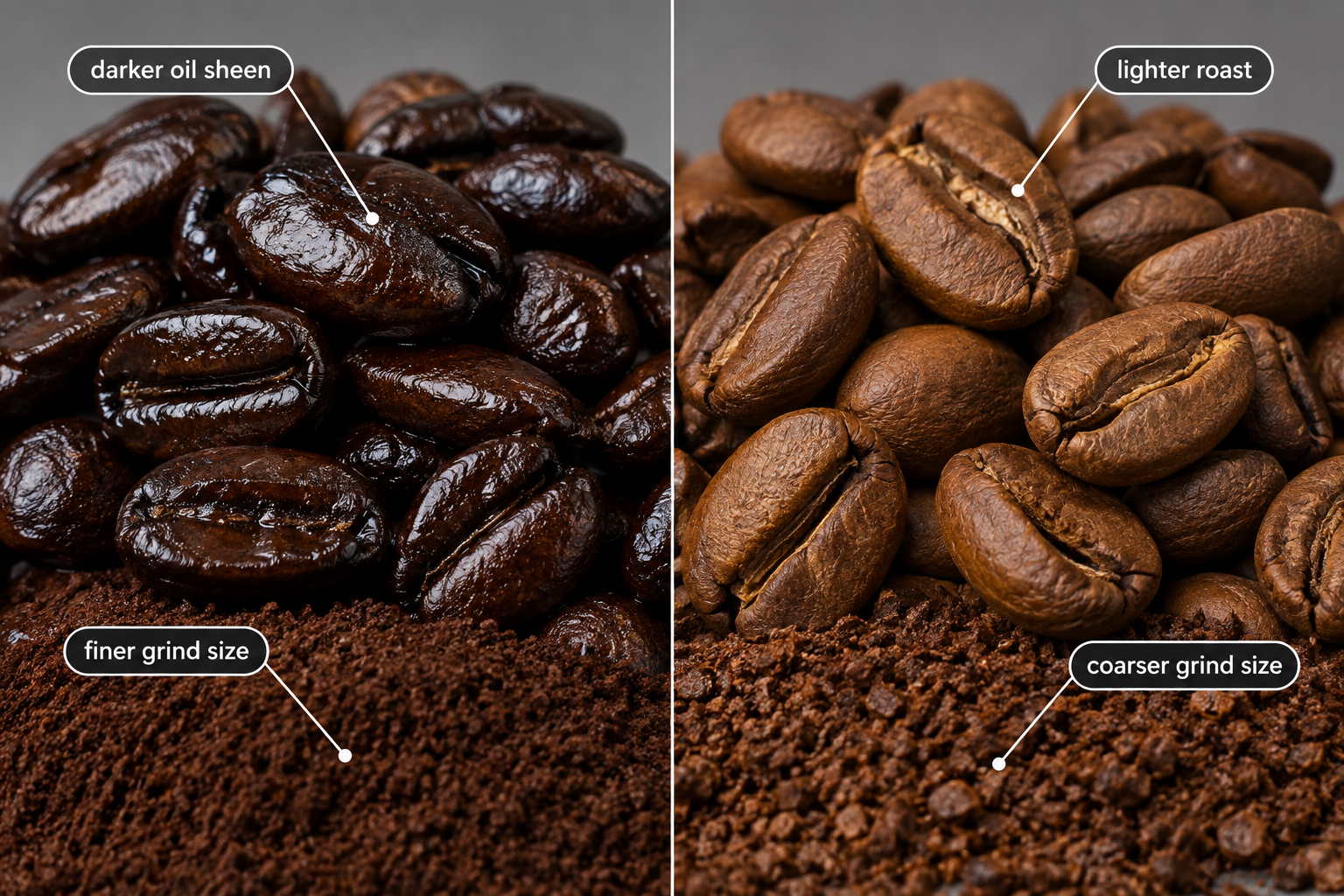
The best espresso beans for lattes are medium to medium-dark roasts with chocolate, caramel, or nutty notes, because those flavors survive being diluted by steamed milk. The best espresso beans for a straight shot are often lighter, more complex beans that let fruit, floral, or acidic notes come through without milk covering them up.
Steamed milk is not a neutral canvas. It adds sweetness and body, and it mutes brighter, more delicate flavors. A 2026 comparison of Lavazza, Illy, and Counter Culture beans found that Super Crema's bold flavor and crema that lasted roughly 18 seconds or longer stayed noticeable even in a 12 oz latte. Counter Culture Forty-Six, by contrast, was judged "over-qualified" for milk drinks, since its layered flavor got mostly lost under 6 to 8 ounces of milk.
That's the trade-off in plain terms:
- Best espresso beans for lattes: Brazilian and Colombian-leaning blends with cocoa, caramel, and nut tones, like Stumptown Hair Bender or Milk Money style blends.
- Best for straight shots: washed Ethiopian Yirgacheffe, washed Kenyan coffees, and honey-processed Costa Rican beans, which show off fruit and floral clarity when the extraction is dialed in.
- Skip for lattes: very light, high-acid roasts. They tend to taste sour or thin once milk goes in.
Common mistake: buying a beautiful, bright single origin bag because it photographed well online, then being disappointed that a latte made with it tastes flat. That bean probably needed to be a straight shot or a small cortado, not a 12 oz milk drink. If lattes are your main drink, our guide to frothing milk for espresso drinks explains how milk texture changes the way flavor comes through.
How much should you spend on good espresso beans
You can get a genuinely good shot for under $10 a bag, and spending more only pays off once your grinder and technique can show off the difference. Budget bags favor consistency and crema. Premium bags favor complexity that rewards a dialed-in setup.
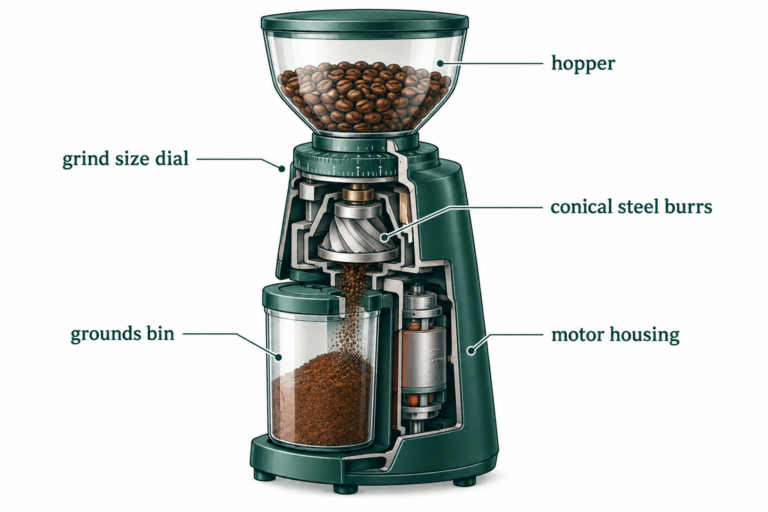
Lavazza Super Crema sits at roughly $8 to $10 per pound depending on package size, which makes it one of the best budget espresso beans under $10 that still performs well in both milk drinks and straight shots. Beans in the $16 to $22 per pound range, like Stumptown Hair Bender or Lifeboost Espresso Whole Bean, usually bring more subtle flavor, but that difference is easiest to notice with a burr grinder and a scale, not a basic pressurized basket.
Decision rule: if you're using a starter machine with a pressurized portafilter basket, spend less and buy a forgiving Robusta-blended bag. If you've upgraded to a bottomless portafilter and a real burr grinder, spending more on single origin or specialty blends starts to make sense.
Edge case: grocery store bags sold in bulk bins can be cheaper per pound than name brand bags, but they often lack a printed roast date. Skip anything without a date on the bag, no matter how low the price looks.
Espresso beans for beginners: what should you buy
Beginners should buy a medium roast espresso blend with some Robusta in it, because it's the most forgiving option while you learn grind size and tamping pressure. A 60/40 or 70/30 Arabica-Robusta blend like Lavazza Super Crema produces thick crema even when your grind isn't perfectly dialed in.
If you own a Breville machine, the best espresso beans for Breville setups tend to be medium roast blends rather than very light single origins. Breville's built-in pressurized baskets on entry models are already doing some of the crema-building work for you, so a forgiving blend gives you a wider margin for error while you learn to read the shot.
Beginner buying checklist:
- Buy whole bean, not pre-ground. Pre-ground coffee loses aroma fast and can't match your machine's ideal grind size.
- Pick a medium roast labeled "espresso" or "espresso blend."
- Check for a roast date within the last month.
- Buy a small bag first (8 to 12 oz). You'll dial in your grind faster with fresh beans than by working through a large bag slowly.
Our beginner's guide to choosing coffee beans for home brewing covers grind size and dose in more depth once you're ready to move past a starter blend.
Why do your espresso beans taste bitter or sour
Bitter shots almost always point to over-extraction, meaning water spent too long in contact with the grounds, usually because the grind was too fine or the dose was packed too tight. Sour shots point to under-extraction, where the shot ran too fast and the water didn't pull enough flavor out of the grounds.
Bitter shot causes:
- Grind too fine for your machine
- Shot pulled too slowly (over about 30 seconds for a double)
- Beans roasted too dark and gone stale
- Water temperature too high for the roast level
Sour shot causes:
- Grind too coarse
- Shot pulled too fast (under about 20 seconds)
- Beans that are too fresh and haven't finished releasing gas (usually within the first 2 to 3 days after roasting)
- Water temperature too low
Common mistake: blaming the bean when the actual problem is grind size. Before switching brands, adjust your grinder one setting at a time and taste again. A $20 bag of beans can't fix a grind that's fighting your machine.
Light vs dark roast espresso beans: which is better
Neither roast level is better across the board. Dark and medium-dark espresso roast beans give you a heavier body, chocolate and caramel notes, and more forgiving extraction, while light roasts give you brighter acidity and more origin-specific fruit flavor, but demand more precise dialing in.
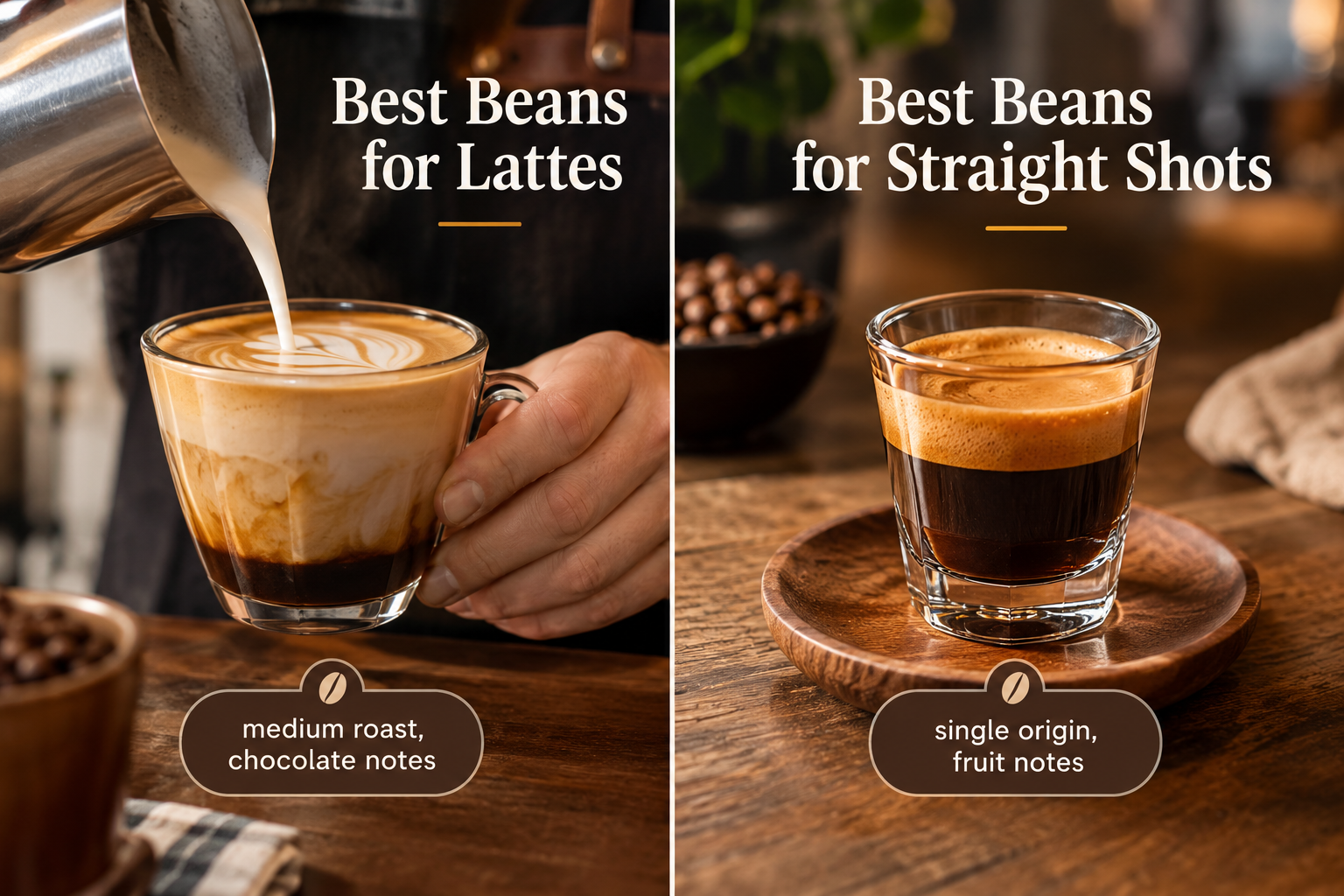
Darker roasts develop more surface oil and lose some caffeine and acidity during the longer roasting time, which is part of why they taste smoother and less sharp. Lighter roasts keep more of the bean's original character, which is why single origin espresso is often roasted lighter than a standard blend.
Choose dark or medium-dark espresso roast beans if:
- You drink mostly lattes or cappuccinos
- You use a basic or mid-range home machine
- You want a forgiving shot that tastes good even on an off day
Choose light or medium-light roast if:
- You drink mostly straight shots or short milk drinks like a cortado
- You already have a dialed-in grinder and machine
- You enjoy fruit-forward, tea-like flavors over heavy body
Some 2026 discussion among home baristas shows growing interest in lighter "Nordic style" espresso roasts, but several guides note these bright profiles can taste thin or sour once milk enters the picture, which keeps medium and medium-dark roasts as the safer everyday choice for most lattes.
Single origin vs espresso blends: which tastes better
Blends generally taste more consistent and forgiving, while single origin beans taste more distinct and interesting, but only when your grinder and technique can extract them properly. Neither one is objectively better. They serve different goals.
A blend combines beans from multiple regions or farms to hit a specific flavor target every time, batch after batch. That's why big brands like Lavazza and Illy rely on blends: consistency sells more coffee than a beautiful but unpredictable single origin lot.
Single origin espresso, sourced from one farm or region, shows off specific traits: the citrus brightness of a washed Ethiopian lot, or the round sweetness of a honey-processed Costa Rican coffee. The tradeoff is that those traits are easier to lose if your grind, dose, or shot time drift even slightly off target.
Quick example: a washed Kenyan single origin might taste bright and berry-like as a straight shot pulled at the right ratio, but taste sour and thin if you pull it too fast, or muddy if the grind runs too coarse. A blend like Super Crema tends to taste decent across a wider range of settings.
How fresh should espresso beans be when you buy them
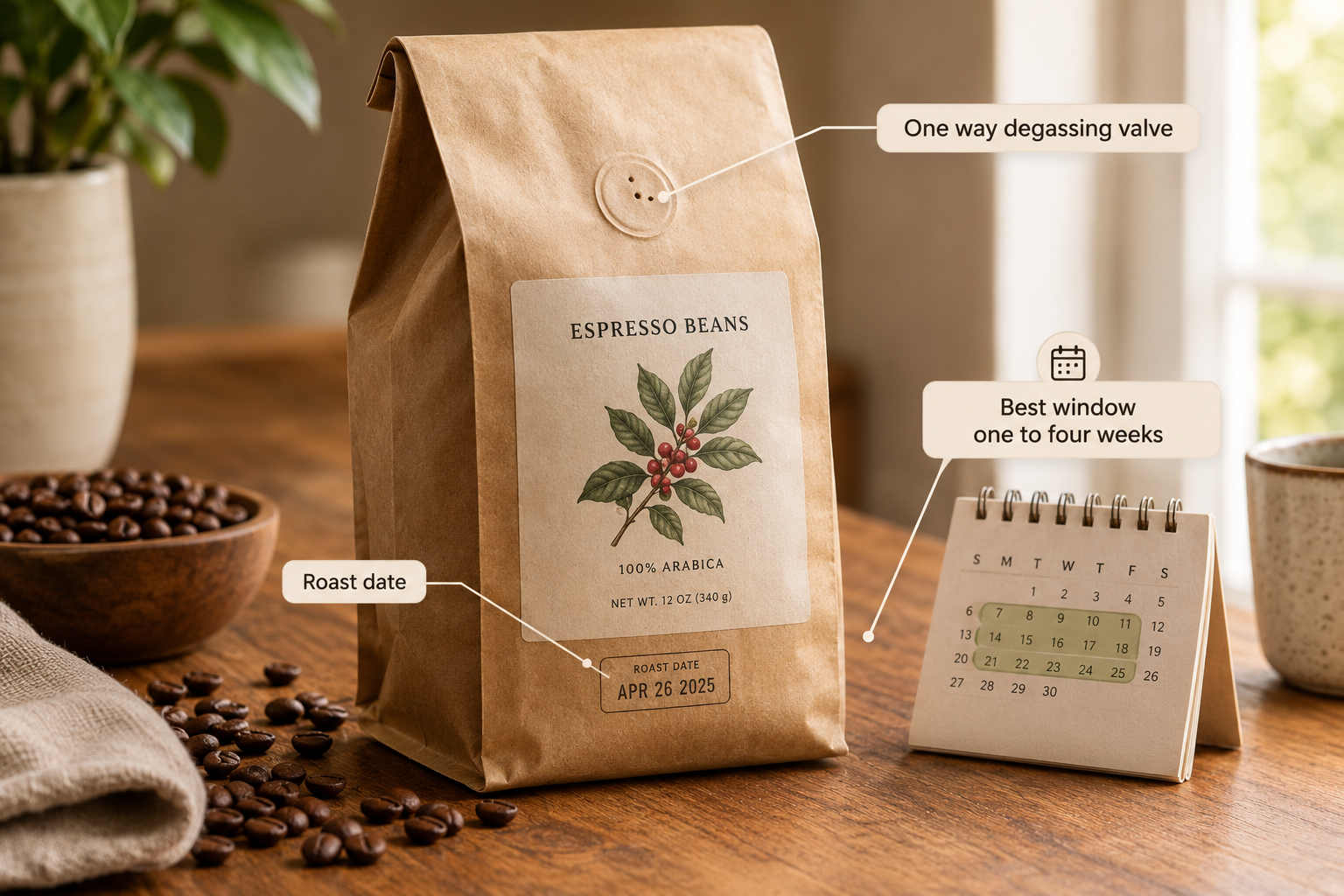
Espresso beans taste best somewhere between 1 and 4 weeks after the roast date, once they've had a few days to release carbon dioxide gas but before they start losing aroma. Buying beans without a printed roast date is one of the easiest ways to end up disappointed.
Freshly roasted beans are full of trapped CO2, which pushes water away from the grounds during extraction and can make a shot run too fast or produce uneven crema in the first day or two after roasting. That's why many roasters recommend waiting at least 3 to 5 days before pulling shots from a very fresh bag.
Decision rule: if a bag doesn't list a roast date, put it back. "Best by" dates stamped a year out tell you nothing useful about how the coffee will actually taste in your cup.
Storage checklist to protect that freshness:
- Keep beans in an airtight container, ideally with a one-way valve
- Store at room temperature, away from direct light
- Don't refrigerate or freeze a bag you're using within a few weeks; condensation can ruin flavor
- Buy amounts you'll use within 3 to 4 weeks rather than stocking up
For the roasting side of this story, our piece on understanding roasting techniques for perfect espresso beans explains how roast profile and freshness interact.
Best espresso beans for home machines vs cafe quality
Cafe espresso often tastes different from your home shot mainly because of the machine's temperature stability and the barista's daily grind adjustments, not because cafes have secret access to better beans. Many of the best espresso beans sold to home drinkers are the same beans, or close relatives, used in commercial cafes.
Commercial machines hold water temperature within a tighter range and let baristas taste and adjust the grind multiple times a day as humidity and bean age change. A home machine with a basic boiler and a static grind setting will struggle to match that, no matter how good the beans are.
That said, some of the best Italian espresso beans, like Illy Classico and Lavazza's Cremoso line, were specifically built for consistency on simple home and cafe machines alike, which narrows the gap. If you're chasing cafe-level results at home, the equipment matters as much as the bag. Our guide to advanced techniques for perfecting espresso covers the dialing-in habits that close most of that quality gap.
Choose these best Italian espresso beans if you want a cafe-like everyday shot without a commercial machine:
- Illy Classico for balanced sweetness
- Lavazza Espresso Italiano Cremoso for a widely available grocery pick
- Lavazza Super Crema when you want thick crema on a simpler machine
Best espresso bean brands that are actually worth it
The brands worth paying attention to in 2026 are the ones with repeated, consistent scores across multiple independent comparisons, not just a good-looking bag. Lavazza, Illy, and Stumptown show up again and again in 2026 testing for a reason: they perform close to their own tasting claims, batch after batch.
Lavazza earns its reputation through Super Crema and the Espresso Italiano Cremoso line, both of which scored well in flavor testing and remain some of the best coffee beans for espresso at a mainstream price point.
Illy built its name on consistency. Illy Classico is a safe, balanced pick if you want the same cup every single time.
Stumptown earns its spot specifically for milk drinks. Hair Bender's wide dialing range means it performs well across different grinders and machines, which matters if you haven't yet found your machine's sweet spot.
Lifeboost and similar specialty roasters justify a higher price with smoother, less processed beans, which suits drinkers who care about how the coffee was grown and roasted, not just how it tastes.
Skip a brand, no matter how well known, if:
- It doesn't list a roast date
- The reviews consistently mention stale or flat crema
- The flavor description doesn't match what you actually drink (a heavily fruity single origin brand isn't the answer if you drink lattes every day)
FAQ
What is the single best espresso bean for a beginner? Lavazza Super Crema is the most forgiving choice for beginners because its 60/40 Arabica-Robusta blend produces thick crema even with an imperfect grind setting.
Are espresso beans and coffee beans really the same thing? Yes, in most cases they come from the same Arabica or Robusta plants. The difference is roast level, oil content, and the fine grind size used for espresso brewing.
Can I use regular drip coffee beans in my espresso machine? Yes, mechanically it works, but a lighter drip roast ground fine for espresso often tastes thin or sharp because it wasn't roasted for that pressure and brew time.
What roast level works best for lattes? Medium to medium-dark roasts with chocolate, caramel, or nutty notes hold up best under steamed milk. Very light, fruity roasts often taste sour or thin once milk is added.
How old can espresso beans be before they go bad? Beans taste best within 1 to 4 weeks of the roast date. They don't spoil like food, but flavor and crema quality drop noticeably after several weeks, especially with light and medium roasts.
Do I need a burr grinder to get good results from these beans? A burr grinder makes a real difference, especially with single origin or specialty beans. Forgiving blends like Lavazza Super Crema still produce decent results on a basic grinder, which is why they're a common starting recommendation.
A quick interactive way to check your match
Use the tool below to match your drink habit to a bean style before you buy.
body{margin:0;font-family:system-ui,-apple-system,”Segoe UI”,Roboto,sans-serif;background:#F5FAF8;} .cg-wrap{max-width:640px;margin:0 auto;padding:16px;box-sizing:border-box;} .cg-title{color:#14231D;font-size:18px;font-weight:700;margin:0 0 10px;} .cg-btns{display:flex;flex-wrap:wrap;gap:8px;margin-bottom:14px;} .cg-btn{flex:1 1 120px;background:#1F6B4A;color:#fff;border:none;border-radius:8px;padding:10px 8px;font-size:13px;font-weight:600;cursor:pointer;} .cg-btn:hover{background:#145037;} .cg-result{background:#E8F2EE;border-radius:10px;padding:14px;color:#23372F;font-size:14px;line-height:1.5;min-height:60px;} .cg-result strong{color:#14231D;}Which best espresso beans fit your habit?
Conclusion
The best espresso beans aren't one single bag. They're the right bag for what's actually in your cup. If lattes are your daily drink, lean medium to medium-dark and skip anything marketed for its delicate acidity. If you're chasing a straight shot with real complexity, spend the extra few dollars on a single origin lot and take the time to dial in your grind. If money is tight, Lavazza Super Crema keeps performing across multiple 2026 comparisons for a reason: it's forgiving, widely available, and cheap enough to experiment with while you learn.
Check the roast date before you check the price. Buy whole bean. Store it properly. And once you've settled on a bean style you like, spend your next upgrade dollar on your grinder, not another bag of beans. That's usually where the bigger flavor jump is waiting. Better coffee starts with better answers, and sometimes the better answer is simply matching the bean to the drink you actually make every morning.
Keep Exploring Coffee Rank IQ
- Coffee Rank IQ home: reviews, brewing guides, and coffee science
- Best Milk Frother for Lattes at Home: Handheld vs Electric
- Espresso Roast Isn't What Most People Think It Is
- Best Nespresso Pods for Lattes, Iced Drinks, and Straight Shots
- Best Medium Roast Coffee for Drip, Pour Over, and Espresso
References
- www.reddit.com/r/espresso/comments/1s3ebzd/2026_beans_so_far
- beanbox.com/blog/best-espresso-beans
- www.cafegrade.com/guides/best-coffee-beans
- homeespressohq.com/blog/best-espresso-beans-for-lattes
- timtalkscoffee.com/best-espresso-beans
- espressoverdict.com/best/best-espresso-beans
- brewpathfinder.com/articles/best-coffee-beans-for-espresso-2026
- www.coffeeness.de/en/best-espresso-beans
- www.coffeeness.de/espresso-test
- www.pulled.coffee/blog/best-coffee-beans-for-espresso-2026