What Is a Cafe au Lait? Coffee and Milk the French Way
Quick answer: A cafe au lait is brewed coffee, usually from a French press or drip method, combined with steamed or scalded milk in roughly equal parts. That's the short answer to what is a cafe au lait, and it's the one used by coffee brands and dictionaries alike. No espresso, no foam layer required, just two hot liquids meeting in the same cup, or more traditionally, the same wide bowl.
Key takeaways
- A cafe au lait is brewed coffee plus hot, steamed milk in about a 1:1 ratio, not espresso plus milk.
- Cafe au lait meaning translates directly from French: "coffee with milk."
- It differs from a latte, which starts with espresso and uses more milk than coffee.
- In New Orleans, cafe au lait is traditionally made with coffee and chicory, popularized by Cafe Du Monde.
- The classic French serving vessel is a wide, handleless bowl called a bol, not a mug.
- A basic recipe scales from a 6 ounce breakfast cup to a 20 ounce bowl using the same ratio.
- You can make a version with espresso, but purists will point out that's technically closer to a latte.
- Instant coffee works in a pinch, though the flavor and body will taste different from filter coffee.
What Is a Cafe au Lait?
What is a cafe au lait? It's brewed coffee and hot milk mixed in nearly equal amounts, served without the thick foam you'd expect on a cappuccino. Nescafe's 2026 coffee culture guides describe it plainly: strong brewed coffee, usually from a filter or French press, poured together with steamed milk in about a 1:1 ratio, with little or no foam on top.
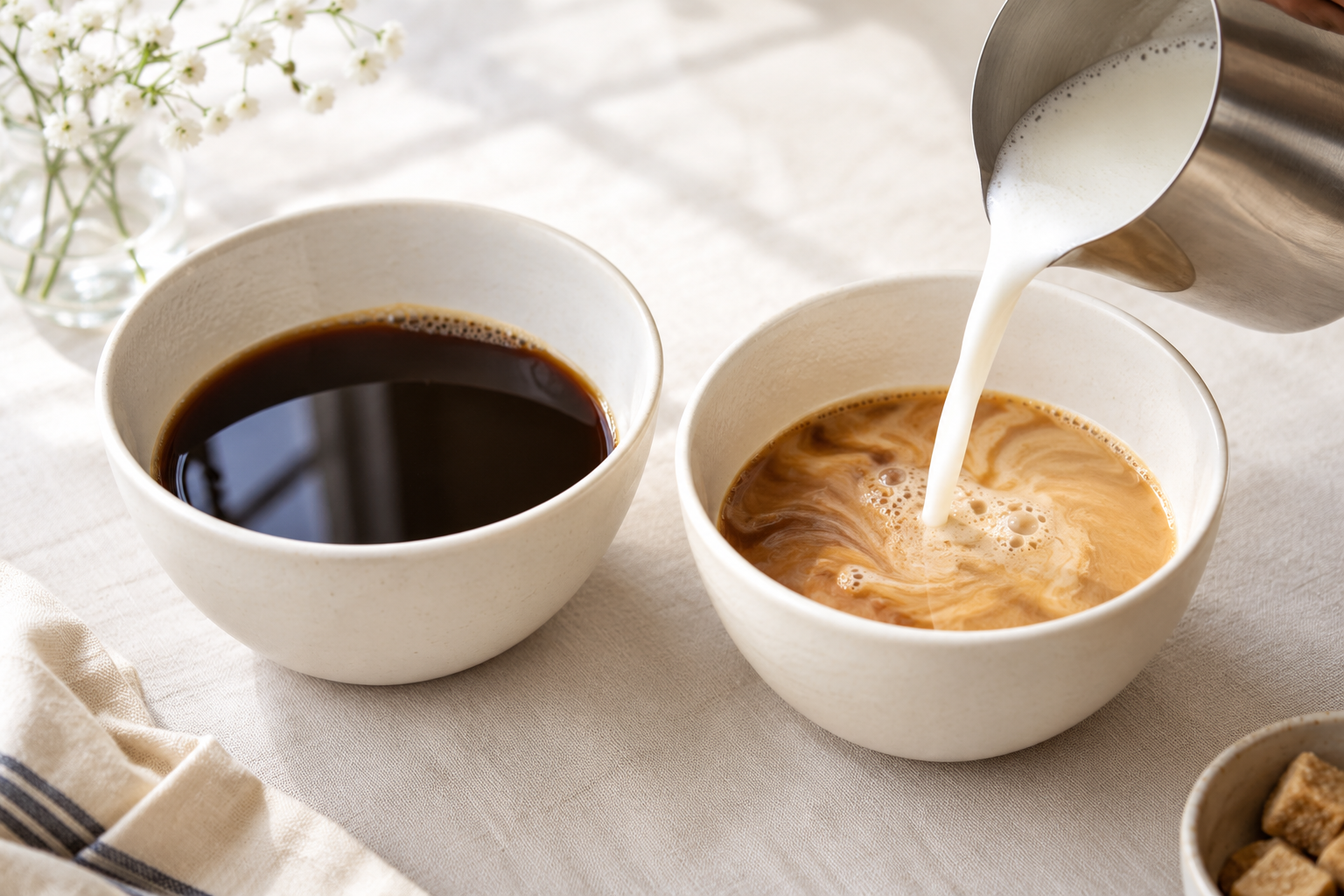
That last detail matters. A cafe au lait isn't trying to build a foam cap or latte art. The milk is there to soften and stretch the coffee, not decorate it. Community Coffee, a New Orleans roaster many home brewers reach for, sells beans specifically marketed toward this style precisely because the drink depends on the coffee holding its own against an equal volume of milk.
If you've ever asked what is a cafe au lait while scanning a cafe menu next to lattes and cappuccinos, the honest answer is that it's the plainest, oldest member of the milk coffee family. Everything else on that menu is a variation built from the same basic idea: hot coffee, hot milk, balanced ratio.
Cafe Au Lait Meaning and Pronunciation
Cafe au lait meaning is literal: "coffee with milk" in French. Wiktionary's 2026 entry defines it exactly that way, a mixture of coffee and hot milk, and the PONS French-English dictionary translates the phrase the same way.
Pronunciation trips up a lot of English speakers on their first order. Say it like this: kah-FAY oh LAY. The "au" is one soft "oh" sound, not two syllables, and the final "t" in "lait" stays silent. If you've been saying "café oh-LATE," you're not alone, but now you can fix it before your next order.
Merriam-Webster's dictionary entry backs up the food definition too: "coffee with usually hot milk in about equal parts." The dictionary also notes a second, unrelated use of the term as a color name, the tan-brown shade you'll see on paint chips and skin tone charts. Same words, two different jobs.
Where Did Cafe Au Lait Originate?
Cafe au lait originated in France as a breakfast drink, and the term has stayed attached to French coffee culture ever since. Wikipedia's entry on the drink, updated in August 2026, frames it as a classic French morning beverage rather than a cafe drink ordered any time of day.
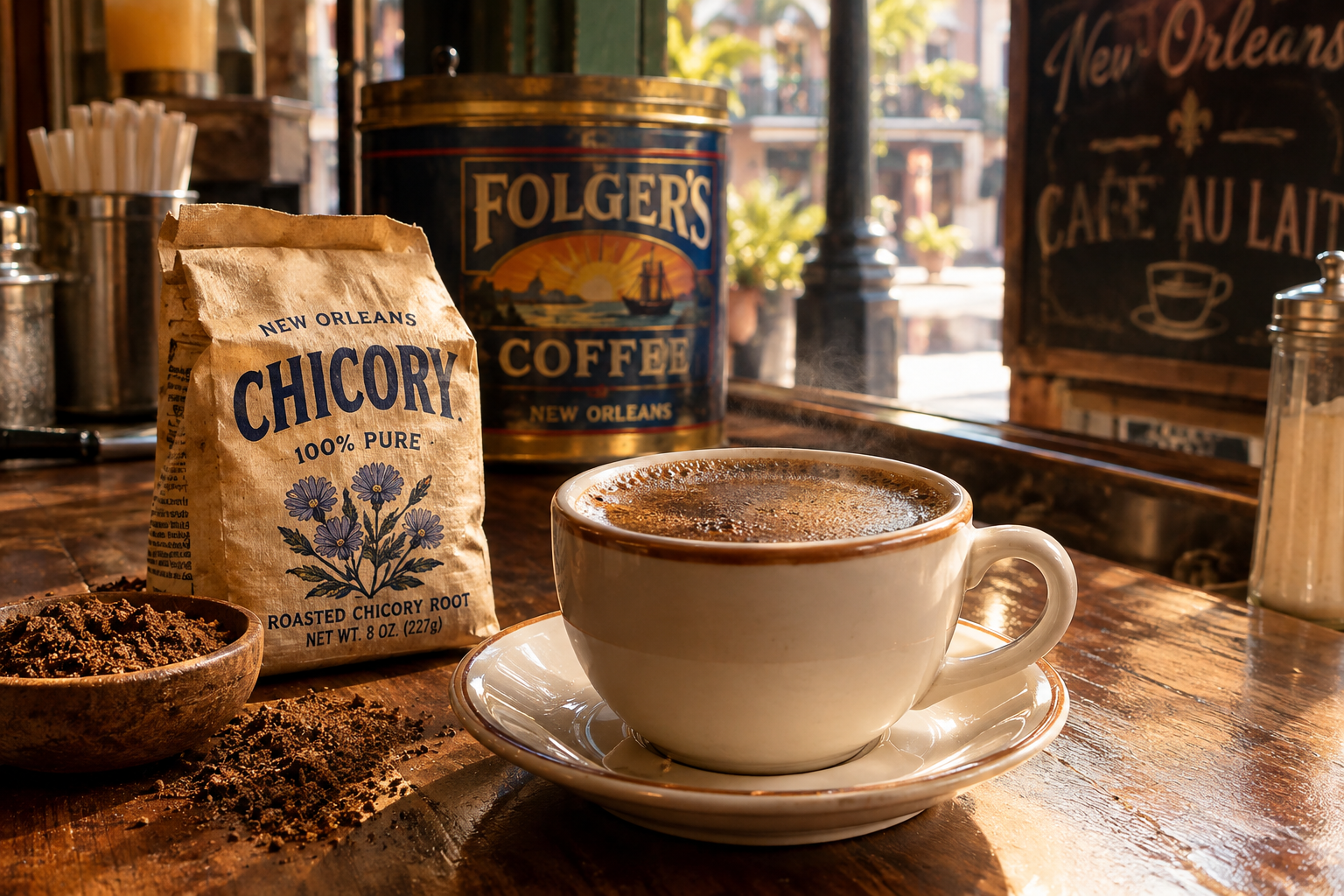
The tradition crossed the Atlantic with French settlers and became rooted in Louisiana, especially New Orleans. That's where cafe au lait picked up a local twist: chicory coffee. Chicory root, roasted and ground, was blended into coffee during shortages, first in France and later in Louisiana, and the practice stuck because people liked the taste and the lower cost. Chicory adds a slightly woody, almost cocoa-like bitterness and contains no caffeine, which mellows the overall cup.
Cafe Du Monde, open in the French Quarter since 1862, built its entire reputation on this New Orleans style cafe au lait: dark roast coffee and chicory, poured half and half with hot milk. If you've had a cup there alongside a plate of beignets, you've tasted the most famous American version of what is a cafe au lait in practice. Community Coffee, based in Baton Rouge, sells a similar coffee and chicory blend for home brewers who want that New Orleans profile without a plane ticket.
Cafe Au Lait vs Latte: What's the Difference
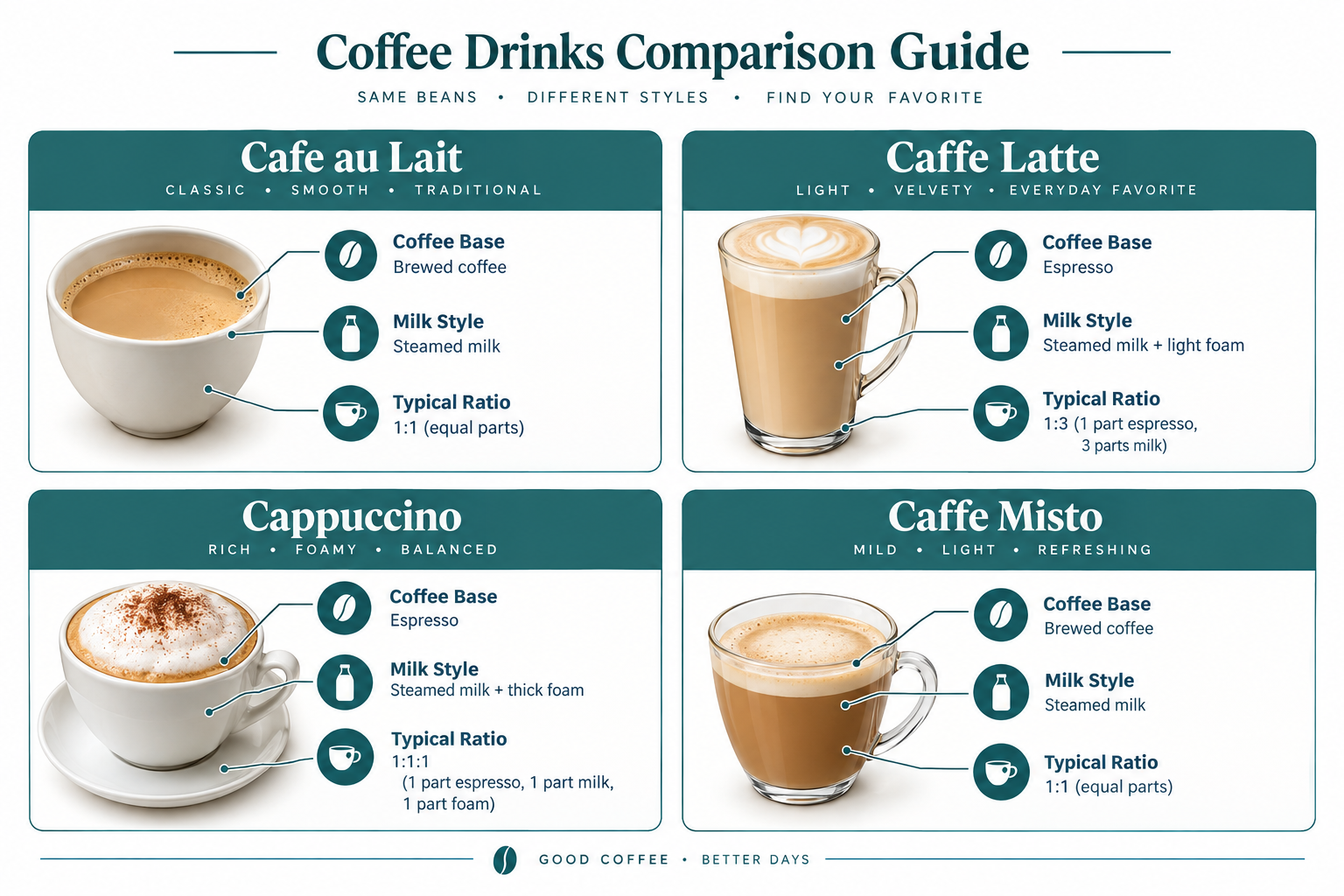
Cafe au lait vs latte comes down to the coffee base and the ratio. A cafe au lait uses brewed filter or French press coffee mixed with milk close to 1:1. A latte starts with one or two shots of espresso, then adds significantly more steamed milk, often a 1:3 or 1:4 ratio of espresso to milk, plus a thin layer of foam.
Think of it this way: a latte is concentrated and diluted heavily. A cafe au lait is milder coffee stretched by an equal amount of milk. The latte tastes stronger and sweeter from the espresso's concentration; the cafe au lait tastes gentler and more like a mellow breakfast drink. Neither is "better," they're built for different moments. A latte suits an afternoon treat. A cafe au lait suits a quiet morning with bread and butter.
For readers deciding what to brew at home, our guide on what a single shot of espresso is called covers the building block behind lattes, cappuccinos, and misto drinks if you want the fuller espresso family picture before choosing a machine.
What's the Difference Between Cafe Au Lait and Cappuccino
A cappuccino is espresso plus milk plus a thick layer of foam, roughly equal parts of all three. A cafe au lait skips the espresso and the foam entirely, relying on brewed coffee and steamed milk poured together with barely any bubbles on top.
The texture is the giveaway when you're served either drink. Dip a spoon in a cappuccino and you'll meet resistance from the foam cap before you reach liquid. Dip a spoon in a cafe au lait and you go straight into a smooth, pourable mixture. Cappuccino drinkers want that dry foam texture on the lip of the cup. Cafe au lait drinkers want something closer to warm, milky coffee you could drink from a bowl without a spoon at all.
If foam texture is what draws you to espresso drinks, our piece on what half espresso and half milk is called walks through the cortado and similar short, strong drinks that sit between a straight shot and a full latte.
Is Cafe Au Lait the Same as Coffee With Milk?
Not quite. "Coffee with milk" is a broad, generic phrase that includes cold milk added to hot coffee, powdered creamer, or any splash of dairy. A true cafe au lait is more specific: brewed coffee combined with milk that has been heated or steamed, in close to equal volume.
Nescafe's regional guides across the UK, Central and West Africa, Singapore, and Australia all repeat this distinction on purpose, because "white coffee" gets confused with cafe au lait constantly. White coffee typically means coffee with cold milk, powdered creamer, or condensed milk stirred in afterward, often in smaller proportions. A cafe au lait is closer to a recipe than a habit. The milk gets heated, the ratio stays balanced, and the result tastes rounder and warmer than a mug of coffee with a splash of half and half.
Cafe Au Lait vs Misto: How the Starbucks Version Compares
Cafe au lait vs misto is mostly a naming and brewing difference. Starbucks Caffe Misto is the chain's version of the same idea: brewed coffee combined with steamed milk in equal parts, made from Starbucks' drip coffee rather than a French press or classic filter method.
The result is close enough that most drinkers won't notice a meaningful taste gap. The real difference is availability and consistency. Ordering a misto at a Starbucks counter gets you a standardized ratio made from whatever drip roast is brewing that day. Making a cafe au lait at home with a French press, like a Bodum Chambord, or with drip coffee gives you control over the roast, the strength, and the milk you use. If you already know what is a cafe au lait from a French bol, ordering a misto at Starbucks will feel immediately familiar.
How Do You Make Cafe Au Lait at Home
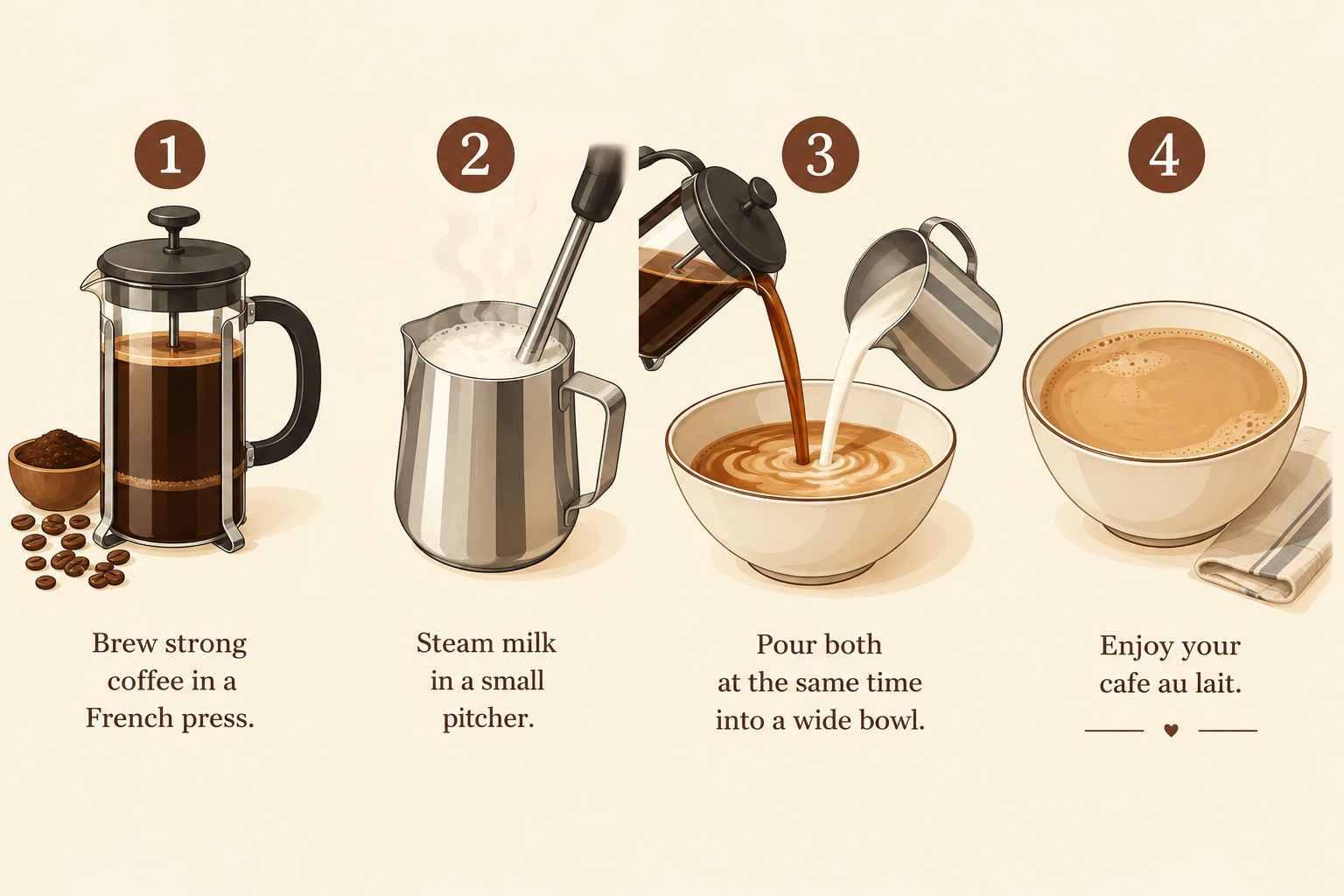
Making cafe au lait at home takes two components brewed separately and combined hot: strong brewed coffee and steamed or scalded milk, poured together in equal parts.
Equipment:
- French press or drip coffee maker
- Small saucepan or milk steamer (a stovetop or a milk frother works)
- A wide mug or bowl
Method:
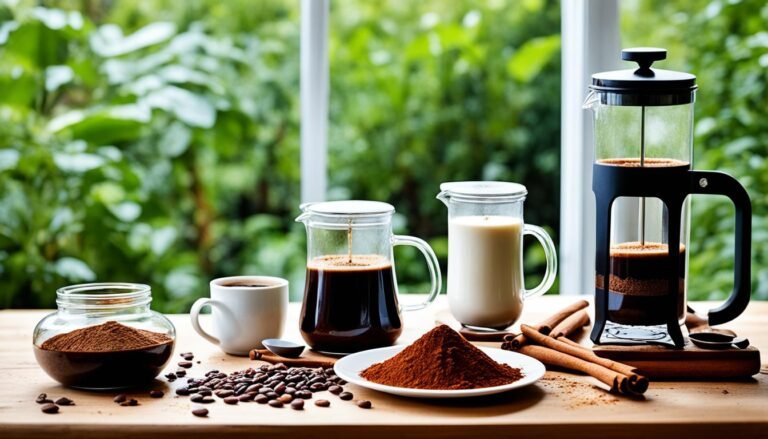
- Brew coffee stronger than your usual cup. Use a slightly finer grind or a higher coffee to water ratio, since it will be diluted by the milk.
- Heat milk on the stove or with a frother until it's hot and steaming, not boiling. Whole milk froths and pours the most smoothly.
- Pour both liquids into the cup at roughly the same time and in equal amounts, either side by side from two pitchers or one right after the other.
- Skip the extra foam. A light layer is fine, but a thick cap turns this into something closer to a latte.
Kitchenaid's 2026 how-to guide and the home recipe site A Couple Cooks both describe the same core method, scaling it from a small 6 ounce cup up to a 20 ounce bowl while keeping the ratio steady. For readers who brew with a French press daily, our beginner's guide to using a French press for coffee covers grind size and steep time that will make the coffee half of this drink taste better.
Cafe Au Lait Ratio of Coffee to Milk
The standard cafe au lait ratio is 1:1, equal parts brewed coffee and hot milk by volume. That's the number every brand guide and recipe site referenced here agrees on, and it's the detail that separates this drink from a latte or a splash of creamer in your mug.
Some home cooks adjust slightly toward 60 percent coffee and 40 percent milk if they want a stronger cup, or the reverse if they prefer something gentler for kids or an evening drink. Both work fine. The key mistake to avoid: brewing your coffee at normal strength and then adding an equal amount of milk. That produces a watery, weak result. Brew stronger than usual, since the milk is going to cut it by half. For a wider look at classic drink recipes and ratios, our guide to making the top 10 coffee recipes at home is worth a read before your next grocery run.
Can You Make Cafe Au Lait With Espresso?
Yes, you can make a version with espresso instead of filter or French press coffee, but the result technically shifts toward a latte once espresso and a larger volume of milk are involved.
If you only own an espresso machine, pull one or two shots, then add roughly the same volume of steamed milk rather than the three or four times the volume you'd use for a latte. You'll get something in between: stronger and more concentrated than a traditional cafe au lait, but closer to the spirit of equal parts coffee and milk than a full latte pour. Nescafe's India guide is direct about this: cafe au lait is not made with espresso in its traditional form, so an espresso version is a home adaptation, not the classic drink.
What Kind of Milk Is Best for Cafe Au Lait?
Whole milk is the traditional and most reliable choice for cafe au lait because its fat content gives the drink body and a smooth mouthfeel once steamed. Skim milk works but tastes thinner. Oat milk and other plant based options can work too if steamed gently, though they froth and behave differently under heat.
Decision rule: choose whole milk if you want the closest match to the traditional French version. Choose 2 percent if you want a lighter cup without losing much texture. Choose a barista blend oat milk if you're dairy free and want the closest froth behavior to whole milk. Avoid ultra low fat or skim milk if body and creaminess matter to you, since it tends to taste watery once diluted with coffee.
Cafe Au Lait Temperature: How Hot Should It Be?
Cafe au lait should be served hot, with the milk steamed to roughly 150 to 160 degrees Fahrenheit, hot enough to feel warming without scalding the drinker or curdling the milk. Boiling milk past that point can create a skin on top and a slightly cooked flavor.
If you're heating milk on the stove, pull it off the heat as soon as small bubbles form around the edge of the pan, well before a full boil. A kitchen thermometer removes the guesswork if you make this drink often. Milk steamed too cool won't feel like a proper cafe au lait; milk steamed too hot will taste scorched and can separate slightly once poured.
Do You Need a Special Cup for Cafe Au Lait?
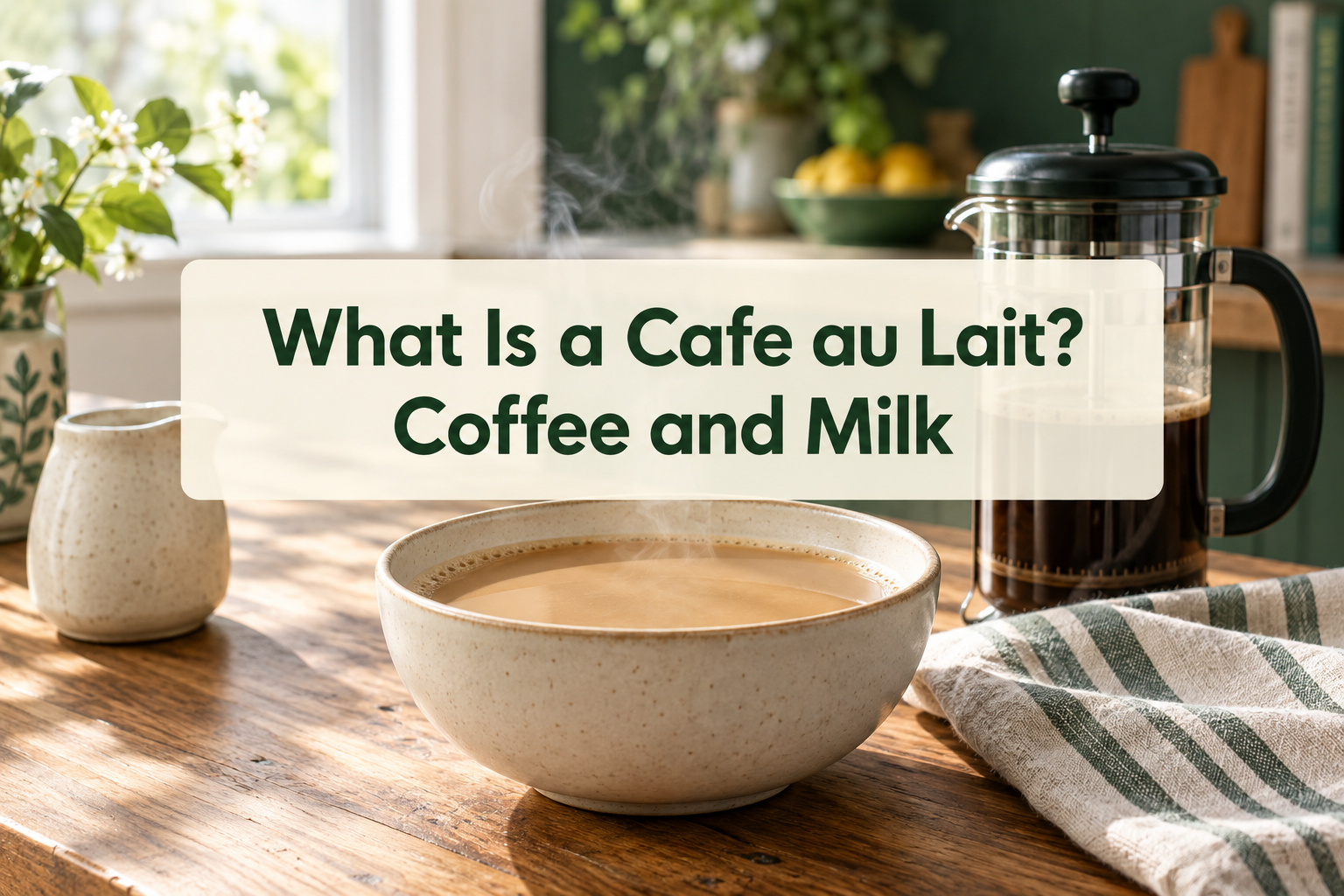
You don't need a special cup, but the traditional French serving vessel is a wide, handleless bowl called a bol, and it's part of the reason cafe au lait feels different from other milk coffee drinks. The wide mouth lets steam and aroma escape, and the shape makes it easy to warm both hands around the bowl on a cold morning, which is exactly the point.
Cafe au lait is served in a bowl in France partly out of habit and partly out of practicality: it's common to dip bread, croissants, or tartines directly into the bowl at breakfast, something a narrow mug handle would only get in the way of. Germany's Milchkaffee, a close cousin, is usually served in a cup with a handle instead, which is one clear way locals tell the two drinks apart even though the recipe is nearly identical. At home, any wide mug will do the job. A basic ceramic bowl works just as well as an imported French one.
Cafe Au Lait Calories and Nutrition
Calories in a cafe au lait depend almost entirely on the milk. A cup made with whole milk in equal parts with coffee runs roughly 60 to 100 calories for an 8 ounce serving, mostly from milk fat and natural milk sugars, since black coffee itself has close to zero calories.
Using skim milk instead of whole milk cuts the calorie count noticeably, while oat milk or another plant based option changes both the calorie count and the sugar content depending on the brand. If you're tracking calories closely, check the label on your milk carton rather than relying on a generic number, since fat content varies between whole, 2 percent, and plant based options.
Cafe Au Lait With Instant Coffee: Does It Work?
Instant coffee works for a quick cafe au lait, though the flavor and body will taste noticeably thinner and less rounded than one made with brewed filter or French press coffee. Dissolve instant coffee in a small amount of hot water at double strength, then add an equal volume of hot, steamed milk.
The tradeoff is speed versus depth. Instant coffee skips the brewing step entirely, which matters on a rushed morning, but it lacks the oils and body that a French press pulls from fresh grounds. If you make this drink often enough to care about the difference, a basic French press like a Bodum, paired with a decent single origin bag, closes that gap for only a few extra minutes of effort.
Cafe Au Lait Breakfast Tradition in France
Cafe au lait is a breakfast drink in France, traditionally paired with bread, butter, and jam rather than sipped alone or ordered later in the day. It's the cup that opens the morning, not a mid-afternoon pick-me-up, and French cafes rarely serve it outside breakfast hours.
In Paris specifically, you may hear the same basic drink called "cafe creme" instead, though outside Paris that term can sometimes mean coffee with actual cream rather than milk, which adds a layer of regional confusion even for French speakers. The New Orleans version, built around chicory and served at spots like Cafe Du Monde, turned a French breakfast habit into a year-round tourist tradition, proof that a simple ratio of coffee to milk travels well across oceans and centuries.
Cafe Au Lait vs Other Milk Coffee Drinks at a Glance
| Drink | Coffee base | Milk style | Typical ratio | Usual serving |
|---|---|---|---|---|
| Cafe au lait | Filter or French press | Steamed, little foam | 1:1 | Wide bowl |
| Caffe latte | Espresso | Steamed, thin foam | 1:3 to 1:4 | Tall glass or mug |
| Cappuccino | Espresso | Thick foam cap | 1:1:1 | Small cup |
| Caffe misto | Drip coffee | Steamed, little foam | 1:1 | Paper cup |
Frequently Asked Questions
What is a cafe au lait, in one sentence? It's brewed coffee, typically from a French press or drip method, mixed with hot or steamed milk in close to equal parts, with little to no foam on top.
Is cafe au lait stronger than a latte? Not usually. A latte uses concentrated espresso diluted heavily with milk, while a cafe au lait uses milder brewed coffee at a 1:1 ratio, so the two often taste similarly strong but for different reasons.
Why is cafe au lait served in a bowl in France? Tradition and practicality. The wide bol lets aroma and steam escape and makes it easy to dip bread directly into the drink at breakfast.
Can I make cafe au lait without a French press? Yes. Regular drip coffee works fine, as does a strong pour over. The key is brewing it stronger than usual since the milk will dilute it by half.
Does cafe au lait have more calories than black coffee? Yes, because of the added milk. An 8 ounce serving with whole milk runs roughly 60 to 100 calories, compared to close to zero for black coffee.
What's the difference between cafe au lait and Starbucks Caffe Misto? Very little in practice. Both mix brewed coffee with steamed milk in equal parts; misto is simply Starbucks' branded version made from their drip coffee.
A useful next step
If you already know what is a cafe au lait and want to try the New Orleans style, look for a coffee and chicory blend from a brand like Community Coffee, or brew a strong cup in a Bodum French press and steam your own milk at home. The ratio matters more than the equipment: keep it close to 1:1, brew the coffee stronger than usual, and skip the thick foam. That's the whole recipe. Better coffee starts with better answers, and in this case, the answer is simpler than the menu makes it look.
Keep Exploring Coffee Rank IQ
- Coffee Rank IQ home: reviews, brewing guides, and coffee science
- Best Espresso Beans for Lattes, Straight Shots, and Budgets
- Best Milk Frother for Lattes at Home: Handheld vs Electric
- Best Iced Coffee Maker: Brew-Over-Ice and Cold Brew Picks Compared
- Homemade Coffee Syrups: 6 Recipes and How Long They Keep
References
- www.nescafe.com/gb/coffee-culture/knowledge/what-is-a-cafe-au-lait
- www.nescafe.com/cwa/en-cwa/coffee-culture/knowledge/cafe-au-lait
- www.nescafe.com/sg/coffee-culture/coffee-knowledge/cafe-au-lait
- www.nescafe.com/au/coffee-culture/knowledge/caf%C3%A9-au-lait
- www.nescafe.com/in/coffee-culture/knowledge/what-cafe-au-lait
- en.wikipedia.org/wiki/Caf%C3%A9_au_lait
- www.dolcegusto-me.com/ndg_mena_en/coffee-articles/what-is-a-cafe-au-lait
- www.mittelbayerische.de/ratgeber/verbraucher/latte-macchiato-milchkaffee-cafe-au-lait-wo-ist-da-eigentlich-der-unteschied-22058474
- www.kitchenaid.com/countertop-appliances/pinch-of-help/how-to-make-cafe-au-lait
- www.acouplecooks.com/cafe-au-lait