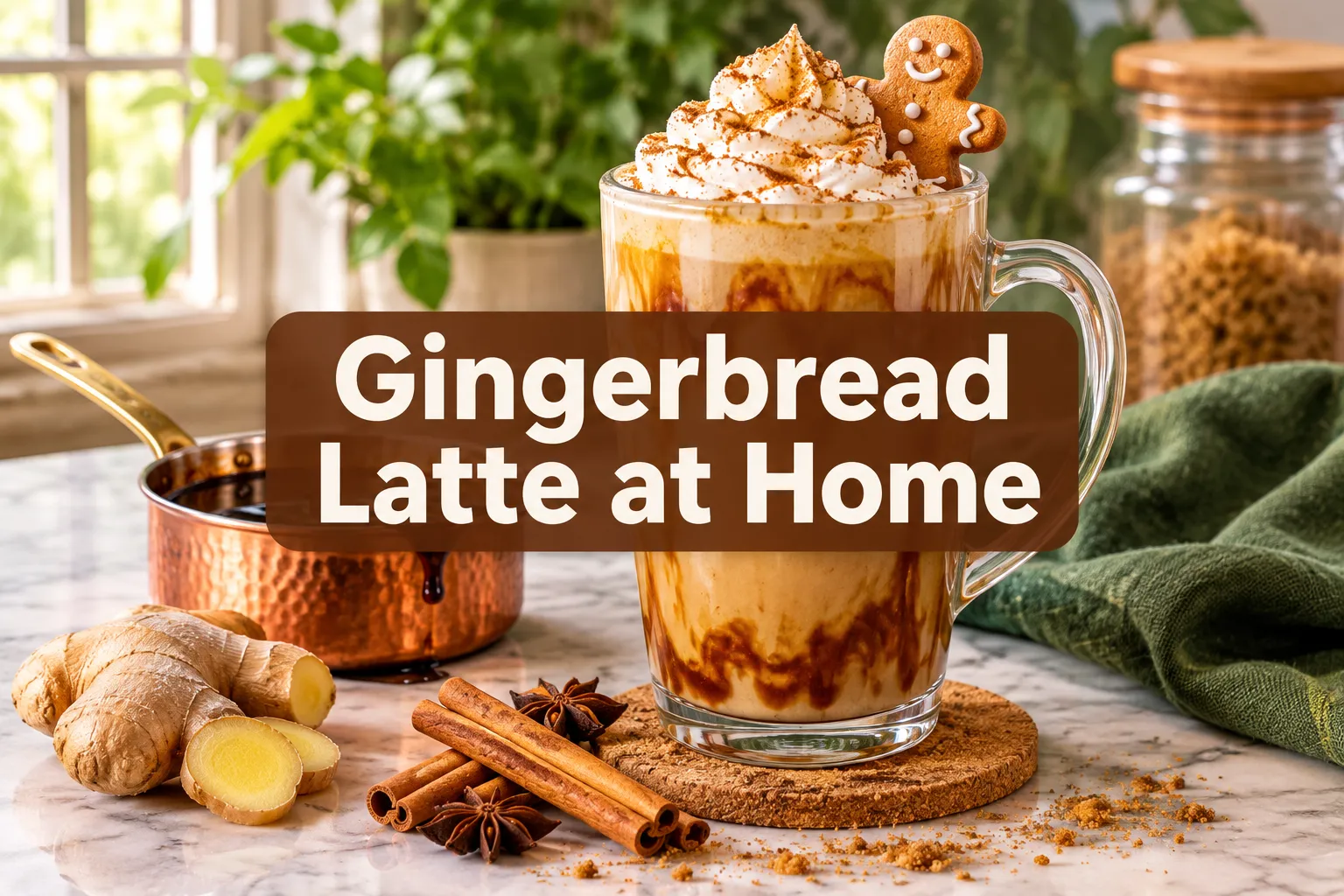
Gingerbread Latte Recipe With a 10 Minute Syrup
Gingerbread Latte Recipe: The Syrup Takes 10 Minutes
The slow part of a gingerbread latte is not the espresso. It is the syrup, and most recipes tell you to steep it for 30 to 45 minutes. You do not need to. Ground spices hydrate in hot liquid in a couple of minutes, sugar dissolves faster than that, and fresh ginger gives up most of its bite inside a five minute simmer. Ten minutes on the stove, start to strain, is enough.
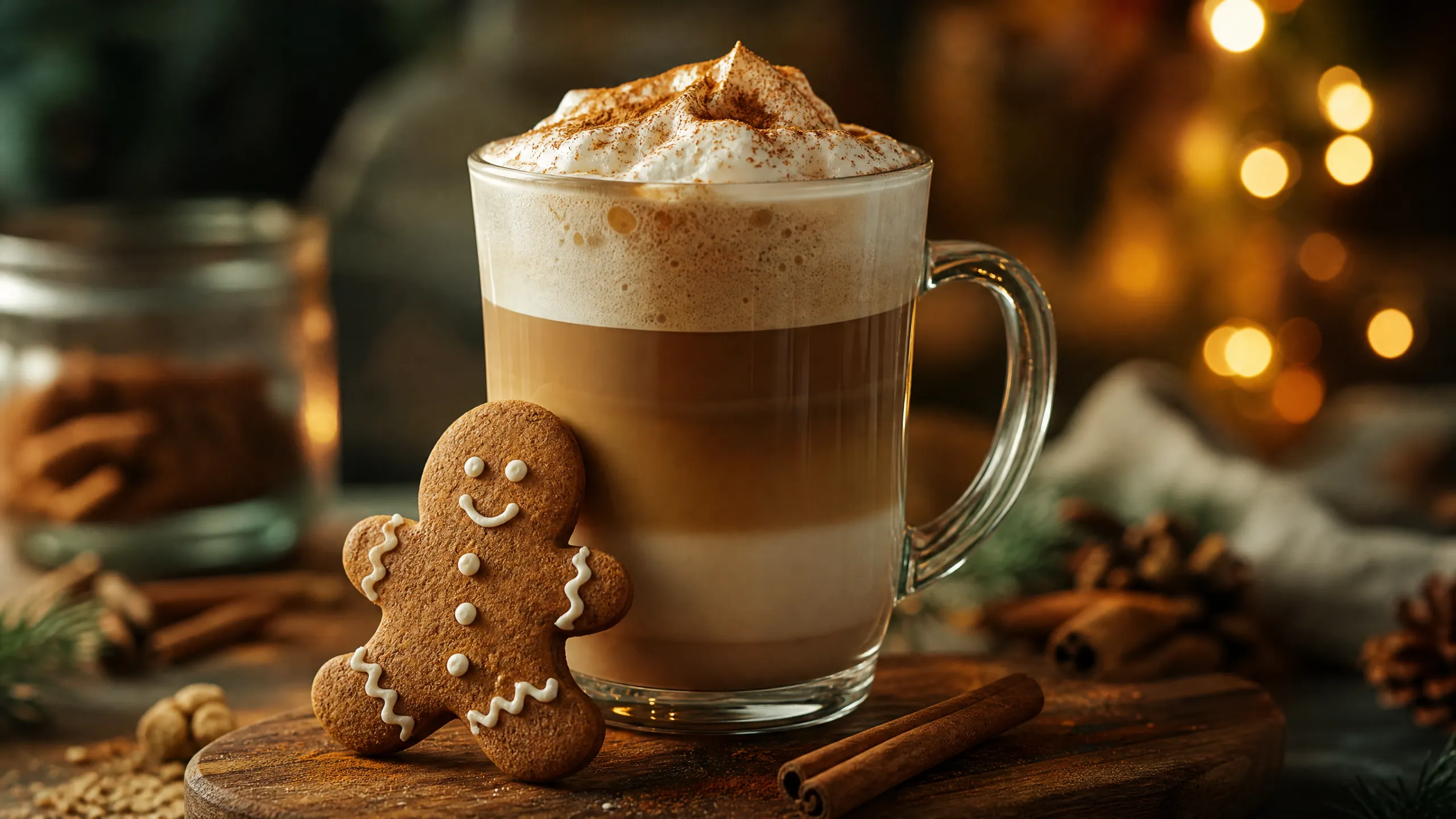
This gingerbread latte recipe gives you a dark molasses coffee syrup that keeps about two weeks refrigerated, plus hot and iced builds that work with espresso, moka pot, or very strong brewed coffee. Cost per cup lands around $1.25 at home based on grocery prices in November 2026, compared with roughly $6 to $7 for a seasonal cafe latte in most US cities.
Better Coffee Starts With Better Answers, and the answer here is that long steeping times are mostly tradition, not chemistry.
Key Takeaways
- Syrup yield: about 1¼ cups from 1 cup water, 1 cup dark brown sugar, 3 tablespoons molasses, and spices. That is roughly 10 lattes at 2 tablespoons each.
- Total active time: 10 minutes on the stove. No overnight steep, no canning, no special equipment.
- Cost estimate: around $0.15 per serving of syrup and $1.25 per finished latte (18 g of $16-per-12 oz beans, 8 oz milk at $4 per gallon, November 2026 US grocery assumptions).
- Shelf life: about 14 days refrigerated at or below 40°F / 4°C, in line with FDA guidance for refrigerated homemade foods.
- Molasses matters more than ginger. It supplies the dark, slightly bitter edge that separates gingerbread from a generic spice syrup.
- Standard pour is 2 tablespoons per 8 oz latte. Start with 1 tablespoon if you dislike sweet drinks.
- This homemade gingerbread latte works hot or iced, with dairy, oat, soy, or almond milk.
Gingerbread Latte Recipe
A gingerbread latte is espresso plus steamed milk plus a spiced molasses syrup. That is the whole structure. Everything else, whipped cream, caramel drizzle, cookie crumble, is decoration that cafes add to justify the price.
Starbucks Australia's 2026 version lists espresso, milk, gingerbread syrup, whipped cream, cinnamon, and caramel drizzle, served hot or iced . The 2026 US holiday menu went a different direction, pushing Gingerbread Chai and a gingerbread cream cold foam rather than a straight gingerbread latte . So if you are in the States and want the classic version this winter, making it yourself is not just cheaper. It may be the only reliable way to get one.
The spices you need are short and standard: cinnamon, ginger, nutmeg, and cloves, with molasses carrying the color and the darker caramel notes. Allspice is optional and mostly overlaps with cloves. Cardamom pushes the drink toward chai territory, which is a fine drink, just a different one. If you want to understand that side of the family, read the breakdown of chai and espresso combined in a dirty chai.
Fresh ginger versus ground is a real choice, not a technicality. Fresh grated ginger brings a sharp, almost peppery heat and a brighter aroma. Ground ginger is rounder, dustier, and more like an actual gingerbread cookie. The recipe below uses both, because each one covers the other's weakness. If you only have ground, use 1½ teaspoons total and skip the straining step.
Ingredients With Exact Amounts
Measure these before you turn on the heat. Ten minutes does not leave room for hunting through the spice drawer.
For the gingerbread syrup for coffee (makes about 1¼ cups, roughly 10 servings):
| Ingredient | Amount | Why it is there |
|---|---|---|
| Water | 1 cup (240 ml) | Dissolving medium |
| Dark brown sugar, packed | 1 cup (200 g) | Sweetness plus caramel depth |
| Unsulphured molasses | 3 tbsp (60 g) | Color, bitterness, the gingerbread signature |
| Fresh ginger, grated | 1 tbsp (about 15 g) | Sharp top note |
| Ground ginger | ½ tsp | Rounder background heat |
| Ground cinnamon | 1½ tsp | Warm bridge spice |
| Ground nutmeg | ¼ tsp | Sweet aromatic lift |
| Ground cloves | ¼ tsp | Strong, easy to overdo |
| Fine salt | Pinch | Keeps it from tasting flat |
| Vanilla extract | 1 tsp | Added off heat |
For one 10 to 12 oz hot latte:
- 2 shots espresso (about 36 to 40 g liquid from 18 g of grounds), or 4 oz strong brewed coffee
- 8 oz milk, dairy or plant
- 2 tbsp gingerbread syrup
- Optional: whipped cream, a dusting of cinnamon, a crumbled ginger snap
Use dark brown sugar if you can. Light brown works, but it contains less molasses, so the finished syrup reads thinner and more generic. Can you substitute white sugar? Yes, with a cost: you lose the caramel backbone, and you will want to push the molasses up to 4 tablespoons to compensate. Straight white sugar plus molasses is, more or less, how brown sugar is made anyway.
Use unsulphured molasses rather than blackstrap. Blackstrap is sharply bitter and mineral-heavy, and in a milk drink it tastes medicinal rather than festive.
The 10 Minute Molasses and Ginger Syrup, Step by Step
Ten minutes, one small saucepan, no thermometer.
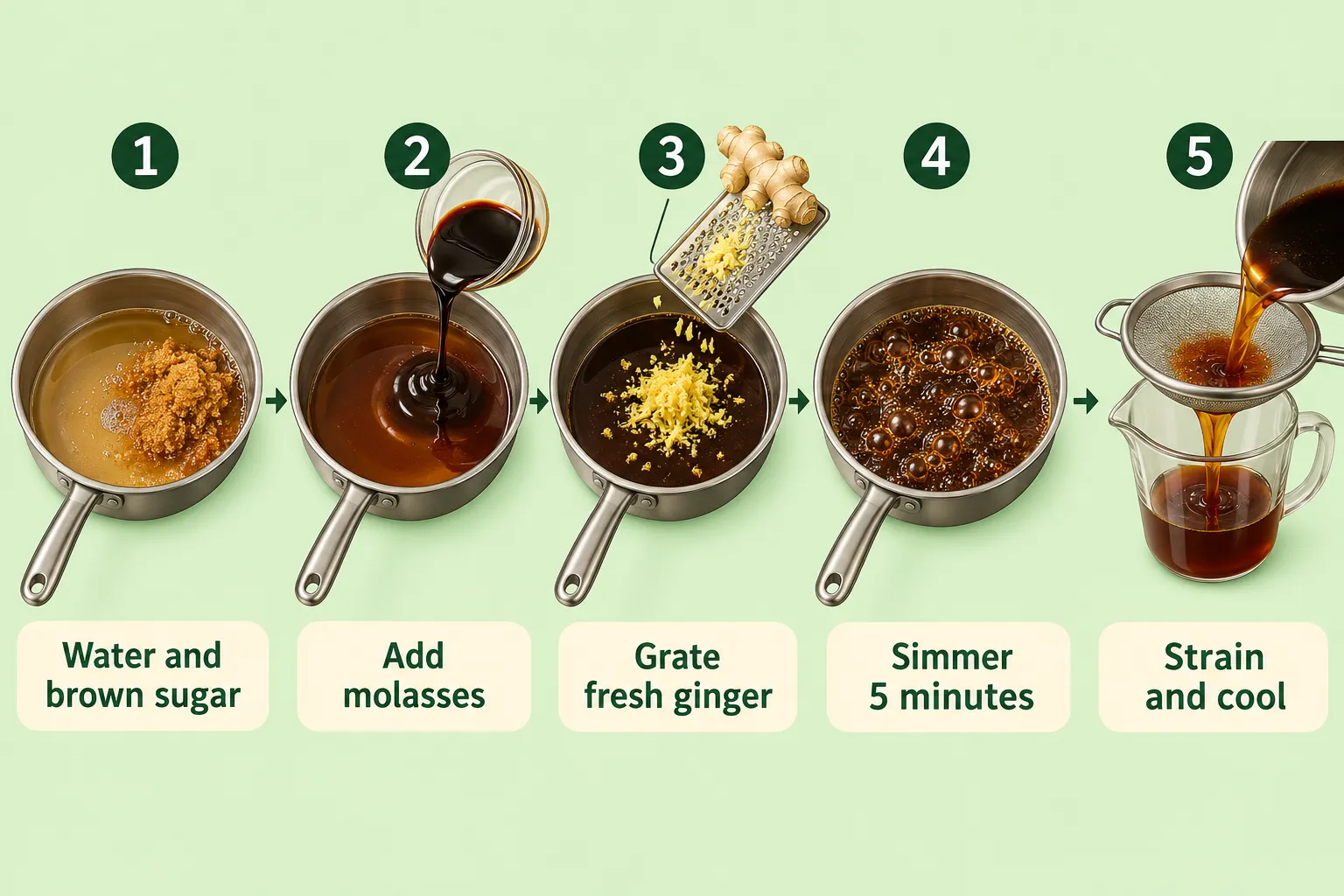
- Minute 0 to 1. Combine the water and brown sugar in a small saucepan over medium heat. Stir until the sugar is no longer grainy on the bottom.
- Minute 1 to 2. Whisk in the molasses, grated fresh ginger, ground ginger, cinnamon, nutmeg, cloves, and salt. Whisk properly. Ground spices clump and float if you dump them in without agitation.
- Minute 2 to 7. Bring to a bare simmer, small bubbles at the edge, not a rolling boil, and hold it for five minutes. Stir every minute or so. A hard boil drives off water fast and gives you a syrup that sets up like candy once cold.
- Minute 7 to 8. Pull it off the heat. Stir in the vanilla. Adding vanilla at the end preserves more of its aroma, since ethanol-carried aromatics evaporate quickly at simmer temperature.
- Minute 8 to 10. Strain through a fine mesh sieve into a clean jar or squeeze bottle. Press the ginger solids with a spoon, then discard them. Label the jar with the date.
The syrup looks thin while hot. It thickens as it cools, the same way a sugar solution always does. Judge consistency at room temperature, never at the stove.
Making it ahead: yes, and it is the better plan. Make a batch on a Sunday, refrigerate it, and your weekday gingerbread latte recipe becomes a 90 second task. Cold syrup pours fine straight from the fridge; if it has stiffened, run the jar under warm tap water for 30 seconds.
Why the fast version works. The syrup's job is flavor extraction and sweetening, not preservation. Ground spices are already pulverized, so their aromatic oils release almost immediately in hot water. Fresh ginger loses its volatile top notes if you cook it too long, which is one reason a 45 minute steep can actually taste duller. Treat the result as a refrigerated condiment, not a shelf-stable pantry item.
If you enjoy this kind of kitchen chemistry, the broader collection of homemade coffee syrups applies the same logic to vanilla, brown sugar, and caramel.
How Do You Make a Gingerbread Latte Step by Step
Pull espresso, add syrup, steam milk, pour. Four moves, under two minutes once the syrup exists.
- Add 2 tbsp syrup to the bottom of a warmed 12 oz mug. Syrup first means the espresso dissolves it on contact. Dropping syrup on top of a finished drink leaves a sweet sludge at the bottom.
- Pull 2 shots of espresso directly onto the syrup. Aim for about 36 to 40 g of liquid in 25 to 30 seconds from 18 g of grounds. Stir once.
- Steam 8 oz of milk to 140 to 150°F (60 to 65°C). Stretch for three or four seconds at the start, then submerge the wand and build a smooth whirlpool. Overheated milk past 160°F tastes scalded and flattens the spices.
- Pour from height first to combine, then drop the pitcher close to the cup to float the foam on top. Dust with cinnamon.
No espresso machine? A moka pot gives you roughly 2 oz of concentrated coffee that works well here. So does 4 oz of coffee brewed at double strength, or a long-steeped cold brew concentrate. The method is covered in how to make espresso without a machine.
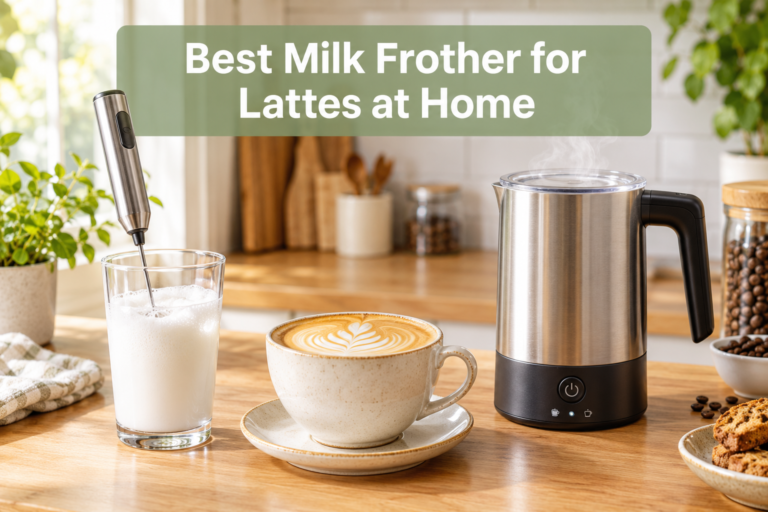
No steam wand? A handheld frother, a French press plunged rapidly 20 times, or a jar shaken hard then microwaved for 30 seconds all produce usable foam. The texture differs: a steam wand gives glossy microfoam, a handheld frother gives drier, bubblier foam that sits higher. For the detail on why that matters, compare microfoam in a flat white versus a latte.
Dairy-free builds. Barista-edition oat milk is the most forgiving, because the added fat and the slightly higher protein hold foam better than standard oat. Soy milk foams well and its beany note actually suits molasses. Almond milk is the trickiest: it thins out and can curdle against acidic espresso, so steam it gently and pour the milk into the coffee rather than the reverse. Coconut milk beverage works but brings its own flavor that competes with the ginger.
Decision rule: choose dairy whole milk for the creamiest texture, barista oat for the closest dairy-free match, soy if you want the most foam stability, and skip almond if your espresso runs bright and acidic.
How Do You Make It Iced
Build an iced gingerbread latte by dissolving the syrup in the hot espresso first, then pouring over ice and cold milk. The order is the whole trick.

- Pull 2 shots of espresso into a small cup. Stir in 2 tbsp gingerbread syrup until fully combined.
- Fill a 16 oz glass with ice.
- Pour in 6 to 8 oz of cold milk.
- Pour the sweetened espresso over the top so it falls through the milk in dark ribbons.
- Stir before drinking, or do not, if you want the first sip to be strong and the last sip to be sweet.
Cold syrup poured into cold milk sinks and stays there. Dissolving it in hot espresso avoids that entirely. If you are using cold brew instead of espresso, warm 2 tablespoons of the cold brew for ten seconds in the microwave, stir the syrup into that, then add the rest cold.
A shaken version is worth trying. Starbucks Australia's 2026 lineup promoted a Gingerbread Iced Shaken Espresso built on Blonde Espresso with cinnamon and caramel notes, a more coffee-forward structure than the milk-heavy latte . At home: 2 shots espresso, 1½ tbsp syrup, and ice in a cocktail shaker, shaken hard for 15 seconds, then topped with 3 oz milk. Shaking aerates the espresso and softens the perceived bitterness, the same mechanism behind the foam on an espresso martini.
For general cold-build technique, including ice dilution and milk ratios, see how to make an iced latte at home.
What to Watch Out For: Oversweetening, Syrup Shelf Life
Two things ruin this drink: too much syrup and syrup that has been in the fridge too long.
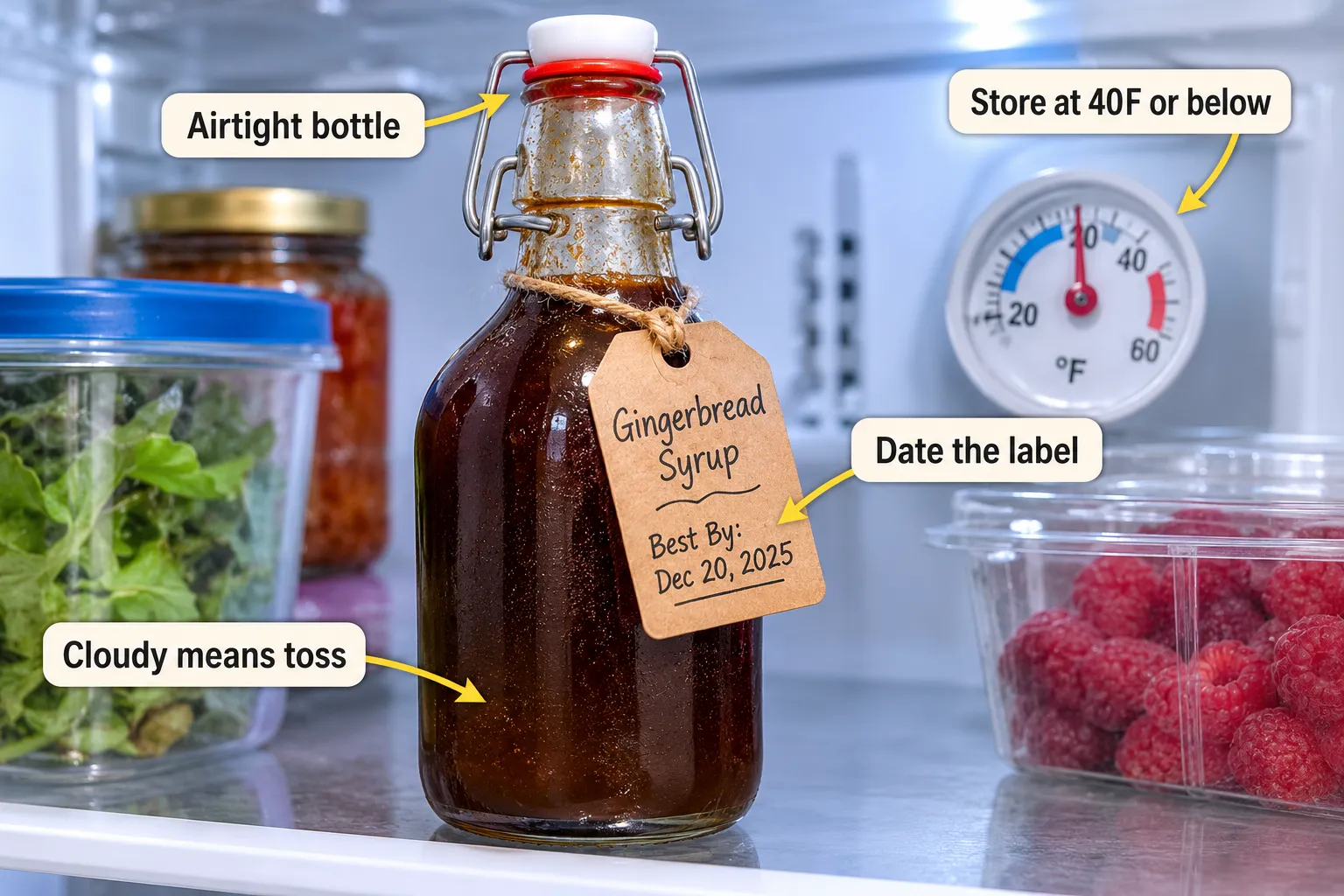
Oversweetening. Two tablespoons in 10 oz is already sweet by specialty coffee standards. Cafe versions often run higher, plus whipped cream and caramel drizzle on top. To make a gingerbread latte less sweet without losing spice, use 1 tablespoon of syrup and add ⅛ teaspoon of extra cinnamon and a pinch of ground ginger directly to the milk. You keep the aroma and cut the sugar roughly in half. Another option: make a half-sugar batch using ½ cup brown sugar to 1 cup water, which gives a thinner, more pourable syrup you can use at 3 tablespoons without exceeding the original sugar load.
Shelf life. Expect about two weeks refrigerated. FDA guidance for refrigerated foods is storage at or below 40°F / 4°C and no more than two hours at room temperature. Sugar concentration does inhibit microbes, but a syrup this dilute is not shelf stable, and the fresh ginger adds plant material that will eventually spoil. Signs to toss it: cloudiness that was not there on day one, fizzing when you open the jar, visible film, or a sour smell. Store it in the main body of the fridge, not the door, where the temperature swings every time someone grabs the milk.
Freezing works. Pour the syrup into an ice cube tray, freeze, and transfer the cubes to a bag. One cube is roughly 1 tablespoon. Frozen cubes keep around three months and drop straight into an iced gingerbread latte.
Common mistakes, in order of how often they happen:
- Boiling instead of simmering. Produces a syrup that turns to taffy in the fridge.
- Skipping the strain. Fresh ginger fibers end up in the cup and feel unpleasant.
- Using blackstrap molasses. Harsh and mineral-tasting in milk.
- Heavy hand with cloves. A quarter teaspoon is plenty. Half will take over the entire batch.
- Adding syrup after the milk. It settles and never mixes properly.
Allergy notes. The syrup as written contains no dairy, no nuts, no gluten, and no eggs, which makes it safer than most commercial seasonal syrups. Check your molasses label, though, since some products are processed on shared equipment. Commercial syrups frequently include "natural flavors" with undisclosed carriers. This recipe is also soy-free unless you choose soy milk. People avoiding sulfites should use unsulphured molasses, which is specified above.
Troubleshooting thickness: syrup too thick means it was boiled too hard or reduced too long, so whisk in warm water a tablespoon at a time. Syrup too thin means it never reached a simmer or the sugar ratio was off, so return it to the pan and simmer two more minutes.
Homemade vs Cafe Gingerbread Latte: Cost, Control, Time
Homemade wins on cost and control. Cafes win on convenience and on days when you genuinely do not want to clean a saucepan.
Homemade vs cafe gingerbread latte
Estimates based on US grocery and cafe pricing, November 2026. Your local prices will vary.
| Factor | Homemade | Cafe |
|---|---|---|
| Cost per 12 oz drink | About $1.25 | About $6 to $7 |
| Syrup cost per serving | About $0.15 | Built into menu price |
| Active time, first cup | 12 minutes | Order and wait |
| Active time, later cups | About 2 minutes | Travel plus queue |
| Sugar control | Exact, adjustable | Pumps only |
| Milk and bean choice | Any you own | Menu options |
| Availability | All year | Seasonal, region dependent |
| Ingredient transparency | Ten listed items | Proprietary syrup |
Store-bought syrup has one real advantage: it does not expire in two weeks. A sealed bottle of commercial gingerbread syrup keeps for months, which suits anyone making one latte a fortnight. What it gives up is freshness. Nothing in a bottle shelved since August tastes like ginger grated ten minutes ago. If low-sugar is your priority, the sugar free coffee syrup comparison covers Torani, Monin, and ChocZero.
Choose homemade if you drink two or more seasonal lattes a week, you care about sugar level, or you live somewhere the gingerbread latte is not on the 2026 menu. Choose the cafe if you want it twice all winter and the $12 total is not worth a saucepan.
The Numbers Behind the Seasonal Latte Boom
Four verified figures that explain why so many people are building espresso drinks at home this winter.
What these numbers do and do not tell you: survey data on consumption frequency is self-reported, and a one-year change from 10% to 13% in home espresso use is a trend signal, not proof that machines cause better coffee. The association between rising espresso-machine ownership and rising latte consumption is exactly that, an association.
The practical read is simpler. More people own the equipment to build a gingerbread latte recipe at home than did two years ago, and the 2026 US holiday menu shifted gingerbread toward chai and cold foam formats . If you want the plain espresso-and-milk version stateside, your own kitchen is the reliable source. If you are still shopping for gear, the comparison of espresso machines with a grinder built in covers the models worth considering at each budget. Check the current price before buying, since seasonal promotions move fast.
FAQ

Conclusion: Variations Plus Next Step
The base syrup is a platform. A few worthwhile edits:
- Gingerbread mocha: add 1 tablespoon of cocoa powder to the syrup while it simmers.
- Gingerbread cold foam: froth 2 oz of heavy cream with 1 teaspoon of the syrup and float it over cold brew. This mirrors the format the 2026 US holiday menu pushed .
- Spicier: double the fresh ginger and add ⅛ teaspoon of black pepper.
- Dirty gingerbread chai: 1 tablespoon syrup, 4 oz brewed chai, 1 shot espresso, 4 oz steamed milk.
- Year-round use: the same syrup is good on oatmeal, pancakes, and in an old fashioned.
Your next step is the 10 minute syrup itself. Make one batch, keep it dated in the fridge, and run your own side-by-side against the cafe version next time you are tempted by the seasonal board. Then work on the pour, since a steady milk stream changes the texture more than any syrup does, and the advanced barista latte techniques guide covers that part properly.