
How to Make an Iced Latte at Home Without Watery Regret
Quick answer
The fastest way to learn how to make an iced latte at home is to pull a slightly stronger espresso shot, pour it over cold milk instead of the other way around, and use large ice cubes instead of crushed ice. That order keeps the drink cold without drowning the coffee flavor, which is the whole reason homemade iced lattes usually taste thin.
Most watery iced lattes fail for one of three reasons: hot espresso melting the ice on contact, milk that was already warm, or too little coffee for too much liquid. Fix those three variables and the rest of the recipe is almost foolproof.
Key takeaways
- A standard iced latte runs about one double shot of espresso (18g in, roughly 36g out) to 6 to 8 ounces of cold milk over ice, served in a 12 to 16 ounce glass.
- Pouring cold milk into the glass before the espresso, not after, is the single biggest fix for a watery iced latte.
- You do not need an espresso machine. A moka pot, AeroPress, or even strong instant coffee can stand in for the shot.
- Large ice cubes melt slower than crushed ice or standard freezer cubes, which matters more than any other single ingredient.
- Milk temperature matters as much as coffee strength. Cold milk straight from the fridge protects the ice; warm milk destroys it fast.
- Brewing your coffee ahead of time and chilling it removes the melting problem entirely.
- Oat milk barista blends froth closer to dairy than regular almond milk, which matters if you want visible foam on top.
- An iced latte holds its texture and flavor for roughly 15 to 20 minutes before dilution becomes noticeable; after that, drink it or rebuild it.
How to make an iced latte at home: the method that beats watery regret
Learning how to make an iced latte at home comes down to four things done in the right order: strong coffee, cold milk, big ice, and a smart pour sequence. Get those right and you have solved 90 percent of the watery iced latte problem before you even taste it.
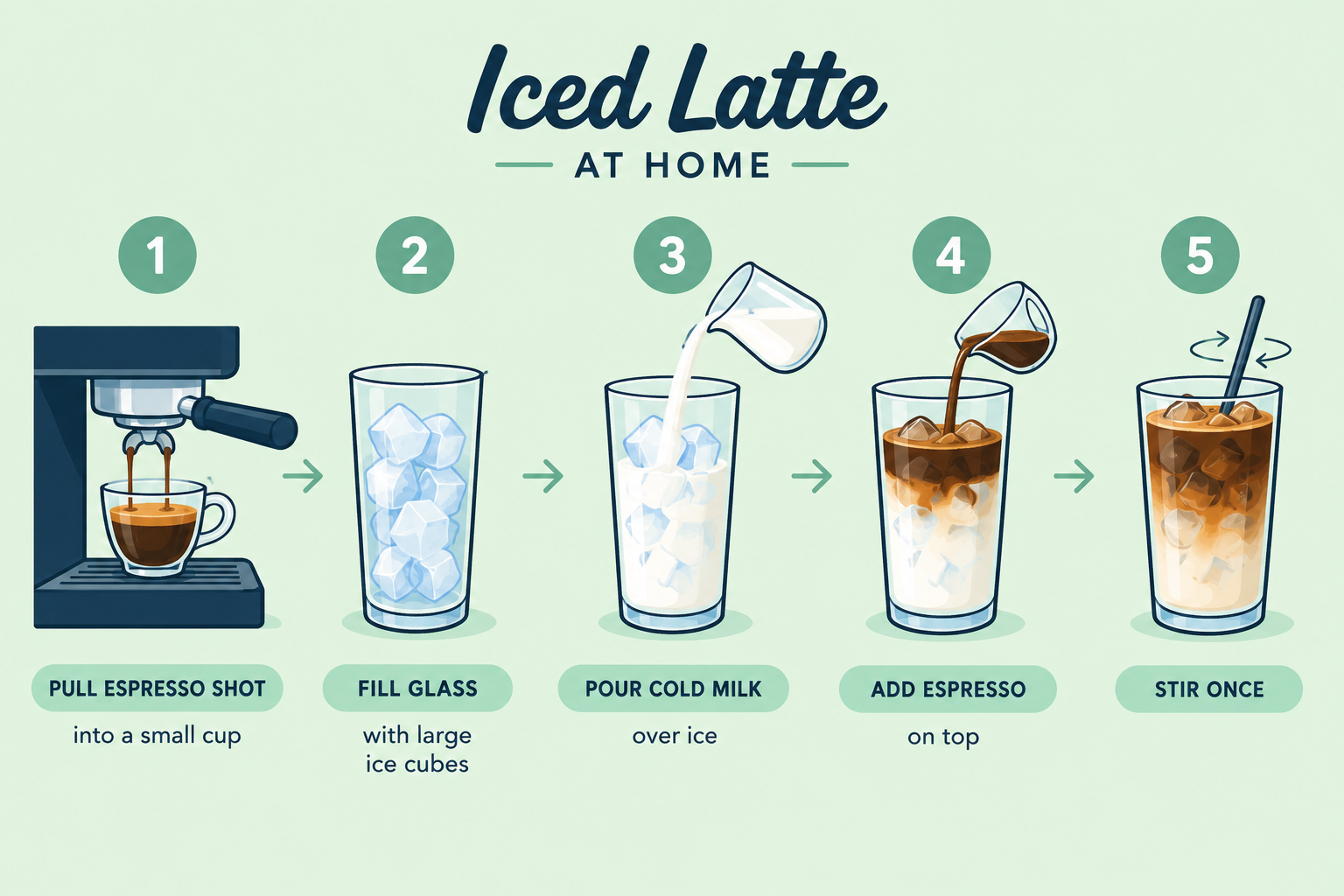
Here is the basic iced latte recipe most 2026 home-barista guides now agree on, scaled for one 12 to 16 ounce glass:
Iced latte ingredients
- 1 double shot of espresso (about 18g ground coffee in, 36g liquid out, pulled in 25 to 30 seconds)
- 4 to 5 large ice cubes
- 6 to 8 ounces of cold milk
- Optional: sweetener or syrup
The method:
- Pull your espresso shot and let it sit for 30 to 60 seconds so it is no longer scalding, but still fresh.
- Fill your glass with large ice cubes first.
- Pour cold milk over the ice, filling about two-thirds of the glass.
- Pour the espresso slowly over the milk so it sits on top.
- Stir once, gently, right before you drink.
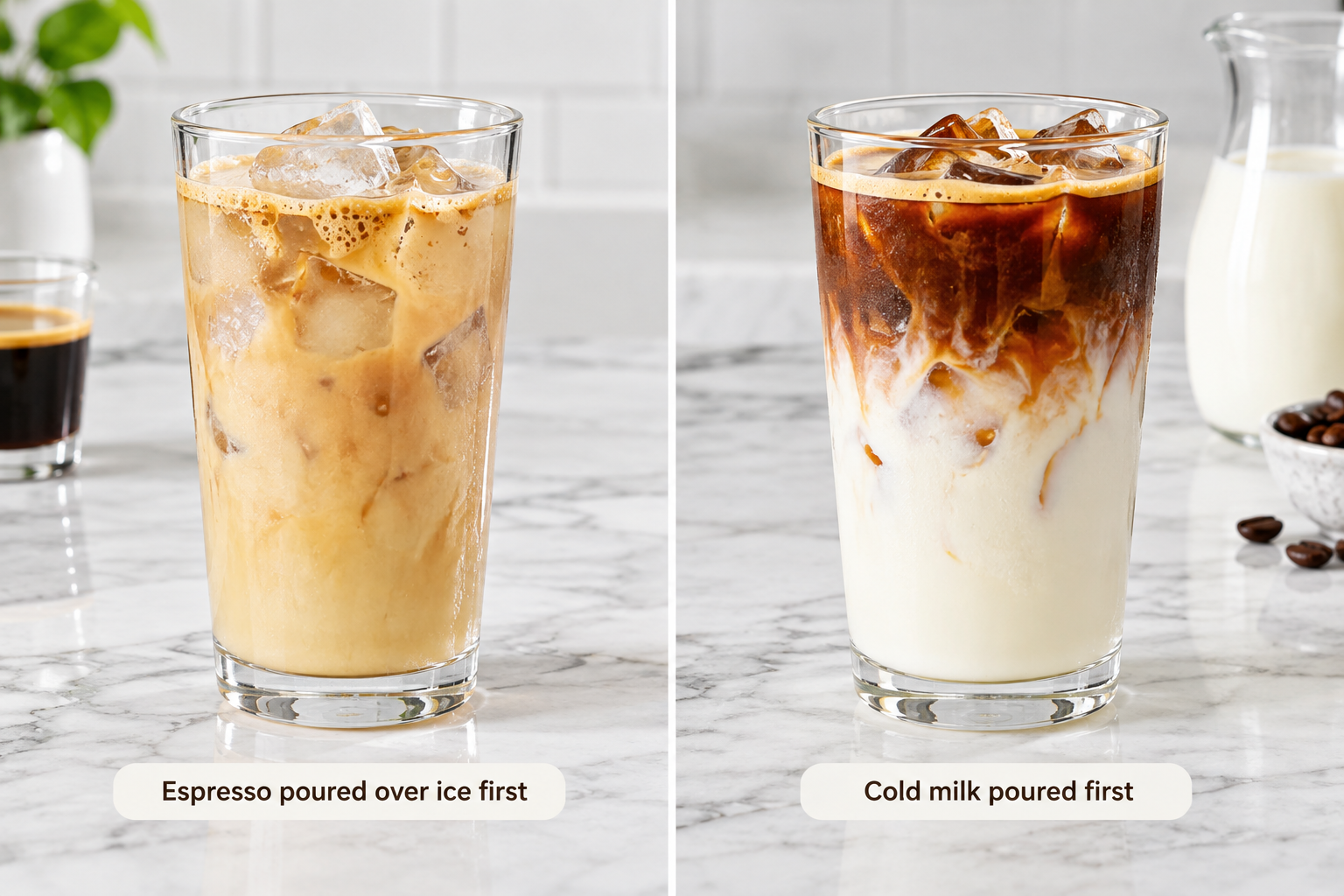
Why the order matters: milk and ice act as a buffer. When hot espresso hits a glass full of bare ice, the ice melts almost instantly and dumps extra water into the drink. When cold milk sits between the espresso and the ice, the espresso cools before it ever touches most of the ice, and the ice does less emergency melting. If you want a broader primer on iced brewing basics before you specialize in lattes, our guide to the best ways to make iced coffee for beginners covers the ice and water fundamentals that apply here too.
Choose this method if: you want a repeatable, cafe-close result with basic kitchen equipment. Common mistake: pouring espresso directly over a full glass of ice before adding any milk. That single step change is responsible for most "why does my iced latte taste watery" complaints.
What's the difference between an iced latte and iced coffee
An iced latte is espresso and cold milk over ice. Iced coffee is brewed drip or batch coffee, chilled and served over ice, with milk optional and usually less of it. They start from different bases: one is concentrated espresso, the other is standard-strength brewed coffee.
An iced cappuccino sits in between visually but is different by ratio: it uses the same espresso base as a latte but with less milk and more foam, so it tastes stronger and lighter in body per sip. A latte is milk-forward and smooth; a cappuccino is foam-forward and airier.
| Drink | Base | Milk amount | Texture |
|---|---|---|---|
| Iced latte | Espresso (or strong coffee) | 6 to 8 oz cold milk | Smooth, milk-forward |
| Iced coffee | Drip or batch brewed coffee | Little to none | Light, coffee-forward |
| Iced cappuccino | Espresso | 3 to 4 oz milk plus foam | Airier, stronger per sip |
Decision rule: if you want a drink you can sip slowly without it tasting like flavored milk, pick iced coffee. If you want the classic cafe milk-and-coffee balance, an iced latte is the one to learn. If you already know how to make an iced latte at home and want more edge in the flavor, cut the milk back and add foam for a cappuccino-style pour.
The best way to make iced latte so it doesn't get watery
The single best fix for a watery iced latte is assembly order: cold milk and ice go in the glass first, espresso goes on top last. This alone solves most of the problem before you even think about coffee strength.
Beyond order, three more variables control dilution:
- Use bigger ice. Large, solid cubes melt slower than crushed ice or standard trays, so they survive longer without watering down the drink.
- Brew stronger than you would for a hot latte. A slightly higher coffee-to-water ratio "builds in" some resistance to melt, since any dilution that happens later has more coffee to dilute.
- Chill the coffee before it meets the ice. Brewing ahead of time and refrigerating your espresso or concentrate removes the temperature shock that melts ice fastest.
For readers chasing genuinely cafe-level clarity, at least one advanced home-barista guide recommends making your ice from filtered or reverse-osmosis water with total dissolved solids under about 75 parts per million, measured with a basic TDS meter, arguing it keeps the drink tasting clean as the ice melts instead of introducing tap-water off-flavors. That is an advanced step, not a requirement, but it explains why some cafe iced lattes taste cleaner even after they sit for a few minutes.
Edge case: if your kitchen ice trays only make small cubes, freeze extra espresso or strong coffee into an ice cube tray instead. As those "coffee ice cubes" melt, they intensify the drink rather than thinning it.
Do I need an espresso machine to make iced latte at home
No, you do not need an espresso machine to make an iced latte at home. A moka pot, AeroPress, or strong instant coffee can all substitute for the shot, as long as the base is concentrated enough to hold its flavor once milk and ice are added.
How to make iced latte with espresso machine: pull a double shot at roughly an 18g in, 36g out ratio in 25 to 30 seconds, let it rest briefly, then build the drink over cold milk and ice as described above. This is the most consistent method because the machine controls pressure and temperature.
How to make iced latte without machine: a moka pot produces a concentrated brew close enough to espresso in strength to work well here. An AeroPress with a fine grind and short brew time gets you most of the way too. Both need roughly the same ratio adjustment: brew stronger than you would for a mug of hot coffee, since you are about to add ice and milk. If you want the mechanics of a stovetop option explained in more detail, see our guide on using a stovetop espresso maker for beginners. You can also learn more about building espresso-strength coffee without dedicated gear in our piece on making espresso with regular coffee without a machine.
How to make iced latte with instant coffee: dissolve 2 teaspoons of instant espresso powder (or strong instant coffee) in a small amount of hot water, about 2 tablespoons, to create a concentrated base. Let it cool, then pour it over cold milk and ice using the same milk-first method. It will not taste identical to espresso, but the technique that prevents watery dilution works exactly the same way regardless of what made the concentrate.
Iced latte recipe with cold brew concentrate: swap the espresso shot for 2 to 3 ounces of cold brew concentrate. Cold brew is already chilled, which sidesteps the ice-melting problem entirely, and its naturally lower acidity pairs well with milk. Our full cold brew coffee guide covers ratios and steep times if you want to keep concentrate on hand for this exact purpose.
Decision rule: if you already own an espresso machine, use it, since the pressure and temperature control give you the most predictable shot. If you don't, a moka pot or cold brew concentrate gets you 90 percent of the way there for a fraction of the equipment cost.
How much espresso vs milk for iced latte ratio
The standard iced latte ratio is about 1 part espresso to 2 parts cold milk, or one double shot (roughly 2 ounces liquid) to 6 to 8 ounces of milk in a 12 to 16 ounce glass.
That ratio is a starting point, not a rule. Adjust it based on what you actually taste:
- Want it stronger: add a third shot, or cut milk back to 5 ounces.
- Want it milder: stay at one double shot but increase milk toward 8 to 10 ounces.
- Making it for iced coffee instead: skip the 1:2 espresso ratio and use brewed coffee at closer to normal strength, since iced coffee is not meant to taste like a latte.
Common mistake: measuring milk by "how full the glass looks" instead of by ounces. Ice takes up more room than people expect, so a glass that looks full of milk might only hold 4 ounces once the ice is accounted for, throwing the ratio off without you noticing. If you want a broader look at how latte ratios work for hot drinks too, our beginner's guide to making a delicious latte breaks down the same math without the ice variable.
How to froth milk for iced latte without a frother
You can froth milk for an iced latte without a frother by shaking cold milk hard in a sealed jar for 30 to 45 seconds, or by whisking it briskly by hand. Neither produces steamed-milk microfoam, but both add visible foam and a slightly creamier texture on top of the drink.
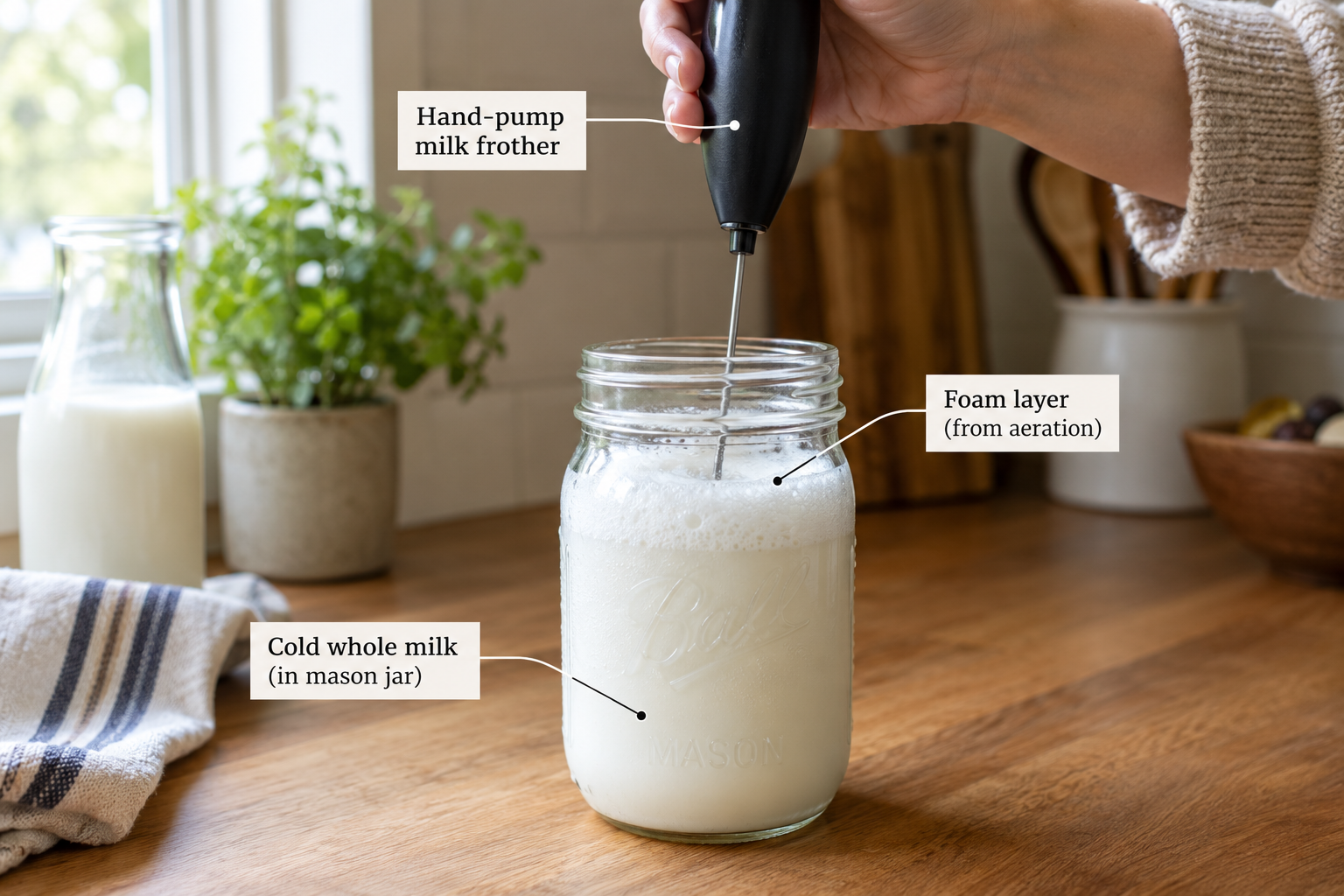
Three no-equipment options, ranked by how much foam they actually produce:
- Mason jar shake. Fill a jar halfway with cold milk, seal it tight, and shake hard for 30 to 45 seconds. This creates the most foam of the manual methods.
- Whisk by hand. A metal whisk worked briskly for a minute produces lighter foam than shaking, but it's faster to clean up.
- French press pump. If you own a French press, pump the plunger up and down in cold milk about 15 times. This is close to a mason jar shake in results.
A small hand-pump milk frother, the kind that costs under 15 dollars, closes most of the gap between manual methods and an actual espresso machine's steam wand. It won't build the same microfoam a barista pulls, but it aerates cold milk fast and cleanly. Our guide to frothing milk for homemade lattes covers device options at every price point if foam matters enough to you to buy something.
Best milk for iced lattes that froths well: whole dairy milk froths most reliably because of its fat content. Among plant milks, oat milk labeled "barista blend" froths closest to dairy, since those formulas are engineered with added fat and protein for exactly this purpose. Regular oat milk and almond milk froth less reliably and can separate or thin out faster once mixed with cold espresso.
Decision rule: if froth appearance matters to you, choose whole dairy or a barista-blend oat milk. If froth doesn't matter and you just want the drink cold and creamy, any milk you already like drinking works fine.
Why does my homemade iced latte taste weak
A weak-tasting homemade iced latte almost always comes from one of three causes: not enough coffee for the amount of milk and ice, coffee that was too hot when it hit the ice, or milk that started out too warm.
Run through this quick checklist:
- Check your ratio first. If you used a single shot in a 16 ounce glass, that is roughly half the coffee-to-liquid ratio of a standard iced latte. Add a second shot.
- Check your ice. Small or crushed ice melts fast and adds water you didn't plan for. Switch to large cubes.
- Check your milk temperature. Milk sitting on the counter for even ten minutes loses enough chill to speed up ice melt once combined.
- Check your pour order. Espresso poured directly onto bare ice, before milk is added, melts ice on contact and is the most common single cause of a thin-tasting result.
Edge case: if you've fixed all four of those and it still tastes weak, your espresso itself might be under-extracted. A shot pulled too fast, or with too coarse a grind, tastes sour and thin even before ice touches it. That's a grind size and extraction issue, not an ice or milk issue, and it's worth troubleshooting separately.
How long can you let an iced latte sit before drinking
An iced latte holds its intended flavor and texture for about 15 to 20 minutes before dilution becomes noticeable. After that window, the ice has melted enough to visibly thin the drink, even if you built it correctly.
If you need it to last longer, two options work:
- Use coffee ice cubes instead of water ice, so melting adds coffee flavor back instead of diluting it.
- Use an insulated tumbler or stainless "chilling stone" instead of a standard glass. These keep the drink cold without adding meltwater, which matters most if you're nursing the drink at a desk for an hour instead of drinking it in one sitting.
Decision rule: if you're drinking it within 20 minutes at home, a regular glass and normal ice are fine. If you're taking it to work or sipping it slowly over an hour, invest in an insulated cup or freeze a batch of coffee ice cubes ahead of time.
Cheapest way to make iced lattes at home regularly
The cheapest reliable way to make iced lattes at home regularly is a moka pot or AeroPress for the coffee base, a basic hand-pump milk frother if you want foam, and a stash of large ice cubes or coffee ice cubes kept ready in the freezer. Total equipment cost typically lands under 40 dollars, well below the price of a countertop espresso machine.
Running costs matter more than the equipment cost if you're making these daily. A pound of decent beans lasts roughly two to three weeks of daily double shots, and milk is your ongoing variable cost, whether that's dairy or an oat barista blend.
Decision rule: if you're making one iced latte a week, buy nothing new and use whatever coffee method you already have, brewed strong. If you're making one daily, a moka pot or a basic single-boiler espresso machine pays for itself against cafe prices within a couple of months.
Iced latte recipe variations you can make tonight
Once you know the base method, flavor variations are just additions layered into the same milk-first, big-ice structure. Nothing about the anti-watery technique changes.
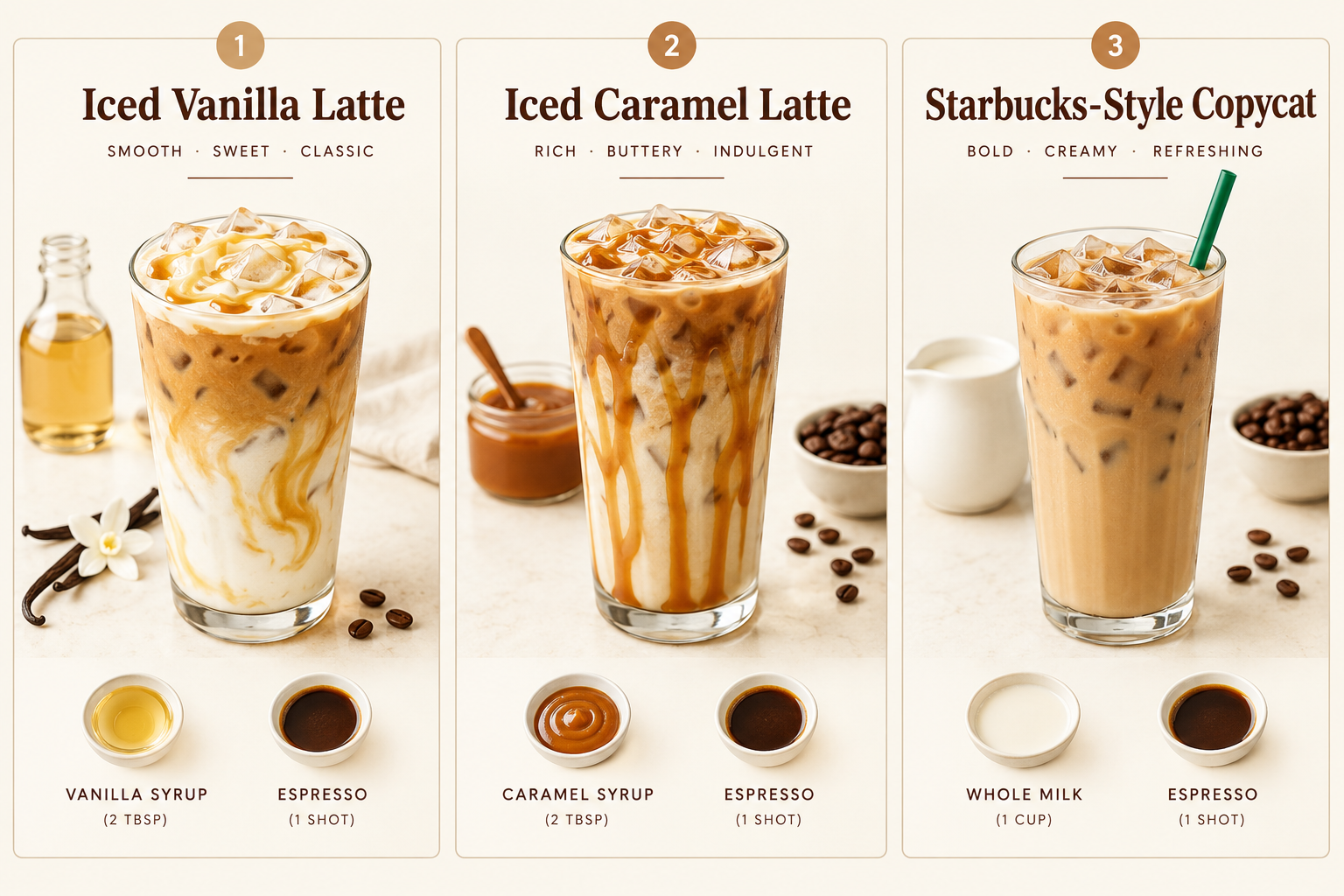
Iced vanilla latte recipe: add 1 to 2 teaspoons of vanilla syrup (or a splash of vanilla extract plus a bit of sugar) to the cold milk before pouring espresso over it. Stir the syrup into the milk first so it distributes evenly instead of sinking to the bottom.
Iced caramel latte recipe: drizzle 1 tablespoon of caramel sauce down the inside of the glass before adding ice, so it streaks as you pour, then build the drink normally with cold milk and espresso on top.
Starbucks iced latte recipe (copycat version): the chain's version leans slightly sweeter and uses a 1:1.5 espresso-to-milk ratio in some sizes rather than a full 1:2, so if you're chasing that specific taste, use a double shot with about 5 to 6 ounces of milk instead of 8, and add 1 teaspoon of simple syrup.
More than a dozen flavor combinations follow this same structural rule in current recipe collections: build over milk and ice, then add espresso, regardless of what syrup or topping goes in. If you want to browse further flavor ideas built on the same espresso foundation, our collection of coffee recipes to try at home has more starting points.
Quick ratio calculator
Iced latte batch calculator
Scale the standard 1:2 recipe for how many drinks you’re making.
‘ + ‘Cold milk: about ‘ + milk + ‘ oz
‘ + ‘Large ice cubes: about ‘ + Math.round(ice) + ‘ total
‘ + ‘Glasses needed: ‘ + n + ‘ (12 to 16 oz each)’; } slider.addEventListener(‘input’, update); update(); })();
FAQ
Do I really need an espresso machine to make an iced latte at home? No. A moka pot, AeroPress, strong instant coffee, or cold brew concentrate can all replace the espresso shot. The pour-order technique that prevents a watery result works the same regardless of how the coffee was brewed.
What's the actual ratio for a homemade iced latte? About one double shot of espresso (roughly 2 ounces) to 6 to 8 ounces of cold milk over 4 to 5 large ice cubes, served in a 12 to 16 ounce glass.
Why does pouring milk first matter so much? Cold milk sits between the hot espresso and the ice, so the ice melts slower and the drink stays closer to its intended strength for longer.
Can I use oat milk or almond milk instead of dairy? Yes. Oat milk labeled "barista blend" froths closest to dairy and holds up well against espresso. Regular almond milk froths less reliably and can taste thinner once combined with ice.
How long before an iced latte starts tasting watered down? Roughly 15 to 20 minutes with regular ice. Coffee ice cubes or an insulated tumbler extend that window significantly.
Is an iced latte the same as an iced cappuccino? No. Both use espresso, but a latte uses more milk and less foam, while a cappuccino uses less milk and more foam, so it tastes stronger and lighter in body per sip.
Conclusion
Learning how to make an iced latte at home isn't about fancy equipment. It's about sequence: cold milk and big ice go in first, espresso goes on top last, and the coffee is brewed slightly stronger than you would for a hot mug. Get those three things right and the rest, whether that's vanilla syrup, caramel drizzle, or a Starbucks-style copycat pour, is just decoration on a method that already works.
Start with the base recipe once, taste it plain, then adjust the ratio to your own preference before you add flavor. That single test run will tell you more about how to make an iced latte at home the way you actually like it than any fixed recipe can. Better coffee starts with better answers, and in this case, the answer was the pour order the whole time.
Keep Exploring Coffee Rank IQ
- Coffee Rank IQ home: reviews, brewing guides, and coffee science
- Cappuccino vs Latte: Same Espresso, Very Different Cup
- Macchiato vs Latte: Why Your Order Tastes So Different
- Flat White vs Latte: The Microfoam Detail Most Cafes Skip
- Iced Shaken Espresso: Make the Starbucks Favorite at Home
References
- myhomebarista.com/recipes/iced-latte
- coffeescan.com/best-iced-latte-recipe
- beanbrewdigest.com/brewing-methods/how-do-you-make-iced-latte-at-home
- www.brewedbarista.com/guides/iced-latte-recipes-home
- www.slurrp.com/photo-stories/top-5-barista-style-tricks-to-upgrade-your-homemade-iced-latte-1788857527748
- www.drinktrade.com/blogs/how-to/how-to-make-iced-latte-at-home
- thecoffeelocator.com/guide/how-to-make-iced-latte
- www.reddit.com/r/Coffee/comments/bxaloq/how_to_make_iced_drinks_that_arent_watered_down
- natashaskitchen.com/iced-latte
- www.goodhousekeeping.com/food-recipes/a38505513/how-to-make-iced-latte-recipe