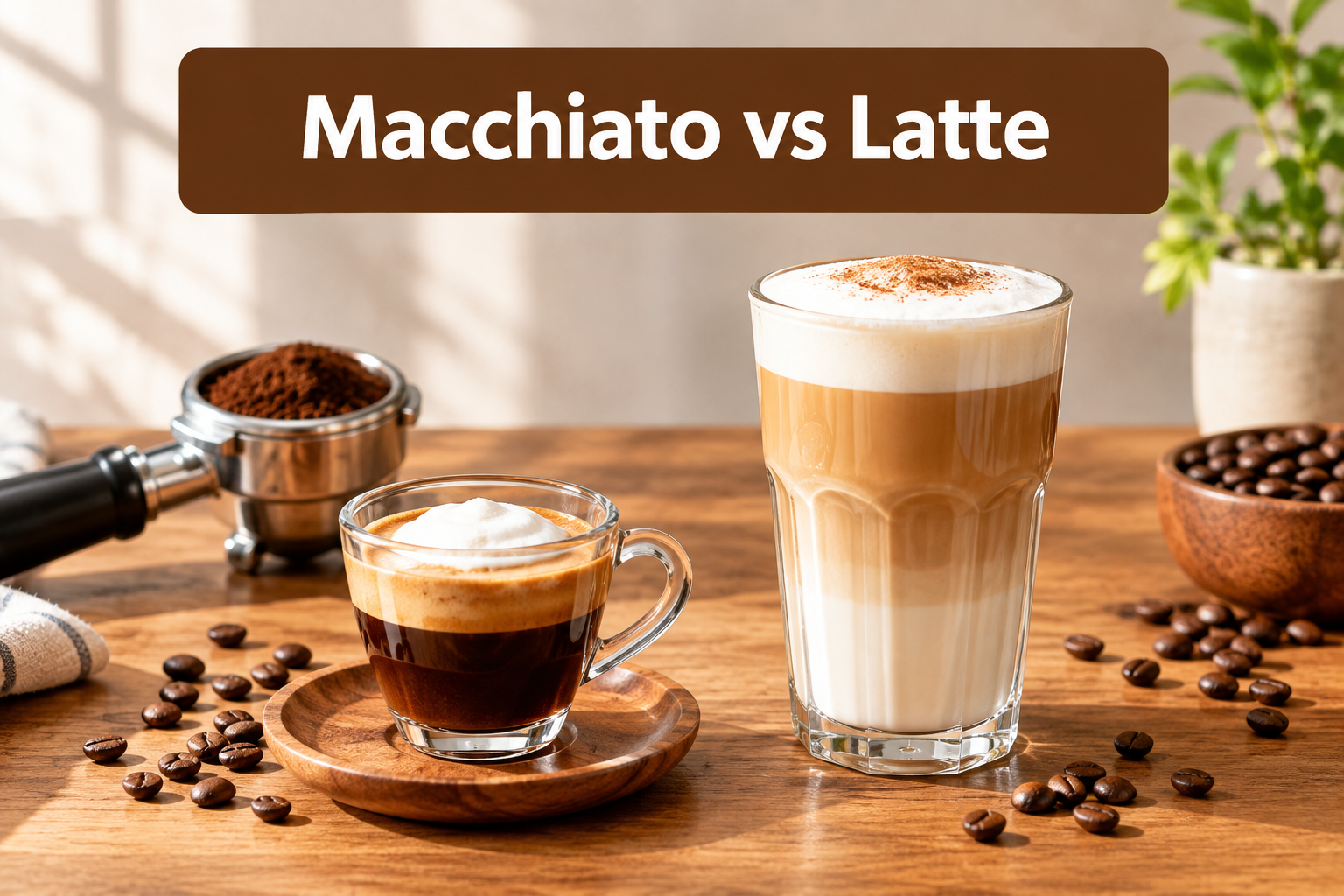
Macchiato vs Latte: Why Your Order Tastes So Different
Order a macchiato in Rome and you get about two ounces of espresso with a dot of milk foam on top. Order one at a US drive-through and you might get twelve ounces of milk with caramel drizzle. Same name, almost nothing else in common. That gap sits at the center of every macchiato vs latte debate, and it comes down to one number: how much milk goes on top of the coffee.
Quick answer: A macchiato is espresso "marked" with a small amount of milk foam, usually 1 to 2 ounces of milk over 1 to 2 shots of espresso in a 3 to 4 ounce cup. A latte is espresso combined with steamed milk in an 8 to 16 ounce cup, closer to 6 to 8 ounces of milk per shot. The macchiato tastes stronger because the same amount of coffee has far less milk to spread through.
Key Takeaways
- A macchiato vs latte comparison is really a milk-ratio comparison: both can use the same espresso, but the macchiato gets a splash and the latte gets a flood.
- A traditional macchiato is 3 to 4 ounces total. A latte is usually 8 to 16 ounces total.
- Caffeine per shot is the same in both drinks. The macchiato just tastes stronger because there's less milk to dilute it.
- A cortado sits in between: equal parts espresso and steamed milk, with no thick foam cap.
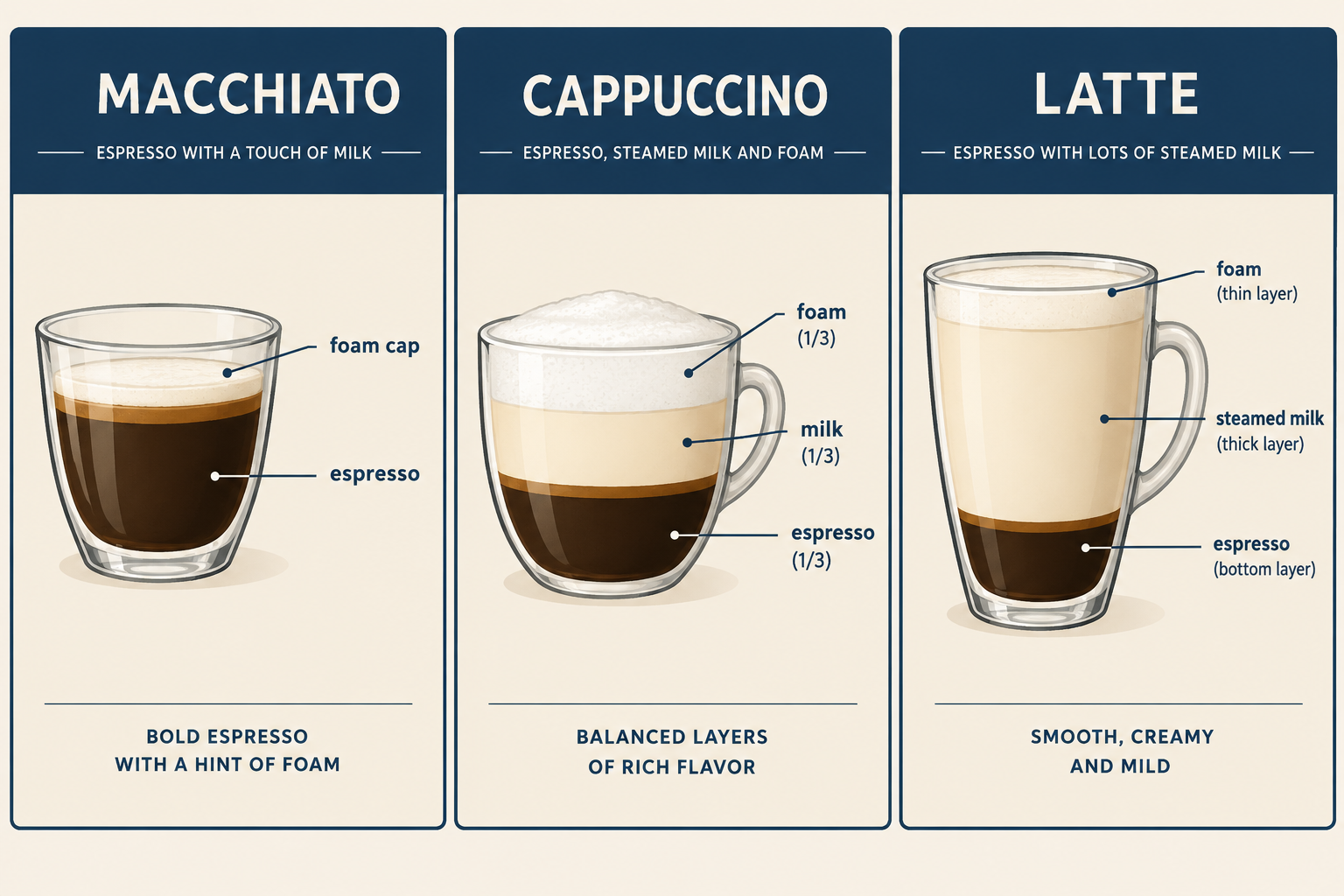
- A cappuccino uses roughly equal thirds of espresso, milk, and foam, giving it more foam than a latte and more milk than a macchiato.
- The Starbucks Caramel Macchiato is built in reverse order from an Italian macchiato and tastes closer to a sweetened latte.
- You can build a home version of a macchiato with a moka pot, Aeropress, or Nespresso capsule and a milk frother. No espresso machine is required.
Macchiato vs Latte
A macchiato vs latte comparison starts with size and ratio, not flavor descriptions. A macchiato is roughly 3 to 4 ounces: one or two espresso shots with 1 to 2 ounces of milk foam spooned on top. A latte runs 8 to 16 ounces: the same one or two shots, now stretched through 6 to 8 ounces of steamed milk, with a thin layer of foam finishing the cup.
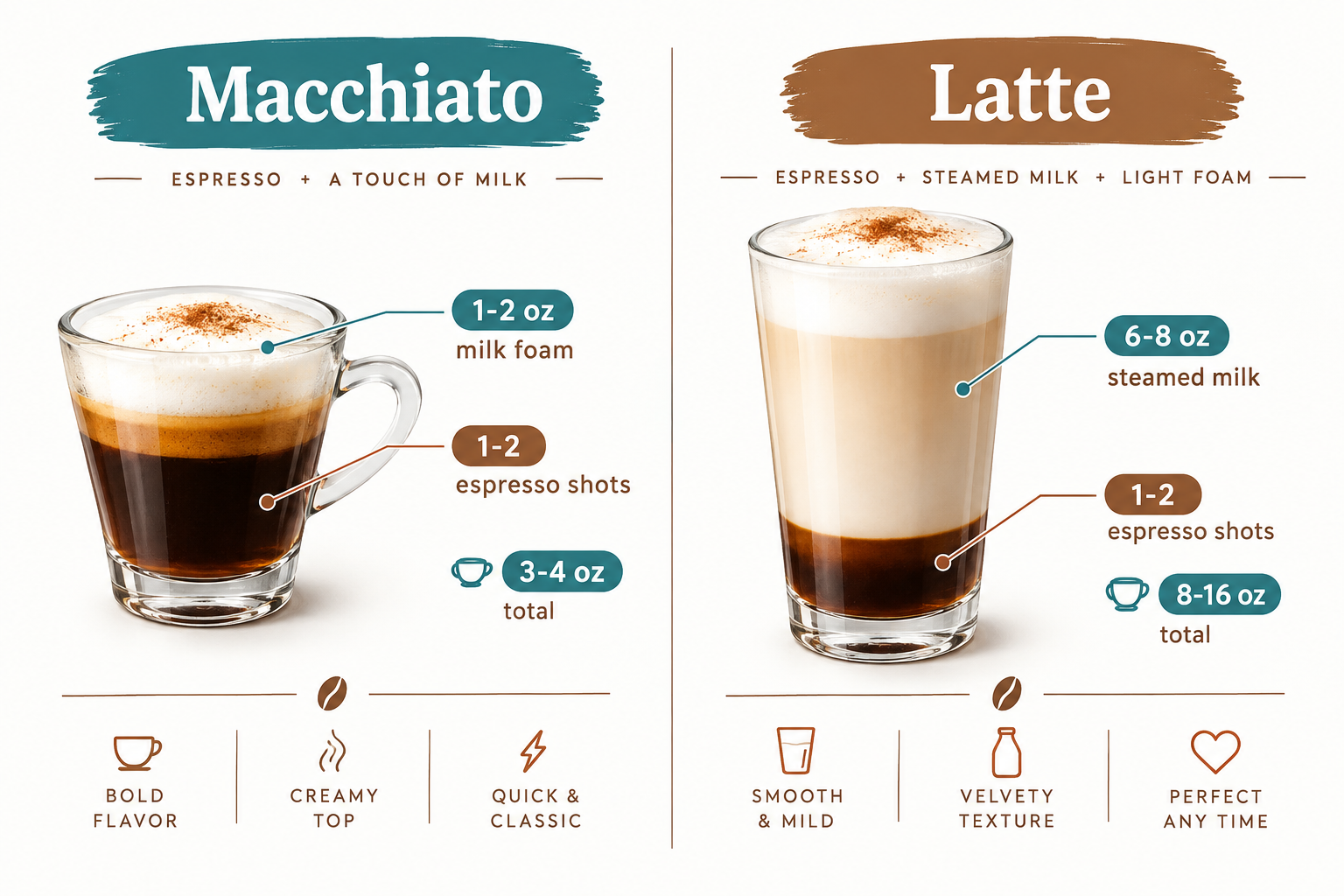
That size difference is the whole story. Both drinks can start from the identical shot pulled on the identical machine. What changes is the container of milk the espresso lands in.
The word "macchiato" means "marked" or "stained" in Italian. The traditional drink is espresso that has been marked by milk, not milk that has been marked by espresso. That word order explains why the classic version is small, strong, and mostly coffee. A latte, from the Italian "caffè latte" or "coffee milk," puts the emphasis the other way: milk with coffee added, not coffee with a touch of milk.
If you want to see the ratio in action rather than read about it, our guide to beginners guide to making a delicious latte walks through exact steamed milk volumes for a home setup.
How Much Espresso Is in a Macchiato vs Latte
Both drinks typically use the same amount of espresso: one shot (about 1 ounce) for a single, or two shots (about 2 ounces) for a double. The difference isn't the coffee. It's what surrounds it.
A standard macchiato recipe:
- 1 to 2 shots of espresso (1 to 2 oz)
- 1 to 2 oz of milk foam, spooned rather than poured
- Total cup size: 3 to 4 oz
A standard latte recipe:
- 1 to 2 shots of espresso (1 to 2 oz)
- 6 to 8 oz of steamed milk, poured with a thin foam finish
- Total cup size: 8 to 16 oz, sometimes larger at chain cafes
Chains complicate this. A Starbucks or Dunkin' macchiato labeled "grande" can hold as much liquid as a small latte at an independent shop, because the sweet, milk-forward versions sold under that name borrow the latte's proportions and keep the macchiato's name. If your barista asks how many pumps of syrup you want in your "macchiato," you're almost certainly ordering a latte with a different label.
Macchiato vs Latte: Which One Has More Milk
A latte has substantially more milk than a macchiato, roughly 6 to 8 ounces compared to 1 to 2 ounces. That's not a small edge. A latte can carry four to six times the milk volume of a traditional macchiato while using the same espresso.
This matters for anyone counting dairy, calories, or added sugar from flavored syrups, since more milk means more lactose, more protein, and more calories before any sweetener gets added. It also matters for texture: a latte has enough milk to build the silky layering used in latte art etching, while a macchiato's small foam cap doesn't leave enough surface to draw on.
Why Does My Macchiato Taste Stronger Than a Latte
A macchiato tastes stronger because it has far less milk to dilute the same espresso. Extraction, the process of pulling flavor and caffeine out of ground coffee with hot water, produces roughly the same concentration of coffee compounds whether that shot ends up in 2 ounces of total drink or 16.
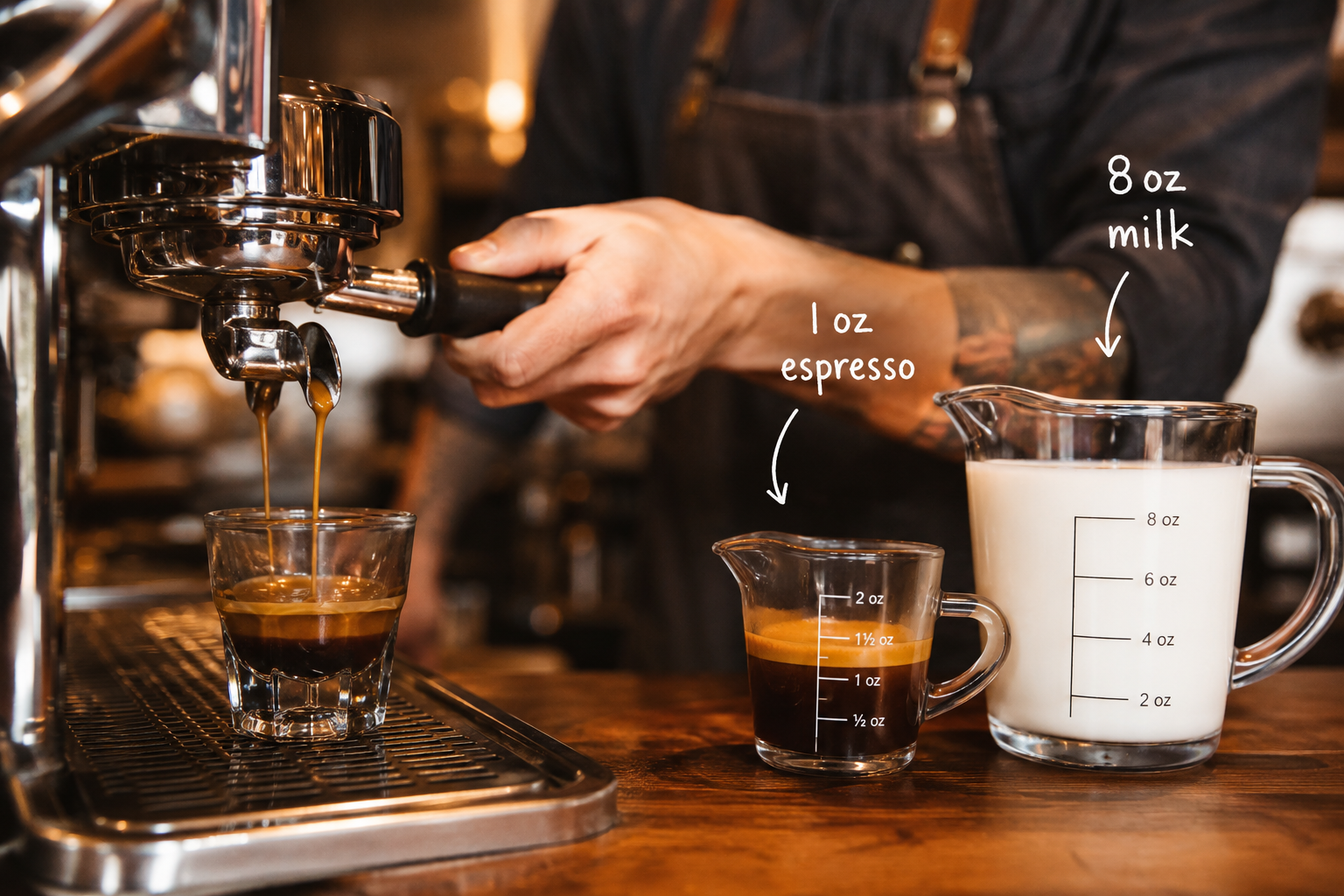
Think of it as a mixing ratio. Two ounces of espresso in a 4 ounce cup means the coffee makes up half the drink. The same two ounces in a 16 ounce latte means the coffee is about one-eighth of the cup. Your palate reads that concentration directly: more coffee per sip equals a bolder, more bitter-leaning taste, and less milk means less of the sweetness that steamed dairy naturally contributes.
Decision rule: if a drink tastes muddy or overly intense, check the cup size against the shot count before blaming the beans. The ratio is usually the real cause, not the roast. Readers working on shot quality at home can compare technique in our guide to advancing your espresso making skills.
Which Is Stronger: Macchiato or Latte Caffeine Content
A macchiato and a latte made with the same number of shots contain the same caffeine. The macchiato only feels stronger because that caffeine arrives in a smaller, more concentrated cup.
- A single-shot macchiato and a single-shot latte both carry roughly the caffeine of one espresso shot (commonly cited around 63mg, though this varies by bean and brew time).
- A double-shot version of either drink roughly doubles that number.
- Chain-menu sizing changes the math. A large flavored macchiato with two shots has the same total caffeine as a large latte with two shots, even though the macchiato tastes punchier.
So when people ask which is stronger, macchiato or latte, the honest answer splits the question. Caffeine strength: usually a tie, shot for shot. Flavor strength: the macchiato wins because it's less diluted.
Macchiato vs Cappuccino vs Latte: Sorting Out the Milk Drinks
A macchiato vs latte vs cappuccino comparison comes down to the milk-to-foam ratio in each cup. All three can share the same espresso base. What changes is how much steamed milk and how much foam sit on top of it.
| Drink | Espresso | Steamed milk | Foam | Typical size |
|---|---|---|---|---|
| Macchiato | 1-2 shots | 1-2 oz | Thin cap | 3-4 oz |
| Cappuccino | 1-2 shots | ~4 oz | ~2 oz, thick | 5-6 oz |
| Latte | 1-2 shots | 6-8 oz | Thin finish | 8-16 oz |
A cappuccino uses roughly equal thirds of espresso, milk, and foam, which gives it a drier, more textured mouthfeel than a latte's silkier steamed milk. If you're deciding between the three at a counter, the cappuccino sits as the middle ground: more milk than a macchiato, more foam and less liquid milk than a latte. Our advanced barista latte art guide covers how that foam thickness changes what designs are even possible to pour.
Macchiato vs Cortado: A Closer Cousin
A cortado is closer to a macchiato than a latte, but it isn't the same drink. A cortado uses equal parts espresso and steamed milk, typically 2 ounces of each, with almost no foam layer. A macchiato uses far less milk than espresso and keeps a foam cap instead of steamed milk. If a macchiato feels too intense but a latte feels too diluted, a cortado is the drink built for exactly that gap.
Latte Macchiato: The Reverse-Layered Drink With a Confusing Name
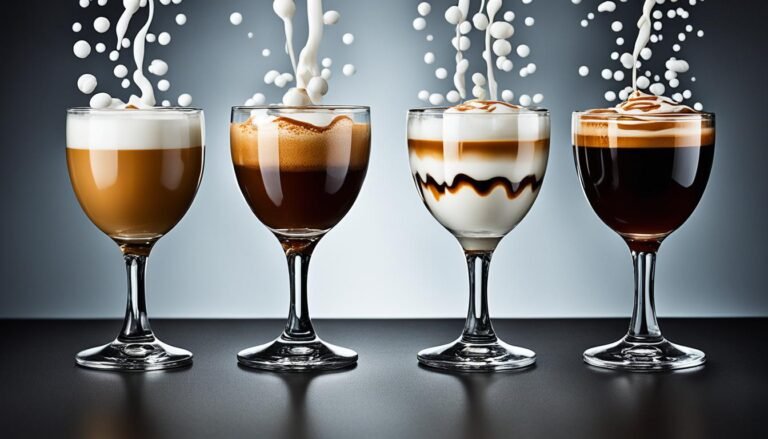
A latte macchiato is milk "marked" with espresso, the opposite build order from a regular macchiato. Steamed milk goes into the glass first, and a shot of espresso is poured slowly on top so it sits as a visible layer rather than mixing through completely.
The result looks dramatic in a clear glass: pale milk on the bottom, a defined coffee line near the top. It tastes lighter than a standard latte because the pour technique keeps more of the espresso near the surface instead of blending it evenly through the milk. Nespresso's own guidance describes this build as one of the more approachable ways to introduce a milk-forward drinker to stronger coffee flavor without overwhelming the cup.
Caramel Macchiato vs Latte: Starbucks, Dunkin, and the Sweet Versions
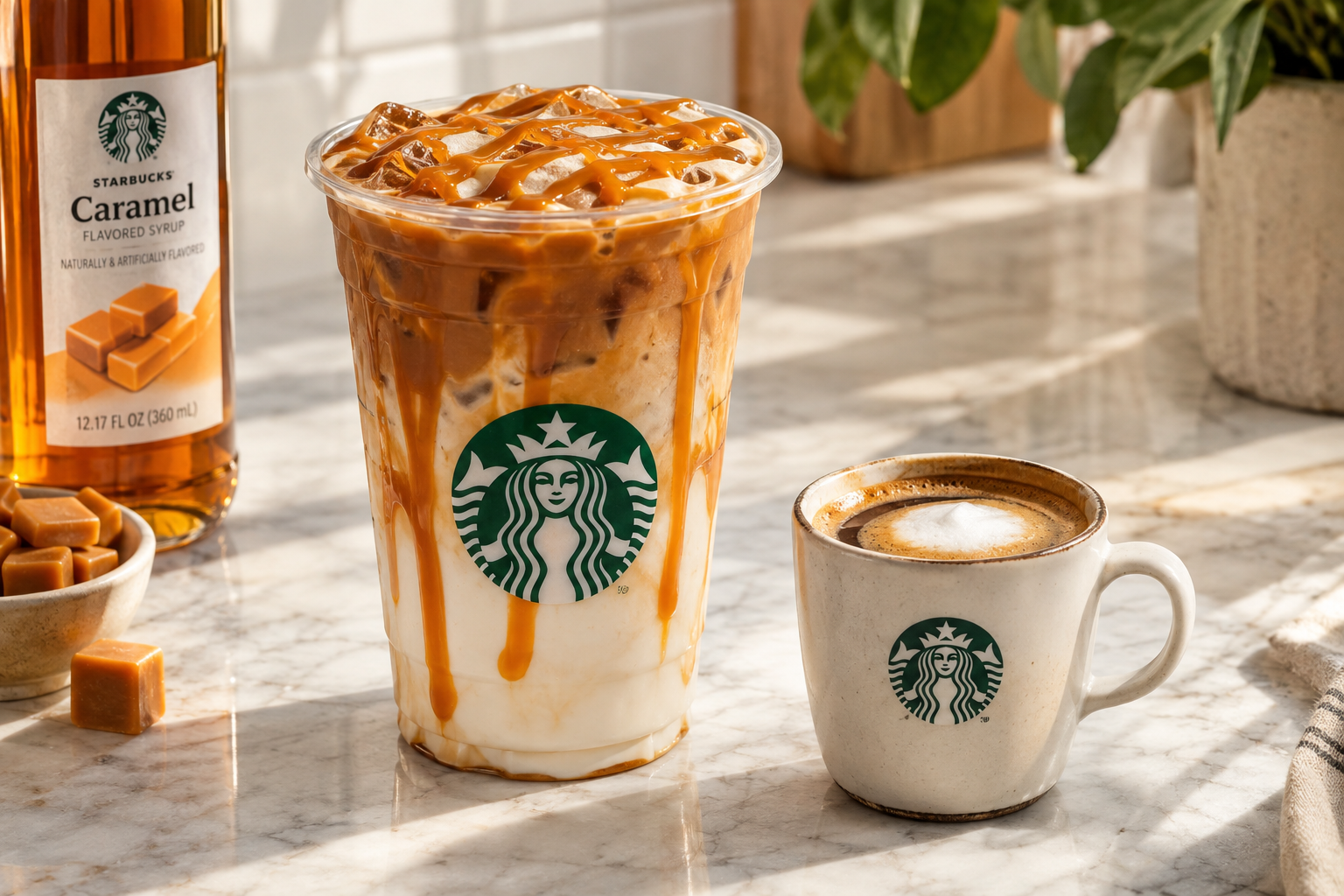
A caramel macchiato vs latte comparison at a US chain is really a comparison of build order and syrup placement, not strength. Starbucks builds its Caramel Macchiato with vanilla syrup and milk first, espresso poured on top, and caramel drizzle marking the surface, which mirrors the traditional "marking" idea even though the drink is far larger and sweeter than an Italian macchiato. A caramel latte, by contrast, typically has the caramel and espresso mixed through the milk rather than left as a visible top layer.
Dunkin' follows a similar sweetened pattern with its own macchiato line, built milk-forward with flavor syrup and a coffee "mark," while its lattes are mixed throughout. In both cases, the calorie and sugar difference between the caramel macchiato and caramel latte versions comes mostly from syrup pumps and milk volume, not from any real espresso difference. If you like the caramel flavor but want the traditional small, strong build, our guide to making a flavored macchiato shows how to keep the ratio closer to the original.
Can I Make a Macchiato at Home Without an Espresso Machine
Yes. A macchiato only requires a small amount of strong, concentrated coffee and a spoonful of milk foam, both achievable without a pressurized machine.
Steps for a machine-free macchiato:
- Brew a strong concentrate using a moka pot, Aeropress with a fine grind, or a Nespresso capsule in a compatible pod machine.
- Pour 1 to 2 ounces of that concentrate into a small cup.
- Heat 2 to 3 ounces of milk and froth it with a handheld whisk, a French press plunger, or a milk frother until it holds soft peaks.
- Spoon just the foam on top, leaving most of the steamed milk behind.
The Aeropress route gets closest to true espresso intensity because the fine grind and short brew time concentrate flavor the way a pump does. For a full rundown of methods that don't require a machine, see our guide to different coffee brewing techniques for beginners, and for the foam step specifically, our piece on frothing milk for espresso drinks covers stovetop and handheld options side by side.
Is a Macchiato or Latte Better for Beginners
A latte is the better starting drink for most new espresso drinkers because the higher milk volume softens bitterness and smooths out grind or timing mistakes. A macchiato has almost no milk to hide behind, so any flaw in the shot shows up immediately.
- Choose a latte if: you're still learning to pull a consistent shot, you prefer a milder flavor, or you're serving guests who don't drink coffee often.
- Choose a macchiato if: you already like the taste of straight espresso, you want a quick, small drink, or you're testing whether a new bag of beans tastes good on its own.
A common mistake is judging a new espresso machine's shot quality using a latte, where milk covers up problems. Pull a macchiato-style shot first. It's the more honest test.
Why Is My Latte Too Strong Tasting
A latte usually tastes too strong because the milk-to-espresso ratio has slipped toward the coffee side, either through too little milk, an overly fine grind, or a shot pulled too long.
Common causes and fixes:
- Too little milk poured: aim for 6 to 8 ounces of steamed milk per 1-2 oz of espresso, not 3 to 4 ounces.
- Grind too fine: a fine grind slows water flow and pulls more bitter compounds into the shot. Coarsen slightly and re-test.
- Shot pulled too long: a shot that runs well past 25-30 seconds starts extracting bitter, harsh flavors instead of sweet ones.
- Stale beans: coffee loses its brighter notes within a few weeks of the roast date, leaving flat bitterness behind. Check the bag's roast date before blaming your technique.
If the shot itself tastes off before milk is even added, work through dial-in steps in our advanced espresso brewing skills guide before adjusting the milk.
How to Order a Macchiato if You Don't Like Bitter Coffee
Ask for a latte macchiato or a cortado instead of a traditional macchiato if bitterness is the concern, since both use more milk to round out the shot while keeping a visible coffee character.
Other adjustments that help without abandoning the drink entirely:
- Ask for a lighter roast. Lighter roasts generally carry less roast-driven bitterness than dark roasts.
- Request an extra pump of foam or a small amount of steamed milk stirred in, moving the drink slightly toward cortado proportions.
- Add a small amount of sugar or a flavored syrup, which is exactly how the Starbucks and Dunkin' caramel versions solve the same problem at scale.
A macchiato isn't meant to taste smooth. It's meant to taste like coffee with a light touch of milk. If that's not the goal, a different drink on the menu will serve you better than forcing a macchiato to be something it isn't.
Does a Macchiato Have Foam Like a Latte, and What Size Should It Be
A macchiato has foam, but a different kind than a latte's. A macchiato uses a small spoonful of denser, stiffer milk foam placed on top of the espresso, while a latte uses silky microfoam, fine and thin bubbles, poured throughout the drink and finished with a light layer on top.
A traditional macchiato should be small: 3 to 4 ounces total, served in a small glass or demitasse cup. Chain versions labeled "tall," "grande," or "venti" abandon that size entirely and closer resemble an 8 to 20 ounce latte with a coffee garnish. If you want the classic proportion at home, use a 3 to 4 ounce cup and resist the urge to fill it further, even if the milk looks too small on its own.
An iced macchiato follows the same small-format logic in theory, but many chain iced macchiatos are built latte-sized over ice with the espresso poured last so it "marks" the surface visibly through the glass, which is closer to a marketing effect than a traditional ratio.
Can You Get a Macchiato With Oat Milk Like a Latte
Yes, oat milk works in a macchiato, though the small milk volume means you'll notice its texture differently than you would in a latte. Oat milk froths well because of its natural starch content, producing foam that holds its shape reasonably close to dairy foam, which matters more in a macchiato where the foam sits visibly on top rather than blending through 8 ounces of liquid.
A few practical notes:
- Oat milk foam can deflate slightly faster than whole milk foam, so spoon it onto the espresso soon after frothing.
- Barista-blend oat milks (formulated with added fat or stabilizers for steaming) generally hold texture better than standard oat milk from the dairy aisle.
- The espresso-to-milk ratio doesn't need to change for plant milk. The frothing technique does.
For a side-by-side on frothing behavior across milk types, our guide to frothing milk for homemade lattes covers dairy and plant-based options in more detail.
Macchiato vs Latte: Which Is Healthier
A macchiato is generally lower in calories, sugar, and dairy than a latte simply because it contains far less milk, assuming neither drink has added syrup. A plain macchiato's milk content is a fraction of a latte's, which keeps its natural lactose and milk-fat calories proportionally lower.
That advantage disappears fast with flavored versions. A caramel macchiato with syrup and whipped topping can carry more sugar than a plain latte of the same size, since sweeteners are added on top of a drink that was already small. The healthier choice depends more on what gets added than on which name is printed on the menu.
For a broader look at how order details change a drink's nutrition profile, see our guide on making your coffee order healthier and our explainer on what happens to your body when you drink coffee.
body{margin:0;font-family:system-ui,-apple-system,”Segoe UI”,Roboto,sans-serif;background:#F5FAF8;} .cg-wrap{max-width:640px;margin:0 auto;padding:16px;} .cg-title{color:#14231D;font-size:20px;font-weight:700;margin:0 0 10px;} .cg-table{width:100%;border-collapse:collapse;font-size:14px;} .cg-table th{background:#1F6B4A;color:#fff;padding:8px;text-align:left;} .cg-table td{padding:8px;border-bottom:1px solid #E8F2EE;color:#23372F;} .cg-table tr:nth-child(even){background:#E8F2EE;} .cg-note{font-size:12px;color:#23372F;margin-top:10px;}Macchiato vs Latte: Quick Comparison
| Feature | Macchiato | Latte |
|---|---|---|
| Espresso | 1-2 shots | 1-2 shots |
| Milk added | 1-2 oz foam | 6-8 oz steamed |
| Total size | 3-4 oz | 8-16 oz |
| Flavor | Bold, coffee-forward | Mild, milk-forward |
| Caffeine per shot | Same as latte | Same as macchiato |
Sizes reflect traditional cafe builds. Chain menu versions vary widely.
Frequently Asked Questions
What's the difference between a macchiato and a latte? A macchiato is espresso with a small spoonful of milk foam in a 3-4 oz cup. A latte is espresso with 6-8 oz of steamed milk in an 8-16 oz cup. Same coffee, very different milk ratio.
Macchiato vs latte, which has more milk? A latte has significantly more milk, often four to six times as much as a traditional macchiato, since a macchiato uses only a small foam topping.
Is a macchiato stronger than a latte? It tastes stronger because it has less milk diluting the same espresso, but caffeine content per shot is equal in both drinks.
What's the difference between a cortado and a macchiato? A cortado uses equal parts espresso and steamed milk with almost no foam. A macchiato uses far less milk than espresso and keeps a foam cap on top instead of stirring milk through.
Can I make a macchiato at home without an espresso machine? Yes. A moka pot, Aeropress, or Nespresso capsule can produce concentrated coffee, and a handheld frother or French press can build the milk foam layer.
Is a caramel macchiato healthier than a caramel latte? Not automatically. Added syrup and whipped topping can make a flavored macchiato just as high in sugar as a similarly sized latte, even though a plain macchiato has less milk overall.
Conclusion
A macchiato vs latte decision is really a decision about how much milk you want between you and the espresso. Choose a macchiato when you want a small, direct hit of coffee flavor with just enough foam to soften the edge. Choose a latte when you want that same espresso spread through enough steamed milk to make a full-sized, mellow drink. Neither one is the "correct" order. They're built for different moments in the day.
If you're setting up a home routine around this decision, start by testing your espresso shot on its own before adding any milk. A shot that tastes rough in a macchiato will taste rough in a latte too, just quieter. Better coffee starts with better answers, not a bigger cup of milk.
Keep Exploring Coffee Rank IQ
- Coffee Rank IQ home: reviews, brewing guides, and coffee science
- Cappuccino vs Latte: Same Espresso, Very Different Cup
- Flat White vs Latte: The Microfoam Detail Most Cafes Skip
- How to Make an Iced Latte at Home Without Watery Regret
- Best Espresso Beans for Lattes, Straight Shots, and Budgets
References
- eathealthy365.com/the-macchiato-explained-how-to-make-and-order-it-right
- www.coffeelabadvisor.com/guides/what-is-a-macchiato
- thecoffeelocator.com/guide/macchiato-vs-latte
- summerstirs.com/difference-between-macchiato-and-latte
- espressoradar.com/coffee-drinks/macchiato-vs-latte
- homeespressolab.com/guides/what-is-a-macchiato
- www.nespresso.com/au/en/news/your-ultimate-macchiato-guide
- thecoffeelocator.com/guide/what-is-a-macchiato
- www.tastingtable.com/1557492/macchiato-vs-latte-difference
- mozzaroasters.com/macchiato-vs-latte