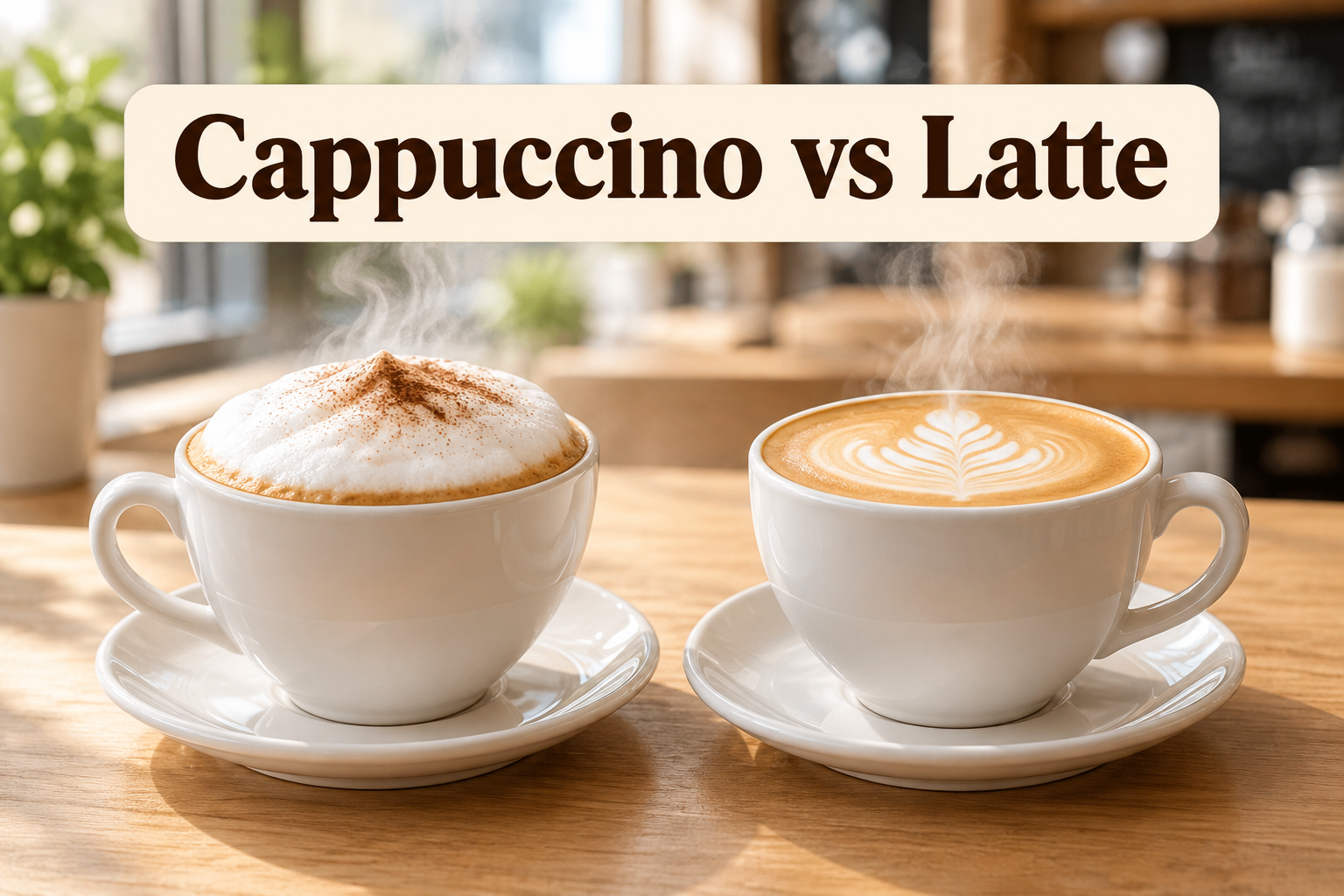
Cappuccino vs Latte: Same Espresso, Very Different Cup
A cappuccino and a latte start from the exact same shot of espresso. What happens to the milk after that shot pulls is the whole story. In a cappuccino vs latte comparison, the difference comes down to how much steamed milk goes in, how much foam sits on top, and how that changes the way the drink tastes, feels, and even how much caffeine seems to hit you. Get the ratio right and you get two completely different cups from one machine.
Quick Answer
A cappuccino uses roughly equal parts espresso, steamed milk, and thick milk foam, usually in a 5 to 6 ounce cup. A latte uses the same espresso shot with much more steamed milk and only a thin foam cap, typically in an 8 to 12 ounce cup. The caffeine is nearly identical since both drinks are built on the same espresso shot; the real difference is texture, milk volume, and how strong the coffee tastes against the milk.
Key Takeaways
- Same espresso base. A single or double shot of espresso is the foundation of both drinks. Nothing about the coffee itself changes.
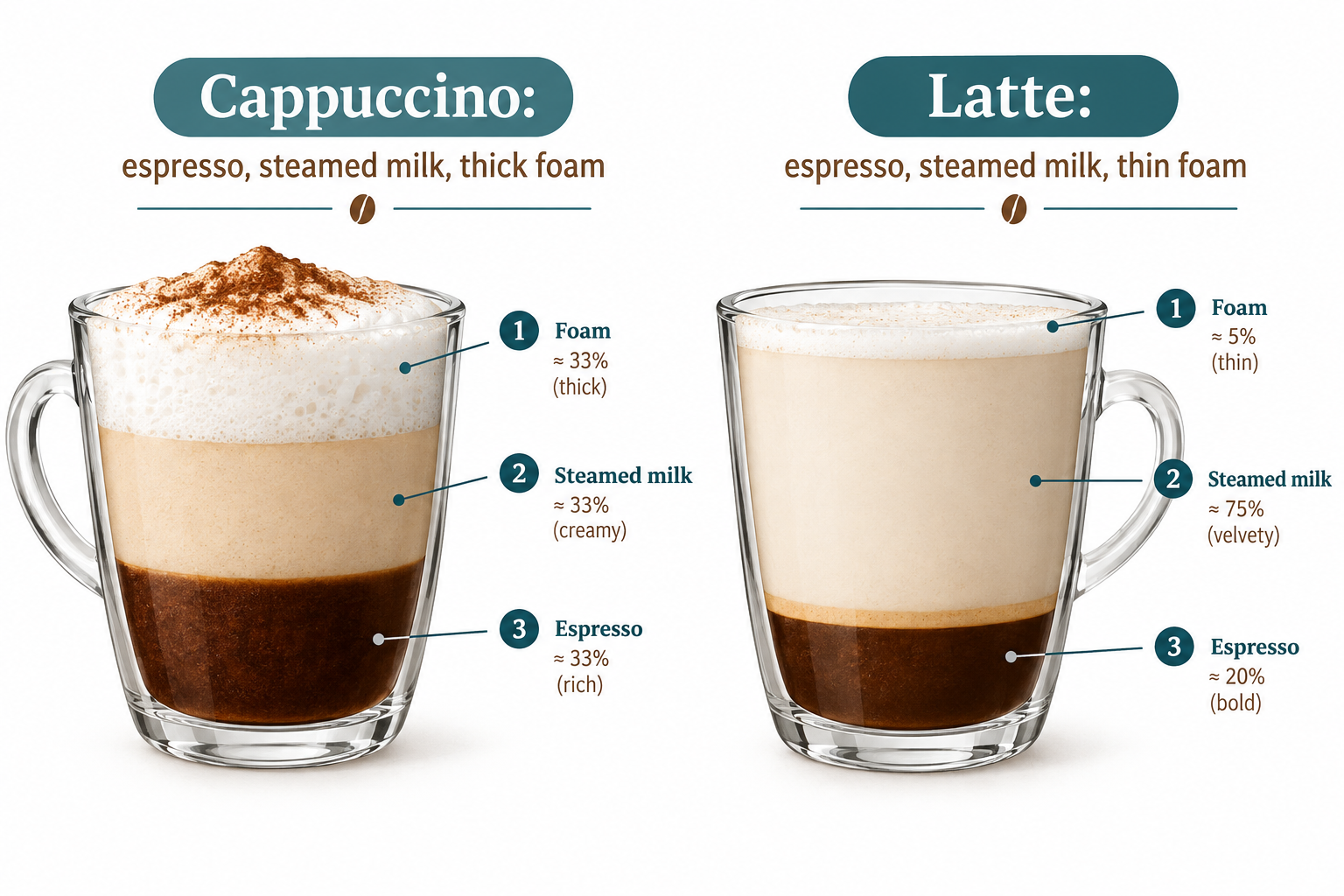
- Milk foam ratio is the real divider. A cappuccino is about one-third espresso, one-third steamed milk, one-third foam. A latte is roughly one-fifth espresso and four-fifths steamed milk with a thin foam cap.
- Caffeine is essentially a tie. Both drinks typically use the same number of espresso shots, so caffeine content is nearly equal unless the shop varies the shot count.
- Cappuccino tastes stronger. Less milk means less dilution, so the espresso's bitterness and acidity come through more clearly.
- Latte is gentler and sweeter-tasting. More steamed milk softens the espresso and rounds out sharp notes.
- Calories favor the cappuccino in most cafe-standard sizes, simply because it holds less milk.
- A flat white sits between them: less milk than a latte, less foam than a cappuccino.
- 2026 sales data shows lattes leading, cappuccinos close behind, as specialty coffee keeps outselling traditional drip coffee in the U.S.
- Both are easy to make at home with a basic steam wand; the cappuccino actually takes less practice because the foam hides small frothing mistakes.
Cappuccino vs Latte: What's the Difference Between a Cappuccino and a Latte
The difference between a cappuccino and a latte is the milk, not the coffee. Both drinks pull the identical espresso shot, then diverge based on how much steamed milk gets poured in and how much foam sits on top.
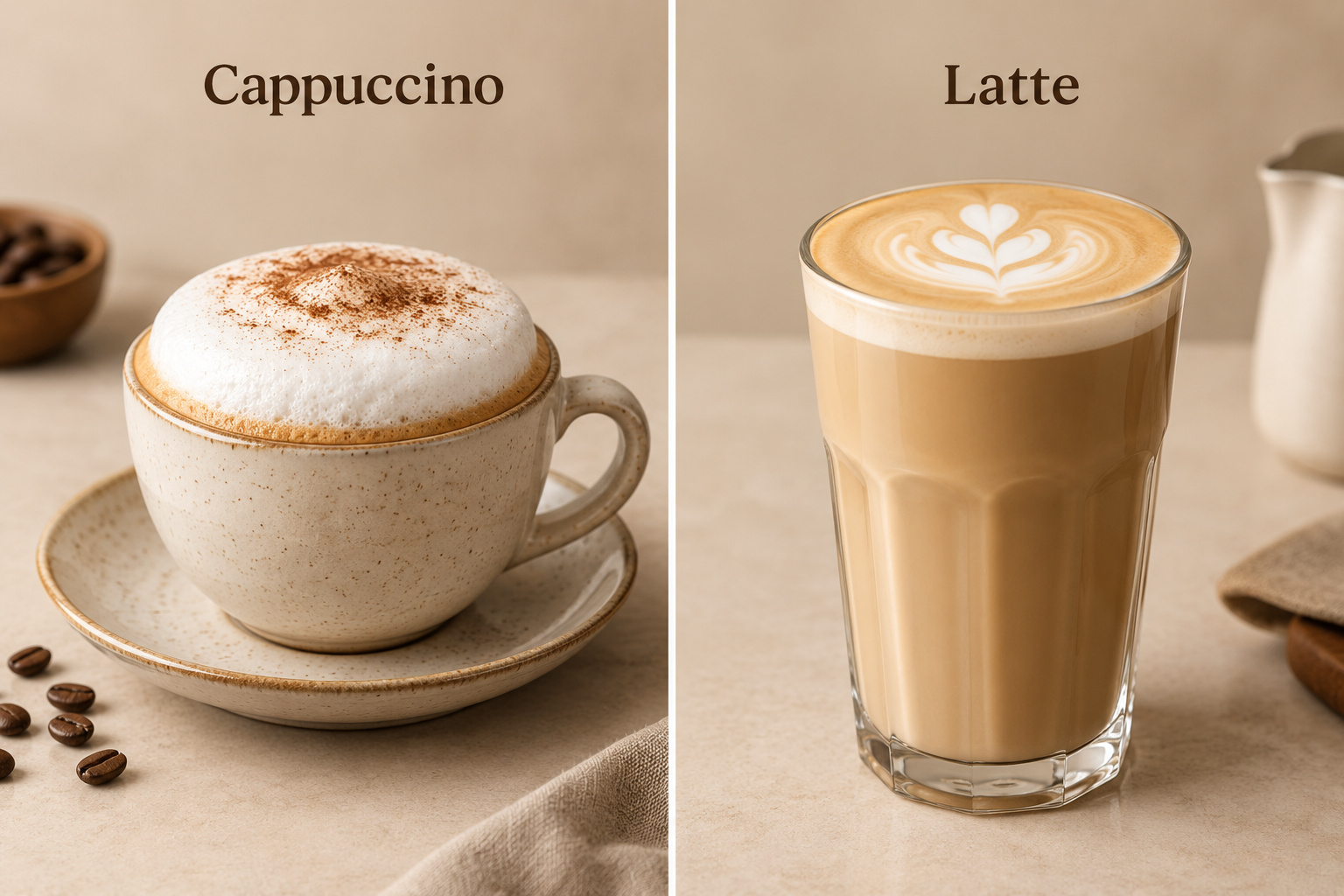
A traditional cappuccino is built in three roughly equal layers: espresso on the bottom, steamed milk in the middle, and a thick cap of microfoam on top, all inside a 5 to 6 ounce cup. A latte keeps the same espresso shot but adds far more steamed milk, usually in an 8 to 12 ounce glass or cup, finished with a thin foam layer thin enough to hold simple latte art. That single variable, milk volume, changes the weight of the drink in your mouth, the temperature it holds, and how loudly the espresso flavor comes through.
Think of it this way: the cappuccino lets espresso lead the conversation. The latte lets steamed milk do most of the talking, with espresso as background flavor. This is the core answer to the cappuccino vs latte question, and everything else in this guide builds on that one ratio.
If you want to see how baristas control that milk texture on purpose, our guide to the best ways to froth milk for your espresso drinks breaks down the technique step by step.
Cappuccino vs Latte Ratio of Espresso to Milk
The standard ratio is close to 1:1:1 for a cappuccino (espresso, steamed milk, foam) and roughly 1:4 for a latte (espresso to steamed milk, with a thin foam cap). That single number explains most of what separates the two drinks on your tongue.
A typical cafe cappuccino uses one double shot of espresso (about 2 ounces) plus 2 to 3 ounces of steamed milk and foam combined, filling a 5 to 6 ounce cup. A latte uses the same double shot but stretches it with 6 to 10 ounces of steamed milk, so the finished drink runs 8 to 12 ounces or larger. That means a latte is mostly milk with coffee flavor running through it, while a cappuccino is mostly coffee with milk softening the edges.
Here's how much milk should be in a cappuccino compared to a latte, using standard cafe pours:
| Drink | Espresso | Steamed milk | Foam | Typical size |
|---|---|---|---|---|
| Cappuccino | 1 double shot (~2 oz) | ~2 oz | ~1.5 to 2 oz thick cap | 5 to 6 oz |
| Latte | 1 double shot (~2 oz) | 6 to 10 oz | thin layer (~0.25 to 0.5 oz) | 8 to 12 oz |
| Flat white | 1 double shot (~2 oz) | 4 to 5 oz | very thin microfoam | 5.5 to 6.5 oz |
This is also where the milk foam ratio becomes the practical test at home. If you pour steamed milk and it stops rising much past halfway up the pitcher, you have latte-style milk. If it triples in volume with visible dry texture on top, that's cappuccino foam.
Why Does My Cappuccino Taste Different From a Latte
A cappuccino tastes stronger and more bitter-forward because it has far less milk to dilute the espresso. A latte tastes rounder and sweeter because the larger volume of steamed milk buffers the espresso's acidity and bitterness before it reaches your palate.
Milk sugar, called lactose, sweetens both drinks slightly on its own, but volume matters more than sweetness here. In a cappuccino, the espresso to milk ratio stays close to even, so the coffee's natural acidity, any roast bitterness, and the crema on top all stay concentrated. In a latte, that same shot gets spread across four or five times as much milk, which mutes sharp flavors and lets sweetness lead.
Foam texture changes the experience too. Cappuccino foam is thicker and drier, so the first sip delivers a mouthful of air and milk before the coffee underneath. Latte foam is thin enough that the espresso and milk blend together almost from the first sip. If your homemade cappuccino tastes flat or watery, the most common cause is under-textured milk poured in latte proportions by accident, not a problem with your espresso shot. For the mechanics of why extraction changes flavor in the first place, see our explainer on the science behind espresso extraction.
Which Has More Caffeine: Cappuccino or Latte
Caffeine content is nearly identical between a cappuccino and a latte because both are built on the same espresso shot. A standard double shot delivers roughly the same caffeine whether it ends up in 5 ounces of cappuccino or 12 ounces of latte.
The milk added afterward carries no caffeine of its own. So when people ask which is stronger, latte or cappuccino, the honest answer splits into two different meanings of "strong." In caffeine terms, they're a tie if the shot count matches. In flavor terms, the cappuccino tastes stronger because there's less milk to dilute the taste, even though the actual caffeine dose is the same.
Where caffeine totals do shift: shop menus that quietly use one shot in a small latte and two shots in a large one, or cafes that pull an extra shot for cappuccinos by default. Always check the shot count on the menu, not the drink name, if caffeine amount is your real concern. Our breakdown of how much caffeine sits in a single shot of espresso covers the actual milligram range.
Cappuccino vs Latte Calories: Which Is Lighter
A standard cafe cappuccino generally has fewer calories than a latte of the same size, mainly because it contains less milk. Whole milk carries calories through fat and natural sugar, so a drink with 6 to 10 ounces of it will run higher than one with 2 to 3 ounces, before you even add flavor syrup.
A small plain cappuccino made with whole milk typically lands lighter than a small plain latte, simply on milk volume alone. That gap grows fast once flavored syrups, whipped cream, or larger sizes enter the picture, since syrup pumps add calories independent of the milk. If cappuccino vs latte calories matter to your routine, the practical fix is the same for either drink: choose a smaller size, skip the flavor pump, or ask for a lower-fat milk. The drink name matters less than the ounces of milk and syrup actually in the cup.
This is part of a broader shift in how people choose coffee. Health and wellness pressure on sugary latte orders is opening room for cappuccino's smaller, lighter profile to look more appealing to calorie-conscious drinkers, a trend worth watching as flavor-driven latte orders keep climbing.
Can I Make a Cappuccino With a Latte Machine
Yes. Any espresso machine with a steam wand can make both drinks; the difference is entirely in how long you froth the milk and how much you pour, not the machine itself. A dedicated "latte machine" and a "cappuccino machine" are usually the same hardware marketed differently.
The variable that matters is your steam wand's ability to build thick, dry foam versus smooth, wet microfoam. Machines from Breville, including several models covered in our advanced espresso machine roundup, give manual control over wand angle and steam pressure, which lets you build either texture on demand. Nespresso's milk-based pod machines automate the froth cycle, which is convenient but gives you less control over exact foam thickness, so cappuccino results can run softer than a cafe version.
Practical steps for a home cappuccino:
- Pull your espresso shot first and set it aside to hold heat.
- Steam roughly 2 to 3 ounces of cold whole milk, keeping the steam wand tip just below the surface to pull in air.
- Stop steaming around 150 to 155°F, once the pitcher feels hot but not scalding to hold.
- Tap and swirl the pitcher to pop large bubbles, then pour slowly to build a thick foam cap.
If you want more milk volume instead, keep the wand deeper in the milk for a longer, gentler stretch, which builds a latte's thinner foam and larger steamed milk volume. Same machine, same shot, different technique.
Cappuccino or Latte for Beginners: Which Is Easier to Make at Home
A cappuccino is generally easier for a first-time home barista because thick foam hides small texture mistakes that would show up clearly in a latte's smooth milk surface. A latte demands more control over pour speed and milk consistency to avoid a thin, uneven layer.
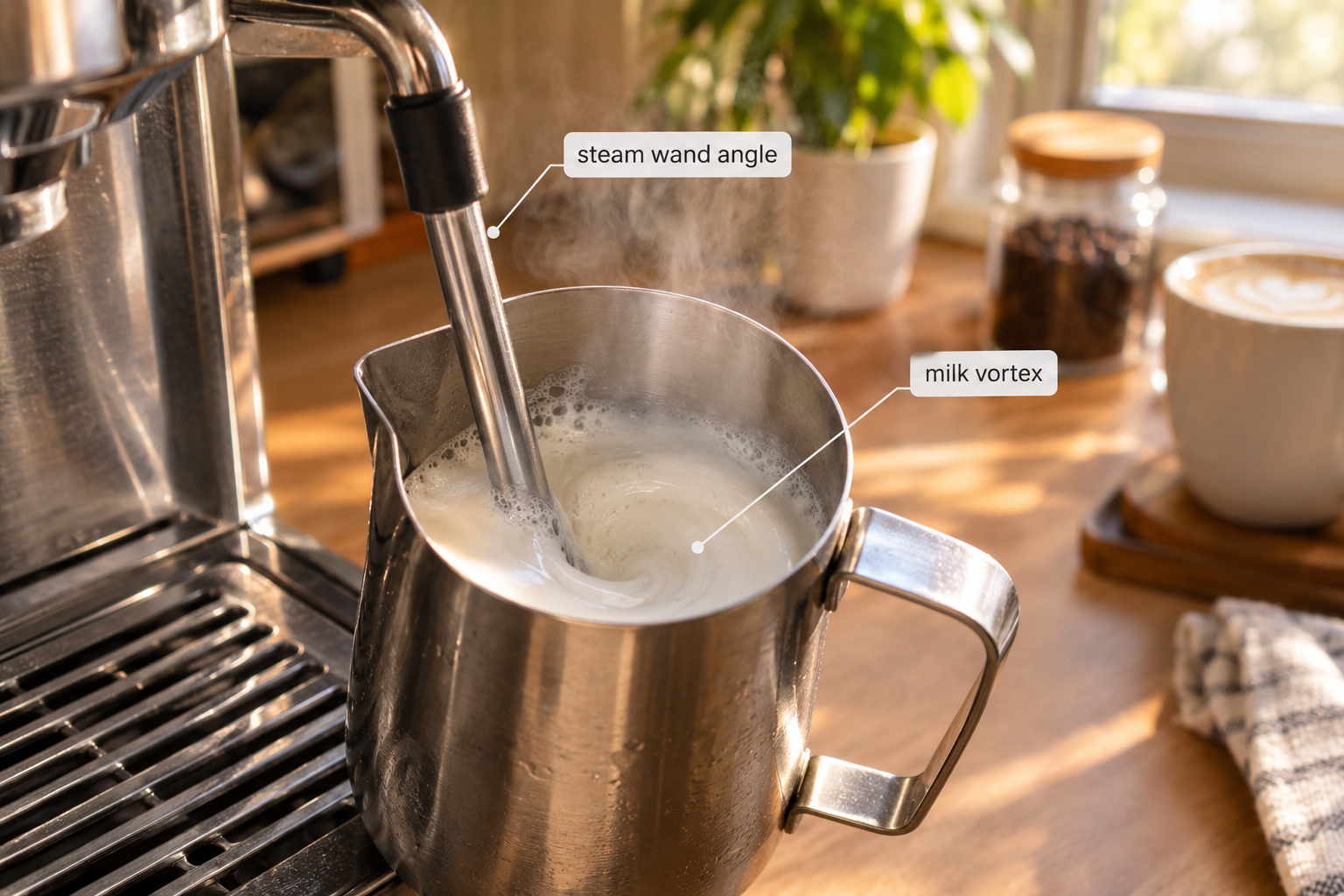
Beginners frothing milk for the first time tend to either under-aerate it, leaving flat milk, or over-aerate it, leaving loose bubbles instead of tight microfoam. A cappuccino forgives both mistakes better than a latte does, since the goal is visible, textured foam rather than a glassy pour. A latte's thin foam cap shows every inconsistency and makes latte art nearly impossible without practiced pouring.
If you're deciding which cup to start with, ask what you actually drink most at a cafe. That answer should set your practice target, not the other way around. Once basic foam texture feels reliable, our step-by-step latte art guide is the natural next stop for pouring rosettes and hearts.
What's the Milk Foam Difference Between Cappuccino and Latte
Cappuccinos hold noticeably more foam than lattes, both in total volume and in thickness. A cappuccino's foam cap runs about 1.5 to 2 ounces of thick, spoonable texture, while a latte's foam is a thin skin, often under half an ounce, just enough to support simple latte art.
The steamed milk itself differs too. Cappuccino milk is steamed briefly and aggressively to trap air, producing dense, dry foam with visible texture. Latte milk is steamed longer and more gently to create smooth, wet microfoam that pours as liquid rather than sitting as a separate cap. Baristas sometimes call cappuccino foam "dry" and latte foam "wet," which describes the mouthfeel more than the actual water content.
Do cappuccinos have more foam than lattes in every case? In traditional recipes, yes. Some modern "wet cappuccinos" served at chains blur the line by adding more steamed milk and less foam, which edges closer to a small latte in practice.
Cappuccino vs Latte vs Flat White vs Macchiato: How the Cups Compare
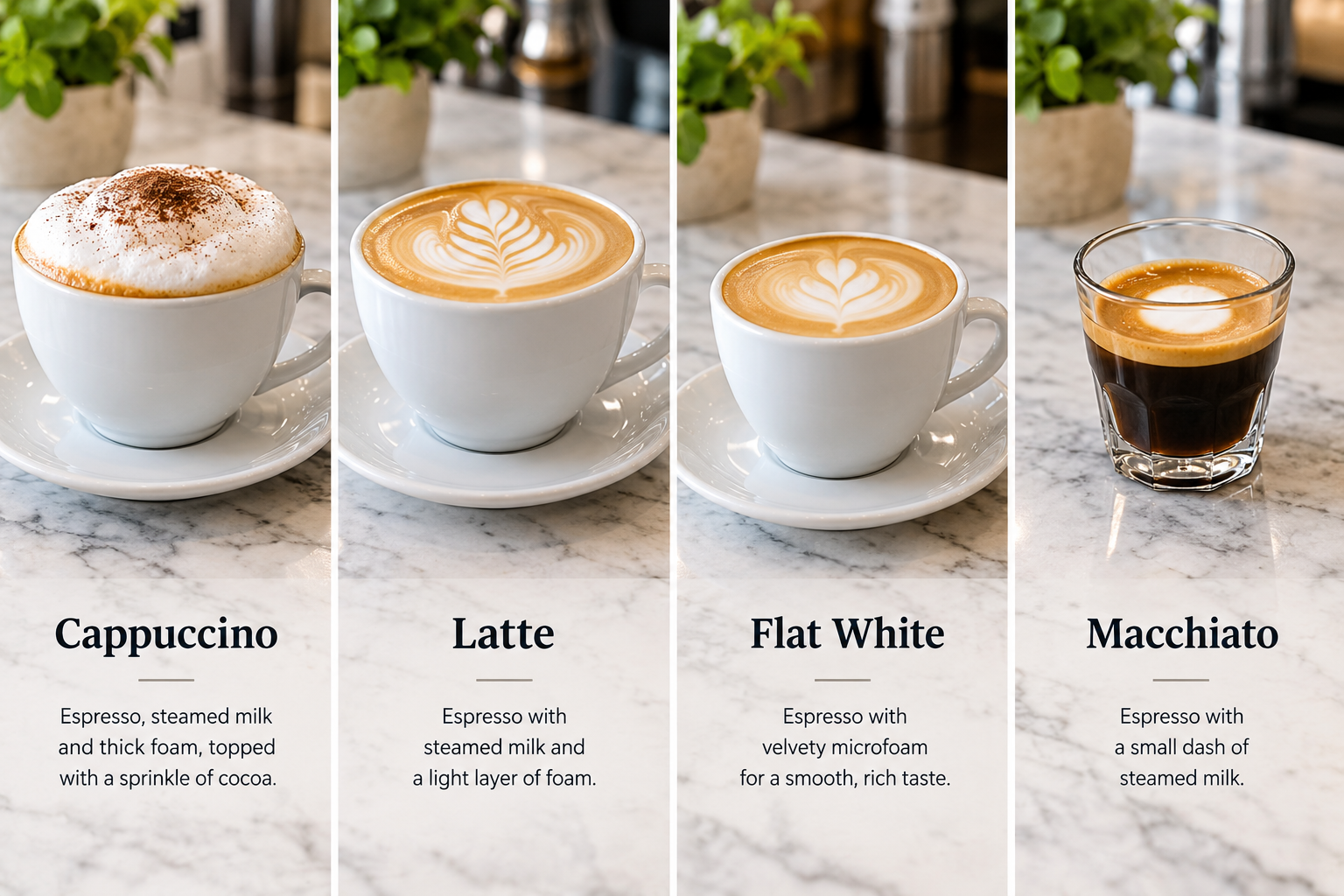
A flat white sits between a cappuccino and a latte: less milk than a latte, but a thinner, smoother foam layer than a cappuccino. A macchiato is closer to straight espresso, with only a small dollop of foam or milk added, making it the strongest and smallest of the four.
Here's how a cappuccino vs latte vs flat white vs macchiato lineup breaks down by milk volume and typical size:
| Drink | Milk style | Typical size | Best for |
|---|---|---|---|
| Macchiato | Small dollop of foam | 2 to 3 oz | Strongest, quickest sip |
| Cappuccino | Equal milk and thick foam | 5 to 6 oz | Bold flavor with texture |
| Flat white | Velvety microfoam, less milk than latte | 5.5 to 6.5 oz | Smoother, still espresso-forward |
| Latte | Large volume of steamed milk, thin foam | 8 to 12 oz | Mild, sweeter, everyday sipping |
Is a flat white the same as a cappuccino or latte? No. A cappuccino vs flat white comparison comes down to foam thickness: flat white foam is smooth and thin, cappuccino foam is thick and dry. A cappuccino vs latte vs flat white comparison shows the flat white using less milk than a latte but far less foam than a cappuccino. And in a cappuccino vs latte vs macchiato lineup, the macchiato is the outlier, barely a milk drink at all. For more drink-by-drink recipes and ratios, our guide to the top five most popular espresso drink recipes is a useful next stop.
How to Order a Cappuccino vs Latte at a Coffee Shop
Order by naming the drink and, if you want to control caffeine or strength, the shot count and size directly. Most U.S. chains standardize cappuccino as small with thick foam and latte as customizable across small to large with light foam.
At Starbucks, a cappuccino comes in short, tall, and grande sizes with a defined foam layer, while a latte scales up to venti and takes flavor syrups easily. At Dunkin', the cappuccino leans slightly wetter than the traditional Italian style, closer to a small latte in some locations, so ask if you want the drier, thicker foam version. If a shop's cappuccino tastes closer to a latte, that's a real variation in house style, not a mistake on your part.
If you're deciding between the two on a given morning, ask yourself one question: do you want the coffee flavor upfront, or eased in by milk? Cappuccino too strong for your taste on a given day? Ordering a latte instead is a completely normal switch, not a downgrade, and baristas won't blink at the change.
Cappuccino vs Latte: Best Time of Day and Which Is Stronger
There's no fixed rule for when to drink either one, but the flavor intensity naturally suits different moments. A cappuccino's concentrated espresso flavor works well as a quick morning drink or an after-meal coffee, since the smaller size and stronger taste don't require a long sitting. A latte's larger size and gentler taste suits a slower morning or an afternoon sipping drink.
On which is stronger, latte or cappuccino: caffeine-wise they're essentially even with matching shot counts, but flavor-wise the cappuccino wins by a wide margin because of the lower milk ratio. If you want the caffeine of a latte with the taste of a cappuccino, ask for an extra shot in either drink, which changes strength without changing the milk style. Home users experimenting with shot ratios can find more detail in our guide to perfecting espresso extraction technique.
2026 Coffee Trends: What's Driving Cappuccino and Latte Demand
Specialty coffee, the category covering espresso-based drinks like cappuccinos and lattes, has kept its lead over traditional drip coffee in U.S. consumption through 2026, with lattes edging ahead of cappuccinos in overall order volume. That gap reflects flavor trends more than any change in the drinks themselves.
Flavor-forward ordering, think seasonal syrups and milk alternatives, tends to favor the latte's larger milk canvas, which holds added flavor more evenly than a cappuccino's thick foam cap. Reporting on 2026 specialty trends also points to continued growth in app-based ordering, which lets customers customize milk type, shot count, and syrup with more precision than a counter order allows. At the same time, interest in single origin beans and lighter, less-sweetened cups gives the traditional cappuccino format room to hold its share among drinkers who want less milk and more visible coffee character.
None of this changes the mechanics behind the cappuccino vs latte choice. It just shows that more people are ordering both, through more channels, with more customization than a decade ago.
Frequently Asked Questions
Is a cappuccino stronger than a latte? In flavor, yes, because it has far less milk diluting the espresso. In caffeine content, they're roughly equal when both use the same number of espresso shots.
Which has fewer calories, cappuccino or latte? A plain cappuccino typically has fewer calories than a plain latte of the same size, since it contains less milk. Added syrup or size changes that gap fast.
Can I use the same machine for both drinks? Yes. The espresso shot and the steam wand are identical for both drinks. Only the froth time and milk volume change between a cappuccino and a latte.
What's the difference between a latte and a flat white? A flat white uses less steamed milk than a latte and a thinner, smoother foam layer, giving it a stronger espresso presence in a smaller cup.
Why does my homemade cappuccino taste watery? Watery cappuccino usually means the milk wasn't aerated long enough to build thick foam, or too much milk was poured relative to the espresso shot.
Is a cappuccino easier to make than a latte at home? Generally yes, since thick foam covers small frothing mistakes that would show clearly in a latte's smooth milk surface.
A Useful Next Step
The cappuccino vs latte choice isn't really about which drink is better. It's about how much milk you want between you and the espresso shot. A cappuccino puts less between you and the coffee; a latte puts more. Both use identical espresso, identical machines, and nearly identical caffeine, so the right pick comes down to how strong you want that first sip to taste on any given morning.
If you're still deciding what to buy or brew next, start with the machine you already own. Practice one froth style until it's consistent, then branch out to the other. Better coffee starts with better answers, not a bigger appliance.
Keep Exploring Coffee Rank IQ
- Coffee Rank IQ home: reviews, brewing guides, and coffee science
- Macchiato vs Latte: Why Your Order Tastes So Different
- Flat White vs Latte: The Microfoam Detail Most Cafes Skip
- How to Make an Iced Latte at Home Without Watery Regret
- Best Espresso Beans for Lattes, Straight Shots, and Budgets
References
- sca.coffee/sca-news/2026-national-coffee-data-trends-report
- brewingcoffees.com/cappuccino-vs-latte
- tastewise.io/blog/specialty-coffee-trends
- dailycoffeenews.com/2026/09/15/nca-more-americans-are-drinking-specialty-coffee-and-ordering-by-app
- www.foodnavigator.com/Article/2026/09/22/how-flavor-is-reshaping-coffee-and-tea-trends
- dailycoffeenews.com/2026/06/02/specialty-coffee-holds-lead-over-traditional-coffee-in-the-u-s
- eathealthy365.com/the-real-difference-in-strength-cappuccino-or-latte
- climpsonandsons.com/blogs/journal/2026-specialty-coffee-trends-to-watch
- masteringcoffee.com/latte-vs-cappuccino
- www.beanscenemag.com.au/specialty-coffee-trends-to-look-for-in-2026