What Is a Cortado? The Small Drink Baristas Quietly Love
Quick Answer
A cortado is an espresso drink made with roughly equal parts espresso and lightly steamed milk, usually 4 to 6 ounces total, with almost no foam. The name comes from the Spanish word "cortar," meaning to cut, because the milk cuts the sharpness of the espresso without covering it up. That's what is a cortado in one sentence: a small, balanced, espresso-forward drink that many baristas consider a better test of a shot than a latte ever could be.
Key Takeaways
- A cortado uses a roughly 1:1 ratio of espresso to steamed milk, unlike a latte's heavier milk ratio.
- Traditional cortados run 4 to 6 ounces. Starbucks serves an 8-ounce version, close to double the size of a specialty-cafe pour.
- The milk is steamed lightly, not frothed, so there's little to no foam cap.
- Caffeine in a standard cortado is roughly one to two shots of espresso, about the same as a macchiato or cappuccino.
- The drink's name and format trace back to Spain, where "cortar" means to cut.
- Starbucks' cortado uses three ristretto shots of Blonde Espresso and steamed whole milk, served hot only, priced around $5.25 for about 90 calories as of late July 2026.
- Baristas often prefer cortados because the small milk volume shows off espresso quality more honestly than a larger drink.
- You can make a cortado at home with any espresso machine or a moka pot plus a small steaming pitcher.
What Is a Cortado?
A cortado is a short espresso drink built from one or more shots of espresso and about an equal volume of lightly steamed milk, with barely any foam sitting on top. The espresso stays the dominant flavor. The milk softens the bite without turning the drink into something creamy or sweet.
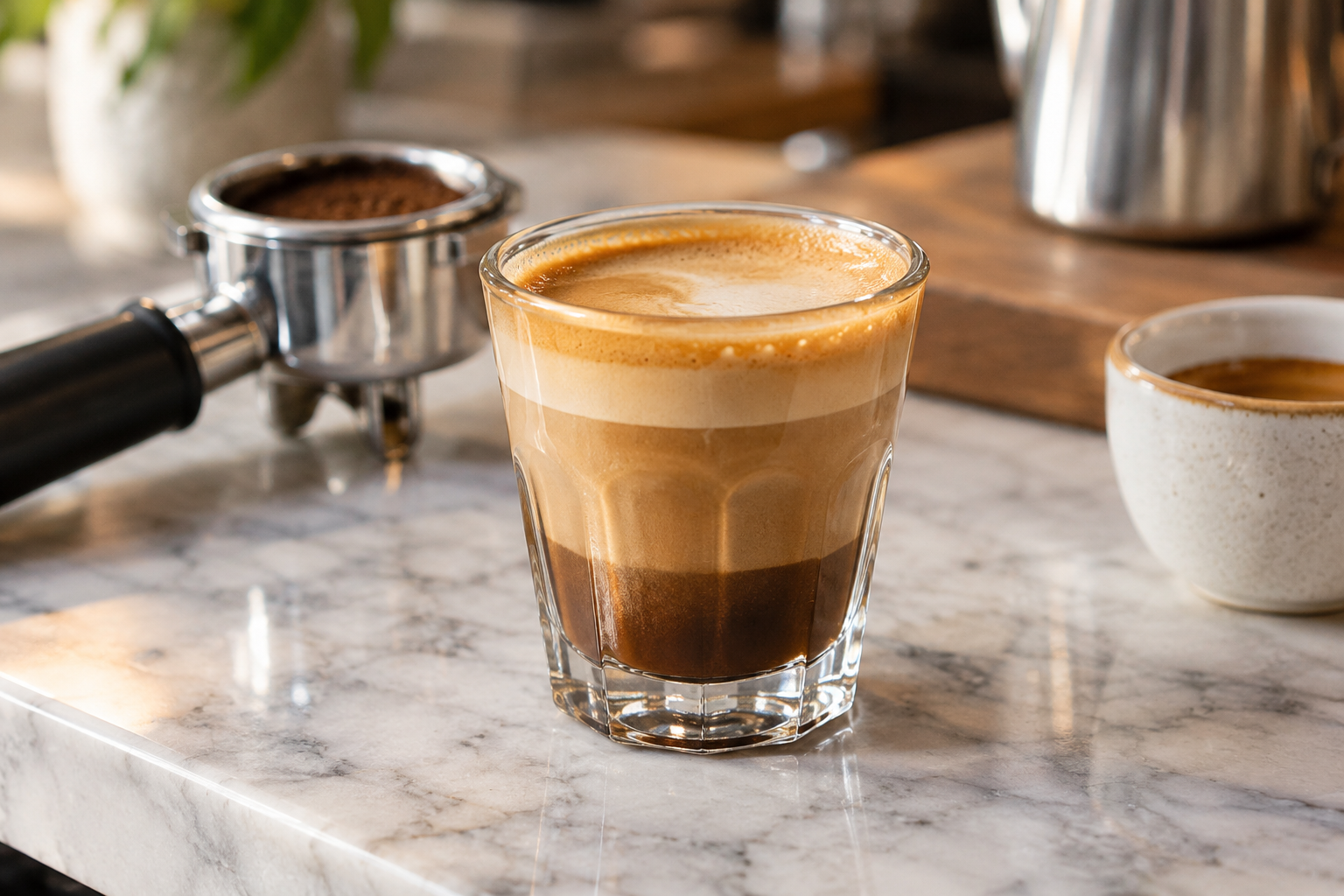
That single detail, minimal foam and a near 1:1 pour, separates a true cortado from almost every other milk-and-espresso drink on a menu. A latte drowns the shot in milk. A cappuccino stacks foam on top. A cortado just tempers.
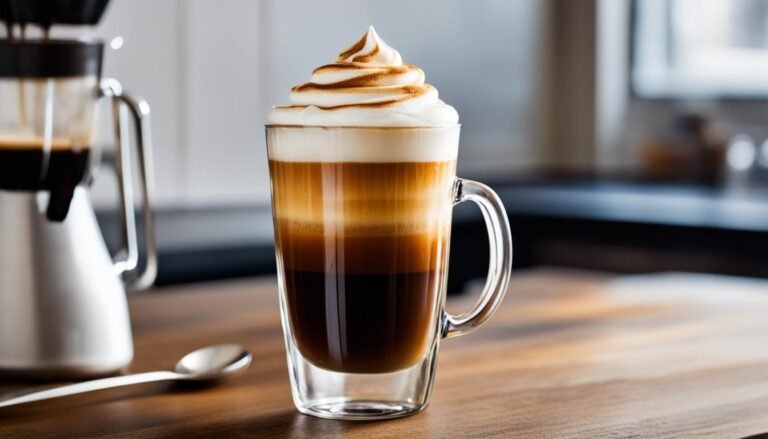
The drink is traditionally served in a small glass, often 4 to 6 ounces, so you see the two layers rather than one blended pool. In Spain and across much of Latin America, this is simply how a coffee break looks. In the US, the cortado spent years as a specialty-cafe secret before chains started putting it on the board.
If you've read a menu and skipped past "cortado" because you weren't sure what is a cortado drink actually tastes like, the short version is: espresso with the volume turned down, not the flavor turned off. If you want a wider view of espresso-based drinks before deciding where the cortado fits, our top 5 most popular espresso drink recipes is a useful place to compare formats side by side.
Cortado Ratio: What Is a Cortado Drink Actually Made Of?
The classic cortado ratio is one part espresso to one part steamed milk by volume, with almost no foam layer. A single or double shot of espresso gets matched, not diluted, by an equal pour of milk that's been warmed and lightly textured rather than whipped into microfoam.
Brew guidance updated in mid-2026 lays out a repeatable version of this: pull about 36 grams of liquid espresso from an 18-gram dose, which typically yields 40 to 60 milliliters, then top with the same volume of lightly steamed milk to hold that true 1:1 cortado balance.
That ratio is the whole identity of the drink. Push the milk higher and you've made a small flat white or a mini latte. Skip the milk and you've got a straight shot or a macchiato splash. The cortado sits in the narrow middle, which is exactly why it's tricky to order well at a chain that hasn't standardized the pour.
A quick reference for home brewing:
| Component | Typical amount |
|---|---|
| Espresso dose | 18 g ground coffee |
| Espresso yield | 36 g liquid, roughly 40 to 60 ml |
| Steamed milk | Matched 1:1 to the espresso volume |
| Foam | Minimal, thin skin only |
| Serving vessel | 4 to 6 oz glass |
Cafes in Spain sometimes serve this in a small tumbler called a "vaso," which is one reason the drink also gets tied to the term gibraltar coffee in the US.
Cortado Origin History: Where Is a Cortado From?
The cortado started in Spain, where "cortar" means to cut, and the name describes exactly what happens: warm milk cuts the intensity of a straight shot of espresso. The format later traveled through Latin America and into the specialty coffee scenes of Portland, San Francisco, and New York before national chains picked it up.
Specialty roasters and independent cafes treated the cortado as a barista's drink for years, something you ordered if you already knew what you wanted from your espresso and didn't need milk to hide it. That reputation is part of why the drink still reads as slightly insider, even now that it's on a national menu.
Blue Bottle, one of the specialty roasters credited with popularizing the drink stateside, has served cortado-style drinks for over a decade, keeping the small glass and light milk pour close to the Spanish original. That's a useful benchmark if you're comparing a cafe pour to a chain pour: the closer the glass is to 5 ounces, the closer you are to the traditional drink.
What Is a Cortado vs Macchiato: How Are They Different?
A cortado has roughly equal parts espresso and steamed milk, while a macchiato is mostly espresso with just a spoonful of milk foam "marking" the top. The difference is one of proportion, not just size.
- Macchiato: espresso with a dollop of foam, often 1 to 2 ounces total, intensely espresso-forward.
- Cortado: espresso matched with an equal pour of lightly steamed milk, 4 to 6 ounces, still espresso-forward but softer.
If a macchiato is espresso wearing a hat, a cortado is espresso wearing a light jacket. Both keep the shot as the star. The cortado just gives it a bit more company. For a deeper look at the smallest espresso pours, our guide to what is a single shot of espresso called covers the terms baristas use before milk ever enters the picture.
Cortado vs Cappuccino: What's the Difference?
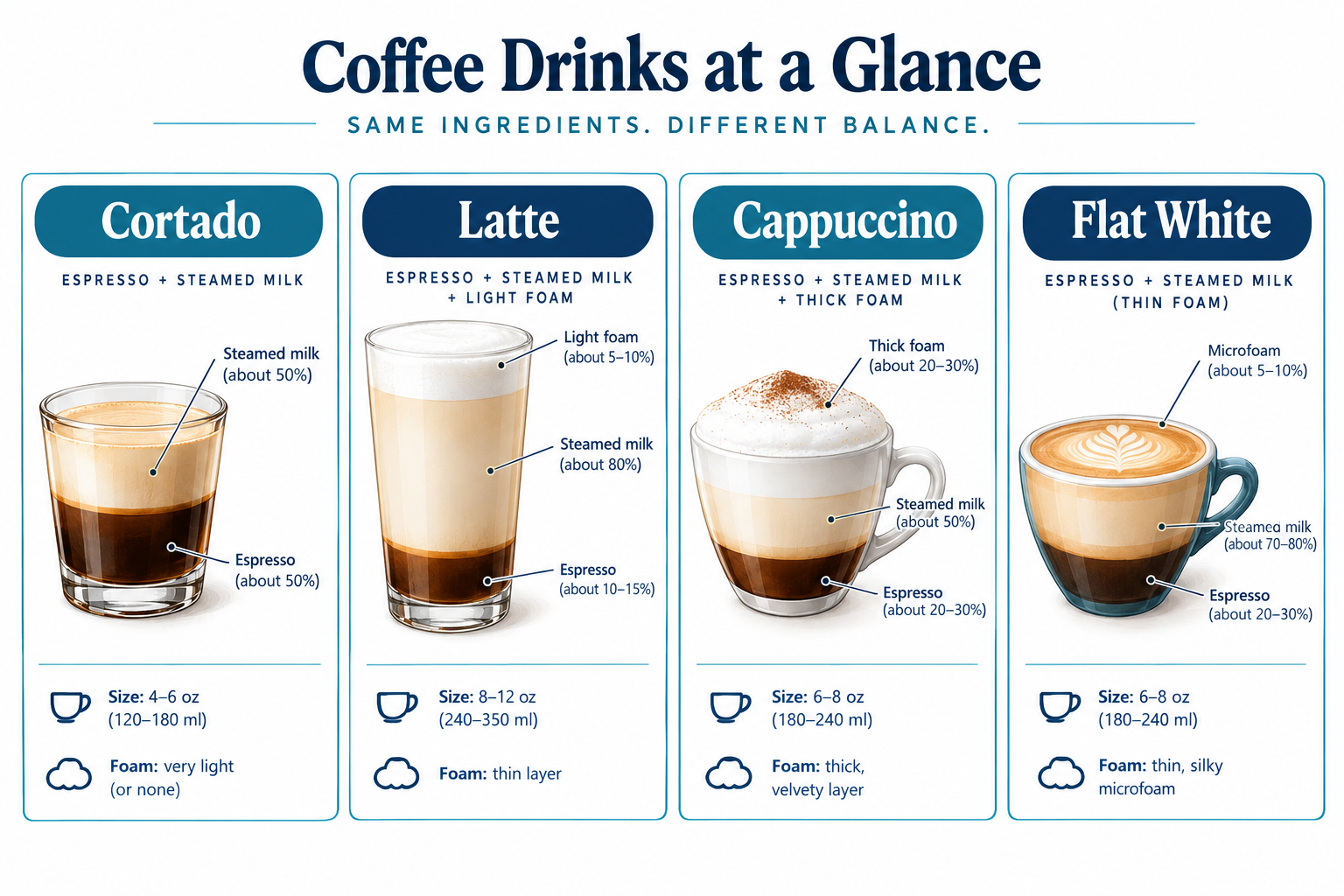
A cappuccino has roughly equal thirds of espresso, steamed milk, and thick milk foam, while a cortado skips the thick foam almost entirely and uses a near 1:1 espresso-to-milk pour instead. The cappuccino is airier and taller. The cortado is denser and smaller.
Order a cappuccino and you're drinking foam first, then milk, then espresso. Order a cortado and every sip tastes closer to the shot underneath. Cappuccino drinkers who like foam texture more than milk volume often end up loving cortados once they try one, since the flavor feels more direct without losing the milk entirely.
Cortado vs Flat White: What's the Difference?
A flat white uses more steamed milk than a cortado, poured with a thin layer of microfoam, and it's usually served in a larger cup, often 5 to 8 ounces. A cortado uses less milk and comes in a smaller glass with barely any foam at all.
Think of it as a volume difference more than a technique difference. Both drinks favor a smooth, integrated milk texture over big foam. But the flat white gives you more milk relative to espresso, which softens the shot further and makes the drink taste rounder and slightly sweeter, even with nothing added.
Cortado vs Latte: What's the Difference?
A latte uses far more milk than a cortado, often 3 to 5 times the espresso volume, plus a thin foam cap, served in an 8 to 16 ounce cup. A cortado holds the milk to roughly the same volume as the espresso, so the shot stays front and center instead of getting stretched across a bigger drink.
If you like the flavor of milky coffee but want to actually taste the espresso underneath, a cortado will read as noticeably stronger than a latte of the same size, because there simply isn't as much milk diluting it.
Cortado vs Americano: Which Is Better?
Neither drink is objectively better. They solve different problems. A cortado cuts espresso with milk for a rounder, creamier sip, while an americano cuts espresso with hot water for a longer, lighter black coffee.
- Choose a cortado if you want a short, espresso-forward drink with a smooth milk texture and don't want much volume.
- Choose an americano if you want more liquid in the cup, prefer black coffee, or are avoiding dairy without switching to an alternative milk.
Neither one hides the espresso. They just change what's cutting it, milk or water. If your household leans dairy-free instead, our piece on what is a sweet coffee with milk called covers where flavored milk drinks fit next to a cortado on the spectrum.
| Drink | Milk ratio | Typical size | Foam |
|---|---|---|---|
| Cortado | ~1:1 with espresso | 4 to 6 oz | Minimal |
| Macchiato | Just a spoon of foam | 1 to 2 oz | Small dollop |
| Cappuccino | Equal thirds milk/foam | 5 to 6 oz | Thick |
| Flat white | More milk than cortado | 5 to 8 oz | Thin microfoam |
| Latte | 3 to 5x espresso volume | 8 to 16 oz | Thin cap |
Cortado Drink Size: How Many Ounces Is a Cortado?
A traditional cortado is 4 to 6 ounces total. Starbucks' version is served in an 8-ounce "short" cup, roughly double the volume of a specialty-cafe pour.
That size gap matters because it changes the ratio math. Starbucks builds its cortado from three ristretto shots of Blonde Espresso and steamed whole milk, poured hot only into that 8-ounce cup. Three shots in a bigger cup keeps the drink espresso-forward even at the larger size, but purists point out it's a different scale than the Spanish original, where 4 to 5 ounces was always the target.
As of late July 2026, menu trackers list the classic Starbucks cortado at around $5.25 for about 90 calories, with flavored permanent additions including a Pecan Oatmilk Cortado around $5.75 for 120 calories and a Brown Sugar Oatmilk Cortado around $5.95 for 130 calories. Those oat milk versions swap the dairy and add syrup, which nudges the drink further from the unsweetened original but keeps the small-cup format intact.
Decision rule: if you want the traditional experience, order at an independent cafe and ask for it in a small glass. If you want a bigger, sweeter, more accessible version, the chain versions do the job, just expect a rounder, less intense cup.
How Much Caffeine Is in a Cortado?
A standard cortado has roughly the same caffeine as one to two shots of espresso, since the milk adds volume but no caffeine. A single-shot cortado runs about 63 mg of caffeine, and a double or three-shot version (like Starbucks' ristretto build) lands closer to 130 to 190 mg, depending on shot count and roast.
Because the milk-to-espresso ratio stays tight, a cortado delivers more caffeine per ounce than a latte or cappuccino of similar size. If you're watching your daily intake, our breakdown of what is an unhealthy amount of caffeine a day is worth a look before ordering a three-shot version on repeat.
Cortado Taste and Flavor Profile
A cortado tastes like a slightly softened straight shot: the roast character and acidity of the espresso stay clear, while the milk rounds off sharp edges and adds a light sweetness. Coffee-slang's comparative description puts it well: smaller than a latte, smoother than a straight shot, and creamier than a macchiato.
Because there's no thick foam cushioning the sip, you taste the espresso almost immediately, then the milk arrives a beat later to soften the finish. Roasts with brighter acidity or fruit-forward tasting notes tend to show through more clearly in a cortado than in a latte, since there's less milk to mute them. Darker, chocolate-forward roasts read as rounder and a bit more dessert-like.
If you're choosing beans specifically for this drink, look for a roast profile you'd also enjoy as a straight shot. A cortado won't rescue a flat or under-extracted espresso. It just makes the flaws slightly quieter.
Why Do Baristas Like Cortados?
Baristas tend to like cortados because the small milk pour doesn't hide anything, so a poorly dialed shot has nowhere to disappear. A latte can mask channeling or a weak extraction under a lot of milk. A cortado can't.
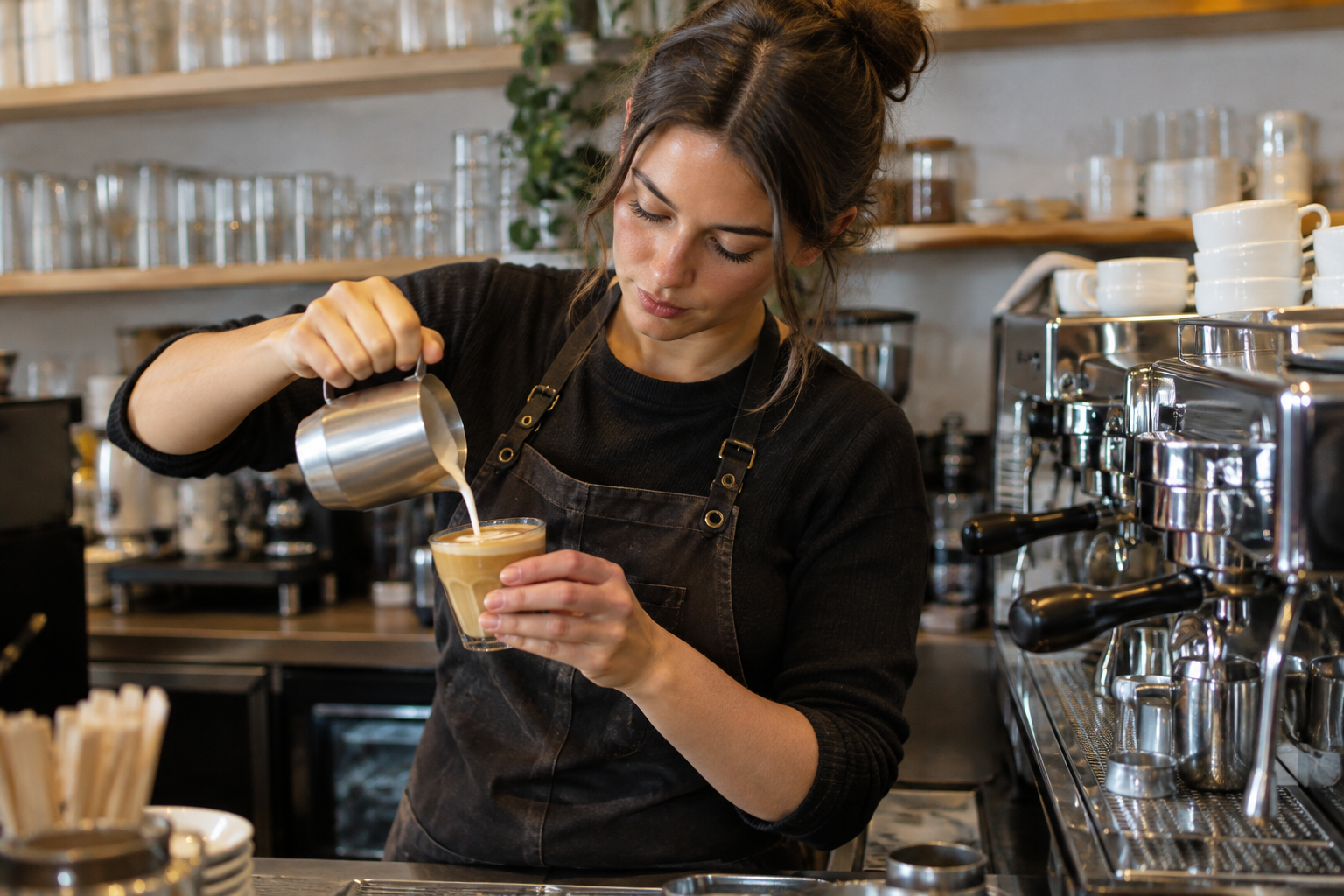
That's part of what makes it a drink baristas quietly gravitate toward rather than push hard on menus. It rewards a well-calibrated grinder, a fresh roast date, and careful attention to shot volume, three things a good barista already cares about. Reading crema as it settles, timing the pull, and matching milk volume by eye instead of guessing all show up more clearly in the final cup.
Coffee culture writing around the drink echoes this: cortados stay relevant not because they're flashy, but because of how deliberately they're built, which keeps the focus on espresso quality rather than milk theatrics. If you want to build that same skill at home, our guide to mastering latte art covers milk-steaming technique that transfers directly to cortados, even without the pour-art finish.
How to Make a Cortado at Home
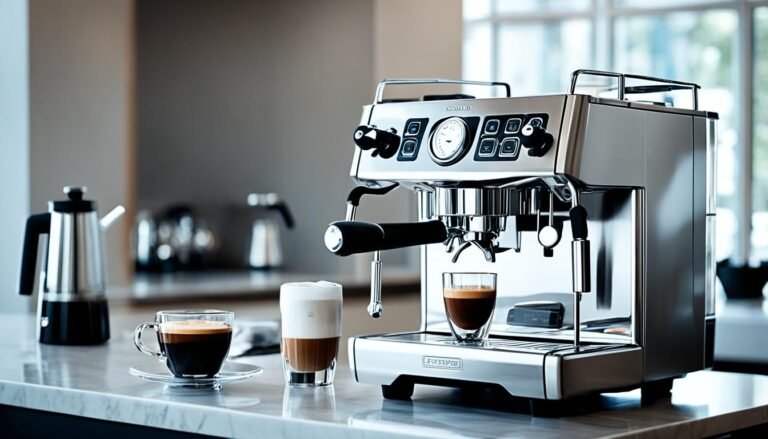
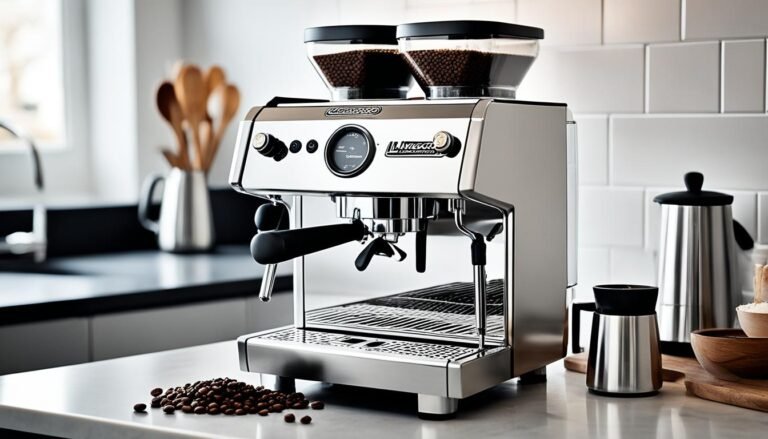
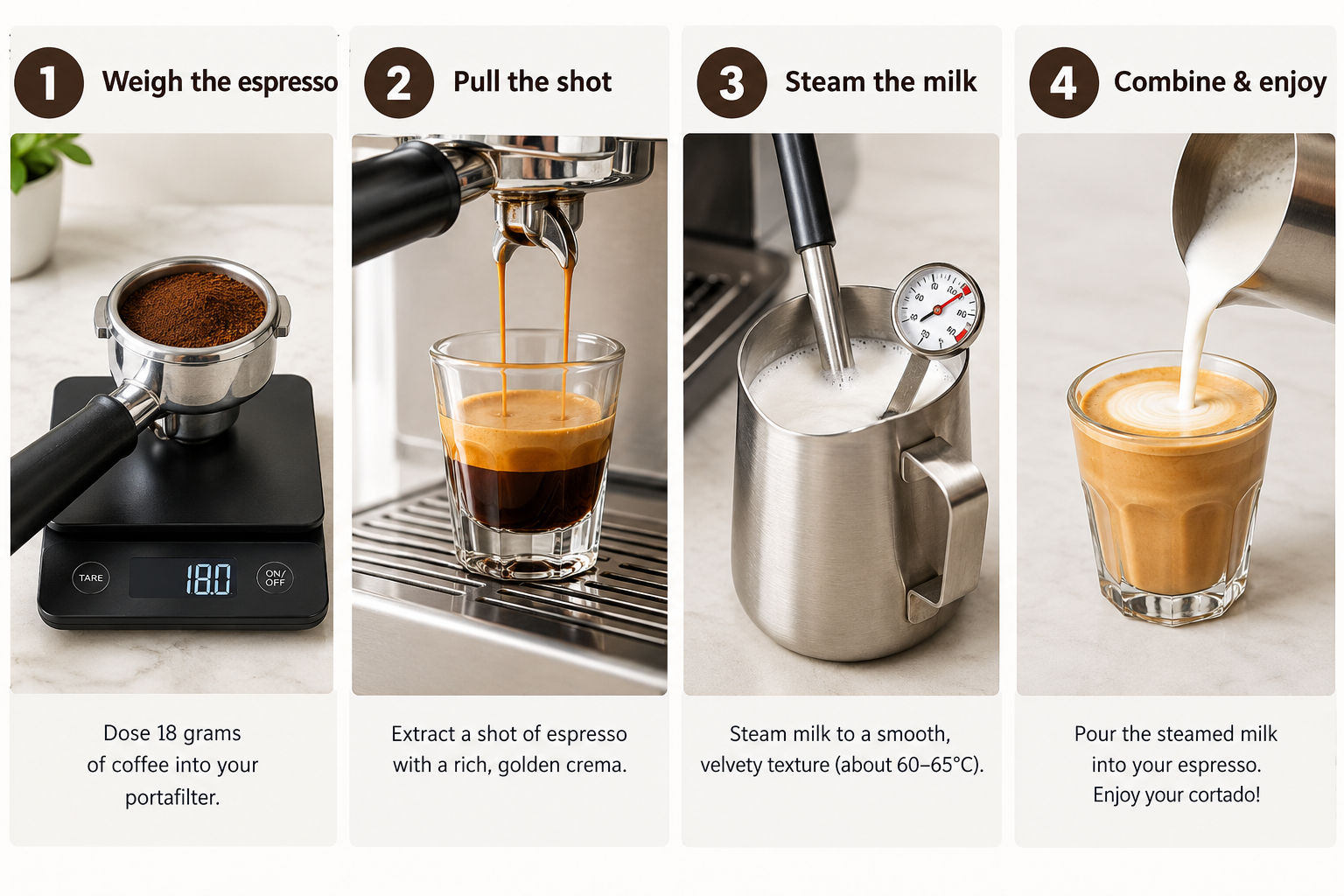
You can make a cortado at home with any espresso machine (or a moka pot in a pinch), a small steaming pitcher, and a scale. The method is short: pull the shot, steam the milk lightly, match the volumes, pour.
Equipment:
- Espresso machine or moka pot
- Burr grinder for a fresh, even grind
- Small steaming pitcher (12 oz or smaller works best for this volume)
- Milk thermometer, optional but helpful
- A Gibraltar glass by Libbey or any small 4 to 6 oz glass
Method:
- Grind 18 g of fresh coffee just before brewing. Grind size matters here more than in a drip brew, since it controls how fast water moves through the puck.
- Pull the shot to a yield of about 36 g (roughly 40 to 60 ml), watching for a steady, honey-colored stream rather than a fast, pale one.
- Steam about the same volume of milk to around 130 to 140°F, just warm enough to feel hot but not scalding, with light texture and fine bubbles rather than a thick foam cap.
- Pour the milk into the espresso in the same glass, matching volume for volume.
- Serve right away, before the milk separates or the shot cools.
Why it works: matching the milk volume to the espresso volume, rather than eyeballing a "splash," is what keeps the ratio at 1:1 instead of drifting toward a mini latte. Steaming lightly instead of frothing hard keeps foam off the top, which is the visual and textural signature of the drink.
Troubleshooting:
- Too bitter or harsh? Your shot may be over-extracted. Check your grind size and dose before blaming the milk.
- Tastes watery? You likely poured too much milk. Cut back toward true 1:1.
- No crema, flat shot? Check your roast date. Beans more than 3 to 4 weeks past roasting lose the CO2 that builds crema.
- Milk won't hold texture? Use cold milk straight from the fridge and stop steaming as soon as it feels warm to the touch, before it scalds.
For grind and machine pairing details, our guides on what is the best grind of coffee for an espresso machine and what kind of coffee do you use for an espresso machine will help you troubleshoot before you blame the recipe.
Best Cortado Coffee Beans
The best beans for a cortado are ones you'd already enjoy as a straight shot, since the light milk pour won't cover up flaws. Medium roasts with balanced acidity tend to work well because they hold up under a small amount of milk without turning flat or overly sweet.
Single origin beans with bright, defined tasting notes, citrus, stone fruit, or floral character, show through clearly in a cortado. Darker roasts with chocolate or nut notes lean into a rounder, dessert-like cup once milk is added. Either direction works. The deciding factor is whether you like that roast on its own, black, before you ever add milk.
If you're still narrowing down beans generally, our buyer's guide to essential ingredients for coffee drink recipes breaks down what to look for on a bag before you commit to a bulk order.
Can You Make a Cortado at Home Without an Espresso Machine?
Yes, though the drink loses some of its crema and body. A moka pot produces a strong, concentrated coffee close enough to espresso to build a reasonable home cortado, and an AeroPress with a fine grind and short brew time gets you closer still.
Neither will fully replicate pressurized espresso extraction, so expect a slightly thinner texture and less crema than a machine-pulled shot. It's still a legitimate way to enjoy the format on a smaller budget.
Frequently Asked Questions
What is a cortado exactly? A cortado is a short espresso drink made with roughly equal parts espresso and lightly steamed milk, served in a 4 to 6 ounce glass with minimal foam. The milk softens the espresso without covering its flavor.
What is a cortado vs a latte in plain terms? A cortado uses about as much milk as espresso. A latte uses three to five times more milk than espresso. That's why a latte tastes milder and a cortado tastes stronger.
Is a cortado stronger than a cappuccino? It can taste stronger per sip because there's less foam and less total milk relative to the espresso, even though both drinks often use a similar shot count.
What is a cortado called at Starbucks? Starbucks simply calls it a Cortado, built from three ristretto shots of Blonde Espresso and steamed whole milk in an 8-ounce cup, served hot only.
Does a cortado have a lot of caffeine? A single-shot cortado has about 63 mg of caffeine. A three-shot version, like the Starbucks build, runs closer to 130 to 190 mg depending on the roast.
What is a Gibraltar coffee, and is it the same as a cortado? Gibraltar coffee is a US term for a cortado served in a small Gibraltar-style glass, popularized by cafes that used that exact glassware. The drink itself is essentially the same ratio and format as a traditional cortado.
Can I order a cortado dairy-free? Yes. Oat milk works especially well because its texture holds up to light steaming. Starbucks now offers permanent Pecan Oatmilk and Brown Sugar Oatmilk Cortado options built the same way, just with oat milk and added syrup.
Conclusion
A cortado earns its quiet reputation honestly. It's small, it's direct, and it doesn't give a weak shot anywhere to hide. Once you understand what is a cortado, and why the 1:1 ratio matters, ordering one (or making one) stops feeling like a gamble and starts feeling like a decision you can actually explain.
Start simple: pull a shot you'd drink on its own, steam an equal amount of milk without overdoing the foam, and pour. If the result tastes thin or bitter, the fix is almost always in the grind or the roast date, not the milk. Better coffee starts with better answers, and in this case, the answer is a ratio you can hold in your head before you ever touch the machine.
Keep Exploring Coffee Rank IQ
- Coffee Rank IQ home: reviews, brewing guides, and coffee science
- What Is a Lungo? The Long Shot vs Espresso and Americano
- What Is a Doppio? The Double Shot Explained Simply
- What Is a Red Eye Coffee? Black Eye and Green Eye Too
- What Is an Americano? Espresso, Water, and One Big Myth
References
- starbucksmenusa.com/cortado
- starbucksmenusa.com/cortado-menu
- www.onlinecoffeeguide.com/coffee-drinks/cortado
- www.starbucks.com/menu/product/2124649/hot
- www.americanrecruiters.com/2025/01/13/starbucks-expands-espresso-lineup-with-brand-new-cortado
- coffee-slang.com/coffee-recipes/cortado-recipe-a-smooth-balance-of-espresso-and-milk
- cortadocoffee.app/blog