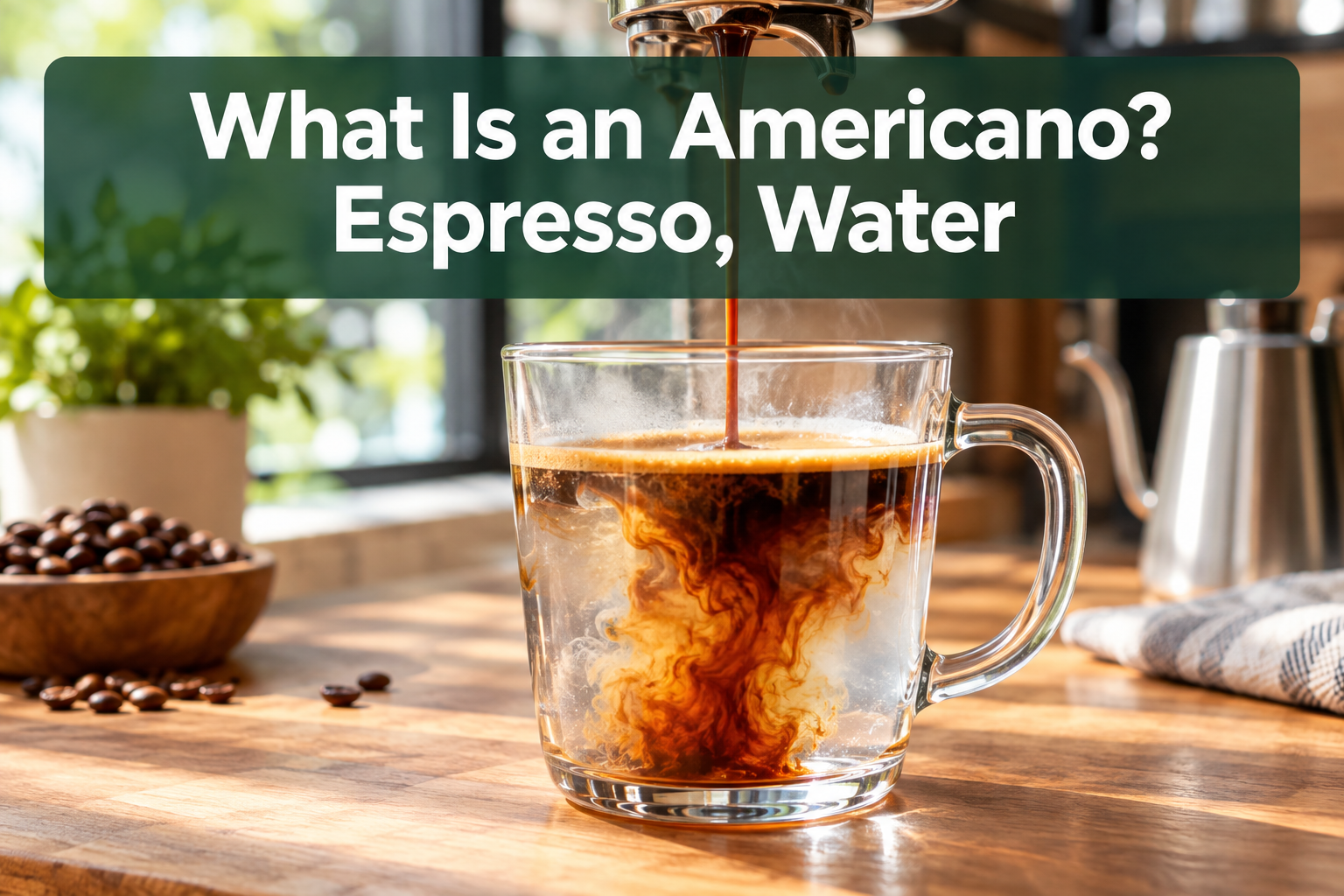
What Is an Americano? Espresso, Water, and One Big Myth
Quick Answer
An americano is a shot of espresso diluted with hot water, usually at a ratio of about 1 part espresso to 3 or 4 parts water, making a cup around 4 to 6 ounces. It tastes lighter than straight espresso but keeps the same body and caffeine load, because the water spreads the coffee out rather than adding anything new to it. That single fact is also where the biggest myth about this drink comes from.
Key Takeaways
- What is an americano? Espresso plus hot water, nothing else, usually served black in a standard coffee cup.
- The common ratio is 1 part espresso to 3 to 4 parts water, though cafes vary this.
- Caffeine in americano matches the shot it's built from, roughly 60 to 80 mg per single shot. Water dilutes strength, not caffeine.
- An americano is not the same as drip coffee, even at a similar volume, because it starts as pressure-extracted espresso.
- A white americano is an americano with a small amount of milk added, distinct from a latte.
- Water quality and temperature (around 185 to 200°F) change the cup more than most people expect.
- You can make an americano at home with a machine like a Breville, a pod system like Nespresso, or a moka pot and a kettle, no full espresso rig required.
- Whether you pour water first or espresso first is a style choice, not a rule. Both show up on cafe menus.
Is an Americano Just Espresso With Water?
Yes, mostly. An americano is espresso diluted with hot water, and that's the entire recipe. But "just" undersells how much the details change the cup.
The shot size, the water temperature, the ratio, and even the pour order all affect how the finished drink smells, tastes, and holds its crema. Two americanos made from the same beans can taste noticeably different depending on those four variables. So the honest answer to what is an americano is: a simple drink built from a small number of choices that actually matter.
What Is an Americano, Exactly?
An americano is a double or single shot of espresso combined with hot water, typically served in a standard coffee cup without milk. It sits in a category of its own: not espresso, not drip coffee, and not a milk drink.
Most cafe recipes land somewhere between 1:3 and 1:4, espresso to water, producing a finished cup between 4 and 6 ounces (roughly 120 to 180 ml). A few things worth knowing:
- The espresso comes first as a real shot, pulled through 9 bars of pressure, not just hot coffee poured over grounds.
- Water is added after brewing, so it dilutes an already complete extraction instead of creating a new one.
- Because it starts as espresso, an americano needs an espresso machine or a compatible pod system such as Nespresso, unless you use a workaround covered below.
Decision rule: if you want the aroma and body of espresso in a bigger, easier-to-sip cup, an americano is the drink. If you want a coffee brewed directly at that larger volume, you want drip coffee instead, which is a different process entirely.
What's the Difference Between an Americano and Regular Coffee?
The core difference is extraction method, not just strength. An americano is espresso stretched with water, while drip coffee is brewed by passing water through grounds one time at a slower rate. That difference shapes everything else.
Americano vs black coffee: both are served without milk, so in that narrow sense an americano is a black coffee. Is an americano a black coffee then, in the way most people mean it? Yes, if "black coffee" just means no milk or sugar. But it is not the same as a standard drip roast served black, because the flavor compounds came from pressure extraction first.
Americano vs drip coffee: drip coffee extracts flavor directly into its final volume of water over several minutes. An americano extracts a small, concentrated shot in under 30 seconds, then dilutes it. Coffee researchers and brewing guides note that this produces a fuller, more layered cup at a comparable size, even though the total coffee dose can be similar.
Is americano stronger than regular drip coffee? In flavor intensity per sip, often yes, because espresso extraction pulls oils and compounds that drip brewing handles differently. In raw caffeine per ounce, it depends on the specific roast and dose used for each, so treat "stronger" as a taste and body claim more than a caffeine claim.
Common mistake: assuming an americano is weaker than drip coffee because it looks lighter in the cup. Color is not a caffeine gauge. A pale americano can carry the same punch as a dark, syrupy double espresso, just spread across more liquid.
How Do You Make an Americano?
Pull a shot of espresso, then add hot water at roughly a 1:3 to 1:4 ratio, and you have an americano. The two variables that separate a good one from a flat one are water temperature and pour order.
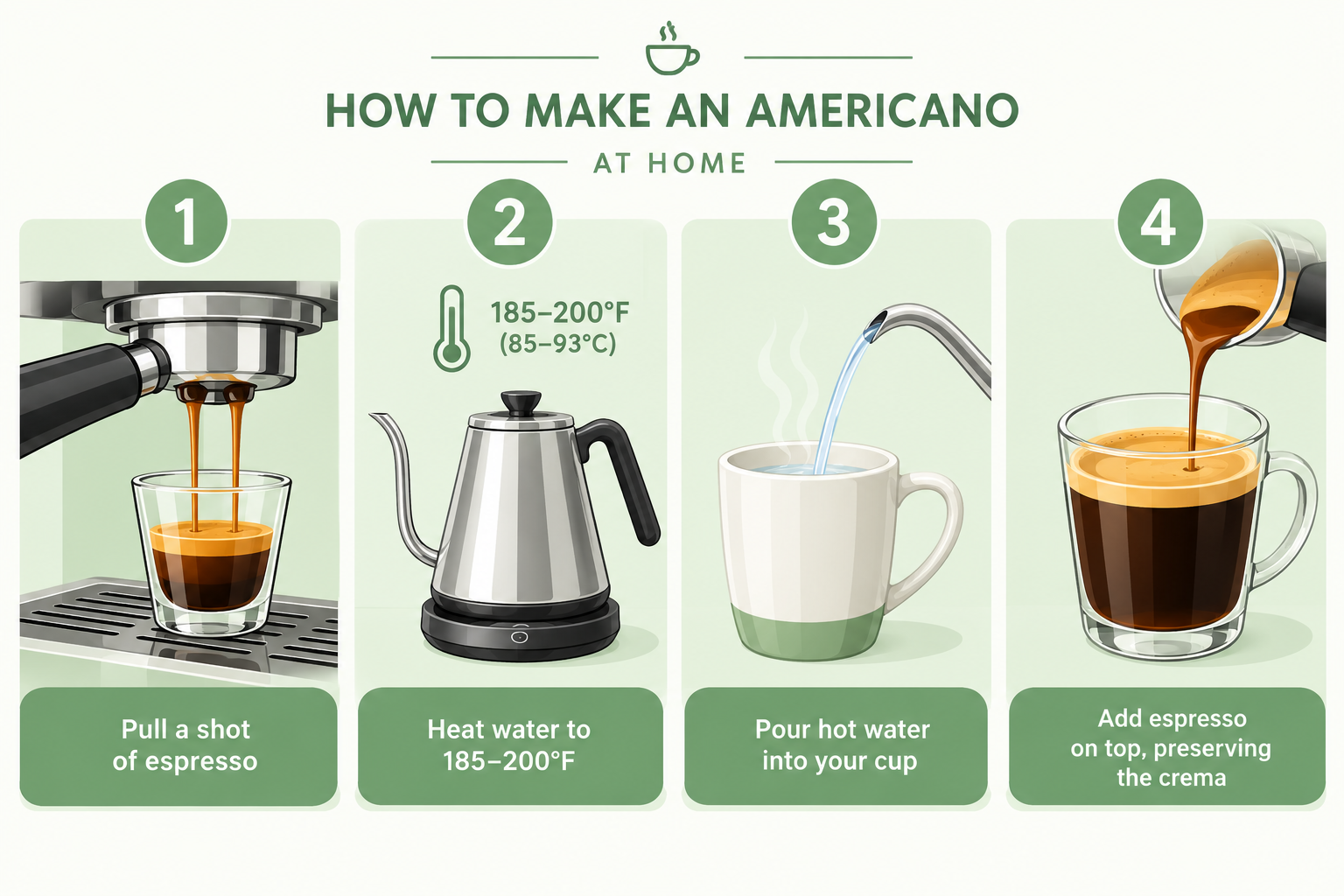
What you need:
- An espresso machine, a pod machine like Nespresso, or a stovetop moka pot as a substitute
- Filtered or soft water, since two-thirds to four-fifths of the drink by volume is water
- A kettle or the machine's hot water function
- A cup roughly 6 to 8 ounces
Method:
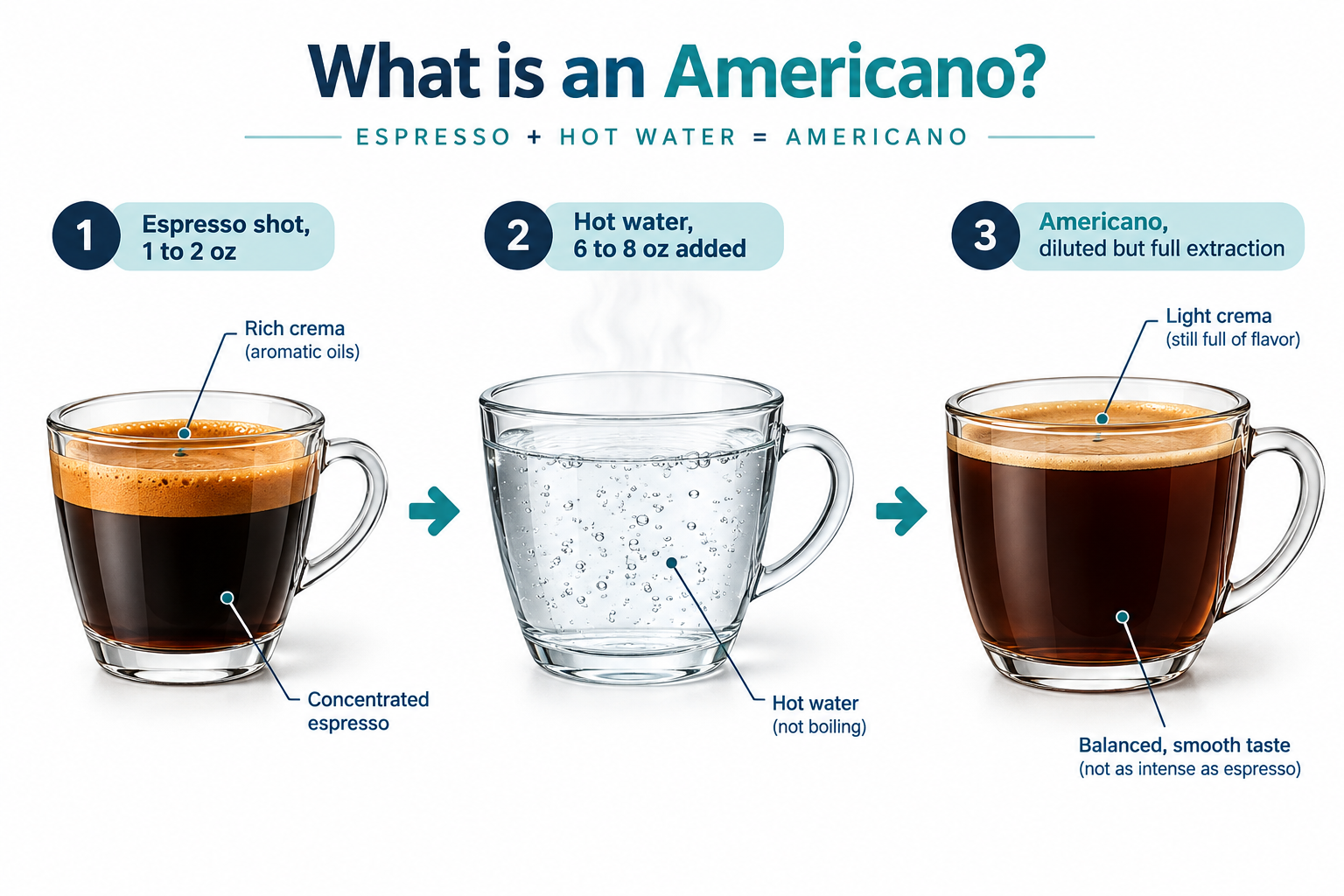
- Pull a single or double shot of espresso (about 1 to 2 fluid ounces).
- Heat water to 185 to 200°F (85 to 93°C). Skip full boiling; 212°F water tends to taste harsh and metallic against fresh espresso.
- Add 3 to 4 parts hot water for every 1 part espresso.
- Pour water first, then espresso on top if you want the crema to stay visible and the aroma to hit first. Pour espresso first, then water, if you want a smoother, more blended cup. Both are common in cafes.
Can you make an americano at home without an espresso machine? Yes, with a workaround. A moka pot produces a concentrated, espresso-like shot under pressure and works as a substitute base. Even strong stovetop coffee diluted with hot water will taste closer to a weak long black than a true americano, since it lacks the pressure extraction, but it is a reasonable stand-in when you don't own a machine.
What's the ratio of espresso to water in an americano? Most sources agree on 1:3 to 1:4 as the standard starting point, adjustable to taste. Start at 1:3 for a bolder cup and move toward 1:4 if it tastes too sharp.
If you're deciding on equipment, our best grind of coffee for an espresso machine guide covers the grind size that keeps extraction consistent before you dilute anything, and our guide to water quality and temperature for espresso goes deeper on why that added water matters as much as the shot itself.
Americano vs Espresso: What's the Difference?
An espresso is a concentrated 1 to 2 ounce shot with no added water. An americano is that same shot diluted with 3 to 4 times its volume in hot water. Same coffee, different final drink.
The practical differences:
| Feature | Espresso | Americano |
|---|---|---|
| Volume | 1 to 2 oz | 4 to 6 oz |
| Water added | None | 3 to 4 parts per shot |
| Crema | Full, thick | Thinned, partial |
| Sip pace | Fast, small sips | Slower, coffee-mug pace |
| Caffeine per serving | Same shot as base | Same, just diluted |
Order espresso if you want intensity in a small format. Order an americano if you want that same coffee stretched into something you can actually sit with. For a wider tour of what an espresso machine can produce beyond these two drinks, see what coffee you can make with an espresso machine.
Why Is It Called an Americano?
The name traces to a popular story about Italian baristas diluting espresso for American soldiers around World War II, since GIs reportedly found straight espresso too strong and unfamiliar. That story is widely repeated in cafe blogs and general reference sources today, but it's worth treating as traditional origin lore rather than a documented historical study, since none of the current sources trace it to a dated primary record.
What is verifiable: "americano" is Italian for "American," and the drink's name reflects that it was built to suit American taste preferences for a larger, milder cup compared to a traditional Italian espresso. Whatever the precise origin, the name stuck, and it now describes a specific, consistent drink on menus worldwide.
Does an Americano Have More Caffeine Than Espresso? The Big Myth
No. A single-shot americano has the same caffeine as the shot it's built from, roughly 60 to 80 mg, because water dilutes concentration, not caffeine content. This is the biggest misconception people carry into ordering an americano.
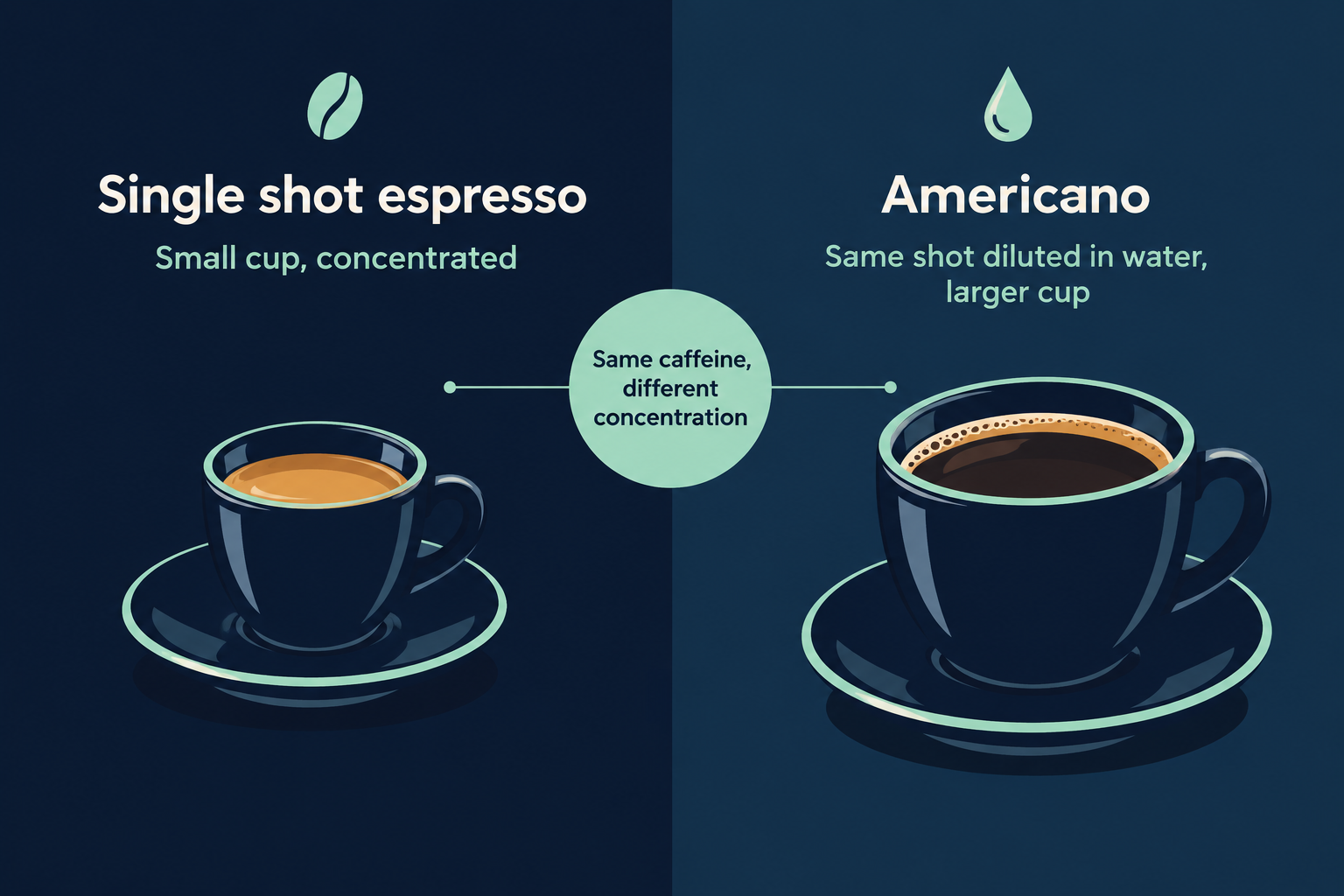
Here's the mechanism: caffeine is extracted during the espresso pull, not during dilution. Adding hot water afterward changes volume and taste intensity, but it does not remove or add caffeine molecules. So a 6 ounce americano and a 1.5 ounce espresso, made from the identical shot, contain the identical amount of caffeine.
Where the myth gets a little more true: if a cafe uses a double shot for its americano (common at places like Starbucks) but a single shot for its plain espresso, the americano will carry more total caffeine, simply because it started with more coffee, not because of the water. Always check shot count, not drink name, when comparing caffeine.
Edge case: an iced americano ordered with extra shots, which many customers request for a stronger cold drink, will have noticeably more caffeine than a standard hot single-shot version. That's a shot-count difference, not a temperature or dilution effect.
For a full breakdown of caffeine by shot count, our guide on how much caffeine is in a single shot of espresso is a useful companion read, and is espresso stronger than coffee covers the broader strength question in more depth.
Americano vs Latte: Which One Should You Get?
Choose an americano if you want black coffee with body and no dairy. Choose a latte if you want espresso balanced with steamed milk and a soft, rounded texture. The two drinks solve different problems.
- Americano: espresso and hot water, no milk, lighter mouthfeel, lets the coffee's actual flavor lead.
- Latte: espresso and steamed milk with a thin layer of foam, sweeter feel even without added sugar, heavier in the mouth.
Decision rule: if you're watching calories or dairy, or you simply like the taste of coffee more than milk, order the americano. If you want something that eats more like a treat and drinks slower, order the latte. There is no wrong choice here, just a different daily habit.
Americano vs Long Black: What's the Difference?
An americano is made by adding espresso to hot water. A long black is made by adding hot water first, then pouring espresso on top, without changing the ratio much. The distinction is really about pour order and crema preservation, not the recipe itself.
Because the espresso hits the water last in a long black, more of the crema survives on the surface, giving a slightly stronger aroma on the first sip. An americano, built the traditional way with water added after the shot, tends to have thinner, more broken-up crema. In practice, many baristas use the terms loosely, and the "correct" method varies by cafe and country, so don't be surprised if a long black and an americano taste nearly identical depending on where you order.
What Does an Americano Taste Like?
Cafe recipe guides describe an americano as smoother and less intense than straight espresso, with the coffee's original tasting notes, whether that's chocolate, citrus, or nuttiness, still noticeable but softened. Compared to drip coffee, tasters in brewing guides note it carries more body and a slightly syrupy weight, since it started as a pressure-extracted shot rather than a slow pour.
Roast and origin still show through. A single origin, lighter roast will read brighter and more acidic once diluted. A darker roast will read heavier and more bitter. The dilution doesn't erase the bean's character, it just turns the volume down. If your americano tastes flat or watery, the fix is usually one of three things: too much water, water that was boiling instead of 185 to 200°F, or an under-extracted shot to begin with.
Can You Add Milk to an Americano? White Americano Explained
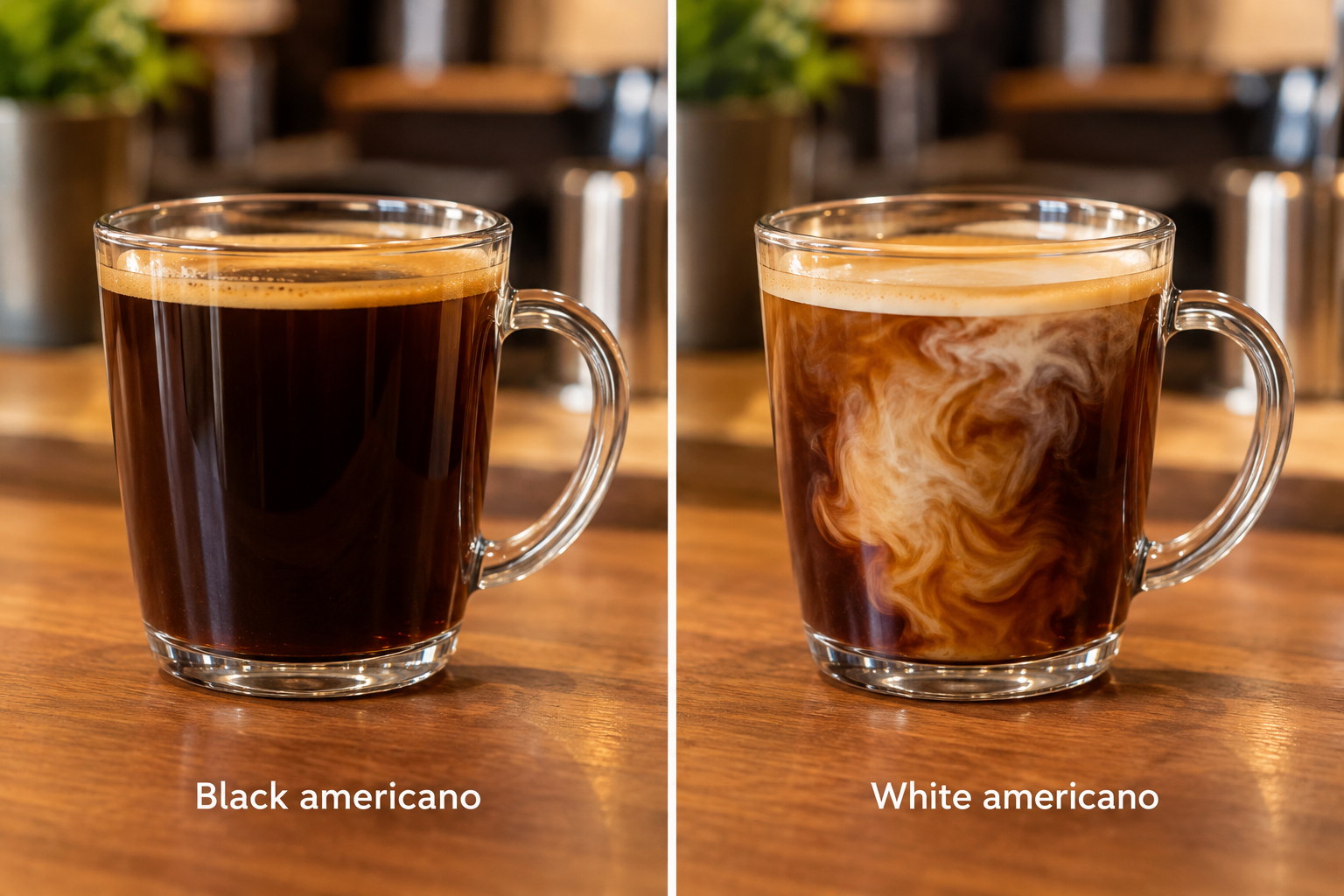
Yes. Adding a splash of milk to an americano creates what's commonly called a white americano, distinct from a latte because the milk-to-coffee ratio stays low. It's a small tweak, not a different drink category.
What is an americano with milk called? Most cafes and home brewers call it a white americano. It typically means a small pour of steamed or plain milk added to a standard americano, softening the acidity without turning it into a milk-forward drink like a latte or cappuccino. If you want the reverse, a milk-forward drink built the same way espresso and water are combined, our guide on what half espresso half milk is called covers that territory directly.
Common mistake: ordering a "white americano" expecting latte-level creaminess. It's still mostly black coffee with a light touch of milk, not a creamy drink.
What Is an Iced Americano?
An iced americano is the same espresso and water recipe, built cold instead of hot, usually poured over ice with cooler or room-temperature water in place of hot water. It's become one of the most ordered cold espresso drinks in the US, especially through spring and summer.
To make one at home: pull your shot as usual, let it cool for a few seconds, pour it over a full glass of ice, then top with cold water at roughly the same 1:3 to 1:4 ratio used hot. Some drinkers use less water since ice will dilute further as it melts. If you want a stronger iced version, ask for or use an extra shot, since a double-shot iced americano will noticeably outpace a single-shot version in caffeine.
How Much Does an Americano Cost?
A hot americano at a major US chain typically runs in a similar price bracket to a small latte, usually a few dollars less since it skips milk. At Starbucks, an americano is a standard menu item available hot or iced, and pricing generally sits below their milk-based espresso drinks of comparable size. Dunkin' also lists americanos as a core menu item, again priced below their lattes and macchiatos.
If you're brewing at home, the ongoing cost drops fast. A pod system like Nespresso makes single or double shots for pennies in electricity plus the cost per pod, and a Breville espresso machine, while a bigger upfront purchase, brings the per-cup cost down further over time since you control the bean cost directly. For a full walkthrough on choosing between a manual machine, a semi-automatic, or a pod system for drinks like this, our buyer's guide to choosing the best espresso machine breaks down which setup fits which budget and routine. Check the current price on machines before deciding, since promotions shift throughout the year.
Conclusion
What is an americano, in one sentence: espresso diluted with hot water, built to taste lighter without losing what made the espresso good in the first place. The recipe is simple, but the details, ratio, water temperature, shot quality, and pour order, decide whether it tastes bright and layered or flat and thin.
The myth worth retiring is the caffeine one. An americano doesn't carry more caffeine than the espresso it's built from. It just spreads that same caffeine across more liquid, which is exactly why it drinks easier without hitting harder.
If you're building a home setup around this drink, start with your grind size and water quality before you spend on anything flashy. Those two variables change the cup more than the machine's price tag does.
Frequently Asked Questions
Is an americano the same as black coffee? Both are served without milk, so an americano qualifies as a black coffee in that sense. But it's not the same as drip coffee served black, since it starts as a pressure-extracted espresso shot before water is added.
What is an americano at Starbucks? Starbucks serves it as espresso topped with hot water, available hot or iced, following the same general 1:3 to 1:4 style ratio used across most US cafes.
Does an iced americano have less caffeine than a hot one? No, temperature doesn't change caffeine content. An iced americano has the same caffeine as a hot one made from the same shot count, unless extra shots are added.
Can I use Nespresso pods to make an americano at home? Yes. Most Nespresso machines have a dedicated Americano or Lungo button, or you can manually add hot water to a standard pod shot at your preferred ratio.
What's the difference between a white americano and a latte? A white americano is mostly black coffee with a small splash of milk added. A latte is a milk-forward drink with steamed milk making up most of the volume.
Why does my homemade americano taste bitter or watery? Bitter usually means the water was too hot, close to boiling, or the shot was over-extracted. Watery usually means too much water relative to the shot. Adjust toward a 1:3 ratio and keep water around 185 to 200°F.
Keep Exploring Coffee Rank IQ
- Coffee Rank IQ home: reviews, brewing guides, and coffee science
- What Is a Cortado? The Small Drink Baristas Quietly Love
- What Is a Lungo? The Long Shot vs Espresso and Americano
- What Is a Doppio? The Double Shot Explained Simply
- What Is a Red Eye Coffee? Black Eye and Green Eye Too
References
- www.masterclass.com/articles/americano-coffee-guide
- www.kimbocoffee.com/blogs/kimbo-blog/how-to-make-americano-coffee
- thecoffeelocator.com/guide/how-to-make-americano
- www.merriam-webster.com/dictionary/Americano
- coffeestudies.com/espresso-drinks/what-is-americano
- knowsips.com/coffee/americano
- en.wikipedia.org/wiki/Caff%C3%A8_americano
- coffeeblog.co.uk/what-is-americano-coffee
- www.webstaurantstore.com/blog/5272/what-is-an-americano.html