Espresso Crema: What It Tells You About Your Shot
Quick Answer
Espresso crema is the tan colored foam that sits on top of a shot, formed when hot water at roughly 9 bars of pressure forces dissolved CO2 and coffee oils to emulsify as they exit the portafilter. Its color, thickness, and how long it holds together give you a fast read on roast freshness, grind size, and whether your machine is hitting the right pressure. Crema is a useful diagnostic tool, but it is not a reliable predictor of flavor on its own.
Key Takeaways
- Espresso crema is an emulsion of CO2 bubbles, coffee oils, and compounds like melanoidins and proteins, not just trapped air.
- A good double shot typically shows 3 to 5 millimeters of crema that covers the surface and holds for 30 to 60 seconds, sometimes up to two minutes.
- Pale blond crema usually points to under-extraction or a very light roast. Dark brown or black crema often signals over-extraction or a very dark roast.
- Crema thicker than about 8 millimeters is often a sign of beans that are still degassing heavily, usually within 3 to 4 days of the roast date.
- Thin or missing crema is commonly caused by stale beans, a grind that's too coarse, or water pressure below the roughly 9 bar standard.
- Crema is not the same as milk foam, and it is not required for espresso to taste good, though its absence usually means something changed in the shot.
- Robusta beans and darker roasts tend to produce more visible crema than lighter, washed arabica lots, largely because of oil and CO2 content, not because they taste better.
- Treat crema as a supporting signal alongside taste, shot time, and brew ratio, not as a standalone quality score.
What Is Espresso Crema and Why Does It Matter
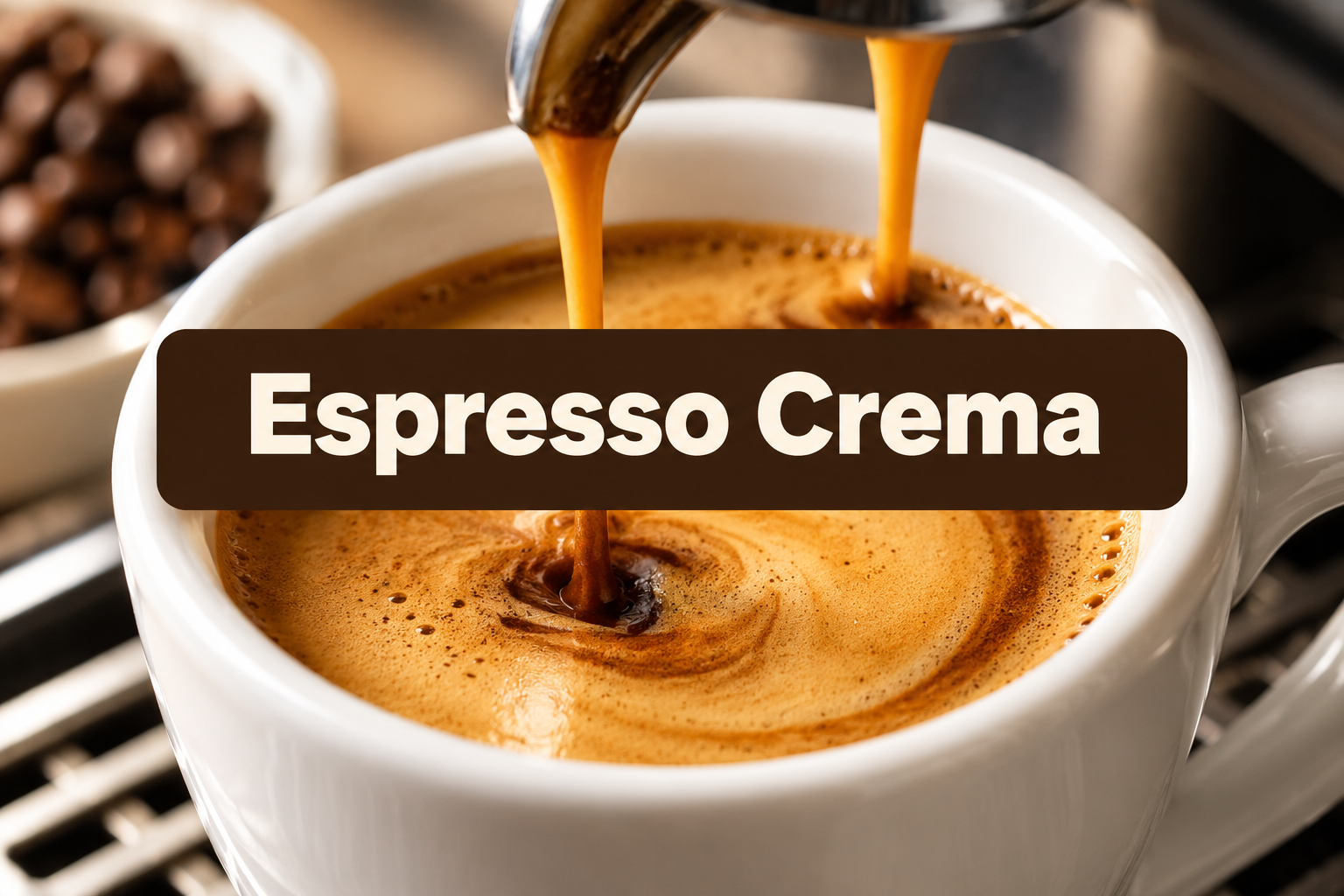
Espresso crema is the layer of tan foam that forms on top of a properly pulled shot. It happens because hot water under pressure pushes through tightly packed, finely ground coffee and pulls dissolved carbon dioxide gas out of the beans while emulsifying oils and soluble compounds at the surface.
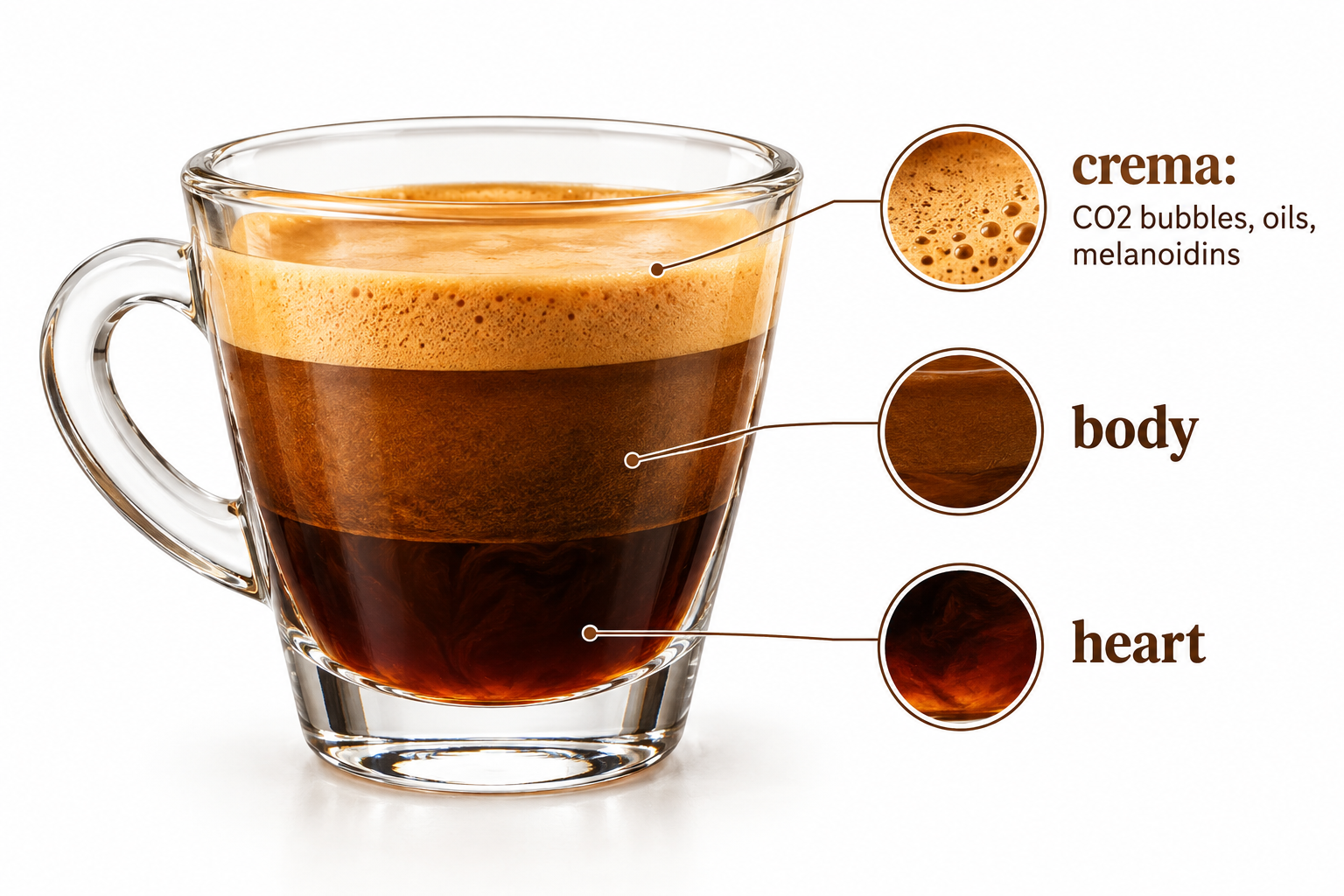
That last detail matters more than most people realize. Crema is not just air bubbles sitting on your coffee. Recent technical breakdowns describe it as a genuine emulsion: microscopic CO2 bubbles wrapped in a film of coffee oils, proteins, melanoidins (the brown compounds created during roasting), and polysaccharides that act like natural surfactants to hold the foam together. Surfactants are molecules that let two things that don't normally mix, like oil and water, form a stable film. That's the same basic chemistry that keeps a soap bubble intact.
This is also why crema behaves differently from foam on a latte. Milk foam is mechanically whipped air trapped in liquid fat and protein. Espresso crema is a byproduct of extraction itself, created under roughly 9 bars of pressure as water forces its way through the puck of ground coffee. If you've ever wondered what is crema in espresso terms most baristas actually use, this is it: pressure plus fresh CO2 plus oil equals foam, no whisking required.
Because crema forms from gas that's still in the bean, it works as a rough freshness gauge and a quick check on your machine's pressure and your grind size. That's the real reason espresso crema gets so much attention. It's not about looks. It's a visible readout of things you can't see happening inside the portafilter.
Espresso Crema: What Your Shot's Surface Actually Reveals
A single glance at espresso crema tells you three things at once: how fresh the beans are, roughly how the shot extracted, and whether your machine reached proper pressure. No other part of the cup gives you that much information before you've even taken a sip.
Color signals roast level and extraction balance. Thickness and hold time signal bean freshness and CO2 content. Texture, whether the bubbles are fine and even or large and patchy, signals puck preparation and channeling, which is when water finds an easy path through the coffee instead of moving evenly through the whole bed.
None of these signals work in isolation. A shot with beautiful crema and a sour, thin taste still has a problem. A shot with thin crema and a syrupy, balanced taste might be perfectly fine, especially with a lighter roast or beans that are a few weeks past the roast date. Read crema as one instrument on the dashboard, not the whole dashboard. For a deeper look at how extraction and crema interact, our guide to extraction and crema walks through the full mechanism.
What Does Crema Color Tell You About Espresso Quality
Crema color maps closely to extraction and roast level. Pale, blond, or gray crema usually means under-extraction or a light roast. Golden to hazelnut tones usually mean a balanced shot. Reddish-brown crema often shows up with well-developed medium to dark roasts pulled at correct pressure, and very dark brown or black crema typically points to over-extraction or a very dark roast.
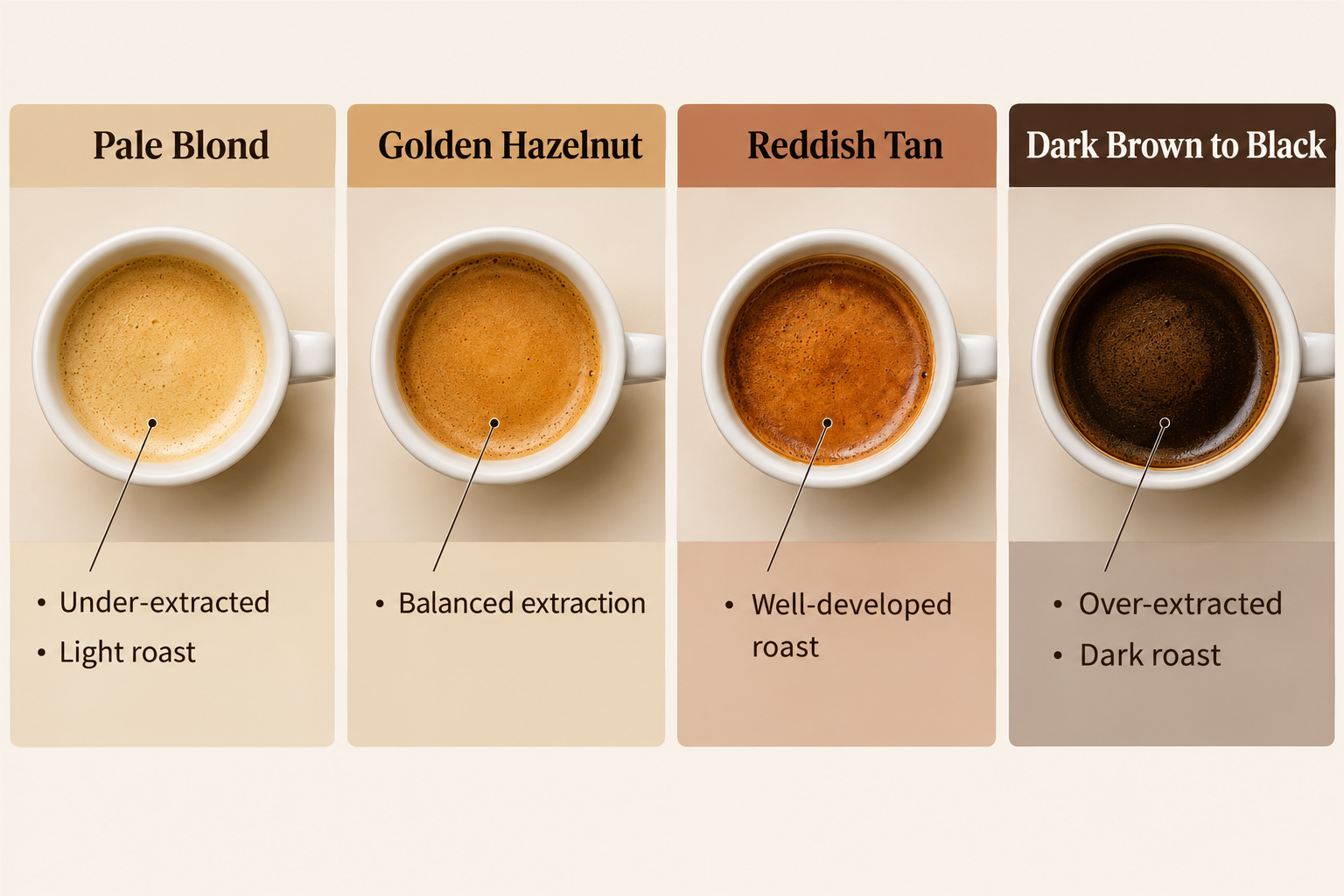
| Crema color | Likely cause | What to check |
|---|---|---|
| Pale blond or gray | Under-extraction, light roast, shot too fast | Grind finer, check shot time |
| Golden or hazelnut | Balanced extraction | Nothing, this is the target range |
| Reddish tan | Well-developed roast, good pressure | Confirm taste matches expectation |
| Dark brown to black | Over-extraction, very dark roast, bitter aroma | Grind coarser, shorten shot time |
Dark versus light colored crema comes down to two overlapping variables: how dark the roast is and how the shot extracted. A dark roast naturally produces darker crema because more melanoidins have formed during roasting. But a light roast pulled too slowly through too fine a grind can also darken toward brown, which is why color alone shouldn't be your only read. Pair it with shot time and taste before you decide anything is wrong.
Decision rule: if the crema looks pale and the shot runs faster than about 20 to 25 seconds for a double, grind finer. If it looks unusually dark and bitter aromas show up in the first sniff, grind coarser or pull the shot shorter.
How Much Crema Should a Good Espresso Shot Have
A well-pulled double shot generally carries about 3 to 5 millimeters of espresso crema that fully covers the surface of the cup. That's the range most current barista training material treats as normal for a standard extraction.
Thick crema versus thin crema tells two different stories, and neither one is automatically good or bad:
- Thick crema (over roughly 8mm): Often means the beans are very fresh, sometimes within 3 to 4 days of the roast date, and still releasing a lot of CO2. It looks impressive, but it can also mean the shot is under-extracted because gas is pushing water around the puck faster than it should move.
- Thin crema (a faint film or patchy coverage): Usually points to beans that have lost CO2 with age, a grind that's too coarse, or water pressure that's not reaching the roughly 9 bar mark needed for proper emulsification.
- Moderate, even crema (3 to 5mm): The range most guides associate with balanced extraction and beans in their useful freshness window, typically somewhere between 5 and 21 days off roast.
Can you get too much crema on espresso? Yes. A thick, foamy cap that fills a third of the cup on very fresh beans often crowds out the liquid espresso underneath and can make the shot taste hollow or overly acidic until the beans rest a few more days. If your beans are less than 4 days old and the crema looks excessive, that's a freshness issue, not a machine issue.
Why Is Your Espresso Crema Too Thin or Missing
Thin or missing espresso crema almost always traces back to one of three causes: stale beans, an incorrect grind size, or insufficient brewing pressure. Fix the right one and the crema returns.
Work through this checklist when you're dealing with no crema on espresso:
- Check the roast date. Beans lose CO2 steadily after roasting. Past about 3 to 4 weeks, many beans simply don't have enough gas left to build a thick foam layer, even if the shot tastes fine.
- Check grind size. A grind that's too coarse lets water rush through the puck instead of building pressure. Dial your burr grinder finer and watch the shot time move closer to 25 to 30 seconds for a double.
- Check your machine's pressure. Espresso needs roughly 9 bars to properly emulsify oils and CO2 into foam. Older machines, worn gaskets, or a scaled boiler can all drop pressure below that threshold.
- Check the dose and tamp. An uneven tamp or too light a dose creates channeling, where water carves a path through the loosely packed coffee and skips the rest of the puck.
Common mistake: blaming the beans first. Grind size and machine pressure cause more thin-crema complaints than actual staleness, especially in machines that haven't been descaled in a while. Our espresso machine maintenance guide covers descaling schedules that keep pressure where it should be.
How Long Does Espresso Crema Last After Pulling a Shot
A properly extracted espresso crema should hold together and stay visible on the surface for roughly 30 to 60 seconds, and sometimes up to a minute or two before it starts to thin and break apart. That window is normal, not a flaw.
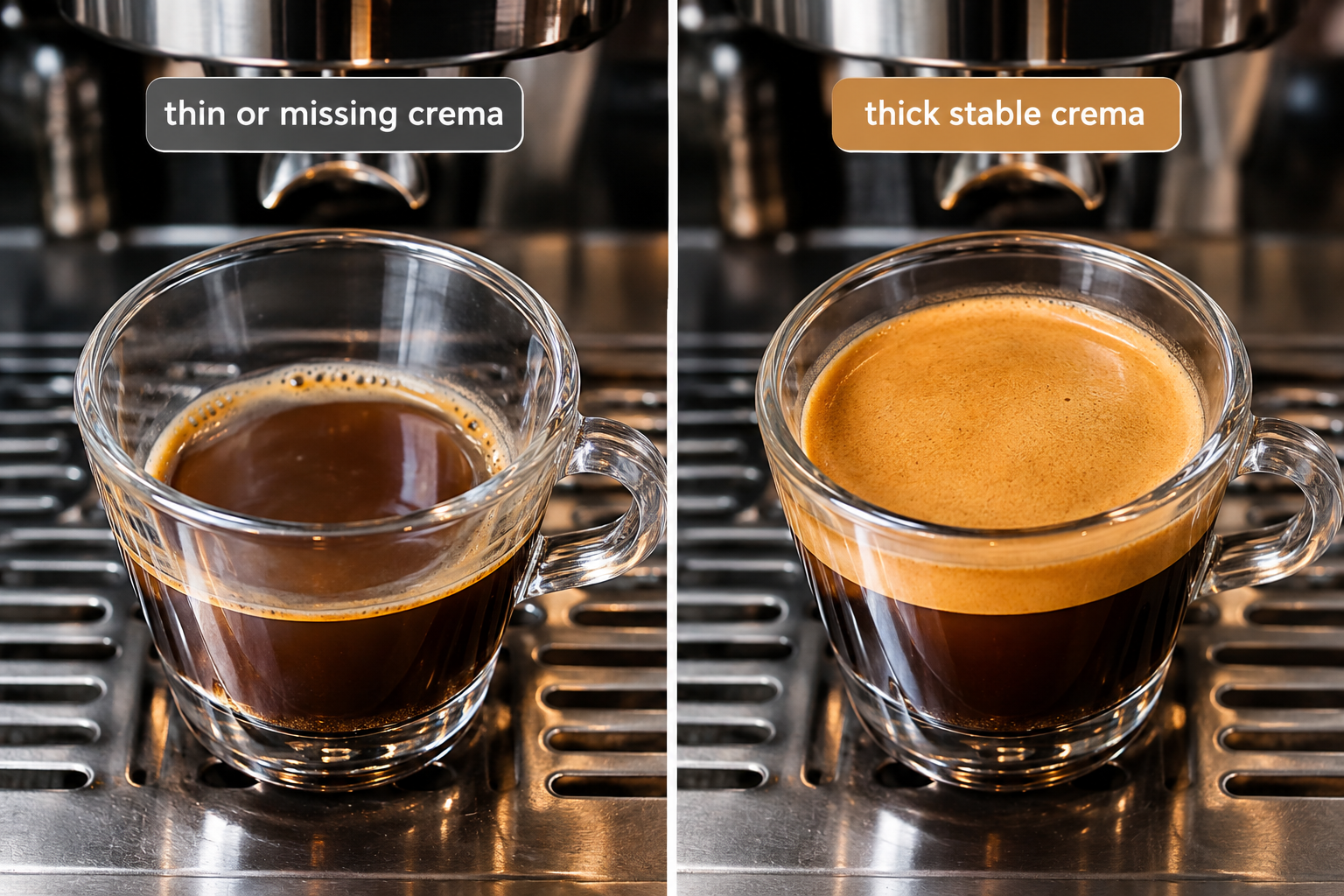
Crema collapses because the CO2 bubbles that hold it together are constantly rising, popping, and losing their gas to the air. There's no way to make crema permanent, and you shouldn't want to. Slow collapse over the first minute is a sign the emulsion was stable when it formed. Crema that vanishes within a few seconds usually means the bubbles were weak from the start, often because of stale beans or low pressure. Crema that never seems to break down within a couple of minutes can be a sign of unusually fresh beans still pushing out gas.
Quick example: pull a shot, set a timer, and watch it. If the crema is gone by the 15-second mark, treat that the same way you'd treat thin crema: check roast date, grind, and pressure.
Does Crema Affect the Taste of Espresso?
Crema itself has a mild, slightly bitter flavor and a light texture, but it does not carry most of the flavor compounds that define a shot's taste. Recent myth-busting coverage from equipment makers and trainers is consistent on this point: crema reflects extraction and roast level more than it predicts how good the coffee will taste.
Can you make good espresso without crema? Yes, and this trips people up constantly. A shot pulled from beans that are three weeks off the roast date might show a thin, patchy crema and still taste sweet, balanced, and full of clear tasting notes. Meanwhile a shot with a gorgeous, thick crema cap from beans roasted two days ago can taste sour or hollow because the beans haven't had time to settle.
Crema does have one real influence on taste: it adds a light bittering note and a touch of texture to the first sip, since the crema layer hits your palate before the espresso underneath. Some drinkers enjoy that contrast. Others prefer stirring it in before drinking. Neither approach is wrong.
Decision rule: trust your tasting notes over your eyes. If the shot tastes sweet, balanced, and clean, thin crema isn't a problem worth chasing.
Fresh vs. Stale Beans, Robusta, and Crema Espresso Beans
Fresh beans build noticeably more crema than stale ones because they hold more dissolved CO2 from roasting. Beans past their useful window, usually beyond 3 to 4 weeks off the roast date, lose enough gas that even a well-dialed shot may show thinner foam.
This is where the phrase crema espresso beans gets used loosely in marketing. There's no special bean variety built purely for crema. What actually changes crema output:
- Roast date: fresher beans mean more CO2 and more crema, up to a point.
- Roast level: darker roasts generally build more visible crema because roasting creates more oils on the surface and more melanoidins.
- Processing method: the way beans are processed after harvest, whether washed, natural, or honey processed, changes sugar and oil content slightly, which can shift crema color and body.
- Species: this is where robusta crema comes in.
Robusta beans, a hardier coffee species with roughly double the caffeine and a different fat and carbohydrate profile than arabica, are well known in the trade for producing thicker, longer-lasting crema. Many Italian espresso blends include a percentage of robusta specifically for that visual effect and for added body, not because robusta tastes better on its own. On the flavor side, robusta typically brings a harsher, more rubbery profile compared to arabica's wider range of tasting notes, so a thick crema from a robusta blend isn't automatically a sign of a better cup, just a different one.
If you're chasing bigger crema at home, buying fresh roasted espresso beans and using them within the first two to three weeks off the roast date will do more than switching bean species. Check the roast date on the bag before checking anything else.
Crema vs. Foam: What's the Difference
Crema and foam are related but not the same thing. Crema forms from pressure-extracted CO2 and coffee oils during brewing. Foam, like the microfoam on a latte, forms when air is mechanically introduced into milk through steam or a whisk.
The distinction matters for a common question: coffee crema vs espresso crema. Drip coffee, pour over, and cold brew are all brewed without the roughly 9 bar pressure espresso machines use, so they don't produce a true crema layer. You might see a thin bubble ring on a fresh pour over during the bloom, the initial 30-second soak that lets grounds release gas before the rest of the water goes through, but that's a much weaker version of the same CO2 release, not crema in the espresso sense. If you're comparing brewing methods, our guide on what coffee you can make with an espresso machine breaks down which drinks actually rely on crema and which don't.
How to Make Espresso Crema at Home
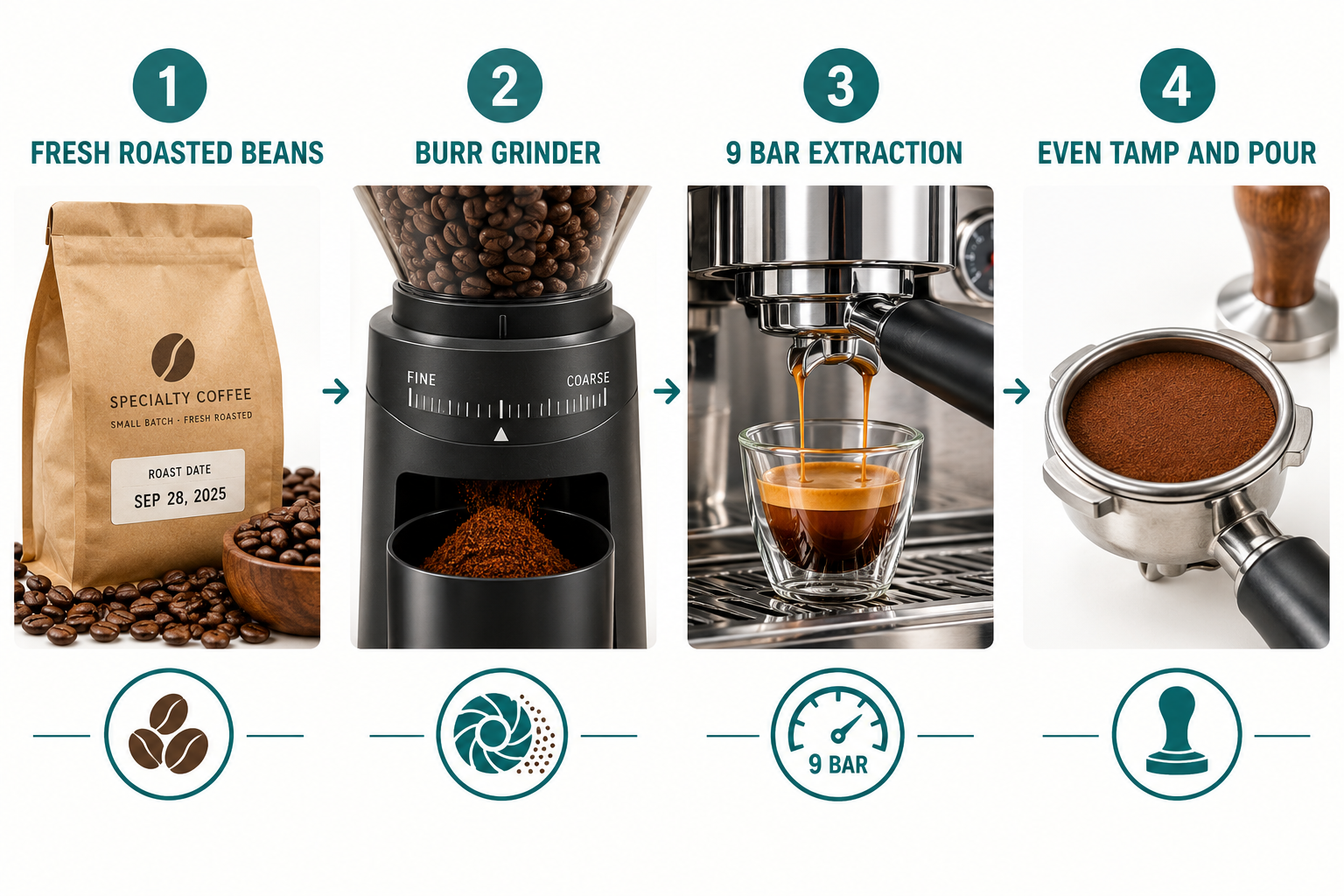
Building good espresso crema at home comes down to four controllable variables: fresh beans, correct grind size, proper dose and tamp, and a machine that reaches roughly 9 bars of pressure.
Here's a practical setup for how to make espresso at home with consistent crema:
- Start with beans roasted within the last 5 to 21 days. Too fresh and the crema will be excessive and unstable. Too old and it thins out.
- Grind fine with a burr grinder, not a blade grinder. Blade grinders produce uneven particle sizes that cause channeling and patchy crema.
- Dose and tamp evenly. An uneven puck surface is one of the most common causes of thin, spotty crema, even with great beans.
- Confirm your machine holds roughly 9 bars. Entry-level machines vary quite a bit here. If your shots run fast and pale no matter what you change, the pump or boiler may be the actual limit. Our espresso machine buying guide walks through which models hold pressure consistently at different price points.
- Time the shot. Aim for roughly 25 to 30 seconds for a standard double using a typical 1:2 brew ratio, meaning about 18 grams of ground coffee to 36 grams of liquid espresso.
If you're deciding what kind of coffee do you use for espresso machine setups at home, look for bags labeled specifically for espresso, since they're roasted and blended to hold up under pressure extraction better than beans meant for drip brewing. Compare the models of grinders and machines before you buy, since a mismatched grinder is one of the most common reasons home shots underperform cafe shots. You can check the current price on a few options before committing to one setup.
How Do You Know If Your Espresso Machine Is Working Right by Looking at Crema
Consistent, moderate crema across multiple shots with the same beans and grind setting is a good sign your machine is holding steady pressure and temperature. Crema that varies wildly shot to shot, even when nothing else changes, points to a mechanical problem.
Watch for these patterns:
- Consistently thin or absent crema with fresh beans and a proper grind often means the pump isn't reaching 9 bars. This is common in machines with worn gaskets or scale buildup in the boiler.
- Excessively frothy, unstable crema that collapses almost instantly can mean water temperature is running too hot, which breaks down the oils responsible for holding the emulsion together.
- Crema that looks fine one day and disappears the next, with the same beans, usually means water temperature or pressure is drifting, which is a signal to descale or have the machine serviced.
This is one of the fastest, cheapest diagnostic tools you have. Before assuming your beans are bad, pull two shots back to back and watch whether the crema behaves the same way both times.
Frequently Asked Questions
What is crema in espresso, exactly? Espresso crema is the tan foam layer on top of a shot, formed when high-pressure water pulls CO2 gas out of freshly roasted beans and emulsifies it with coffee oils and other soluble compounds.
Is crema just air bubbles? No. Crema is CO2 gas trapped in a film of coffee oils, proteins, and melanoidins, which is why it behaves differently from a plain foam of air and water.
Why does my espresso have no crema at all? Stale beans, a grind that's too coarse, or a machine that isn't reaching roughly 9 bars of pressure are the three most common causes. Check the roast date first.
Can espresso be good without crema? Yes. Crema mostly reflects extraction and roast level, not flavor quality. A shot with thin crema can still taste balanced and sweet, and a shot with thick crema can still taste sour or hollow.
Does robusta make better crema than arabica? Robusta typically produces thicker, longer-lasting crema because of its oil and CO2 profile, but that doesn't mean better flavor. Many blends add robusta specifically for crema and body, accepting a harsher taste tradeoff.
How long should crema last before it's a problem? Around 30 to 60 seconds of stable crema is normal. If it's gone in under 10 to 15 seconds every time, check your grind size, roast date, and machine pressure.
Conclusion
Espresso crema won't tell you everything about a shot, but it tells you enough to fix problems before you even taste them. Pale, thin crema usually means stale beans, a coarse grind, or low pressure. Dark, heavy crema on very fresh beans often means the shot needs a few more days to settle. Moderate, golden crema that holds for a minute is a solid sign you're in the right range.
Use it as a first check, not a final verdict. Taste the shot, note the timing, and compare it against your usual brew ratio before deciding anything needs to change. Better coffee starts with better answers, and in this case the answer is sitting right on top of your cup.
Quick crema check tool
Pick an option to see the likely cause.
Keep Exploring Coffee Rank IQ
- Coffee Rank IQ home: reviews, brewing guides, and coffee science
- Best Espresso Machine for Beginners: 7 Picks That Forgive Mistakes
- Best Espresso Grinder: The Spec That Decides Your Shot
- Best Super Automatic Espresso Machine: Read the Cleaning Specs First
- Best Semi Automatic Espresso Machine for Real Home Kitchens
References
- homeespressohq.com/blog/how-to-read-an-espresso-shot
- caffeina.org/espresso-extraction/what-crema-means-in-espresso
- thecoffeelocator.com/guide/how-to-increase-espresso-crema
- www.indulgexpress.com/food/trends/2025/Apr/19/what-is-crema-and-what-can-it-tell-you-about-your-espresso
- grindset.cafe/blog/what-does-espresso-crema-tell-you
- www.kafgar.com/espresso-crema-color-the-visual-clue-to-a-great-shot
- coffeegeek.com/opinions/professionally-speaking/crema
- roestpost.ch/en/blog/espresso-crema
- www.slurrp.com/article/what-is-crema-and-what-can-it-tell-you-about-your-shot-of-espresso-1727604304592
- outin.com/blogs/news/espresso-crema-myths