Whole Bean vs Ground Coffee: How Fast Freshness Fades
Quick Answer
Whole bean coffee holds its aroma and flavor for roughly two to four weeks past the roast date when stored in an airtight container, while pre ground coffee starts losing meaningful flavor within 30 minutes of grinding and tastes noticeably flat after about a week. The difference comes down to surface area: grinding exposes far more of the coffee to oxygen, so a whole bean vs ground coffee comparison is really a comparison of how fast each form oxidizes.
Key Takeaways
- Grinding multiplies surface area by a large factor, which speeds up oxidation and aroma loss almost immediately.
- Whole bean coffee stays close to peak flavor for about 2 to 4 weeks after the roast date if kept sealed and away from light.
- Ground coffee loses its best flavor window within roughly 30 minutes to a few days, and most of it is gone within a week.
- A burr grinder used right before brewing keeps more aroma in the cup than any pre ground bag can offer.
- Storage matters for both forms, but it matters more for ground coffee because there is less coffee "left" to protect once staling starts.
- Coffee bean freshness is best judged by roast date, not by a printed "best by" date, which is usually a year out.
- Pre ground coffee is not a bad choice for every buyer. It is a fair tradeoff for convenience when the roast date is recent and the bag is used quickly.
What's the Difference Between Whole Bean and Ground Coffee
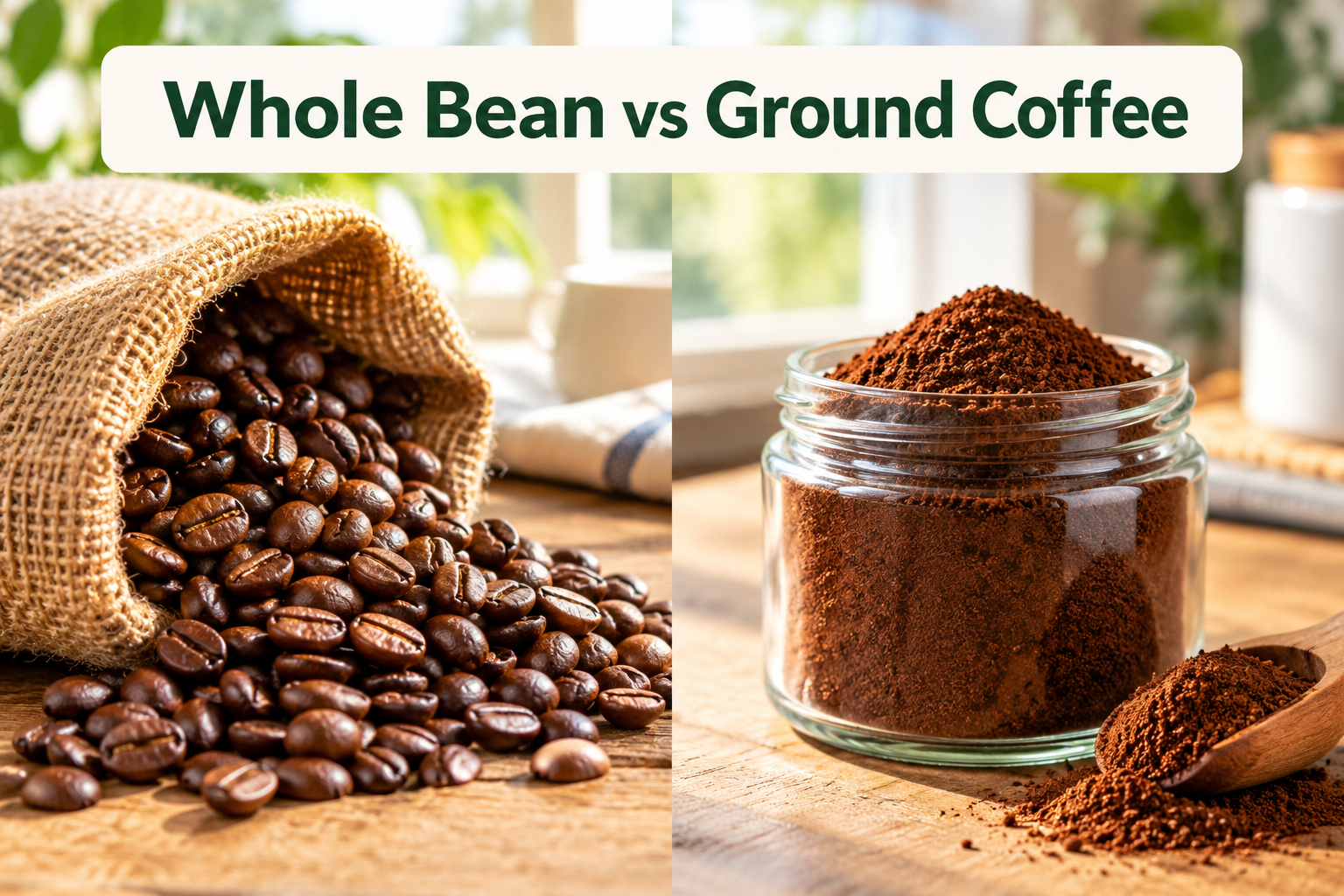
The core difference in whole bean vs ground coffee is timing: whole beans keep their flavor compounds locked inside until you grind them, while ground coffee has already released those compounds to the air. Whole beans are roasted coffee seeds sold intact. Ground coffee is that same roasted seed broken into smaller particles, either by the roaster or by you at home.
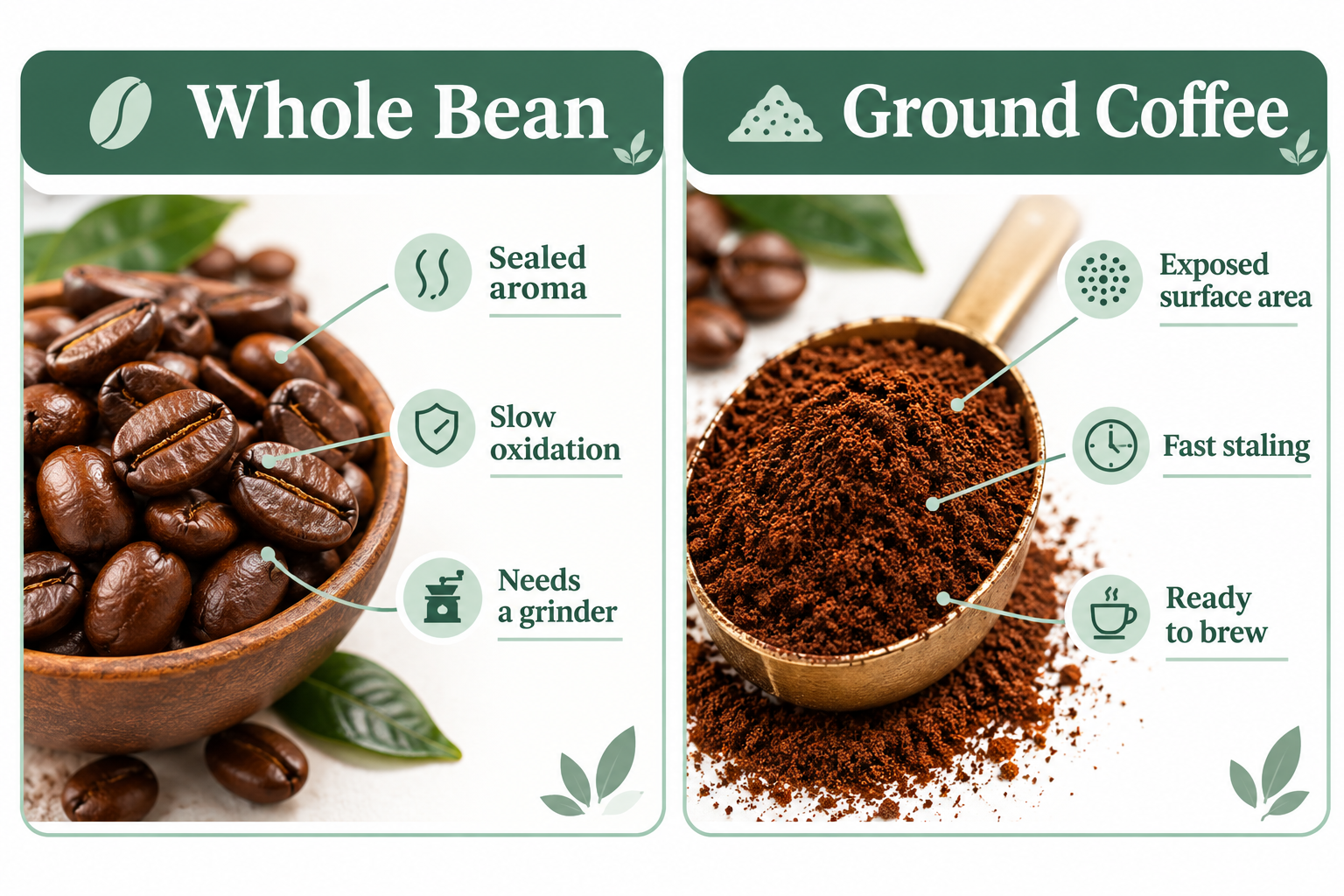
Cutting a bean into grounds does two things at once. It creates more surface area for oxygen to reach, and it releases carbon dioxide that was trapped inside during roasting. That gas escape is called degassing, and it carries aroma compounds out with it. A whole bean has one intact surface. Ground coffee for a typical drip brew has thousands of exposed surfaces per gram.
That is why a bag of pre ground coffee can smell strong the moment you open it, then noticeably weaker a few days later, while a bag of whole beans smells almost the same on day 1 and day 10. The beans are not more flavorful in some abstract sense. They are just releasing their flavor more slowly, which means you get to choose when that release happens.
If you want to understand what is physically inside that bean before it is ground, the beans used in most coffee guide breaks down the seed structure and species differences that affect how fast oxidation happens later.
Whole Bean vs Ground Coffee: Which One Stays Fresher
Whole bean coffee stays fresher than ground coffee, and the gap is not close. In most home storage tests, whole beans hold usable flavor for two to four weeks, while ground coffee drops off within days. If freshness is your main priority, whole bean wins in a whole bean vs ground coffee comparison almost every time.
The reason is mechanical, not mysterious. Coffee's aroma comes from hundreds of volatile compounds that evaporate on contact with air. Whole beans limit that contact to the outer skin of each seed. Ground particles have no outer skin left to speak of, so evaporation happens on every visible surface at once.
There is a practical way to notice this yourself. Open a fresh bag of whole beans and a fresh bag of ground coffee from the same roaster on the same day. Smell both again a week later. The whole beans will smell close to their original scent. The ground coffee will smell duller, sometimes almost like cardboard, because the lighter aromatic oils have already escaped.
Decision rule: choose whole bean if you drink coffee across more than a few days and own or plan to own a grinder. Choose ground only if you will finish the bag within a week, or if grinding is not realistic for your setup.
How Long Do Coffee Beans Last After Opening
Whole bean coffee typically stays good for 2 to 4 weeks after opening when sealed properly, and it remains drinkable, if flatter, for one to two months beyond that. That is the honest answer to how long do coffee beans last once the bag is no longer factory sealed.
Coffee bean freshness follows a curve rather than a cliff. The first week or so after the roast date is often called the peak window, when degassing has slowed enough for good extraction but aroma compounds are still strong. Weeks two through four hold most of that character with a gradual decline. Past a month, whole beans are still safe to drink but the sweetness and aroma thin out noticeably.
Unopened, vacuum sealed, or valve bagged whole beans can carry a "best by" date well over a year from packaging, but that number reflects food safety and packaging integrity, not peak taste. Roasters that care about coffee bean freshness print an actual roast date on the bag, and that date is the number worth watching.
Common mistake: buying beans based on the printed "best by" date instead of the roast date. A bag can be food safe for 12 months and still taste tired after 6 weeks.
How Long Does Ground Coffee Last After Opening
Ground coffee stays close to its best flavor for about 30 minutes to a few days after grinding, and most buyers notice a real drop in quality within one week of opening a pre ground bag. That answers how long does ground coffee last in plain terms: not very.
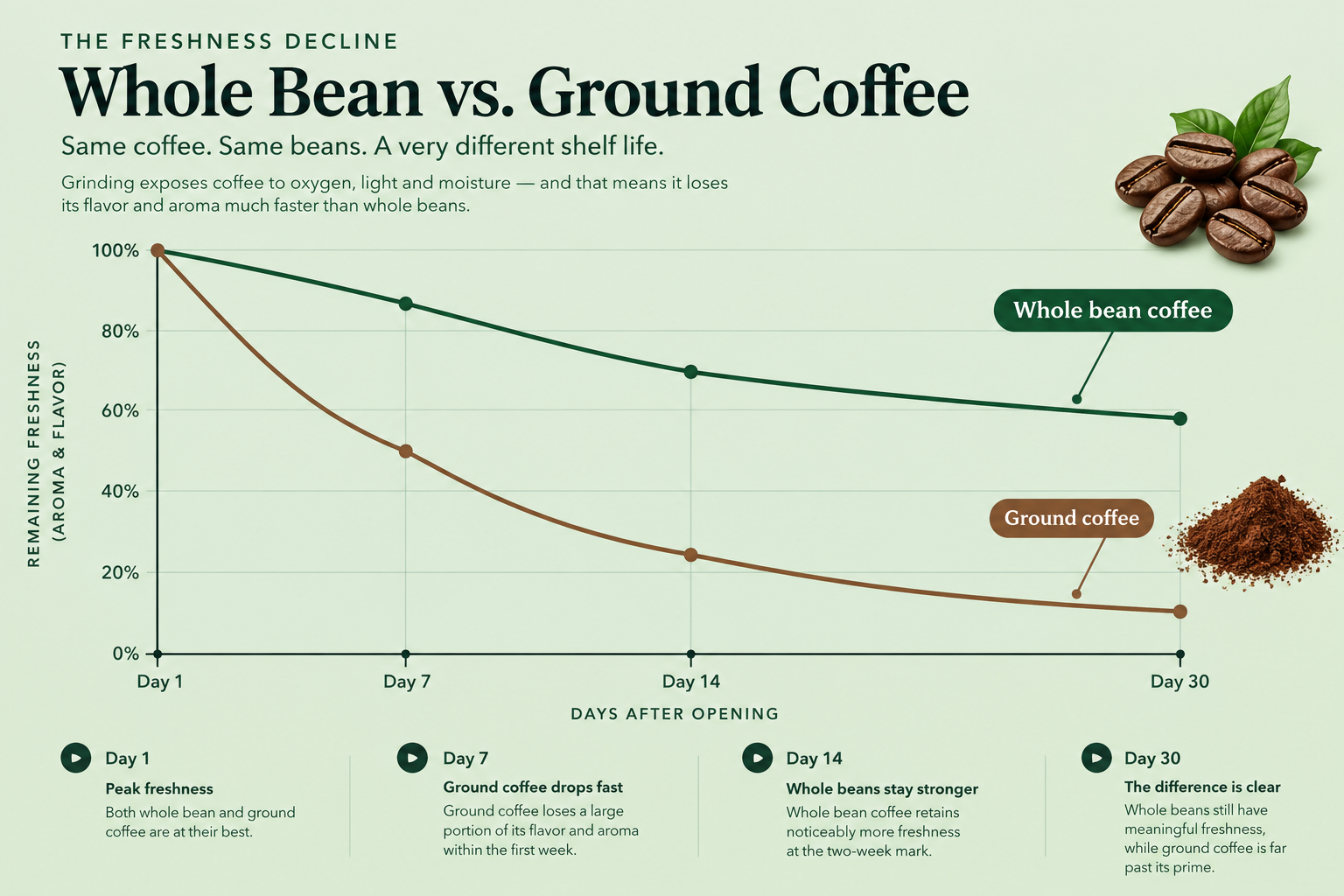
Compare that to whole beans and the timeline shrinks by a factor of roughly ten. A whole bean bag measured in weeks becomes a ground coffee bag measured in days. The aroma loss that took a month for beans can happen in 24 to 48 hours for grounds, depending on the grind size and how tightly the bag or container seals.
Fine grinds, the kind used for espresso, stale faster than coarse grinds used for French press or cold brew, because finer particles expose even more surface area per gram. If you are working from an espresso machine and wondering whether pre ground bags of fine coffee can substitute for fresh grinding, the ground coffee for espresso guide explains where that substitution works and where it falls short.
Edge case: vacuum sealed pre ground coffee in a can, unopened, can last many months because there is no oxygen inside to react with. The clock only starts once you break the seal.
Ground Coffee Oxidation: How Fast Staling Happens
Ground coffee oxidation begins within minutes of grinding, and the sharpest aroma loss happens in the first 15 to 30 minutes as volatile compounds escape into open air. This is the single biggest reason baristas and roasters recommend grinding right before brewing rather than ahead of time.
Oxidation is a chemical reaction between oxygen and the oils and compounds inside roasted coffee. It produces staler, flatter flavors and, over longer periods, faintly rancid or cardboard-like notes as fats break down. Heat and light speed the reaction up. Humidity adds a second problem: ground coffee left in a damp kitchen absorbs moisture, which can cause clumping and faster spoilage on top of oxidation.
A useful way to picture the scale: a whole bean has roughly one exposed surface. A tablespoon of drip grind coffee has thousands of exposed surfaces from the same amount of bean mass. Oxygen reaches all of them almost immediately, which is why the smell fades so much faster once coffee is ground.
Quick example: a bag of ground coffee opened on Monday and stored in a cabinet will usually taste noticeably duller by the following Monday, even if it never left the sealed bag between pours, simply because the bag is opened and resealed repeatedly, letting air in each time.
Does Whole Bean Coffee Taste Better Than Ground Coffee
Yes, whole bean coffee generally tastes better than pre ground coffee of the same age and origin, because it has lost less aroma by the time it reaches your cup. The gap grows wider the longer the coffee has been sitting since the roast date.
Taste differences show up in specific ways. Fresher, recently ground beans tend to show brighter tasting notes and a cleaner finish, since the lighter aromatic compounds have not had time to evaporate. Coffee ground days earlier tends to taste more one-dimensional, often described as flat or muted rather than "bad." This is a matter of degree, not a guarantee that every cup of pre ground coffee will taste poor.
Brew method also matters here. Espresso and pour over are more sensitive to staling because they rely on extracting delicate aromatics quickly under pressure or through a controlled pour. Cold brew is more forgiving, since the long steep time and different extraction chemistry mask some staling. If you brew mostly pour over, freshness differences will be more obvious than if your daily habit is a batch of cold brew.
Decision rule: if you can taste the difference between a fresh pour over and a week-old one, whole bean is worth the switch. If you cannot tell, or you mainly drink cold brew, pre ground convenience may cost you less in flavor than you think.
How to Store Whole Bean Coffee and Ground Coffee to Keep Them Fresh
The best way to store coffee beans is in an airtight, opaque container kept away from heat, light, and moisture, ideally in a cabinet rather than on a sunny counter. The same rules apply to ground coffee, just with a stricter clock, because ground coffee has already lost its natural protection from air.
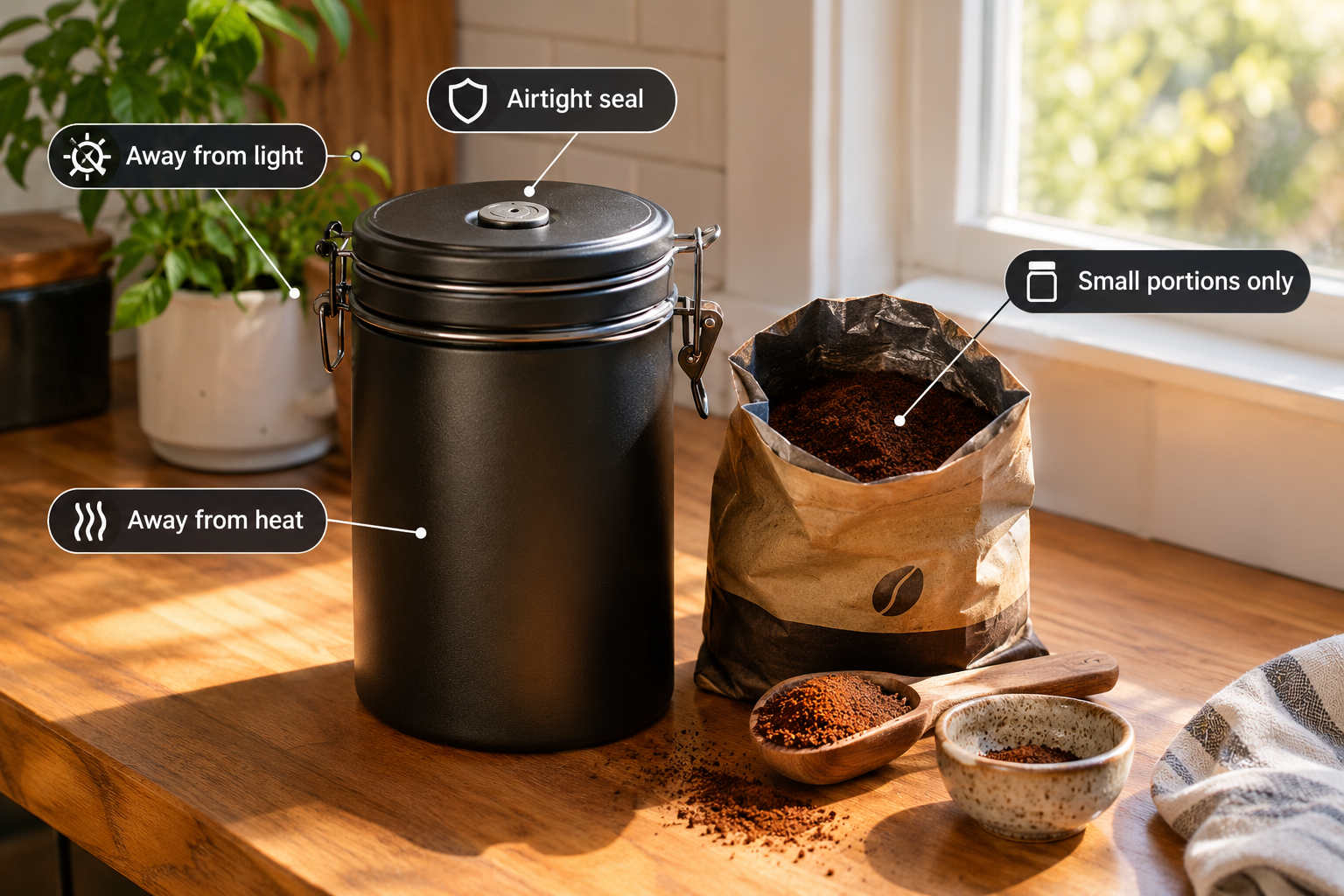
How to store whole bean coffee:
- Use a container with a tight seal, ideally one with a one way valve that lets built-up carbon dioxide escape without letting oxygen in.
- Keep the container in a cabinet, not the fridge. Cold storage can introduce condensation, which damages beans faster than staying at room temperature.
- Buy in amounts you will use within a month rather than stocking up for three months at once.
- Freeze only in small, airtight, portioned bags if you truly need to store beans longer than a month, and avoid opening and closing the frozen container repeatedly.
How to store ground coffee to keep it fresher longer:
- Move ground coffee into an airtight canister immediately after grinding or opening the original bag.
- Keep the container away from the stove, oven, and any window that gets direct sun.
- Buy smaller bags of ground coffee more often instead of one large bag that sits open for weeks.
- Consider grinding your own coffee in small batches rather than buying pre ground coffee at all, if you drink coffee daily.
For a longer look at container types, humidity control, and seasonal storage adjustments, the advanced coffee storage and preservation guide covers the setup in more depth than a single section can.
Do You Need a Grinder for Whole Bean Coffee
Yes, whole bean coffee requires a grinder before brewing, because intact beans will not extract properly in a drip machine, pour over cone, or espresso basket. You cannot brew drinkable coffee from beans that have not been broken down to expose their interior to water.
A burr grinder is the standard recommendation over a blade grinder because it crushes beans between two textured surfaces to produce a consistent particle size, rather than chopping them unevenly. Grind consistency affects extraction directly: uneven grinds create both over-extracted fines and under-extracted chunks in the same cup, which shows up as a bitter-and-sour mix rather than a clean flavor.
Can you use whole bean coffee without a grinder? Only in a roundabout way. Some cafés and roasters will grind beans for you at purchase, which gives you fresher grounds than a pre ground bag on a shelf, though the clock on staling still starts the moment that grinding happens. A rough workaround at home, like crushing beans with a mortar and heavy object, is not recommended, since it produces wildly inconsistent particle size and a poor cup.
If you already own an espresso machine and are deciding whether pre ground bags can stand in for fresh grinding on busy mornings, the ground coffee for espresso guide walks through when that shortcut is acceptable and when it hurts the shot.
When Should You Grind Whole Bean Coffee Before Brewing
Grind whole bean coffee as close to brewing as possible, ideally within a few minutes, since most aroma loss in ground coffee happens in the first 30 minutes after grinding. There is no meaningful freshness benefit to grinding coffee an hour or a day ahead of time.
This is the single most repeated piece of advice from roasters and baristas, and it holds up because of the same surface area math covered earlier: grinding exposes the coffee to air, and that exposure starts a countdown. Grinding at 7am for a 7:05am pour over keeps almost all of the aroma intact. Grinding the night before for a morning cup throws away a meaningful amount of that same aroma before you ever add water.
If a grinder is not part of your morning routine yet, the step by step grinding guide walks through grind size choices for drip, pour over, French press, and espresso, along with how to dial in a burr grinder for each method.
Practical tip: grind size should change with brew method, not just with taste preference. Espresso needs a fine grind, pour over a medium grind, and French press a coarse grind, because contact time with water is different for each.
Is Whole Bean Coffee Worth the Extra Cost
Whole bean coffee is usually worth the extra cost for anyone who drinks more than a cup or two most days and owns or is willing to buy a grinder, because the flavor gap over pre ground coffee is measurable and the price difference is small. It is a weaker case for someone who drinks coffee occasionally or strongly prefers convenience over flavor precision.
Price differences between whole bean and pre ground versions of the same coffee are often minor, sometimes just a dollar or two per bag, since the roaster's main cost is the beans, not the grinding step. The bigger cost consideration is the grinder itself, which is a one-time purchase rather than a recurring one.
Run the math on your own habits:
| Factor | Whole bean | Pre ground |
|---|---|---|
| Flavor at day 7 | Close to peak | Noticeably faded |
| Upfront equipment | Grinder needed | None needed |
| Weekly time cost | Extra 30 to 60 seconds per brew | Zero extra time |
| Best for | Daily drinkers, brew method fans | Occasional drinkers, travel, guests |
If you are shopping for beans and want a starting point on what to look for beyond just whole vs ground, the buyer's guide to choosing coffee beans for your recipes covers roast level, origin, and processing method decisions that matter just as much as freshness.
Whole Bean Coffee for Beginners: How to Start
The simplest way to start with whole bean coffee is to buy a small bag with a recent roast date, add an affordable burr grinder, and pick one brew method to learn first rather than juggling several at once. You do not need an expensive setup to notice the freshness difference.
A practical first order of operations:
- Buy beans with a roast date within the last two weeks. Skip bags that only show a "best by" date with no roast date printed.
- Get a burr grinder before anything else. It matters more than the brewer for cup quality.
- Pick one brew method to start. Pour over or a basic drip machine are the most forgiving for beginners.
- Grind right before brewing, even if that means grinding a small amount every morning instead of once a week.
- Store the rest properly in an airtight container, away from light and heat.
For a full walk-through of the equipment and brew ratio basics once you have beans and a grinder in hand, the step by step home brewing guide covers water temperature, bloom time, and how brew ratio changes the strength of your cup.
Best Whole Bean Coffee Brands That Stay Fresh Longer
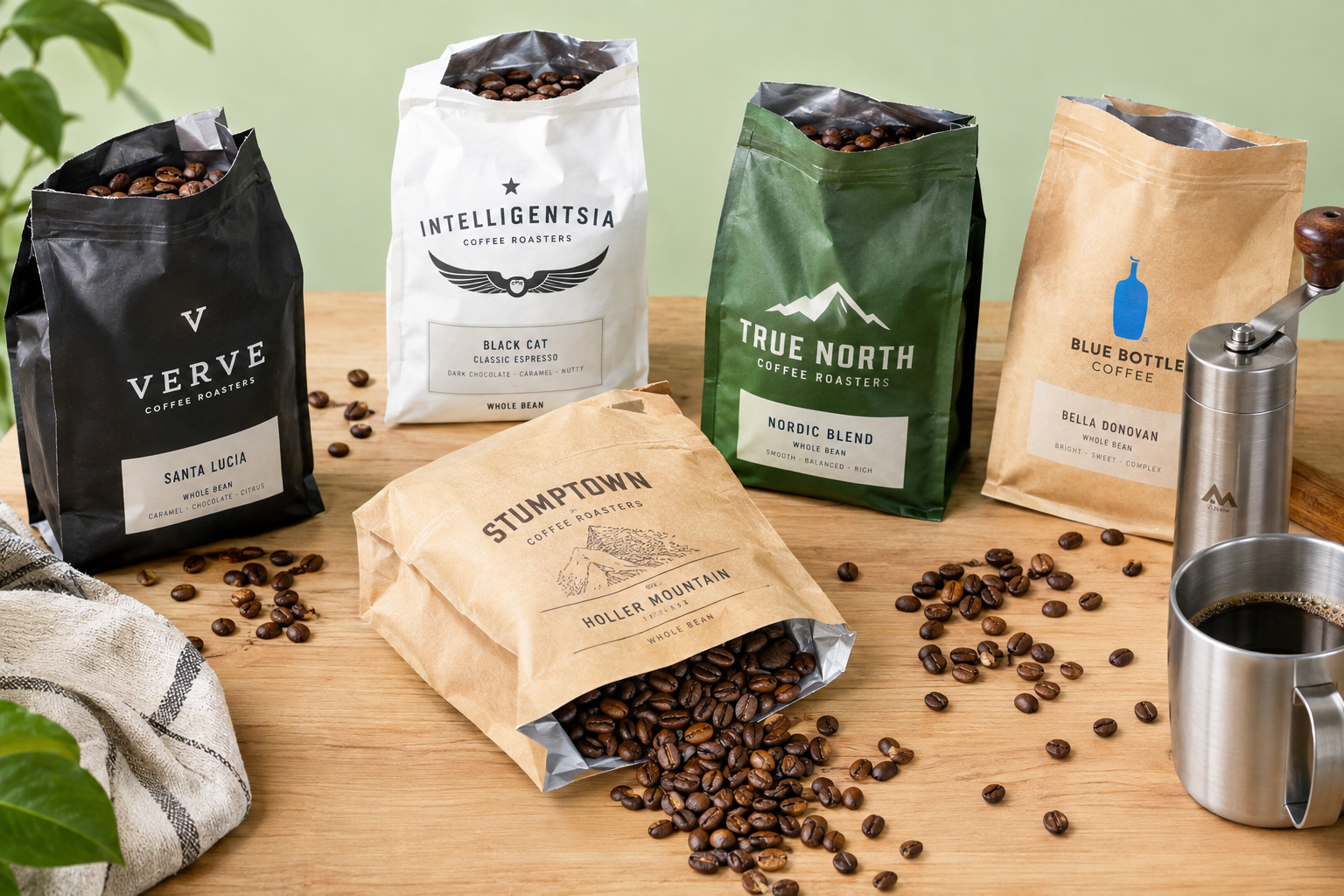
The brands that protect coffee bean freshness best share three habits: they print a real roast date, they use one way valve bags or vacuum sealed packaging, and they ship or sell in smaller batch sizes rather than large bulk bags that sit open for weeks.
Some practical signals to look for on any bag, regardless of brand name:
- A visible roast date, not just a packaging date or a "best by" date a year out.
- A one way valve on the bag, which lets carbon dioxide escape without letting oxygen back in.
- Bag size matched to your habits. A 12 ounce bag used within three weeks protects freshness better than a 5 pound bag opened once and refilled from for two months.
- Single origin or small batch labeling, which often correlates with faster turnaround from roaster to shelf, though this is not guaranteed by the label alone.
A recognizable name on a bag is not proof of freshness by itself. Two bags from the same brand can differ in roast date by weeks depending on where and when you buy them, so check the actual date printed on the bag rather than assuming freshness from reputation. Compare the models of grinders and storage containers if you are building out a full freshness-focused setup rather than buying beans alone.
Looking ahead, more roasters are moving toward smaller bag sizes and printed roast dates as standard practice rather than a premium feature, a trend that has picked up through 2026 as more buyers ask about coffee bean freshness before purchase. That shift makes it easier for any buyer, not just specialty shoppers, to judge a bag on real information instead of guesswork.
Whole Bean vs Ground Coffee Freshness Timeline
| Time since roast or grind | Whole bean coffee | Ground coffee |
|---|---|---|
| 30 minutes | No noticeable change | First aroma loss begins |
| 1 to 3 days | Peak flavor holding | Noticeably flatter |
| 1 week | Still close to peak | Most brightness gone |
| 2 to 4 weeks | Gradual decline | Largely stale |
| 1 to 2 months | Drinkable but flat | Better used for cold brew or discarded |
FAQ
What's the actual difference between whole bean and ground coffee? Whole bean coffee is roasted coffee left intact, while ground coffee has been broken into smaller particles. That break exposes far more surface area to air, which is why the whole bean vs ground coffee comparison always comes back to how fast each form oxidizes.
How long does ground coffee last once opened? Pre ground coffee holds its best flavor for about 30 minutes to a few days and is usually noticeably flat within one week, even when stored in a sealed bag or container.
How long do coffee beans last compared to ground coffee? Whole beans typically stay close to peak flavor for 2 to 4 weeks after the roast date, roughly ten times longer than ground coffee from the same batch.
Do I need a burr grinder specifically, or will any grinder work? A burr grinder produces a consistent particle size, which leads to even extraction and a cleaner cup. Blade grinders chop unevenly, which mixes over-extracted and under-extracted grounds in the same brew.
Is whole bean coffee always worth the extra cost? Not always. It makes sense for daily drinkers who own a grinder, since the price gap is usually small and the flavor gap is real. It matters less for occasional drinkers or anyone who strongly prioritizes convenience.
When is the best time to grind whole bean coffee before brewing? As close to brewing as possible, ideally within a few minutes. Grinding the night before or hours ahead throws away much of the aroma advantage that whole beans offer over pre ground coffee.
Conclusion
Coffee bean freshness is not a marketing detail. It is a measurable, fast-moving countdown that starts the moment a bean is roasted and speeds up dramatically the moment it is ground. In a whole bean vs ground coffee comparison, whole beans win on flavor almost every time, because they protect their aroma compounds behind an intact surface for weeks instead of days.
If you drink coffee daily, the practical next step is small: buy a bag with a real roast date, add a burr grinder if you do not already have one, and start grinding just before you brew. If pre ground coffee still fits your routine better, buy smaller bags more often and move them into an airtight container the moment you open them. Either path works. The one that does not work is letting a bag of grounds sit open on the counter for a month and expecting the roast date on the label to save it.
Better Coffee Starts With Better Answers, and in this case the answer is simple: freshness is a clock, and how you handle the bean or the grind decides how much time you get before it runs out.
Keep Exploring Coffee Rank IQ
- Coffee Rank IQ home: reviews, brewing guides, and coffee science
- Drip Coffee vs Espresso: Caffeine, Flavor, and the Real Difference
- Best Cold Brew Coffee Maker: 6 Picks for Smooth Batches at Home
- Best Manual Coffee Grinder for Pour Over, Espresso, and Travel
- Best Pour Over Coffee Maker: Drippers vs Machines Compared
References
- afpakmachine.com/how-long-do-coffee-beans-last
- www.whichbrewforyou.com/2026/06/whole-bean-vs-ground-coffee-worth-extra.html
- beanandburr.com/coffee-beans/whole-bean-vs-ground
- flightwinebar.com/non-alcoholic-beverages/coffee/how-long-does-whole-bean-coffee-last
- unanswered.io/guide/whole-bean-vs-ground-coffee
- planetarydesign.com/blogs/news/how-long-does-coffee-stay-fresh-storage-tips-for-peak-flavor
- www.lowkeycoffeesnobs.com/why-using-fresh-ground-coffee-is-worth-the-extra-effort
- www.scielo.br/j/aabc/a/V7pmCGr3rFCfjYjDkw6T4YH/?lang=en&format=pdf
- colipsecoffee.com/blogs/coffee/whole-bean-vs-ground-coffee
- air.unimi.it/retrieve/de17d66e-ff43-4314-b64f-8a0ea792693e/2025-FoodResInt_Coffee.pdf