Lavender Latte Recipe That Skips the Soap Taste
Punchline: seed keyword inside first 8 words
A lavender latte tastes like soap for two fixable reasons: too many dried buds, and too much heat on those buds. Use 2 tablespoons of dried culinary lavender per 1 cup of water, add it only after the syrup comes off the burner, and steep no longer than 10 minutes. That single change turns a perfumed, medicinal drink into something that reads as floral honey and vanilla.
The chemistry behind it is real. A peer-reviewed review published in Foods on October 8, 2026 by Ceyhun Uçuk of Gaziantep University and Charles Spence of the University of Oxford examined why lavender reads as "soapy" in food . Their conclusion: acceptance depends on cultivar, concentration, preparation method, familiarity, and context. Lavender is not inherently unsuited to drinking. It is usually just overdosed and overcooked.
Better Coffee Starts With Better Answers, and this one has a number attached.
Key Takeaways: 5 to 7 bullets with exact lavender amounts
- Syrup ratio: 1 cup water, 1 cup sugar, 2 tablespoons dried culinary lavender buds .
- Steep cap: 5 to 10 minutes off heat. Good Housekeeping's test kitchen found that boiling the blossoms was specifically linked to a soapy result [1 reference below is GH; see sources].
- 3 tablespoons was too much. A side-by-side test of 2 vs 3 tablespoons preferred 2, reporting the higher dose pulled more tannins and tasted too strong.
- Per drink: start at 1/2 to 1 tablespoon of lavender syrup in a standard 8 to 12 oz latte, then adjust.
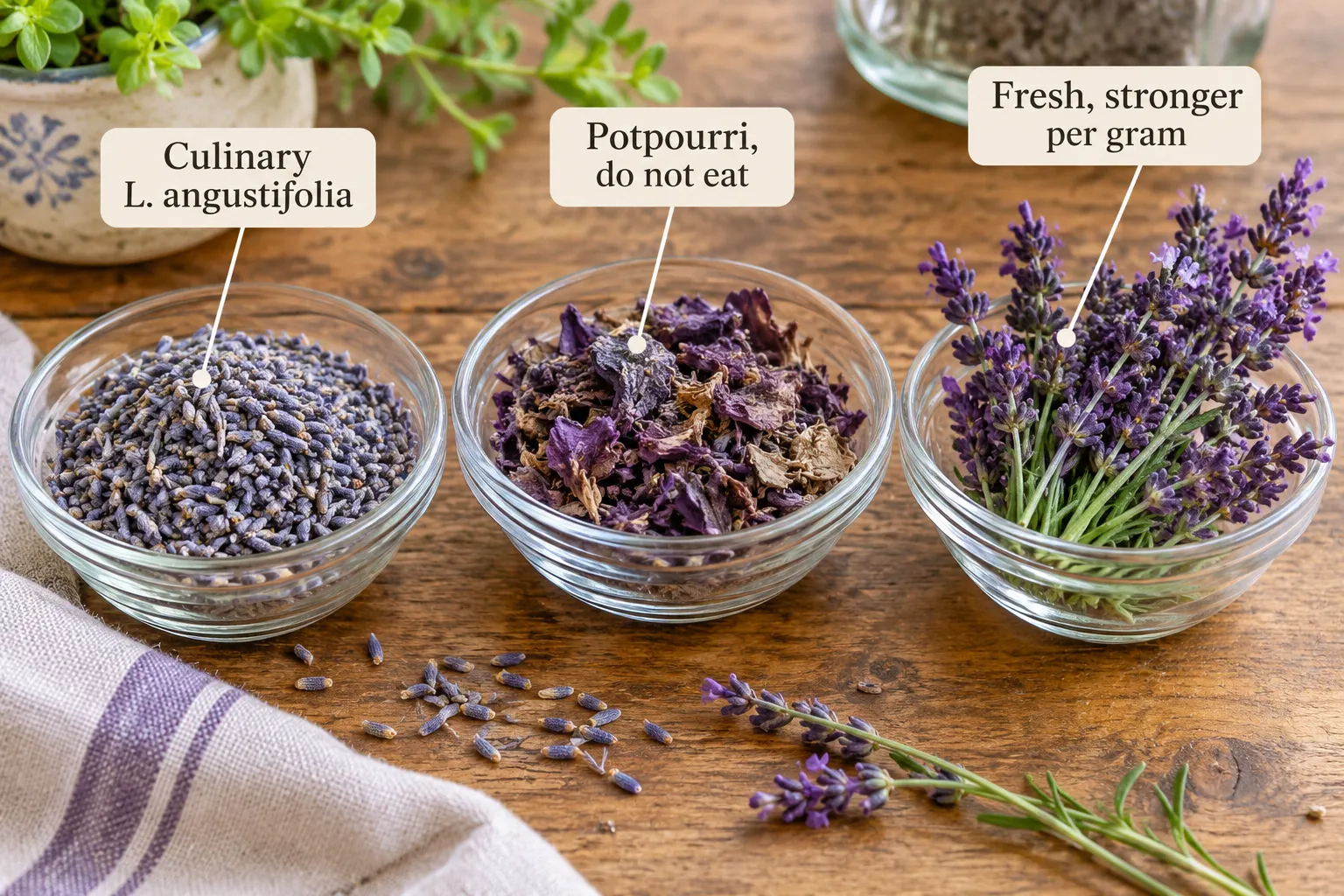
- Cultivar matters: English lavender (Lavandula angustifolia) runs under roughly 1% camphor, while lavandin sits near 4 to 12% and spike lavender near 8 to 20% . Camphor is what tastes medicinal.
- Fat buffers aroma. Lavender volatiles are lipophilic, so whole milk and oat milk soften the floral hit compared with water-based drinks .
- Only culinary-grade buds. Decorative, potpourri, and garden-center lavender have uncertain pesticide and cultivar status .
Pin this lavender latte recipe for the first warm morning of spring.
Lavender latte
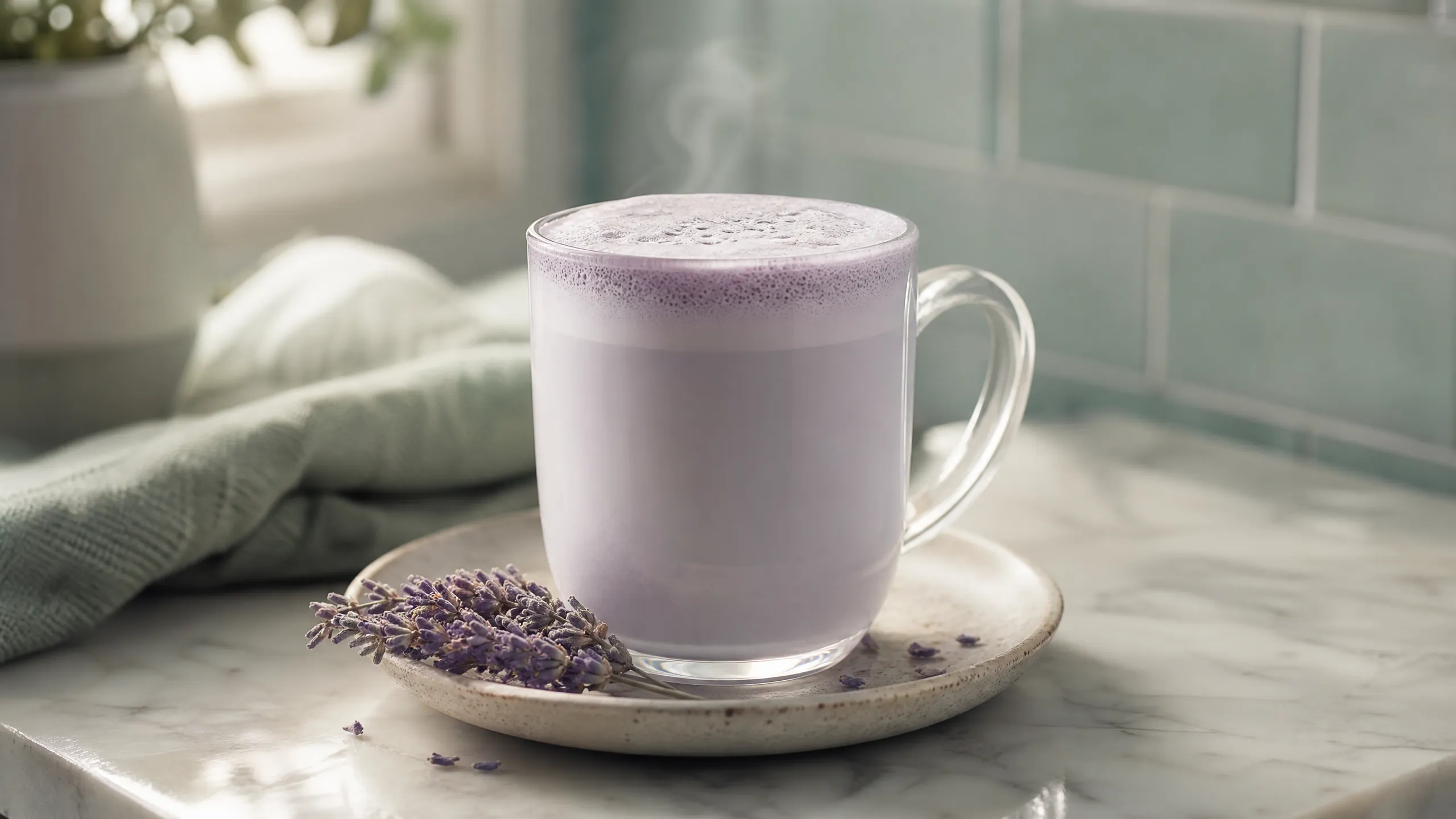
A lavender latte is espresso and steamed milk sweetened with a lavender-infused syrup, usually 1 to 2 shots of espresso, 6 to 10 oz of milk, and 1/2 to 1 tablespoon of syrup. It should taste like a vanilla latte with a floral lift in the finish, not like a mouthful of hand soap. If the florals arrive before the coffee does, the dose is too high.
Worth separating two things people conflate. Lavender fragrance and lavender flavor are not the same experience. The 2026 Foods review makes the point directly: lavender is heavily used in soaps, detergents, and linen sprays, so many Western consumers have learned to file that aroma under "cleaning product" rather than "food" . That learned association can amplify the soap perception even in a technically well balanced drink.
Which means dosing low is not just chemistry. It is psychology. Keep the lavender quiet enough that the brain categorizes it as dessert.
Two more things shape the cup:
Extraction. A bitter, over-extracted espresso fights florals. Pull a shot you would happily drink on its own. If your base tastes harsh, that is a grind size and brew ratio problem, and the lavender will only make it louder. Our guide on how to make coffee taste better covers the fixes.
Milk texture. Dense, glossy microfoam carries aroma differently than thin, bubbly foam. The same detail that separates a flat white from a latte is covered in flat white vs latte and the microfoam detail.
A good lavender latte should make someone ask what the flavor is. A bad one makes them check whether the cup was rinsed.
How lavender latte compares to lavender milk tea
Lavender milk tea leans on tea tannins and usually carries more lavender per serving, because there is no espresso competing for attention. A lavender latte has roasted, bitter, and caramelized notes from the coffee that already fill a lot of sensory space. Transfer a milk tea dose into a latte and it tips medicinal fast. Among floral coffee drinks, lavender is the easiest to overdo, more so than rose or orange blossom, because its volatiles are potent at low concentration.
The whole lavender latte recipe comes down to restraint with the buds.
The culinary lavender syrup with the dosing that stays floral, not soapy
Make a 1:1 simple syrup, pull it off the heat, then steep the buds like tea. That off-heat step is the single biggest difference between a lavender syrup for coffee that tastes floral and one that tastes like a bar of Yardley.
Ingredients (makes about 1 1/4 cups)
| Item | Amount | Notes |
|---|---|---|
| Water | 1 cup | Filtered if your tap tastes of chlorine |
| Granulated sugar | 1 cup | White sugar keeps the florals clean |
| Dried culinary lavender | 2 tablespoons | L. angustifolia buds |
| Vanilla (optional) | 1/2 tsp extract | Add after straining |
Method
- Combine water and sugar in a small saucepan. Heat on medium, stirring, until the sugar fully dissolves. You want dissolution, not a rolling boil.
- Take the pan off the heat. Let it sit 30 seconds.
- Stir in the 2 tablespoons of dried lavender.
- Cover and steep 5 minutes for a light floral syrup, up to 10 minutes maximum for a stronger one .
- Taste at 5 minutes with a clean spoon. If it already reads perfumed, strain immediately.
- Strain through a fine mesh sieve. Press lightly, do not grind the buds through.
- Cool, then bottle in a clean glass jar.
Why off-heat works. The 2026 Foods review reports that linalool and linalyl acetate, the two dominant lavender volatiles, are volatile and heat-sensitive. Prolonged heating or boiling drives off the fresh top notes while leaving behind more resinous, camphoraceous, bitter, and woody components . Boil the buds and you keep the worst half of the aroma profile.
On the "it's just linalool" theory. Linalool also appears in basil and coriander, ingredients nobody calls soapy by default. The 2026 review is careful here: perception comes from the whole volatile mixture, the concentration, the cultivar, and the drinker's learned associations, not one compound acting alone .
Fresh lavender instead of dried
Fresh buds work, but they are wetter and more variable. Use roughly 3 tablespoons fresh in place of 2 tablespoons dried, keep the same off-heat steep, and taste at 4 minutes. Strip the buds from the green stems. Stems add a grassy, slightly bitter note that nobody ordered.
Storage
Keep the syrup refrigerated in a sealed glass bottle. A 1:1 sugar syrup with botanicals holds up roughly 2 to 3 weeks cold. Toss it at the first sign of cloudiness, film, or a fermented smell. Freezing it in an ice cube tray extends life considerably and gives you single-serve portions for iced drinks. If you make syrups regularly, our homemade coffee recipes collection has other infusion ratios worth borrowing.
A good lavender latte recipe should taste like a garden, not a candle.
H2 (question): how do you make a lavender latte step by step
Pull 2 shots of espresso over 1/2 to 1 tablespoon of lavender syrup, steam 6 to 8 oz of milk to about 140°F, and pour. Total time is under four minutes once the syrup exists.
Equipment
- Espresso machine, moka pot, or AeroPress
- Burr grinder (consistent grind size matters more here than usual, because florals expose bitterness)
- Milk pitcher and steam wand, or a handheld frother
- Digital scale
- A 10 to 12 oz cup
Method
- Measure the syrup. Put 1/2 tablespoon in the bottom of the cup. Start low. You can always add more; you cannot un-perfume a latte.
- Dial in the shot. 18 g in, about 36 g out, 25 to 30 seconds. Roast date matters: beans more than 4 weeks past roast tend to taste flat and let the lavender dominate.
- Pull the shot directly onto the syrup. Heat and crema help it dissolve. Stir once.
- Steam the milk to roughly 140°F. Hotter milk tastes scalded and pushes sweetness around. Aim for glossy microfoam with no visible large bubbles.
- Pour. Start high to combine, drop low to set the foam on top.
- Taste before adding more syrup. Nine times out of ten the first sip tells you everything.
Decision rule: choose oat milk if you want the floral note softened and the drink slightly sweeter. Choose whole dairy if you want the most aroma buffering. Choose almond milk only if you like a sharper, more exposed lavender, since lower fat means less to carry the lipophilic volatiles .
Which beans. A medium roast single origin from Latin America, with chocolate and nut tasting notes listed by the roaster, sits under lavender well. Bright, acidic Ethiopian naturals with heavy berry character can clash and make the drink taste like a candle shop. Not a rule, just an easier starting point.
Common mistake: adding syrup to already-poured milk and stirring at the end. It never fully disperses and you get a strong floral slug at the bottom of the cup.
This lavender latte recipe works with any milk that can hold microfoam.
H2 (question): how do you make a honey lavender latte
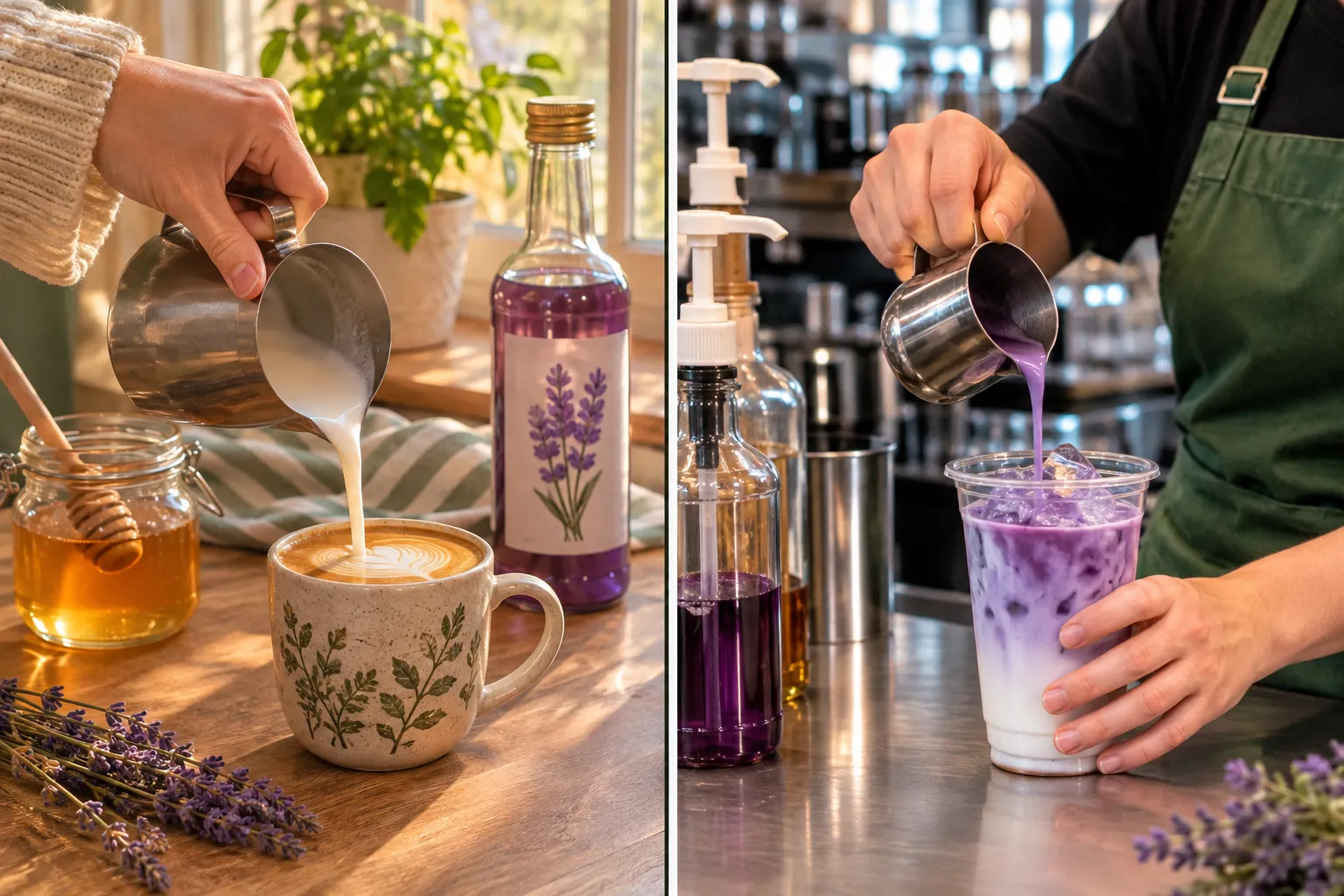
Swap half the sugar in the syrup for honey, or keep your standard lavender syrup and add 1 teaspoon of honey directly to the cup. A honey lavender latte reads rounder and slightly waxy in a good way, and honey's own floral notes stack neatly with lavender.
Honey lavender syrup
| Item | Amount |
|---|---|
| Water | 1 cup |
| Honey | 1/2 cup |
| Granulated sugar | 1/2 cup |
| Dried culinary lavender | 2 tablespoons |
Heat the water with the sugar until dissolved, remove from heat, stir in the honey until it melts, then add the lavender and steep 5 to 10 minutes. Adding honey off heat matters, because high heat dulls honey's aromatics the same way it dulls lavender's.
Why honey pairs well. Honey brings glucose and fructose plus its own volatile profile, which overlaps with floral territory and gives the lavender somewhere to sit. Clover honey is neutral and safe. Orange blossom honey doubles down on florals and can tip the drink perfumed, so cut the lavender to 1 1/2 tablespoons if you use it.
Other flavors that work with lavender:
- Vanilla is the most forgiving partner. It rounds edges and reads familiar.
- Honey adds body and mild floral depth.
- White chocolate buffers aroma through fat and makes a dessert drink.
- Lemon zest, a single strip added during the steep, lifts the whole thing.
- Blueberry works in iced versions, though it crowds the cup.
- Rosemary, oddly, works in small amounts. Both are Mediterranean herbs.
Avoid: cinnamon and nutmeg. Warm baking spices fight lavender and produce something that tastes like potpourri with opinions.
Edge case: if you use a honey with strong buckwheat or manuka character, skip the lavender entirely. Those honeys are too assertive to share a cup.
Batch the syrup once and the lavender latte recipe becomes a 90 second drink.
H2 (question): how do you make it iced
Build an iced lavender latte cold: 1 tablespoon of chilled lavender syrup, 6 oz of cold milk, ice, then 2 shots of espresso poured over the top. Use slightly more syrup than you would hot, because cold temperatures suppress perceived sweetness and aroma.
Steps
- Add 1 tablespoon of cold lavender syrup to a 16 oz glass.
- Pour in 6 oz of cold milk and stir to combine. Stirring before the ice goes in prevents the syrup from sinking.
- Fill with ice.
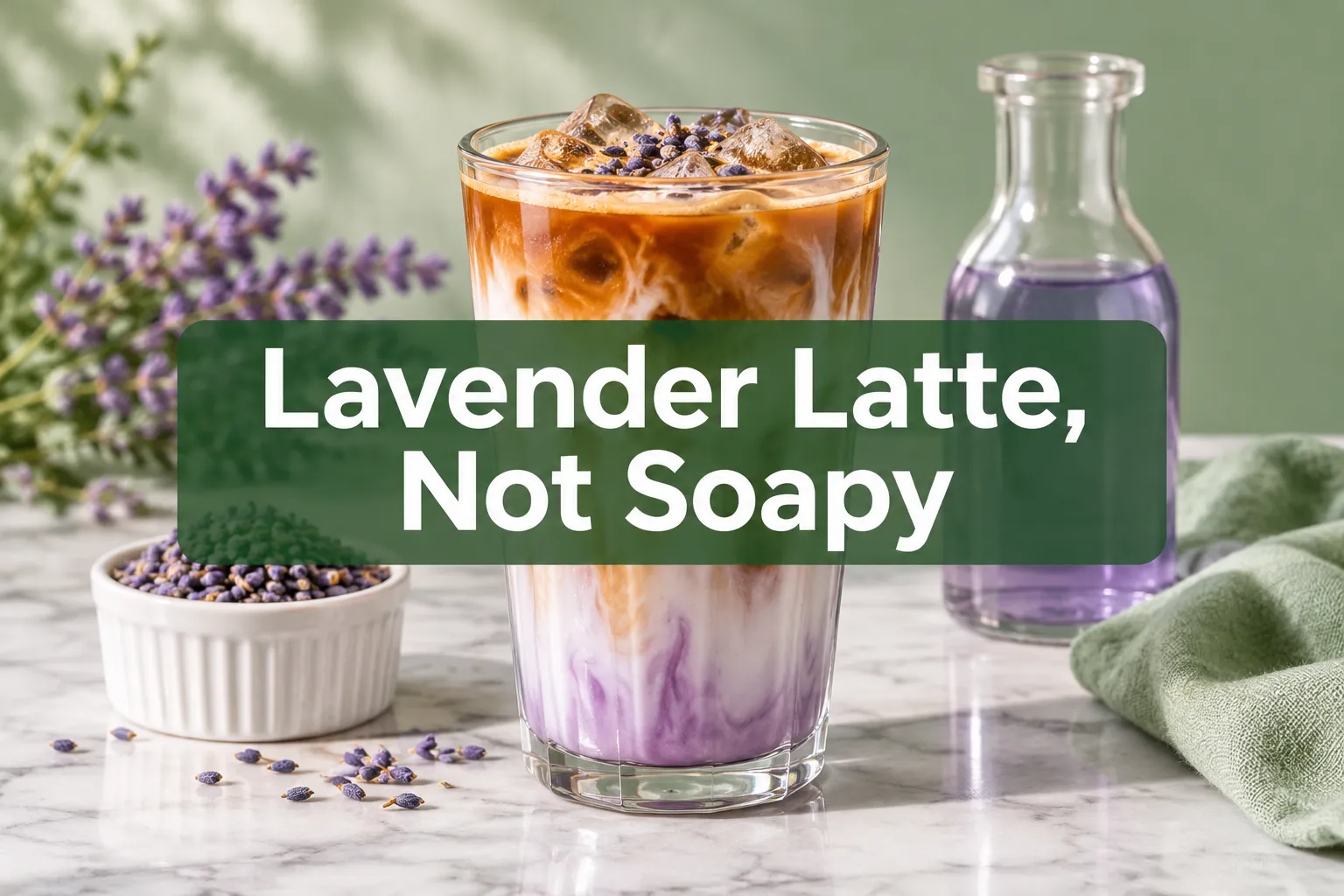
- Pull 2 shots of espresso and pour over. You get the layered purple-to-brown look people photograph.
- Stir before drinking, or don't, and let the first sip be mostly coffee.
Cold brew version. Replace espresso with 4 oz of cold brew concentrate. Cold brew's lower acidity and heavier body suit lavender well, though it mutes the florals slightly, so nudge the syrup to 1 1/4 tablespoons. Our walkthrough on making an iced latte at home covers the dilution math in more detail.
Lavender cold foam. Whisk 1/4 cup of cold heavy cream or 2% milk with 2 teaspoons of lavender syrup until it thickens to a pourable foam, about 30 seconds with a handheld frother. Float it on an unsweetened iced coffee. The lavender sits in the top layer, which makes the aroma hit on approach and keeps the body of the drink clean. That contrast is the best use case for lavender in cold drinks.
Common mistake: pouring warm syrup over ice. It melts the ice, dilutes the drink, and you end up adding more syrup to compensate, which is how soap happens.
Our lavender latte recipe testing settled on two teaspoons of buds, no more.
What to Watch Out For: over-steeping lavender, non-culinary lavender, oversweetening
Three failure modes account for nearly every bad lavender latte. All three are avoidable before the espresso is pulled.
1. Over-steeping and boiling. Good Housekeeping's test kitchen, in a May 3, 2026 article, had recipe editor Susan Choung steep lavender like tea after pulling the syrup from heat, and specifically tied boiling the blossoms to a soapy outcome. The same piece compared 2 tablespoons against 3 and preferred 2, reporting that the larger amount pulled more tannins and tasted too strong. Set a timer. Ten minutes is a ceiling, not a target.
2. Non-culinary lavender. Decorative lavender, potpourri bundles, perfumery stock, and garden-center plants are not grown to food standards. Pesticide treatment is uncertain, and the cultivar is often lavandin or spike lavender rather than L. angustifolia. Those higher-camphor species taste sharper and more medicinal . Buy buds explicitly labeled culinary grade or food grade, ideally with the species printed on the package. Spice shops, tea retailers, and specialty grocers carry them; bulk herb suppliers list species on the label, which is the detail worth checking .
3. Oversweetening. Lavender syrup is sugar. A tablespoon of 1:1 syrup is roughly 6 g of sugar. Three tablespoons plus a flavored milk plus whipped cream and you have a dessert where the coffee is decorative. Keep the syrup at 1 tablespoon maximum per 12 oz drink and let the milk's lactose do the rest.
Other things that go wrong:
- Grinding the buds. Powdered lavender extracts too fast and too completely. Leave the buds whole.
- Using lavender essential oil. Not interchangeable. Food-grade labeling varies and the concentration is vastly higher than infused buds.
- Stale espresso. Beans well past roast date taste papery and leave the lavender standing alone.
- Scalded milk. Over 160°F, milk tastes cooked and flattens the floral top notes.
Is it safe daily? Culinary lavender in beverage quantities, meaning a couple of grams of dried buds spread across a full batch of syrup, is used as a food ingredient and consumed routinely in places like Provence. The 2026 Foods review treats it as a culinary ingredient whose acceptance varies by culture, not a risk category . It is not a medicine, and the research does not show that a lavender latte delivers measurable calming effects. Lavender aromatherapy studies use different exposure routes and doses entirely, and that evidence does not transfer to a latte. If you are pregnant, on medication, or managing a health condition, ask your doctor rather than a coffee site.
The iced version of this lavender latte recipe skips nothing but the steam.
Comparison table (HTML): homemade vs cafe lavender latte on cost, control, time
Homemade wins on cost and control. The cafe wins on speed and milk texture, at least until your steaming improves.
| Factor | Homemade lavender latte | Cafe lavender latte |
|---|---|---|
| Lavender dose | You set it. 2 tbsp per cup of water, 1/2 to 1 tbsp syrup per drink | Fixed pump count, often 3 to 4 pumps, rarely adjustable |
| Syrup type | Real buds, no preservatives, known cultivar | Often commercial syrup with flavoring and colorant |
| Setup time | About 15 min once for a 2 to 3 week syrup batch | Zero, plus travel and line time |
| Per-drink time | 3 to 4 minutes | Under a minute of your effort |
| Sweetness control | Full. Can cut sugar or swap honey | Pump increments only |
| Milk texture | Depends on your steam wand and practice | Usually better, commercial boiler and daily reps |
| Best for | Anyone who found cafe versions too perfumed or too sweet | Occasional drinkers who don’t want a syrup jar in the fridge |
Choose homemade if you have ever ordered a lavender latte and left half of it. The dose is the whole problem, and only you can fix it. If your milk foam is the weak link, the drills in our advanced barista latte techniques guide close that gap faster than new equipment will.
One more point for this lavender latte recipe: about a dollar a glass.
Sourced stat cards: 3 to 6 cited numbers
Numbers worth keeping, each tied to a named source and date.
2 tablespoons beat 3. Good Housekeeping's test kitchen compared lavender syrups made with 2 versus 3 tablespoons of dried lavender per batch in a May 3, 2026 article. The 2 tablespoon version was preferred; 3 tablespoons extracted more tannins and tasted too strong. Limitation: a test-kitchen preference judgment, not a blinded panel study.
5 to 10 minutes, off heat. Barista At Home's April 23, 2026 lavender syrup guide specifies 1 cup water, 1 cup sugar, 2 tablespoons dried culinary lavender, with a 5 to 10 minute off-heat steep and a hard 10 minute maximum for latte use . Limitation: published recipe guidance, not peer-reviewed sensory testing.
198 sources synthesized. The October 8, 2026 Foods review by Uçuk and Spence searched Scopus, Web of Science, PubMed, and Google Scholar through September 23, 2026, screened 10,936 records, and synthesized 198 sources . Limitation: it is a narrative review, so it gives strong formulation context but no single validated "ideal latte" dose.
Camphor separates the species. The same review reports many L. angustifolia types at roughly 25 to 45% linalool and 25 to 45% linalyl acetate in essential oil, with typically under 1% camphor. Lavandin runs about 4 to 12% camphor, spike lavender about 8 to 20% . Camphor is the compound most associated with medicinal and sharp notes. Limitation: essential-oil composition ranges, not direct measurements of what ends up in a syrup.
Fat buffers the florals. The 2026 review notes lavender volatiles are lipophilic, so fat-rich matrices such as cream, whole milk, oat milk, butter, and chocolate slow aroma release, while water-based preparations deliver a sharper floral hit and need tighter dosing . Practical read: a lavender lemonade needs less lavender than a lavender latte.
FAQ

Conclusion: variations plus next step
The lavender latte has a dosing problem, not an ingredient problem. Two tablespoons of dried culinary lavender per cup of water, added off heat, steeped 5 to 10 minutes, then 1/2 to 1 tablespoon of that syrup per cup. That is the whole fix, and it is supported by both a 2026 test-kitchen comparison and the chemistry described in the October 2026 Foods review .
Variations worth making next:
- Honey lavender latte: half honey, half sugar, honey added off heat.
- Iced lavender latte: cold-build with 1 tablespoon syrup, espresso poured last.
- Lavender cold foam over unsweetened cold brew, 2 teaspoons syrup per 1/4 cup cream.
- Lavender vanilla: 1/2 teaspoon vanilla extract stirred in after straining.
- Decaf evening version: the same build with good decaf, since the drink is about flavor anyway. Our roundup of decaf K-Cups that taste like real coffee is a reasonable starting point.
Your next step: make one batch of syrup tonight, steep exactly 5 minutes, and taste it straight off the spoon before it goes near coffee. If it is pleasant on its own, it will be pleasant in a latte. If it already makes you flinch, you know the fix is fewer buds, not more milk.