Eggnog Latte Recipe: Steam It Without Scorching
Punchline: seed keyword inside first 8 words
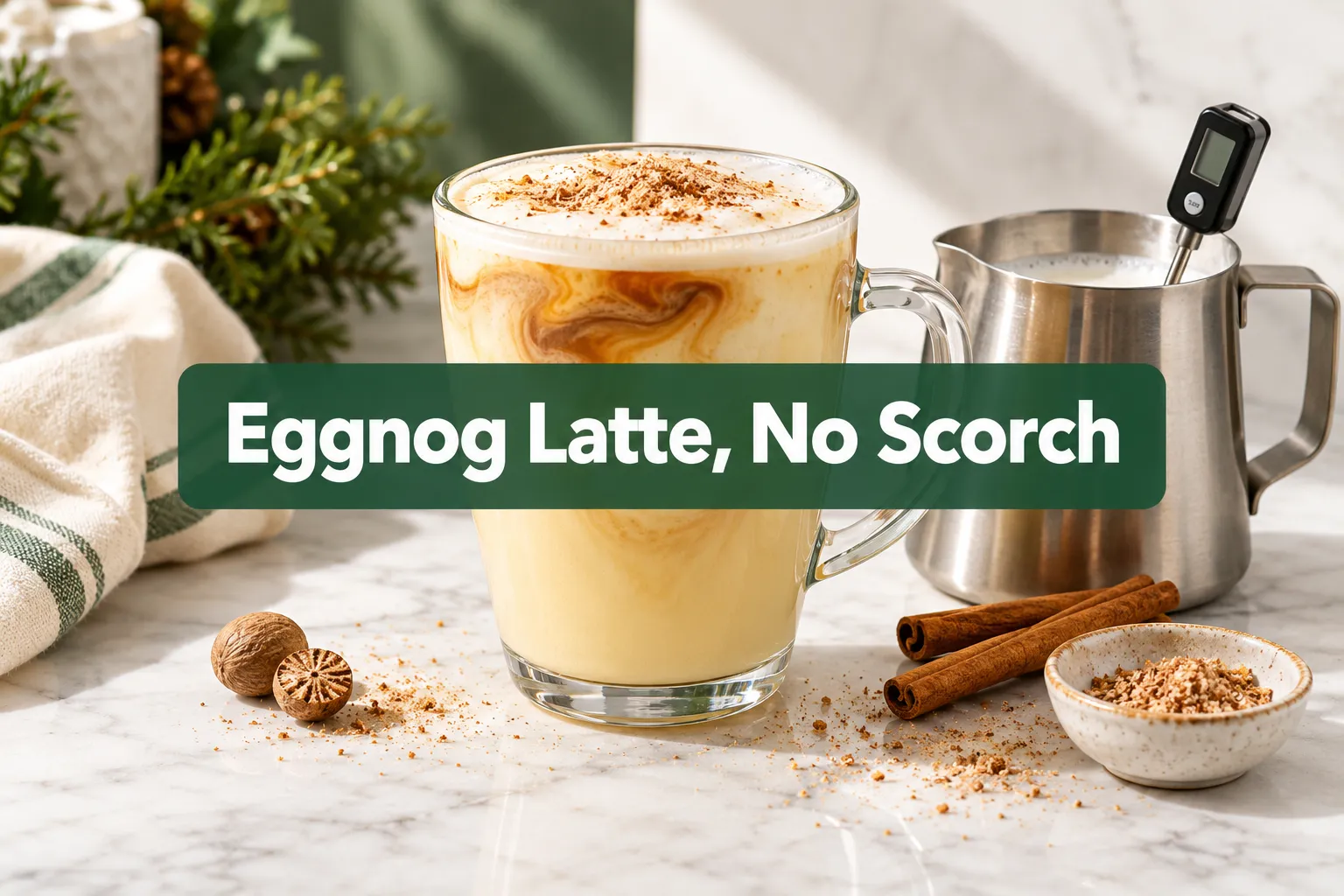
An eggnog latte recipe fails at one point: the steam wand. Eggnog carries more sugar, more fat, and egg proteins that ordinary milk does not have, so it scorches, thickens, and goes grainy at temperatures a cappuccino shrugs off. Cut it half and half with milk, stop steaming at 145 to 150°F, and the drink turns out silky instead of sandy.

That single change is the difference between a café-quality holiday latte and a pitcher of sweet scrambled egg. Most recipes online tell you to "steam the eggnog." They skip the part where eggnog behaves like a custard base, because that is exactly what it is.
This guide gives you amounts, temperatures, the steaming sequence, a no-machine version, and the mistakes that ruin the cup. Better Coffee Starts With Better Answers, and the answer here is a thermometer and some restraint.
Key Takeaways: 5 to 7 bullets with amounts and temps
- Ratio that works: 5 oz eggnog plus 5 oz milk, steamed together. Copycat Spices recommends this 50:50 blend specifically to lower the sugar and egg protein exposed to the steam wand .
- Target temperature: 145 to 150°F maximum. Standard milk is usually taken to 155 to 165°F. Eggnog is not standard milk.
- Richer option: 4 oz eggnog to 2 oz milk, steamed to roughly 140°F, keeps more eggnog flavor but leaves almost no margin for error.
- Aerate for 2 to 3 seconds only. Eggnog is already emulsified fat and protein. It does not need a long stretching phase.
- Espresso: 2 shots, about 2 oz total, pulled fresh. A dark or medium-dark roast with a recent roast date cuts through the sweetness better than a bright single origin.
- Finish: freshly grated nutmeg. Starbucks' UK version lists espresso, eggnog, and nutmeg, nothing else .
- Sugar warning: commercial eggnog typically runs 20g or more of sugar per half cup, so skip any added syrup before you taste it.
eggnog latte recipe
An eggnog latte recipe is espresso combined with steamed eggnog, usually diluted with milk, finished with grated nutmeg. The whole drink takes about four minutes once your machine is hot. What makes it different from any other holiday latte is that the dairy component contains egg yolk, which sets at a much lower temperature than milk proteins denature.
That is the entire problem in one sentence.
Egg yolk proteins begin coagulating around 149 to 158°F depending on what else is in the mix. Sugar raises that threshold slightly, fat buffers it, and the starch or stabilizers in commercial eggnog help too. But the thin film of liquid touching your steam wand tip is hotter than the bulk temperature of the pitcher. That film is where scorching starts: sugar caramelizes on hot metal, proteins seize, and you get flecks of cooked egg and a burnt-caramel smell that never leaves the drink.
Diluting with milk solves three things at once. Fewer egg proteins per ounce. Less sugar to caramelize. And more water content, which makes the liquid thinner and easier to circulate so no single spot sits against the wand tip cooking.
Several 2026 recipe sources converge on the same guidance. My Home Barista, updated September 24, 2026, recommends 140 to 150°F and warns the texture turns grainy above that [sourced in the research notes]. Copycat Spices puts the ceiling at 150°F with a 5 oz plus 5 oz blend . Allrecipes' long-running version simply heats eggnog and milk together until steaming, no boiling .
Why the drink is suddenly everywhere in search again: Starbucks' US holiday menu launched November 5, 2026, and the official announcement listed Peppermint Mocha, Caramel Brulée Latte, Sugar Cookie Latte, Gingerbread Chai, and the new Tiramisu Velvet drinks . The Eggnog Latte was not in that initial US lineup . In 2025 it returned on December 2, so a later appearance is possible, but nothing is confirmed . Meanwhile Starbucks UK did bring it back for 2026, reported at around £4.40 in one outlet and from £5.40 in another .
So people are making it at home. Reasonably so.
Ingredients with exact amounts and the eggnog-to-milk ratio
For one 12 oz drink, you need five things. Four if you skip the nutmeg, which you should not.
| Ingredient | Amount | Notes |
|---|---|---|
| Espresso | 2 shots (about 2 oz) | Medium-dark or dark roast works best against the sugar |
| Eggnog | 5 oz | Full-fat dairy eggnog, chilled |
| Whole milk | 5 oz | Cold, straight from the fridge |
| Nutmeg | 1 light grating | Whole nutmeg, grated fresh |
| Cinnamon (optional) | Pinch | Only if your eggnog is lightly spiced |
The ratio decision. Two ratios are worth knowing:
- 50:50 (5 oz eggnog, 5 oz milk). Easier to steam, more forgiving, closer in texture to a normal latte. This is the beginner's starting point.
- 2:1 (4 oz eggnog, 2 oz milk). More eggnog character, heavier body, steamed to about 140°F. Home Cafe Lab recommends this one. It tastes more like eggnog, and it punishes a slow hand.
Start at 50:50. Once you can hit 148°F consistently without thinking about it, shift to 2:1 and see if you prefer it.
Best eggnog to use. Full-fat dairy eggnog from the refrigerated case, not shelf-stable. Refrigerated versions generally contain more real egg and cream, which gives better body. Shelf-stable eggnog is heavily stabilized and often tastes flat after steaming. Avoid "eggnog-flavored creamer," which is mostly oil and syrup and will not build any texture at all.
Dairy-free eggnog. Oat-based and almond-based eggnogs steam fine and some steam better than the dairy version because they contain no egg protein to coagulate. They will not foam as thickly. Oat eggnog gives the closest mouthfeel. Coconut-based versions can split under heat, so keep those under 140°F or use them cold.
Alcohol. This eggnog latte recipe is non-alcoholic by default. Store-bought eggnog in the US contains no alcohol unless the label says otherwise. If you want a spiked version, add half an ounce of bourbon or dark rum to the cup after pouring, never before steaming. Heat drives off the aroma compounds you paid for.
H2 (question): how do you steam eggnog without scorching it (the temperature answer)
Stop at 145 to 150°F, dilute 50:50 with milk, and aerate for only 2 to 3 seconds. Those three rules account for nearly every scorched pitcher.
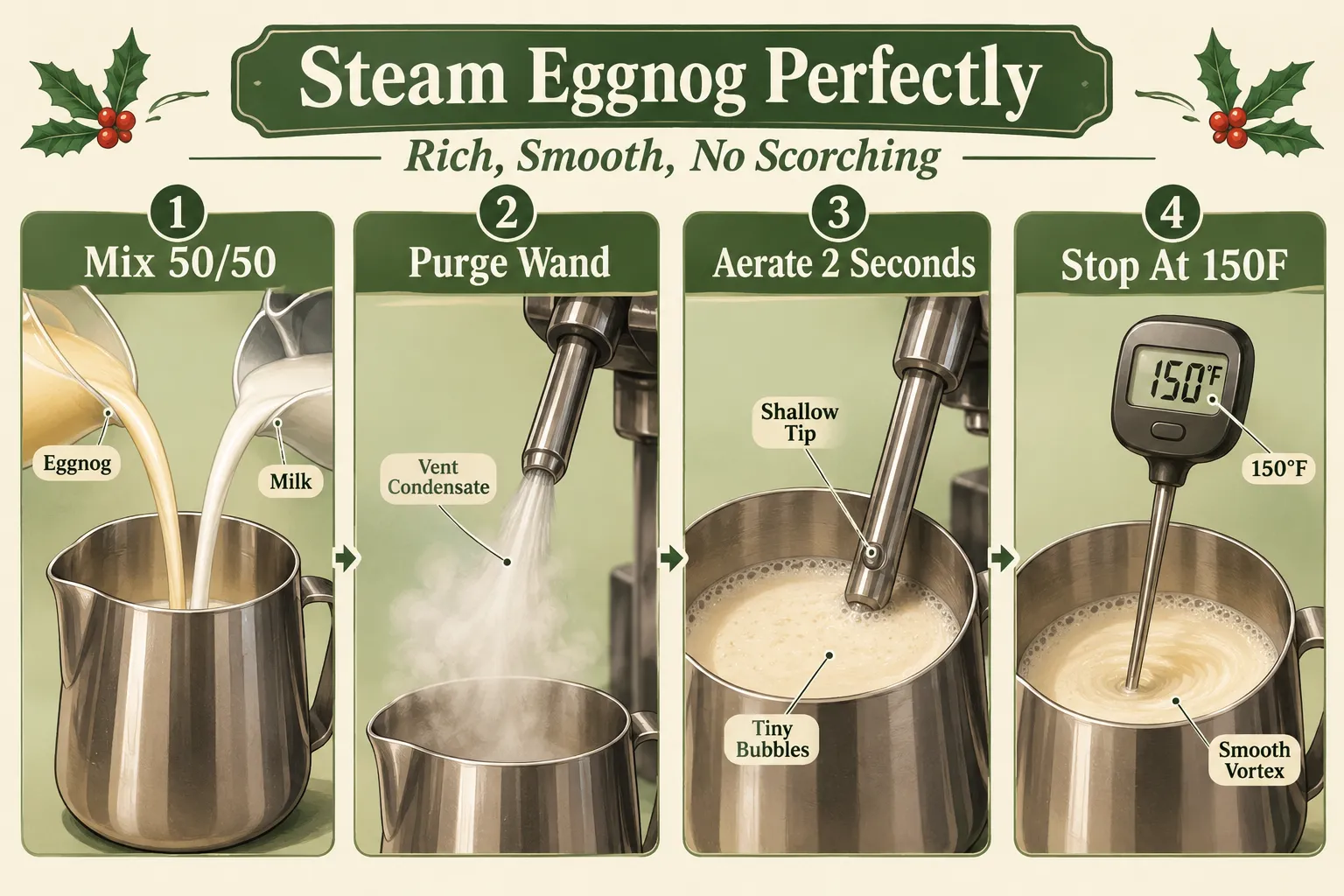
Here is the sequence, in order:
- Pour cold. Combine 5 oz eggnog and 5 oz milk in a chilled 20 oz steel pitcher. Starting cold buys you seconds of working time. Never start with room-temperature eggnog.
- Purge the wand. Run the steam for two seconds into a towel to clear condensate. Water droplets hitting hot sugar create the first scorch spots.
- Set the tip just below the surface. Angle the pitcher so the wand sits off-center and creates a rotating vortex.
- Aerate 2 to 3 seconds. You want a faint paper-tearing sound, briefly. Then submerge the tip fully. Eggnog contains emulsified fat and protein already, so it needs far less air than milk does.
- Spin and watch. Keep the vortex turning. The whole surface should be moving.
- Cut the steam at 145 to 150°F. Use a probe thermometer clipped to the pitcher rim. This is the step people skip and regret.
- Wipe and purge the wand immediately. Eggnog bakes onto a hot wand within seconds and becomes genuinely difficult to remove.
No thermometer? The common hand test is to hold the pitcher base until it becomes uncomfortable for about five seconds, then stop . It is an approximation at best. Pitcher thickness, your hand sensitivity, starting temperature, and boiler pressure all shift the result. A $12 clip-on thermometer removes the guesswork permanently.
Decision rule: if your machine has an underpowered single-boiler steam wand that takes 40 seconds to texture 10 oz, use the 50:50 ratio and a smaller volume. Slow steam means more total time at high heat, which is exactly what scorches eggnog. Our guide to how steam wand quality affects milk texture in home cappuccino machines explains why wand design matters more than boiler size for this.
What you are aiming for: a silky, pourable liquid with a thin glossy foam layer. Not dense cappuccino foam. If it looks like wet paint and pours in one smooth stream, you got it. If it has stiff peaks, you over-aerated. For the difference between thin pourable microfoam and stiffer foam, see our breakdown of microfoam texture in flat whites versus lattes.
H2 (question): how do you make an eggnog latte step by step
Pull the espresso, steam the eggnog-milk blend to 148°F, pour, grate nutmeg. Total time, about four minutes.
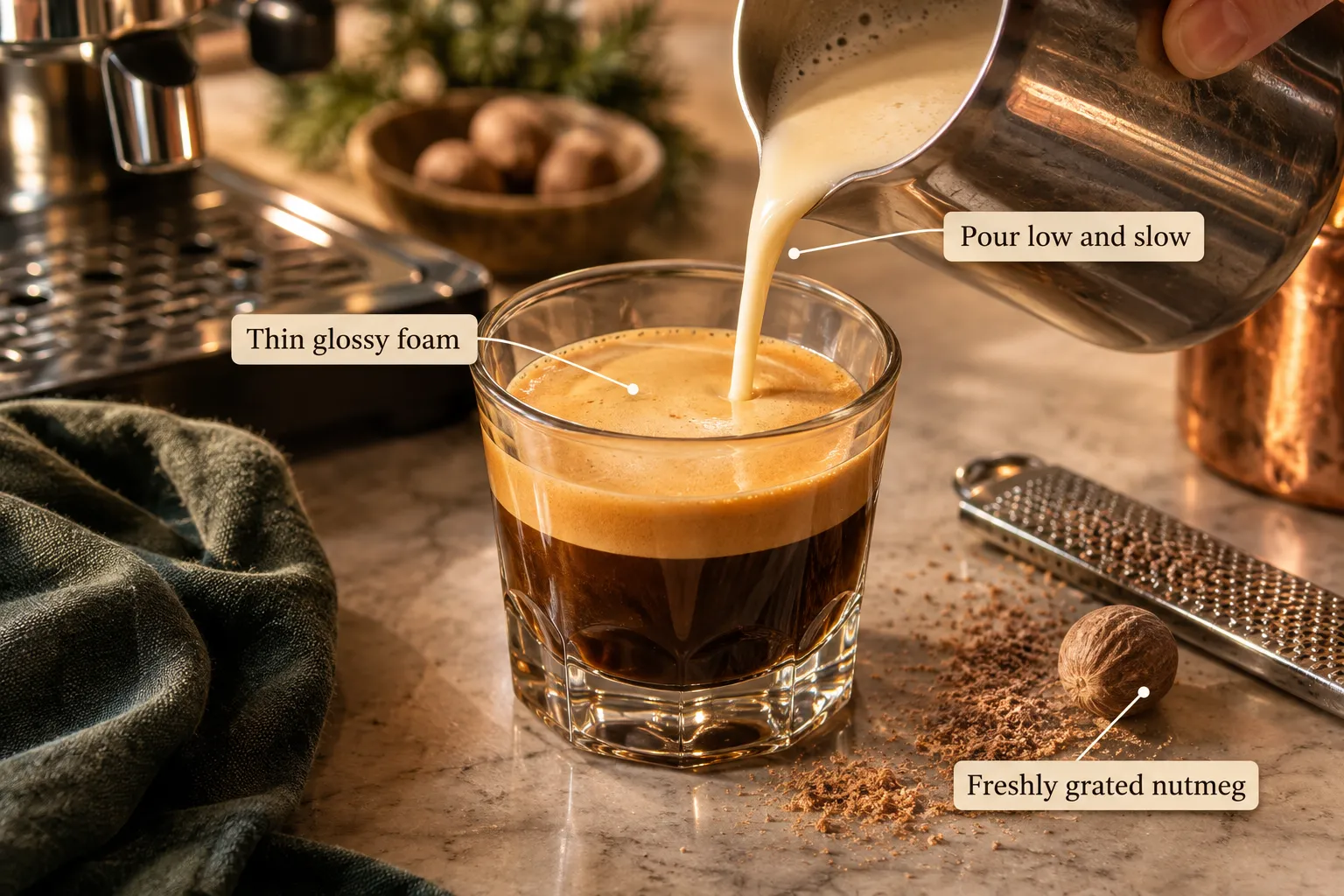
Full method:
- Preheat your cup. Run hot water into a 12 oz cup and dump it. Cold ceramic drops the drink temperature by several degrees instantly, which matters more here because you started lower than usual.
- Grind and pull. Dose 18 to 20g of a medium-dark roast, aim for a 1:2 brew ratio, around 36 to 40g of espresso out in 25 to 30 seconds. A burr grinder makes this repeatable; a blade grinder does not. Check the roast date on the bag. Coffee more than four weeks past roast gives thin crema that disappears under eggnog.
- Pull the shots directly into the warm cup.
- Steam the blend using the seven steps above, stopping at 145 to 150°F.
- Groom the pitcher. Tap it once on the counter to pop large bubbles. Swirl for five seconds until the surface shines.
- Pour. Start high to let the eggnog sink and mix with the espresso, then drop the spout close to the surface for the last third if you want a rosetta. Eggnog is heavier than milk, so latte art is harder. The foam is denser and less reflective. If you want to practice patterns, our advanced latte art techniques guide covers pour height and flow rate control.
- Grate nutmeg over the top. Fresh, not pre-ground. The aroma difference is large and immediate.
Iced version. Skip steaming entirely. Pull 2 shots over ice in a 16 oz glass, add 4 oz cold eggnog and 2 oz cold milk, stir. No scorch risk at all, and the eggnog flavor is actually cleaner because no heat has altered the egg and spice aromatics. Same construction as our iced latte method at home, just with eggnog swapped for the milk.
Eggnog latte versus eggnog coffee. An eggnog latte uses espresso and steamed eggnog, so the texture is dense and the coffee flavor is concentrated. Eggnog coffee is drip or filter coffee with eggnog stirred in as a creamer. It is thinner, sweeter per sip, and far easier to make for a group. Neither is wrong. If you are making six cups for family, make eggnog coffee. If you are making one good drink for yourself, make the latte.
An eggnog cappuccino is the same base with more aeration, aiming for a thicker foam cap. It is harder to pull off because eggnog resists stretching without going grainy. Add one extra second of aeration, no more.
H2 (question): can you make it without an espresso machine
Yes. You need strong concentrated coffee and a way to heat eggnog gently. Neither requires a machine.
For the coffee base, ranked by how close they get to espresso:
- Moka pot. The closest substitute. Brews a 2 oz concentrated shot with real body. Use a fine grind, fill the chamber to the valve, pull it off the heat when it starts to sputter.
- AeroPress, concentrated. 20g coffee to 60g water, fine grind, two minute steep, press slowly. Thick and sweet.
- French press, strong. 1:8 ratio instead of the usual 1:15. Less body than espresso but workable.
- Instant espresso powder. 2 teaspoons in 2 oz hot water. Not elegant, but it holds up against eggnog better than weak drip does.
Our guide to making espresso without a machine walks through the moka pot and AeroPress methods in detail, and six coffee methods that need no coffee maker covers the rest.
For heating the eggnog without a steam wand:
- Saucepan, low heat. Combine eggnog and milk, heat on low, stir constantly, pull it the moment steam rises and small bubbles form at the edge. Allrecipes' version uses exactly this approach and specifies not letting it boil . Target the same 145 to 150°F.
- Microwave in 20-second bursts. Stir between each. Three bursts is usually enough for 10 oz. Microwaves create hot spots, and hot spots scorch eggnog, so the stirring is not optional.
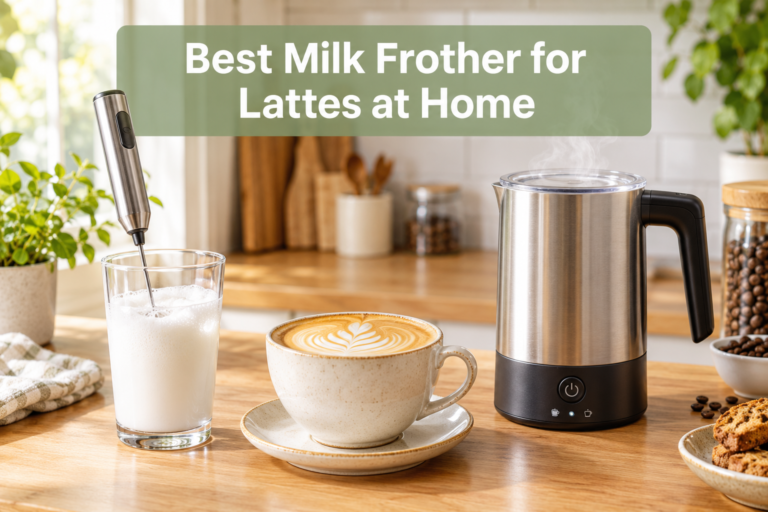
- Handheld milk frother. Heat the blend on the stove first, then froth off the heat for 15 seconds. You get foam without ever exposing eggnog to a 250°F metal tip.
- French press plunge. Heat the blend, pour it into a clean French press, plunge rapidly 15 to 20 times. This produces a surprisingly good thin foam.
Common mistake with the stovetop route: walking away. Eggnog goes from "steaming" to "curdled" in about fifteen seconds over medium heat. Stay with the pan.
What to Watch Out For: scorching, curdling, oversweetening
Three failure modes cover almost every bad homemade eggnog latte. Each has a distinct cause and a distinct fix.
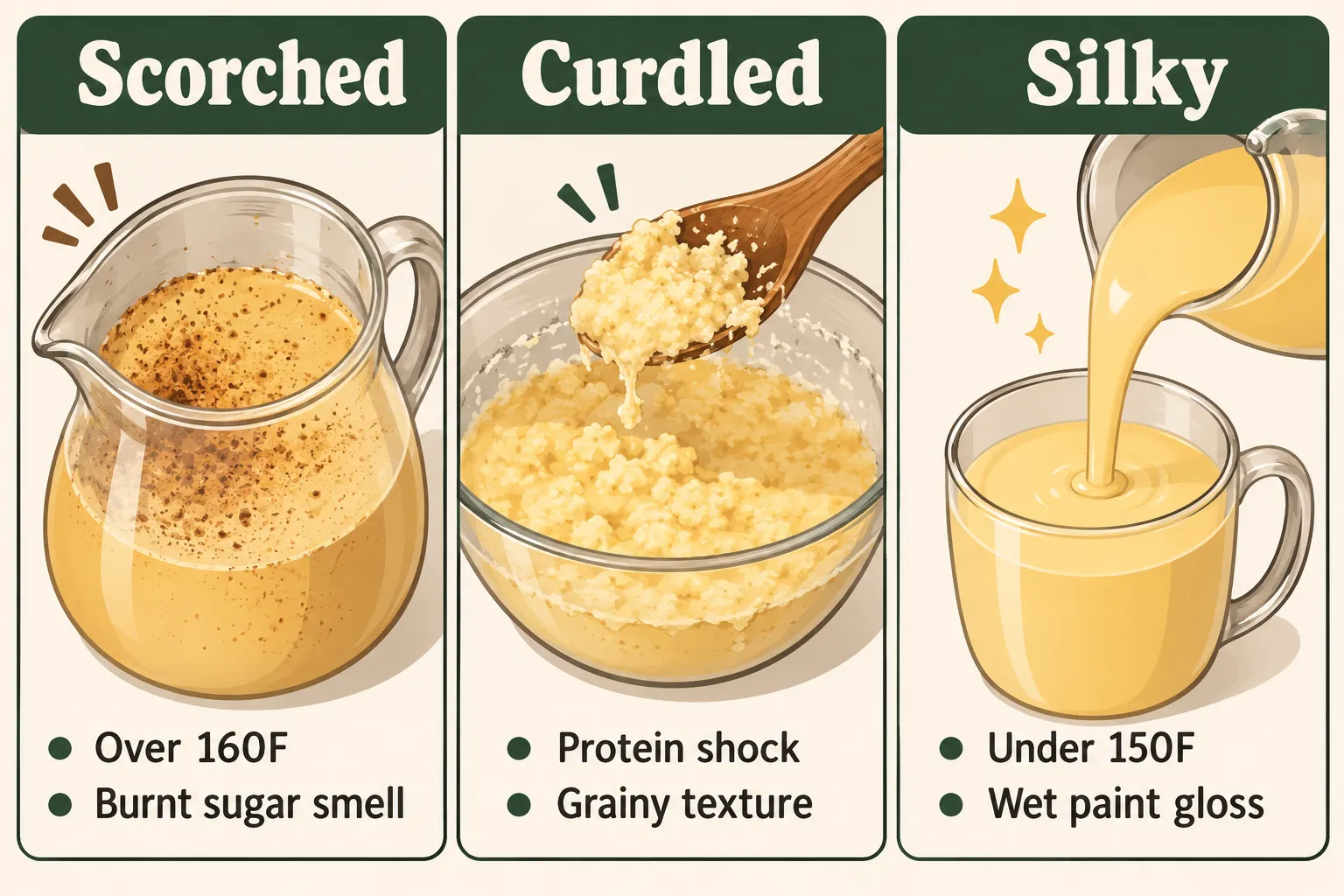
Scorching. Dark flecks in the pitcher, a burnt-caramel smell, a bitter edge that sits behind the sweetness. Cause: sugar caramelizing on the hot steam wand tip, or a hot spot in a saucepan. Fix: lower the final temperature, keep the vortex moving so no liquid parks against the tip, and purge the wand before you start. Once a batch is scorched, it cannot be rescued. Dump it.
Curdling. Grainy texture, visible specks, a separated look. Cause: egg proteins coagulating above roughly 155°F, or acid shock from espresso that is too hot when it meets the eggnog. Fix: stop at 150°F, dilute with milk, and pour steamed eggnog into espresso rather than the reverse. Also check your eggnog's date. Older eggnog curdles more readily.
Oversweetening. The most common complaint, and the easiest to avoid. Commercial eggnog is already a dessert. Adding vanilla syrup on top produces something closer to melted ice cream than coffee. Fix: taste before you sweeten. Use a darker roast with more bitterness to balance it. If you want more spice character without more sugar, add cinnamon and nutmeg rather than syrup.
Three more worth knowing:
- Over-aeration. Eggnog stretched like milk goes stiff and dry. Two seconds of air, maximum.
- Reheating. Never re-steam eggnog that has already been heated. The proteins are already partly set and the second pass will curdle them.
- Wand neglect. Eggnog bakes onto a steam wand harder than milk. Wipe and purge within five seconds of finishing, every time.
Can you make them ahead? Partly. You can pre-mix the eggnog and milk blend and keep it refrigerated for up to two days, which saves time on a busy morning. You cannot steam ahead. A finished eggnog latte is at its best within about ten minutes and should not sit out more than two hours for food safety reasons. An iced version holds up better, up to about 24 hours refrigerated, though it will separate and need a stir.
Sourced stat cards: 3 to 6 cited numbers
A note on the numbers: the temperature figures come from recipe developers, not from a controlled laboratory study. They are consistent across multiple independent 2026 sources and they match what egg protein chemistry predicts, but nobody has published a peer-reviewed paper on eggnog steaming. Treat 150°F as a well-supported working ceiling rather than a measured scientific constant.
The Starbucks pricing figures are reported prices from UK news outlets in late October 2026 and will vary by store, size, and date checked .
Eggnog latte: three ways to get one
| Factor | Full eggnog (no milk) | Half eggnog, half milk | Café version |
|---|---|---|---|
| Blend | 10 oz eggnog | 5 oz eggnog + 5 oz milk | Shop formula |
| Steam ceiling | ~140°F | 145–150°F | Set by machine |
| Scorch risk | High | Low | None for you |
| Foam quality | Dense, hard to pour | Silky, pourable | Consistent |
| Eggnog flavor | Strongest | Balanced | Varies |
| Sweetness | Very high | Moderate | Often high |
| Time | ~4 min | ~4 min | Drive + queue |
| Best for | Eggnog devotees | Most people | No equipment |
Temperature guidance from 2026 recipe sources. Café availability and pricing vary by market and date checked.
FAQ

Conclusion: variations plus next step
One rule carries this whole eggnog latte recipe: dilute and stay under 150°F. Everything else is preference.
Variations worth trying:
- Eggnog cappuccino. Same blend, one extra second of aeration, served in a 6 oz cup. Thicker cap, more aromatic nutmeg lift.
- Iced eggnog latte. 2 shots over ice, 4 oz cold eggnog, 2 oz cold milk. Zero scorch risk and the spice notes read cleaner.
- Eggnog cortado. 2 shots, 2 oz of the steamed blend. Coffee-forward, for people who find the full latte too sweet.
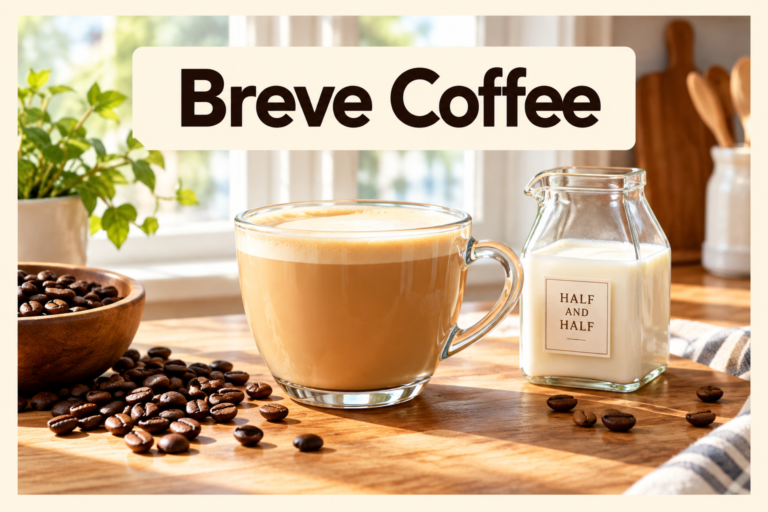
- Eggnog breve. Swap the milk for half and half. Heavier, richer, and the technique matches our breve coffee method.
- Dirty eggnog chai. Espresso, chai concentrate, and steamed eggnog in equal parts. Built like a dirty chai with eggnog standing in for the milk.
Your next step: buy a clip-on probe thermometer before your next attempt. It costs less than two café eggnog lattes and it removes the only genuinely difficult variable in the drink. Make one batch at 50:50, note the temperature where it tasted best, and write it on the eggnog carton. Next December you will already know your number.
If you want more holiday latte recipes and seasonal builds, browse our collection of coffee recipes.