Coffee Ice Cubes: The Fix for Watery Iced Coffee
Coffee Ice Cubes Fix the Drink That Gets Worse as You Drink It
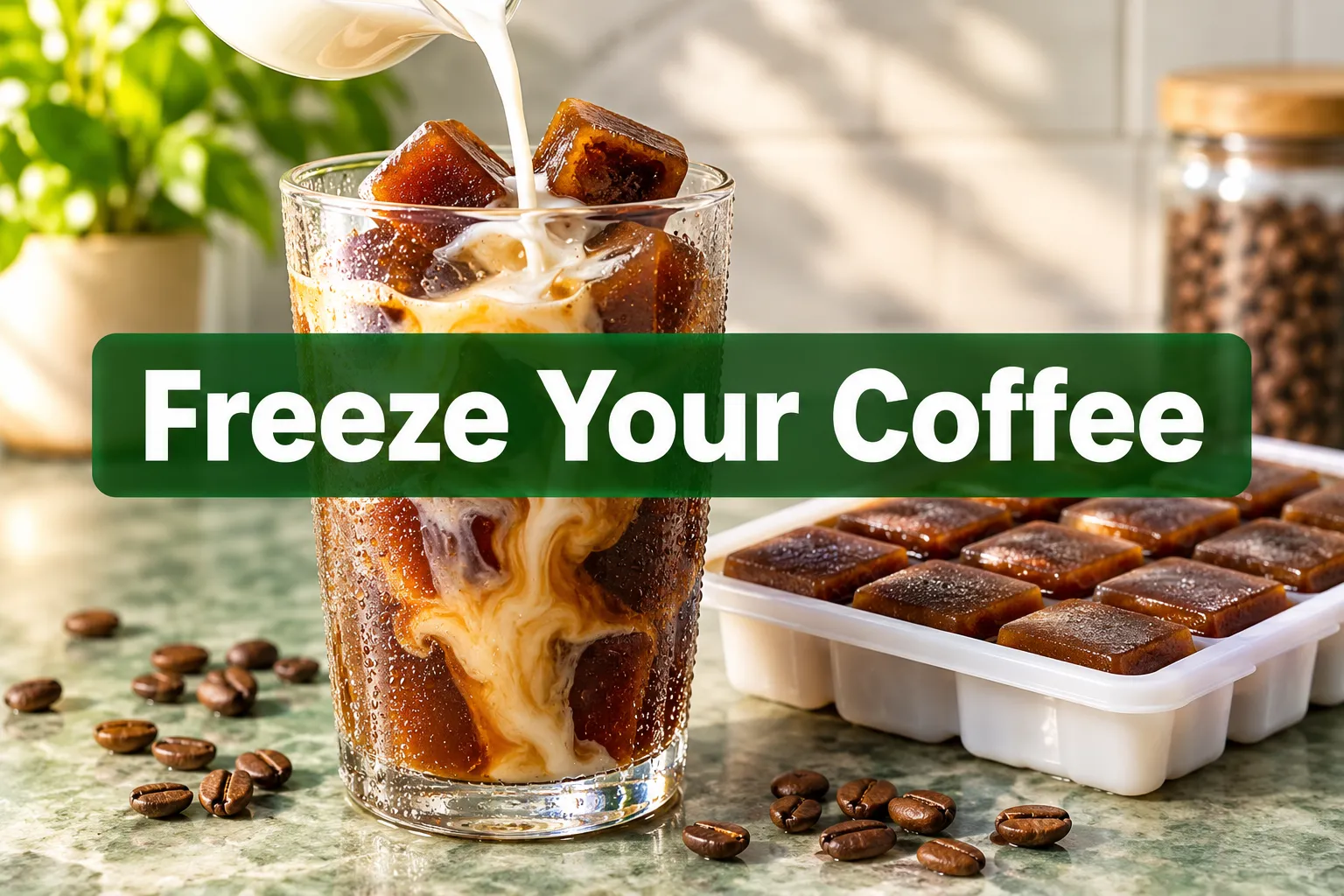
Freeze coffee instead of water and your iced coffee gets weaker nowhere near as fast. That's the whole mechanism. A glass of iced coffee doesn't go bad because ice melts. It goes bad because what melts is water, and water added to a finished drink is just a slow-motion dilution you didn't ask for. Coffee ice cubes swap the melt water for brewed coffee, so the last mouthful tastes close to the first.
The trick is older than the internet trend charts, but the demand is new. US search interest in coffee ice cubes has climbed from roughly 1,000 to 4,400 monthly searches (DataForSEO), and at least one chain has turned the idea into a selling point. Bad Ass Coffee of Hawaii reported more than 30% sales growth over about five weeks tied to a coffee-ice campaign, documented in an August 2026 case study and revisited by the Association of National Advertisers in October 2026 .
One caveat before the recipes: freezing weak coffee gives you weak coffee later. Strength in, strength out. Everything below is about controlling that.
Key Takeaways
- Brew stronger than usual. Lavazza's Kathleen McCarthy suggests roughly 1:12 coffee to water for iced service instead of the 1:16 hot benchmark, down to 1:8 when a lot of ice will melt in .
- Freezing time: 3 to 4 hours in a standard 0°F home freezer for a 1 oz cube, 4 to 6 hours for a 2 oz cube. Overnight is safest.
- Best storage window: about 2 weeks. After that, freezer odors and surface sublimation start showing up in the cup.
- Yield: one 12-cup carafe (about 60 oz of brewed coffee) fills roughly three standard 16-cube trays, or about 48 one-ounce cubes.
- Use 4 to 6 cubes in a 12 oz drink, 6 to 8 in a 16 oz. More than that and the drink gets cold before it gets diluted, which is fine until the cubes start over-flavoring the milk.
- Silicone trays with lids release cleanly, resist staining better than cheap polypropylene, and block the smell of last week's salmon.
- Freeze a concentrate, not a finished drink. Dave Cutler of Lavazza UK recommends freezing coffee at around 1:5 coffee to water for iced use .
Coffee Ice Cubes
Coffee ice cubes are exactly what the name says: brewed coffee, espresso, or cold brew frozen in an ice cube tray and used in place of water ice. They melt into coffee instead of melting into nothing, which keeps an iced coffee tasting like coffee from top to bottom.
)
The science is simple and worth saying plainly. Dilution is a ratio problem, not a temperature problem. Gina Cordoba, who founded and runs TRACER Coffee in Charleston, told Yahoo that the common home mistake is brewing normal-strength coffee and pouring it over ice without accounting for the water that ice will add . A 12 oz glass packed with ice holds maybe 5 oz of frozen water. When it melts, you've turned an 8 oz coffee into a 13 oz coffee. Nobody would brew that on purpose.
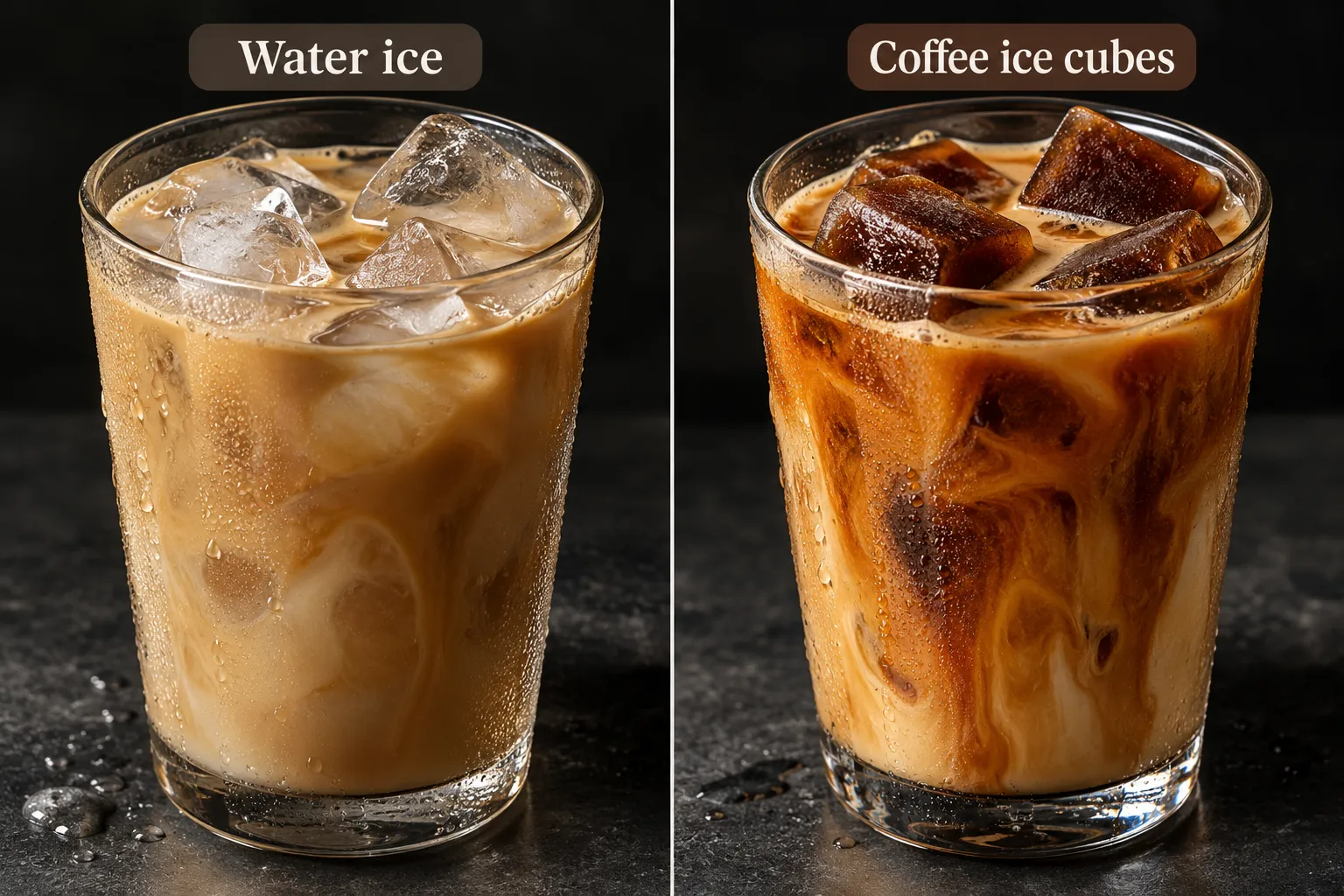
Swap in frozen coffee and the melt contributes extraction rather than water. That's the difference between iced coffee not watered down and the sad grey cup at the bottom of a to-go tumbler.
Who this suits: anyone drinking iced coffee slowly. Desk workers, commuters, people who nurse a 20 oz tumbler for two hours. Who it doesn't suit: anyone who drains a glass in four minutes. If you drink fast, large water ice does the job and costs you nothing.
A few related terms worth defining now, since they get mixed up constantly:
- Espresso ice cubes are frozen shots. Intense, usually 1 oz each, excellent in milk drinks.
- Cold brew ice cubes are frozen cold brew, smoother and lower in perceived acidity because cold water extracts fewer of the sharp-tasting acids.
- Frozen coffee cubes is the catch-all term, including cubes made from leftover drip.
- A coffee ice cube tray is just an ice tray, but the silicone ones with lids matter for reasons covered later.
One honest limitation. KAVOVO points out that coffee cubes in a milk drink can push the balance the other way, making a latte progressively stronger or more bitter as they melt, especially if the frozen coffee was stale or over-extracted to begin with . Coffee ice cubes are an ingredient with a flavor, not a neutral chilling device. Treat them like one.
How Do You Make Coffee Ice Cubes Step by Step
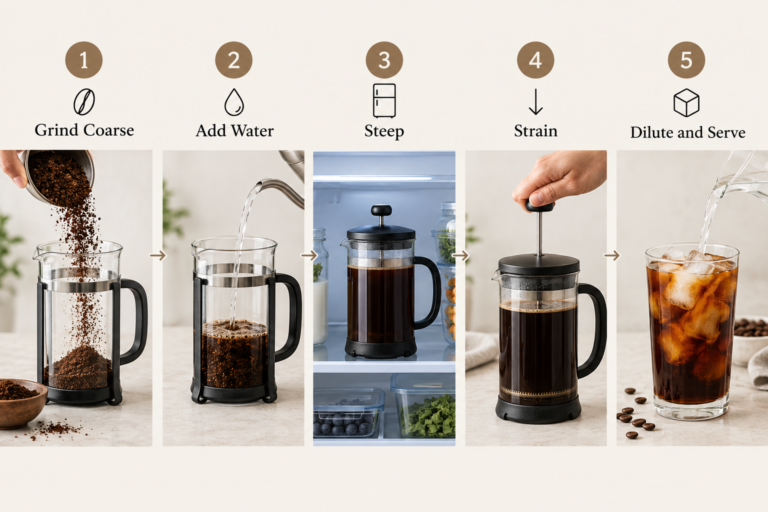
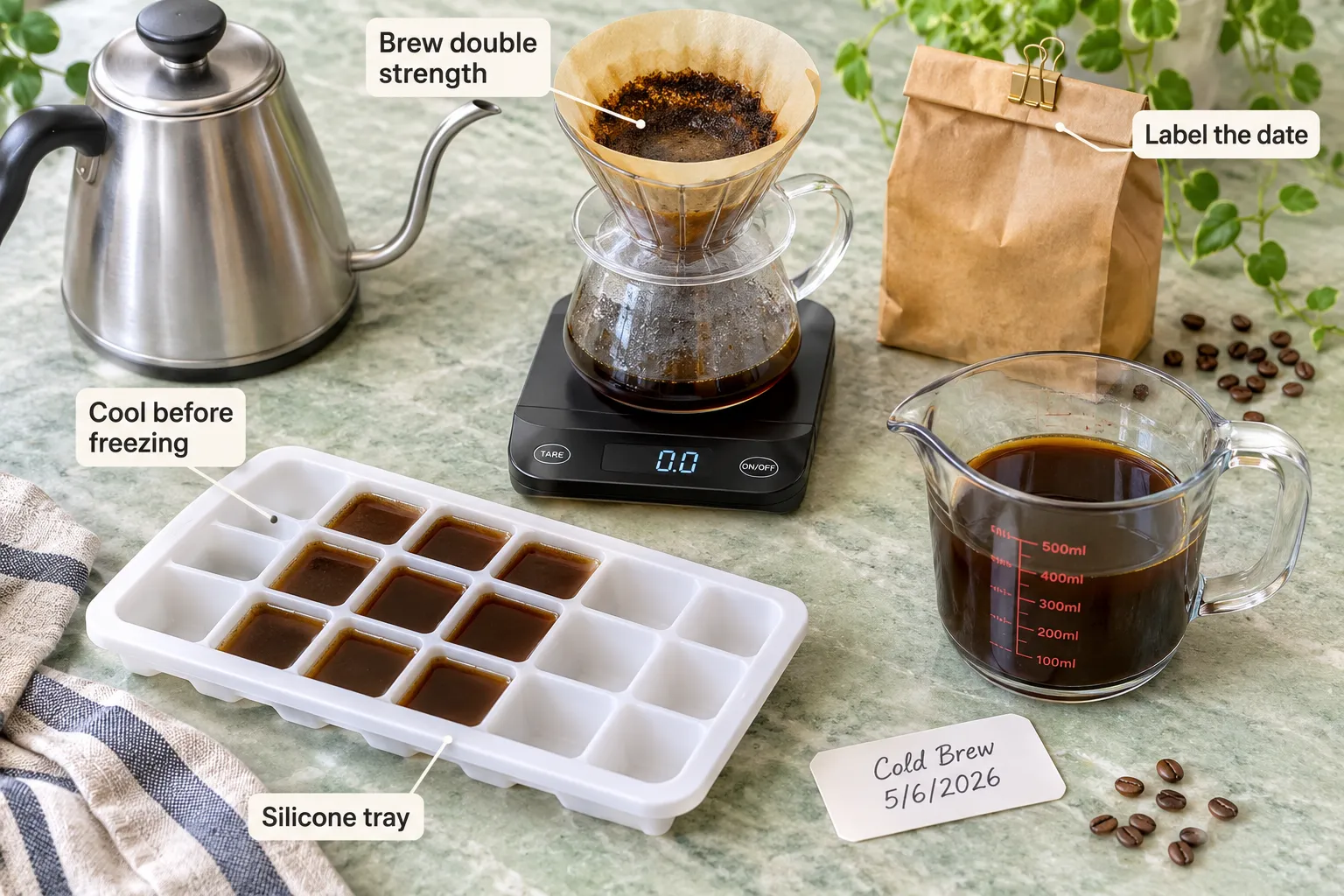
Brew coffee at roughly double your normal strength, cool it to room temperature, pour into a silicone tray, freeze for 4 hours or overnight. That's the short version. The details are where most people lose the drink.

)
The method
- Pick your base. Drip, pour over, espresso, or cold brew all work. Yes, you can make coffee ice cubes with regular drip coffee, including the pot you forgot about this morning, as long as it hasn't been sitting on a hot plate stewing for two hours. Hot plate coffee tastes burnt. Freezing preserves that faithfully.
- Brew strong. For drip or pour over, adjust your brew ratio to about 1:12 rather than the usual 1:16. McCarthy's guidance for iced service runs 1:12, and as strong as 1:8 when a lot of ice will melt into the glass . For cubes that will sit in milk, Cutler's 1:5 concentrate approach gives you cubes with real backbone . Keep the grind size the same and increase the dose rather than grinding finer, which risks a harsh, over-extracted result.
- Cool it down. Hot liquid in a freezer raises the compartment temperature and partially thaws whatever is next to it. Let the coffee reach room temperature on the counter, or chill it in the fridge for an hour. Cooling also lets any fine sediment settle.
- Pour and cover. Fill each well to about 90%, since liquid expands as it freezes. Put the lid on. If your tray has no lid, a sheet of plastic wrap works.
- Freeze 4 to 6 hours. Standard 1 oz cubes firm up in about 3 to 4 hours at 0°F. Larger 2 oz cubes take 5 to 6. Overnight removes the guesswork.
- Transfer to a sealed bag or container. Label with the date. Cubes sitting open in a tray pick up freezer smells and lose surface moisture.
Should you add milk or cream before freezing
Usually no. Dairy cubes freeze cloudy, can separate slightly on thawing, and they limit what the cube can be used for. The exception is deliberate: a tray of frozen sweetened condensed milk and coffee is a genuinely good addition to a Vietnamese-style iced coffee. For everything else, freeze coffee plain and add milk in the glass.
A quick decision rule
Choose espresso ice cubes if your drink is milk-heavy. Choose cold brew ice cubes if you want smooth and low-acid, and see our beginners guide to cold brew coffee for the steeping ratios. Choose strong drip if you want the fastest route from existing equipment to a tray of frozen coffee cubes tonight.
Common mistake
Freezing yesterday's half-pot without tasting it first. If the coffee isn't pleasant warm, it won't improve at 0°F. Freezing locks in flavor; it doesn't repair it.
How Long Do Coffee Ice Cubes Keep in the Freezer
Plan on about two weeks for good flavor, and up to a month before they're genuinely unpleasant. They stay frozen indefinitely at 0°F. Taste is the limiting factor, not safety.
Three things degrade them:
- Odor absorption. Frozen coffee is porous and aromatic compounds move both ways. An uncovered tray next to garlic bread or fish will taste like it within days. A sealed zip bag buys you weeks.
- Freezer burn and sublimation. Ice slowly turns straight to vapor in a dry freezer, leaving the cube's surface dull, slightly concentrated, and papery in flavor.
- Oxidation before freezing. Coffee brewed three days ago and then frozen was already flat. The freezer just paused the decline.
A practical rhythm: make one tray per week. A standard 16-well tray at 1 oz each gives 16 cubes, which is three or four drinks. Date the bag with a marker. If you've had a bag longer than a month, use those cubes in a blended drink where sugar and milk mask the fade, or toss them.
Edge case: frost-free freezers cycle through brief defrost phases, which is exactly the condition that accelerates surface sublimation. If yours is frost-free, the two-week window is a ceiling, not a target. Chest freezers running colder and drier hold flavor longer, but the odor rule still applies.
Five Ways to Use Coffee Ice Cubes
These are the five uses that actually earn the tray space, in rough order of how often people reach for them.
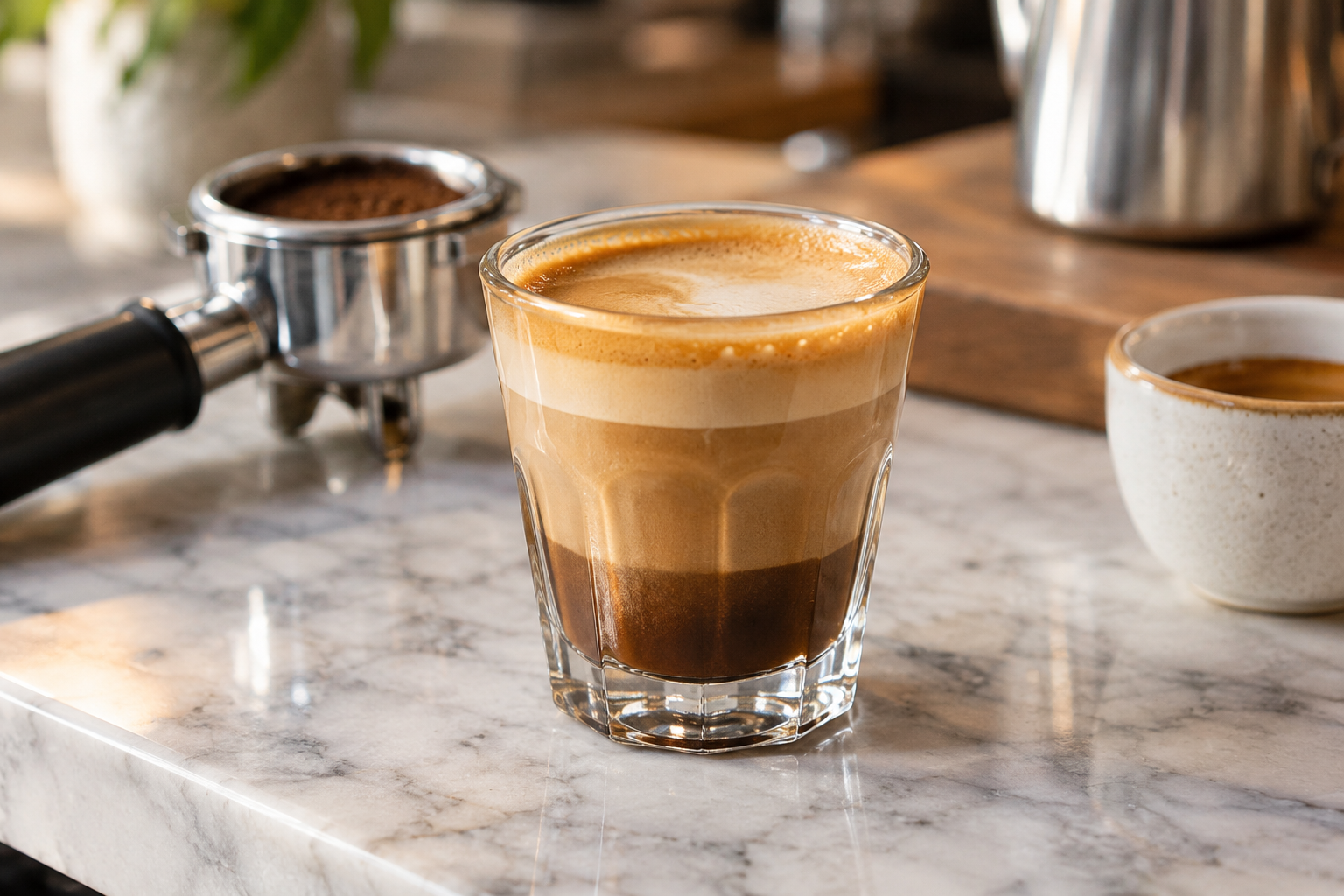
1. Iced latte
The flagship. Put 5 or 6 espresso ice cubes in a 12 oz glass, pour 6 to 8 oz of cold whole milk over them, stir, and wait a minute. The cubes release coffee into the milk gradually, so the drink darkens as you drink it rather than fading. Compare the same build with water ice and the difference is obvious by the halfway point. If you want to go further, our guide to the best ways to make iced coffee for beginners covers the brewing side, and a layer of cold foam from a homemade coffee syrup on top sweetens without thinning the base.
2. Iced mocha
Chocolate mutes coffee, which makes this a good home for a slightly bitter batch of coffee ice cubes. Stir 1 tbsp of chocolate syrup into 2 oz of milk first so it dissolves, then add 5 or 6 cubes and top with 6 oz more milk. Freezing a tray of pre-sweetened mocha concentrate at 1:5 works beautifully here and saves a step every morning.
3. Blended coffee drinks
This is where frozen coffee cubes outperform everything else. A blended drink made with water ice is 60% water by volume and tastes like it. Blend 8 coffee cubes with 4 oz of milk and a splash of syrup and you get a thick, dark, genuinely coffee-flavored frozen drink with no dilution at all. Use a blender with decent blades; cheap ones struggle with solid coffee ice and leave gritty shards.
4. Protein coffee
Protein shakes with coffee usually taste muddy because you're adding powder, milk, ice, and coffee all at once and the ice wins. Swap the water ice for 4 to 5 coffee ice cubes in a shaker or blender with one scoop of vanilla protein and 8 oz of milk. The coffee flavor survives the powder. Chocolate protein plus espresso ice cubes makes a decent post-workout mocha.
5. Affogato-style
Not a true affogato, which uses hot espresso over ice cream, but a slower cousin. Drop three coffee ice cubes into a small bowl of vanilla gelato and let them sit for two minutes. The cubes soften at the surface, the gelato melts around them, and you get a dessert that doesn't flood the bowl the way hot espresso does. It's also the best use for the last few cubes in a bag that's getting old.
Bonus territory: a frozen coffee cube in a cocktail shaker makes an espresso martini colder without diluting the spirit. See the beginners guide to coffee infused cocktails if that's your direction.
What to Watch Out For: Freezer Odors, Weak Brew, Tray Staining
Three problems account for nearly every disappointing batch of coffee ice cubes. All three are preventable in under a minute.
Freezer odors. Frozen coffee is aromatic and absorbent. Left uncovered beside onions, garlic, or anything fish-related, the cubes pick up those smells in two or three days, and once absorbed they don't leave. Use a lidded silicone tray while freezing, then move the cubes to a zip bag with the air pressed out. If your freezer already smells, an open box of baking soda helps, but a sealed bag is faster.
Weak brew. The single most common complaint about coffee ice cubes is that the drink ends up thin anyway. That means the cube was brewed at normal strength. A 1:16 cube melting into a 1:16 drink keeps the ratio flat but adds volume, so the drink gets longer and cooler without getting better. Brew at 1:12 for general use and 1:8 when the glass will be mostly ice . If you're measuring by scoops, our scoops of coffee per cup chart makes the adjustment easy.
Tray staining. Coffee stains plastic. Cheap polypropylene trays go permanently tan after a month. Silicone resists it better and releases cubes without the twist-and-crack routine, which matters because frozen coffee is more brittle than water ice. Choose a silicone tray with a hard plastic frame so it doesn't flex when you carry it full, and a lid if you can get one. Wash with hot water and dish soap promptly; coffee oils left to sit are what cause the stain, and they also turn rancid, which taints the next batch.
Two more worth knowing. Head roaster Allin warns that crushed, shaved, and pebble ice make iced coffee watery fast because small pieces have far more surface area per unit of volume . The same geometry applies to coffee ice: larger cubes last longer. And on bitterness, coffee cubes don't taste bitter unless the coffee was bitter. Cold mutes perceived bitterness slightly, so a cube that tastes harsh in the glass was harsh in the pot. If that's a recurring issue, coarsen your grind size a step and check the roast date on the bag.
Regular Ice vs Coffee Ice Cubes vs Cold Brew Concentrate in an Iced Latte
Direct answer: the cubes win on flavor retention, cold brew concentrate wins on speed and consistency, and regular ice wins only on convenience. Here's the same 12 oz iced latte built three ways.
)
12 oz iced latte: three ways to chill it
| Factor | Regular ice | the cubes | Cold brew concentrate |
|---|---|---|---|
| Flavor after 20 min | Noticeably thin | Holds, slowly deepens | Holds if poured over coffee ice |
| Prep time | None | 4 to 6 hrs freezing | 12 to 18 hrs steeping |
| Strength control | Guesswork | Set by brew ratio | Dilute to taste in glass |
| Acidity | Same as base | Same as base | Lower, smoother |
| Shelf life | Indefinite | About 2 weeks | 7 to 10 days chilled |
| Best for | Fast drinkers | Slow sippers, blended drinks | Daily batch drinkers |
| Main drawback | Dilution | Needs planning ahead | Still melts if ice is water |
Times reflect a 0°F home freezer and standard 1 oz cubes. Cold brew steep times vary by grind size and recipe.
The honest conclusion: the strongest setup combines two of them. Cold brew concentrate in the glass, cold brew ice cubes doing the chilling. You get low acidity, no dilution, and a drink you can build in 30 seconds once the batch work is done. If you're going that route, our picks for the best cold brew coffee maker cover the gear.
There's a fourth option worth naming: flash brewing, where part of the brew water is replaced by ice in the carafe. McCarthy's example uses 20 g of coffee, 240 g of hot water, and 80 g of ice . It chills instantly and extracts aromatics that cold brew never captures. The downside is you drink it now; it doesn't keep.
The Numbers Behind the Cold Coffee Shift
Four figures that explain why the cubes stopped being a niche hack.
More than 30% sales growth. Bad Ass Coffee of Hawaii reported that increase over roughly five weeks after making coffee-made ice a product feature, documented in an August 2026 case study and covered again by the Association of National Advertisers in October 2026 . Reported marketing results aren't controlled experiments, and no one has isolated the ice from the rest of the campaign. It does show consumer appetite is real.
1,000 to 4,400 monthly US searches. The rise in search volume for the cubes, per DataForSEO. Search data measures curiosity, not satisfaction, so treat it as interest rather than proof the method works.
1:16 to 1:12, or as low as 1:8. Lavazza's Kathleen McCarthy's iced coffee brew ratio guidance, moving from the hot-coffee benchmark to a stronger iced recipe depending on how much ice will melt in . This is professional guidance, not a laboratory measurement.
1:5 coffee to water. Dave Cutler, Head of Training at Lavazza UK, recommends freezing coffee at roughly this concentration for iced drinks, so the cubes add flavor as they melt rather than water . That's a deliberately strong concentrate, closer to a syrup than a cup.
$5,500. The prize reportedly won by Kube & Co., a Cornell-founded startup developing flavored the cubes for cafés and retail, at the 2026 Hospitality Business Plan Competition. Early-stage funding is not the same as market validation, and no broad retail distribution has been established.
As for where to buy the cubes: as of November 2026, there's no widely stocked US retail product. A handful of cafés sell them in-store, and startups are working on shelf-stable formats, but a tray and six hours remains the reliable route.
FAQ

Conclusion: Your Next Tray and the One Piece of Gear
Start tonight with the simplest version. Brew 500 g of water over 42 g of coffee for a 1:12 ratio, cool it on the counter for 40 minutes, fill a silicone tray, and freeze overnight. Tomorrow, build a 12 oz iced latte with six of those the cubes and 7 oz of cold whole milk. Taste it at minute one and minute fifteen. That comparison teaches more than any article can.
The one piece of equipment worth buying is a lidded silicone coffee ice cube tray with a rigid frame, usually $10 to $18 as of November 2026. The lid blocks freezer odors, the silicone releases brittle frozen coffee cubes without cracking them, and the frame keeps the tray level when you carry it full. Check the current price before buying; prices move and cheap unlidded trays are a false economy.
Then try one upgrade: make the cubes from espresso instead of drip and build an iced shaken espresso at home. Better Coffee Starts With Better Answers, and this one started with noticing what was actually melting into the glass.
Coffee Rank IQ includes affiliate links in some articles. Recommendations are based on product research and stated limitations, and affiliate revenue never changes a verdict.