French Press vs Pour Over: Which Cup Fits Your Morning?
Quick answer: French press and pour over solve two different problems. French press steeps coffee grounds directly in hot water, then a metal mesh plunger separates them, which gives you a heavier, oil-rich cup with almost no active effort. Pour over sends hot water through grounds and a paper filter by gravity, which gives you a lighter, clearer cup but asks for a steadier hand. Pick french press if you want a forgiving method that serves a crowd. Pick pour over if you want control over one bright, detailed cup.
Key Takeaways
- French press is an immersion method: grounds soak in water for about 4 minutes before a plunger presses them down.
- Pour over is a percolation method: water drips through grounds and a paper filter over roughly 3 to 5 minutes of active pouring.
- The metal mesh in a french press lets coffee oils and fine particles into your cup, which builds body. A paper filter in pour over traps most of that, which builds clarity.
- French press suits medium and dark roasts with chocolate and earthy notes. Pour over suits light and medium roasts with fruit and floral notes.
- Entry-level french presses run about $15 to $60. Pour over setups run about $10 to $40 for a dripper, plus a kettle if you want one.
- French press has a shorter learning curve. Pour over rewards practice with grind size, water flow, and bloom timing.
- Neither method is inherently healthier, but french press passes more of a compound called cafestol into your cup because it skips a paper filter.
French Press vs Pour Over: What's the Difference
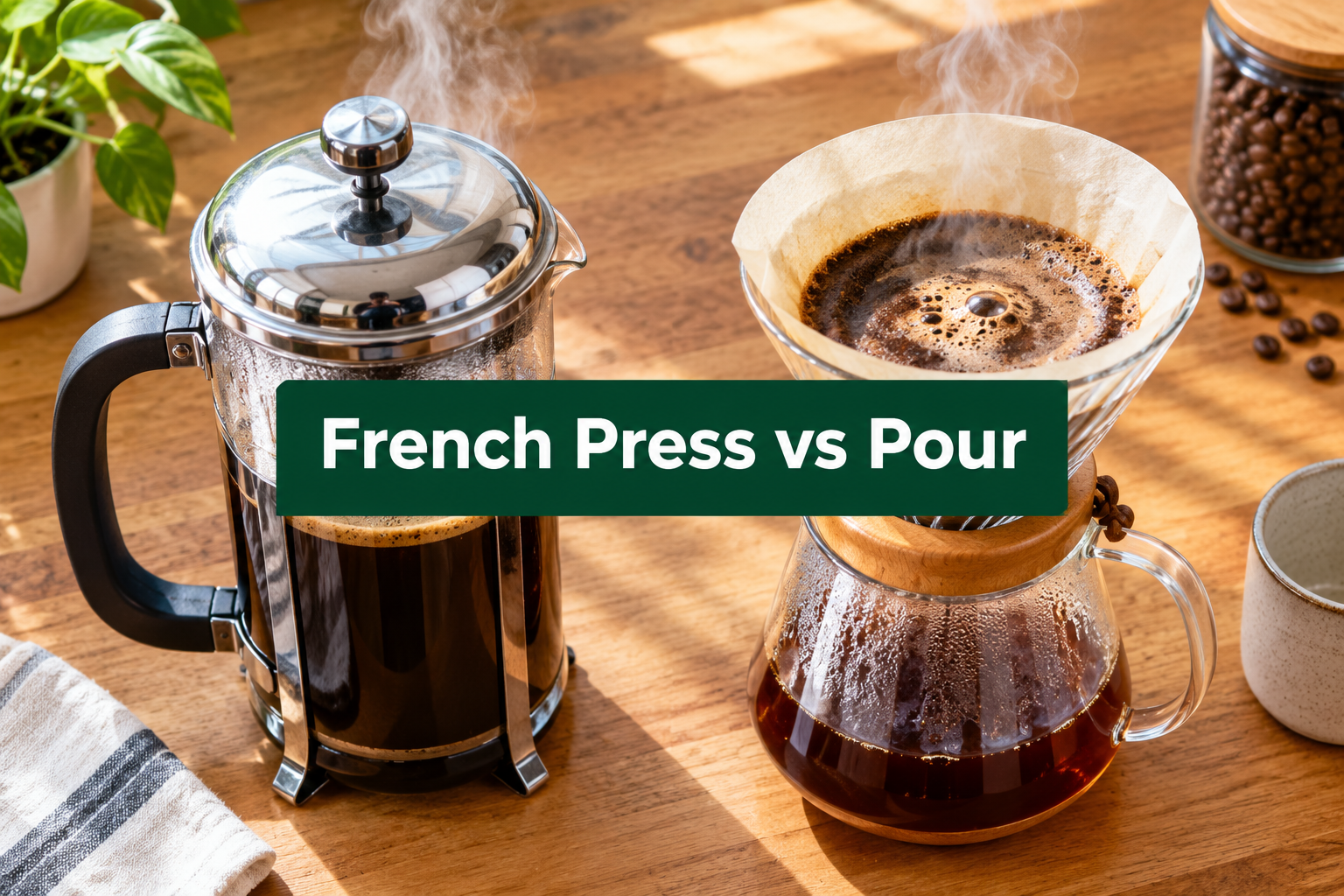
The core difference between french press vs pour over is how the water meets the grounds. French press is immersion: you dump ground coffee into a carafe, pour hot water over it, stir, wait about four minutes, and press a metal mesh plunger down to trap the grounds at the bottom. Pour over is percolation: you set a filter and grounds in a cone, then pour hot water over the top in stages so it drips through by gravity, landing in a carafe or mug below.
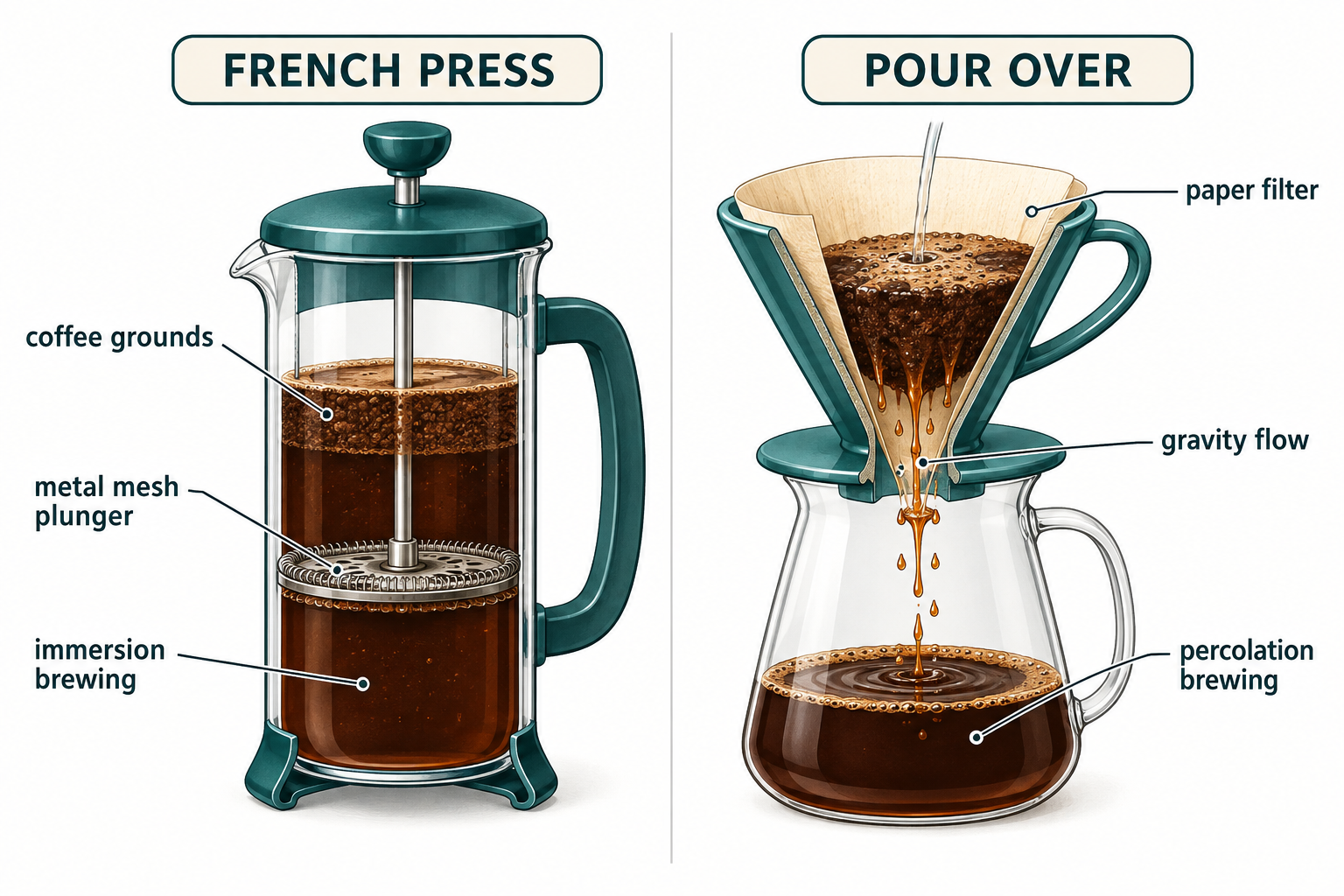
That single mechanical choice, immersion versus percolation, decides almost everything else about the cup: texture, clarity, cleanup, and how much attention the method demands from you.
The filter matters as much as the mechanism. A french press uses a metal mesh, which is loose enough to let coffee oils and microscopic grounds slip through. A pour over cone almost always uses a paper filter, which catches those oils and fines before they reach your cup. That's the paper filter vs metal filter question in one sentence: paper filters for clarity, metal filters for body. If you brew with a paperless dripper like the Cafellissimo pour over coffee dripper, you get a middle ground, more body than a paper filter allows but still more clarity than a french press.
French Press vs Pour Over: Which Makes Better Tasting Coffee
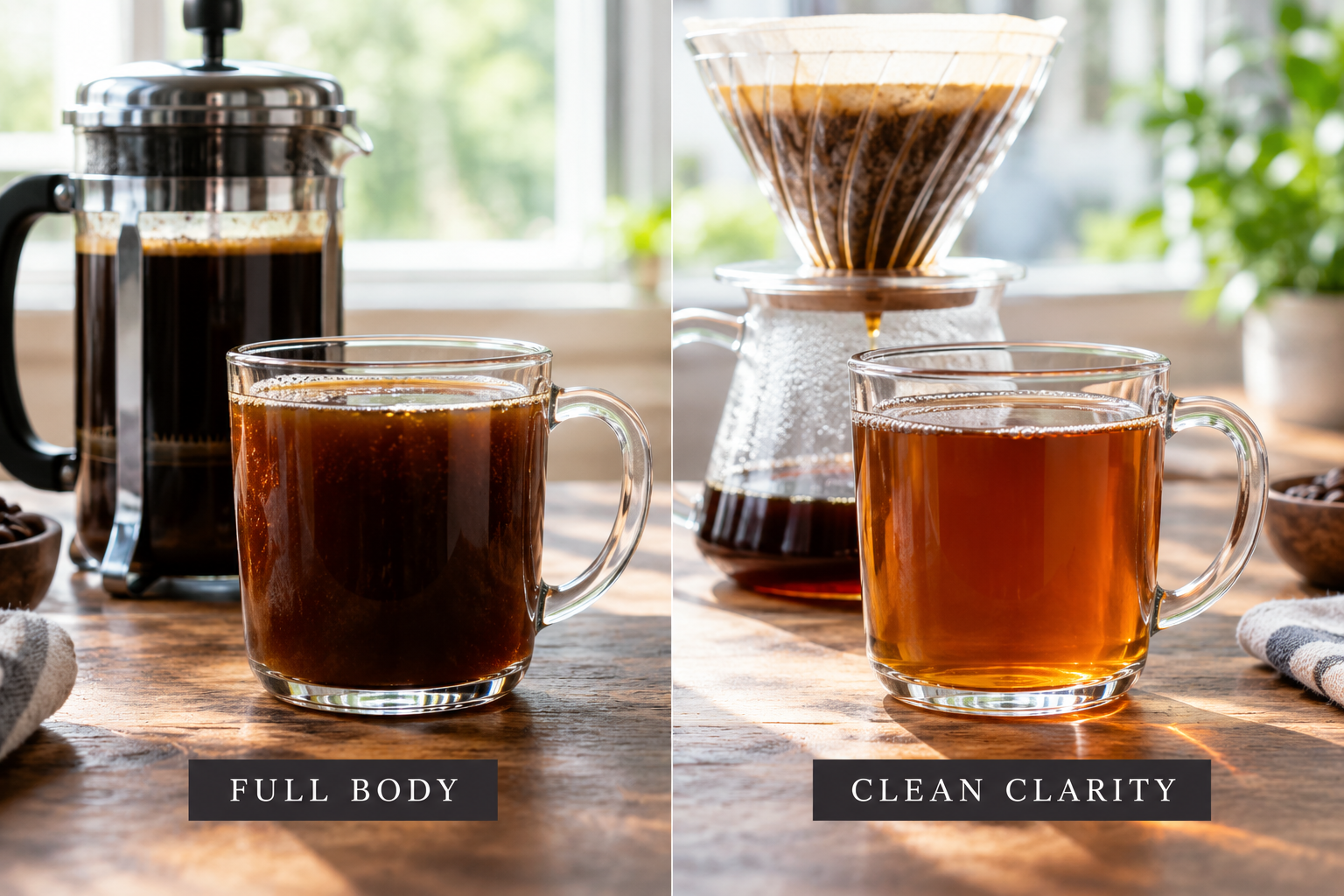
Neither wins outright. French press makes a bolder, thicker cup with visible texture. Pour over makes a lighter, brighter cup with almost no sediment. Which one tastes "better" depends on what you already like in a cup of coffee.
The filter is doing the work here. Because the metal mesh in a french press lets oils and fine particles through, you get more coffee body and clarity trades in the opposite direction: heavier mouthfeel, muted high notes, and a cup that can turn a little sludgy near the bottom if you drink it slowly. A paper filter strips most of that out, so pour over delivers coffee body and clarity that favors clarity: you taste acidity, fruit, and floral notes more distinctly because nothing heavy is sitting on your tongue to dull them.
Recent buyer guides tie the two methods to different roast profiles. French press pairs well with medium to dark roasts that lean chocolatey and earthy. Pour over pairs well with light to medium roasts and single-origin beans where fruit or floral character is the point. If you're the type who reads a bag's tasting notes and wants to actually taste "orange peel" or "cocoa," pour over gives that flavor a cleaner stage.
Decision rule: choose french press if you want weight and comfort in the cup. Choose pour over if you want to taste the bean's specific character. Browse a buyer's guide to choosing coffee beans before you pick a roast to match either method.
Is French Press or Pour Over Healthier
Neither method changes coffee's basic health picture in any way that outweighs personal preference, but they do differ on one measurable compound. French press lets more of a substance called cafestol reach your cup because it has no paper filter to trap it. Pour over's paper filter removes most cafestol before it ever hits the carafe.
Cafestol is a compound found naturally in coffee oils. Some research has connected unfiltered coffee consumption with modest increases in LDL cholesterol, and french press falls into the "unfiltered" category because its metal mesh doesn't stop oils the way paper does. That's not a reason to panic over a daily french press habit. It's a reason to know the difference exists if a doctor has told you to watch your cholesterol. If that applies to you, a paper filter method, pour over or standard drip, is the lower-cafestol choice.
French Press vs Pour Over: Which Is Easier to Use
French press is easier to use and more forgiving of small mistakes. Pour over asks for more attention to grind size, pour speed, and timing, which is also why it rewards practice.
With a french press, you scoop grounds, add water, wait, and press. There's no pouring technique to learn and no filter to fold. Pour over requires a slower, steadier pour in stages, starting with a small amount of water to "bloom" the grounds (a 30 to 45 second rest that releases trapped gas and lets water saturate evenly), then continuing in circles so the water passes through the bed instead of channeling down the sides.
Search french press vs pour over reddit threads and you'll see this split repeated constantly: new brewers default to french press because it's hard to mess up, while people who enjoy tinkering gravitate to pour over because a slightly different pour changes the cup in a way they can taste and adjust.
Which brewing method is better for beginners? French press, without much debate. It has a lower failure rate and needs no gooseneck kettle or scale to get a decent result. If you want to start with pour over anyway, our beginner's guide to pour over coffee and our guide to using a pour over coffee maker walk through the pour in stages so the learning curve is shorter.
How Long Does It Take to Make Coffee in a French Press vs Pour Over
Both methods take about the same total time, roughly 4 to 5 minutes, but the effort involved is different. French press needs about 4 minutes of steeping with almost no hands-on work. Pour over takes 3 to 5 minutes of active pouring and flow control.
That distinction matters more than the raw number. With french press, you can set a timer and walk away to make toast. With pour over, you're standing at the counter the whole time, pouring in a slow, deliberate circle. If your morning is rushed, french press gives you back those minutes. If brewing itself is part of the ritual you enjoy, pour over turns that time into something worth watching.
French Press or Pour Over: Which Is Cheaper
French press and pour over are both inexpensive to start. A basic french press runs about $15 to $60. A pour over dripper runs about $10 to $40, though a gooseneck kettle for controlled pouring adds cost if you don't already own one.
Ongoing costs favor pour over slightly if you buy paper filters regularly, though a box of 100 filters costs only a few dollars. French press has no recurring filter cost since the metal mesh is reusable for years with basic care. Neither method requires electricity, a pod system, or a proprietary cartridge, which keeps both firmly in the budget category compared to single-serve machines. If you're weighing this against drip coffee vs french press for a household that wants speed over ritual, a standard drip machine still wins on hands-off convenience, but it costs more upfront than either manual method.
Can You Use the Same Coffee Beans in French Press and Pour Over
Yes, you can use the same beans for both, but you should grind them differently. French press needs a coarse, even grind so grounds don't slip through the metal mesh and end up in your cup. Pour over needs a medium grind, finer than french press but coarser than espresso, so water flows through at the right pace without rushing or stalling.
Roast choice can also cross over. A medium roast works reasonably well in either method. Where it gets specific: a light, fruity single-origin bean will show its best side in pour over, while a dark, chocolatey blend has more to offer a french press. If you want one bag of beans that performs decently in both machines, look for a medium roast description on the bag and adjust only the grind setting on your burr grinder between brews.
French Press vs Pour Over: Cleanup and Maintenance
French press cleanup takes longer and gets messier. Pour over cleanup is nearly instant because the paper filter carries the grounds away with it.
A french press carafe needs the plunger disassembled, the mesh screen rinsed of trapped grounds, and the glass washed to clear any oily film left behind. Skip a thorough rinse a few times and the mesh starts holding onto stale coffee smell. Pour over cleanup is as simple as lifting the paper filter out by its edges and tossing it, then rinsing the cone. There's no screen to unscrew and nothing oily clinging to the plastic or ceramic.
Common mistake: letting a french press carafe sit with wet grounds inside after brewing. That's the fastest way to end up with a stale, bitter smell that lingers into the next pot. Our guide on perfecting your french press coffee recipe covers a full cleaning routine worth following after every brew, not just once a week.
Does French Press or Pour Over Make Stronger Coffee
French press generally produces a stronger-feeling, heavier cup because more oils and fine solids stay suspended in the coffee. Pour over produces a lighter-feeling cup at a similar caffeine level, because the paper filter removes body without necessarily removing caffeine.
"Strength" gets confused with caffeine content, but they're not the same thing. Caffeine extraction depends mostly on brew ratio (the amount of coffee compared to water) and water temperature, not on the filter type. A french press and a pour over made with the same beans, same grind coarseness adjusted for each method, and the same ratio will land close in caffeine. What differs is mouthfeel: french press tastes heavier and fuller because of the oils a metal mesh allows through, which many drinkers describe as "stronger" even when the caffeine numbers are similar.
What If I Don't Have a Pour Over Cone? Can I Use Something Else?
Yes. You can pour hot water over grounds set in any fine mesh strainer lined with a paper towel or coffee filter over a mug, though the flow will be less even than a purpose-built cone. A few reusable options also skip paper filters entirely.
If you're improvising, a metal strainer lined with a folded paper towel works in a pinch, though pour slowly since the flow rate won't match a cone's designed channels. For a permanent low-waste option, a paperless dripper like the one covered in our Cafellissimo pour over dripper guide uses a fine built-in filter instead of paper, which lands somewhere between a paper filter and a french press on body and clarity.
French Press vs Pour Over for Camping or Travel
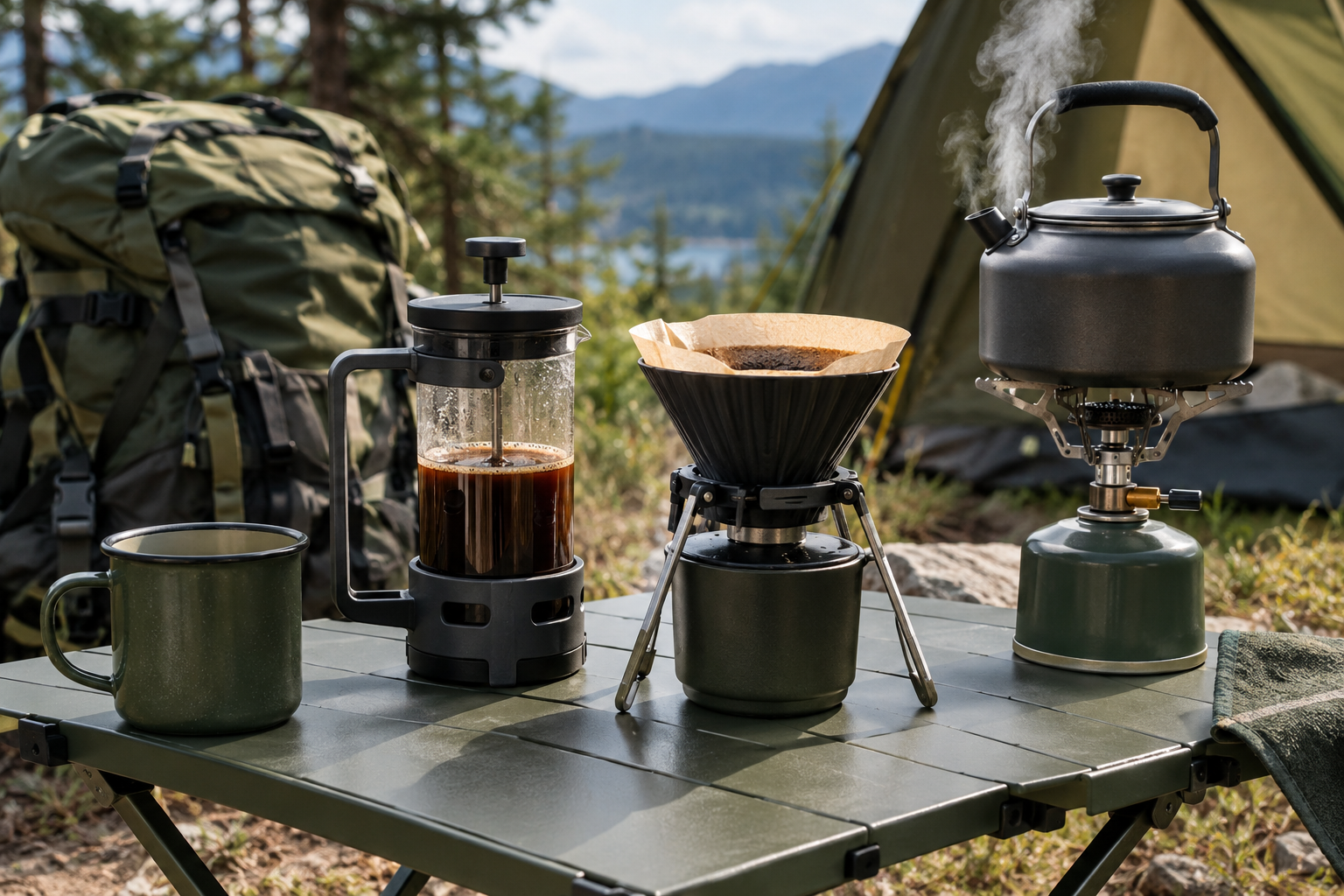
French press wins for camping and travel because it needs no filters, no electricity, and almost no technique to get a drinkable result outdoors. Pour over travels fine too, but it depends on paper filters that need to stay dry in a pack and a steadier pour than a wobbly picnic table always allows.
Compact travel french presses exist in sizes as small as a single mug, and they double as a simple hot water container if you're not brewing coffee. Pour over setups pack flatter and lighter if you choose a collapsible silicone cone, but you're stuck rationing paper filters or bringing extras. For car camping where you have a stable surface and can boil water on a stove, either method works well. For backpacking where weight and simplicity matter most, french press generally has the edge.
Why Does My French Press Coffee Taste Gritty?
Gritty french press coffee almost always comes from a grind that's too fine or a plunger that didn't seal fully against the carafe wall. Fine grounds slip through the metal mesh, and an uneven plunger seal lets loose grounds escape into your cup as you pour.
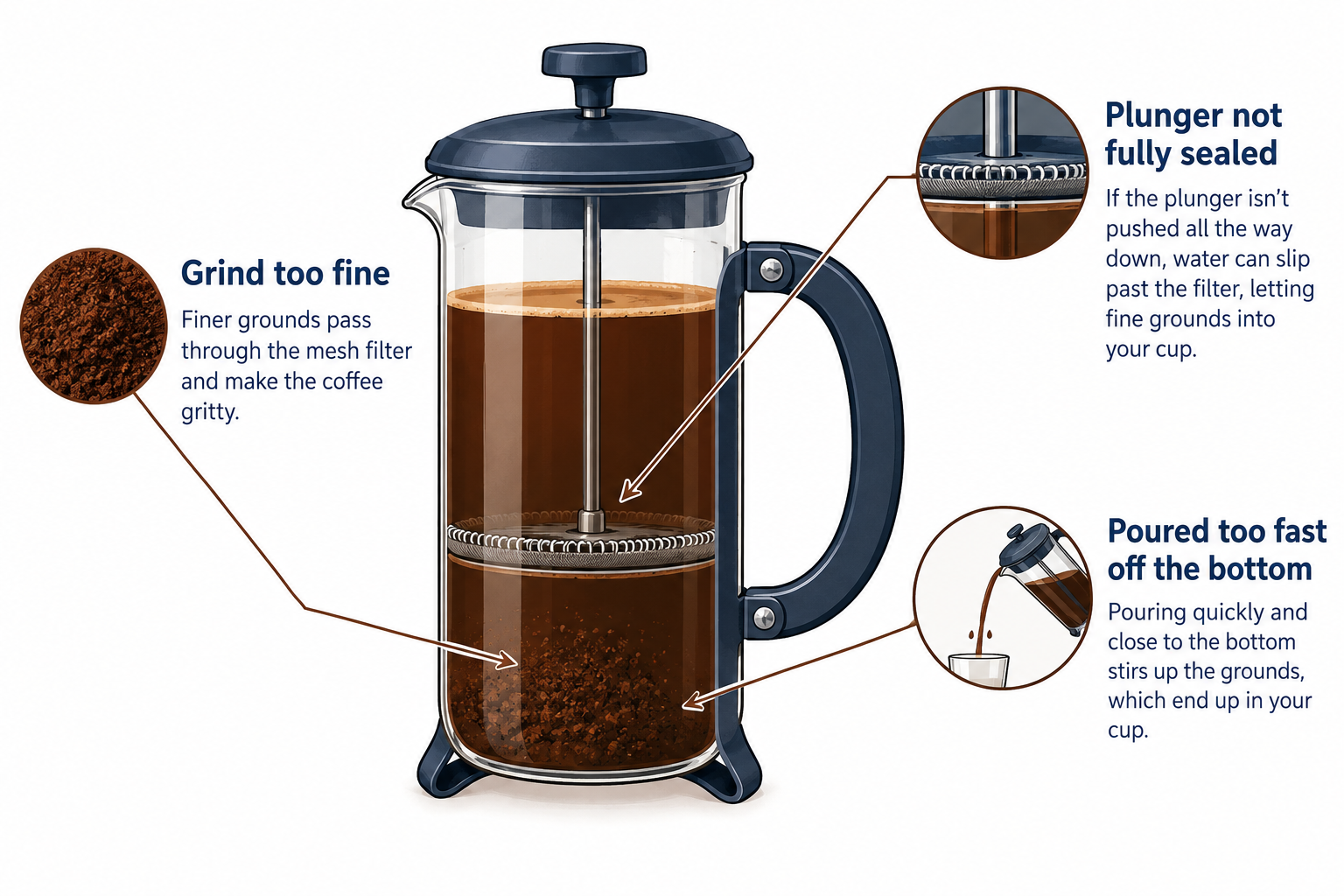
Check your grinder setting first. French press needs a coarse grind, roughly the texture of sea salt, not the finer sand-like texture pour over uses. A burr grinder gives you consistent particle size, which matters more here than most people expect, since a blade grinder produces a mix of fine dust and larger chunks that both cause trouble. Second, press the plunger slowly and evenly. Pressing too fast can force fine particles around the mesh edges instead of trapping them underneath. Third, pour gently and stop before you reach the very bottom of the carafe, since sediment concentrates there.
How Many Cups Can You Make at Once: French Press vs Pour Over
French press scales up more easily for a group. A standard 8-cup french press brews close to a liter in one steep, and larger models exist for bigger households. Pour over is built around one or two cups at a time, since pouring water evenly over a wide bed of grounds gets harder as the batch grows.
If you're brewing for one person most mornings, pour over's single-cup focus isn't a drawback, it's the point. If you're feeding a family or hosting brunch, a french press lets you brew once and pour for everyone, while a pour over setup would mean several rounds through the same cone or a specialized batch brewer built for that purpose.
Is French Press or Pour Over Better for Cold Brew
French press adapts to cold brew more naturally than a standard pour over setup. Its immersion design already suits a long steep, you just swap hot water for room-temperature or cold water and extend the steep time from minutes to hours.
To cold brew in a french press, use a coarser grind than your usual hot brew, add cold water, stir, and let it sit in the refrigerator for 12 to 18 hours before pressing the plunger down. A pour over cone isn't designed for this because percolation depends on gravity moving water through grounds quickly, and cold water moves too slowly through a paper filter to extract well without special cold drip equipment. If cold brew becomes a regular habit, a dedicated cold brew maker is worth it, but a french press you already own works well as a starting point.
Quick Comparison: French Press vs Pour Over
| Feature | French Press | Pour Over |
|---|---|---|
| Mechanism | Immersion (steep and press) | Percolation (drip through) |
| Filter type | Metal mesh | Paper (usually) |
| Brew time | About 4 minutes, low effort | 3 to 5 minutes, active pouring |
| Cup character | Bold, full body, some sediment | Clean, bright, low sediment |
| Cost to start | About $15 to $60 | About $10 to $40 plus kettle |
| Best for | Beginners, groups, camping | Precision, single-origin beans |
| Cleanup | More steps, mesh to rinse | Fast, filter lifts out |
Frequently Asked Questions
Is french press or pour over better for a beginner? French press is better for a beginner because it has fewer variables to control and no pouring technique to learn. You steep, wait, and press.
Does pour over or french press use more coffee? Ratios are similar for both, typically around 1 gram of coffee per 15 to 17 grams of water, but french press grounds are coarser and can look like a bigger scoop for the same weight.
What's the difference between drip coffee vs french press? Drip coffee uses an electric machine that automates the pour over process with a paper filter, while french press is a manual immersion method with a metal mesh plunger and no electricity involved.
How does french press vs pour over vs drip compare on convenience? Drip is the most hands-off since a machine handles the pour. French press needs minimal hands-on time. Pour over needs the most active attention of the three.
Can I use a metal filter with pour over instead of paper? Yes, some pour over cones accept reusable metal or paperless filters, which raises body and lowers clarity compared to a paper filter, landing between standard pour over and french press.
Why does my pour over coffee taste weak or sour? Weak or sour pour over usually means the grind is too coarse, the water wasn't hot enough (aim for 195 to 205 degrees Fahrenheit), or the pour moved too fast through the bed.
Conclusion
French press and pour over both start with hot water and ground coffee, and both cost less than most electric machines. The difference that matters most is the filter: a metal mesh builds body and lets more oils through, while a paper filter builds clarity and holds most of those oils back. If your mornings are rushed and you want a forgiving method that serves more than one cup, buy a french press. If you have a few extra minutes and want to taste exactly what a single-origin bag promises, buy a pour over cone and a gooseneck kettle. Either way, the beans matter as much as the method, so pick a roast date within a few weeks of purchase and grind it fresh with a burr grinder right before you brew. Better coffee starts with better answers, and now you have the ones that actually decide which pot you should reach for tomorrow morning.
.cg-quiz{max-width:480px;margin:20px auto;font-family:system-ui,-apple-system,”Segoe UI”,Roboto,sans-serif;background:#F5FAF8;border:1px solid #E8F2EE;border-radius:10px;padding:18px} .cg-quiz h3{color:#14231D;margin-top:0;font-size:18px} .cg-q{margin-bottom:14px} .cg-q p{color:#23372F;font-weight:600;margin:0 0 8px} .cg-quiz button{display:inline-block;margin:4px 4px 4px 0;padding:8px 12px;border:1px solid #1F6B4A;border-radius:6px;background:#FFFFFF;color:#1F6B4A;font-size:14px;cursor:pointer} .cg-quiz button:hover{background:#61BDA1;color:#14231D} #cg-result-btn{background:#1F6B4A;color:#FFFFFF;font-weight:600;margin-top:6px} #cg-result-btn:hover{background:#145037} #cg-result{margin-top:12px;font-weight:600;color:#14231D;min-height:20px}Which brew fits your morning?
1. How much time do you have?
2. Who are you brewing for?
3. What matters more?
Keep Exploring Coffee Rank IQ
- Coffee Rank IQ home: reviews, brewing guides, and coffee science
- AeroPress vs French Press: Body, Cleanup, and Cost Compared
- Best French Press: Why the Filter Matters More Than the Glass
- Best Pour Over Coffee Maker: Drippers vs Machines Compared
- Pour Over Coffee Ratio: The Number Baristas Start With
References
- mugcult.com/guides/french-press-vs-pour-over
- www.kingofcoffee.net/2025/12/03/pour-over-vs-french-press-which-brews-better-coffee
- roastworthy.coffee/french-press-vs-pour-over
- leavittbaycoffee.com/blogs/news/french-press-vs-pour-over-which-one-is-right-for-you
- dailyhomecoffee.com/french-press-vs-pour-over-which-brewing-method-is-best-for-beginners-at-home
- myhomebarista.com/guides/pour-over-vs-french-press
- jayarr.coffee/blog/pour-over-vs-french-press
- homebrewexpert.com/blog/pour-over-vs-french-press-better-coffee
- www.brewbenchgear.com/guides/french-press-vs-pour-over
- myhomeespresso.com/french-press-vs-pour-over