How to Choose Coffee Beans: Read the Bag Like a Roaster
In “Top Tips For Choosing The Best Craft Coffee Beans,” you’ll look at the delightful world of artisanal brews, discovering how to select the perfect beans to improve your coffee experience. You will explore essential factors such as roast profiles, origin, and freshness, ensuring that your next cup of joe is nothing short of extraordinary. By understanding the nuances that make craft coffee unique, you’ll confidently handle your way through the many of options available, guaranteeing each sip is bustling with rich flavors and aromas matched to your tastes. So, get ready to start a flavorful adventure and transform your coffee routine into a gourmet experience!
How to choose coffee beans, in short: To choose coffee beans, start with the roast date, then match roast level and origin to your brewer and taste. Pick a bag roasted within the last two weeks, a light to medium roast for pour over or a medium-dark roast for espresso and milk drinks, and tasting notes you already enjoy in food.
Ever found yourself wandering through the coffee aisle, overwhelmed by the endless options and jargon? You’re not alone. Choosing the best craft coffee beans can be a hard task, but it doesn’t have to be. With a few tricks up your sleeve, you can handle the coffee world like a pro and pick the perfect beans for your taste buds. Ready to become a craft coffee connoisseur? Let’s jump in!
Understanding Coffee Beans
Before looking at the nitty-gritty tips, it’s essential to understand the basics of coffee beans. Knowledge is power, and in this case, it will give you the confidence to make informed choices.
Coffee Species: Arabica vs. Robusta
There are two main species of coffee beans: Arabica and Robusta. Knowing the differences between them can help you make better choices.
| Feature | Arabica | Robusta |
|---|---|---|
| Taste | Smooth, sweet, and complex | Strong, bitter, and earthy |
| Caffeine | Lower caffeine content | Higher caffeine content |
| Elevation | Grows at higher altitudes (600-2000m) | Grows at lower altitudes (sea level-800m) |
| Price | Generally more expensive | Usually more affordable |
| Shape | Oval-shaped with a curved crease | Round-shaped with a straight crease |
Single-Origin vs. Blends
You might come across terms like “single-origin” and “blends” on coffee labels. Here’s what they mean:
- Single-Origin: Beans sourced from a single location, offering unique flavors specific to that region.
- Blends: A mix of beans from different regions, providing a balanced and consistent flavor profile.
Both have their merits, and knowing what you prefer will help you make better choices.
Tips for Choosing the Best Craft Coffee Beans
Now that we have the basics down, let’s get to the heart of the matter: how to choose the best craft coffee beans. Here are some top tips to guide you on your routine.
Tip #1: Know Your Preferred Flavor Profile
Everyone’s taste buds are unique, and what might be delicious to one person could be off-putting to another. Understanding your flavor preferences can greatly narrow down your options.
Flavor Profiles
Coffee flavors can be broadly categorized into four primary profiles:
- Fruity & Bright: Think of a burst of citrus, stone fruits, or berries. These coffees often have a lively acidity.
- Nutty & Sweet: Hints of nutmeg, caramel, or vanilla. These beans offer a smooth and sweet experience.
- Chocolatey: Rich flavors reminiscent of dark chocolate or cocoa.
- Earthy & Spicy: Rustic flavors with notes of spices, herbs, and sometimes even wood or tobacco.
Consider trying samples from each category to discover what you like.
Tip #2: Check the Roast Date
Freshness is key in craft coffee. The closer you are to the roast date, the better the beans will taste.
Why Roast Date Matters
Once coffee is roasted, its flavors start to degrade over time. Ideally, you should consume coffee within 2 to 4 weeks of the roast date for optimal freshness.
- Freshly Roasted (0-14 Days): Beans at their peak.
- Just Right (14-30 Days): Still fresh and flavorful.
- Losing Flavor (30-60 Days): Flavors start to wane.
- Stale (60+ Days): Noticeable drop in quality.
Always look for the roast date on the packaging, and choose the freshest beans available.
Tip #3: Pay Attention to Roast Levels
The roast level can dramatically affect the flavor of your coffee. Here’s a quick rundown of the common roast levels:
| Roast Level | Description | Flavor Notes |
|---|---|---|
| Light Roast | Light brown color, no oil on the surface | Bright, acidic, and complex with fruity notes |
| Medium Roast | Medium brown color, balanced taste | Balanced acidity and flavors, with a touch of sweetness |
| Medium-Dark Roast | Rich brown color, slight oil on the surface | Slight bitterness, rich and full-bodied flavors |
| Dark Roast | Dark brown to black color, oily surface | Strong, smoky, and bitter with chocolatey notes |
Decide what roast level aligns with your taste preferences and choose accordingly.
Tip #4: Explore Different Regions
Coffee beans are grown all over the world, and each region imparts unique characteristics to the beans. Here are some popular coffee-growing regions:
Africa
- Ethiopia: Known for fruity and floral notes. Often described as complex and bright.
- Kenya: Offers bold, fruity, and wine-like flavors with high acidity.
Central & South America
- Colombia: Smooth and balanced, with nutty and chocolatey flavors.
- Brazil: Generally sweet, nutty, and full-bodied.
Asia
- Indonesia: Earthy, spicy, and full-bodied with a low acidity.
- Vietnam: Known for strong and solid flavors, often used in blends.
Taste different coffees from various regions to find what excites your palate.
Tip #5: Consider the Processing Method
How coffee cherries are processed can significantly impact the final flavor of the beans. Here are the three primary processing methods:
| Method | Description | Flavor Notes |
|---|---|---|
| Wash Processed | Cherries are washed to remove the fruit before drying | Clean, bright, and vibrant flavors |
| Natural Processed | Cherries are dried with the fruit still on | Fruity, sweet, and complex |
| Honey Processed | A hybrid method: the skin and fruit are removed, but some of the sticky mucilage stays on the bean while it dries | Sweet and balanced, with a hint of fruitiness |
Experiment with beans processed using different methods to see which ones you prefer.
Tip #6: Check for Certifications
Certifications can tell you a lot about the quality and ethical considerations of the coffee. Here are a few to look out for:
- Fair Trade: Ensures fair prices and ethical working conditions for farmers.
- Organic: Coffee grown without the use of synthetic pesticides or fertilizers.
- Rainforest Alliance: Promotes sustainable farming practices that protect the environment and wildlife.
Beans with these certifications are often a safer bet for quality and ethics.
Tip #7: Grind Size Matters
The grind size can greatly affect the flavor and brew time of your coffee. While it’s best to grind your beans just before brewing, knowing the appropriate grind size for your preferred brewing method is essential.
| Brewing Method | Grind Size |
|---|---|
| Espresso | Fine |
| Aeropress | Medium-fine |
| Drip Coffee | Medium |
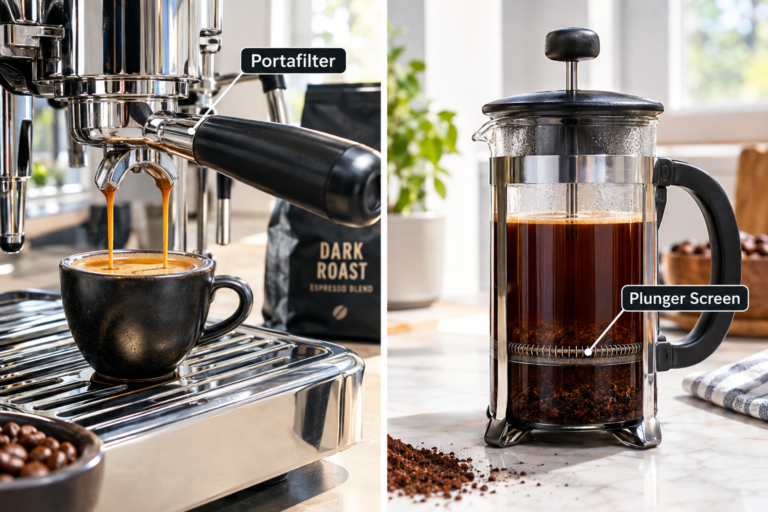
| French Press | Coarse |
| Cold Brew | Extra coarse |
Invest in a good burr grinder for consistent grind sizes, and always match the grind size to your brewing method for the best results.
Bonus Tips
While the above tips cover the essentials, a few extra pointers never hurt anyone. Here are some bonus tips to improve your craft coffee routine:
Tip #8: Buy in Small Amounts
Even the best coffee beans will lose their flavor over time. Hence, it’s wise to buy in small amounts to ensure you’re always drinking fresh coffee.
Tip #9: Use Proper Storage
Store your beans in an airtight, opaque container in a cool, dark place. Skip the fridge, where beans pick up moisture and odors. Freezing works for longer storage if you portion beans into airtight bags and let each bag thaw fully before you open it.
Tip #10: Experiment and Have Fun
craft coffee is vast and varied. Don’t be afraid to experiment with different beans, brewing methods, and recipes. The routine to finding your perfect cup is part of the fun!
How to Read a Specialty Coffee Bag
A good specialty roaster prints most of what you need to know on the bag. Here is what each line tells you, and which ones deserve your attention before you pay $18 for 12 ounces.
| Label line | What it tells you | What to look for |
|---|---|---|
| Roast date | The day the beans came out of the roaster | A date within the last two weeks. A “best by” date alone hides the age. |
| Origin | Country, region, and sometimes the farm or cooperative | The more specific, the better. “Huila, Colombia” beats “Latin America.” |
| Process | Washed, natural or honey | Washed for clean and bright, natural for fruity and heavy |
| Variety | The coffee plant cultivar, such as Bourbon, Caturra or Gesha | A named variety signals a roaster who tracks the lot closely |
| Altitude | Growing elevation, usually in meters above sea level | Higher farms often produce denser beans with more acidity |
| Tasting notes | The flavors the roaster tasted in the cup | Notes you already like in food, such as chocolate, berries or citrus |
| “100% Arabica” | The species | Not much. Nearly all specialty coffee is Arabica already. |
Match the Bean to Your Brewer
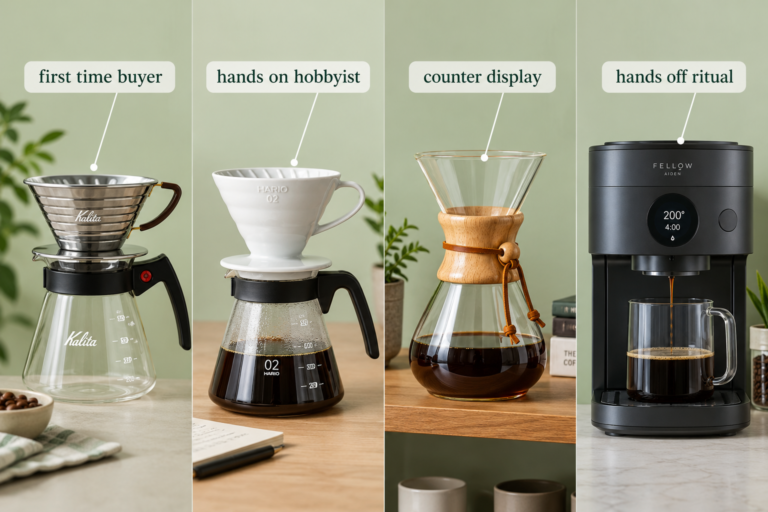
The best bag for a pour over can taste thin in a latte. Start with the brewer you use most and shop from there.
| Brewer | Roast to start with | Origins and processes to try |
|---|---|---|
| Pour over | Light to medium | Washed Ethiopian or Kenyan coffees for florals and citrus |
| Drip machine | Medium | Colombian or Central American coffees for balance |
| Espresso and milk drinks | Medium to medium-dark | Brazilian and Colombian blends for chocolate and nut notes |
| French press | Medium-dark | Natural process Brazil or Sumatra for heavy body |
| Cold brew | Medium to dark | Chocolatey, low-acid coffees such as Brazil |
For specific bags, our best coffee beans list covers the ones we keep rebuying, and the best espresso beans guide narrows it down for lattes and straight shots.
Red Flags on a Coffee Bag
- No roast date anywhere. A “best by” date a year out tells you when the coffee expires, not when it was fresh.
- Vague origin words like “gourmet” or “premium.” These are marketing terms with no standard behind them.
- A clear bag sitting under store lights. Light and air age coffee fast. Look for opaque bags with a one-way valve.
- Flavor in the ingredients list. Tasting notes describe the coffee itself. “Natural flavors” on the ingredients line means something was added.
- Self-serve bulk bins. You cannot tell when those beans were roasted or how long the bin has been open.
Once you find a bag you love, keep it in an opaque, airtight canister. Our best coffee storage container guide compares the options, and more buying guides live on the Coffee Rank IQ homepage.
How to choose coffee beans: FAQ
What makes coffee beans specialty grade?
Specialty grade coffee scores 80 points or higher on the Specialty Coffee Association’s 100-point cupping scale. Small roasters selling specialty beans usually roast in batches and print the origin, process and roast date on the bag.
How fresh should coffee beans be when you buy them?
Buy beans roasted within the last two weeks and plan to finish them within about a month of the roast date. Flavor fades steadily after that, and ground coffee fades much faster than whole beans.
Is Arabica better than Robusta?
For most black coffee, yes, Arabica tastes sweeter and more complex, while Robusta tastes harsher and carries roughly twice the caffeine. Robusta still earns a place in some espresso blends, where it adds crema and a bitter backbone.
Conclusion
Choosing the best craft coffee beans doesn’t have to be overwhelming. By understanding the basics and keeping these top tips in mind, you’ll be well on your way to becoming a coffee aficionado. Keep in mind, it’s all about finding what you love and enjoying the process. So next time you’re faced with an array of coffee options, take a deep breath, use these tips, and start your own coffee adventure. Happy brewing!