How to Make Coffee Without a Coffee Maker: 6 Methods I Trust
Quick Answer: You can make coffee without a coffee maker by combining hot water and ground coffee, then separating the grounds through boiling, steeping, or straining. Cowboy coffee (grounds boiled directly in water) is the fastest method. A cloth pour over, a DIY coffee bag, or a jar used like a small French press give a cleaner cup with gear most kitchens already have. Every method in this guide has one job: control contact time between water and grounds so extraction stops at the right point.
Key Takeaways
- Learning how to make coffee without a coffee maker only requires hot water, ground coffee, and something to separate the two.
- Cowboy coffee (grounds boiled in a saucepan) is the fastest fix and needs no filter at all.
- A cloth, paper towel, or fine strainer can replace a paper filter for a cleaner pour over style cup.
- Use roughly 2 tablespoons (about 12 to 15 grams) of ground coffee per 8 ounce cup, adjusted to taste.
- Water just off the boil, around 195°F to 205°F, extracts coffee properly without scorching it.
- Cold brew needs no heat and no gear beyond a jar, cold water, and time in the fridge.
- Bitter coffee usually means too fine a grind, too much heat, or grounds sitting too long in the water.
- A coffee bag made from a filter or a paper towel works almost exactly like a tea bag.
How to make coffee without a coffee maker
Learning how to make coffee without a coffee maker comes down to one idea: coffee is just an extraction, and a machine is only one way to control it. Water dissolves flavor compounds out of ground coffee. A drip machine controls that process with a heating element and a paper filter. Take those two things away and you can still get the same result with a saucepan, a jar, a cloth, or a strainer.
Six methods show up again and again across tested guides, and each earns its place for a different reason. Cowboy coffee (grounds boiled straight in water) is the fastest and most forgiving. A cloth or paper towel pour over gets closest to what a drip machine produces. A DIY coffee bag works like a giant tea bag. Bowl or jar immersion brewing mimics a French press without owning one. A jar left in the fridge overnight makes cold brew with zero heat. And a stovetop pot with a lid can stand in for a moka pot if you own something shaped like Bialetti's classic design.
None of these methods require special skill. They require attention to two variables: how fine the coffee is ground and how long it sits in the water. Get those right and how to make coffee without a coffee maker stops being a workaround and starts being a method you might keep using even after the machine is fixed.
What's the easiest way to make coffee without a coffee maker
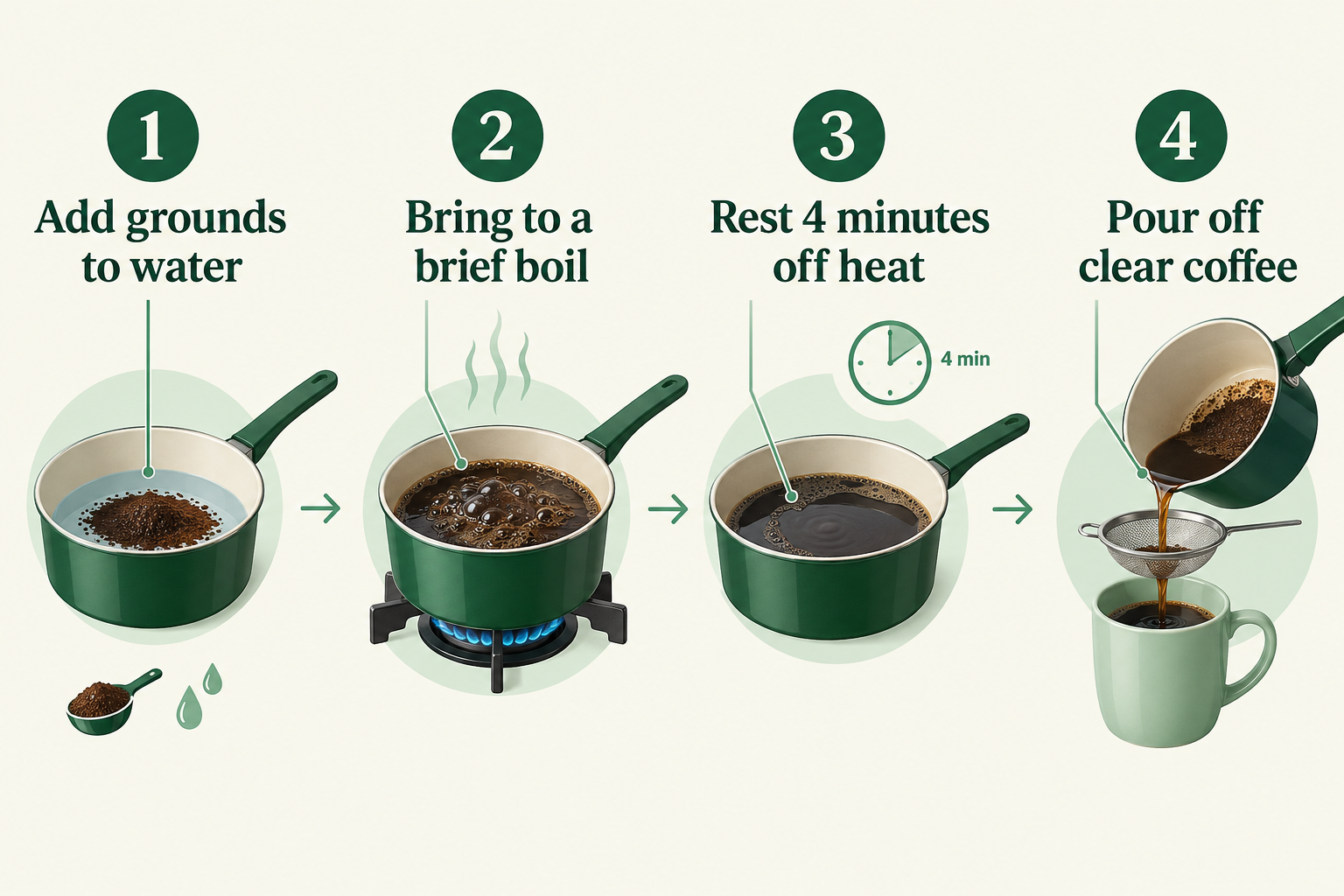
The easiest way to make coffee without a coffee maker is cowboy coffee: stir ground coffee into water, bring it to a brief boil, then let the grounds settle before pouring. No filter, no cloth, and no extra equipment beyond a pot and a heat source.
Here is the version that actually works, based on the ratios used across several tested guides:
- Heat about 8 ounces of water in a saucepan until it just starts to boil.
- Stir in roughly 2 tablespoons of ground coffee.
- Boil gently for about 2 minutes, then pull the pot off the heat.
- Let it rest for about 4 minutes so the grounds sink to the bottom.
- Pour slowly, or ladle from the top, leaving the sediment behind.
Food Network's saucepan method follows this exact rhythm: boil briefly, rest, then pour carefully so the grounds stay at the bottom of the pot. It is not elegant, but it is reliable, and it is the method most campers, cabin owners, and people riding out a kitchen appliance outage reach for first.
Decision rule: choose cowboy coffee when you want the fastest possible cup and don't mind a little sediment at the bottom of the mug. If you want a cleaner cup that looks more like drip coffee, skip ahead to the pour over method below.
Can you make coffee with just hot water and ground coffee
Yes. Hot water and ground coffee are the only two ingredients coffee actually needs. Everything else, filters, machines, plungers, exists to control how long the water and grounds touch and how cleanly they separate afterward.
This is the whole idea behind how to make coffee without a coffee maker. A coffee maker's job is timing and separation, not chemistry. Pour hot water directly over grounds in a mug, stir, and you have technically brewed coffee. The problem is texture: without straining, you are drinking grounds along with the liquid. That's fine for cowboy coffee, less fine for a smooth morning cup.
How long do you steep coffee grounds in hot water
For most improvised methods, 4 minutes of contact time between hot water and ground coffee gives a balanced cup. Shorter than that and the coffee tastes thin and sour. Longer than 6 or 7 minutes, especially with a fine grind, and bitterness creeps in.
- Cowboy coffee: boil about 2 minutes, then rest about 4 minutes before pouring.
- DIY coffee bag or bowl immersion: steep 3 to 5 minutes, tasting partway through.
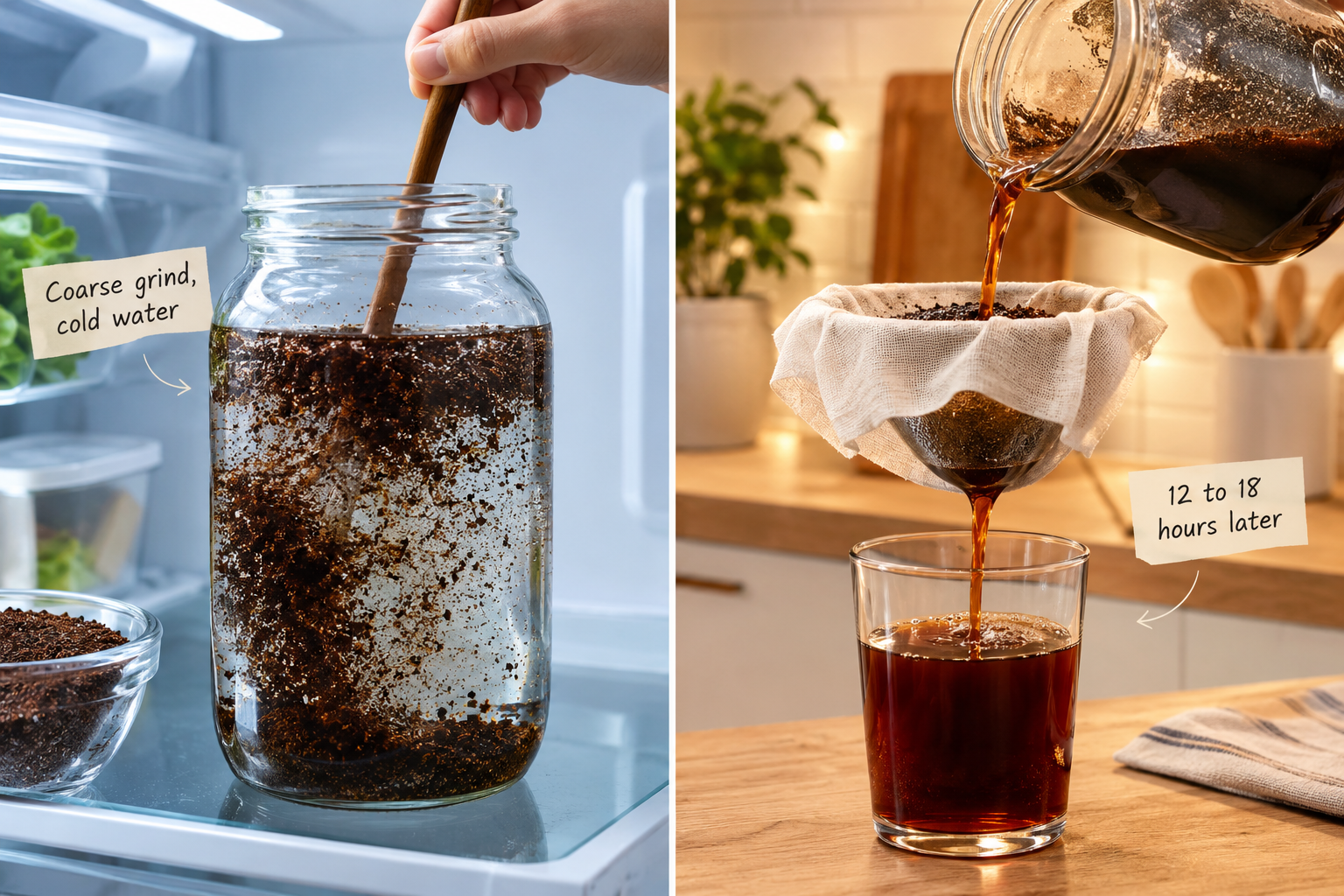
- Cold brew (no heat): steep 12 to 18 hours in the refrigerator, since cold water extracts far more slowly.
Steep time is the one variable you control most easily with no equipment, so use it. If a cup tastes weak, give it another minute before you add more coffee.
What household items can I use to make coffee without a coffee maker
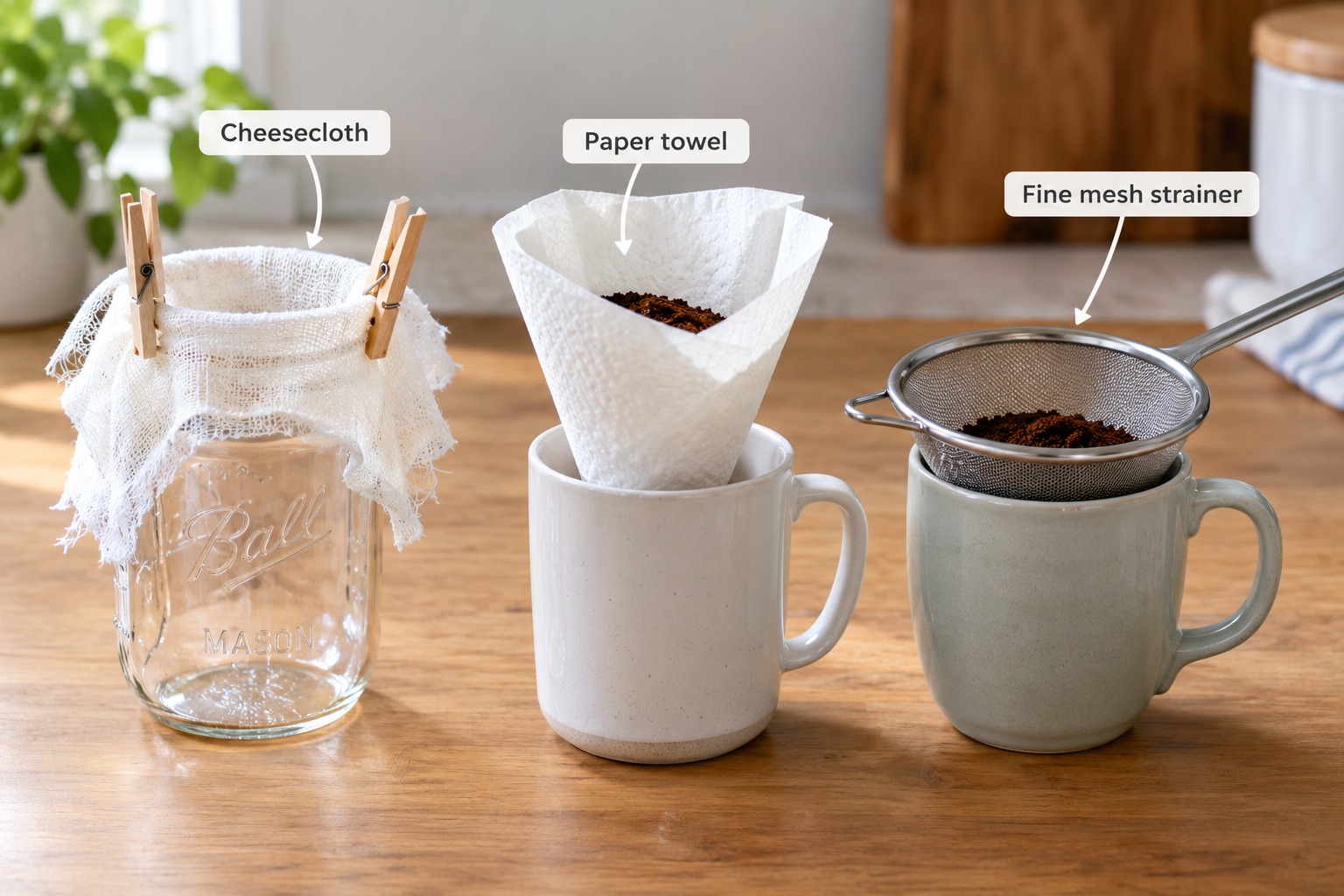
The most useful household items for how to make coffee without a coffee maker are a fine mesh strainer, a clean cloth or cotton hankie, a paper towel, cheesecloth, and any heatproof jar or bowl. Each one replaces the paper filter inside a standard drip machine.
Can you use a strainer or cheesecloth to make coffee
Yes, and it is one of the cleanest no-filter options available. Line a fine mesh strainer with a folded paper towel or a double layer of cheesecloth, set it over a mug, and pour hot coffee grounds and water through it slowly. The mesh catches the coarse particles while the cloth traps the fine sediment that would otherwise cloud the cup.
Coffee without filter: straining tricks that work
Brewing coffee without filter paper is entirely doable with a few tricks:
- Clip a clean cotton cloth over the mouth of a mason jar, add grounds, pour hot water through slowly, then lift the cloth away.
- Fold a paper towel into a cone and set it inside a second mug like a makeshift dripper.
- Use the "settle and pour" trick from cowboy coffee if no cloth or strainer is available at all.
Food Network's cloth pouch method uses exactly this setup: a cloth stretched over a jar, grounds added on top, and hot water poured through in stages, producing something close to a real pour over. Brewed Late's version follows the same logic with a coffee filter, a paper towel, or a clean sock in an emergency, since the goal is simply to trap grounds while letting liquid through.
Common mistake: using a thin paper napkin instead of a folded paper towel. Napkins tear apart the moment they get wet and dump grounds straight into your cup.
Is pour over coffee better than other methods without a coffee maker
Pour over is generally the cleanest tasting option among no-machine methods, but it takes more attention than cowboy coffee or a coffee bag. It rewards a steady hand and a consistent pour more than it rewards fancy equipment.
Driftaway Coffee's manual pour over guidance applies directly to improvised setups: rinse the filter or cloth first, use a medium grind about the texture of raw sugar, let the coffee bloom (a 30 second rest right after the first splash of water lets trapped gas escape and improves even extraction) and pour in slow stages rather than dumping the water in all at once.
If you already know how to make coffee with a coffee maker that uses a drip system, a cloth pour over follows the exact same principle, just without the machine doing the pouring for you. The tradeoff is time and attention in exchange for a genuinely brewed, filtered cup. Readers who want to build real pour over skill with dedicated gear should read the beginner's guide to using a pour over coffee maker, since brands like Melitta made the cone filter format popular and it translates well to cloth substitutes.
Choose pour over if you have five spare minutes and want a cup closer to café quality. Choose cowboy coffee if you just need caffeine fast.
Can you make cold brew coffee without equipment
Yes. Cold brew needs cold water, coarsely ground coffee, time, and a container, nothing else. It is the easiest method in this entire guide because there is no heat to manage and no timing to rush.
Mix coarsely ground coffee with cold water using a ratio around 1 part coffee to 15 parts water as a general starting point, then adjust stronger or weaker to taste. Cover the jar and let it sit in the refrigerator overnight, roughly 12 to 18 hours. Strain through a cloth, paper towel, or fine mesh strainer before drinking. Because the water never gets hot, the extraction happens slowly and pulls out fewer of the bitter compounds that heat brings forward, which is why cold brew tastes naturally smoother and less acidic even without any equipment.
This is the same principle behind our full cold brew coffee guide and the more detailed advanced cold brew methods, just scaled down to whatever jar happens to be in your cabinet.
Edge case: if your fridge is packed and you don't have 12 hours to spare, cold brew is the wrong method for that morning. Use cowboy coffee or a coffee bag instead and save cold brew for a batch you can plan ahead.
What's the difference between cowboy coffee and regular brewing
Cowboy coffee skips filtration entirely and relies on gravity and rest time to separate grounds from liquid, while regular brewing (drip, pour over, or a French press) uses a physical filter or mesh to do that job. Both use the same basic extraction chemistry.
The practical difference shows up in the cup. Cowboy coffee carries fine sediment at the bottom of the mug and a slightly heavier, more mineral body, since some ultra-fine particles pass through even careful pouring. Filtered methods produce a clearer, lighter-bodied cup because the filter (paper, cloth, or metal mesh) physically traps those particles. Neither is more "correct." Cowboy coffee is simply the fastest form of how to make coffee without a coffee maker, while filtered methods trade a little speed for a cleaner texture.
If you already own a Bodum French press, you technically have the best of both worlds: full immersion brewing with a built-in metal filter. A jar and a fork can approximate the immersion step, but nothing quite replaces a real metal plunger for consistent filtration.
What temperature water do you need to brew coffee, and how much ground coffee per cup
Water between 195°F and 205°F (just below a full boil) extracts coffee properly. Below that range, extraction is weak and sour; above it, coffee turns bitter and flat tasting fast. For dosage, roughly 2 tablespoons of ground coffee per 8 ounce cup is the standard starting ratio across tested no-machine guides.
| Method | Ratio (coffee : water) | Grind size | Water temp |
|---|---|---|---|
| Cowboy coffee (saucepan) | 2 tbsp per 8 oz | Medium-coarse | Just boiled |
| Pour over (cloth or paper towel) | 2 tbsp per 8 oz | Medium, like raw sugar | 195 to 205°F |
| DIY coffee bag | 2 to 3 tsp per bag | Medium-fine | 195 to 205°F |
| Cold brew (jar) | 1:15 ratio | Coarse | Cold, no heat |
How to make ground coffee without a coffee maker
If you only have whole beans, you still need a way to break them down before any of these methods work. A rolling pin over a sealed bag, a mortar and pestle, or a blender pulsed in short bursts will all produce usable grounds, though unevenly. A dedicated burr grinder gives far more consistent particle size, which matters more for pour over than for cowboy coffee. If you're shopping for one anyway, our guide to advanced coffee grinders breaks down which features are worth paying for.
Decision rule: use a coarser grind for immersion methods (cowboy coffee, cold brew, jar-as-French-press) and a slightly finer, more even grind for pour over and coffee bags, since those methods rely on water passing through rather than sitting around the grounds.
Can you make coffee in a pot on the stove
Yes, saucepan coffee is essentially the stovetop version of a drip machine, and it is the method most people already know without realizing it has a name. Any pot with a lid can boil water and hold grounds long enough to brew a full pot at once.
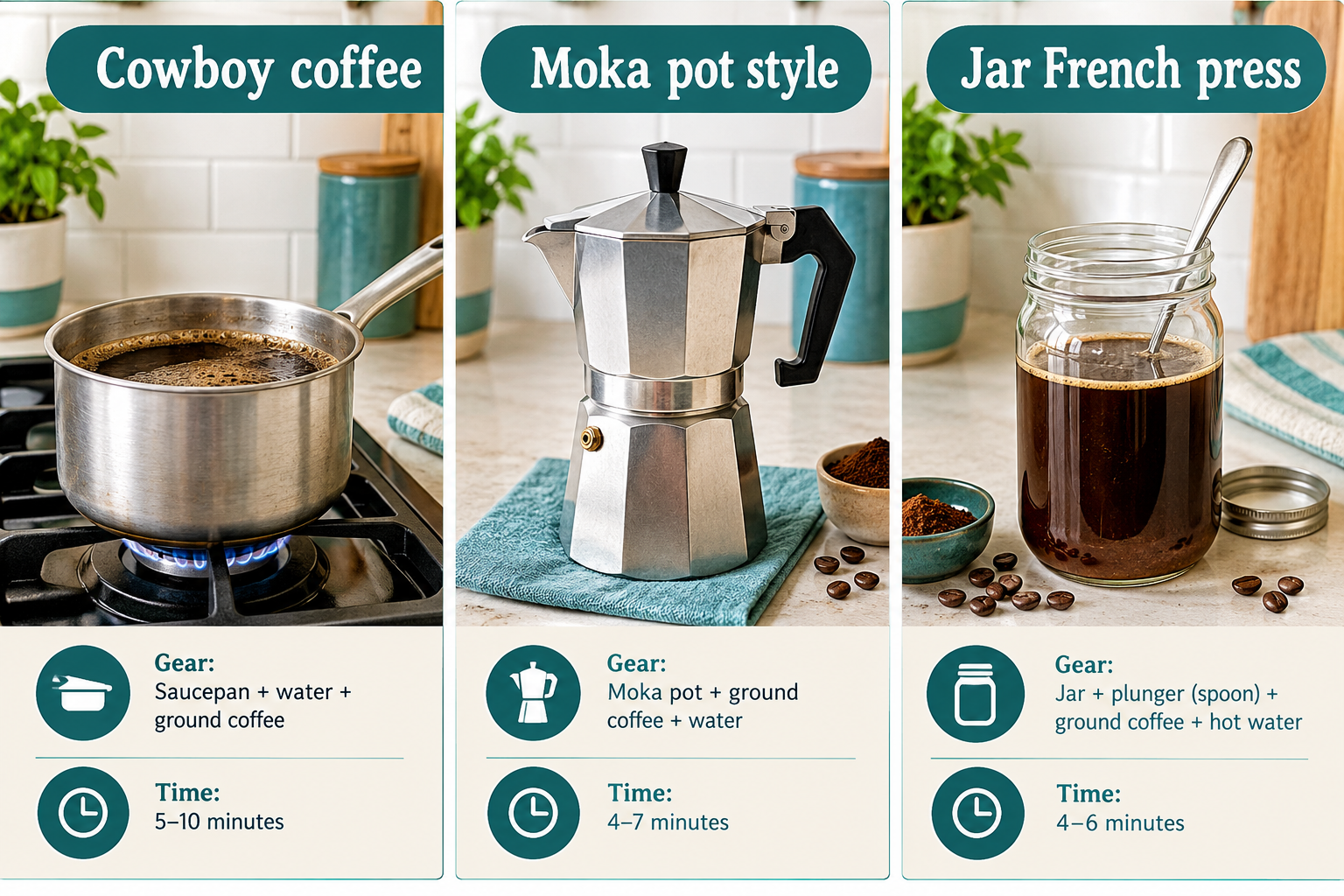
Beyond basic cowboy coffee, a stovetop pot opens up two more options:
- Moka pot style: if you own something built like a Bialetti moka pot, steam pressure pushes hot water through fine grounds automatically, giving an espresso-strength cup without electricity.
- Jar "French press": stir grounds into hot water in a heatproof jar, let it steep 4 minutes, then press the grounds down with a spoon and pour off the clear coffee on top, mimicking a Bodum-style plunge without the metal filter.
Coffee Chronicler's testing of hybrid immersion and pour over setups found that simple vessels, jars, bowls, pots, can match dedicated gear closely enough that the difference mostly comes down to convenience, not final cup quality. For readers exploring espresso-style results from a stovetop, our piece on whether you can make espresso with regular coffee without a machine covers what a moka pot can and cannot replicate.
What if your coffee tastes bitter when making coffee without a coffee maker
Bitter coffee almost always means one of three things: the grind is too fine, the water is too hot, or the grounds sat in contact with the water too long. Fixing any one of the three usually solves it.
Quick troubleshooting checklist:
- Taste sharp and harsh? Your grind is likely too fine, or the water was at a full rolling boil instead of just off it. Coarsen the grind or let the water cool for 30 seconds before pouring.
- Taste flat and ashy? You steeped too long. Cut cowboy coffee's rest time down, or strain a coffee bag out a minute earlier next time.
- Taste muddy with grit? You are drinking sediment, not bitterness. Pour more slowly, or add a cloth or strainer step you skipped.
- Taste weak no matter what? Add more grounds rather than steeping longer, since over-steeping thin coffee just adds bitterness on top of weakness, not strength.
This is the same troubleshooting logic that applies to any brew method, machine or none, and it's worth reading alongside our broader look at the most popular coffee brewing methods for beginners if bitterness keeps showing up in your regular routine too.
Is it safe to boil coffee grounds directly in water
Yes, boiling coffee grounds directly in water is safe as long as you use a heatproof pot and avoid scorching the grounds against a too-hot burner. The main risks are burns from handling a hot pot, not anything about the coffee itself.
Food Network's guidance keeps the burner at medium-high rather than full blast, since scorched grounds taste burnt and bitter no matter how careful the rest of the process is. A few practical safety notes:
- Use a pot with a handle you can grip safely, not a thin foil container.
- Never boil grounds for more than about 2 to 3 minutes. Longer boiling pulls out more bitter compounds without adding useful flavor.
- Let the pot rest off the heat before pouring so you are not tilting a fully boiling liquid near your hand.
- Pour slowly and stop before the sediment at the bottom reaches the lip of the pot.
Edge case: if you're brewing in an emergency setting with limited water, boiling grounds directly (rather than filtering separately) actually saves water and cleanup, which is part of why this method shows up so often in outage and camping guides.
Other quick options worth knowing
A few more shortcuts round out how to make coffee without a coffee maker when you want something even faster than a saucepan.
- Coffee bag method: shape a paper filter, a paper towel, or a clean piece of cloth into a small pouch, add 2 to 3 teaspoons of ground coffee, tie it off, and steep it in a mug of hot water like a tea bag. Pull it out once the color and strength look right.
- Microwave coffee: microwave water in a mug until steaming (not boiling over), stir in grounds, let sit 4 minutes, then strain through a small sieve or cloth. It is not elegant, but it works when the stove is unavailable.
- Instant coffee singles: products like Folgers Coffee Singles are essentially the coffee bag method already done for you, a single-serve pouch designed to steep directly in hot water with no straining step at all.
- Camping and travel setups: a Stanley insulated mug or thermos holds heat long enough to steep a coffee bag or cowboy coffee grounds during a hike, then keeps the finished cup hot for hours afterward.
WikiHow's rundown of no-machine methods lists several of these same shortcuts, reinforcing that the core requirement is always just heat, grounds, and a way to separate the two. Foodie.com and Daniel Norris's writeup both land on the same conclusion from different angles: once you understand extraction, the "coffee maker" part of coffee making is optional gear, not a requirement.
Six methods, side by side
| Method | Time | Best for |
|---|---|---|
| Cowboy coffee | 6 min | Speed, camping |
| Cloth pour over | 5 min | Cleaner cup |
| Coffee bag | 4 min | Travel, low mess |
| Jar immersion | 5 min | Full flavor |
| Cold brew jar | 12 to 18 hrs | Batch, smooth taste |
FAQ
Can I make coffee without any filter at all? Yes. Cowboy coffee needs no filter, just a rest period so the grounds sink before you pour. This is the most filter-free version of how to make coffee without a coffee maker.
What grind size works best without a machine? Medium-coarse for immersion and cowboy methods, medium for pour over. A coarser grind is more forgiving of over-steeping and produces less sediment.
Does the water need to fully boil? No. Water between 195°F and 205°F, just below a rolling boil, extracts coffee correctly. A full boil for more than a minute or two can scorch the grounds.
Can I reuse coffee grounds for a second cup? You can, but the second cup will taste noticeably weaker and thinner, since most of the soluble flavor compounds extracted the first time around.
Is instant coffee a better option than these methods? Instant coffee is faster and needs no straining, but it uses a different processing method entirely and tastes different from freshly brewed grounds. Folgers Coffee Singles sit in between, offering steeped flavor without any cleanup.
Which method tastes closest to drip coffee from a machine? A cloth or paper towel pour over gets closest, since it uses the same filtration principle as a standard drip machine, just with your hand doing the pouring instead of a heating element.
Conclusion
Every method here proves the same point: coffee makers are convenient, not required. Once you understand that hot water, ground coffee, and a way to separate the two are the only real ingredients, how to make coffee without a coffee maker stops feeling like an emergency workaround and starts feeling like just another way to brew. Start with cowboy coffee if you want speed, move to a cloth pour over if you want a cleaner cup, and keep a jar of cold brew going in the fridge if mornings are rushed. If this experiment convinces you it's worth doing daily, our buying guide for beginners choosing a coffee maker can help you decide whether to go back to a machine or just keep the saucepan. Better coffee starts with better answers, not necessarily better equipment.
Keep Exploring Coffee Rank IQ
- Coffee Rank IQ home: reviews, brewing guides, and coffee science
- Best Cold Brew Coffee Maker: 6 Picks for Smooth Batches at Home
- Best Pour Over Coffee Maker: Drippers vs Machines Compared
- Best Iced Coffee Maker: Brew-Over-Ice and Cold Brew Picks Compared
- How Long to Steep French Press Coffee: Beyond the 4 Minute Rule
References
- summerstirs.com/how-can-you-brew-coffee-without-a-coffee-maker
- brewedlate.com/blog/how-to-make-coffee-without-a-coffee-maker
- driftaway.coffee/nomaker
- coffeebrewster.com/coffee-brewing-methods/without-coffee-maker
- www.foodnetwork.com/how-to/articles/make-coffee-without-coffee-maker
- www.ecoflow.com/us/blog/coffee-without-electricity-power-outages
- coffeechronicler.com/best-way-to-make-coffee-at-home
- www.foodie.com/1480599/how-to-make-coffee-without-coffee-maker
- www.wikihow.com/Make-Coffee-without-a-Coffee-Maker
- www.danielnorris.com/blog/making-coffee-without-a-coffee-maker