How to Make Cold Brew at Home: The Mason Jar Method
According to industry data, cold-brewed coffee sales at trendy coffeehouses have significantly increased over the past few years, indicating a growing demand for this refreshing and flavorful beverage. Unlike traditional iced coffee, which is brewed hot and then chilled, cold brew coffee is made by steeping coarsely ground coffee beans in cold or room-temperature water for an extended period, typically 12 to 15 hours. This unique process results in a smooth, low-acid coffee concentrate that can be diluted and enjoyed in a variety of ways.
Making cold brew coffee at home is surprisingly easy and can save you money compared to purchasing it from a specialty coffee shop. By following a simple recipe and technique, you can create a batch of cold brew concentrate that will last you for up to a week in the refrigerator, providing you with a refreshing and versatile coffee option any time you need it.
Key Takeaways
- Cold brew coffee is a popular trend with a growing demand in the coffee industry.
- Cold brew coffee is made by steeping coarsely ground beans in cold or room-temperature water for 12-15 hours.
- Making cold brew at home is easy and cost-effective compared to buying it from a coffee shop.
- Cold brew concentrate can be stored in the fridge for up to a week and used in a variety of ways.
- Adjusting the coffee-to-water ratio and steeping time can help you achieve your desired flavor profile.
What is Cold Brew Coffee?
Cold brew coffee has become a major trend in the coffee industry in recent years. Unlike traditional iced coffee, which is simply hot-brewed coffee poured over ice, cold brew coffee is brewed by steeping coarsely ground beans in room temperature or cold water for an extended period, typically 12-24 hours.
Difference Between Cold Brew and Iced Coffee
This slow cold brewing process extracts the coffee’s flavors while leaving behind much of the bitterness and acidity associated with hot-brewed coffee. As a result, cold brew coffee tends to be less acidic and less sharp than its hot-brewed counterpart. The longer brewing time also reduces the coffee’s bitterness, resulting in a smoother, more mellow flavor profile.
By comparison, iced coffee is simply hot-brewed coffee that is served over ice, often with added sweeteners or syrups. The rapid cooling process of iced coffee retains more of the coffee’s original acidity and bitterness, leading to a more intense and potentially less smooth taste compared to cold brew.
| Characteristic | Cold Brew Coffee | Iced Coffee |
|---|---|---|
| Brewing Process | Steeps ground coffee in cold or room temperature water for 12-24 hours | Hot-brewed coffee poured over ice |
| Flavor Profile | Smooth, less acidic, and less bitter | More intense, potentially more acidic and bitter |
| Caffeine Content | Higher due to longer brewing time and higher coffee to water ratio | Lower, as the dilution with ice reduces the overall caffeine concentration |
The key difference between cold brew coffee and iced coffee is the brewing process, which directly impacts the final flavor and caffeine content of the beverages.
Benefits of Making Cold Brew Coffee at Home
Crafting your own cold brew coffee at home offers a multitude of advantages. The slow, patient brewing process produces a remarkably smooth and sweet-tasting coffee, with less bitterness compared to traditional hot-brewed methods. This gentler extraction also results in lower acidity, which can be easier on your stomach.
Also, preparing a large batch of cold brew on the weekend provides you with a convenient, ready-to-go coffee option all week long, saving precious time in the mornings. Homemade cold brew also allows you to tailor the strength and concentration to suit your personal taste preferences, ensuring a customized experience every time.
| Benefits of Homemade Cold Brew Coffee | Benefits of Store-Bought Cold Brew |
|---|---|
|
|
Whether you’re seeking a smoother, more wallet-friendly coffee experience or simply want to explore cold brew, making it at home can be a rewarding and cost-effective choice. Open up the benefits of cold brew and improve your daily coffee routine.
“Regularly drinking 3-5 cups of coffee daily may lower the risk of heart disease by up to 15%.”
The Trend of Cold Brew Coffee and How to Make It at Home
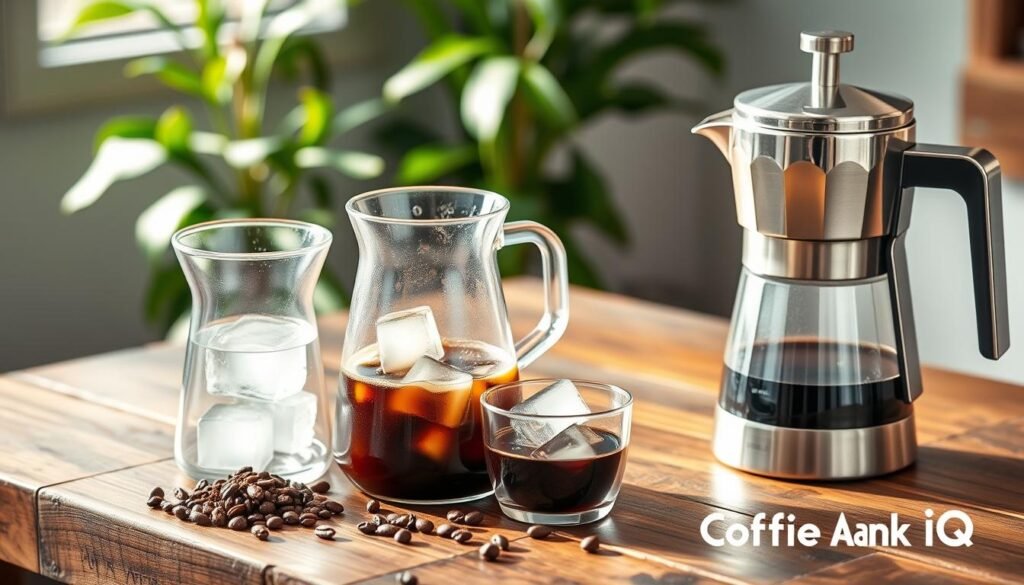
The cold brew coffee trend has swept the nation in recent years, with many coffee shops and brands offering their own cold brew varieties. But, you don’t need to visit a specialty café to enjoy a delicious cold brew – it’s incredibly easy to make at home using just a few simple ingredients and minimal equipment.
Ingredients and Equipment Needed
To make cold brew coffee at home, all you need are a few key items:
- Coarsely ground coffee beans – The cold brew coffee trend is often associated with a lower acidity and bitterness compared to hot brewed coffee, so using the right cold brew coffee beans is essential.
- Filtered water – The quality of your water can significantly impact the flavor of your cold brew coffee, so be sure to use filtered or bottled water.
- A large container or cold brew maker – You can use a French press, Chemex, or any other large pitcher or jar to steep your cold brew coffee.
The brewing process for cold brew coffee can take up to 24 hours, so patience and planning ahead are key. But with just a few simple steps, you can enjoy a delicious, smooth, and low-acid cold brew coffee in the comfort of your own home.
“Cold brew coffee typically results in lower bitterness due to the extended extraction time required.”
Step-by-Step Guide to Making Cold Brew Coffee
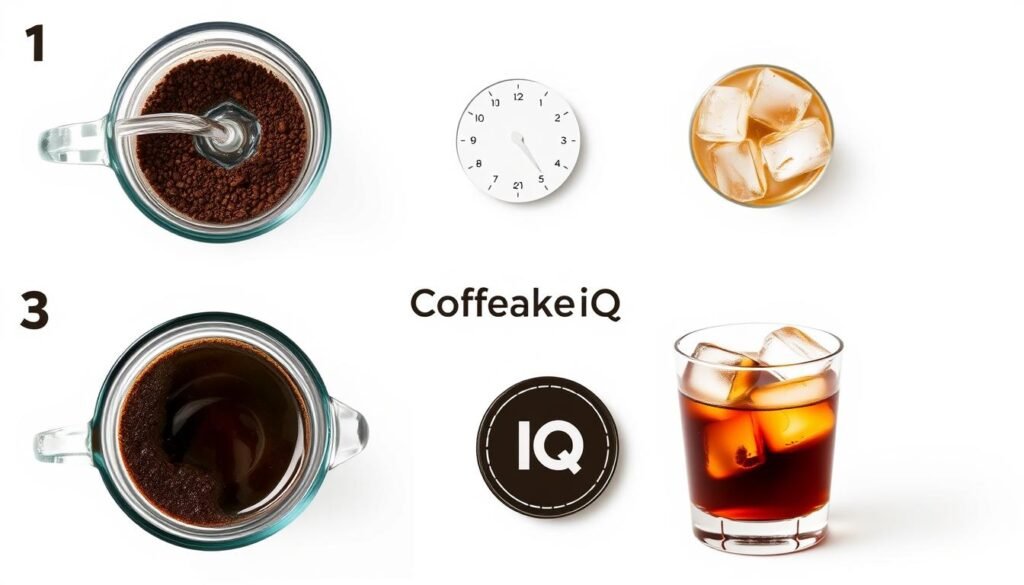
Crafting delightful cold brew coffee in the comfort of your own home is easier than you might think. By following a few simple steps, you can create a smooth, flavorful brew that rivals your favorite coffee shop’s offerings. Let’s look at the process and uncover the secrets to making the perfect cold brew coffee at home.
Grinding the Beans
The first step in your cold brew coffee routine is to coarsely grind your coffee beans. This is key, as a fine grind can lead to an over-extracted, muddy brew. Aim for a grind size similar to that used for a French press, as this will allow the water to flow through the grounds efficiently during the steeping process.
Steeping the Coffee
Next, combine the ground coffee with filtered water in a large container, using a ratio of about 1 part coffee to 4 parts water. This cold brew coffee ratio is a great starting point, but you can adjust it to suit your personal taste preferences. Allow the mixture to steep at room temperature or in the refrigerator for 12-24 hours, with longer steeping times resulting in a stronger cold brew coffee concentration.
Straining and Storing the Concentrate
Finally, strain the coffee through a fine-mesh sieve or cheesecloth, reserving the concentrated cold brew in a clean container. Store the concentrate in the refrigerator for up to 1 week, ready to be diluted with water, milk, or other additions to create your desired strength of cold brew.
By following these steps to make cold brew coffee, you’ll be well on your way to enjoying a delightful and customizable cold brew experience right in your own kitchen. Experiment with different coffee beans, steeping times, and dilution ratios to find your perfect cold brew coffee recipe.
Serving and Enjoying Cold Brew Coffee
Once you’ve mastered the art of making cold brew coffee at home, the fun part begins – serving and enjoying it! The concentrated cold brew can be used in a variety of ways to create your perfect cup. Whether you prefer it diluted with water, milk, or enjoyed over ice, the versatility of cold brew allows you to customize it to your personal taste.
Diluting and Adding Milk or Creamer
The concentrated cold brew can be quite strong, so the first step is to dilute it to your desired strength. A good starting point is a 1:1 ratio of cold brew concentrate to water or milk. Feel free to experiment with different dilution levels until you find the balance that suits your taste buds. Some people also enjoy adding a splash of cream, milk, or non-dairy creamer to their cold brew for a creamier texture and flavor.
- Start with a 1:1 ratio of cold brew concentrate to water or milk
- Adjust the dilution to your personal preference
- Try adding a touch of cream, milk, or non-dairy creamer for a creamier drink
The beauty of cold brew is that the concentrated form allows you to control the strength and customize it to your liking. Play around with the dilution ratio and experiment with different dairy or non-dairy milk options until you find your perfect cold brew recipe.
How to Make Cold Brew at Home With a Mason Jar
You do not need a cold brew maker. Here is how to make cold brew at home with a 32 ounce mason jar, a long spoon, a fine mesh strainer, and a paper coffee filter. The result is a concentrate you cut with water or milk by the glass.
The Mason Jar Method, Step by Step
- Weigh the coffee. Grind 100 grams of beans coarse, about the texture of cracked pepper. Without a scale, that is roughly 1 1/4 cups of ground coffee.
- Add half the water. Tip the grounds into a clean quart jar and pour in about 350 grams (1 1/2 cups) of cold filtered water.
- Stir out the dry pockets. Fresh grounds float and trap air. Stir until every clump is wet, then add the other 350 grams of water. That is 700 grams total, a 1:7 ratio by weight.
- Push the raft down. Stir once more so the floating layer sinks, then lid the jar and note the start time.
- Steep, then strain twice. Time it with the chart below, pour through the mesh strainer, then run that liquid through a paper filter.
- Bottle and chill. Expect about 500 grams (roughly 2 cups) of concentrate, since the grounds keep about 200 grams of water. Mixed 1:1, that makes about four 8 ounce glasses.
For a stronger batch, a lighter one, or a gallon jug, our cold brew ratio guide does the concentrate math so you do not waste beans.
Cold Brew Steep Time Chart: Fridge vs Counter
These are the starting points we use for the jar method. Adjust by two hours at a time once you taste the first batch.
| Where it steeps | Coarse grind | Medium grind | What you get |
|---|---|---|---|
| Counter, about 68 to 72°F | 12 to 16 hours | 10 to 12 hours | Fuller body and more chocolate; strain on time, then refrigerate |
| Fridge, about 38 to 40°F | 18 to 24 hours | 14 to 18 hours | Cleaner and lighter; more forgiving if you forget it |
The long steep mostly buys flavor and body. In a 2017 Scientific Reports study, Megan Fuller and Niny Rao brewed cold brew at room temperature (21 to 25°C) and found that caffeine and chlorogenic acid reached equilibrium between 6 and 7 hours. Grind size did not change the final concentrations significantly. Past that point, the extra hours change body and flavor, and a counter batch left for a full day starts tasting like a cutting board.
Filtering Options Compared
| Filter | Pros | Cons |
|---|---|---|
| Paper filter alone | Clearest cup, almost no sediment, cheap | Slow; clogs fast with a full jar, so swap filters partway |
| Cloth (nut milk bag or cheesecloth) | Fast, reusable, handles the whole batch | Lets fine particles through; must be rinsed and dried fully or it starts to smell sour |
| Fine mesh strainer, then paper | Mesh catches the bulk quickly, paper polishes; best balance of speed and clarity | Two steps and one more thing to wash |
Cold Brew Troubleshooting
| Problem | Likely cause | Fix |
|---|---|---|
| Bitter or woody | Steeped too long, especially on the counter, or ground too fine | Cut 2 to 4 hours, grind coarser, or move the jar to the fridge |
| Weak or watery | Too little coffee, too coarse, or diluted too far | Add 10 to 20 grams of coffee, steep longer, or dilute less |
| Sour or thin | Under extracted, often a short fridge steep with very light roast beans | Add 4 to 6 hours, stir well at the start, or try a medium roast |
| Cloudy | Fine particles suspended in the liquid | Run it through paper, or let it settle an hour and pour off the top |
| Muddy bottom | Grind too fine or a squeezed filter | Grind coarser and leave the last half inch in the jar |
How Long Cold Brew Keeps in the Fridge
Flavor fades before safety does. In a 2024 Clemson University study in Food Science & Nutrition, cold brew made at a 1:14 ratio, which is ready to drink strength, was bottled in sealed amber glass and held at about 45°F (7°C). Across 42 days, the samples showed no detectable bacterial growth, and the researchers concluded that declining flavor set the shelf life while microbes never became the problem. That was a lab with sanitized bottles, so treat it as a ceiling rather than a target for a kitchen jar.
Our house rule: drink undiluted concentrate within about 10 days and mix drinks by the glass, which keeps the jar small and lets you change the strength every morning. Once milk or cream goes in, the dairy’s own date decides.
Cold Brew Caffeine per Serving
It depends on how much you dilute it. A University of Victoria study of five batches from one café, published in The Arbutus Review in 2017, measured 153 to 238 mg of caffeine per 12 ounce serving, averaging about 207 mg. At home, the math is simple: cut concentrate 1:1 and each ounce of drink carries half the caffeine of straight concentrate; use two parts water to one part concentrate and it carries a third.
If the jar method becomes a weekly habit, a dedicated brewer saves the straining step. Our best cold brew coffee maker picks cover the jar size and filter styles that work, and the Coffee Rank IQ homepage has the rest of our brewing guides.
More Cold Brew Questions
Can you make cold brew with regular pre-ground coffee?
Yes, but pre-ground coffee is usually a medium drip grind, so use the medium grind times in the chart and a paper filter. Expect a slightly cloudier batch than one from fresh coarse grounds.
Can you steep cold brew too long?
Yes, mostly on the counter, where coarse ground cold brew turns woody and bitter past about 16 hours. The fridge slows everything down, so a few extra hours there rarely hurt.
Conclusion
Crafting cold brew coffee at home is a simple and rewarding process that allows you to enjoy a smooth, low-acid coffee beverage all week long. By steeping coarsely ground beans in cold or room temperature water for 12-24 hours, you can create a concentrated cold brew concentrate that can be diluted and customized to your liking. With just a few basic ingredients and minimal equipment, you can easily become your own barista and enjoy the benefits of homemade summary of cold brew coffee at home.
The slow extraction process of cold brew results in a beverage that is less acidic, making it a popular choice for individuals with sensitive stomachs or those who prefer milder coffee flavors. Also, cold brew is known for its sweeter and more chocolatey flavor with subtle undertones, challenging the misconception that it is always stronger in caffeine than traditional cold coffee.
Whether you’re looking to save money, experiment with different flavor profiles, or simply enjoy a smooth and satisfying cup of coffee, making cold brew at home is a simple and accessible option that will allow you to become your own barista and savor the summary of cold brew coffee at home all week long.
FAQ
What is cold brew coffee?
Cold brew coffee is a method of brewing coffee where the grounds are steeped in room temperature or cold water for an extended period, typically 12-24 hours. This slow infusion process extracts the coffee’s flavors while leaving behind much of the bitterness and acidity associated with hot-brewed coffee, resulting in a smooth, sweet-tasting beverage.
What are the benefits of making cold brew coffee at home?
Making cold brew coffee at home offers several benefits, including a less bitter and more smooth and sweet-tasting coffee, lower acidity that can be gentler on the stomach, and the ability to prepare a large batch on the weekend for easy, ready-to-go coffee all week long, saving time in the mornings. Homemade cold brew also allows you to control the strength and concentration to suit your personal taste preferences.
What equipment and ingredients are needed to make cold brew coffee at home?
To make cold brew coffee at home, you’ll need coarsely ground coffee beans, filtered water, and a large container or cold brew maker. The process involves steeping the grounds in cold water for 12-24 hours, then straining to produce a concentrated cold brew that can be diluted with water, milk, or other additions to taste.
What’s the difference between cold brew and iced coffee?
The main difference between cold brew and iced coffee is the brewing method. Cold brew is made by steeping coarsely ground coffee beans in room temperature or cold water for an extended period, while iced coffee is simply hot-brewed coffee that is served over ice, often with added sweeteners or syrups. Cold brew results in a smoother, less acidic flavor profile compared to iced coffee.
How do you serve and enjoy cold brew coffee?
Once you have your homemade cold brew concentrate, there are several ways to enjoy it. The concentrated brew can be served over ice for a refreshing iced coffee, or diluted with water or milk to reach your preferred strength. Many people also enjoy adding dairy or non-dairy milk, sweeteners, or other flavorings to their cold brew to customize it to their personal taste.
Keep reading
- Advanced Cold Brew Coffee Methods
- Beginner's Guide To Cold Brew Coffee
- How to Make the Best Cold Brew Coffee
- Unique Coffee Recipes to Try at Home | Brew Magic
More in How to Coffee guides for beginners, or start from the Coffee Rank iQ homepage.