Espresso Martini Recipe: The Foam Trick Bartenders Use
Quick Answer
The best espresso martini recipe uses a 1:1:1 ratio of vodka, coffee liqueur, and fresh espresso, shaken twice: once without ice to build foam, once hard with ice to chill and finish it. The thick tan foam on top comes from mechanical agitation acting on the natural oils and proteins in fresh espresso, not from a special ingredient. Skip the double shake or use stale coffee and the foam collapses within a minute.
Key Takeaways
- A classic espresso martini recipe is vodka, coffee liqueur, and fresh hot espresso in a 1:1:1 or 2:1:1 ratio, shaken and double strained into a chilled glass.
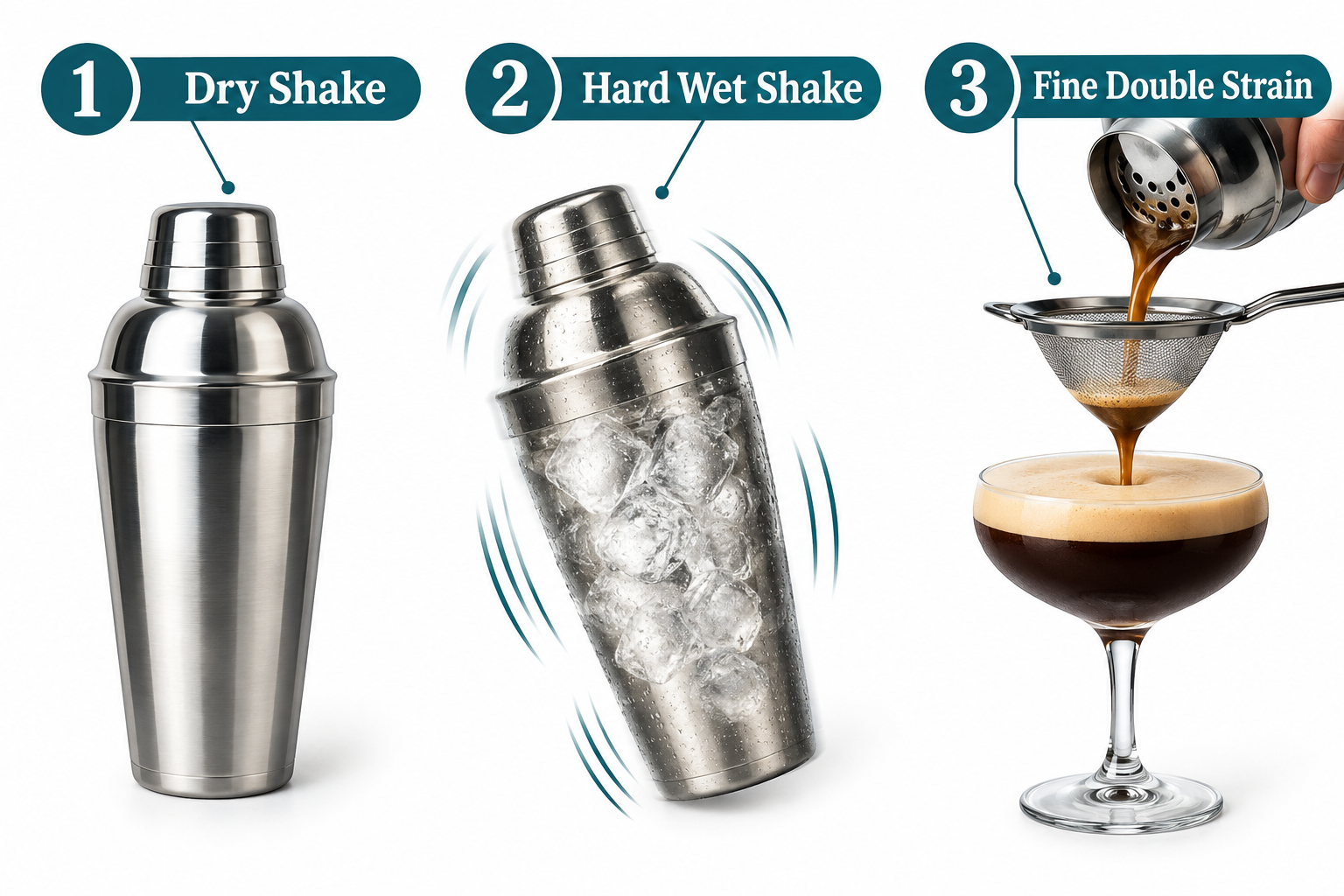
- The foam trick bartenders use is a dry shake (no ice) followed by a hard wet shake (packed with ice), then a fine double strain.
- Fresh, still-warm espresso foams better than reheated or hours-old coffee because its crema-forming compounds break down over time.
- A cold, dense shaker and at least 15 seconds of hard shaking matter as much as the recipe itself.
- Kahlua, Mr Black, and Baileys each produce a noticeably different espresso martini, from sweet and light to bitter and boozy to rich and creamy.
- Cold brew and Nespresso pods can substitute for espresso, but both usually need a shorter, more concentrated pour to match the foam and strength of true espresso.
- A standard-strength espresso martini recipe carries roughly the caffeine of one espresso shot, generally cited around 60 to 80 milligrams, depending on the shot size.
- You can batch the vodka, liqueur, and syrup ahead of time, but always add fresh espresso and shake right before serving.
What Is an Espresso Martini Recipe, Exactly?
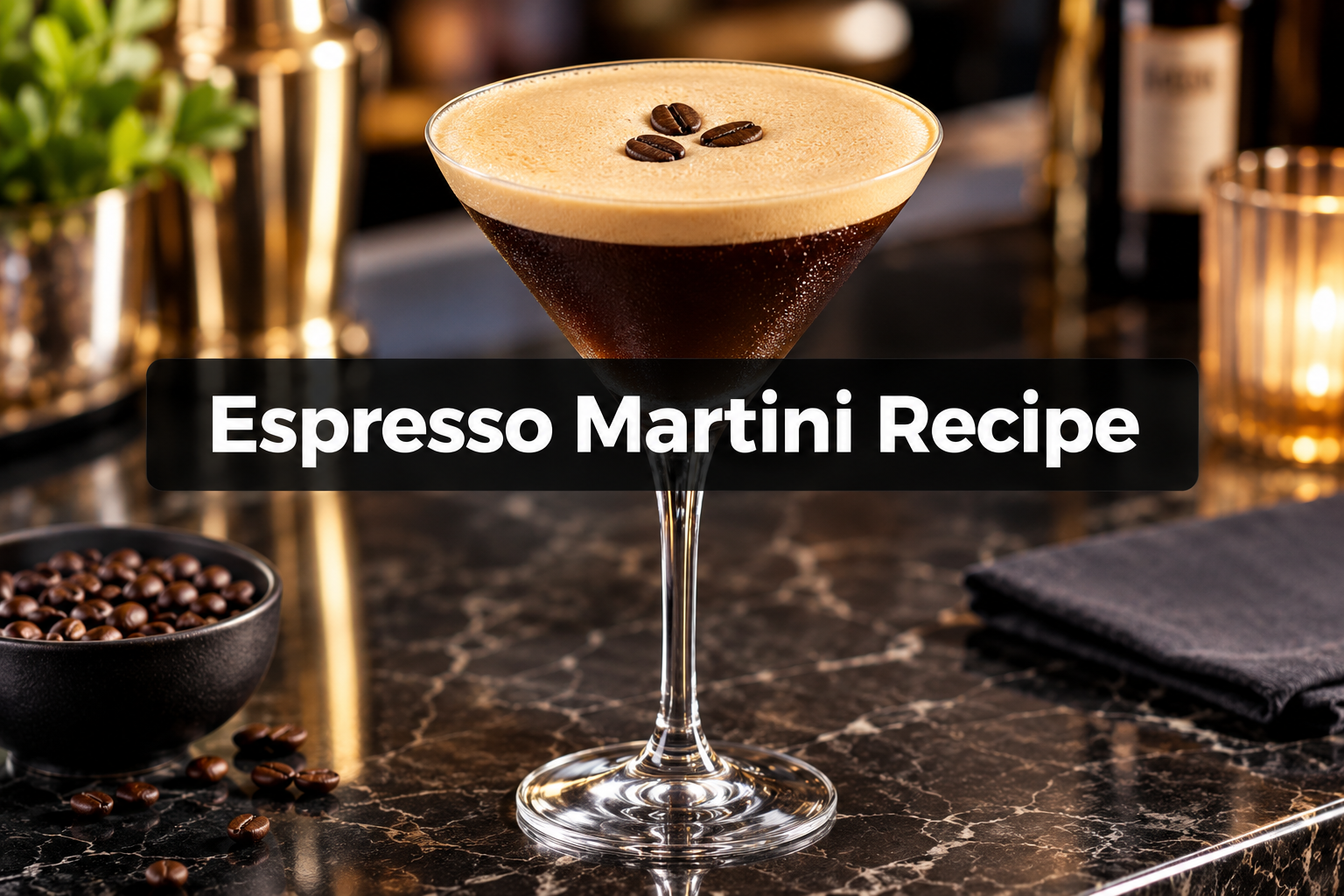
An espresso martini recipe is a shaken cocktail built from vodka, coffee liqueur, and a shot of hot espresso, served in a chilled martini glass with a foam layer on top. It has no vermouth and no relation to a gin martini beyond the glass it's served in.
The drink traces back to London in 1983, when bartender Dick Bradsell reportedly mixed it for a customer who wanted something that would "wake me up, then f*** me up." Forbes' reporting on the drink's history and its 2023 to 2024 sales resurgence notes that the original name was blunter than the one that stuck, and that the recipe has barely changed since.
What has changed is how seriously bartenders treat the foam. A republished version of the 1983 recipe circulating in 2026 confirms the original method already relied on hard shaking over firm ice, the same mechanical principle modern bars still use. The espresso martini recipe you get at a good bar today is really the same drink, made with more consistent technique.
Decision rule: if a recipe calls itself a "coffee martini recipe" instead of an espresso martini, check the coffee source. Some coffee martini recipe variations swap in instant coffee or cold brew concentrate, which changes both the strength and the foam behavior described later in this guide.
Espresso Martini Recipe Ratio: The Best Formula for a Balanced Drink
The best espresso martini recipe ratio is 1 part vodka, 1 part coffee liqueur, and 1 part fresh espresso, shaken with ice and double strained. Some bars use 2 parts vodka to 1 part each of liqueur and espresso for a stronger, less sweet pour.
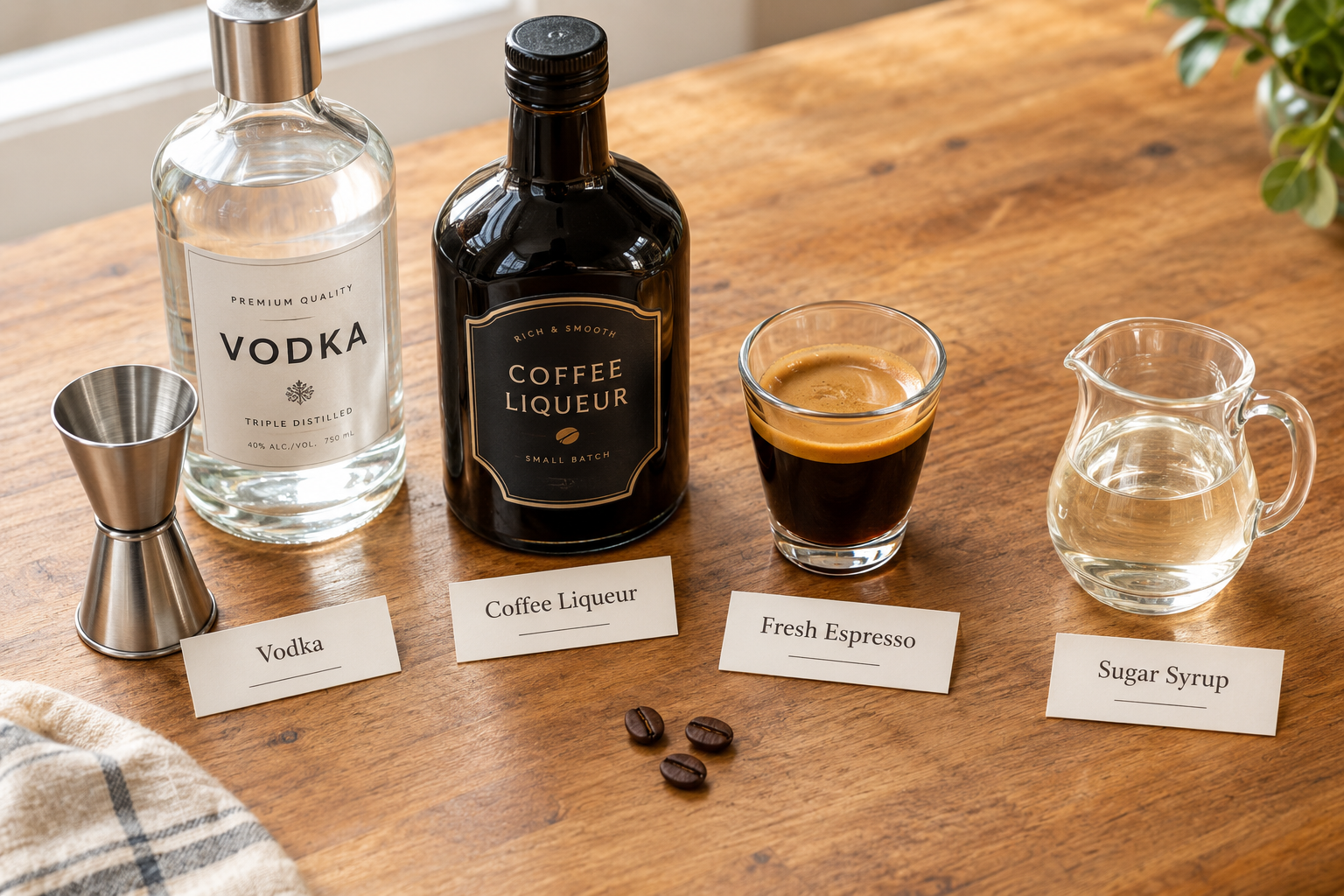
Standard espresso martini ingredients (one serving):
| Ingredient | Amount | Role |
|---|---|---|
| Vodka | 1.5 oz (45 ml) | Base spirit, carries the other flavors |
| Coffee liqueur | 1 oz (30 ml) | Sweetness and coffee depth |
| Fresh espresso | 1 oz (30 ml), hot | Foam, aroma, bitterness |
| Simple syrup | 0.25 to 0.5 oz (optional) | Balances bitterness |
| Coffee beans | 3, for garnish | Aroma on the nose, optional |
Pour everything into a shaker, add ice for the second shake stage (covered below), shake hard, and double strain into a chilled coupe or martini glass. This ratio produces a drink that's sweet enough to drink easily but still tastes like coffee, not candy.
Common mistake: using cold espresso straight from a fridge. Cold espresso shakes into a thinner foam because the temperature contrast between hot coffee and ice is part of what agitates the crema compounds. Pull or brew the shot right before you shake.
For readers building out a full home cocktail and coffee routine, our guide on 10 delicious espresso drink recipes to try today covers other drinks that use the same fresh-shot principle.
Espresso Martini Recipe Ratio Scaler
Enter servings to scale the base 1:1:1 espresso martini recipe.
| Vodka | 1.5 oz |
| Coffee liqueur | 1 oz |
| Fresh espresso | 1 oz |
| Simple syrup | 0.5 oz |
How Do You Make the Foam on Top of an Espresso Martini
The foam comes from shaking fresh espresso hard enough to break its crema and coffee oils into thousands of tiny bubbles, then trapping them under a layer of chilled, diluted liquid. Bartenders build that foam in two distinct shakes, not one.
The Espresso Martini Shaking Technique
The technique documented by bar-side guides in 2025 and 2026 breaks into three moves:
- Dry shake. Combine vodka, coffee liqueur, and hot espresso in the shaker with no ice. Shake hard for about 10 seconds. This starts breaking down the crema without diluting it.
- Hard wet shake. Add ice and shake again, harder and longer, for 15 to 20 seconds. This is where most of the visible foam forms, as the cold agitation whips air into the coffee's oils and proteins.
- Fine double strain. Pour through the shaker's built-in strainer and a separate fine mesh strainer into a chilled glass. The fine strainer catches ice shards and coffee grit that would otherwise sink the foam.
VinePair's bartender-sourced tips add a small extra step some pros use: a brief "pre-aeration" shake of just the espresso before adding the other ingredients, plus a short dry shake again after straining to firm up the foam that lands on top of the glass.
Why Is My Espresso Martini Not Foamy?
A flat espresso martini usually comes from one of three problems: stale espresso, a soft shake, or a warm glass. Fix the weakest link and the foam comes back.
- Stale espresso. Coffee that sat for more than a few minutes loses the compounds that hold foam. Pull or brew it right before shaking, not five minutes ahead.
- Soft shake. A gentle 5 second wobble won't do it. You need real force for the full 15 to 20 seconds of the wet shake stage.
- Warm glass. A room-temperature glass melts the foam edges on contact. Chill the glass in the freezer for at least 10 minutes, or fill it with ice water while you shake, then dump the water out right before pouring.
Home Espresso Lab's 2026 recipe guide ties the same three variables together: espresso freshness, glass temperature, and shake intensity all move in the same direction, so improving two out of three still produces a thin foam if the third is ignored.
For a deeper look at the crema chemistry behind this, see our guide to extraction and crema and our espresso drink enhancement tips, which cover related agitation and crema principles used across espresso drinks.
Espresso Martini vs Regular Martini: What's the Difference
An espresso martini and a regular martini share only the glass, not the ingredients. A regular martini is gin or vodka with vermouth, stirred and garnished with an olive or lemon twist. An espresso martini is vodka, coffee liqueur, and espresso, shaken hard and topped with foam.
The texture is the biggest giveaway. A regular martini is clear and thin. An espresso martini recipe produces a drink with body, sweetness, and a foam crown that a stirred martini never has. If someone calls an espresso martini a "coffee martini recipe," that's fair too. Both names describe the same shaken, foam-topped drink.
Choose an espresso martini if: you want a dessert-adjacent, after-dinner drink with caffeine. Choose a regular martini if: you want something dry, cold, and low in sugar.
Can You Make an Espresso Martini Without Vodka?
Yes, you can swap the vodka in an espresso martini recipe for another base spirit, though the drink's flavor and name may shift with it. Common substitutes include light rum, tequila, or even brandy.
Vodka stays the standard because it carries the coffee and liqueur flavors without adding its own strong taste. Brands like Tito's and Grey Goose are common bar choices because both are clean-tasting and shake well without turning harsh at cocktail strength. If you swap in a flavored or heavily botanical spirit, the espresso and coffee liqueur can get lost.
Edge case: an espresso martini made with no alcohol at all is really a coffee mocktail, not a true espresso martini recipe. It can still use the same foam technique, since the dry shake and hard wet shake work on the coffee itself, not the alcohol.
What Coffee Should You Use for an Espresso Martini?
Use fresh, hot espresso for the most reliable espresso martini recipe. Cold brew and pod-based coffee, including Nespresso, can work as substitutes, but each needs a small adjustment to match espresso's strength and foam behavior.
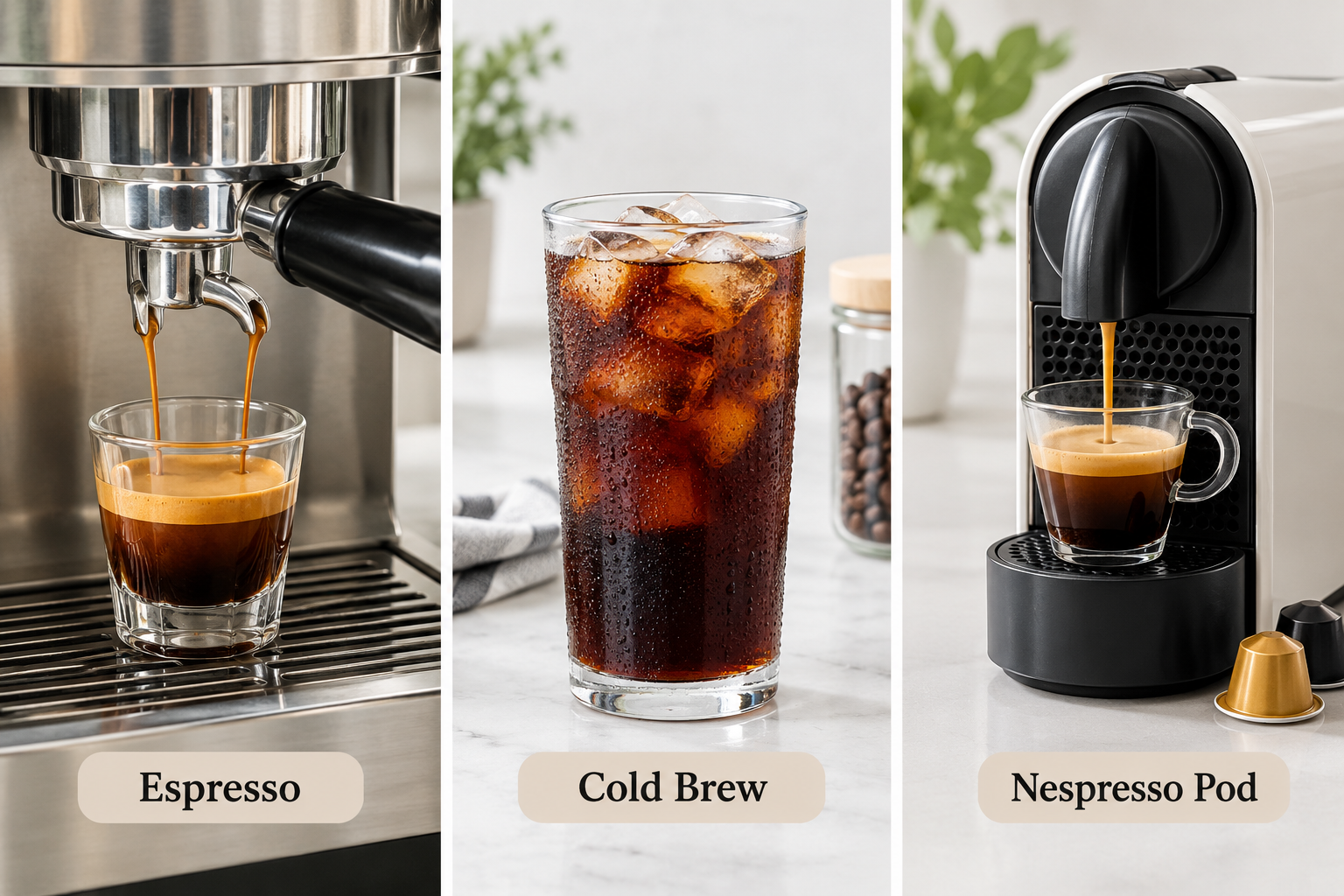
- Fresh espresso (best option). True espresso has more dissolved oils and finer crema than drip coffee or cold brew, which is exactly what the dry shake needs to work with. A Breville machine or any home espresso maker with a fresh, correctly ground shot will out-perform other coffee sources for foam.
- Nespresso pods. A 2026 home-recipe guide using Nespresso capsules recommends flash-chilling the shot briefly, then shaking aggressively and double straining, which produces a workable microfoam close to bar quality. Choose a dark, intense capsule rather than a light or flavored one.
- Cold brew instead of espresso. Cold brew is weaker and lower in the oils that build foam, so an espresso martini with cold brew instead of espresso usually needs less added liquid overall and a longer, harder shake to compensate. Expect a thinner foam layer even with a good shake.
If you're deciding what grind or roast to keep on hand for cocktail-strength shots, our page on the best grind of coffee for an espresso machine and our note on using flavored coffee for espresso both apply directly here.
Best Liqueur for an Espresso Martini
The best coffee liqueur for an espresso martini depends on how sweet and how strong you want the finished drink. Kahlua, Mr Black, and Baileys each push the same base recipe in a different direction.
| Liqueur | Style | Best for |
|---|---|---|
| Kahlua | Sweet, light coffee flavor, 20 percent ABV | An easy-drinking espresso martini with Kahlua for beginners |
| Mr Black | Dry, bitter, higher coffee intensity, 23 percent ABV | Bartenders who want less sugar and more real coffee taste |
| Baileys | Cream-based Irish liqueur, not a coffee liqueur | A creamy espresso martini recipe with a dessert-like finish |
An espresso martini with coffee liqueur like Kahlua leans sweet and approachable, which is likely why it remains the most common bar pour. Mr Black markets itself directly at bartenders chasing a less sugary, more coffee-forward drink, and the brand's own Espresso Martini Fest promotions in 2025 and 2026 have leaned into that positioning as the category keeps growing. Drinks International's coverage of the coffee liqueur category notes that espresso martini demand is a direct driver of new liqueur launches and reformulations, since bars want options at different sweetness and strength levels.
Decision rule: choose Kahlua if you're serving a crowd that wants something familiar and sweet. Choose Mr Black if you or your guests already drink black coffee and want the cocktail to taste like it.
Creamy Espresso Martini Recipe With Baileys and Sugar-Free Options
A creamy espresso martini recipe swaps some or all of the coffee liqueur for Baileys, which adds cream and vanilla notes on top of the coffee base. It's a heavier, more dessert-style drink than the classic version.
Espresso martini recipe with Baileys (one serving):
- 1 oz vodka
- 0.5 oz coffee liqueur
- 0.5 oz Baileys
- 1 oz fresh hot espresso
- Shake dry, then hard with ice, then double strain
Because Baileys already carries sugar and cream, most versions of this creamy espresso martini recipe skip added simple syrup entirely. That also answers a related question directly: an espresso martini without sugar syrup is easy to make if your coffee liqueur or cream addition already supplies enough sweetness. Taste the shaken mix before straining and add syrup only if it tastes flat or too bitter.
Common mistake: using cold Baileys straight from the fridge without adjusting shake time. Cream liqueurs thicken when cold, which can mute the foam. A slightly longer hard shake compensates.
Pernod Ricard's UK press materials on Kahlua's product line show that coffee liqueur brands are actively marketing cream and flavor variants aimed at exactly this creamy, dessert-style espresso martini trend.
How Much Caffeine Is in an Espresso Martini?
A standard espresso martini recipe contains roughly the caffeine of one espresso shot, since espresso is the only caffeinated ingredient. A typical single shot runs in the range commonly cited for espresso, and coffee liqueurs like Kahlua add only a small additional amount.
That means an espresso martini sits well below a full cup of drip coffee in caffeine, even though it tastes strong. If you want the specific numbers behind a single shot, our breakdown of how much caffeine is in a single shot of espresso walks through the ranges and what changes them, including bean type and shot volume.
Practical note: doubling the espresso in a "double shot" version of the recipe roughly doubles the caffeine too, which matters if you're serving the drink late in the evening.
Can You Make an Espresso Martini Ahead of Time?
You can batch the vodka, coffee liqueur, and syrup for an espresso martini ahead of time, but you should always add fresh espresso and shake just before serving. Pre-mixing everything, including the coffee, kills the foam before guests ever see it.
Batching method for a party:
- Combine vodka, coffee liqueur, and syrup in a bottle. Refrigerate up to a few days ahead.
- Chill your glasses in the freezer the night before.
- Brew fresh espresso in small batches as guests arrive.
- Shake each serving individually: batch mix, fresh hot espresso, ice, dry shake then hard wet shake, double strain.
This keeps the espresso martini recipe fast to pour for a crowd without sacrificing the foam that makes the drink recognizable. If you're setting up a full cocktail and coffee bar for guests, our beginner's guide to barista-quality espresso drinks covers the workflow for pulling several fresh shots back to back.
Espresso Martini at Home vs Bar Quality
A home-made espresso martini can match bar quality if you control the same three variables bars do: fresh espresso, a genuinely hard shake, and a cold glass. The gap most home versions fall into isn't the recipe, it's the shortcuts.
Bars have an advantage in volume and muscle memory. A bartender making forty espresso martinis a shift shakes automatically hard and pours from an espresso machine that's already dialed in. At home, the two most common shortcuts are using coffee that's already gone lukewarm and shaking for only a few seconds because a full 15 to 20 second hard shake feels like a long time when you're holding a cold shaker.
Forbes' coverage of the drink's recent boom points out that on-premise espresso martini sales in the US rose 91 percent in the second half of 2023 and climbed another 116 percent year over year in 2024, a surge that pushed bars to standardize the shaking technique described above so quality stayed consistent as volume grew. That same consistency is available at home, it just needs the same attention to timing and temperature.
A newer challenger, the carajillo (espresso with a liqueur like Licor 43, served over ice rather than shaken), has picked up bar attention as a simpler alternative. Forbes notes that the espresso martini's foam and its strong presence on social media remain a real advantage the carajillo doesn't fully match. Sucafina's 2026 coverage of coffee cocktail trends also points to regional riffs, including ready-to-drink coffee cocktails built for the same aperitivo-style occasion, that keep the foam but experiment with different base spirits and toppings. Promotional pushes like Moxies' $5 espresso martini events in 2025 show how bars are using the drink's visual foam as a marketing hook, not just a flavor feature.
FAQ
What is an espresso martini made of? Vodka, coffee liqueur, and a fresh shot of hot espresso, shaken with ice and double strained into a chilled glass, usually garnished with three coffee beans.
What's the best espresso martini recipe ratio for beginners? Start with equal parts: 1 oz vodka, 1 oz coffee liqueur, 1 oz espresso. Adjust the vodka up if you want it stronger, or add a splash of syrup if it tastes too bitter.
Why does my espresso martini foam disappear fast? Usually a warm glass. Chill the glass for at least 10 minutes before pouring, and serve the drink immediately after straining.
Can I use instant coffee instead of espresso? You can, but it produces a thinner foam and a flatter flavor than fresh espresso or even strong cold brew, since instant coffee lacks the oils and crema compounds that build foam under shaking.
Is Kahlua or Mr Black better for an espresso martini? Kahlua gives a sweeter, easier-drinking espresso martini with Kahlua's mild coffee flavor. Mr Black gives a drier, more bitter, higher-proof result favored by bartenders who want a stronger coffee taste.
How long should I shake an espresso martini? Two rounds: about 10 seconds dry (no ice), then 15 to 20 seconds hard with ice. Both stages matter for the foam.
Conclusion
The espresso martini recipe itself hasn't changed much since 1983. What separates a flat home version from a bar-quality one is technique: fresh espresso, a genuine dry shake followed by a hard wet shake, a fine double strain, and a properly chilled glass. Get those four details right and the foam takes care of itself.
Pick your base recipe (classic with Kahlua, dry with Mr Black, or creamy with Baileys), keep your espresso fresh off the machine, and shake harder and longer than feels natural the first few times. That's the whole trick. Better coffee starts with better answers, and in this case, a better shake.
Keep Exploring Coffee Rank IQ
- Coffee Rank IQ home: reviews, brewing guides, and coffee science
- Best Espresso Beans for Lattes, Straight Shots, and Budgets
- Iced Shaken Espresso: Make the Starbucks Favorite at Home
- Best Milk Frother for Lattes at Home: Handheld vs Electric
- How to Make an Iced Latte at Home Without Watery Regret
References
- www.prnewswire.com/news-releases/the-coffee-cocktail-of-a-generation-mr-black-espresso-martini-fest-marks-year-four-302562030.html
- drinksint.com/news/fullstory.php/aid/12223/The_Espresso_Martini_is_shaping_the_coffee_liqueur_category.html
- homeespressolab.com/recipes/espresso-martini-recipe
- www.forbes.com/sites/rachelking/2025/03/15/the-rise-fall-and-resurgence-of-the-espresso-martini
- www.thedoublestrainer.com/post/espresso-martini-the-complete-recipe-technique-and-foam-troubleshooting-guide
- www.pernod-ricard.com/sites/default/files/news/downloads/2025-03/UK%20Kahlu%CC%81a%20SPD%20_Press%20Release_FINAL.pdf
- www.globenewswire.com/news-release/2025/05/06/3075400/0/en/moxies-serves-up-a-new-5-espresso-martini.html
- instant.sucafina.com/news/coffee-mixology-2-0-when-rtd-coffee-meets-the-aperitivo-moment
- eathealthy365.com/an-easy-espresso-martini-recipe-with-nespresso