Ristretto vs Espresso: Shorter Shot, Sweeter Cup?
Last updated: September 30, 2026
Quick Answer
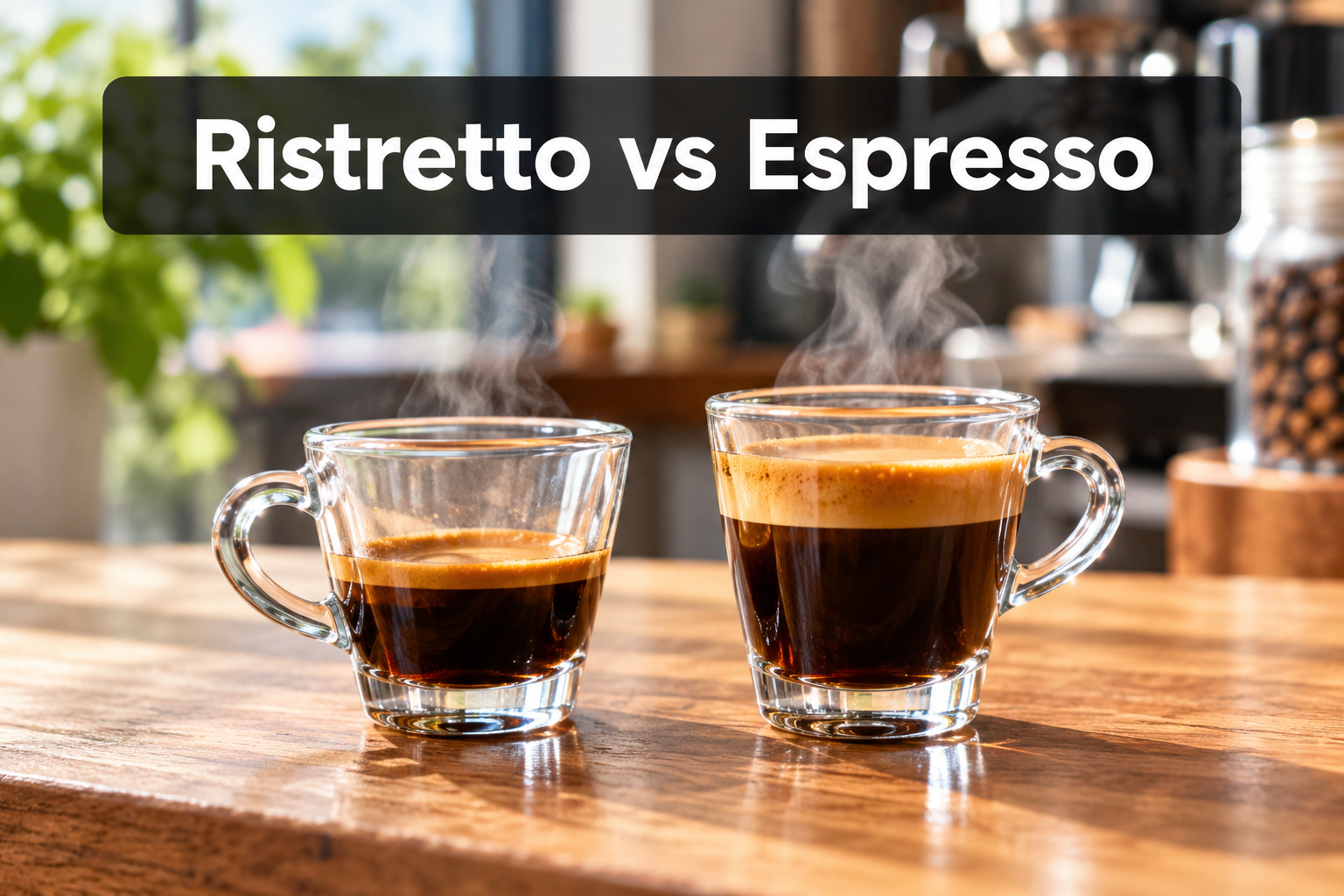
Ristretto and espresso start with the same ground coffee dose, but a ristretto is stopped early, at roughly half the water. That single change in ristretto vs espresso brewing shortens the extraction time from about 25-30 seconds to about 15-20 seconds, cuts the yield from around 30 ml to around 15-20 ml, and pulls out more sugar and less bitterness. The result is a smaller shot that tastes sweeter and thicker, with slightly less total caffeine than a full espresso.
Key Takeaways
- Same beans, different stop point. Ristretto vs espresso comes down to water volume and time, not a different roast or grind recipe.
- Ristretto yields about 15-20 ml. A standard espresso yields closer to 25-36 ml from the same dose.
- Extraction time is shorter. Ristretto runs about 15-20 seconds. Espresso runs about 25-30 seconds.
- Ristretto tastes sweeter, not stronger in caffeine. Less water contact time means fewer bitter compounds extract, but total caffeine is usually slightly lower than a full shot.
- Brew ratio separates the two. Espresso sits near 1:2. Ristretto sits near 1:1 to 1:1.5.
- Starbucks calls it a "restricted" shot. Same roast, less hot water, smaller and sweeter pour.
- Any espresso machine can pull a ristretto. You just stop the shot early or adjust the dose/grind slightly.
- Ristretto vs lungo sits at the opposite end of the same scale. Lungo runs longer and more diluted; ristretto runs shorter and more concentrated in flavor.
Ristretto vs Espresso: What's the Difference
The core ristretto vs espresso difference is water volume and time, not the coffee itself. Both shots typically start with the same 7-9 gram (single) or 18-20 gram (double) dose of finely ground coffee, pulled through the same puck at the same pressure.
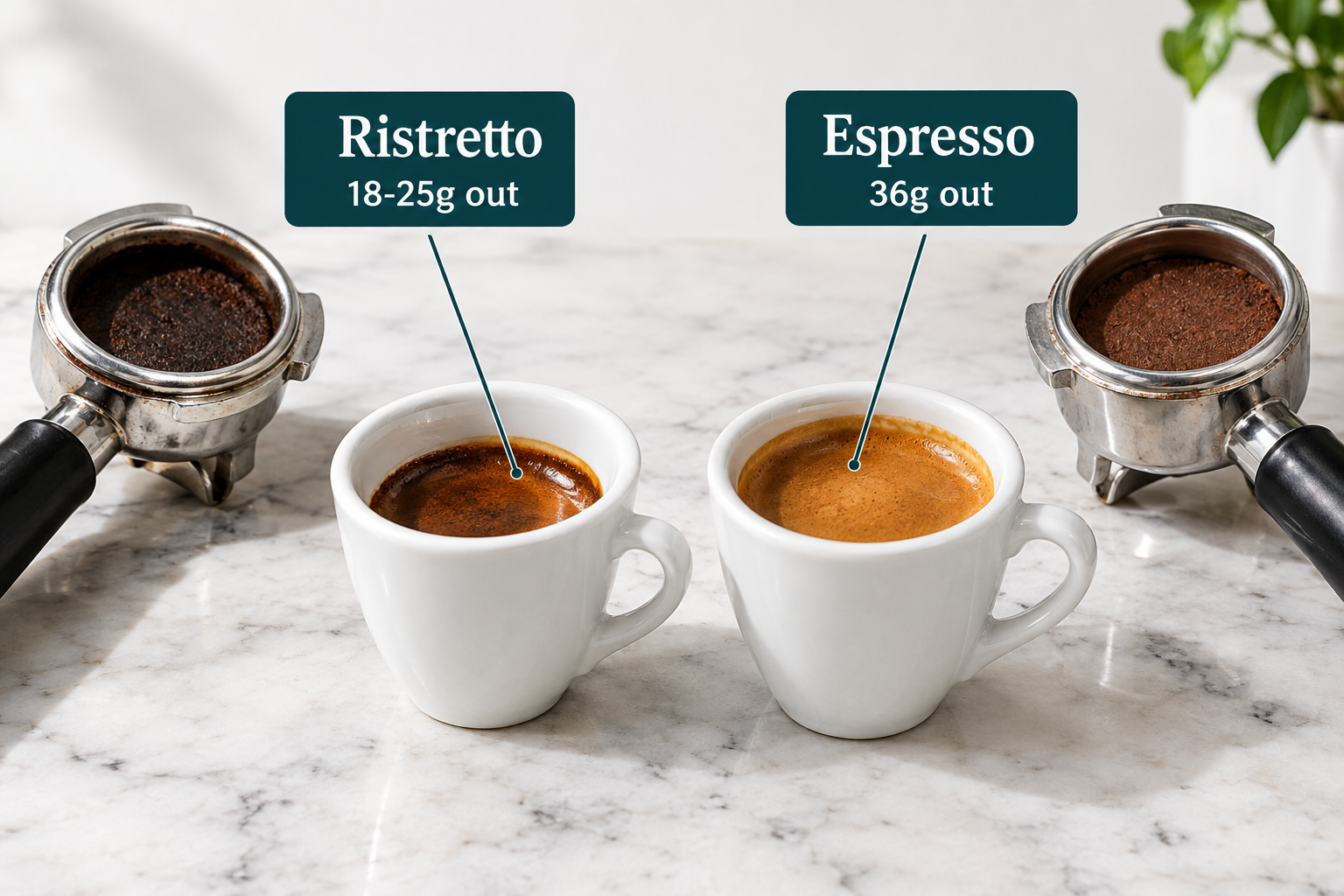
What changes is when the barista or machine stops the shot. Espresso runs until it collects roughly double the dry coffee weight in liquid, commonly described as a 1:2 brew ratio (18 g of coffee producing about 36 g of beverage). Ristretto stops the flow around half that volume, closer to a 1:1 or 1:1.5 ratio, so the same 18 g dose might yield only 18-27 g of liquid.
That shorter contact time between hot water and ground coffee changes what ends up in the cup. Early in an extraction, water pulls out sugars and fruit acids first. Bitter compounds, mostly phenolics, dissolve later in the shot. Stop early, and you get a cup weighted toward sweetness. Let it run the full distance, and you get the fuller, more balanced flavor most people associate with a standard espresso.
If you're shopping for a machine that can pull both styles well, our buyers guide to choosing the best espresso machine covers what to look for in pressure control and shot timing.
What Is a Ristretto?
A ristretto is a short espresso shot made with the same coffee dose as a regular espresso but roughly half the water, extracted in about 15-20 seconds instead of 25-30. The name comes from the Italian word for "restricted," which describes exactly what happens: the water is cut off before it can pull out the full flavor range.
You'll sometimes see ristretto compared to a "long shot," which is the opposite move. A long shot pushes more water through the same puck, extending both time and volume past a standard espresso. So the real question, what is ristretto vs long shot, comes down to direction: ristretto shortens the pour, a long shot extends it. Café menus rarely use "long shot" directly, but it's the same idea behind a lungo, which we cover in more detail further down.
Coffee Rank IQ's guide on what a single shot of espresso is called is a useful companion if you're still sorting out espresso terminology before comparing ristretto to it.
How Much Caffeine Is in a Ristretto vs Espresso
A ristretto usually contains slightly less total caffeine than a full espresso shot, even though it tastes stronger and more concentrated. The smaller water volume means less liquid pulls caffeine out of the same coffee dose, so ristretto caffeine per shot typically lands a bit below espresso caffeine per shot.
This surprises a lot of people because ristretto tastes so much more intense. Intensity and caffeine content are not the same measurement. Caffeine is water-soluble and dissolves at a fairly steady rate throughout the extraction, so a shorter pour simply has less time and less water to carry it out of the grounds. Flavor compounds behave differently: sweetness shows up early, bitterness shows up late, and cutting the shot short changes the flavor balance far more than it changes the caffeine count.
Practical numbers vary by bean, roast, and dose, so treat any specific milligram figure as a rough guide rather than a lab result. If you want a general caffeine baseline before comparing shot styles, Coffee Rank IQ's breakdown of how much caffeine is in a single shot of espresso is a good starting point.
Decision rule: if your goal is more caffeine for the same volume, a standard espresso or an added shot beats a ristretto. If your goal is more flavor concentration without more caffeine, ristretto is the better choice.
Why Is Ristretto Sweeter Than Espresso
Ristretto tastes sweeter than espresso because the shorter extraction time limits how many bitter compounds dissolve into the cup. Sugars and organic acids extract early in a shot. Bitter phenolic compounds extract later. Stopping the pour at 15-20 seconds catches more of the early, sweeter compounds and less of the later, bitter ones.
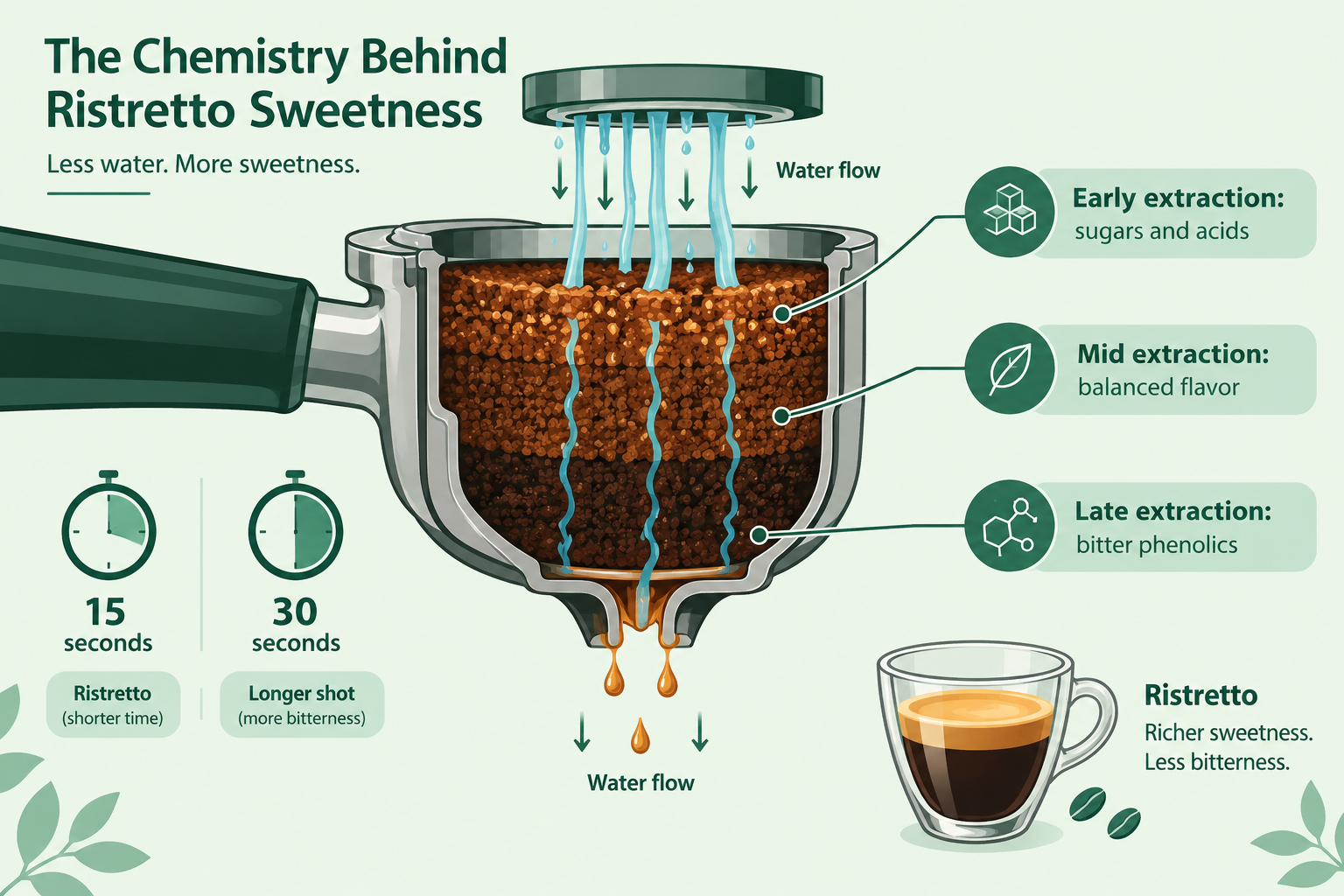
One 2026 chemistry-focused guide measured total dissolved solids (TDS), a way of tracking how much coffee material actually ends up dissolved in the liquid, at around 10-14% for ristretto versus 8-11% for a standard espresso. That higher concentration doesn't mean more bitterness. Because so much of what dissolved happened early in the shot, the extra material skews toward fruit sugars and acids rather than the bitter phenolics that show up in the back half of a full pull.
This is the mechanism behind the article's whole premise: shorter shot, sweeter cup. It isn't a marketing description. It's a direct result of extraction chemistry and timing.
For the deeper science behind how water and grind size interact during a shot, see Advanced Espresso Brewing 101: Understanding the Science Behind Extraction.
Ristretto Shot Size: How Many ML
A single ristretto shot typically yields about 15-20 ml, compared to about 25-36 ml for a standard single or double espresso, depending on the machine and recipe. A double ristretto, pulled from a double basket, generally lands around 30-40 ml, still noticeably smaller than a comparable double espresso.
Some 2026 comparison charts standardize these numbers even further: ristretto at a 1:1-1.5 ratio yielding roughly 15-20 ml in 15-20 seconds, against espresso at a 1:2-2.5 ratio yielding roughly 30 ml in 25-35 seconds. These aren't rigid rules enforced by any authority. They're common targets that most specialty cafés and home baristas aim for when dialing in a shot.
| Shot style | Typical dose | Water ratio | Yield (ml) | Extraction time |
|---|---|---|---|---|
| Ristretto | 7-9 g single / 18-20 g double | 1:1-1.5 | 15-20 ml single / 30-40 ml double | 15-20 seconds |
| Espresso | 7-9 g single / 18-20 g double | 1:2-2.5 | 25-36 ml single / 55-70 ml double | 25-30 seconds |
| Lungo | 7-9 g single / 18-20 g double | 1:3 or more | 45-60 ml single | 35-45 seconds |
Can I Make a Ristretto With a Regular Espresso Machine
Yes. Any machine that pulls a normal espresso shot can pull a ristretto, since the only real change is stopping the shot earlier or adjusting the grind slightly finer to slow the flow. You don't need a special ristretto setting, though some machines include one as a shortcut.
Two practical approaches work:
- Time-based stop. Pull the shot as usual and manually stop it at around 15-20 seconds instead of letting it run to 25-30 seconds.
- Grind and ratio adjustment. Grind slightly finer to slow water flow, then target a lower yield weight on your scale (roughly 1:1 to 1:1.5 instead of 1:2).
Machines with programmable volumetric shots, a common feature on higher-end Breville models, let you save a ristretto preset alongside your usual espresso and long-shot settings, which removes the guesswork on busy mornings. Nespresso Ristretto capsules take a different route entirely: the capsule itself is formulated and pre-portioned to deliver a shorter, more concentrated pour without any manual adjustment, which is part of why pod systems marketed a dedicated Ristretto line in the first place.
If you're shopping for a machine and want to compare how different models handle shot timing and pressure profiles, the top 10 advanced espresso machines roundup is a useful next stop, and our espresso machine buying guide breaks down what actually matters for shot control.
Ristretto vs Espresso Taste Comparison
In direct taste comparisons, ristretto reads as sweeter, thicker, and less bitter, while espresso reads as more balanced and complete across sweetness, acidity, and bitterness together. Neither is objectively "better." They're built to show off different parts of the same coffee.
Espresso is often described as the reference shot for a reason: pulling the full ratio lets acidity, sweetness, and bitterness all show up in proportion, which is why cafés use standard espresso to evaluate a new bag of beans. Ristretto trims off the tail end of that extraction, so bitterness drops out first and the cup leans toward syrupy sweetness and concentrated aroma.
Bean choice affects this comparison too. Lighter, fruit-forward roasts tend to show ristretto's sweetness advantage clearly, since there's more early-extracting acidity and sugar to capture. Darker roasts, which already carry more bitterness at every stage of extraction, sometimes show less dramatic difference between the two styles.
Is Ristretto Stronger Than Espresso
Ristretto is more concentrated in flavor per milliliter, but it is not stronger in total caffeine, and the answer to long shot vs ristretto which is stronger depends entirely on what "stronger" means to you. If strength means flavor intensity and mouthfeel, ristretto wins. If strength means total caffeine delivered, a full espresso or long shot usually wins, since more water pulls more caffeine out of the same coffee dose.
A double ristretto vs espresso comparison makes this clearer. A double ristretto, pulled from a double dose and stopped early, delivers a very concentrated, syrupy shot with roughly the volume of a single standard espresso, but it still carries somewhat less total caffeine than a full double espresso pulled from the same dose, because less water passed through the grounds.
Common mistake: assuming a smaller cup automatically means less caffeine by a wide margin. The gap is real but modest, usually a matter of a small percentage difference rather than a dramatic cut.
When Should I Order a Ristretto Instead of Espresso
Order a ristretto when you want a smaller, sweeter, more concentrated sip, especially with milk drinks or lighter roasts where you want the coffee to stand out without added bitterness. Order a standard espresso when you want the full, balanced flavor of the bean on its own or you're judging a new coffee.
If you want to know what is a ristretto shot at Starbucks, the company's own espresso explainer describes it as a "restricted" shot made from their standard espresso roast, pulled with less hot water for a smaller, richer, sweeter pour than their regular espresso shot. You can ask for it in any drink that normally uses espresso, including lattes and Americanos, though the barista will need to know you want the ristretto swap since it isn't always a visible menu item.
Larger chains and premium brands have followed the same logic. Lavazza's espresso lines are frequently used at home and in cafés to build both standard and ristretto-style pulls from the same bag, since the difference comes from brewing choices rather than a separate bean blend. Capsule brands took a more direct route: Nespresso's dedicated Ristretto line is formulated specifically for the shorter, higher-intensity pour, which is worth knowing if you're comparing pod convenience against a manual machine.
How Do You Pull a Ristretto Shot
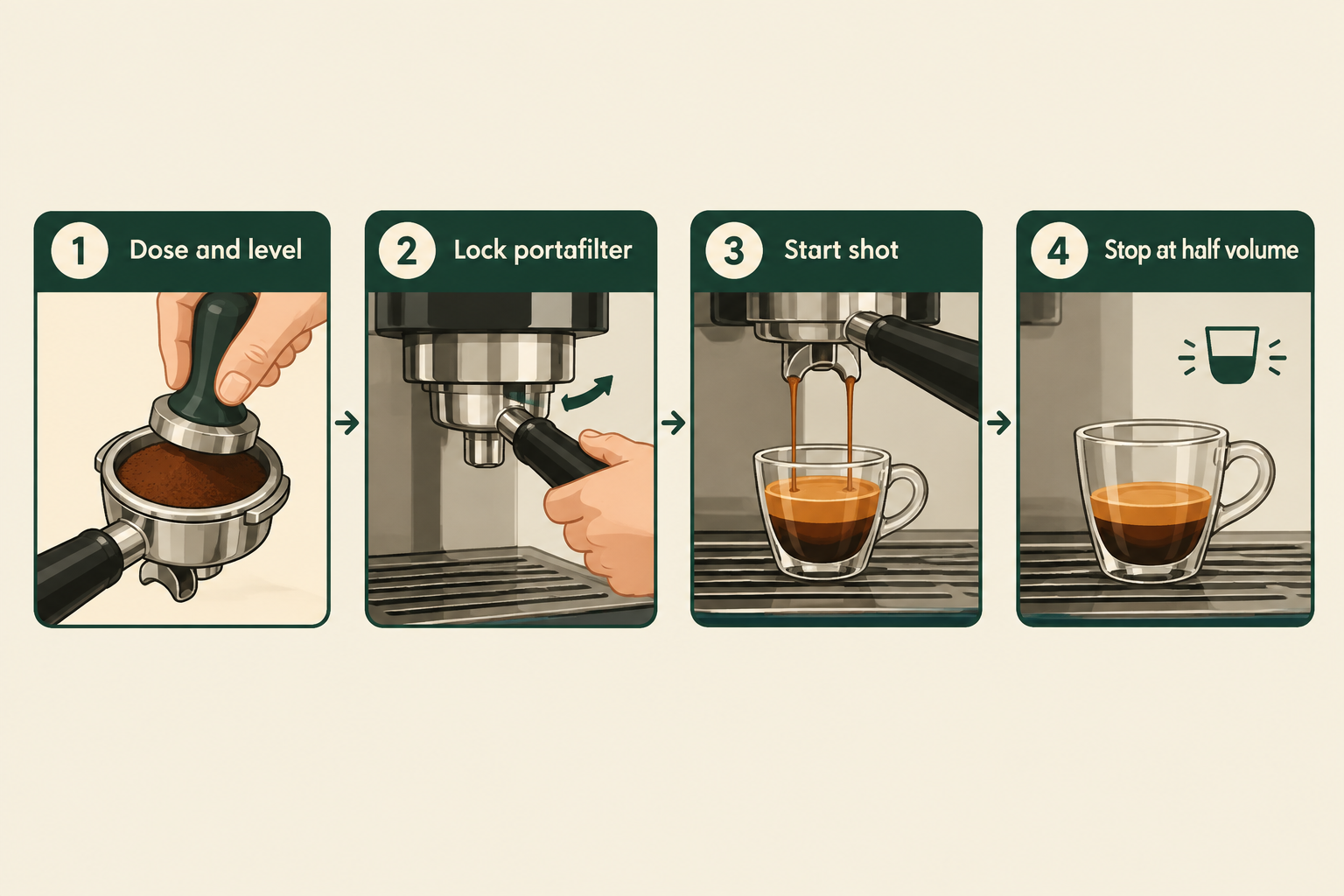
To pull a ristretto shot, use your normal espresso dose and grind, then stop the extraction at roughly half the usual water volume, around 15-20 seconds instead of 25-30. If the flow runs too fast at that setting, grind slightly finer to slow it down and keep the shot from tasting thin or sour.
Basic steps for how to make a ristretto at home:
- Dose as usual. Use the same coffee weight you'd use for a normal espresso, typically 18-20 g for a double basket.
- Grind slightly finer if needed. A finer grind slows water flow, which helps you hit the shorter time window without the shot running too thin.
- Start the shot and watch the scale or timer. Target 15-20 seconds of total extraction time.
- Stop at roughly half the usual yield. For an 18 g dose, aim for about 18-27 g of liquid out, compared to roughly 36 g for a full espresso.
- Taste and adjust. If it's sour or thin, grind finer or increase dose slightly. If it's harsh or muddy, grind coarser or shorten the time further.
For general shot-pulling technique that applies to both styles, Coffee Rank IQ's advanced barista espresso shot techniques guide covers tamping, dosing, and timing in more detail.
Ristretto Common Mistakes and How to Avoid Them
The most common ristretto mistake is stopping the shot early without adjusting the grind, which produces a thin, sour cup instead of a sweet, concentrated one. Cutting time short reduces extraction overall, so if the grind stays the same as your espresso setting, you often end up under-extracted rather than simply "less bitter."
Other frequent mistakes:
- Using the wrong dose. A ristretto isn't a smaller coffee dose. It uses the same amount of ground coffee as espresso, just less water.
- Ignoring grind size. Since ristretto relies on a shorter window, grind size becomes more sensitive. A slightly finer grind than your usual espresso setting usually helps hit the target time.
- Judging sweetness by volume alone. A ristretto that finishes too fast, under 12-13 seconds, often tastes sour and thin rather than sweet, because it didn't have enough contact time to extract sugars properly.
- Skipping calibration. Every bean and roast behaves differently. Dial in ristretto the same way you'd dial in espresso, adjusting dose, grind, and time together rather than changing one variable in isolation.
If grind size is where things keep going wrong, Coffee Rank IQ's guide on the best grind of coffee for an espresso machine is worth reading before you troubleshoot further.
Ristretto vs Lungo: What's the Difference
Ristretto vs lungo sit at opposite ends of the same brewing scale: ristretto shortens the water and time, while lungo extends both well beyond a standard espresso. Where espresso runs 25-30 seconds for about 30 ml, a lungo runs closer to 35-45 seconds for 45-60 ml, using a ratio near 1:3 or higher.
The practical result is a lungo that tastes more diluted and, often, slightly more bitter, since the extra water pulls more of those late-extracting phenolic compounds along with it. Ristretto moves the opposite direction, toward sweetness and concentration. If you think of espresso as the middle setting, ristretto and lungo are the two dials on either side of it.
What Drinks Use Ristretto Shots
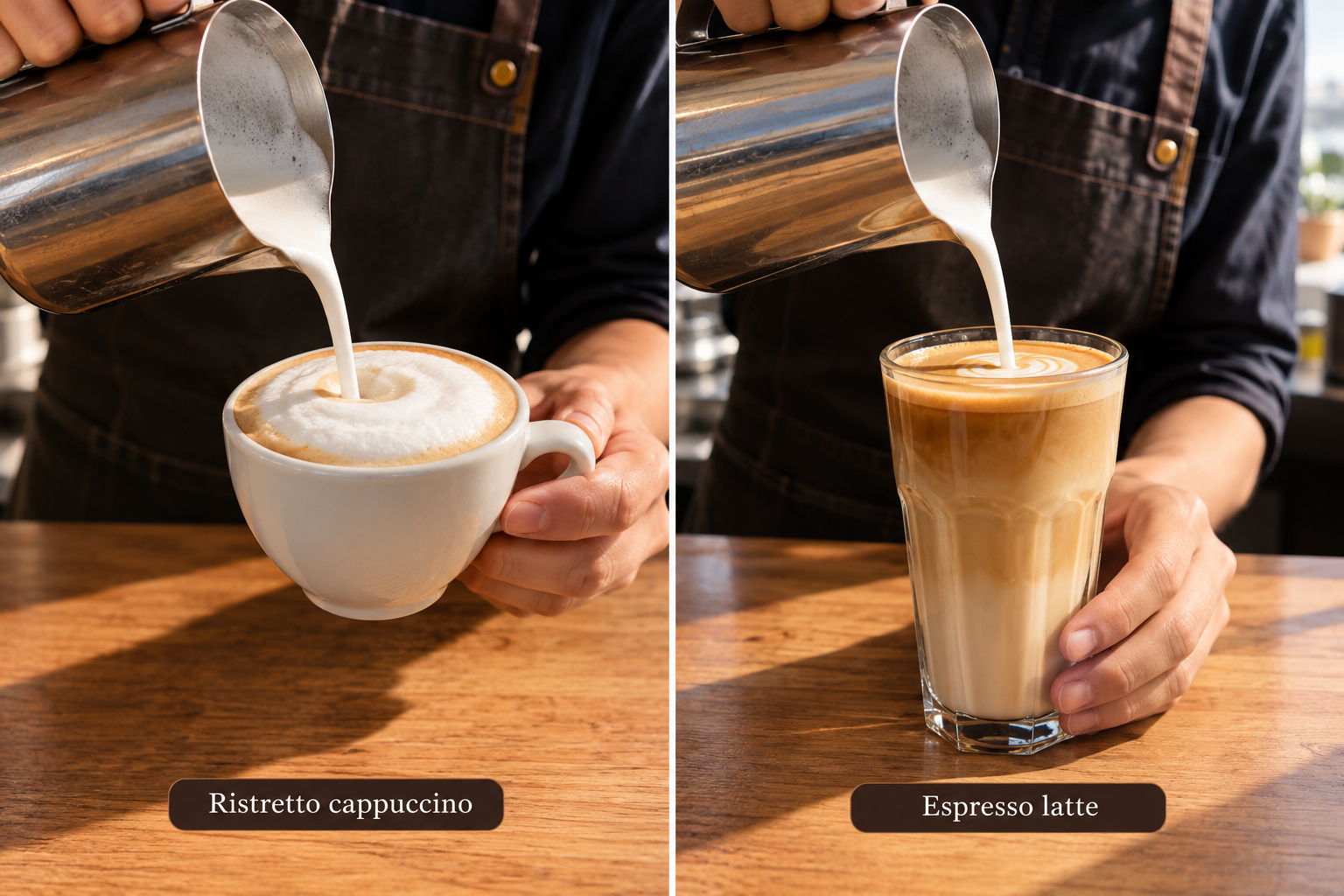
Ristretto shots work especially well in milk-based drinks, since the concentrated, sweeter shot holds up better against steamed milk than a full espresso does. Cafés commonly use ristretto as the base for cappuccinos, flat whites, and some specialty lattes when they want the coffee flavor to stay noticeable under the milk.
For the question of whether ristretto is better for lattes or cappuccinos, the shorter drink usually wins the comparison. A cappuccino's smaller volume and denser foam let a ristretto's concentrated sweetness come through clearly, while a latte's larger milk volume can dilute a ristretto shot to the point where the coffee gets lost. If you're building a bigger milk drink, a standard or even double espresso base usually balances better against that much milk.
For milk-drink technique once you've settled on a base shot, Coffee Rank IQ's step-by-step guide to mastering latte art covers pouring and foam texture in more detail.
Ristretto Vs Espresso Comparison Tool
Ristretto vs Espresso: side-by-side
| Factor | Ristretto | Espresso |
|---|---|---|
| Ratio | 1:1 to 1:1.5 | 1:2 to 1:2.5 |
| Yield (single) | 15-20 ml | 25-36 ml |
| Time | 15-20 sec | 25-30 sec |
| Flavor lean | Sweet, concentrated | Balanced, full-range |
Figures reflect common 2026 brewing guides. Actual results vary by bean, dose, and machine.
FAQ
What is a ristretto? A ristretto is a short espresso shot made with the same coffee dose as espresso but roughly half the water, extracted in about 15-20 seconds and yielding about 15-20 ml.
Is ristretto stronger than espresso? Ristretto is more concentrated in flavor and aroma, but it usually contains slightly less total caffeine than a full espresso, since less water passed through the same coffee dose.
Does ristretto have less water than espresso? Yes. Ristretto uses roughly half the water volume of a standard espresso from the same coffee dose, which is the main reason for its sweeter, thicker profile.
Can I make a ristretto with a regular espresso machine? Yes. Stop your usual espresso shot earlier, around 15-20 seconds, or grind slightly finer and target a lower yield weight. No special machine or setting is required.
Ristretto vs lungo, which one is right for me? Choose ristretto if you want a sweeter, more concentrated shot for milk drinks. Choose a lungo if you want a larger, more diluted cup with a slightly more pronounced bitterness.
Is ristretto better for lattes or cappuccinos? Ristretto tends to work better in cappuccinos and flat whites, where the smaller milk volume lets its concentrated sweetness come through. In a full-size latte, the extra milk can dilute a ristretto shot more than it dilutes a standard espresso.
Conclusion
The ristretto vs espresso question isn't really about strength or quality. It's about which slice of the extraction you want in your cup. Espresso runs the full distance and gives you the complete picture of a bean, sweetness, acidity, and bitterness together. Ristretto stops early and hands you the sweeter half of that same story, with a little less total caffeine to show for it.
If you're building a home setup, start with your usual espresso recipe and practice stopping it early before you buy anything new. Once you know whether you prefer the shorter cup, you can decide if a machine with a programmable ristretto preset, a finer grinder, or a Nespresso Ristretto capsule box fits your morning better than adjusting a manual shot every time. Better coffee starts with better answers, and in this case, the answer is mostly about timing your pour.
Keep Exploring Coffee Rank IQ
- Coffee Rank IQ home: reviews, brewing guides, and coffee science
- Drip Coffee vs Espresso: Caffeine, Flavor, and the Real Difference
- Best Espresso Machine for Beginners: 7 Picks That Forgive Mistakes
- Best Espresso Grinder: The Spec That Decides Your Shot
- Best Super Automatic Espresso Machine: Read the Cleaning Specs First
References
- myhomebarista.com/guides/ristretto-vs-espresso
- homeespressolab.com/guides/ristretto-vs-espresso
- myhomebarista.com/recipes/ristretto
- www.expertcafe.be/en/guides/ristretto-espresso-lungo-ratios-guide
- thecoffeelocator.com/guide/what-is-a-ristretto
- coffeestudies.com/espresso-drinks/ristretto
- www.lorespresso.com/en_gb/cp/blog/what-is-ristretto
- www.grammar.com/espresso_vs._ristretto
- coffeeintown.com/guides/what-is-a-ristretto