Single Origin Coffee Subscription: 5 Services Compared
Quick Answer
For most US drinkers, Trade Coffee is the best general-purpose single origin coffee subscription because its quiz plus a network of more than 55 specialty roasters narrows the choice before the first bag ships . If you want geography as the main event, Atlas Coffee Club rotates a new country each shipment and listed a 12 ounce bag at $20, a 24 ounce double at $34, and a 6 ounce half bag at $13 on its official page, accessed November 5, 2026 . Onyx Coffee Lab suits people who want one roasting style done consistently at roughly $18 to $22 per bag . Fellow Drops suits people who hate recurring charges and want a weekly text they can ignore .
Key Takeaways
- Atlas Coffee Club listed $20 per 12 ounce bag (about $1.67 per ounce), $34 per 24 ounce double bag (about $1.42 per ounce), and $13 per 6 ounce half bag (about $2.17 per ounce) on its official subscription page, accessed November 5, 2026, with a first bag free promotion running for new subscribers .
- Onyx Coffee Lab is reported at roughly $18 to $22 per bag, with drip, espresso, and omni roast tracks . Verve sits nearby at about $17 to $21 .
- Fellow Drops is not a standard recurring plan. It texts one weekly selection, you have about 12 hours to respond, and bags have ranged roughly $17 to $34 depending on the roaster .
- A single origin coffee subscription can mean a country, a region, a cooperative, a farm, or one micro-lot. Check whether the listing names the producer, variety, altitude, and processing method .
- Use 48 to 72 hours from roast to shipment as a sane freshness baseline for premium services, and remember light roasts often taste better after several days of degassing .
- Nearly all major services let you pause, skip, or cancel from the account dashboard. Atlas states this plainly .
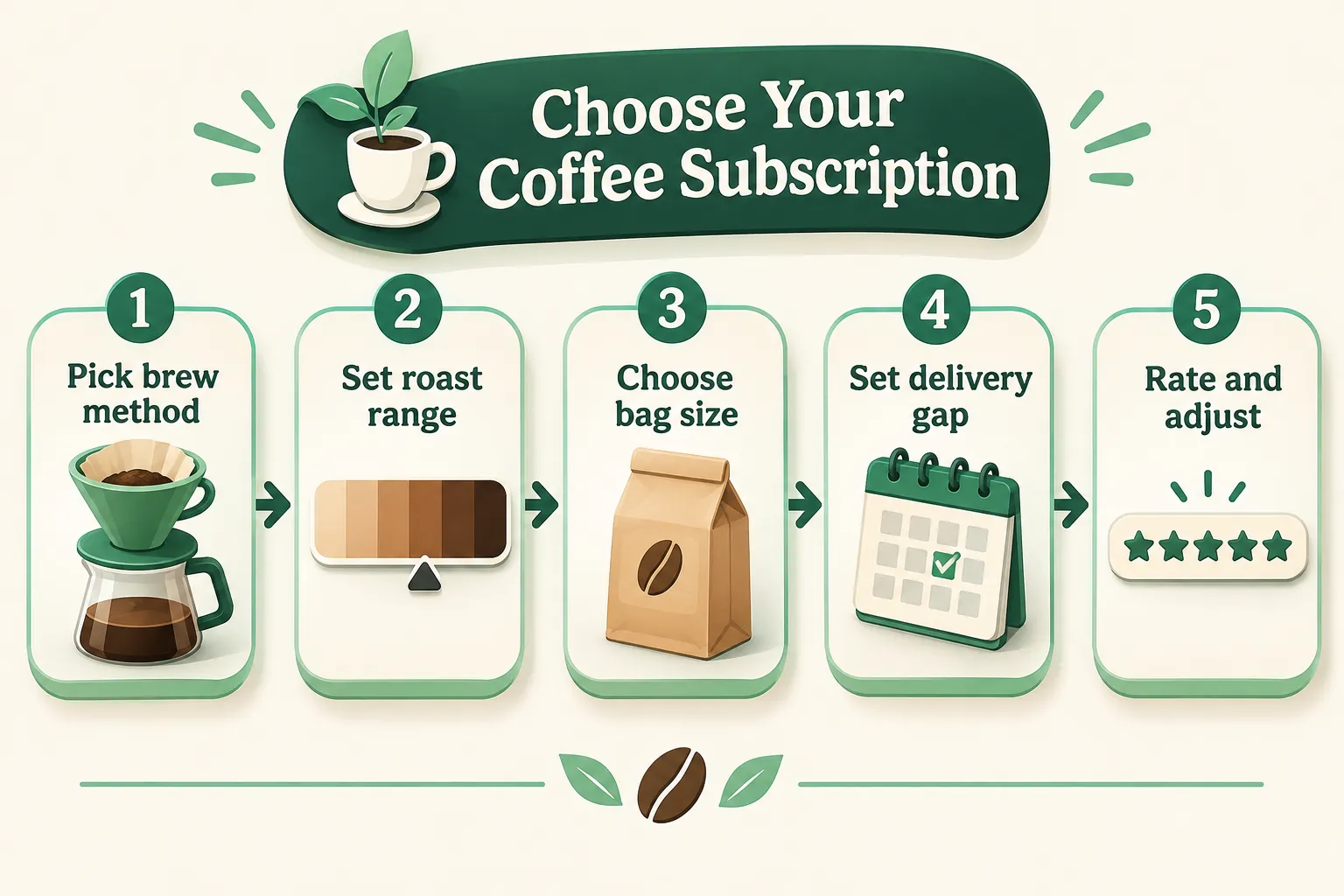
- Choose by control: Atlas curates for you, Trade and MistoBox let you set roast, flavor, brew method, and budget .
What does single origin coffee actually mean
Single origin means the coffee in the bag comes from one identified place rather than a mix of several. The catch is that "one place" is elastic. It can mean one country, one growing region, one cooperative of hundreds of smallholders, one farm, or one lot from one plot of one farm .

That range matters because two bags can both say single origin and tell you wildly different amounts. A country-level rotation like Atlas's is a real single origin product, but it is not the same thing as a producer-named micro-lot .
What a traceable listing names:
- Producer or cooperative
- Farm or washing station
- Lot name or number
- Coffee variety (Caturra, Gesha, SL28, and so on)
- Altitude in meters
- Processing method: washed, natural, honey, anaerobic
Decision rule: if you care about traceability, skip any single origin coffee subscription that lists only a country and tasting notes. If you care about variety week to week, country-level rotation is fine and usually cheaper.
)
What's the difference between single origin and blended coffee
A blend mixes coffees from two or more origins to hit a consistent, repeatable flavor target. A single origin presents one place and accepts that it will taste different from last season's crop.
Blends exist for good reasons. Espresso blends are built for body, sweetness, and forgiveness under pressure. Shops like them because the cappuccino in March tastes like the cappuccino in September.
| Feature | Single origin | Blend |
|---|---|---|
| Flavor goal | Express one place and one harvest | Repeat a consistent profile |
| Variation | Changes with the crop year | Deliberately steady |
| Milk drinks | Can get lost or turn sour | Usually built for milk |
| Best use | Pour over, filter, black coffee | Espresso, milk drinks, drip for a crowd |
| Label detail | Often names farm and process | Often names only a roast style |
A blend is not a lesser product. It is a different brief. Our take: keep a blend for your milk drinks and keep a single origin coffee subscription running for the black cup you actually taste.
Is single origin coffee really better, or just marketing hype
Single origin is a sourcing description, not a quality grade. A badly roasted single origin from a mediocre lot will lose to a well built blend every time. What single origin reliably gives you is information and variety, not guaranteed superiority.
Where the label earns its keep is traceability. When a bag names the producer, the lot, the altitude, and the processing method, you can connect what you taste to a decision someone made on a farm. Natural processing often pushes fruit and ferment character. Washed coffees tend to read cleaner and more acidic.
Where the hype creeps in is at the top end. Perfect Daily Grind reported on November 2, 2026 that an "ultra-specialty" segment is growing, built on competition lots and micro-lots sold to buyers willing to pay substantially more through cafés, retail, and subscriptions . Those coffees can be extraordinary. They are also priced as discovery items, not as your Tuesday morning default.
A single origin label tells you where the coffee came from. The roast date, the grind, and your water tell you how it will taste tomorrow morning.
Single origin coffee subscription services compared: the 5 picks
Here are the five services, with price per shipment, bag size, approximate price per ounce, roast range, and the buyer each one fits. Prices for Atlas were checked on the company's official page on November 5, 2026 . Other figures are reported ranges from the cited sources, and roaster-dependent plans move around, so check the current price before you commit.
Affiliate disclosure: Coffee Rank IQ may earn a commission if you subscribe through links on this site. That does not change the prices listed, and no service paid for placement in this comparison. This article is based on published pricing, official service pages, and documented third-party reviews, not on hands-on testing of all five plans.
1. Atlas Coffee Club: best for country-by-country discovery
Price per shipment (checked November 5, 2026): $20 for 12 ounces, $34 for 24 ounces, $13 for 6 ounces . Price per ounce: about $1.67, $1.42, and $2.17 respectively. Delivery frequency: every two or four weeks . Roast range: selectable roast range in signup, plus a flavor profile choice. A "Bright & Expressive" profile carries a reported $2 per bag surcharge . Who it suits: curious drinkers who want a new country every shipment and do not want to make decisions.
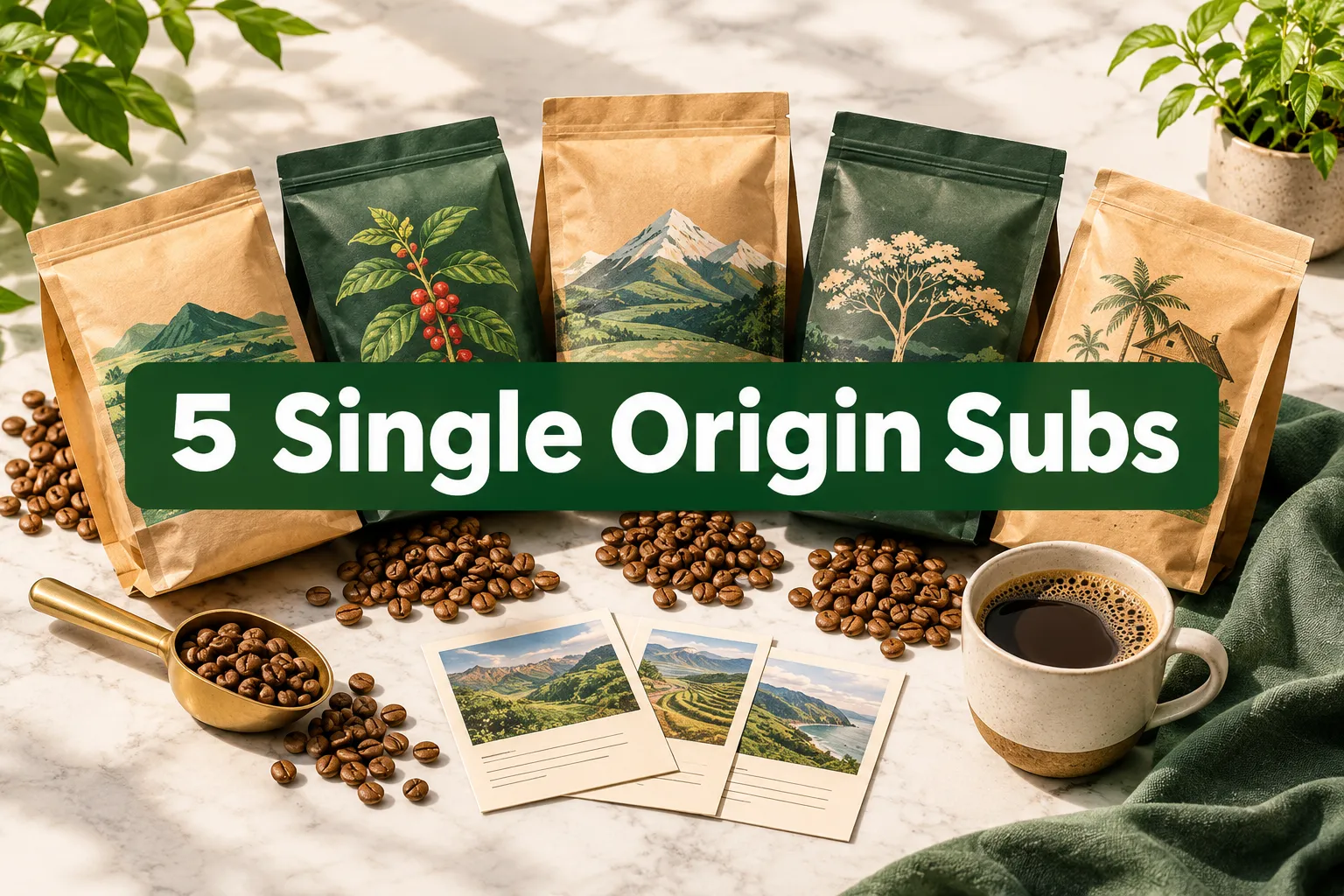
Atlas builds the whole product around geography. Each shipment arrives with origin information, tasting notes from the roaster, and a postcard from the growing country. CoffeeGuideBook names Atlas the leading option for single origin explorers . At the time of writing, Atlas advertises the first bag free for new subscribers .
The signup now asks more than it used to: whole bean or ground, grind type, regular or decaf, roast range, flavor profile, and shipment size . You still do not pick the specific country, which is the point.
Drawback: country-level sourcing means you may not get farm-level traceability on every lot. If you want named producers and lot numbers, this is not the plan. Alternative: read our full breakdown of the Atlas Coffee Club subscription before signing up.
2. Trade Coffee: best overall personalization
Price per shipment: varies by the roaster and bag you are matched with; most standard 12 ounce specialty bags on US marketplaces sit in the high teens to mid twenties. Check the current price at signup. Price per ounce: roughly $1.40 to $2.00 for a 12 ounce bag at those levels. Delivery frequency: adjustable, commonly weekly through monthly. Roast range: light through dark, set by your quiz answers and refined by ratings. Who it suits: people who know roughly what they like and want the service to get sharper over time.
CoffeeGuideBook's September 6, 2026 comparison picks Trade as its best overall US service, citing the taste-and-brewing quiz, a network of more than 55 specialty roasters, and post-delivery feedback that improves later matches . You rate the bag, the algorithm adjusts, and the next match should land closer.
That feedback loop is the real product. A single origin coffee subscription that learns beats one that guesses, provided you actually rate the coffee.
Drawback: matching across dozens of roasters means roast style varies between shipments, which can feel inconsistent if you brew the same recipe every day. Alternative: see our notes on the Trade Coffee subscription.
3. MistoBox: best for budget control
Price per shipment: you set a per-bag budget band, and the service matches roasters within it. Standard bags are 12 ounces. Price per ounce: depends entirely on the band you pick, typically between about $1.30 and $2.50 per ounce in the specialty market. Delivery frequency: adjustable, with easy skips. Roast range: full range, set by your preference sliders. Who it suits: people who want specialty coffee but refuse to be surprised by the bill.
MistoBox sits alongside Trade in the curation-versus-control split. Both let customers specify roast, flavor, and brew method, and MistoBox adds budget as a filter . If you want a single origin coffee subscription that stays under a set per-bag ceiling, that control is the differentiator.
Drawback: a lower budget band narrows the roaster pool, so the rarest micro-lots will stay out of reach. Alternative: our overview of the MistoBox coffee subscription covers the curator system in more detail.
4. Onyx Coffee Lab: best single-roaster consistency
Price per shipment: approximately $18 to $22 per bag as reported . Price per ounce: roughly $1.50 to $1.83 for a 12 ounce bag at that range. Delivery frequency: adjustable recurring schedule. Roast range: drip, espresso, and omni roast tracks . Who it suits: drinkers who have found a roasting style they like and want fewer variables.
Single-roaster plans trade breadth for coherence. Onyx roasts in one house style, so when a shipment tastes different, it is the coffee that changed, not the roaster's philosophy. That makes dialling in a grinder far less frustrating. CoffeeGuideBook recommends single-roaster plans specifically for consistency and predictable quality .
Verve is the close comparison at a reported $17 to $21 per bag .
Drawback: less origin variety than a marketplace, and you are exposed to one buyer's taste. Alternative: compare with the Onyx Coffee Lab subscription page, or look at Intelligentsia for a different house style.
5. Fellow Drops: best for people who hate recurring charges
Price per shipment: reported at roughly $17 to $34 per bag, with shipping varying by roaster . Price per ounce: about $1.42 to $2.83 for a 12 ounce bag across that range. Delivery frequency: opt-in weekly. Fellow texts the selection, you have about 12 hours to respond, and ignoring it skips the week . Roast range: whatever that week's guest roaster sent, usually light to medium specialty. Who it suits: people who want limited releases and zero automatic billing.
Fellow Drops is the odd one out, and deliberately so. Orders are generally processed Wednesday and shipped Thursday or Friday, arriving in about three to five business days . You are never charged for a week you skipped, which is a real advantage if your bean cupboard tends to overflow.
Drawback: the 12 hour response window is unforgiving, pricing swings widely, and you cannot plan your coffee budget precisely. It is a discovery feed, not a staple supply.
How much does a single origin coffee subscription cost
Expect roughly $17 to $24 per 12 ounce bag for mainstream specialty plans, which works out to about $1.40 to $2.00 per ounce before shipping. Atlas's official page listed $20 for 12 ounces on November 5, 2026, with a 24 ounce double bag at $34 bringing the per-ounce cost down to about $1.42 .
| Service | Standard shipment | Approx. price per ounce | Price basis |
|---|---|---|---|
| Atlas Coffee Club | $20 / 12 oz | ~$1.67 | Official page, checked Nov 5, 2026 |
| Atlas (double bag) | $34 / 24 oz | ~$1.42 | Official page, checked Nov 5, 2026 |
| Onyx Coffee Lab | ~$18 to $22 / bag | ~$1.50 to $1.83 | Reported range |
| Verve (comparison) | ~$17 to $21 / bag | ~$1.42 to $1.75 | Reported range |
| Fellow Drops | ~$17 to $34 / bag | ~$1.42 to $2.83 | Reported range |
Three cost levers actually move your monthly total:
- Bag size. Buying 24 ounces instead of 12 cut Atlas's per-ounce price by roughly 15 percent on the listed November 2026 prices .
- Frequency. Every four weeks instead of every two halves your spend and, for most households, still beats stale beans.
- Add-ons. Atlas's "Bright & Expressive" flavor profile carries a reported $2 per bag surcharge . Small, but it compounds across a year.
Common mistake: signing up for a two-week cadence because the sample pack arrives fast, then discovering you brew four cups a week. A 12 ounce bag makes roughly 20 to 24 cups at a 1:16 brew ratio with 18 grams per cup.
Is a coffee subscription worth the money
It is worth it if you drink your coffee black, grind at home, and currently buy café drinks more than twice a week. It is probably not worth it if you add a lot of milk and sugar, buy pre-ground, or keep beans open on the counter for a month.
Run the simple math. A 12 ounce bag at $20 makes around 20 cups. That is about $1.00 per cup before milk. One café latte in most US cities costs several times that. The subscription pays for itself quickly if it replaces café visits rather than sitting alongside them.
The honest counter-argument: a subscription only beats your local shelf if the coffee is fresher and better chosen. If your neighborhood roaster stamps roast dates and sells bags at $17, you may already be winning. Our comparison of coffee subscription services looks at the broader field beyond single origin plans.
How do I know if my coffee beans are actually fresh
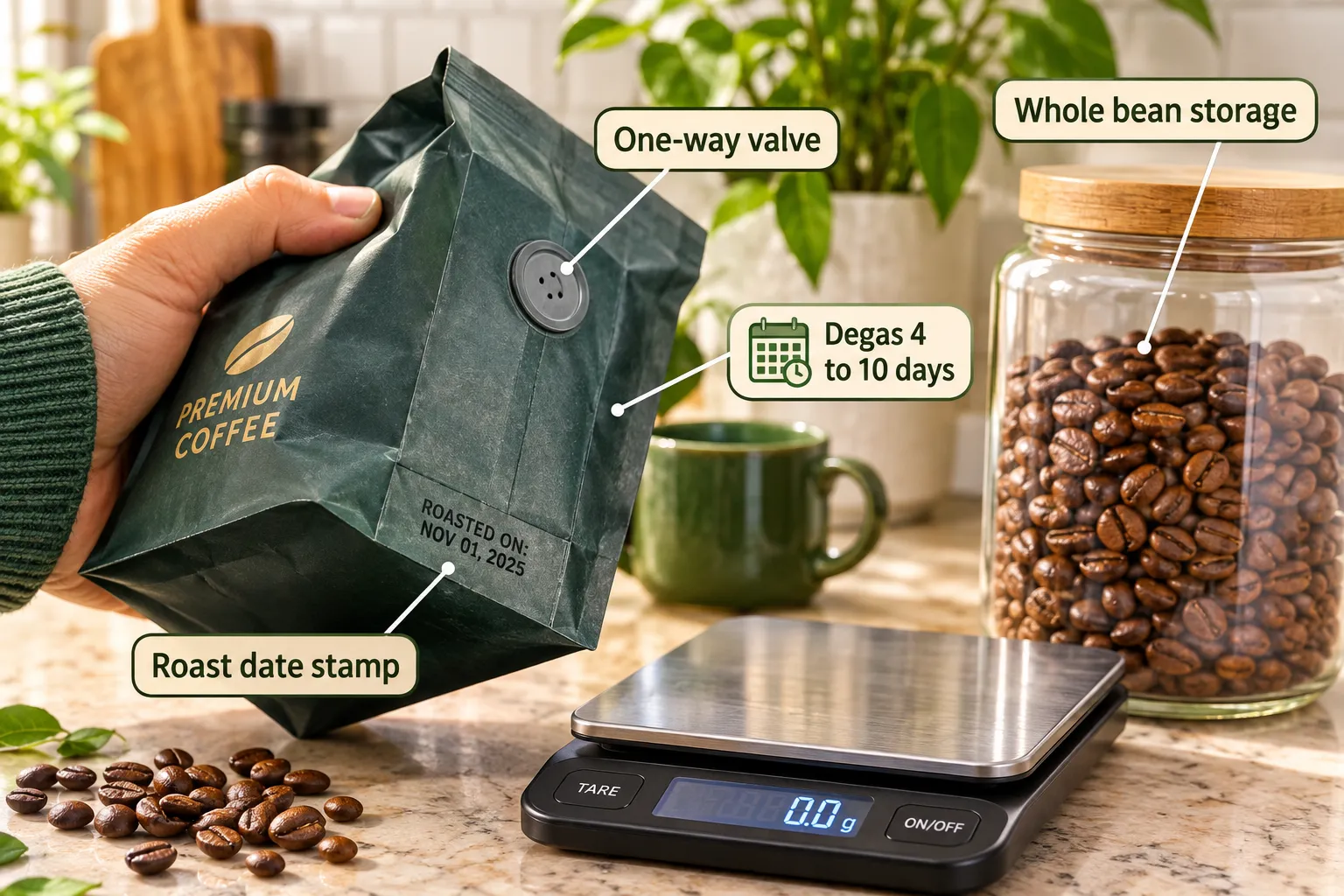
Look for a printed roast date, not a best-by date, and judge the service by how fast it ships after roasting. CoffeeGuideBook treats 48 to 72 hours from roasting to shipment as a useful baseline for premium subscriptions .
Three checks when a box arrives:
- Roast date printed on the bag. No roast date means you cannot assess freshness. A best-by date 12 months out tells you nothing useful.
- One-way valve. Fresh roasted coffee releases carbon dioxide. A valve lets gas out without letting oxygen in. Press the bag gently near the valve; fresh coffee smells sharp and sweet.
- Bloom behavior. Pour a little hot water on fresh grounds in a pour over and the bed should swell and foam for 30 to 45 seconds. A flat bloom with no rise points to older beans.
Edge case worth knowing: fast shipping is not the same as ready to brew. Light-roasted coffee often benefits from several days of degassing before it tastes its best . If a bag arrives three days off roast and the cup tastes thin and gassy, wait four more days and brew the same recipe again.
Storage: keep beans whole, in the original valve bag, sealed, at room temperature, away from light. Grind immediately before brewing with a burr grinder. Freezing works for long-term storage, but only in airtight portions you will not repeatedly thaw.
Can you pause or cancel a coffee subscription anytime
Yes, at every major US service covered here. Atlas states on its official page that subscribers can pause, skip, or cancel , and the same self-service controls are standard across Trade, MistoBox, and single-roaster plans.
What to check before you sign up:
- The cutoff. Most services lock a shipment a few days before it processes. Skipping after the cutoff does not stop that box.
- Where the control lives. Dashboard toggle is good. Email-only cancellation is a flag.
- Prepaid terms. A prepaid three or six month plan usually cannot be cancelled mid-term for a refund, only paused.
Fellow Drops sidesteps the issue entirely. Ignore the weekly text and nothing ships, nothing is charged .
Can you choose which coffees you get, or is it random
It depends on the model you pick. The central split in this category is curation versus control: Atlas selects the coffee with limited customer choice, while Trade and MistoBox let you specify roast, flavor, brew method, and in MistoBox's case, budget .
- Curated (Atlas): you set preferences, the service picks the origin. Good for learning and for people tired of deciding.
- Matched (Trade, MistoBox): a quiz plus ratings steers each shipment toward your stated profile. You can usually swap a recommended bag before it ships.
- Single roaster (Onyx, Verve): you pick a track such as drip, espresso, or omni, then receive that roaster's rotating offerings .
- Opt-in (Fellow Drops): one offer per week, take it or leave it .
Decision rule: if the thought of a coffee you dislike ruins your week, pick a matched service and rate every bag. If you want to be surprised by a country you have never tasted, pick the curated plan.
)
What roast level should I pick for single origin beans
Pick light to medium for single origin filter coffee, because those roast levels keep the acidity and aromatics that make one origin taste different from another. Dark roasting pushes the cup toward roast character, which flattens the distinctions you paid for.
A practical mapping:
| Roast level | What tends to show | Best brew methods |
|---|---|---|
| Light | Floral, citrus, tea-like, high acidity | Pour over, filter, AeroPress |
| Medium-light | Stone fruit, caramel, balanced acidity | Pour over, drip, modern espresso |
| Medium | Cocoa, nuts, rounder body | Drip, espresso, French press |
| Medium-dark | Dark chocolate, molasses, low acidity | Espresso, milk drinks, cold brew |
| Dark | Roast, smoke, bitterness forward | Milk drinks, traditional espresso |
Light roasts need hotter water and a finer grind to extract properly. Aim near 200 to 205 F for light roasts and dial down slightly for darker ones; our guide to coffee brewing temperature explains why that few degrees matters.
Common mistake: ordering a light Ethiopian natural, brewing it at your usual grind setting, and calling it sour. Under-extraction and sourness look identical in the cup. Grind finer before you blame the beans.
What's the best single origin coffee subscription for beginners
Atlas Coffee Club is the easiest start, because it makes one decision for you each shipment and explains the origin in the box. Its listed $13 half bag at 6 ounces is also a low-commitment way to test the format before paying $20 a bag .
A beginner setup that works:
- Start with medium roast, whole bean, 12 ounces, every four weeks.
- Buy a burr grinder before you buy fancier coffee. Grind consistency changes the cup more than origin does.
- Weigh your coffee and water. Start at a 1:16 brew ratio, which is 20 grams of coffee to 320 grams of water.
- Keep notes: origin, roast date, grind setting, and what you tasted.
If you want personalization from day one instead, Trade's quiz does the sorting before the first bag ships . Either way, pair the beans with a method you will actually repeat. Our brewing methods comparison is a sensible starting point.
Single origin coffee subscription vs buying from a local roaster
Buy local if you have a roaster within driving distance who prints roast dates and rotates origins. Subscribe if you do not, or if you want access to roasters outside your region.
| Factor | Subscription | Local roaster |
|---|---|---|
| Freshness | Strong, with 48 to 72 hour roast-to-ship targets at premium services | Often strongest, no transit time |
| Variety | Very high, especially multi-roaster marketplaces | Limited to one buyer's sourcing |
| Price per ounce | Shipping is usually bundled into the bag price | Often cheaper in person |
| Convenience | Arrives automatically | Requires a trip |
| Advice | Quiz and ratings | A human who can taste with you |
A reasonable hybrid: keep a local bag for daily drinking and run a single origin coffee subscription at a four week cadence for discovery. November 2026 comparisons increasingly describe these services as discovery platforms built around rotating origins, limited releases, and independent roasters rather than simple replenishment .
What's the best single origin coffee for making espresso
For single origin espresso, start with a medium or medium-light washed coffee from Brazil, Colombia, or Guatemala. Those origins tend to carry enough sweetness and body to survive nine bars of pressure without turning sharp.
Why single origins are harder as espresso: espresso concentrates everything, including acidity. A bright washed Ethiopian can taste like lemon juice in a 1:2 ratio shot. Natural processed coffees can read boozy and overwhelming.
Practical espresso notes:
- Choose a roaster's espresso track where offered. Onyx separates drip, espresso, and omni roasts for exactly this reason .
- Let the bag rest. Espresso often peaks 7 to 14 days after roast, later than filter coffee.
- Pull longer ratios for light roasts, around 1:2.5 or 1:3, to reduce harshness.
- For milk drinks, a medium or medium-dark single origin behaves far better than a bright light roast.
Looking at espresso-leaning roasters? Our review of the George Howell coffee subscription covers a filter-forward alternative worth comparing.
How often do coffee subscriptions deliver, and how many ounces
Standard cadences are every one, two, or four weeks, and the standard bag is 12 ounces. Atlas offers two or four week deliveries with 6, 12, and 24 ounce options . Fellow Drops runs weekly by text, with no automatic shipment .
Match cadence to consumption:
- 2 to 4 cups a week: 12 ounces every four weeks, or Atlas's 6 ounce half bag.
- 1 cup a day: 12 ounces every two to three weeks.
- 2 cups a day or a two-person household: 24 ounces every two to four weeks, which also gives the best price per ounce .
Edge case: if you brew espresso, you will burn through beans faster than a filter drinker because dialling in a new bag costs several shots. Add a few ounces to your estimate.
What to watch out for before you subscribe
Five things that cost subscribers money or flavor.
1. Skip cutoffs. A skip after the processing cutoff does not stop the box. Find the cutoff before your first holiday.
2. Shipping that is not included. Fellow Drops shipping varies by roaster, which widens the real cost of a bag beyond its listed price .
3. Best-by dates masquerading as freshness. A date six months out tells you when the bag stops being sellable, not when the coffee was roasted.
4. Flavor profile surcharges. Atlas's "Bright & Expressive" profile carries a reported $2 per bag surcharge . Not a scandal, just worth knowing.
5. Promotional first bags. Atlas's advertised first bag free offer applies to the first shipment . Price the second and third shipment, which is what you will actually pay all year.
6. Vague origin claims. If the listing names only a country, treat it as a country lot. Producer, farm, variety, altitude, and processing method are the details that make traceability real .
Who should pick which service
- You want a new country every month and no decisions: Atlas Coffee Club .
- You want the service to learn your taste across many roasters: Trade Coffee .
- You want specialty coffee inside a fixed per-bag budget: MistoBox .
- You want one roasting style, consistent quality, espresso-ready options: Onyx Coffee Lab at a reported $18 to $22 per bag, or Verve at about $17 to $21 .
- You want limited releases without a recurring charge: Fellow Drops, if you can answer a text within 12 hours .
If you prefer a single roaster with a filter-forward reputation, the Olympia Coffee subscription is another option worth a look.
Atlas figures were taken from the company’s official subscription page on November 5, 2026. Onyx, Verve, and Fellow Drops figures are reported ranges from the cited third-party reviews. Subscription pricing changes often. Check the current price on the service’s own page before subscribing.
Subscription cost per cup
Enter your plan to see cost per ounce, cost per cup, and yearly spend.
FAQ
Conclusion: the verdict and your next step
Trade Coffee is the best single origin coffee subscription for most US drinkers because its quiz and ratings loop narrow more than 55 roasters down to coffees you are likely to finish . Atlas Coffee Club wins for country-by-country discovery at $20 for 12 ounces as listed on November 5, 2026, with a first bag free promotion for new subscribers . Onyx suits people who want one roasting style done consistently, and Fellow Drops suits people who want limited releases without a recurring charge .
Your next step is small and concrete: before you subscribe to anything, buy a 12 ounce bag of a medium washed single origin, weigh 20 grams of coffee to 320 grams of water, and write down the roast date and what you tasted. That one note tells you which of these five services you actually need.
Better Coffee Starts With Better Answers.