Coffee Brewing Temperature: Why 195°F to 205°F Keeps Showing Up
Quick answer
The coffee brewing temperature that specialty coffee groups recommend is 195°F to 205°F (about 90°C to 96°C) at the point where water touches the grounds. That range extracts enough sweetness and acidity from the coffee without pulling out the harsh, bitter compounds that show up when water runs too hot. Most home brewers should aim for 200°F as a starting point, then adjust based on the roast and the method.
Key takeaways
- The Specialty Coffee Association's Golden Cup standard sets ideal coffee brewing temperature at roughly 90°C to 96°C (195°F to 205°F), with 200°F as a common default.
- Water below 195°F under-extracts coffee, leaving it sour and thin. Water above 205°F over-extracts it, pulling out bitter compounds.
- Pour-over generally wants water closer to 200-205°F because heat drops fast during a slow pour. French press can use 195-200°F since the grounds sit in water longer.
- Espresso machines run slightly cooler water, often 88-93°C (190-199°F), because pressure and short contact time change the extraction math.
- Roast level shifts the target: light roasts want hotter water (92-96°C), dark roasts want cooler water (85-88°C) to avoid tasting scorched.
- Cold brew skips heat entirely, steeping in room temperature or refrigerated water for 12 to 24 hours instead of relying on thermal energy.
- SCAA brewing standards require certified home machines to reach at least 92°C within the first minute of brewing and stay under 96°C throughout the cycle.
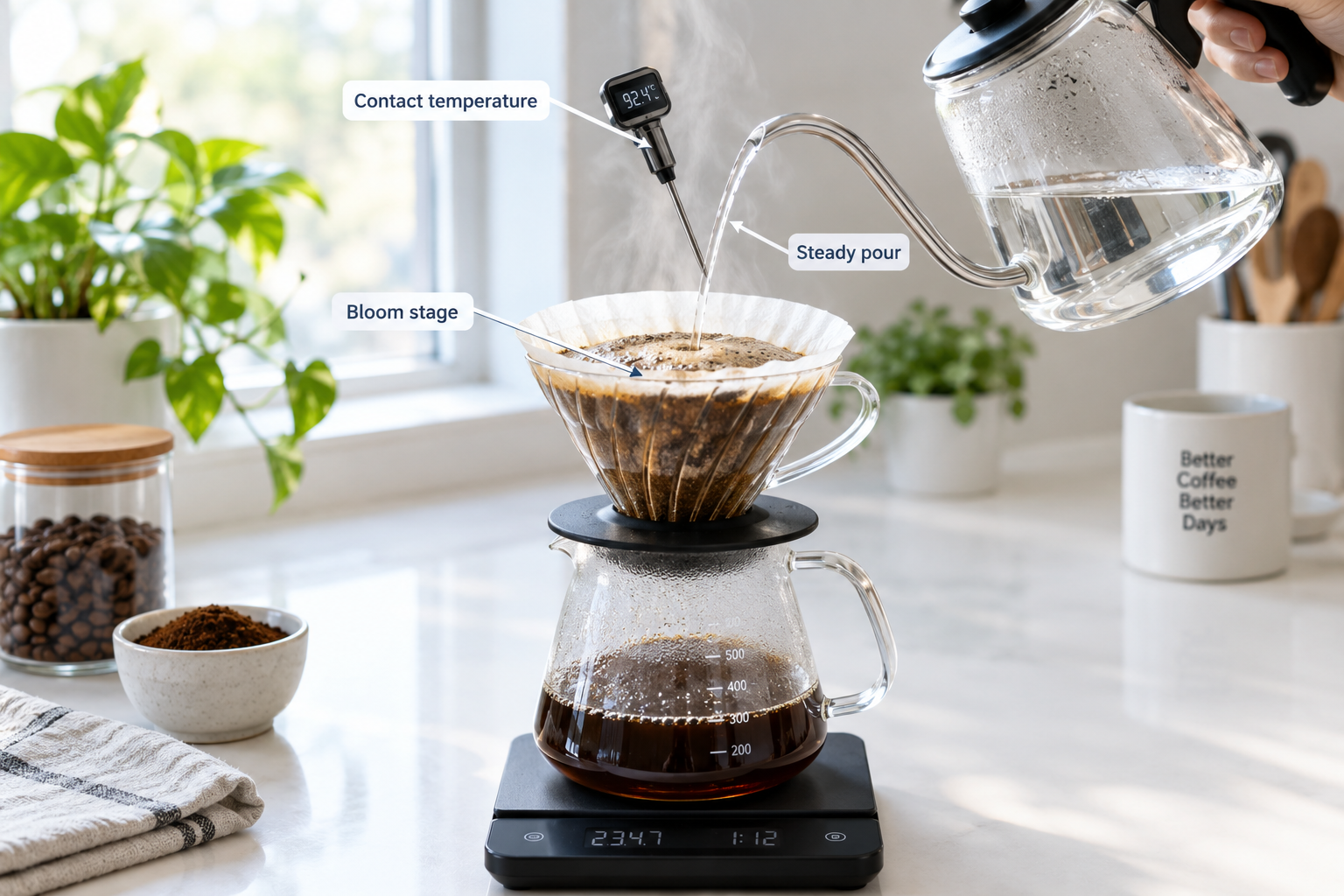
- You do not need a thermometer to get close: water that has boiled and rested for 30 to 45 seconds off the heat lands right in the target window.
What is the ideal coffee brewing temperature
The ideal coffee brewing temperature sits between 195°F and 205°F, or roughly 90°C to 96°C, measured at the moment water contacts the coffee grounds. This is not a rounded guess. It is the water temperature for coffee that consistently produces the extraction levels the Specialty Coffee Association defined in its Golden Cup standard: total dissolved solids around 1.15 to 1.35 percent and an extraction yield of 18 to 22 percent.
Those numbers describe how much soluble material moves from the ground coffee into your cup. Extraction below that yield tastes sour and hollow. Extraction above it tastes bitter and flat. Water temperature is one of the biggest levers controlling where you land, alongside grind size and brew ratio (the weight of coffee compared to the weight of water). If you want the full picture on how grind size interacts with these numbers, our top ways to grind coffee beans for a perfect brew guide breaks down particle size and surface area in detail.
Decision rule: if you brew the same coffee two different ways and one tastes flat while the other tastes bright and balanced, check your water temperature before you blame the beans.
Why does 200°F keep showing up as the best temperature for coffee
Two hundred degrees Fahrenheit sits almost exactly in the middle of the 195-205°F range, which is why it gets quoted as a single number when writers want a simple answer. It is a starting point, not a rule carved into the machine.
Coffee extraction runs on chemistry, not tradition. Hot water dissolves compounds faster than cool water. At 200°F, water carries enough energy to pull sugars, acids, and aromatic oils out of ground coffee at a workable speed, generally two to four minutes for pour-over and drip methods. Push much hotter and you start dissolving larger, harsher molecules that taste bitter. Drop much cooler and extraction slows down so much that the brew finishes sour and weak before enough of the good compounds come out.
Treat 200°F as a default, not a promise. Recent brewing guidance is explicit that the 195-205°F window is a starting range, and brewers should move warmer or cooler depending on grind size, coffee density, and their own taste goals. A rigid 200°F rule ignores that a coarsely ground dark roast and a finely ground light roast do not behave the same way in the same water.
How does water temperature affect coffee taste
Water temperature changes coffee taste by controlling extraction speed, which determines which flavor compounds end up in your cup and in what proportion. Hotter water pulls flavor out faster and reaches deeper into the bean's structure. Cooler water is more selective.
Here is the practical breakdown:
- Sourness comes from underdeveloped acids that need heat and time to break down further. Cooler water leaves more of this behind.
- Sweetness peaks in the middle of the extraction curve, right around the range the coffee brewing temperature standard targets.
- Bitterness comes from larger, harder-to-dissolve compounds that only release in quantity once water gets hot enough, generally above 205°F.
- Body and mouthfeel thicken slightly with hotter water because more solids and oils make it into the cup.
This is why a single coffee can taste sour at 190°F, balanced at 200°F, and harsh at 210°F, using the exact same beans, grind, and brew time. The water temperature for coffee is doing the sorting.
What happens if you brew coffee with water that's too hot or too cold
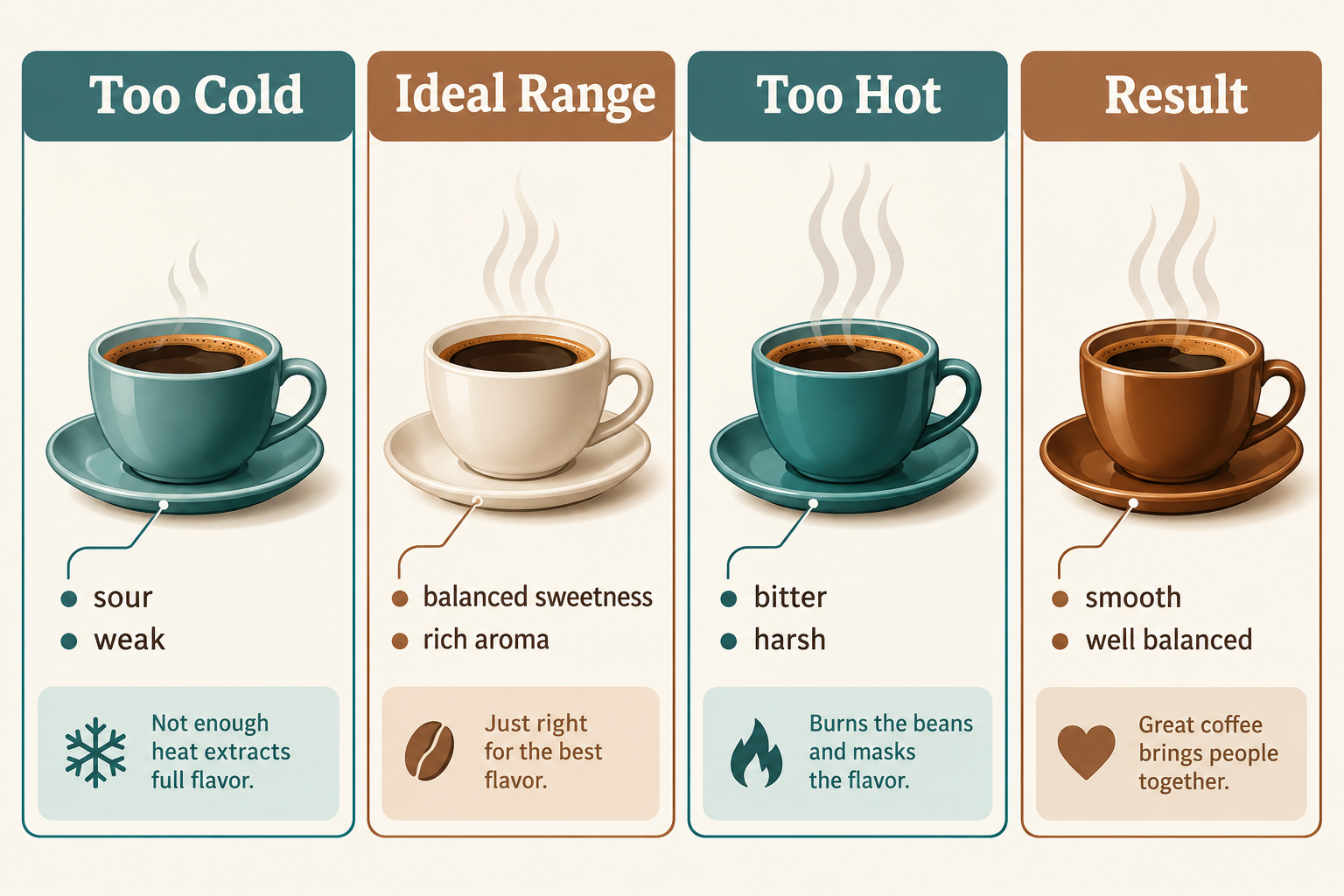
Water above 205°F over-extracts coffee, pulling bitter and astringent compounds into the cup and often adding a burnt or papery edge to the finish. Water below 195°F under-extracts it, leaving flavors thin, sour, and underdeveloped.
Too hot
Boiling water, 212°F straight off the stove, is the most common mistake home brewers make. It rushes extraction, grabs bitter compounds early, and can also scorch delicate light roasts that already carry bright acidity you do not want amplified into sharpness. Fine grinds are especially vulnerable because the extra surface area speeds everything up.
Too cold
Water that has cooled too long, or a kettle set below 195°F on purpose, slows extraction to the point where sugars and acids never fully develop. The result tastes sour, watery, and oddly salty on the finish, since salt-forward flavor notes become more noticeable when sweetness is missing. Coarse grinds in cold water are the worst combination, since coarse particles already extract slowly.
Common mistake: blaming the beans for a sour or bitter cup when the actual problem is a kettle that never got measured. Check the water before you switch bags.
Does coffee brewing temperature matter for different coffee types
Yes. Coffee brewing temperature interacts with roast level, grind size, and brew method, so the same 195-205°F window still needs small adjustments depending on what is in your cup. Roast level in particular shifts the target because density and sugar development change as beans darken.
| Roast level | Suggested temperature | Why |
|---|---|---|
| Light roast | 92-96°C (198-205°F) | Denser bean structure needs more heat to extract fully |
| Medium roast | 90-93°C (194-199°F) | Balanced sugars extract well in the middle of the range |
| Medium-dark roast | 88-91°C (190-196°F) | Lower density releases flavor faster, less heat needed |
| Dark roast | 85-88°C (185-190°F) | Prevents scorched, ashy notes from already-developed sugars |
This is the coffee brewing temperature chart worth taping inside a cabinet if you rotate between light and dark roasts often. If you are still deciding which roast fits your taste, our complete guide to different types of coffee beans covers how roast level changes flavor before temperature even enters the picture.
French press vs pour over: how brewing temperature changes
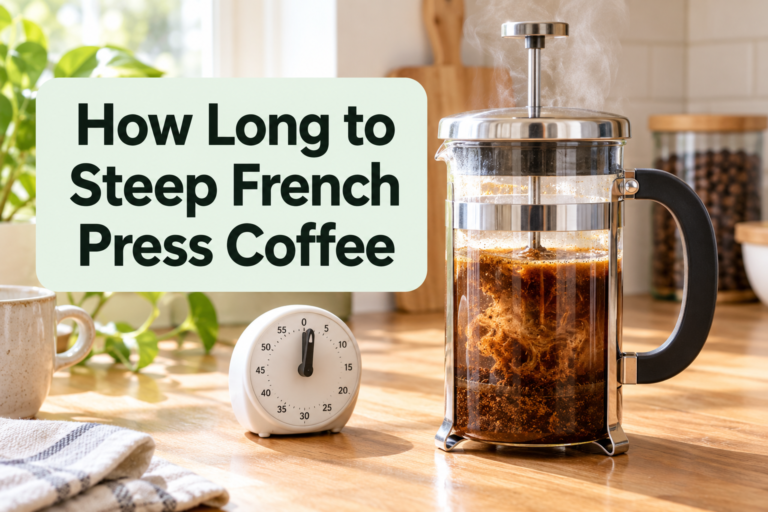
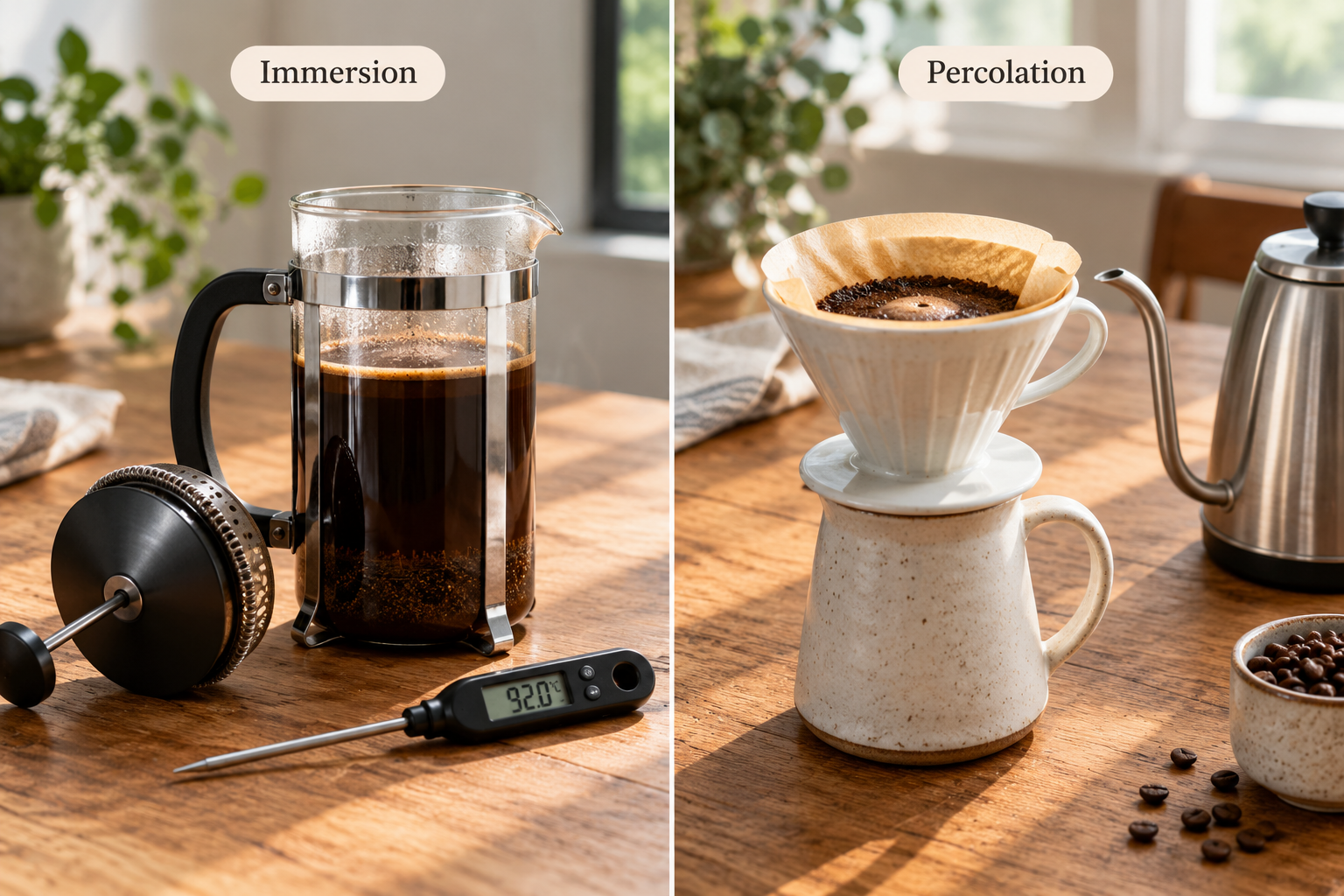
French press generally uses slightly cooler water than pour-over because the grounds sit fully submerged for four minutes instead of passing through in a quick stream. A practical French press water temperature is 195-200°F, while pour-over benefits from 200-205°F.
The difference comes down to contact time and heat loss. Pour-over is a percolation method: water passes through the grounds once, briefly, so it needs to start hotter to finish extraction before gravity pulls it through the filter. Immersion methods like French press keep grounds and water together the whole time, so slightly cooler water still has plenty of opportunity to extract properly.
Quick example: if you pour 205°F water into a French press and let it steep four minutes, you risk over-extraction and bitterness, since the coffee brewing temperature pour over range is a touch hot for a method that already gives extraction extra time. Drop it 5-10 degrees for French press and the same beans taste rounder.
For a side-by-side walkthrough of both techniques, see our comparison of different coffee brewing techniques for beginners.
Best coffee brewing temperature for espresso vs drip coffee
Espresso machines typically run slightly cooler water than drip brewers, often 88-93°C (190-199°F), because pressure and a 25-30 second shot time change how fast extraction happens. Drip and pour-over methods stay closer to the standard 195-205°F band since they rely on gravity and longer contact time instead of pressure.
Espresso pushes hot water through finely ground, tightly packed coffee at roughly 9 bars of pressure. That pressure alone accelerates extraction, so the water does not need to run as hot as it would for a slow pour-over. Machines that run espresso water above 205°F tend to produce shots that taste burnt or acrid, even with well-dialed grind and dose.
Drip machines certified under SCAA brewing standards must reach at least 92°C (about 197.6°F) within the first minute of the brew cycle and stay below 96°C (204.8°F) throughout, which effectively bakes the 195-205°F window into how many automatic machines are engineered. If you are shopping for a new drip machine, our advanced coffee brewing equipment buying guide covers which models actually hit that certification.
How to measure water temperature without a thermometer, and can you use boiling water straight from the kettle
You can estimate coffee brewing temperature without a thermometer by watching for the point just after boiling: full boil is 212°F at sea level, and water dropped off the heat for 30 to 45 seconds settles into the 195-205°F range on its own. Boiling water straight from the kettle is too hot for most brewing and should generally rest briefly first.
Here is a simple checklist:
- Bring water to a full rolling boil.
- Remove it from heat immediately.
- Let it sit for 30 seconds for a hotter target (around 205°F) or 45-60 seconds for a cooler target (around 195°F).
- Pour and brew.
At high altitude, water boils below 212°F, sometimes around 205°F itself, so the rest time can shrink or disappear entirely. In that case, target closer to 194°F to avoid over-extraction, since the water is already carrying less thermal energy than sea-level boiling water at the same visible point.
An electric kettle with temperature presets removes the guesswork entirely, and it is one of the cheapest upgrades that improves consistency more than a fancier grinder or a pricier bag of beans.
Does coffee brewing temperature affect caffeine content
Water temperature has a modest effect on caffeine extraction, but it is smaller than most people assume, and grind size and brew time matter more for how much caffeine ends up in the cup. Hotter water and longer contact both pull slightly more caffeine out of the grounds, but the difference between 195°F and 205°F brewing is not the main lever for a stronger or weaker cup.
If you want more caffeine, the bigger changes are using more coffee relative to water (brew ratio), choosing a finer grind for percolation methods, or extending steep time for immersion methods like French press or cold brew. Temperature inside the standard range plays a supporting role, not the lead one.
How long should water cool before brewing coffee, and what temperature for cold brew
Water usually needs 30 to 60 seconds off a rolling boil to cool into the 195-205°F brewing range, depending on your kettle size and the ambient room temperature. Cold brew skips this step completely and steeps at room temperature or in the refrigerator instead of relying on heat at all.
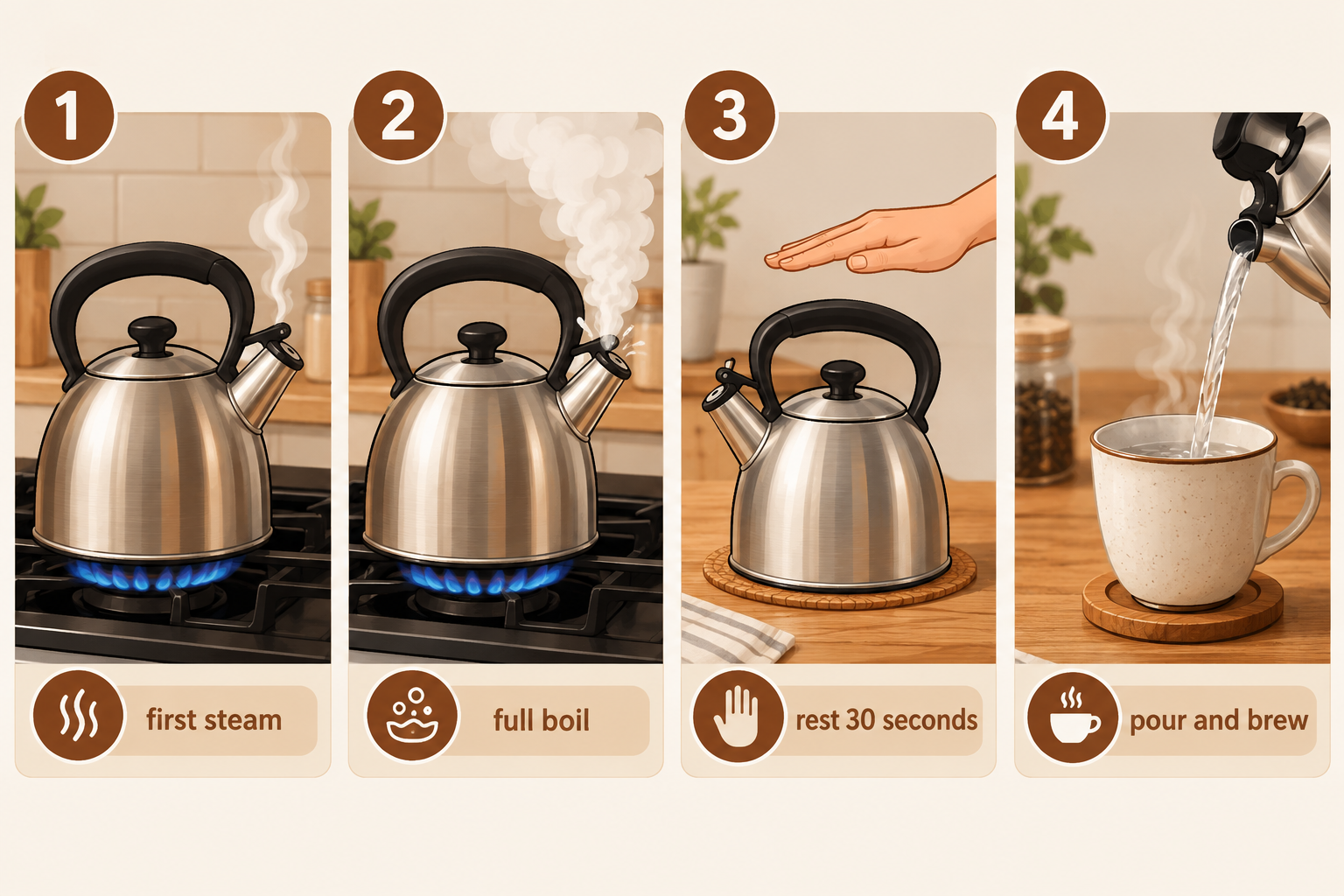
For hot brewing methods, cooling time depends on volume: a small one-cup kettle loses heat faster than a full two-liter one. A kitchen thermometer removes the guesswork, but the 30-to-60-second rule works as a reliable fallback.
Cold brew coffee uses cool or room temperature water, generally 60-75°F, steeped with coarsely ground coffee for 12 to 24 hours. Extraction happens through time instead of heat, which produces a smoother, lower-acid cup with a different flavor profile than any hot brewing method. Because there is no thermal extraction pushing out bitter compounds quickly, cold brew tolerates a much coarser grind and a longer steep without turning harsh. For a full walkthrough, our advanced cold brew coffee methods guide covers ratios and steep times in more depth, and how to make the best cold brew coffee covers the basics for a first attempt.
Do expensive coffee makers actually control temperature better
Some do, and the difference is measurable rather than cosmetic. Machines certified to SCAA brewing standards are tested to confirm they reach at least 92°C within the first minute and hold below 96°C for the full brew cycle, and that certification tends to show up in machines with better heating elements and thermal sensors, which usually cost more.
Cheaper drip machines often heat unevenly, undershoot the target temperature during the middle of the brew cycle, or overshoot at the start and taper off. That inconsistency is a real, identifiable difference, not just marketing language, and it explains why two machines at very different price points can produce noticeably different cups from the same beans.
That said, a higher price only earns its place if the machine documents its temperature performance. Look for stated SCAA certification, published brew temperature specs, or independent testing rather than assuming a premium logo guarantees consistency. Our essential guide to coffee brewing walks through what separates a genuinely engineered machine from one that just looks expensive.
FAQ
What is the ideal coffee brewing temperature in Fahrenheit and Celsius? The ideal coffee brewing temperature is 195°F to 205°F, or about 90°C to 96°C, measured where water meets the grounds. Two hundred degrees Fahrenheit (about 93°C) works as a reliable middle-ground default.
What temperature for coffee in Celsius should I use for pour-over? Pour-over generally works best around 93-96°C (200-205°F) since heat drops during a slow, exposed pour.
Is boiling water too hot for coffee? Yes, in most cases. Water straight off a full boil (212°F) sits above the 195-205°F range and tends to over-extract, producing bitter or scorched flavors. Let it rest 30 to 45 seconds first.
Does French press need hotter or cooler water than pour-over? Cooler. French press water temperature typically sits at 195-200°F, while pour-over runs slightly hotter at 200-205°F, since immersion brewing already has more contact time.
Does water temperature change how much caffeine is in my coffee? Only slightly. Grind size and brew time affect caffeine extraction more than a 10-degree temperature swing within the standard range.
What water temperature does cold brew coffee use? Cold brew uses room temperature or refrigerated water, roughly 60-75°F, and relies on a 12 to 24 hour steep instead of heat to extract flavor.
A useful next step
Coffee brewing temperature is one variable among several, alongside grind size, brew ratio, and roast date, that decide whether a cup tastes balanced or off. Start with 200°F, taste the result, and move five degrees in either direction based on what you notice: too sour means go hotter, too bitter means go cooler. If you want to work on the other variables at the same time, our best ways to perfect advanced coffee brewing guide is a solid next stop. Better Coffee Starts With Better Answers, and a kitchen thermometer is a cheap way to get more of them.
Coffee Brewing Temperature by Method
Tap a method to see its target range
Based on SCA Golden Cup guidance, 195-205F (90-96C) window.
Keep Exploring Coffee Rank IQ
- Coffee Rank IQ home: reviews, brewing guides, and coffee science
- Best Cold Brew Coffee Maker: 6 Picks for Smooth Batches at Home
- Best Manual Coffee Grinder for Pour Over, Espresso, and Travel
- Best Pour Over Coffee Maker: Drippers vs Machines Compared
- Best Coffee Scale for Pour Over and Espresso…Timer Included
References
- coffeestudies.com/brewing-science/best-water-temperature-for-coffee
- coffee-guide.jp/en/brewing/coffee-water-temperature-effect-guide
- pmc.ncbi.nlm.nih.gov/articles/PMC7536440
- beanbench.coffee/learn/brew-temperature
- www.brewedbarista.com/guides/water-temperature-coffee-science
- coffeefile.com/water-temperature-chart-for-coffee-brewing
- timeforespresso.com/golden-cup-standard
- cartographcoffee.com/blogs/news/best-water-temp-for-coffee
- dailyrisecoffee.com/blogs/news/what-are-sca-brewing-standards-and-why-do-they-matter
- www.brewcoffeehome.com/coffee-brewing-temperature