Light Roast vs Dark Roast: Caffeine, Flavor, and Acidity Compared
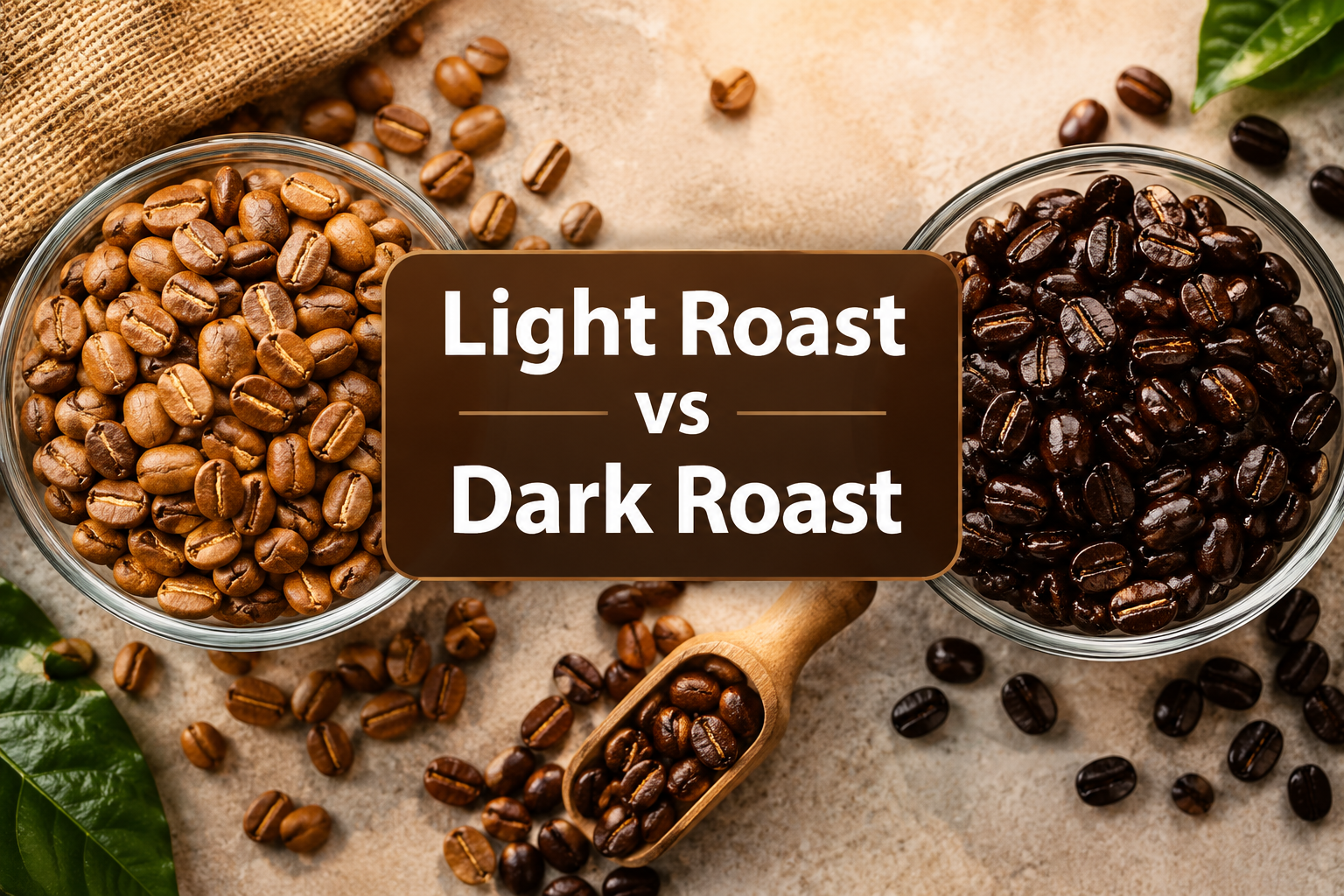
Quick answer: Light roast and dark roast coffee contain nearly the same amount of caffeine by weight, so the light roast vs dark roast caffeine content myth is mostly wrong. What actually changes is flavor and acidity: light roast tastes brighter and more acidic, showing off the bean's origin, while dark roast tastes heavier, more bitter, and gentler on stomach acid. The right choice depends on your taste, your brew method, and how your stomach handles acidity, not on which one gives you a bigger jolt.
Key takeaways
- Caffeine is roughly equal by weight. A gram of light roast and a gram of dark roast contain about the same caffeine, even though roasting changes bean density and volume.
- Scoop measuring flips the script. Because dark roast beans lose mass and expand, a scoop of dark roast can hold slightly less caffeine than the same scoop of light roast.
- Light roast is more acidic. It keeps more chlorogenic acid, giving it a sharper, tangier profile on a coffee acidity chart.
- Dark roast is smoother on the stomach for many drinkers, largely because roasting time breaks down some acid-forming compounds.
- Medium roast sits in between and remains the most popular choice with US buyers in 2026, though light roast is gaining share.
- Dark roast dominates cold brew and French press territory less than people assume; light roast actually shines in both when the grind and steep time are right.
- Espresso can be pulled from either roast, but dark roast is more forgiving for beginners because it masks small extraction mistakes.
- Price runs higher for specialty light roast, since it demands more careful sourcing and roasting precision.
Light roast vs dark roast: what's the difference?
The core difference between light roast and dark roast coffee is time and temperature inside the roaster, not the type of bean. Light roast beans come out around 350°F to 400°F internal temperature and stop before much oil reaches the surface. Dark roast beans stay in longer, often past 430°F, until the surface turns glossy and the sugars caramelize heavily.
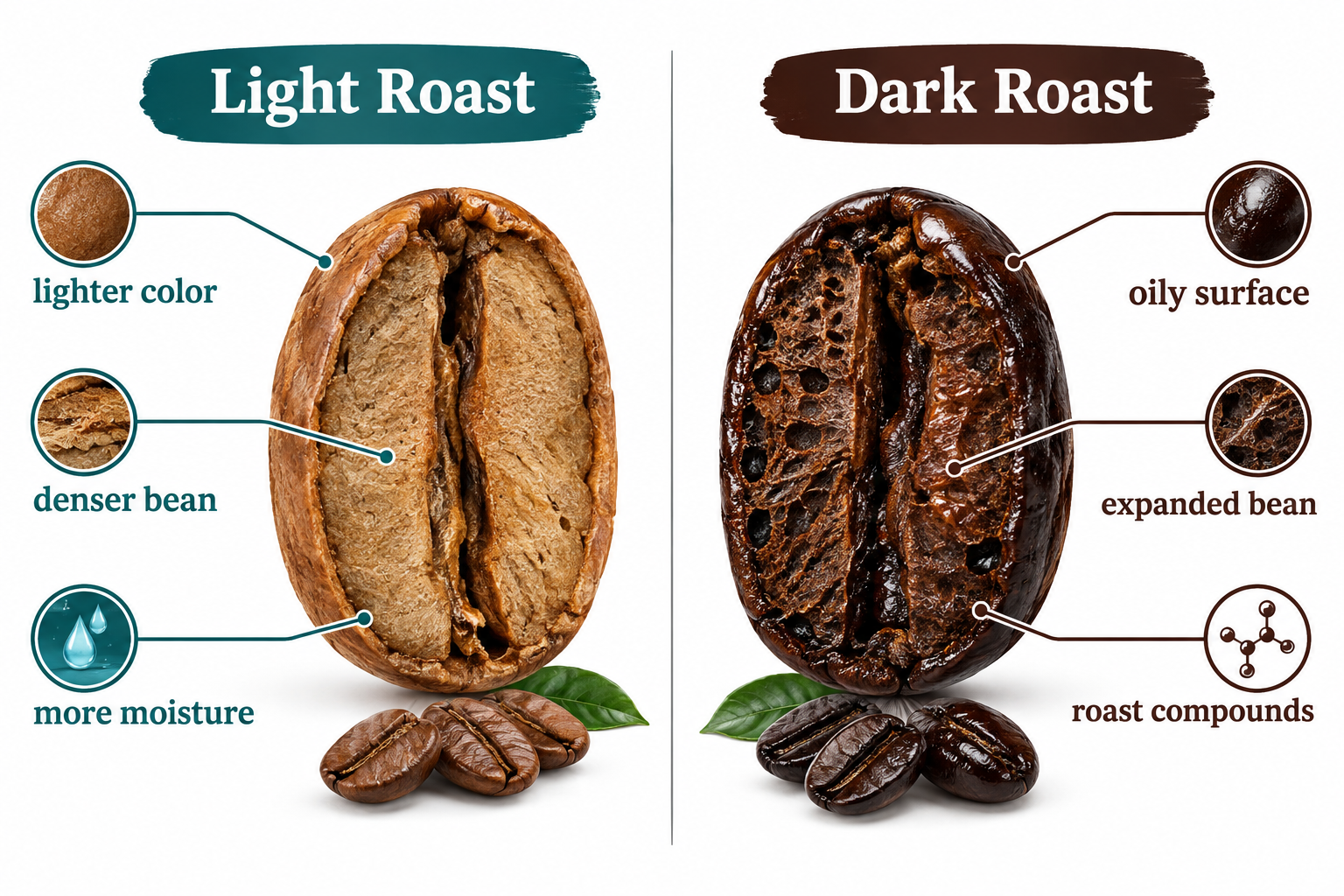
That extra time changes almost everything you taste, but it barely touches caffeine. Here's the mechanism: caffeine is a stable compound that resists heat far better than the acids and sugars around it. Chlorogenic acids, which drive brightness and tang, break down steadily as roasting continues. Sugars caramelize into bitter, smoky compounds. The bean also loses moisture and expands, which is why a dark roast bean looks bigger and weighs less than the same green bean roasted light.
Decision rule: if you want a cup that tastes like the growing region, choose light roast. If you want a cup that tastes like the roasting process itself, choose dark roast. For a full breakdown of how roasting temperature and time reshape a bean, our beginners guide to understanding different coffee roasts walks through each stage in order.
Does light roast have more caffeine than dark roast?
By weight, no. Light roast and dark roast coffee contain roughly the same amount of caffeine per gram of beans, and 2026 expert coffee guides treat the "dark roast has more caffeine" claim as an outdated myth. The light roast vs dark roast caffeine content difference only shows up when you switch how you measure your coffee.
Here's where it gets confusing for home brewers:
- By weight (grams): light roast and dark roast are essentially equal in caffeine. Roasting removes moisture and breaks down oils and acids, but caffeine barely moves.
- By volume (a scoop or tablespoon): dark roast beans are lighter and more expanded, so a scoop holds fewer beans and slightly less total caffeine than the same scoop of denser light roast beans.
- By bean count: a light roast bean and a dark roast bean started from the same green coffee weigh differently after roasting, which is the real source of most "dark roast is stronger" folklore.
Common mistake: assuming a darker cup color means more caffeine. Color comes from caramelization and roast compounds, not caffeine concentration. If you brew by scale and weigh your grounds instead of scooping, the light roast vs dark roast caffeine content gap nearly disappears. For context on how espresso and drip caffeine compare across roast and method, see how much caffeine is in a cup of coffee vs espresso.
Light roast vs dark roast flavor profile: taste descriptions compared
Light roast and dark roast taste like two different drinks made from the same crop, and the light roast vs dark roast flavor profile gap is the biggest reason people pick a side. Light roast leans fruity, floral, and tea-like. Dark roast leans toward smoke, cocoa, and bitterness.
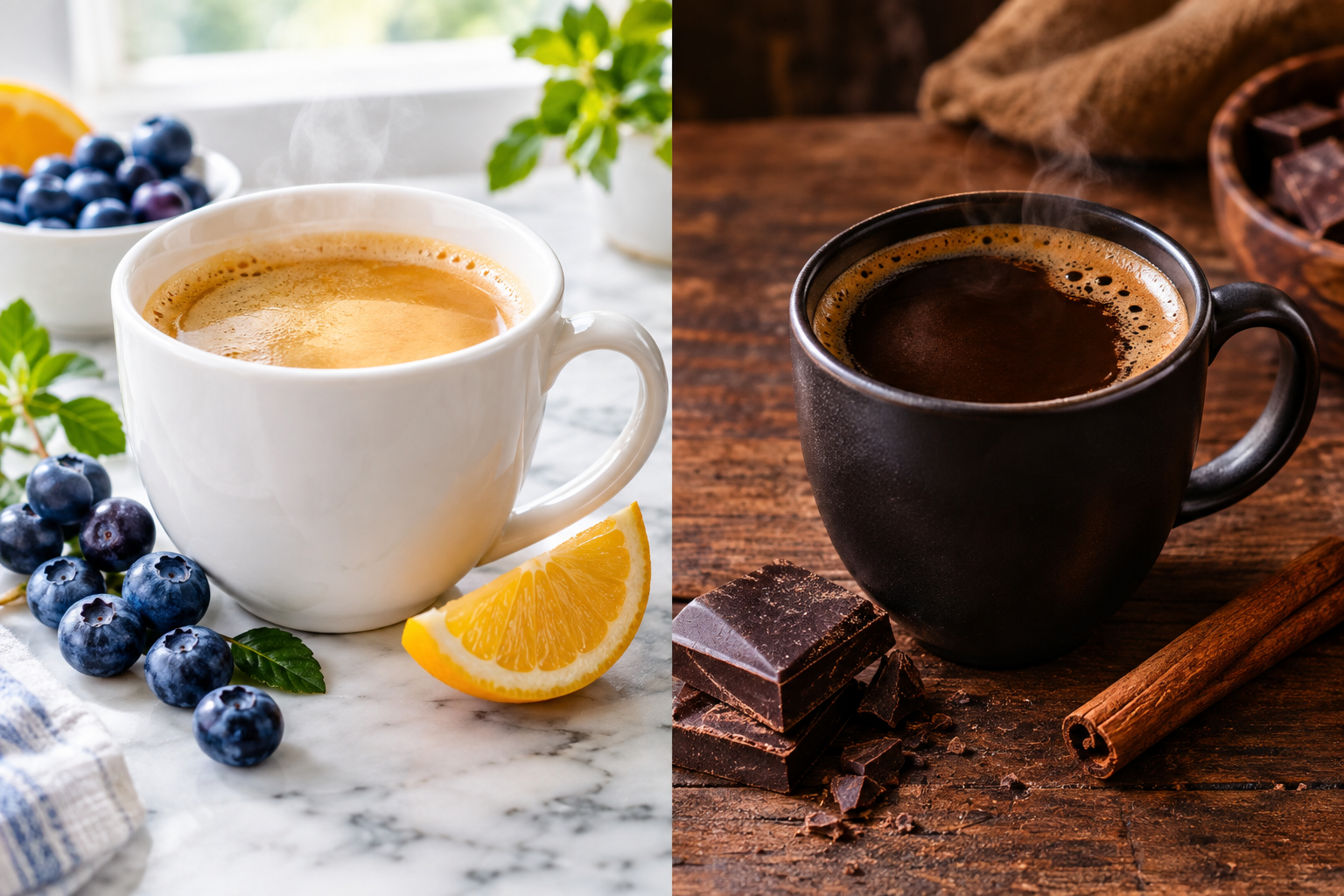
Light roast coffee taste description: roasters commonly describe light roast as showing berry, citrus, stone fruit, or floral notes with a lighter body and a crisp, tea-like finish. Because the beans spend less time caramelizing, the flavor of the growing region and the processing method (how the cherry was dried or washed before roasting) comes through clearly. A single origin Ethiopian or Kenyan light roast often tastes noticeably different cup to cup for this reason.
Dark roast coffee taste description: dark roast is usually described as bold, smoky, and heavier, with cocoa, roasted nut, or charred notes and a lower, rounder acidity. The origin character fades under roast-driven flavor, which is why many dark roasts from different countries taste more alike than their light roast counterparts.
| Trait | Light roast | Dark roast |
|---|---|---|
| Dominant taste | fruity, floral, tea-like | smoky, bittersweet, bold |
| Body | lighter, crisper | heavier, fuller |
| Origin character | strong and distinct | muted |
| Best sugar/cream match | optional, often skipped | works well with milk drinks |
Brands make this easy to test at home. Starbucks Blonde is built specifically as a light roast for drinkers who want less bitterness. Peet's built its reputation on dark, bold roasting since 1966. Stumptown and Counter Culture both roast light-to-medium single origin lots that highlight processing method and origin. Death Wish sits firmly on the dark, heavy-bodied end, and our Death Wish Coffee Co dark roast review covers what that intensity actually tastes like in the cup. For a deeper look at how tasting notes get identified in the first place, read our advanced coffee flavor profile guide.
Which has more acidity: light roast or dark roast?
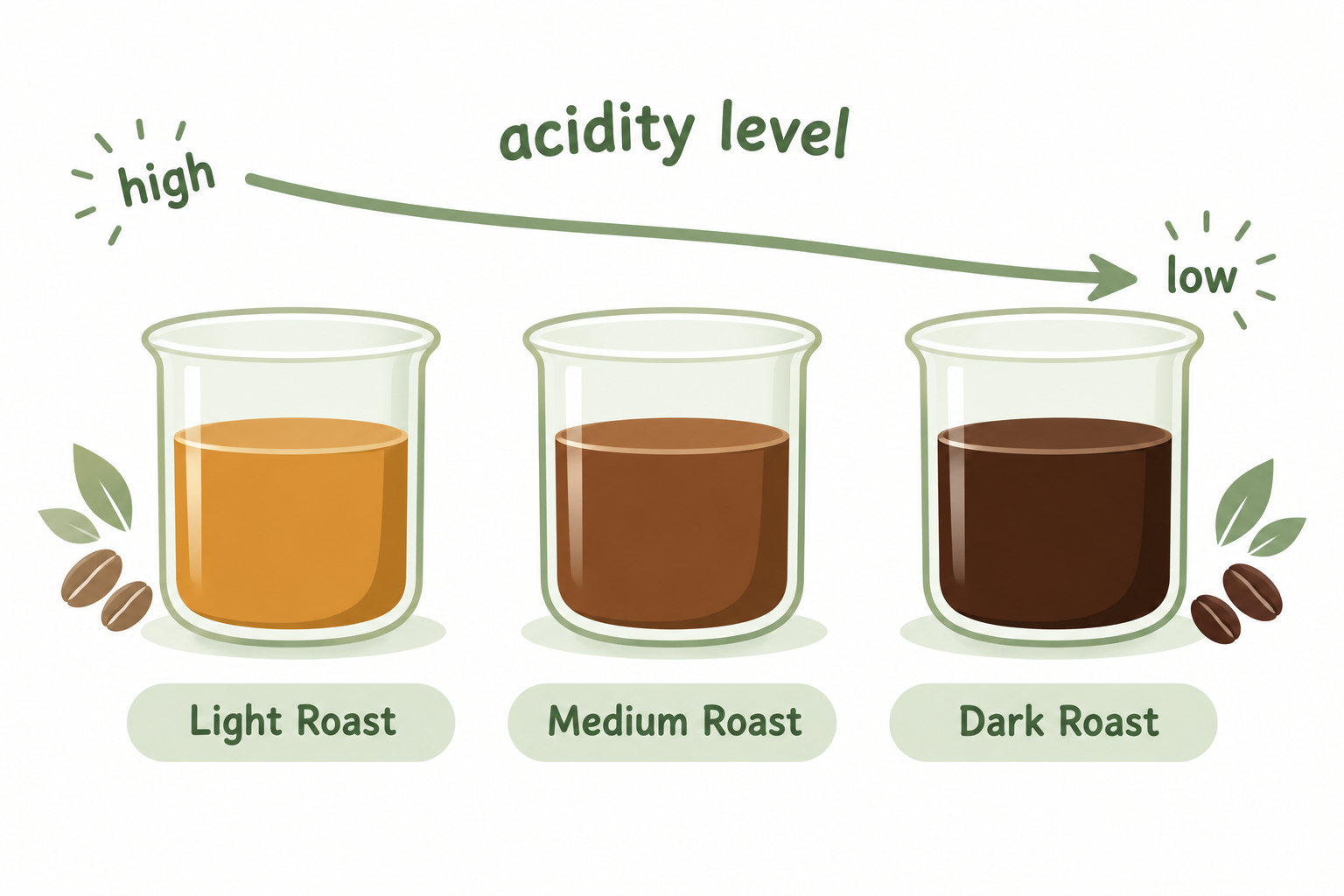
Light roast has more acidity than dark roast, and it isn't close. Longer roasting breaks down chlorogenic acids, the compounds responsible for coffee's tangy, bright sensation, so dark roast coffee is less acidic almost every time.
On a typical coffee acidity chart, light roast sits near the top with citrus fruit and green apples, medium roast lands in the middle, and dark roast drops toward the bottom, closer to dark chocolate or cocoa in perceived sharpness. This is measurable, not just a matter of taste: chlorogenic acid content drops steadily as roast time and temperature increase, which is the mechanism behind the light roast vs dark roast acidity gap.
Is dark roast coffee better for acid reflux? For many people, yes. Because dark roast has fewer acid-forming compounds, it tends to feel gentler on a sensitive stomach, and some reflux sufferers report fewer symptoms after switching. This is a reported pattern, not a guarantee, since reflux triggers vary by person and by how much coffee is consumed. If acidity bothers you, dark roast, or a low-acid labeled blend, is worth trying before giving up coffee entirely. Our guide to understanding coffee acidity for beginners covers how brew method also changes perceived acidity, since a cold brew light roast can taste less sharp than a hot-brewed one.
Edge case: cold brewing a light roast lowers its perceived acidity because cold water extracts fewer acidic compounds than hot water, even though the bean itself is unchanged. So a cold brew light roast can taste gentler than a hot dark roast, which surprises a lot of first-time cold brewers.
Light roast vs dark roast for espresso, cold brew, and french press
The short answer: dark roast is the traditional default for espresso, light roast works well in cold brew and pour over, and light roast is genuinely excellent in a french press despite old advice saying otherwise.
Light roast vs dark roast espresso: dark roast has historically dominated espresso because its bolder, caramelized flavor stands up to milk in lattes and cappuccinos, and its lower acidity is more forgiving of small timing mistakes during the shot. Light roast espresso has grown popular at specialty cafes because it produces a brighter, more complex shot, but it demands tighter control over grind size, water temperature, and shot time to avoid sourness. If you're dialing in a machine, our explainer on how much caffeine is in a single shot of espresso is a useful companion read before you experiment with roast level.
Can you use light roast for cold brew? Yes, and it's a good choice. Cold water extraction pulls out less acidity and bitterness overall, which softens light roast's natural tang into something smoother while keeping its fruit-forward character. Dark roast cold brew still works, and gives a heavier, chocolate-leaning result, but light roast cold brew is not a mistake, despite what older brewing guides claim.
Light roast coffee best for french press? Many roasters recommend medium to dark roast for french press because the immersion method already extracts a fuller body, but light roast in a french press produces a clean, tea-like cup that pour over fans tend to enjoy. The metal filter lets more natural oils through regardless of roast, so light roast benefits from the fuller mouthfeel a french press provides.
Best light roast and dark roast coffee brands to try
For light roast, look at Starbucks Blonde for an accessible grocery-store option, and Stumptown or Counter Culture for specialty single origin lots with distinct fruit and floral notes. These roasters publish tasting notes for each lot, which is useful for comparing origins side by side.
For dark roast, Peet's remains a benchmark for bold, full-bodied roasting, and Death Wish sits at the extreme end for drinkers who want maximum intensity and body. Grocery classics like Folgers and French roast blends also fall into this category for everyday budget buying. Our review of the Death Wish Coffee Co dark roast breaks down who that bag actually suits, since "extreme" marketing doesn't always match the cup.
Decision rule: if you're new to specialty coffee, start with a light roast single origin from Stumptown or Counter Culture to taste origin character clearly, then try a dark roast from Peet's to feel the contrast. That side-by-side test settles the light roast vs dark roast question for your own palate faster than reading tasting notes alone.
Light roast vs dark roast: which is healthier?
Neither roast is clearly "healthier" across the board, and the light roast vs dark roast healthier question depends on which compound you care about. Caffeine content is nearly identical, so energy and alertness barely change with roast level.
What does change:
- Antioxidant compounds like chlorogenic acid are higher in light roast, since roasting breaks them down over time.
- Acrylamide, a compound formed during roasting that has drawn research attention, has shown mixed patterns across roast levels in studies, and current research does not point to dark roast being clearly worse in typical home consumption amounts.
- Acidity-related stomach comfort tends to favor dark roast for reflux-prone drinkers, as covered above.
- Lipophilic and hydrophilic compounds (fat-soluble and water-soluble components) shift measurably between roast levels, which affects both flavor and how the coffee interacts with the body during digestion.
If your main health goal is caffeine intake control, roast level won't help you much either way; grind, brew ratio, and cup size matter more. Our breakdown of what roast of coffee is the healthiest goes deeper into the specific compounds and what current research actually supports.
Light roast vs dark roast price difference
Specialty light roast coffee tends to cost more per bag than dark roast in 2026, because light roasting demands tighter control and often uses higher-grade, more traceable green coffee. Roasters need precise timing to avoid underdeveloped, grassy-tasting beans, which raises both skill requirements and waste during production.
Dark roast can mask lower-grade beans more easily, since caramelization and bitterness cover up small defects that would stand out in a light roast. That's part of why dark roast has historically been the more affordable, mass-market default at grocery stores, while light roast has stayed more associated with specialty and single origin pricing. This gap isn't universal. Some dark roast specialty brands charge premium prices too, so price alone isn't a reliable roast indicator.
How to choose between light and dark roast
Choose light roast if you want a brighter, more complex cup that shows off where the coffee came from, and you're brewing pour over, cold brew, or a carefully dialed espresso shot. Choose dark roast if you want a bolder, heavier cup that pairs well with milk, is more forgiving to brew, and feels gentler on a sensitive stomach.
A simple way to decide:
- Start with your stomach. If acid reflux or a sensitive stomach is a concern, lean dark roast or try a lower-acid light roast in cold brew form.
- Match your brew method. Pour over and cold brew favor light roast's clarity. Milk-based espresso drinks favor dark roast's boldness.
- Think about your taste memory. If you enjoy tea, citrus, or berries, light roast will feel familiar. If you enjoy dark chocolate or toasted nuts, dark roast will feel familiar.
- Try medium roast as a bridge. Medium roast balances some acidity with some caramelized sweetness, and it remains the most purchased roast level among US coffee drinkers in 2026.
- Buy small bags first. A 12-ounce bag from two different roast levels of the same brand is a cheap, direct way to settle your own preference.
Compare roast levels side by side using the tool below before you commit to a bag.
.cg-wrap{font-family:system-ui,-apple-system,”Segoe UI”,Roboto,sans-serif;max-width:700px;margin:20px auto;background:#F5FAF8;border:1px solid #E8F2EE;border-radius:10px;padding:16px} .cg-title{color:#14231D;font-size:18px;font-weight:700;margin:0 0 10px} .cg-btns{display:flex;gap:8px;margin-bottom:12px;flex-wrap:wrap} .cg-btn{background:#fff;border:2px solid #1F6B4A;color:#1F6B4A;padding:8px 14px;border-radius:20px;font-size:14px;cursor:pointer;font-weight:600} .cg-btn.active{background:#1F6B4A;color:#fff} .cg-table{width:100%;border-collapse:collapse;background:#fff;border-radius:8px;overflow:hidden} .cg-table td{padding:10px 12px;border-bottom:1px solid #E8F2EE;color:#23372F;font-size:14px} .cg-table td:first-child{font-weight:700;color:#14231D;width:38%} .cg-highlight{background:#61BDA1;color:#14231D;font-weight:700}Compare roast levels at a glance
FAQ
Does light roast or dark roast have more caffeine?
They contain roughly the same caffeine by weight. Light roast can have slightly more caffeine by volume, since dark roast beans are lighter and more expanded after longer roasting.
Is light roast or dark roast more acidic?
Light roast is more acidic. Roasting breaks down chlorogenic acid over time, so dark roast ends up smoother and lower in acidity.
Which roast is better for an upset stomach?
Dark roast is generally gentler on a sensitive stomach because it has fewer acid-forming compounds, which is also why many people ask if dark roast coffee is better for acid reflux specifically.
What's the best roast for espresso?
Dark roast is the traditional espresso choice for its bold, forgiving flavor. Light roast espresso is possible and increasingly popular at specialty cafes, but it requires tighter dialing of grind size and shot time.
Can I use light roast coffee for cold brew?
Yes. Cold extraction softens light roast's natural acidity while keeping its fruit and floral character, making it a strong cold brew option, not just a hot brew choice.
Why does dark roast coffee cost less than light roast?
Dark roast can mask lower-grade beans through caramelization, and light roast demands more precise roasting and higher-grade green coffee, which is part of why specialty light roast often carries a higher price.
Conclusion
The light roast vs dark roast decision comes down to flavor and acidity, not caffeine. Both roasts deliver about the same energy per gram, so pick based on what you actually want in the cup: brightness and origin character from light roast, or boldness and a gentler stomach feel from dark roast. Medium roast remains a smart middle ground if you're still deciding.
The next useful step is practical: buy two 12-ounce bags this week, one light and one dark from the same roaster, and brew them the same way. That single comparison will tell you more about your own preference than any chart. If you want to push further, our guide on roasting coffee at home for beginners shows how to control roast level yourself instead of guessing from a bag label.
Better coffee starts with better answers, and now you have the ones that actually matter for your next bag.
Keep Exploring Coffee Rank IQ
- Coffee Rank IQ home: reviews, brewing guides, and coffee science
- Best Decaf Coffee That Still Tastes Like Coffee
- Best Decaf K Cups That Taste Like Real Coffee
- Does Decaf Coffee Have Caffeine? The Real Milligrams
- Best Dark Roast Coffee That Tastes Bold, Not Burnt
References
- www.berry.edu/articles/news/2025/coffee-roasts
- impressivemagazine.com/coffee-trends-2026
- www.utupub.fi/bitstream/handle/10024/186936/ollennu-chuasam-et-al-2025-effect-of-the-roast-level-on-lipophilic-and-hydrophilic-compounds-in-pot-and-filter-coffee.pdf?sequence=1&isAllowed=y
- www.groucommunity.com/post/light-roast-vs-dark-roast
- www.mordorintelligence.com/industry-reports/roasted-coffee-market
- www.coffeester.com/guides/comparisons/light-vs-dark-roast
- balancejournal.co/food-drink/light-roast-vs-dark-roast
- pmc.ncbi.nlm.nih.gov/articles/PMC12933743
- mycoffeeexplorer.com/coffee-price-index
- www.coffeegearhub.com/coffee-roast-levels