Does Decaf Coffee Have Caffeine? The Real Milligrams
Quick answer
Yes. Does decaf coffee have caffeine? Almost always, in small amounts. A standard 8-ounce cup of decaf typically contains somewhere between 2 and 15 milligrams of caffeine, compared with roughly 95 milligrams in a regular brewed cup. Decaffeination removes about 97% or more of the original caffeine, not all of it, so "decaf" means low caffeine rather than zero caffeine.
Key takeaways
- Does decaf coffee have caffeine? Yes, usually 2 to 15 mg per 8-ounce cup, versus about 95 mg in regular coffee.
- Decaffeination laws require roughly 97% caffeine removal, not 100%, so a small residue is expected and legal.
- Swiss Water Process and Mountain Water Process are the two most common water-based decaffeination methods used by specialty roasters.
- Decaf espresso carries a small amount of caffeine too, often under 1 mg per ounce in reference data, though real shots vary by brand.
- Caffeine-sensitive drinkers can still react to decaf, especially with multiple cups or large 16-ounce sizes.
- Most healthy adults can drink decaf coffee safely, including many people managing pregnancy or sleep concerns, but "low caffeine" still needs a personal limit.
- Brand and brew method both change the milligram count more than most people expect.
Does decaf coffee have caffeine? The straight answer
Does decaf coffee have caffeine? It does, just far less than regular coffee. The decaffeination process strips out about 97% of the caffeine naturally present in green coffee beans, but commercial processes and regulations were never built to hit zero.
That leftover 3% or so isn't a rounding error you can ignore entirely, but it's also not enough to give most people a real buzz. Federal guidance and industry data both describe decaf as containing a small, measurable amount of caffeine per cup rather than none at all. So if a friend swears their decaf "definitely" has zero caffeine, they're working from marketing language, not the actual chemistry.
This is also why "caffeine free coffee" and "decaf coffee" are not interchangeable terms. True caffeine free products, like most herbal coffee substitutes, contain no caffeine at all by design. Decaf coffee still comes from the coffee plant and still carries trace caffeine, which is the whole reason the milligram question matters.
How much caffeine in decaf coffee actually shows up per cup
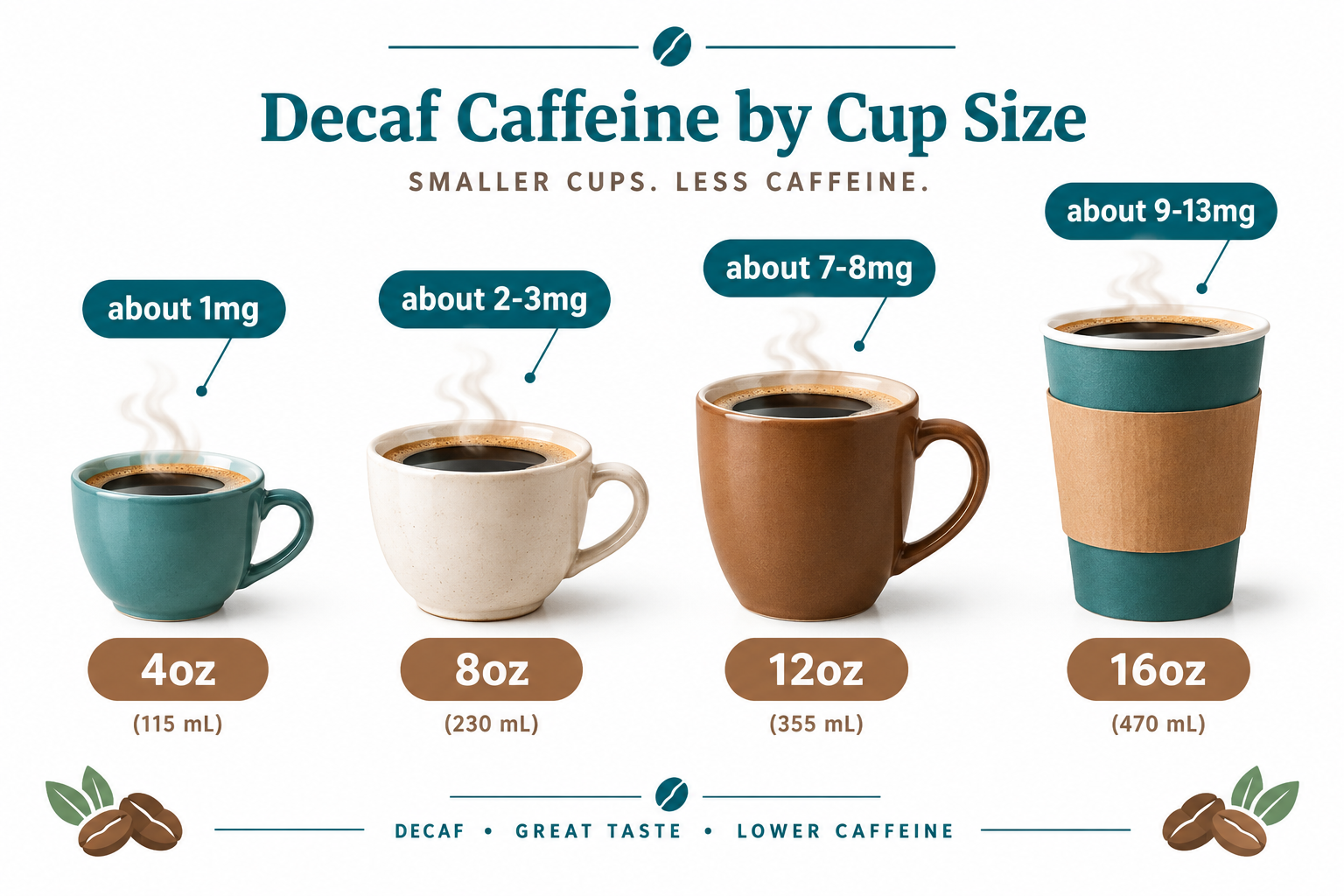
An 8-ounce cup of brewed decaf coffee generally contains between 2 and 15 milligrams of caffeine, with most reference sources landing closer to the 2 to 10 mg range for a standard cup. USDA-style reference data puts brewed decaf at about 1 mg of caffeine per 100 grams, which works out to roughly 2 mg in an 8-ounce cup.
Larger servings scale up the number, which matters if you're the type who orders the big cup:
| Cup size | Typical decaf caffeine (mg) | Notes |
|---|---|---|
| 8 oz (240 ml) | 2 to 10 mg | Standard reference range |
| 10 to 12 oz | 7 to 8 mg | Common café pour |
| 16 oz | 9 to 13 mg | Larger chain-size servings |
| Decaf espresso shot (1 oz) | Under 1 mg to a few mg | Varies by roast and process |
A widely referenced study measured brewed decaf servings between 3 and 15 mg and decaf espresso shots between 3 and 16 mg, which lines up with why some decaf drinkers notice a mild effect while others feel nothing. Instant decaf tends to run lower still, often around 3 to 4 mg per 8 to 10 ounces.
Why does decaf coffee still have caffeine
Decaf coffee still has caffeine because decaffeination is a subtraction process, not a total removal process. Every accepted commercial method pulls out roughly 97% of the caffeine in green beans, and the remaining fraction rides along into your cup.
Caffeine is a naturally occurring compound bound tightly inside the coffee bean's cell structure. Solvents, water, and carbon filters can dissolve out most of it, but chasing the final trace amounts would take longer processing, more passes, and higher cost, with diminishing returns for flavor and yield. Roasters settled on 97%-plus removal as the practical, industry-standard target, and labeling rules were built around that same benchmark rather than an impossible zero.
Common mistake: assuming "decaf" and "no caffeine" mean the same thing on a nutrition label. They don't. If a product needs to be truly caffeine free, check for labels that say "caffeine free" specifically, since that term is held to a stricter standard than "decaffeinated."
Is decaf coffee completely caffeine free
No. Decaf coffee is not completely caffeine free, and no major roaster claims it is once you read the fine print. Regulatory guidance allows "decaffeinated" labeling once caffeine is reduced by about 97%, leaving a small residual amount by design.
If you need a genuinely caffeine free coffee experience, your options are:
- Caffeine free herbal coffee substitutes made from roasted chicory, barley, or dandelion root, which contain zero caffeine because they're not coffee at all.
- Decaf coffee, which still contains a few milligrams per cup and is the closest thing to real coffee flavor.
- Water-processed decaf from a trusted producer, which tends to sit at the lower end of the caffeine range but still isn't zero.
For most people managing caffeine intake for sleep or sensitivity, decaf's small residual amount is a feature, not a flaw. It lets you keep the ritual and the taste while cutting the stimulant load by roughly 95%.
How is caffeine removed from coffee
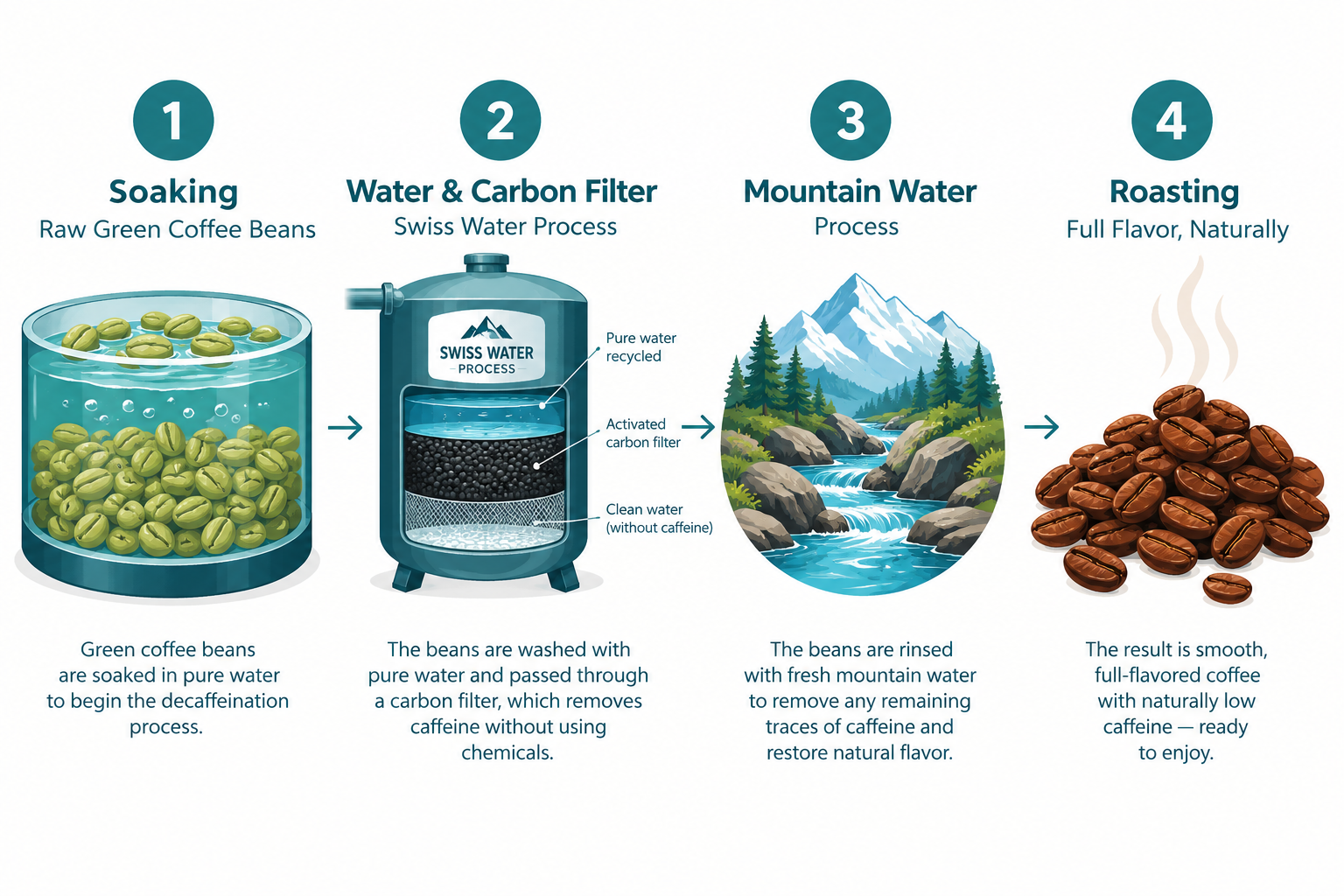
Caffeine is removed from coffee using one of three main commercial methods: solvent-based extraction, carbon dioxide extraction, or water-based extraction, each applied to green (unroasted) beans before roasting. All three target the same result: pulling caffeine out while leaving as much flavor compound behind as possible.
Here's how decaf coffee is made, broken down by method:
- Swiss Water Process soaks green beans in hot water to pull out caffeine and flavor compounds together, then passes that water through a carbon filter that catches caffeine molecules but lets flavor compounds pass back through into a new batch of beans. No chemical solvents touch the coffee at any point.
- Mountain Water Process works on a similar water and carbon filtration principle, often marketed by origin, using local water sources as part of the process story.
- CO2 process uses pressurized carbon dioxide to bond with caffeine molecules and lift them out, a method favored for large-scale specialty decaf because it preserves more of the bean's original character.
- Solvent-based methods (methylene chloride or ethyl acetate, the latter sometimes called the "natural" or sugarcane process) rinse beans in a solvent that selectively binds caffeine, then evaporate the solvent away before roasting.
None of these methods claims 100% removal. All of them target that same 97%-plus benchmark, which is why the "how much caffeine in decaf coffee" question always ends with a range instead of a flat zero.
Decaf vs regular coffee caffeine content comparison
The decaf vs regular coffee caffeine gap is large: about 2 to 15 mg per 8-ounce decaf cup against roughly 95 mg for the same size regular cup, a difference of roughly 85 to 90 milligrams. That's the reason decaf feels like a completely different drink even though it looks and smells nearly identical.
| Drink (8 oz unless noted) | Caffeine (approx.) | Source |
|---|---|---|
| Brewed decaf coffee | 2 to 15 mg | |
| Brewed regular coffee | 95 to 165 mg | |
| Decaf espresso (1 oz shot) | Under 1 mg to a few mg | |
| Regular espresso (1 oz shot) | Around 63 mg | [reference comparison] |
| Decaf instant coffee | 3 to 4 mg per 8 to 10 oz |
If you're deciding between the two for an afternoon cup, the practical rule is simple: choose regular if you need the lift, choose decaf if you want the ritual without the stimulant. For a deeper side-by-side on brewed coffee against shots, see our breakdown of how much caffeine is in a cup of coffee vs espresso.
Does decaf espresso have caffeine
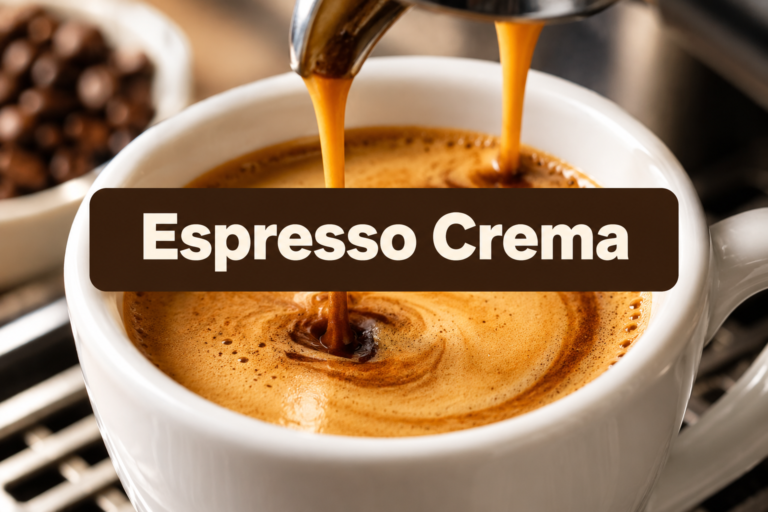
Yes, decaf espresso has caffeine, though usually less than a full mug of decaf drip because of the small serving size. A 1-ounce decaf espresso shot generally contains well under a few milligrams of caffeine, compared with roughly 63 mg in a standard regular espresso shot.
The catch is volume. A single decaf shot is small, but a double or triple decaf drink stacks the milligrams the same way regular espresso does. If you order a triple decaf latte, you're getting three shots worth of that small caffeine amount, not a proportionally larger dose of nothing. For readers comparing shot counts directly, our guide on how much caffeine is in an espresso shot compared to coffee walks through the math, and our piece on whether 2 shots of espresso is a lot of caffeine applies the same logic to regular shots.
Edge case: decaf espresso from a machine that also pulls regular shots can pick up minor caffeine cross-contamination from shared portafilters or grinders if they aren't cleaned between drinks. It's small, but it's a real reason cafes keep separate decaf grinders.
Decaf coffee caffeine by brand: which has the least
Caffeine per cup varies by brand mostly because of decaffeination method, bean origin, and roast batch, not because any single brand is secretly caffeine-free. Independent testing across popular decaf coffees has found real milligram ranges rather than one fixed number, even within the same product line.
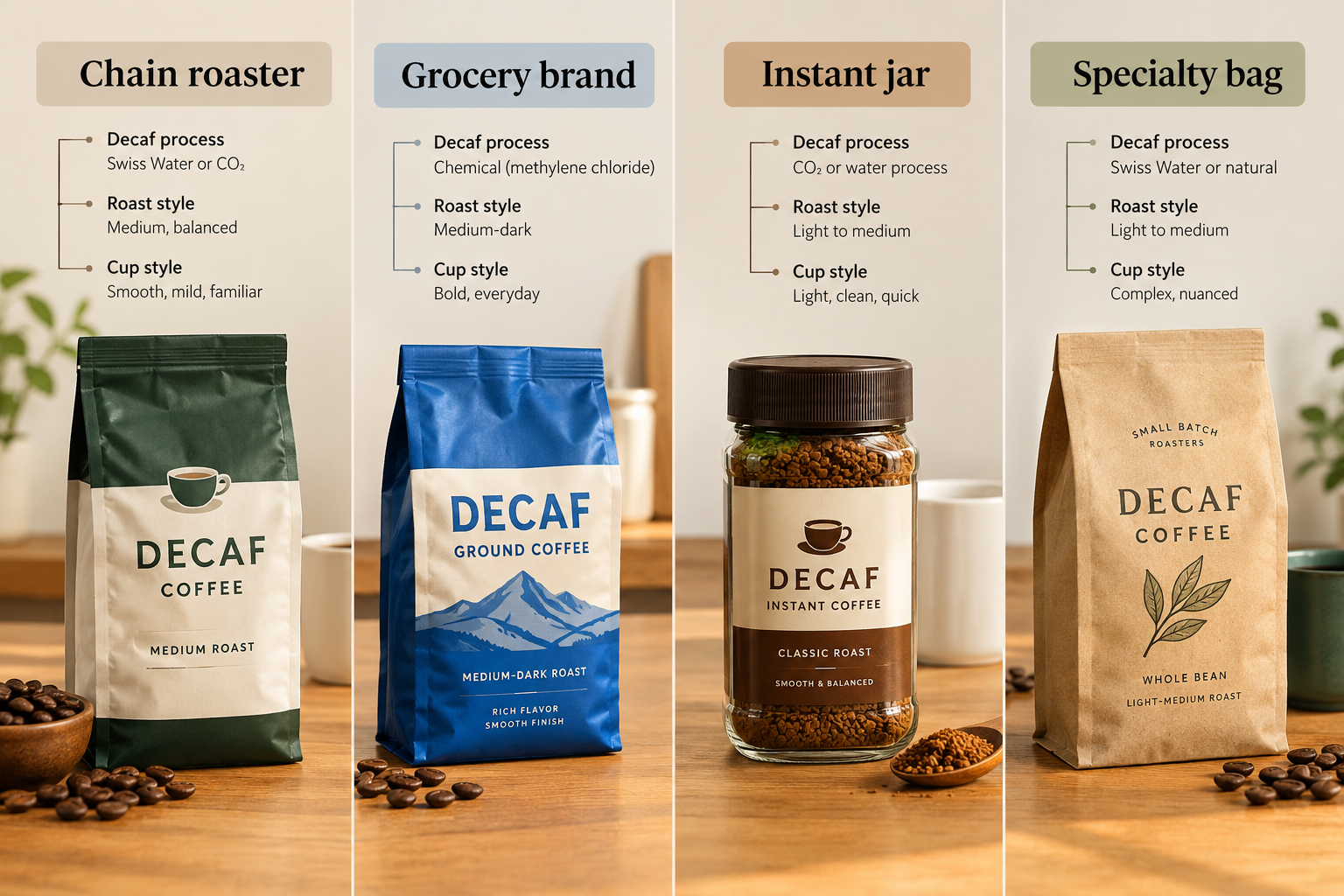
Here's how the big names generally position themselves:
- Starbucks decaf options are typically processed using a combination of methods depending on the bean origin, with some lines using Swiss Water Process; milligram counts land in the same general 2 to 15 mg per 8 oz range as most commercial decaf.
- Peet's decaf coffee uses water-based decaffeination on select roasts and markets its decaf as full-flavor rather than caffeine-focused, consistent with typical decaf ranges.
- Folgers decaf, a widely available grocery brand, uses solvent-based or water processing depending on the product line and falls within standard decaf caffeine ranges for ground coffee.
- Nescafe decaf instant coffee tends to sit near the lower end of the range, consistent with instant decaf figures around 3 to 4 mg per 8 to 10 ounces.
If you specifically want the lowest realistic milligram count, look for bags labeled Swiss Water Process or Mountain Water Process on the packaging. These chemical-free methods are marketed partly because they let roasters claim a cleaner story, and independent measurements tend to land at the lower end of the decaf spectrum rather than the higher end.
How many cups of decaf coffee equal one regular coffee
Roughly 6 to 10 cups of decaf coffee contain the same amount of caffeine as one regular 8-ounce cup, depending on which end of the milligram range you land on. If regular coffee averages about 95 mg and decaf averages about 10 mg per cup, that's roughly a 9 or 10 to 1 ratio.
Quick example: at 95 mg regular versus 10 mg decaf, you'd need about 9.5 cups of decaf to match one regular cup. At the low end of decaf (2 mg), that number climbs closer to 47 cups. Nobody drinks that many cups in a sitting, which is the practical proof that decaf is not a meaningful caffeine source for most drinkers, even multiple cups deep.
What counts as decaf coffee legally
In the United States, coffee can be labeled "decaffeinated" once it has had roughly 97% of its original caffeine removed, based on standards referenced by industry groups and adopted into common labeling practice. There is no legal requirement for zero caffeine.
This matters for two groups of shoppers:
- Label readers who assume "decaf" means "none": it doesn't, and the 2 to 15 mg range on an 8-ounce cup is the practical result of that 97% standard.
- Strict avoiders who need true caffeine free products: look for "caffeine free" labeling specifically, or choose non-coffee substitutes, since decaf will never satisfy a zero-caffeine requirement.
As of late 2026, there's no visible move to tighten this definition toward a stricter zero-caffeine standard. Industry commentary points toward better voluntary milligram disclosure on packaging as the more likely next step, not a legal overhaul.
Can you be sensitive to caffeine in decaf coffee
Yes, some people notice an effect from decaf, even though the caffeine amount is small. Individual sensitivity to caffeine varies widely, and a person who reacts strongly to 10 mg of caffeine will feel something from decaf that a less sensitive drinker never notices.
This is also where "why do I still feel jittery from decaf coffee" gets answered. A few real explanations show up again and again:
- You drank more than one cup. Two or three decaf cups can add up to 20 to 30 mg, enough for a genuinely sensitive person to notice.
- You're extra sensitive to caffeine generally. Genetics affect how fast your body clears caffeine, so a small dose lingers longer for some people than others.
- The jitters aren't caffeine at all. Heat, hunger, low blood sugar, or the warmth of the drink itself can mimic caffeine jitters, especially on an empty stomach.
- It's a placebo or expectation effect. Believing a drink is stimulating can produce mild physical symptoms on its own, a documented pattern in caffeine research generally.
If jitters show up reliably after decaf and nothing else changed that morning, cutting to one cup or switching to a lower-caffeine Swiss Water Process brand is a reasonable next step before assuming something else is going on. Readers curious about how caffeine clears the body over a longer window can check our guide on how long it takes to detox from coffee.
Decaf coffee and pregnancy: how much is safe
Most pregnancy guidance treats decaf coffee as a low-caffeine choice that fits comfortably within recommended daily limits, but it still needs to be counted, not ignored. Health guidance generally frames total daily caffeine, not just regular coffee, as the number that matters.
Because a cup of decaf contributes only 2 to 15 mg, a person drinking two or three cups a day adds a small, usually low-risk amount to their daily total. That said, "safe" limits during pregnancy come from a physician's guidance based on individual health, not from a blog post, so treat any published number as a starting point for a conversation rather than a final answer. For general context on how coffee affects the body across a normal day, see our explainer on what happens to your body when you drink coffee, and our piece on whether coffee is actually healthy for you for the wider picture.
Does decaf coffee keep you awake before bed
For most people, a single cup of decaf coffee before bed is unlikely to cause noticeable sleep disruption, because the caffeine load is small enough to clear quickly for most metabolisms. Does decaf coffee keep you awake in every case? No, but it's not a guaranteed zero-risk choice either.
Two situations change the answer:
- You're highly caffeine sensitive. Even 5 to 10 mg late at night can be enough to delay sleep onset for some people.
- You drink several cups close to bedtime. Stacking two or three decaf cups in an evening pushes total caffeine into the 15 to 30 mg range, which starts to matter more for sensitive sleepers.
If a warm drink before bed is the goal and caffeine of any amount worries you, a true caffeine free herbal coffee substitute removes the question entirely. If you love the taste of real decaf and haven't had a problem before, there's no strong reason to stop based on the milligram numbers alone.
Is decaf coffee bad for you? Best options if you're caffeine sensitive
No, decaf coffee is not considered bad for you for most healthy adults, and it carries many of the same antioxidant compounds found in regular coffee, just without most of the caffeine. The main caution is for people who must strictly avoid even small amounts of caffeine, who should treat decaf as "low caffeine" rather than risk-free.
Choose decaf if you:
- Want the coffee ritual and flavor without a stimulant kick.
- Are managing caffeine for sleep, anxiety, or a medical condition, but don't need absolute zero.
- Drink coffee later in the day and want to avoid disrupting sleep.
Choose a caffeine free herbal substitute instead if you:
- Have a heart condition or take medication where your doctor has said to avoid caffeine entirely.
- Are extremely sensitive and have noticed reactions even to small decaf amounts.
For brand selection, favor bags that clearly state Swiss Water Process or Mountain Water Process on the label if minimizing milligrams matters to you, since these chemical-free methods are associated with some of the lower end of decaf's caffeine range. Otherwise, the difference between Starbucks, Peet's, Folgers, and Nescafe decaf is more about roast style and price than a meaningful caffeine gap.
FAQ
Does decaf coffee have caffeine at all, or is that a myth? Yes, decaf coffee has caffeine. It's not a myth. A typical 8-ounce cup contains roughly 2 to 15 mg, far less than regular coffee's 95 mg, but not zero.
How much caffeine in decaf coffee is considered normal? Most reference sources place normal decaf caffeine between 2 and 10 mg per 8-ounce cup, with larger 16-ounce servings sometimes reaching 9 to 13 mg.
How much caffeine in decaf espresso specifically? A 1-ounce decaf espresso shot generally contains under a few milligrams of caffeine, far below the roughly 63 mg in a regular espresso shot.
What is the Swiss Water Process and why does it matter? The Swiss Water Process is a chemical-free decaffeination method that uses hot water and carbon filtration to remove caffeine from green coffee beans while preserving flavor. It's associated with some of the lower caffeine counts in decaf products.
Can decaf coffee keep you awake if you drink it before bed? Usually not for most people in a single cup, but highly caffeine-sensitive individuals or those drinking several cups close to bedtime may still notice mild effects.
Is caffeine free coffee the same thing as decaf coffee? No. Decaf coffee still contains a few milligrams of caffeine per cup. True caffeine free products, usually herbal coffee substitutes, contain no caffeine at all.
Conclusion
Does decaf coffee have caffeine? Yes, consistently, in amounts small enough to ignore for most people and large enough to matter for a few. The real range sits around 2 to 15 mg per 8-ounce cup, against roughly 95 mg for regular coffee, and that gap comes from a decaffeination process built to hit 97% removal, not 100%.
If you're choosing a decaf for the first time, start with a bag that names its process, Swiss Water Process or Mountain Water Process included, and treat the milligram count as a guide rather than a guarantee. If jitters or sleep problems show up after decaf, cut back to one cup before assuming something else is wrong. Better coffee starts with better answers, and now you have the actual numbers behind the "decaf" label instead of a guess.
Keep Exploring Coffee Rank IQ
- Coffee Rank IQ home: reviews, brewing guides, and coffee science
- Best Decaf Coffee That Still Tastes Like Coffee
- Best Decaf K Cups That Taste Like Real Coffee
- Light Roast vs Dark Roast: Caffeine, Flavor, and Acidity Compared
- Does Coffee Dehydrate You? What the Research Actually Says
References
- www.healthline.com/nutrition/caffeine-in-decaf
- www.ncausa.org/About-Coffee/All-About-Decaffeinated-Coffee
- www.healthline.com/nutrition/decaf-coffee-good-or-bad
- www.aboutcoffee.org/beans/decaf-coffee
- www.webmd.com/diet/what-to-know-decaf-coffee
- www.hollandandbarrett.com/the-health-hub/food-drink/decaf-coffee-how-much-caffeine
- www.medicalnewstoday.com/articles/325502
- www.prevention.com/food-nutrition/healthy-eating/a71801122/decaf-vs-regular-coffee
- www.pulled.coffee/blog/decaf-coffee-decoded
- www.theskimm.com/health/nutrition/caffeine-in-decaf-coffee