Coffee Plant Guide: Can You Grow Coffee Indoors?
Quick Answer
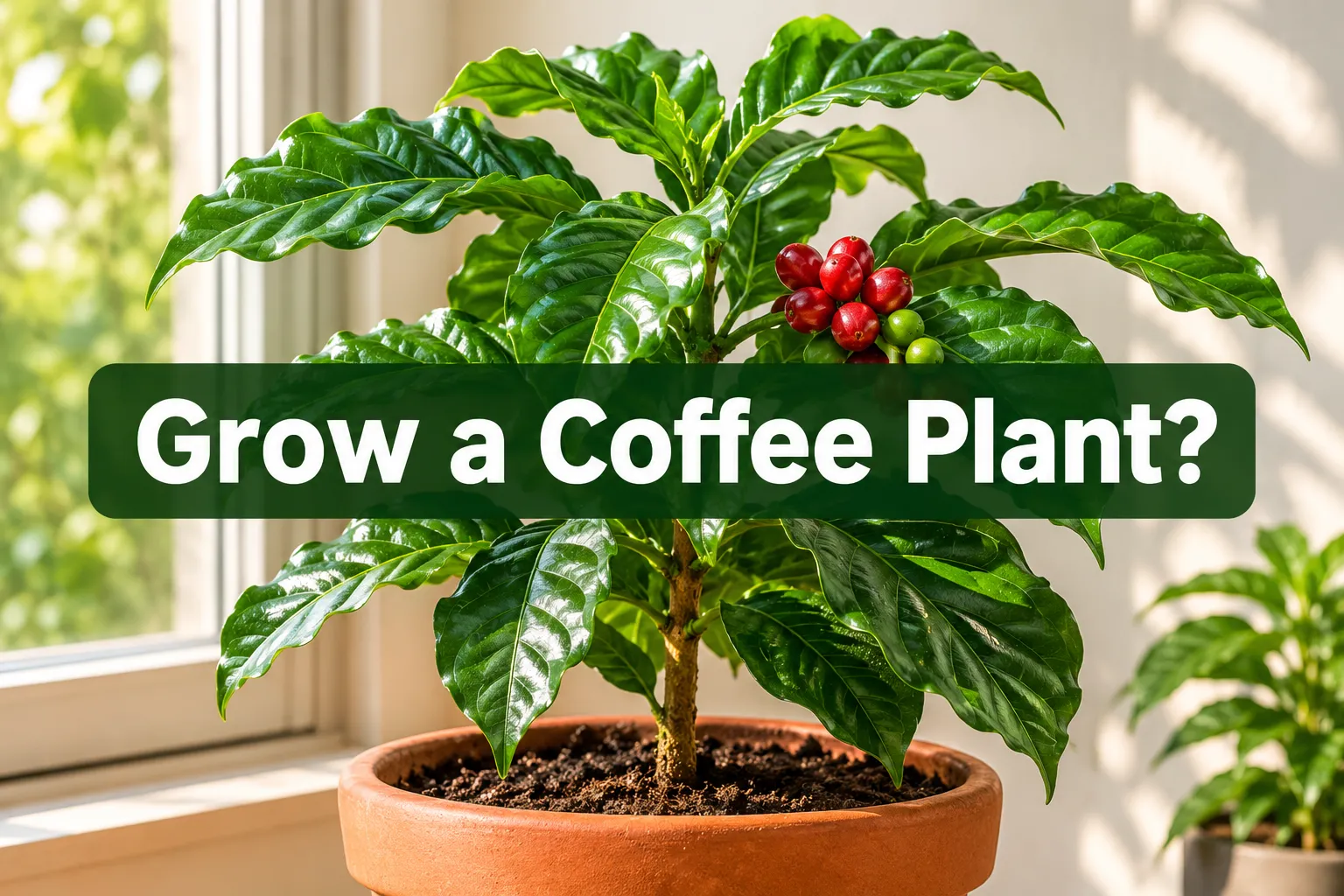
Yes, you can grow a coffee plant indoors, and it makes a genuinely handsome houseplant. Harvesting enough beans to brew with is the hard part. Coffea arabica is self-fertile and can set fruit indoors, but a window-grown plant usually takes three to four years to flower, and a single healthy specimen might give you enough green beans for one or two small cups a year. Grow it for the glossy leaves and the education. Keep buying beans for breakfast.
Key Takeaways
- North Carolina State University Extension lists Coffea arabica as a suitable houseplant in temperate climates, typically kept at 4 to 6 feet tall indoors with bright light, high humidity, and moist but never waterlogged soil.
- N.C. State Extension gives a preferred range of 70 to 80°F by day and 60 to 65°F at night, with leaf drop possible below 55°F. The University of Arizona cites the same day and night benchmark and notes growth slowing above roughly 77°F.
- A 2025 peer-reviewed review in Plants identified roughly 70 to 80% atmospheric humidity as optimal for vegetative growth, which is far above the average US living room in winter.
- University of California guidance states C. arabica flowers are self-fertile and self-pollinating, with flowering to harvest taking roughly 9 to 11 months under the cited production conditions.
- UF/IFAS describes coffee as a naturally shaded understory shrub that still produces more in sunnier conditions when water and fertilizer keep up. Shade tolerant does not mean low light.
- A University of Florida field trial that began with 48 Arabica plants in 2022 reported 2025 fresh-cherry yields of roughly 3 to 6 kg per plant outdoors. That is a field benchmark, not a houseplant one.
- Small nursery coffee plants commonly sell in the $15 to $40 range in the US, which is cheap for a conversation piece and expensive per gram of homegrown coffee.
What exactly is a coffee plant, and how does it grow?
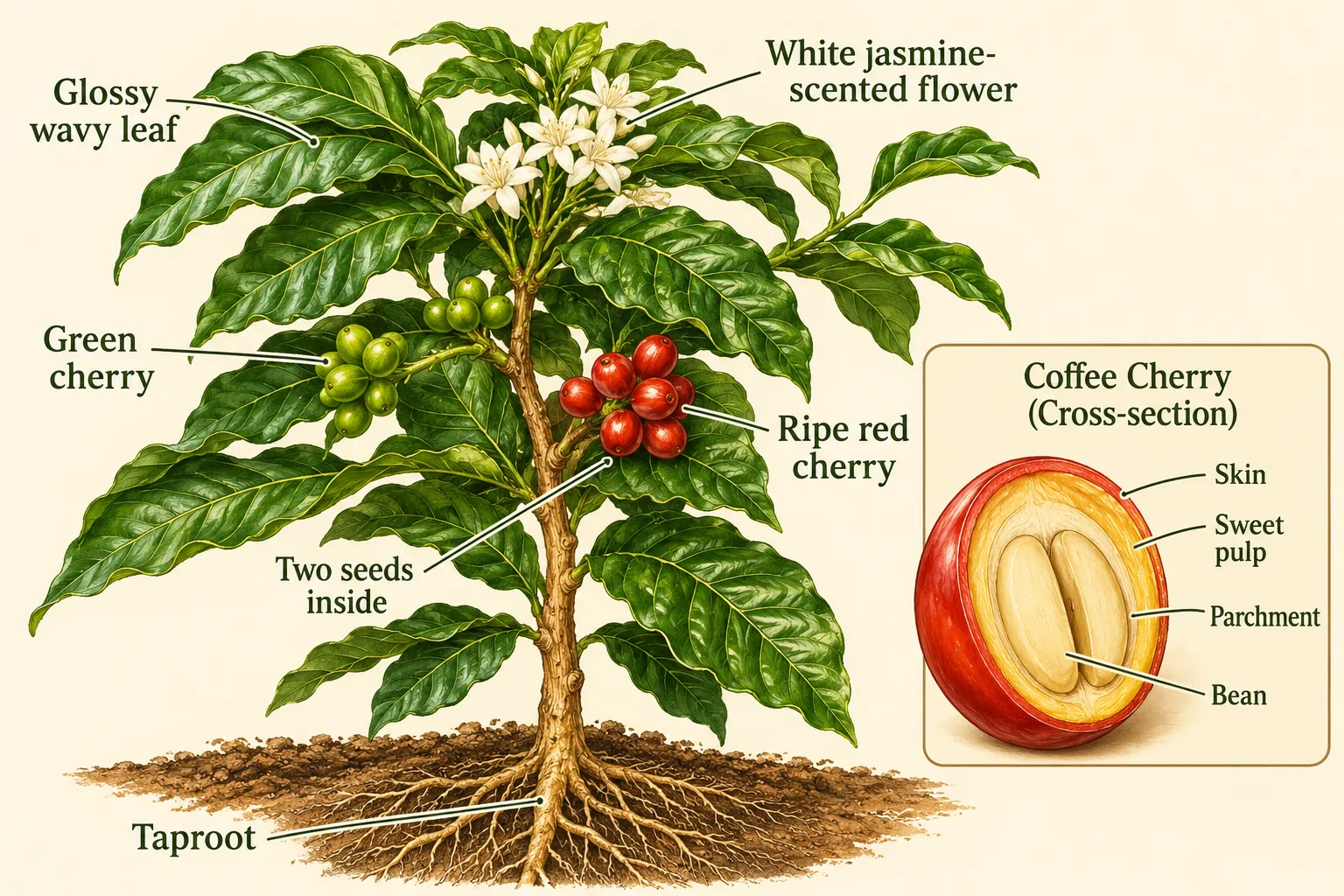
A coffee plant is a tropical evergreen shrub or small tree in the genus Coffea, grown commercially for the seeds inside its fruit. Those fruits are the cherries. Each one usually holds two seeds, and those seeds, once dried and roasted, are what you call coffee beans.
The two species that matter commercially are Coffea arabica and Coffea canephora (robusta). Arabica is the one sold as a houseplant .
In the wild, Arabica grows in the cool highland understory of Ethiopian forests, shaded by taller trees. That single fact explains most of its indoor behavior: it wants warmth without scorching sun, steady moisture, and air that is not desert dry.
The growth habit is worth knowing before you buy. Coffee grows on a vertical trunk with horizontal lateral branches, and flowers only appear on new lateral growth. Chop the top off a young plant and you get a bushier, shorter plant that fruits on fresh laterals. Let it run and it heads for your ceiling.
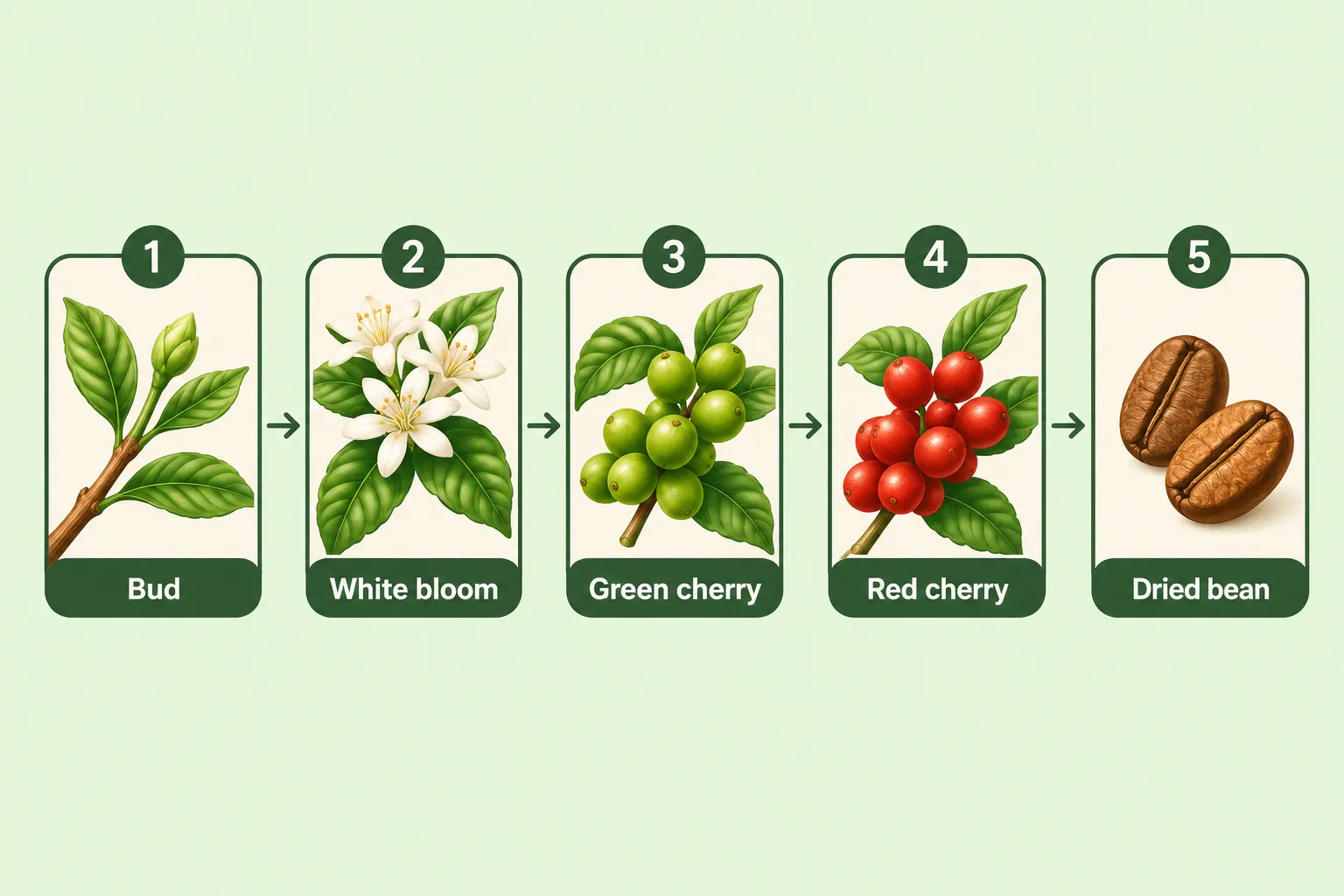
Flowers are small, white, and jasmine-scented. They open in a flush, last a couple of days, then drop. Green fruit follows, ripening slowly through yellow to deep red. Inside each cherry, the seeds sit in a sticky layer called mucilage, which is the part that processing methods at origin are designed to remove.
How much light do coffee plants need if you keep them inside?
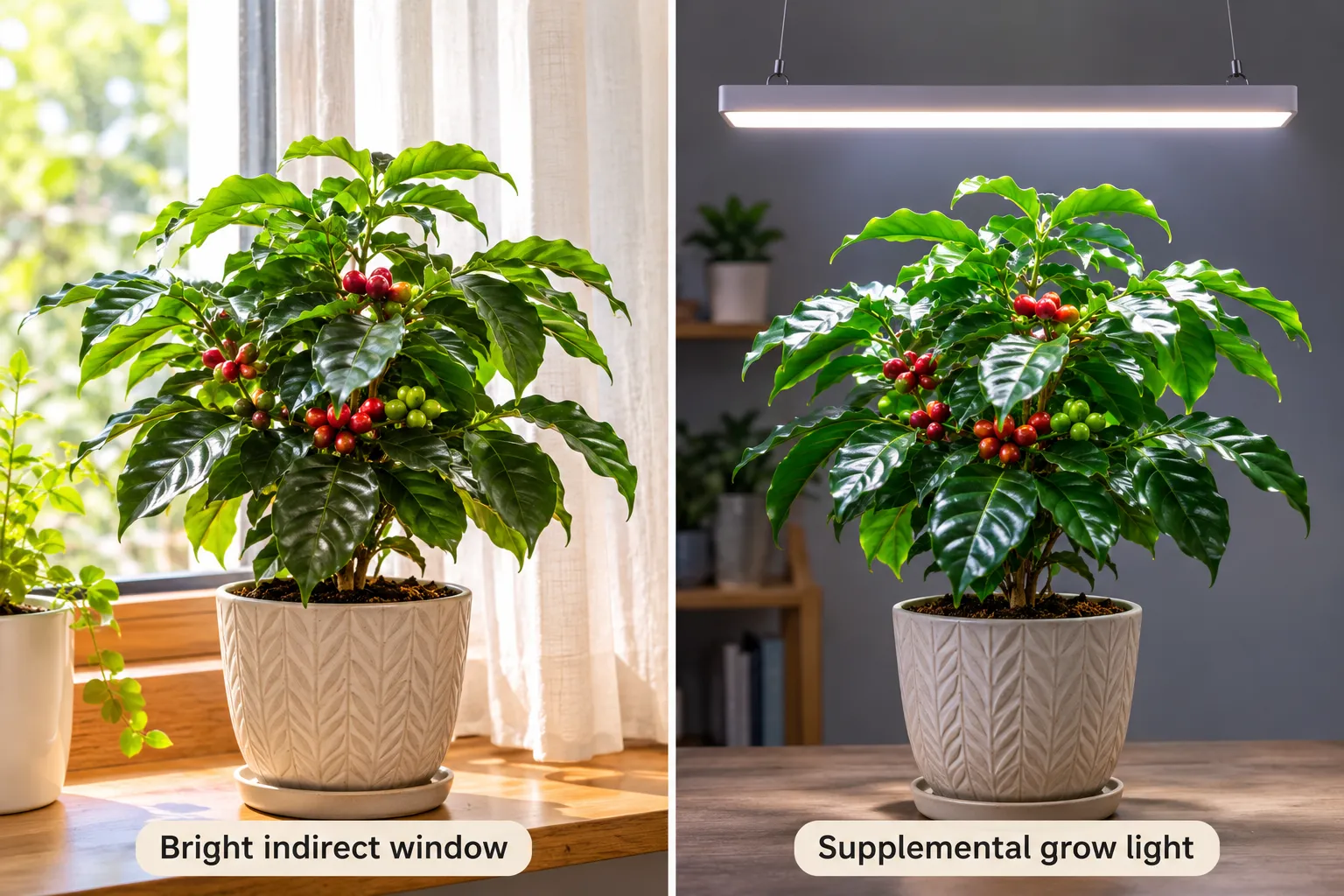
Bright, indirect light for most of the day. An east or west facing window with a sheer curtain is the practical sweet spot for an indoor coffee plant in a US home .
UF/IFAS describes coffee as naturally growing under light shade while also noting that production rises in sunnier conditions when water and fertilizer are adequate. That is the tension for home growers. Enough light for survival is easy. Enough light for flowering is not.
What goes wrong at each end:
- Too little light: stretched stems, wide leaf spacing, dark floppy leaves, no flowers ever.
- Too much direct sun through glass: bleached pale patches, crispy brown leaf margins, especially on south-facing afternoon exposure.
A decision rule: if you can read a paperback comfortably in that spot at midday without turning on a lamp, the light is probably workable for leaf growth. If you want cherries, you need more than that.
Can you grow coffee indoors without a grow light?
Yes, a coffee plant will live happily for years in a bright window with no supplemental lighting. It will just grow more slowly and is much less likely to flower.
One 2026 controlled-environment guide suggests roughly 200 to 400 µmol/m²/s PPFD for indoor coffee production, along with 18 to 24°C and 60 to 80% relative humidity . Treat that as a grow-tent target, not a household minimum. It was written for commercial controlled-environment setups, and a typical bright window delivers a fraction of it.
If you want to add light, a single 20 to 40 watt full-spectrum LED panel 12 to 18 inches above the canopy, running 12 to 14 hours a day, is a reasonable starting point for one plant. Watch the leaves for the first two weeks and raise the fixture if edges start to pale.
Can indoor coffee plants actually produce beans, or just leaves?
They can produce beans, but most never do, and the ones that do produce very little. A mature indoor coffee plant that flowers well might yield a few dozen cherries, which dries down to roughly 20 to 40 grams of green coffee. That is about one strong cup, maybe two.
Three things have to line up:
- Maturity. Flowers form on second-year lateral wood. A seedling needs years.
- Light and nutrition. Flower initiation takes energy the plant cannot spare in a dim corner.
- Environmental cueing. Research published in Plants in 2025 describes coffee flowering and fruiting as strongly dependent on environmental signals including humidity and seasonal water conditions. In production regions, a dry spell followed by rain triggers a synchronized bloom.
That third point is the one most houseplant guides skip. You can imitate it by reducing water for three to four weeks in late winter, letting the soil get noticeably drier than usual without wilting the plant, then watering thoroughly and raising humidity. On mature plants, this sometimes triggers a flush of buds. On a two-year-old plant, it just stresses it.
University of California guidance notes C. arabica flowers are self-fertile and self-pollinating, so one plant is enough. Indoors there are no pollinators and little air movement, so brushing open flowers gently with a small artist's brush improves fruit set. Same source puts flowering to ripe harvest at roughly 9 to 11 months under the production conditions cited.
The honest framing: an indoor coffee plant is a botany lesson with a very small edible souvenir attached.
What is the best temperature and humidity for growing coffee indoors?
Aim for 70 to 80°F during the day and 60 to 65°F at night, with humidity as high as you can reasonably hold. N.C. State Extension gives that temperature range and warns that leaf drop may occur below 55°F. The University of Arizona cites the same day and night figures and adds that growth slows above about 77°F.
That night-time drop is useful. A cooler night is normal for highland coffee and most homes deliver it automatically.
On humidity, the 2025 Plants review identified roughly 70 to 80% atmospheric humidity as optimal for vegetative growth. Few homes hit that, and you do not need to. Above about 50% keeps leaf edges from crisping.
What actually raises humidity, ranked by effect:
| Method | Real-world effect |
|---|---|
| Room humidifier | Largest and most consistent |
| Grouping plants together | Modest but free |
| Pebble tray with water | Small, local, needs topping up |
| Hand misting | Minimal |
University of California indoor-plant guidance makes the misting point plainly: hand misting has little lasting effect because it would need repeating every few minutes. Misting feels like care. A humidifier is care.
Edge case worth flagging: a coffee plant parked above a forced-air heating vent will shed leaves no matter how carefully you water it. Dry moving air is the fastest way to lose a plant in a US winter.
How often do you water an indoor coffee plant?
Water when the top inch of soil is dry, which in most homes means roughly every 5 to 10 days in summer and every 10 to 14 days in winter. N.C. State Extension describes the target as consistently moist but not waterlogged .
A practical routine:
- Push a finger an inch into the soil. Dry at the fingertip means water.
- Water until it runs freely from the drainage holes.
- Empty the saucer within 15 minutes. No standing water, ever.
- Use room-temperature water. Cold tap water on a warm root ball causes sulking.
Hard tap water with heavy mineral content can build salt in the pot over time. Flushing the soil thoroughly every few months, or using filtered water, helps. The same water chemistry thinking that applies to brewing applies here, just with different priorities. If you want the brewing side of water, see our essential guide to coffee brewing.
Feed during active growth, roughly every 4 to 6 weeks from spring through early autumn, with a balanced liquid houseplant fertilizer at half strength. Coffee is slightly acid loving, so a fertilizer formulated for acid-loving plants suits it.
Skip feeding in winter. A plant barely growing cannot use the nutrients, and the salts accumulate.
Why are my coffee plant leaves yellowing and dropping?
Most yellowing and leaf drop on an indoor coffee plant comes down to one of five causes: overwatering, cold exposure, dry air, light extremes, or depleted feeding. Diagnose by looking at which leaves fail first.
| Symptom | Likely cause | Fix |
|---|---|---|
| Lower leaves yellow, soil stays wet | Overwatering, poor drainage | Repot into free-draining mix, water less |
| Sudden leaf drop, no yellowing | Cold draft or temperature below 55°F | Move away from doors and single-glazed glass |
| Brown crispy edges, leaves otherwise green | Low humidity or mineral buildup | Humidifier, flush the soil |
| Pale bleached patches on sun-facing leaves | Direct afternoon sun through glass | Add a sheer curtain or shift the pot |
| Uniform pale green, slow growth | Underfeeding or root-bound | Feed at half strength, check roots |
One more culprit: shock. A coffee plant dropping leaves a week after you brought it home is usually reacting to the change in light and humidity between greenhouse and living room. Hold steady, do not overwater in a panic, and new growth usually appears within a month.
Common pests indoors are mealybugs in leaf axils, spider mites in dry air, and scale on stems. Check leaf undersides monthly. Insecticidal soap handles all three if you catch them early.
How long until an indoor coffee plant produces coffee beans?
Plan on three to four years from seedling to first flowers, and add another 9 to 11 months from flower to ripe cherry, based on the flowering to harvest window cited in University of California guidance. Realistically, that is a four to five year wait indoors, and only if light, warmth, and humidity cooperate.
Buying a plant that is already two feet tall shortens the clock by a year or two. Growing from a green bean does not work, because roasted and most commercially sold green coffee is not viable seed. Fresh seed from a cherry, sown promptly, germinates in roughly 6 to 10 weeks.
Compare that with the field trial context. A University of Florida project in Volusia County started with 48 Arabica plants in 2022, transplanted them in May 2023, saw first fruit set in 2024, and reported 2025 fresh-cherry yields averaging roughly 3 to 6 kg per plant across four cultivars. Reporting dated October 6, 2026 described those experiments as still assessing cultivar performance and quality, and not yet commercial scale. Those plants had full root volume, outdoor light, and professional management. Your pot does not.
Arabica vs robusta for indoor growing: which the plant should you buy?
Buy Arabica. Nearly every the plant sold as a houseplant in the US is Coffea arabica, usually a compact cultivar, and it suits indoor conditions better than robusta .
Robusta (Coffea canephora) is a larger, more vigorous tree adapted to hotter lowland conditions. It grows faster and resists disease better in the field, but it gets big, it wants more heat, and it is rarely offered as a potted houseplant. Arabica is self-fertile, which matters when there is only one plant and no insects. Robusta is generally self-incompatible and needs cross-pollination.
If you see a cultivar name on the label, 'Nana' and other dwarf Arabica selections stay more manageable under a ceiling. Also useful background on species and geography: read are coffee beans native to North America.
What size pot does a the plant need indoors?
Start a young plant in a 6 to 8 inch pot and step up one or two inches at a time as roots fill the space. A mature 4 to 6 foot indoor the plant generally settles into a 12 to 16 inch container.
Rules that matter more than the number:
- Drainage holes are non-negotiable. No exceptions, no decorative cachepots without a liner you can drain.
- Do not overpot. A small plant in a huge pot sits in wet soil for weeks, and root rot follows.
- Mix: two parts quality potting soil, one part perlite or orchid bark, for free drainage with some water holding.
- Repot in spring, every 2 to 3 years, or when roots circle the pot's edge.
Terracotta dries faster and forgives heavy-handed watering. Glazed ceramic and plastic hold moisture longer, which helps if you travel.
How much does a the plant cost, and is it worth growing coffee at home?
A small nursery the plant typically costs $15 to $40 in the US, with larger specimens running $50 to $100 or more. As a houseplant that is fair value. As a coffee source it is terrible value, and that is the misconception worth correcting.
Run the arithmetic. A thriving indoor plant that flowers might give you 20 to 40 grams of green coffee a year, which roasts down to less. A $16 twelve-ounce bag of specialty coffee contains roughly 340 grams. One bag beats several years of your windowsill harvest, and the bag was grown at altitude by people who know what they are doing.
So the answer depends on what you want:
- Grow a the plant if you like houseplants, you want to see what a cherry actually looks like, and you find the botany interesting.
- Skip it if you expected a renewable bean supply, you have a dark apartment, or you travel often enough that watering slips.
Your money buys more cup quality in a burr grinder, a scale, and fresh beans with a visible roast date than in any amount of indoor horticulture. If you are chasing café drinks at home for less, start with drip coffee vs espresso and work out which setup matches your morning.
Context from the wider industry supports the point. Reporting on October 20, 2026 described Planet Farms testing coffee in controlled-environment agriculture, with a UK facility targeting completion in the first half of 2028. That is industrial-scale equipment and capital. It is not proof that a living room can do the same thing economically.
A quick note on buying and shipping plants
A USDA proposal published in the Federal Register on August 5, 2026 addressed the importation of unroasted coffee, coffee leaves, and plantable coffee material into Hawaii and Puerto Rico because of quarantine-pest risk. It does not ban ordinary indoor growing of a legally bought plant, but it is a reminder to buy from a reputable domestic nursery rather than shipping plant material across borders yourself.
What are the most common mistakes people make with indoor the plants?
The top five, in the order they kill plants: overwatering, cold drafts, dry heated air, a dark corner, and impatience with pruning.
- Watering on a calendar, not on soil. Soil conditions change with season, pot size, and light. Check with a finger.
- A decorative pot with no drainage. The commonest silent killer of any houseplant.
- Winter window contact. Leaves pressed against cold glass drop. Pull the pot back six inches.
- Misting instead of humidifying. Reread the University of California point above.
- Never pruning. Flowers form on lateral branches. Tipping the main stem at your preferred height encourages laterals and keeps the plant at a usable size.
- Expecting fruit from a two-year-old plant. It is not doing anything wrong. It is young.
One edge case: coffee leaves, stems, and unripe cherries contain caffeine. Keep the plant out of reach of cats, dogs, and small children who sample houseplants.
Are there easier plants to grow if you want something similar to coffee?
Yes. If you want glossy tropical foliage with less fuss, or an edible crop you will actually harvest, several plants beat coffee indoors.
- Rubber plant (Ficus elastica): similar thick glossy leaves, far more tolerant of dry air and irregular watering.
- Dwarf Meyer lemon or calamondin: fragrant flowers, fruit you will genuinely use, and reliable indoor cropping in a bright window.
- Tea plant (Camellia sinensis): a harvestable leaf crop, much more cold tolerant, and a few leaves make an actual cup.
- Cacao (Theobroma cacao): beautiful and dramatic, but harder than coffee. Higher humidity demands, lower survival rate.
- Bay laurel: slow, forgiving, and you will cook with it.
Choose a the plant if the species itself is the point. Choose a Meyer lemon if you want a harvest.
If the actual goal is better coffee rather than more plants, the faster wins live elsewhere: fresher beans, correct grind size, measured brew ratio, water temperature near 200°F, a proper bloom. Our beginner's guide to pour over coffee covers that ground, and cold brew if you prefer it chilled. And the cherries you never harvest have a cheap equivalent: see what else can be done with used coffee grounds.
the plant indoors: target vs typical US home
Compare your room against published horticultural targets.
| Condition | Target | Typical home | Gap |
|---|---|---|---|
| Day temperature | 70 to 80°F | 68 to 74°F | Usually fine |
| Night temperature | 60 to 65°F | 62 to 68°F | Usually fine |
| Cold limit | Above 55°F | Drafty windows dip lower | Move the pot |
| Humidity | 70 to 80% optimal | 25 to 40% in winter | Add humidifier |
| Light | Bright indirect, all day | Varies by window | East or west window |
| Soil moisture | Moist, free draining | Often overwatered | Check top inch |
| Years to first flower | 3 to 4 | Often never indoors | More light |
Temperature and soil targets: N.C. State Extension. Humidity optimum: Plants review, 2025. Flower-to-harvest timing: University of California guidance.
FAQ

Conclusion
Grow a the plant for the plant. A healthy Coffea arabica houseplant gives you deep green glossy leaves, jasmine-scented flowers if conditions are right, and a direct look at the fruit behind every bag you buy. What it will not do is feed your habit. The published numbers make that clear: 3 to 6 kg of fresh cherry per plant in a Florida field trial, versus a handful of cherries on a windowsill.
Your next step, if you want one: put a cheap hygrometer next to the spot where the plant would live and read it for a week. If winter humidity sits below 40%, buy a small humidifier before you buy the plant. That single reading predicts indoor the plant success better than any care checklist.
And if the real goal is a better cup tomorrow morning, spend the $30 on fresh single origin beans with a recent roast date instead. Better Coffee Starts With Better Answers.
Coffee Rank IQ articles may contain affiliate links. Recommendations are made on evidence and reader relevance, and prices should be checked at the retailer before buying.