
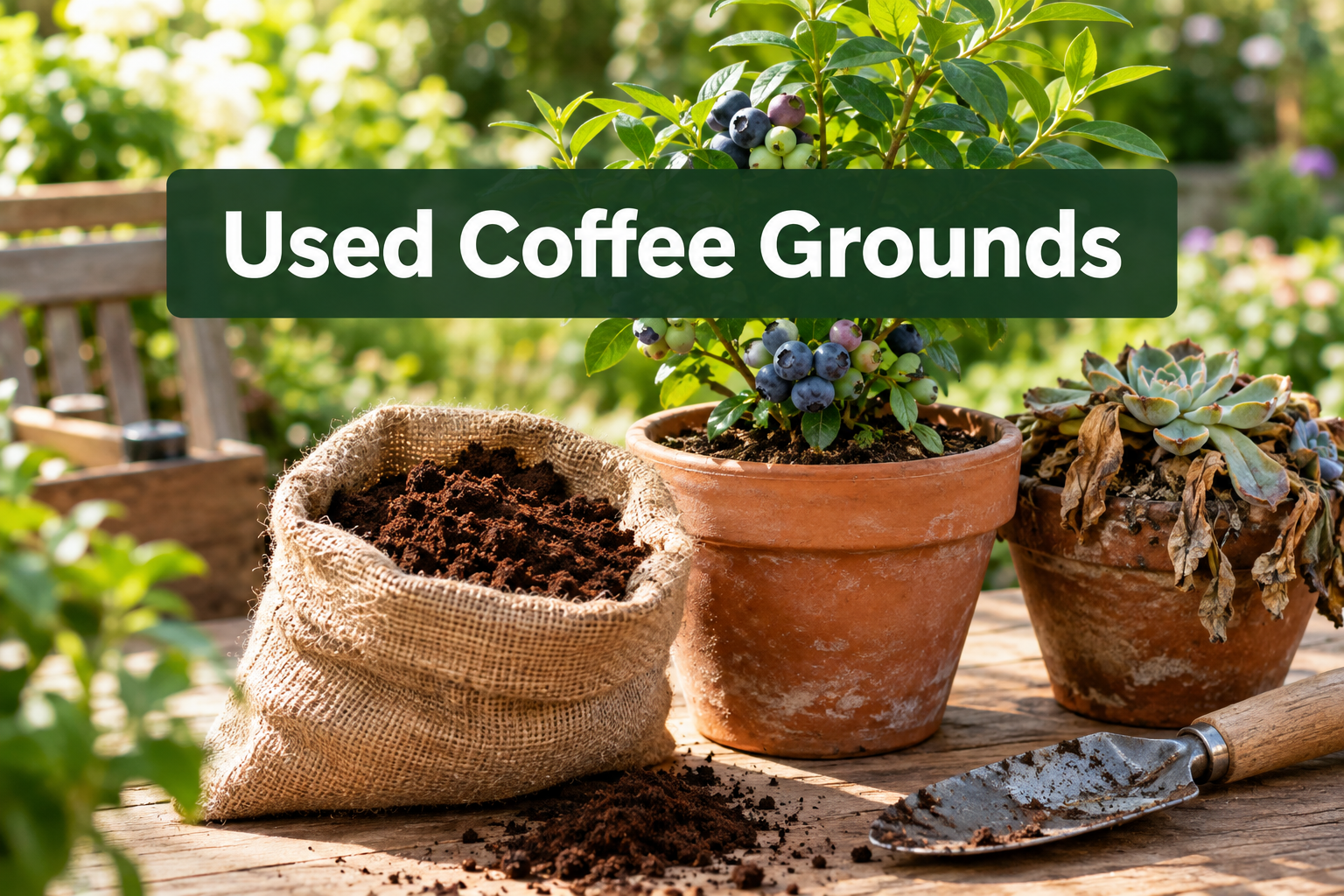
Used Coffee Grounds: Which Plants Love Them…and Which Don’t
Quick Answer
Used coffee grounds work well for nitrogen hungry, acid tolerant plants like blueberries, tomatoes, carrots, hydrangeas, and leafy greens, especially when composted first. They cause real problems for succulents, cacti, orchids, seedlings, and plants that need alkaline or fast draining soil. The difference almost always comes down to dose, moisture, and whether the grounds are fresh or fully broken down.
Key Takeaways
- Used coffee grounds contain roughly 2% nitrogen by weight, but that nitrogen is not available to plants right away.
- Fresh grounds tie up soil nitrogen for close to 100 days before releasing it back as a slow feed.
- Blueberries, hydrangeas, azaleas, camellias, and other acid loving plants respond best to coffee grounds worked into soil.
- Succulents, cacti, orchids, and most seedlings do poorly with coffee grounds because of moisture retention and acidity.
- Composting or drying used coffee grounds first solves most mold, odor, and crusting problems.
- A safe rule of thumb: keep coffee grounds under 10 to 20% of any soil mix or compost pile by volume.
- Coffee grounds raised acidic soil pH from 5.2 to 6.8 in one 2025 spinach trial, alongside a 95.8% yield increase.
- Coffee grounds are a soil amendment, not a replacement for a balanced fertilizer, because they lack enough phosphorus and potassium alone.
Used Coffee Grounds: What They Actually Do in Soil
Used coffee grounds add organic matter, a small amount of nitrogen, and a mild acidifying effect to soil, but they do not feed plants the moment you sprinkle them on. The nitrogen in used coffee grounds is bound up in organic compounds that soil microbes need time to break down before roots can use it.
A 2025 spinach trial using a coffee grounds based organic fertilizer measured the material at about 2.10% nitrogen, 0.45% phosphorus, 0.68% potassium, and 35.8% organic matter. Applied to acidic soil starting at pH 5.2, the amendment raised soil pH to 6.8 and pushed organic matter from 12.5% up to 27.6%. Spinach height, leaf count, and total yield rose by as much as 95.8% compared with unfertilized plots.
That result came from properly processed material worked into the soil, not a raw pile dumped on top of a seedling. A 2026 agronomy review of spent coffee grounds in sustainable agriculture found that both composted and uncomposted grounds tend to immobilize nitrogen in soil for roughly the first 100 days after application, then slowly release it as decomposition continues. During that immobilization window, grounds can actually compete with plants for available nitrogen instead of supplying it.
The practical meaning: used coffee grounds behave like a slow-release soil conditioner, not a fast fertilizer. Established perennials and beds benefit more than seedlings that need nutrients today. If you already know your brewing routine well, our brewing methods guide for beginners explains how different methods change the grind and volume of grounds you end up with each morning, which affects how much material you have to work with in the garden.
What Plants Benefit From Used Coffee Grounds
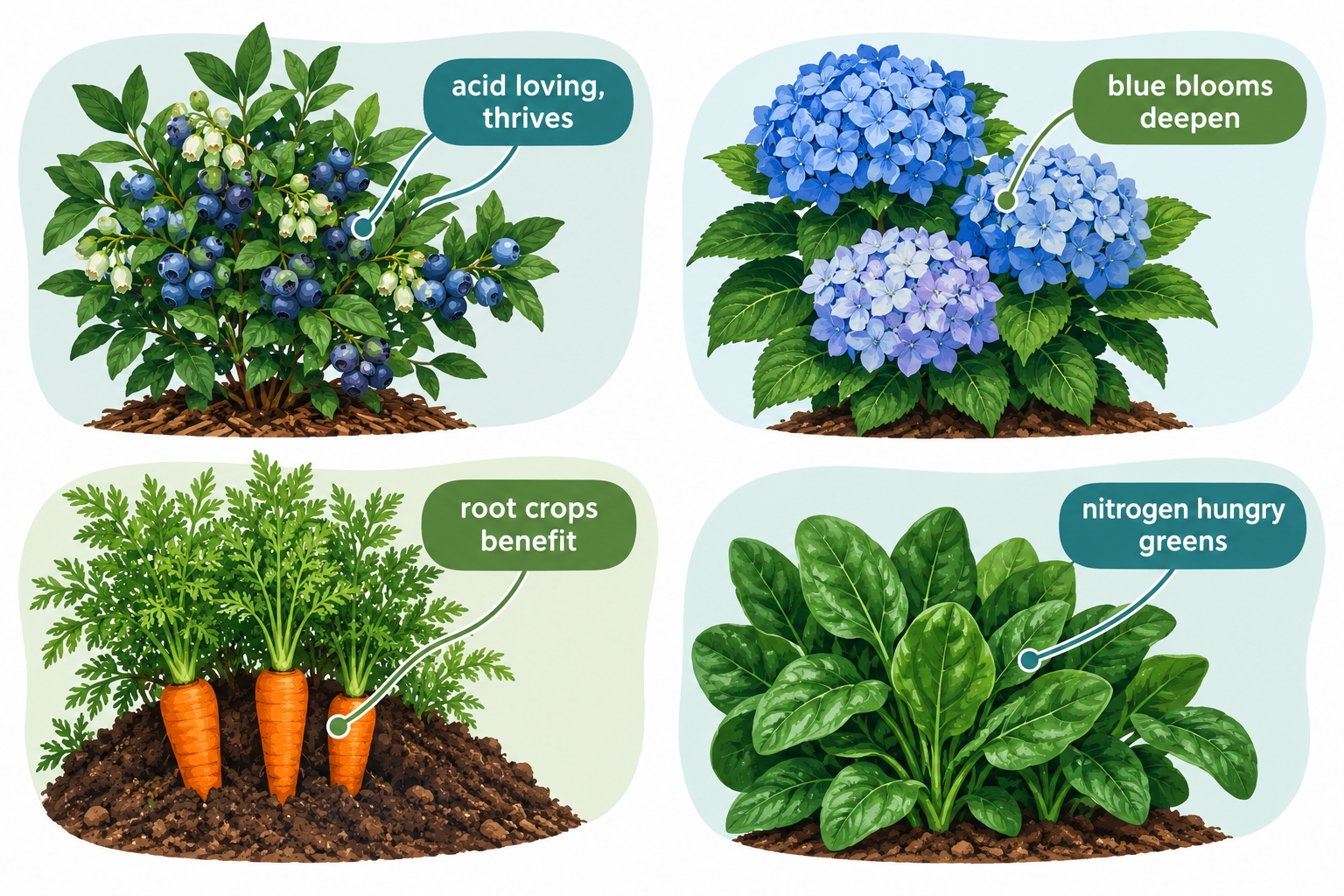
Nitrogen hungry vegetables, berries, and acid loving ornamentals benefit the most from used coffee grounds for plants. This includes leafy greens, root crops, blueberries, and shrubs like azaleas and hydrangeas that already prefer slightly acidic soil.
A 2025 red radish study tested spent coffee grounds at 0, 7.5, 15, and 30 tonnes per hectare in loamy sand soil and found significant gains in soil organic matter and key nutrients including nitrogen, phosphorus, potassium, magnesium, and zinc. At the highest rate, soil organic matter rose by about 50%, phosphorus by 27.5%, magnesium by 14.6%, and manganese by 55.5%. The radish tubers themselves ended up with 32% more magnesium, 55% more manganese, and 35% more vitamin C.
Plants that generally respond well to used coffee grounds:
- Blueberries and other acid loving berries, because their preferred soil pH sits close to what coffee grounds create
- Tomatoes and peppers, which are heavy nitrogen feeders once established (more on tomatoes below)
- Carrots, radishes, and other root vegetables, based on documented nutrient gains in trial soil
- Leafy greens like spinach and lettuce, which showed strong yield response in controlled trials
- Azaleas, camellias, gardenias, hydrangeas, and rhododendrons, all classic acid loving ornamentals
- Foliage houseplants such as pothos, philodendron, peace lily, spider plant, and monstera, when grounds are well composted and kept to 5 to 10% of the potting mix
Decision rule: if a plant already grows well in slightly acidic, humus-rich soil and needs a lot of nitrogen to keep producing leaves or fruit, used coffee grounds are worth trying at a low rate.
Which Plants Don't Like Coffee Grounds
Plants that need alkaline or neutral soil, fast drainage, or very low organic content generally do not like coffee grounds. This includes succulents, cacti, orchids, lavender, and most seedlings.
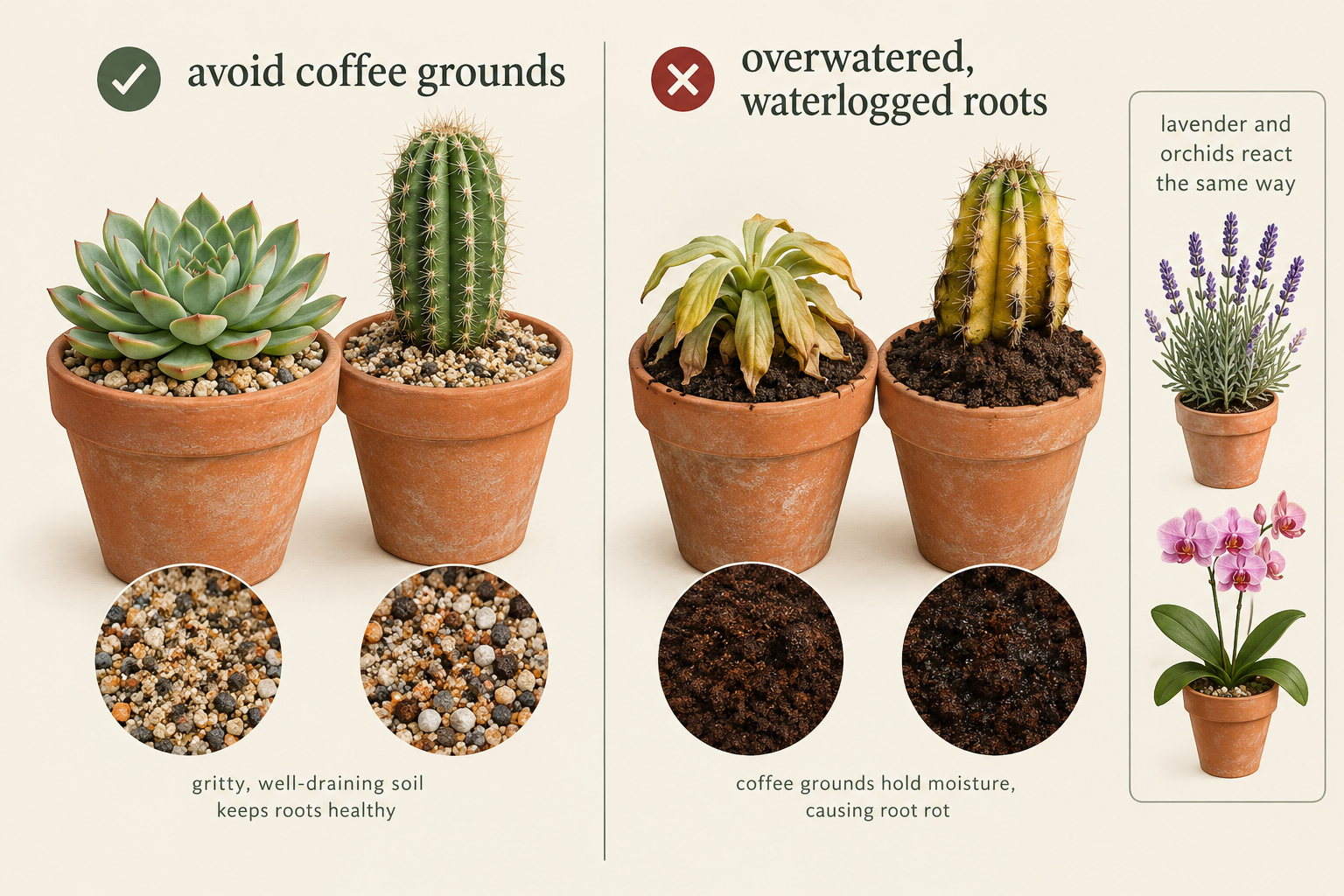
Multiple horticultural sources point to the same pattern: species that prefer neutral to alkaline soil, such as lavender, many Mediterranean herbs, and legumes like peas and beans, often do not benefit from coffee grounds, especially at high rates. Repeated applications push soil more acidic over time, and the short-term nitrogen tie-up described earlier can cause stunting or yellowing (chlorosis) in these species.
Succulents, cacti, and orchids need very free-draining, low-organic substrate. Fresh coffee grounds hold moisture and compact easily, which works against everything these plants need from their soil.
Do tomato plants like coffee grounds? Mostly yes, but with a caveat. Mature, established tomato plants tolerate and often benefit from small amounts of composted coffee grounds worked into the soil around them, since they are heavy nitrogen feeders. Young tomato seedlings are a different story. Fresh grounds piled near a seedling's stem can encourage mold and tie up the nitrogen the seedling needs immediately, so wait until the plant has several true leaves before introducing any coffee grounds at all.
Plants and situations where coffee grounds usually cause more harm than good:
- Succulents, cacti, and most orchids
- Lavender and Mediterranean herbs like rosemary and thyme
- Seedlings and freshly transplanted starts
- Peas, beans, and other legumes that prefer near-neutral soil
- Any plant already growing in alkaline soil for a specific reason (some clematis, lilac, and certain lilies)
Can You Use Coffee Grounds on All Plants
No, you cannot use coffee grounds on all plants safely, and treating them as a universal fertilizer is the most common mistake gardeners make. The right answer depends on the plant's preferred soil pH, its drainage needs, and whether the grounds are fresh or composted.
Indoor plants and used coffee grounds: houseplants are a mixed bag. Foliage plants that like rich, slightly acidic, moisture-retentive soil, such as pothos, philodendron, and peace lily, can handle composted coffee grounds at around 5 to 10% of the potting mix. Cacti, succulents, and orchids should skip coffee grounds entirely, since their pots already need to dry out fast between waterings and organic material like grounds slows that down.
A good test before adding coffee grounds to any plant, indoor or outdoor:
- Does the plant already prefer slightly acidic soil? If yes, proceed cautiously.
- Does the plant need excellent drainage (succulent, cactus, orchid)? If yes, skip the grounds.
- Is the plant a seedling or recent transplant? If yes, wait.
- Are the grounds composted or dried, not fresh and wet? If not, process them first.
Common mistake: pouring a full mug of wet grounds straight onto a houseplant's surface soil. That single dose can be denser and more compacted than a whole month of gradual composted additions, and it is one of the fastest ways to trigger the mold problems covered next.
How to Use Coffee Grounds as Fertilizer Without Mold or Mistakes
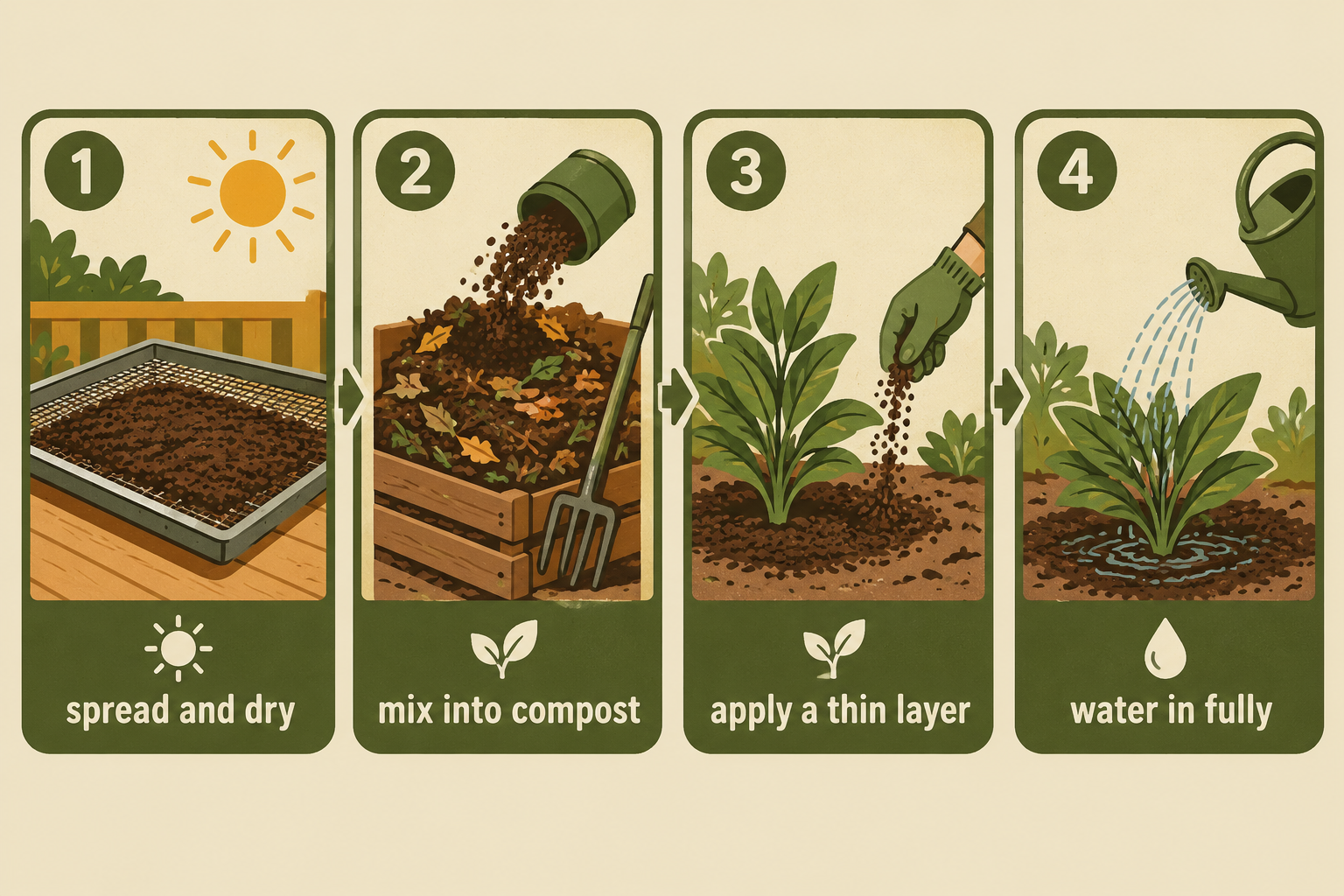
The safest way to use coffee grounds as fertilizer is to dry or compost them first, then work a thin layer into the top few inches of soil instead of leaving a thick surface layer that traps moisture. Wet, undisturbed grounds sitting on top of soil are what actually cause mold and a hard, water-repellent crust.
Can you put coffee grounds directly on plants? You can, but only in a thin layer, mixed slightly into the surface soil rather than piled up, and never touching the stem or trunk directly. A dense layer of fresh grounds left on the surface blocks air and water from reaching the roots, which is the opposite of what a fertilizer should do.
How to dry used coffee grounds:
- Spread the wet grounds in a thin layer on a baking sheet, mesh screen, or old newspaper.
- Set them somewhere with airflow, ideally outdoors or near a sunny window.
- Stir once or twice a day for two to four days until they feel dry and crumbly, not clumped.
- Store dried grounds in a paper bag or open container, never sealed plastic while damp, since trapped moisture is what starts mold.
Once dried, mix the grounds into potting soil, garden beds, or a compost pile rather than leaving them exposed. Laboratory and pot trials on spent coffee grounds as a soil fertility booster tested dried grounds at 0 to 3% of soil volume and found that increasing the dose from 1 to 3% steadily improved organic matter, total carbon, total nitrogen, and available phosphorus. Those same trials note that higher, undiluted doses risk creating dense, poorly aerated soil, which is the mechanism behind most mold and crusting complaints.
If you brew with a method that produces a lot of fine sediment, like a French press, you will end up with more used coffee grounds per pot than a paper filter method leaves behind. Our French press brewing guide covers how much grounds a typical brew produces, and our Chemex filter guide explains why paper filtered grounds tend to be drier and easier to compost right away.
Do Coffee Grounds Lower Soil pH
Used coffee grounds can lower soil pH slightly over repeated applications, but the effect is usually mild, and in the 2025 spinach trial the grounds actually raised pH from an acidic 5.2 toward a healthier 6.8 rather than pushing it lower. The direction and size of the pH shift depends on the starting soil and how much material is applied.
This surprises a lot of gardeners, because "coffee grounds acidify soil" is repeated so often online. Used grounds are actually closer to neutral than raw coffee, since most of the acidity in coffee brewing gets extracted into the liquid you drink, not left behind in the solids. What used grounds reliably add is organic matter and structure, which can buffer soil pH toward a healthier middle range depending on what the soil looked like beforehand.
Practical meaning: do not assume a scoop of used coffee grounds will reliably push your soil acidic by a specific amount. Test your soil pH before and after a season of use if precise acidity matters for a plant like blueberries or azaleas, and treat coffee grounds as one input among several, not a dedicated pH tool.
How Often Should You Add Coffee Grounds to Soil
A reasonable rate is a thin layer worked into soil once every two to four weeks during the growing season, kept under 10 to 20% of the total soil or compost volume. Going heavier or more frequent than that raises the risk of nitrogen tie-up, compaction, and mold without adding a proportional benefit.
The multi-criteria fertilizer analysis from 2026 that ranked coffee grounds among the best organic-mineral fertilizer components specifically credited them for nutrient content and moisture retention, but the same analysis paired coffee grounds with other ingredients like eggshells rather than recommending them alone at high volume. That pairing approach matters: coffee grounds work best as part of a mix, not as the sole soil additive.
How much coffee grounds per plant is too much? As a working guide:
| Plant type | Suggested frequency | Amount per application | Risk if overdone |
|---|---|---|---|
| Established tomatoes, peppers | Every 3-4 weeks | Thin layer, worked in | Nitrogen tie-up, slow growth |
| Blueberries, azaleas | Every 4-6 weeks | 1/4 inch layer, mulched over | Excess acidity buildup |
| Leafy greens, spinach | Every 2-3 weeks in compost | Mixed at under 10% of soil | Compaction, poor drainage |
| Houseplants (pothos, philodendron) | Once at repotting only | 5-10% of potting mix | Mold, root rot |
| Succulents, cacti, orchids | Never | None | Waterlogged roots, rot |
Common mistake: treating "more is better" as a rule with organic matter. A 2025 red radish trial did use a high rate of 30 tonnes per hectare successfully, but that was a controlled agricultural application, carefully measured against soil type, not a backyard gardener eyeballing scoops from a French press filter.
Can You Mix Used Coffee Grounds With Compost
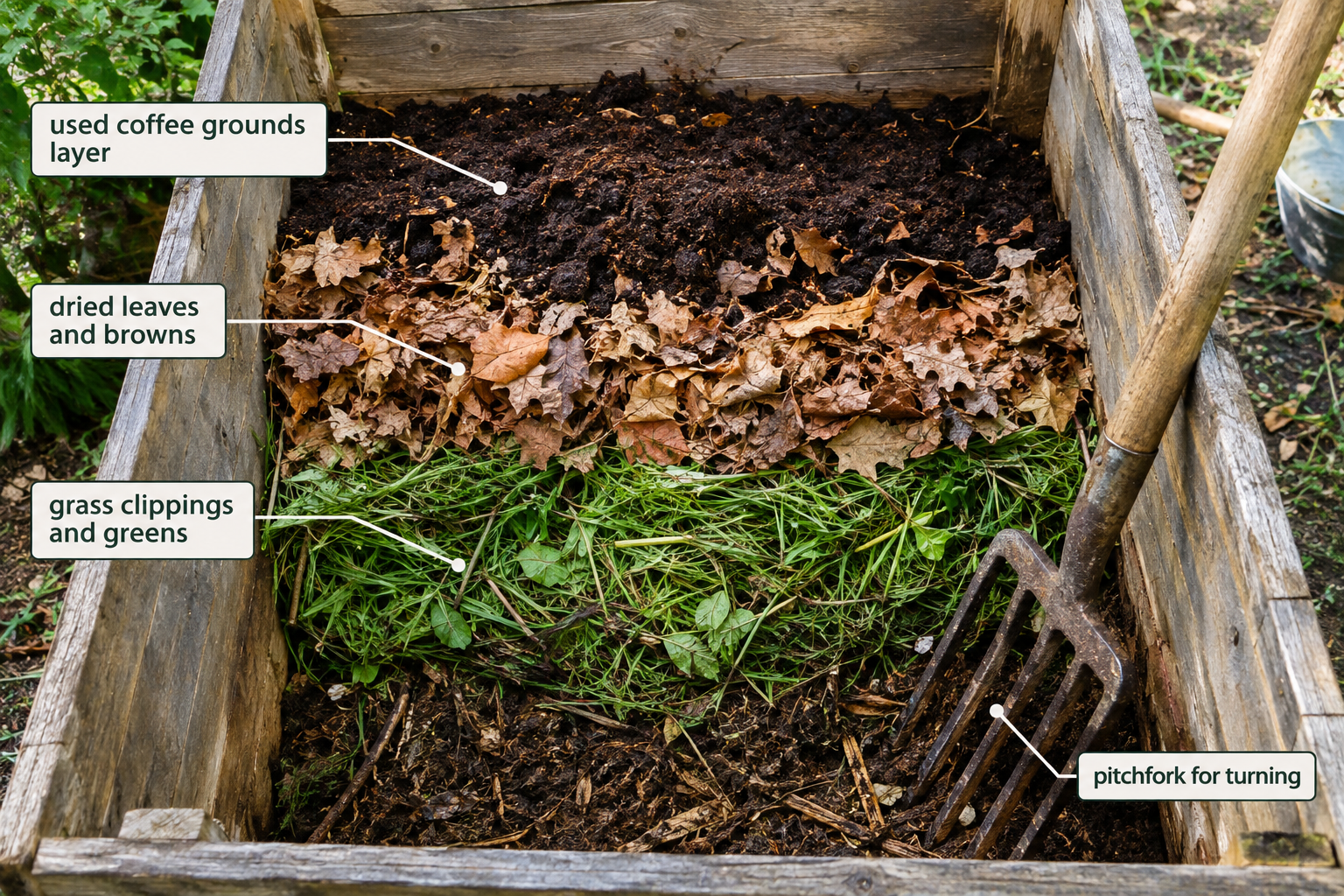
Yes, mixing used coffee grounds with compost is one of the most reliable ways to use them, since composting neutralizes most of the mold and odor risk that comes with fresh grounds. Coffee grounds count as a nitrogen-rich "green" material in composting terms, even though they are brown in color.
A study on liquid organic fertilizer production found that feedstock made with 20 to 30% coffee grounds produced a milder, fermented smell by the end of processing, which points to effective microbial breakdown of the material rather than a raw, sour result. That is the same principle behind backyard composting: coffee grounds broken down alongside carbon-rich "brown" material like dried leaves or shredded paper turn into something a plant can actually use, instead of sitting as a wet, matted layer.
Simple coffee grounds compost ratio: aim for roughly one part used coffee grounds to three or four parts dry brown material (leaves, straw, shredded cardboard) by volume. Turn the pile every one to two weeks so oxygen reaches the coffee grounds layer and prevents the compacted, moldy clumps that give coffee grounds a bad reputation in compost bins.
What to do with used coffee grounds if you don't garden: save them in a container in the fridge or freezer for a week, then drop them off at a community garden or municipal compost program. Many US cities now accept food scraps including coffee grounds in curbside organics collection, which keeps the material out of landfill methane production entirely.
Do Coffee Grounds Attract Pests or Bugs, and How Long Do They Take to Decompose
Dried or composted used coffee grounds rarely attract pests, but a thick, wet, exposed pile can draw fruit flies, gnats, or mold gnats because of the moisture, not because of the coffee itself. Left in soil, used coffee grounds typically take a few months to fully break down, with the fastest visible changes happening within the first 60 to 100 days.
The 2026 agronomy review on spent coffee grounds noted that both composted and non-composted grounds go through an active decomposition window of roughly 100 days before nitrogen becomes available again to plants. That timeline lines up with why fresh grounds feel inert to a seedling in week one, but the same bed can show a visible nitrogen boost by late in the growing season.
Pests are almost always a moisture and exposure issue, not a coffee issue:
- Keep grounds dry until you mix them into compost or soil
- Bury or work grounds in rather than leaving a surface pile
- Turn compost regularly so grounds do not sit wet in one spot
- Skip adding fresh dairy-based coffee drink residue (milk, cream) to the pile, since that draws pests far more than plain grounds
Are Used Coffee Grounds Better Than Fertilizer
Used coffee grounds are not better than a balanced fertilizer, because they lack enough phosphorus and potassium to support a plant on their own. They work best as a soil amendment that improves structure, moisture retention, and slow-release nitrogen alongside a proper fertilizer program, not as a replacement for one.
The 2025 spinach trial numbers make the gap clear: the coffee-grounds-based fertilizer measured about 2.10% nitrogen but only 0.45% phosphorus and 0.68% potassium. A balanced commercial fertilizer usually carries far higher phosphorus and potassium ratios, which matter for root development and flowering that nitrogen alone cannot support.
The 2026 multi-criteria analysis of organic-mineral fertilizer ingredients ranked coffee grounds near the top of ten components tested, largely for nutrient content and moisture retention, and specifically paired them with poultry eggshells to correct pH and round out the nutrient profile. That pairing is the honest takeaway: used coffee grounds are a strong supporting ingredient, not a standalone fertilizer.
If you are curious about what actually ends up in your grounds based on how you brew, our guide to brewing coffee at home breaks down grind size and extraction, and a quick look at our coffee equipment maintenance guide covers keeping your brewer clean enough that the grounds you save are actually clean, not contaminated with old milk residue or descaling solution.
Used coffee grounds behave less like plant food and more like a slow-release soil conditioner. Treat them that way and most of the common problems disappear.
Coffee Grounds Compatibility Checker
Frequently Asked Questions
Do tomato plants like coffee grounds? Established tomato plants generally tolerate and benefit from small amounts of composted coffee grounds, since they are heavy nitrogen feeders. Young seedlings should wait until they have several true leaves first.
Can I put coffee grounds directly on plants without composting them first? You can apply a thin layer directly, mixed lightly into the surface soil, but avoid piling wet grounds up against stems or leaving a thick undisturbed layer, since that traps moisture and can cause mold.
How often can you put coffee grounds on plants? Roughly every two to four weeks during the growing season works for most nitrogen hungry plants, kept under 10 to 20% of the total soil volume at each application.
Are used coffee grounds safe for indoor plants? Foliage houseplants like pothos and philodendron can handle small, composted amounts mixed into potting soil. Succulents, cacti, and orchids should not get coffee grounds at all, since they need fast drainage.
How long does it take used coffee grounds to fully break down in soil? Most of the visible decomposition happens within 60 to 100 days, and that same window is when the nitrogen in the grounds becomes available to plant roots rather than tied up by soil microbes.
Do coffee grounds attract bugs or pests in the garden? Dry or composted grounds rarely attract pests. Thick, wet piles left exposed on the soil surface are what draw fruit flies and gnats, so the fix is drying the grounds or working them into compost quickly.
Conclusion
Used coffee grounds reward the gardener who treats them like a soil amendment, not a magic fertilizer. Dry or compost them first, keep the dose under 20% of any soil mix, and match the plant to its actual preference for acidity and drainage before adding a single scoop.
Start small: save a week's worth of grounds from your usual brewing routine, dry them on a tray, and mix a thin layer into the soil around one tomato plant or blueberry bush. Watch what happens over a month before you expand the habit to the rest of the garden. Better coffee starts with better answers, and so does better soil.
Keep Exploring Coffee Rank IQ
- Coffee Rank IQ home: reviews, brewing guides, and coffee science
- Best Decaf Coffee That Still Tastes Like Coffee
- Drip Coffee vs Espresso: Caffeine, Flavor, and the Real Difference
- How Many Calories Are in Black Coffee? The Answer Changes Fast
- Best Coffee Maker With Grinder: Fresh Grounds Without an Extra Gadget
References
- eqa.unibo.it/article/view/21303
- eqa.unibo.it/article/download/21303/19429/90516
- dergipark.org.tr/en/pub/jotaf/article/1558760
- theaspd.com/index.php/ijes/article/download/8866/6414/18402
- theaspd.com/index.php/ijes/article/download/6875/4967/14001
- dergipark.org.tr/en/download/article-file/4252415
- www.theplantindex.com/articles/are-coffee-grounds-good-for-houseplants
- dergipark.org.tr/tr/pub/jotaf/issue/91811/1558760
- www.gardeningknowhow.com/composting/ingredients/plants-that-like-coffee-grounds
- www.sciencesocieties.org/publications/csa-news/2025/june/spent-coffee-grounds-in-sustainable-agriculture