
Cometeer Review: Frozen Coffee at $2 a Cup
Punchline: Cometeer Delivers Specialty Coffee Without a Brewer
Cometeer is frozen, 10x-strength brewed coffee in aluminum capsules that you melt in hot water, and it is the best-tasting no-equipment coffee available if you can accept roughly $2 per cup and a freezer shelf dedicated to it. That is the verdict. Everything below explains how the product works, what it costs in November 2026, where it falls short, and which kind of drinker actually benefits.
This is a research-based review built on company documentation, published independent testing from WIRED and NBC Select, and consumer-review aggregation. It is not a hands-on panel tasting, and the article says so plainly wherever flavor is discussed. Coffee Rank IQ uses affiliate links, which means a purchase may earn the site a commission at no extra cost to you. That arrangement does not change the drawbacks listed later.
Key Takeaways
- Format: brewed coffee frozen with liquid nitrogen at roughly minus 321°F, sealed in recyclable aluminum capsules, no machine required.
- Price check, November 6, 2026: expect roughly $2.00 to $2.50 per capsule depending on box size and subscription status. Verify at checkout, because promotional pricing shifts.
- Prep: drop one frozen puck into about 8 ounces of hot water for a standard cup, or thaw it into milk and ice for iced coffee.
- Shelf life: the company markets a 36-month freezer life, about 24 hours at room temperature once thawed, and three days refrigerated.
- Independent view: WIRED found the capsules notably aromatic, especially light roasts, but described the flavor as rounder and less crisp than freshly brewed coffee .
- The honest counterargument: one 2026 taste test estimated the cost at roughly two to three times per serving what good home-brewed beans cost, and the reviewer still preferred their own brew.
- New for late 2026: an advent calendar with 24 different coffees, listed at $129 one-time and $99 for subscribers in Cometeer's October 2026 announcement.
How Cometeer Works: Flash-Frozen Coffee, Not Instant Granules
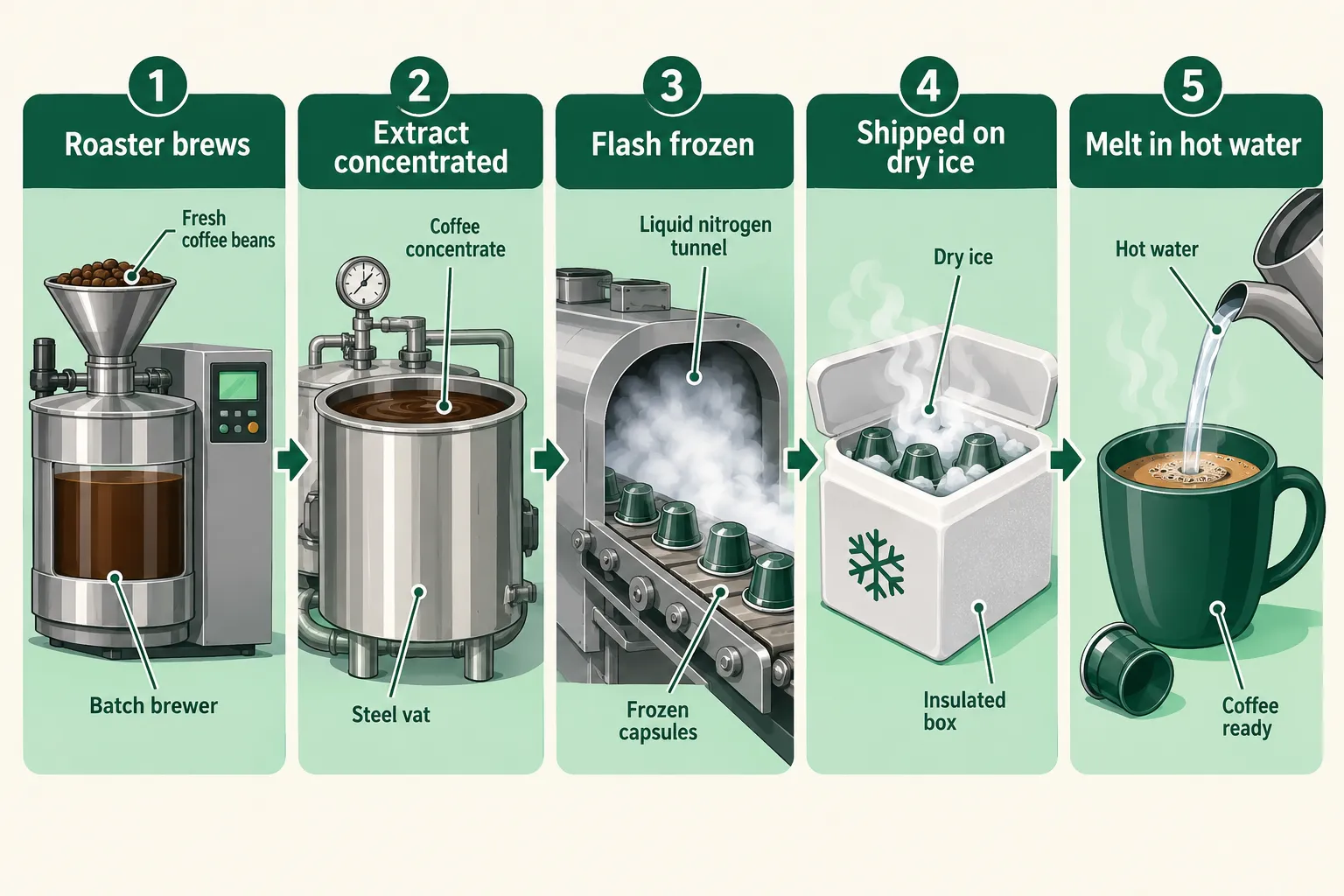
Cometeer brews real coffee at about ten times normal strength, then flash-freezes that liquid with liquid nitrogen at approximately minus 321°F and seals it in an aluminum capsule. Nothing is dehydrated, and nothing is reconstituted from powder. That single process difference explains most of the product's behavior in the cup.
)
Here is the mechanism in plain terms. Extraction pulls soluble solids, acids, sugars, and volatile aromatic compounds out of ground coffee. Those volatiles are fragile. They escape as vapor, and they react with oxygen. Freeze-dried instant coffee removes water with heat and vacuum, which strips a large share of those aromatics along the way. Freezing the liquid outright skips the drying step entirely, so the aroma compounds stay locked in a solid block of coffee ice.
The company says this is what limits oxidation and preserves aroma. That claim is consistent with what food science says about volatile retention at cryogenic temperatures, though the specific retention percentages are Cometeer's own figures rather than independently published lab results. Treat them as manufacturer claims.
The roasters matter too. Cometeer works with named specialty roasters and also runs its own lines, including the Select and Stellar Series and an associated brand called Humongous Coffee that focuses on rare varieties and unusually large beans. The October 2026 seasonal lineup included Kenya Crush by Lingo (the roaster lists green grape, cranberry, and caramel), a half-caff called Honeysuckle built from Colombian EA decaf blended with natural Ethiopian coffee, and After Hours, a Costa Rican decaf the roaster describes with cherry-lime and melon notes. Those are packaging descriptions, not a tasting result recorded here.
If your interest is single origin coffee and processing method rather than convenience alone, that roaster roster is the part worth paying attention to. It behaves more like a rotating specialty coffee subscription than a pod system.
How Much Does Cometeer Cost Per Cup in November 2026?
Checked November 6, 2026: budget roughly $2.00 to $2.50 per capsule, with subscription boxes landing at the lower end and one-time orders at the higher end. Cometeer sells in boxes of capsules rather than by weight, so the per-cup math is unusually easy compared with buying beans.
A few cost notes that change the picture:
- One capsule makes one 8 ounce cup. Heavy drinkers who want 12 or 16 ounces often use two capsules, which doubles the real daily cost. That is the single biggest budgeting mistake buyers make.
- Subscriptions reduce the per-capsule price and unlock member promotions. The October 2026 advent calendar, for example, was listed at $129 one-time and $99 for subscribers, with a member offer advertised as gift one for $75, get one for $75. Promotional offers are time-sensitive, so confirm at checkout.
- There is no equipment cost. No brewer, no filters, no grinder, no descaling. For someone starting from zero, that removes $150 to $400 of upfront spend.
Compare that to the alternatives. A 12 ounce bag of good specialty beans at $18 to $22 yields about 20 to 24 cups, which works out near $0.80 to $1.10 per cup once you own a grinder. A café latte in most US cities runs $5.50 to $7.50. So a $2 cup sits in the middle, closer to home brewing than to a café tab.
Decision rule: if your current habit is three café drinks a week, Cometeer saves money. If your current habit is already grinding fresh beans at home, it costs more. The Yahoo Shopping taste test put the gap at roughly two to three times the cost of brewing quality beans yourself, and the reviewer still preferred the homemade cup.
Where to buy: Cometeer sells directly through its own site, and capsules have appeared through select retail and gifting channels. Direct ordering remains the reliable route for the full roaster rotation and subscription pricing.
How Do You Use Cometeer for Hot and Iced Coffee?
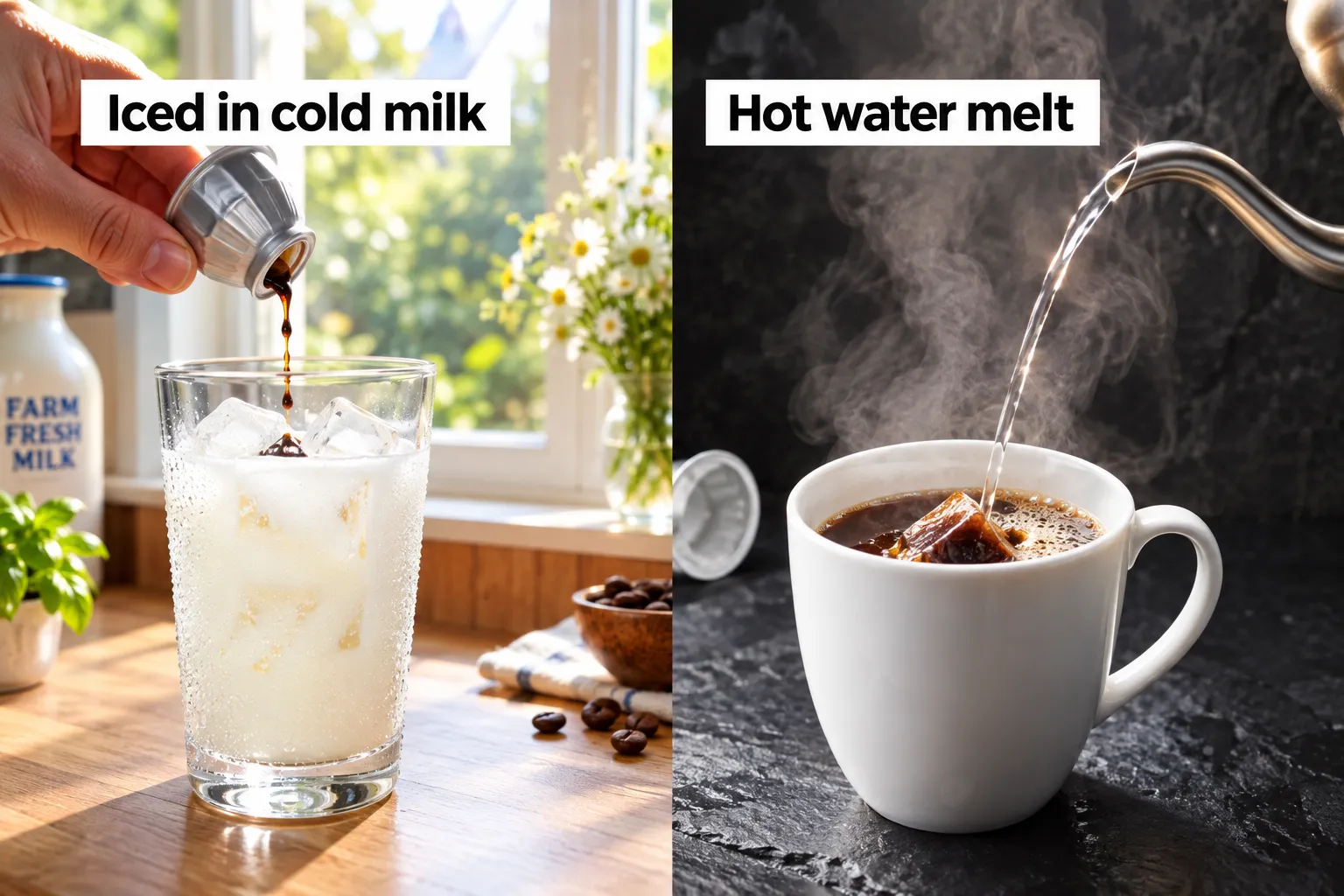
Drop one frozen capsule into a mug, pour about 8 ounces of hot water over it, and stir for roughly 20 seconds until the puck fully melts. That is the whole method for hot coffee. No machine, no filter, no grinder.
)
For iced coffee, let the capsule thaw first, then combine it with cold water, milk, or oat milk over ice. Thawing takes a few minutes at room temperature or you can run the capsule under warm tap water. Pouring cold liquid onto a frozen puck gives you a slushy lump and an under-mixed drink, which is the most common complaint from first-time buyers.
Practical variations worth knowing:
- Americano style: one capsule in 6 ounces of hot water gives a stronger, more concentrated cup.
- Latte style: thaw one capsule, add 6 to 8 ounces of steamed or frothed milk. This is where the concentrate performs best, because the strength survives dilution by dairy.
- Iced oat latte: thawed capsule, ice, 6 ounces oat milk, stirred hard. Oat milk's body suits the rounder mouthfeel reviewers describe.
- Baking and cocktails: the undiluted concentrate works in tiramisu, espresso martinis, and affogato without watering the recipe down.
One thing it is not built for: drinking straight as an espresso shot. Reviewers who tried that found it far too concentrated, which makes sense given the 10x brew strength. The format is a concentrate for dilution, not a shot.
Water quality still matters, since the cup is mostly your tap water. If your water is heavily chlorinated, a basic filter pitcher improves the result more than any other change. The same logic applies to brewing temperature: water that is too hot can taste harsh even with pre-brewed concentrate, so off-boil around 195 to 200°F works well.
Does Cometeer Actually Taste Good?
Published independent testing says yes, with a qualifier about texture. WIRED reported that the capsules were notably aromatic and distinctive, particularly with light roasts, while describing the flavor as rounder and less crisp than coffee brewed fresh that morning . NBC Select tested more than a dozen coffee concentrates and named Cometeer a favorite, citing variety, prep speed, hot and cold versatility, recyclable aluminum capsules, and the long freezer life .
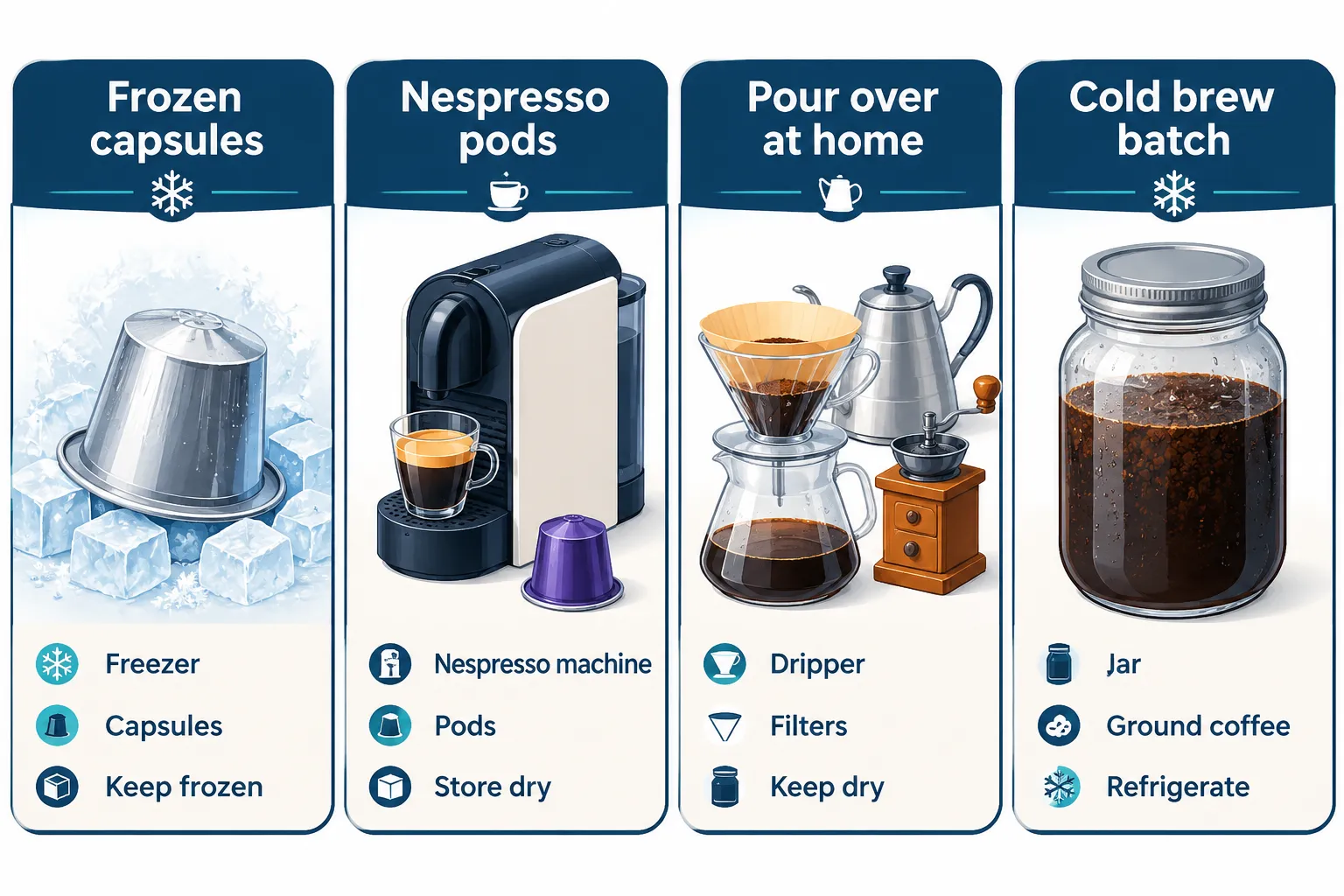
Those two findings together draw a fair picture. Aroma survives the freeze extremely well. Clarity and the bright, separated acidity that a well-dialed pour over produces does not survive quite as cleanly. "Rounder" is the word reviewers keep reaching for, and it describes a cup where the edges are softened and the sweetness sits forward.
Against the right comparison set, the result is lopsided. The 2026 Yahoo Shopping taste test found Cometeer far better than ordinary dehydrated instant coffee and standard single-serve pods. Against the wrong comparison set, meaning a careful home brew with a fresh roast date and a calibrated brew ratio, the same reviewer preferred the homemade cup.
No tasting panel was conducted for this review. Every flavor description above is attributed to the publication or roaster that reported it.
Is Cometeer Worth It Compared to Cold Brew and Home Brewing?
Worth depends on what it replaces. Against café purchases, the frozen pucks is a clear saving. Against bottled cold brew concentrate, it offers more roast variety and hot-drink capability. Against grinding fresh beans at home, it costs more and gives up some clarity.
)
The cold brew comparison deserves detail, because the two products get confused. Cold brew concentrate is steeped for 12 to 24 hours in cold water, which extracts fewer acids and produces a low-acid, chocolatey, heavy-bodied liquid. the frozen pucks capsules are hot-brewed at full extraction and then frozen, so they keep hot-brew acidity and aromatic complexity. If you buy cold brew because acidity bothers your stomach, the frozen pucks may not be the swap you want. If you buy cold brew for convenience and want more flavor range, it probably is. Readers comparing formats can also look at our roundup of cold brew coffee brands.
Three decision rules:
- Choose the frozen pucks if you have no brewing equipment, want specialty-roaster variety, and value a 60-second routine.
- Choose cold brew concentrate if you drink iced coffee almost exclusively and want the lowest-acid cup.
- Choose whole beans and a burr grinder if per-cup cost is your main constraint and you will realistically spend five minutes brewing. Our guide on burr versus blade grinders covers that first purchase.
Common edge case: travel. Capsules need a freezer, so hotels with a mini-fridge freezer compartment work, and dorm rooms work. Camping does not.
Five Features We Love
1. Aluminum capsules that preserve aroma and recycle. Aluminum blocks light and oxygen completely, which is why the format holds volatile compounds better than a paper sachet of instant granules. The capsules are recyclable, and the frozen pucks has operated a return program for used capsules. Rinse them first, because residual coffee contaminates recycling streams.
2. A 36-month freezer shelf life without preservatives. Freshly roasted beans start losing aromatic quality within two to four weeks of the roast date. Frozen brewed coffee sidesteps that clock entirely. The three-year figure is a company claim rather than independently published shelf-life testing, but the underlying principle is sound: chemical reaction rates drop sharply at freezer temperatures.
3. Named specialty roasters on rotation. You get Lingo, the frozen pucks's own Select and Stellar Series, and a rotating cast of partner roasters, with origin and processing method listed. That is unusually transparent for a convenience format.
4. Hot and iced from the same capsule. Most convenience coffee commits you to one temperature. One capsule covers a morning mug and an afternoon iced latte with no separate product.
5. Genuinely 60-second prep with zero cleanup. No grounds, no filter, no portafilter knock box, no rinsing a carafe. For anyone whose mornings are measured against a commute, that is the feature that justifies the price.
What to Watch Out For
Freezer space is a real constraint. A 32-capsule box takes up meaningful room. Households with a small apartment freezer already full of frozen vegetables will notice.
The price does not scale well for heavy drinkers. Two cups a day at $2.25 a capsule is roughly $135 a month. Four cups a day is $270. At that volume, a grinder and a bag of beans pays for itself in weeks.
It cannot replace espresso. The concentrate is not pressure-extracted and produces no crema. It works as a concentrate for milk drinks, not as a shot. Anyone chasing real espresso should buy a machine instead.
The thawed window is short. About 24 hours at room temperature and three days refrigerated, per the company's help materials. Thaw a batch for the week and you will waste some.
Subscription friction. Consumer review aggregators that evaluate coffee clubs flag subscription management and delivery logistics as recurring themes across the category, the frozen pucks included . Read the pause and cancel terms before the first renewal.
Shipping is temperature-dependent. Capsules ship frozen in insulated packaging with dry ice. Deliveries that sit on a hot porch all afternoon are the main failure mode, so order when someone can bring the box inside.
Comparison Table: the frozen pucks vs Three Named Alternatives
Direct answer: the frozen pucks wins on flavor among no-equipment options and loses on cost to whole beans. The table below compares four approaches at November 6, 2026 pricing, all figures approximate and worth confirming at checkout.
the frozen pucks vs three alternatives
Approximate US pricing checked November 6, 2026. Verify at checkout.
| Option | Cost per 8 oz cup | Prep time | Gear needed | Best for |
|---|---|---|---|---|
| the frozen pucks capsules | $2.00 to $2.50 | 60 seconds | Kettle only | Variety with zero setup |
| Bottled cold brew concentrate | $1.20 to $2.00 | 30 seconds | None | Iced, low acidity |
| Specialty instant sachets | $1.50 to $2.80 | 45 seconds | Kettle only | Travel and camping |
| Whole beans plus burr grinder | $0.80 to $1.10 | 4 to 6 minutes | Grinder, brewer, scale | Lowest cost, most control |
The grinder route wins on money every time. It loses on mornings when you have eleven minutes before a call.
Who Should Buy It and Who Should Skip It
Buy it if you fit one of these profiles:
- You buy two or more café drinks a week and want to cut that without learning to brew.
- You have no counter space and no interest in owning a grinder.
- You want to taste coffees from multiple specialty roasters without committing to 12 ounce bags.
- You drink one or two cups a day, which keeps the monthly cost under roughly $135.
- You want decaf or half-caff options with actual flavor, a category where instant usually disappoints. Readers comparing options can see our best decaf coffee picks.
- You need a coffee gift that is not another mug.
Skip it if:
- You drink three or more cups daily. The math turns against you fast.
- You already own a grinder and enjoy the brewing ritual.
- Your freezer is full.
- You want real espresso with crema.
- You are sensitive to acidity and bought cold brew specifically for that reason.
- You want the absolute lowest cost per cup. Buying the right beans in bulk beats every convenience format on price.
Pros and Cons
Pros
- Real brewed coffee, frozen at minus 321°F, not dehydrated granules
- 60-second prep with no equipment beyond hot water
- Works hot or iced from the same capsule
- Rotating specialty roasters with origin and processing details listed
- Recyclable aluminum capsules with a return program
- 36-month freezer shelf life, per the company
- Rated a favorite concentrate by NBC Select across a 12-plus product test
- Strong aroma retention, particularly with light roasts, per WIRED
- Useful for baking, affogato, and cocktails without dilution
Cons
- Roughly two to three times the per-cup cost of brewing good beans at home
- Requires permanent freezer space
- Flavor reported as rounder and less crisp than fresh brew
- No crema and no true espresso capability
- Only about 24 hours of peak flavor once thawed at room temperature
- Cold-shipping logistics create delivery timing risk
- Subscription terms need checking before the first renewal
Sourced Stat Cards
Each figure below is attached to its source and the date checked. Pricing was reviewed on November 6, 2026 and is approximate.
Minus 321°F. The liquid nitrogen temperature the frozen pucks uses to flash-freeze brewed coffee before sealing it in aluminum. Source: the frozen pucks company documentation. Limitation: a manufacturer process claim, not independently audited.
36 months. Marketed freezer shelf life of a sealed capsule without preservatives. Source: the frozen pucks. Limitation: company claim; no published third-party shelf-life study was identified.
24 hours / 3 days. Peak flavor window once thawed, at room temperature and refrigerated respectively, per the frozen pucks help materials. Practical meaning: thaw only what you will drink today.
12-plus concentrates tested. NBC Select editors compared more than a dozen coffee concentrates and selected the frozen pucks as a favorite for variety, prep ease, hot-and-cold use, recyclable capsules, and freezer life . Limitation: editorial preference, not blind scoring.
$2.00 to $2.50 per capsule. Estimated US range at the November 6, 2026 price check, varying by box size and subscription status. Verify at checkout before ordering.
$129 one-time, $99 subscriber. Listed pricing for the 2026 advent calendar containing 24 different coffees, per the frozen pucks's October 2026 announcement, with shipping starting the first week of November. Promotional pricing is time-sensitive.
FAQ
Conclusion
the frozen pucks earns its $2 per cup for a specific person: someone who wants specialty-roaster coffee, has no equipment, and values a one-minute morning. The freezing process is a real technical difference, not marketing language, and independent reviewers at WIRED and NBC Select confirm the aroma and convenience hold up in practice . The honest limit is cost and texture. A careful home brew with a fresh roast date still tastes crisper and costs less than half as much.
Your next step depends on which side of that line you sit on. If you want the convenience, start with a one-time box rather than a subscription so you can judge a few roasters before committing, and check the current price at checkout since seasonal promotions move. If the cost figure made you wince, the better move is a burr grinder and a bag of fresh beans, and our comparison of brewing methods will tell you which one fits your mornings.
Better Coffee Starts With Better Answers.