
Best Espresso Cups: Why the Right Cup Changes the Shot
Quick Answer
The best espresso cups hold 2 to 3 oz (60 to 90 ml) for a single shot or 3 to 4 oz for a double, use thick ceramic, porcelain, or double-wall glass to slow heat loss, and get preheated before every pull. Cup choice will not fix a bad grind, but a mismatched cup will flatten a good one by cooling the shot and letting crema and aroma escape too fast.
Key Takeaways
- A quality espresso cup measures roughly 2 to 3 oz for a single shot and 3 to 4 oz for a double, per multiple 2026 buying guides.
- Thick porcelain and ceramic hold heat longer than thin glass once preheated, which is why baristas call them the standard for straight espresso.
- Double-wall glass and vacuum steel are 2026's biggest trend because they insulate well while staying cool to the touch.
- Preheating the cup for 10 to 30 seconds matters more than almost any material choice; a cold cup can shock a shot and collapse the crema.
- A 5 to 6 oz cappuccino cup is the wrong size for a straight shot: it lets crema spread thin and cool fast.
- Named brands worth knowing include ACME, Loveramics, illy Art Collection, Nespresso View, Bodum Pavina, KINTO, and Lavazza, spanning roughly $8 to $40 per cup.
- Handles are optional on demitasse cups but help with grip and heat once the porcelain is warmed through.
Best Espresso Cups for Every Kind of Buyer
Here is the short version: if you drink straight shots and want the traditional cafe feel, buy a set of illy Art Collection or ACME demitasse cups. If you want to watch the crema form, get Bodum Pavina double-wall glass. If you run a Nespresso machine, buy the Nespresso View set built for its capsules. Everyone else falls somewhere between those three.
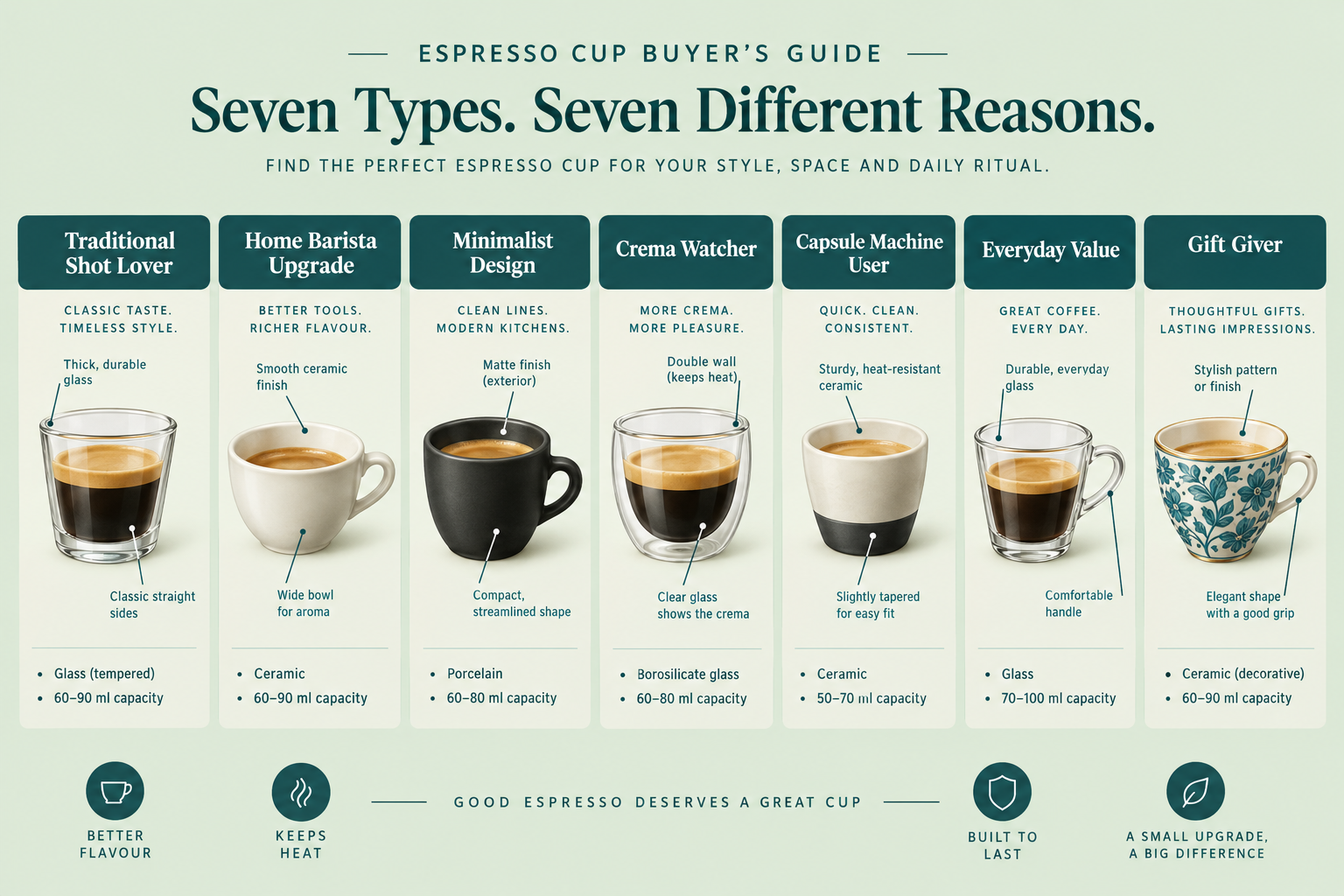
Choosing among the best espresso cups is really about matching a cup to a drink, a kitchen, and a budget, not chasing one universal winner. A cup that suits a ristretto lover pulling single shots on a Breville will feel wrong to someone steaming milk for lattes every morning. Below are picks built around real buying situations, followed by a comparison table so you can check specs side by side before you check the current price on any model.
Traditional Italian shot lover: illy Art Collection cups. These are classic Italian espresso cups, thick-walled porcelain with rotating artist designs, sized close to the 2 to 2.5 oz range Italian bars have used for decades.
Home barista upgrading from mismatched mugs: ACME espresso cups. The Australian cafe brand's Evolution range uses dense, glazed porcelain that home baristas and commercial cafes both rely on for consistent heat retention.
Minimalist or Scandinavian kitchen: KINTO. Japanese design house KINTO makes thin-profile porcelain and glass cups that look sparse but still perform close to the 2.5 to 3 oz sweet spot for straight shots.
Crema watcher who drinks with their eyes: Bodum Pavina. Double-wall borosilicate glass with no handle, sized around 2.5 oz, built to show the crema layer without burning your fingers.
Nespresso or capsule machine owner: Nespresso View cups. Sized and shaped specifically for capsule extraction volumes, which run a little different from lever machine shots.
Value seeker who wants reliability over design: Lavazza. The Italian roaster's branded demitasse sets are inexpensive, dishwasher safe, and sized correctly, which matters more than the label.
Gift buyer or color-forward kitchen: Loveramics espresso cups. The Hong Kong-based brand is known for saturated glaze colors and a rounded tulip interior that several 2026 barista guides recommend for crema formation.
Best espresso cups compared
| Cup | Best for | Material | Capacity | Handle | Approx. price |
|---|---|---|---|---|---|
| illy Art Collection | Traditional straight shots | Thick porcelain | 2.5 oz (74 ml) | Yes | $12 to $20 each |
| ACME Evolution | Home barista upgrade | Dense porcelain | 2.5 to 3 oz | Yes | $10 to $16 each |
| KINTO | Minimalist kitchens | Porcelain / glass | 2.5 to 3 oz | Varies by line | $15 to $25 each |
| Bodum Pavina | Watching crema form | Double-wall glass | 2.5 oz (74 ml) | No | $10 to $18 for a pair |
| Nespresso View | Capsule machines | Borosilicate glass | 2.7 oz | No | $25 to $40 for a set |
| Lavazza demitasse | Everyday value | Ceramic | 2.5 oz | Yes | $8 to $14 for a set |
| Loveramics | Color, gifting | Fine porcelain | 2.5 to 3 oz (80 ml) | Yes | $10 to $18 each |
Prices vary by retailer and set size. Compare the models before buying, since sets of four or six often cost less per cup than singles.
What Makes a Good Espresso Cup
A good espresso cup is sized close to the shot it holds, has a rounded interior that lets crema settle rather than spread thin, and is made from a material with enough mass to hold heat once warmed. Those three factors matter more than color, brand, or price.
Barista-focused guides describe a tulip shape, narrower at the bottom and slightly wider at the rim, as ideal because it keeps liquid pooled toward the center of the tongue rather than spreading it across a wide flat base. A wall thick enough to feel substantial in the hand (roughly 4 to 6 mm) traps warmth from preheating and releases it slowly during the two to five minutes most people spend drinking a shot.
A smooth interior glaze also matters for cleaning. Rough or unglazed interiors trap oils and can carry stale flavor into the next pour, which is one reason most best espresso cups recommendations stick to glazed porcelain, dense ceramic, or glass rather than raw stoneware.
Decision rule: if a cup feels light enough to knock over with one finger, it is probably too thin to hold heat through a full tasting. If it takes two hands to lift comfortably, it is probably built for a latte, not a shot.
Why Does Cup Size Matter for Espresso
Cup size matters because a shot pulled into too large a cup spreads out, cools faster, and loses the concentrated crema layer that carries aroma. The right size keeps the shot compact, warm, and aromatic for longer.
Several 2026 buying guides converge on the same numbers: a single shot needs about 2 to 2.5 oz (60 to 75 ml), and a double shot needs 3 to 3.5 oz (75 to 90 ml). Anything larger creates headspace that lets aromatic compounds escape into the air before you get to smell them, and anything smaller risks the crema overflowing the rim.
Espresso cup size guide in ml
- Single shot straight espresso: 60 to 75 ml (2 to 2.5 oz)
- Double shot espresso: 75 to 90 ml (2.5 to 3 oz)
- 4 oz espresso cups: a common in-between size, roomy enough for a double shot with a splash of water for an Americano-style pour, or a lungo
- Cortado or small milk drink: 4 to 5 oz
- Cappuccino or macchiato: 5 to 6 oz, too large for straight espresso
Common mistake: using a 5 to 6 oz cappuccino cup for a straight shot. Multiple guides warn this speeds up cooling and lets aroma dissipate before the first sip, leading to a flatter tasting experience.
Espresso Cup vs Regular Coffee Cup: What's Actually Different
An espresso cup is smaller, thicker-walled, and shaped to concentrate a small volume, while a regular coffee mug is built for 8 to 12 oz of drip coffee and prioritizes handle comfort over crema retention. The two are not interchangeable if you want a shot to taste right.
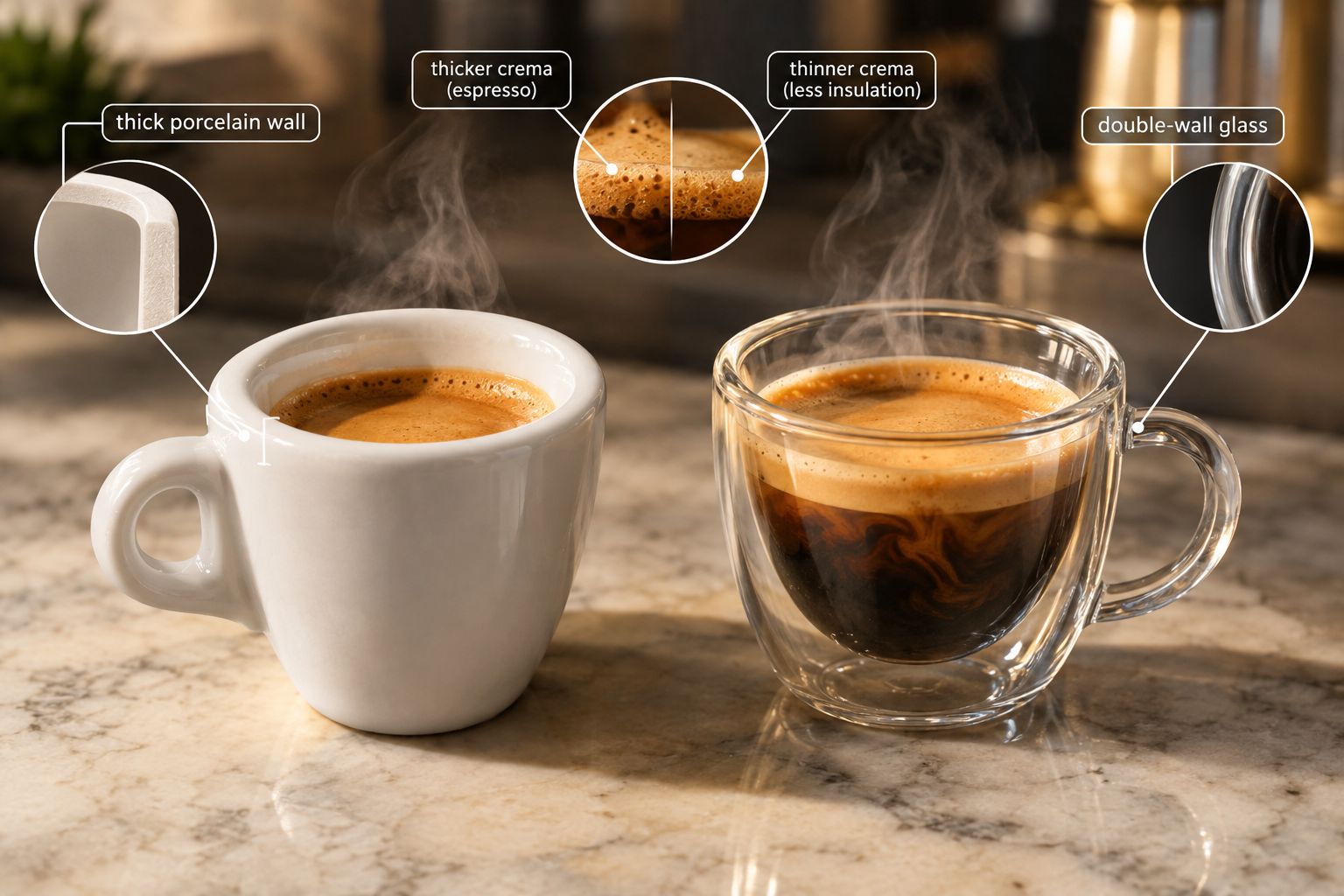
A standard mug's wide, straight-sided shape works fine for a large volume of coffee that will be sipped slowly over ten or fifteen minutes. Pour a single 1 oz shot into that same mug and the espresso spreads into a thin, fast-cooling layer, and the crema breaks apart almost immediately.
Edge case: if you regularly drink a long black or Americano-style pour, a slightly larger 6 to 8 oz cup makes sense because you are adding hot water anyway. For anything you pull straight from the group head, stick to demitasse cups sized in the 2 to 3.5 oz range. If you want a refresher on shot ratios before you buy, read the brewing method behind a standard single versus double.
Ceramic vs Glass Espresso Cups (and Thick Walls vs Thin)
Ceramic and porcelain generally hold heat longer than glass once both are preheated, but double-wall glass narrows that gap by trapping an insulating air layer between two panes. Thick walls beat thin walls in either material for the same reason: more mass holds more stored heat.
Comparative reviews published through 2026 call thick ceramic or porcelain the standard for espresso cups because the material absorbs heat during preheating and releases it slowly across the first few minutes of drinking, which is exactly when flavor perception matters most. Single-wall glass looks great and shows off crema, but it loses heat a little faster than heavy porcelain, so the shot can taste sharper and thinner by the third sip.
Espresso cup temperature retention: what actually helps
- Preheat every time. Running hot water into the cup for 10 to 30 seconds, or resting it on the machine's warming tray, brings the cup close to brew temperature so crema does not collapse on contact.
- Choose double-wall over single-wall glass if you want to see crema without sacrificing much heat retention. It is the fastest-growing design trend in 2026 buying guides for exactly this reason.
- Favor 4 to 6 mm ceramic walls over thin bone china for straight shots.
- Skip foam or paper cups for espresso service. They can retain heat well in lab tests, but no serious guide recommends them for taste, feel, or sustainability reasons.
Decision rule: choose ceramic or porcelain if heat retention is your top priority and you don't mind opaque walls. Choose double-wall glass if you want to see the crema and don't mind a small tradeoff in how long the shot stays hot.
Best Espresso Cup Brands Worth Knowing
The best espresso cup brands split into three groups: Italian heritage names, design-forward newcomers, and machine-matched sets from capsule brands. Knowing which group a cup belongs to tells you what it's actually optimized for.
Italian heritage: illy espresso cups and Lavazza demitasse sets represent decades of Italian espresso cups tradition, sized for the short, concentrated shots served in Italian bars. illy's rotating Art Collection designs are functional cups first, with thick porcelain walls that meet the 2.5 oz standard, and collectible artwork second.
Design-forward: ACME espresso cups (Australian, cafe-industry standard), Loveramics espresso cups (Hong Kong, known for saturated color glazes and a tulip interior), and KINTO (Japanese, known for restrained, thin-profile shapes) all built reputations in specialty cafes before showing up in home kitchens. These three show up repeatedly in 2026 product roundups for their balance of looks and function.
Machine-matched: Nespresso View and other espresso cups Nespresso sells directly are sized around 2.7 oz to match capsule extraction volumes, which run slightly different from lever machine shots. Bodum Pavina fits here too, less because it's machine-specific and more because its double-wall glass has become the default recommendation for anyone wanting to see crema without buying a specialty brand.
If you're still deciding on the machine itself before the cups, our buyer's guide to choosing an espresso machine covers group head types and steam power that affect what size shot you'll actually be pouring.
Best Espresso Cups for Latte vs Ristretto
A ristretto belongs in a small 2 to 2.5 oz demitasse cup, while a latte needs a mug in the 8 to 12 oz range built for steamed milk, not a traditional espresso cup at all. Confusing the two is the most common sizing mistake new buyers make.
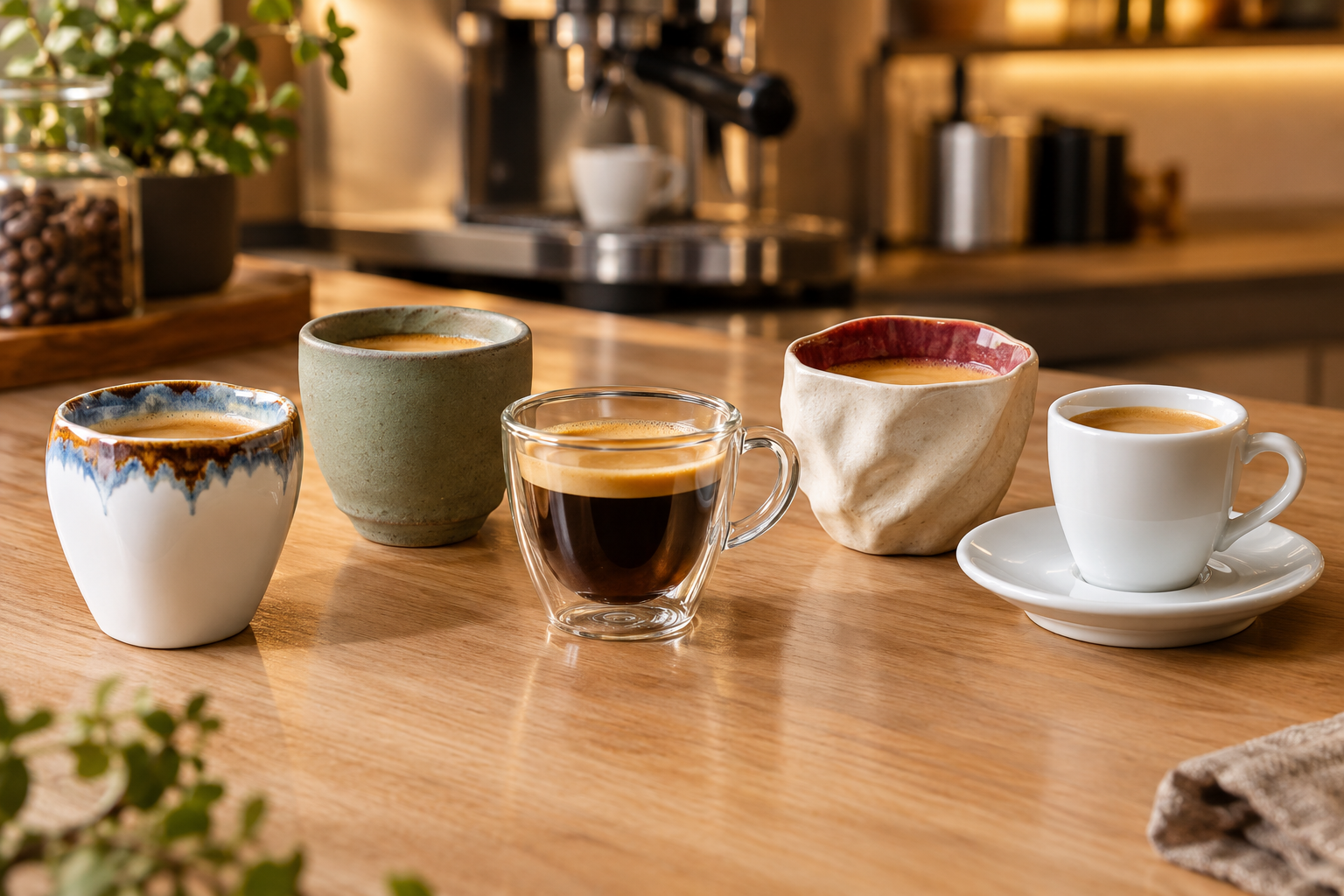
A ristretto is a shortened, more concentrated shot, roughly 0.75 to 1 oz pulled with the same dose as a standard single. It needs the smallest cup on your shelf so the concentrated liquid doesn't spread thin. A standard single or double shot fits the 2 to 3.5 oz range covered earlier.
Milk drinks are a different category entirely:
- Cortado: 4 to 5 oz cup, equal parts espresso and steamed milk
- Cappuccino: 5 to 6 oz cup, room for foam
- Latte: 8 to 12 oz mug, mostly steamed milk
Quick example: if your morning routine includes one straight double shot and one latte for your partner, you need two different cups, not one large all-purpose mug. Buying a single 6 oz "espresso cup" to cover both jobs is a common shortcut that under-serves the straight shot. For technique on the milk side, see our guide to frothing milk for espresso drinks.
Espresso Cup Handle vs No Handle
A handle helps with grip and heat protection once the cup is warmed through, but it isn't required for a good espresso experience; plenty of well-regarded cups, including Bodum Pavina, skip it entirely. The choice is mostly about comfort and ritual, not extraction quality.
Handled demitasse cups (illy, ACME, Lavazza, Loveramics) follow the traditional cafe format and let you lift a hot cup without touching the warmed body. Handle-less cups (Bodum Pavina, many KINTO glass pieces) rely on a slightly cooler exterior wall, often helped by double-wall construction, so your fingers touch the outer pane rather than the hot inner one.
Choose a handle if: you preheat with very hot water and want to lift the cup immediately without waiting for it to cool slightly.
Skip the handle if: you like the minimalist look and are buying a double-wall design where the outer surface stays cool anyway.
Do Espresso Cups Really Affect Taste
Yes, within limits. Cup size, wall thickness, and preheating change how fast a shot cools and how much crema and aroma survive the first minute, which measurably affects perceived sweetness, body, and acidity. A cup cannot fix bad extraction, but it can flatten a good one.
Barista commentary from 2026 guides describes thick ceramic and porcelain as producing a richer mouthfeel because the crema stays intact longer, which is associated with more noticeable chocolate or caramel notes in the shot. Thin glass, by contrast, cools the shot faster, and a cooling shot tends to taste sharper and more acidic as it drops in temperature. Cup shape plays a role too: rounded, tulip-style rims guide the liquid onto the tongue in a way several guides link to a fuller sense of body, while wide, sharp rims spread the pour thin.
None of this replaces grind size, dose, or water temperature as the real drivers of flavor. If your shots taste sour or bitter regardless of cup, the fix is in the grind and extraction, not the cabinet.
How Much Does a Quality Espresso Cup Cost
A quality espresso cup runs roughly $8 to $20 each for individual pieces from named brands, or less per cup when bought in sets of four or six. Specialty double-wall glass and designer sets can run higher, closer to $15 to $40 per piece.
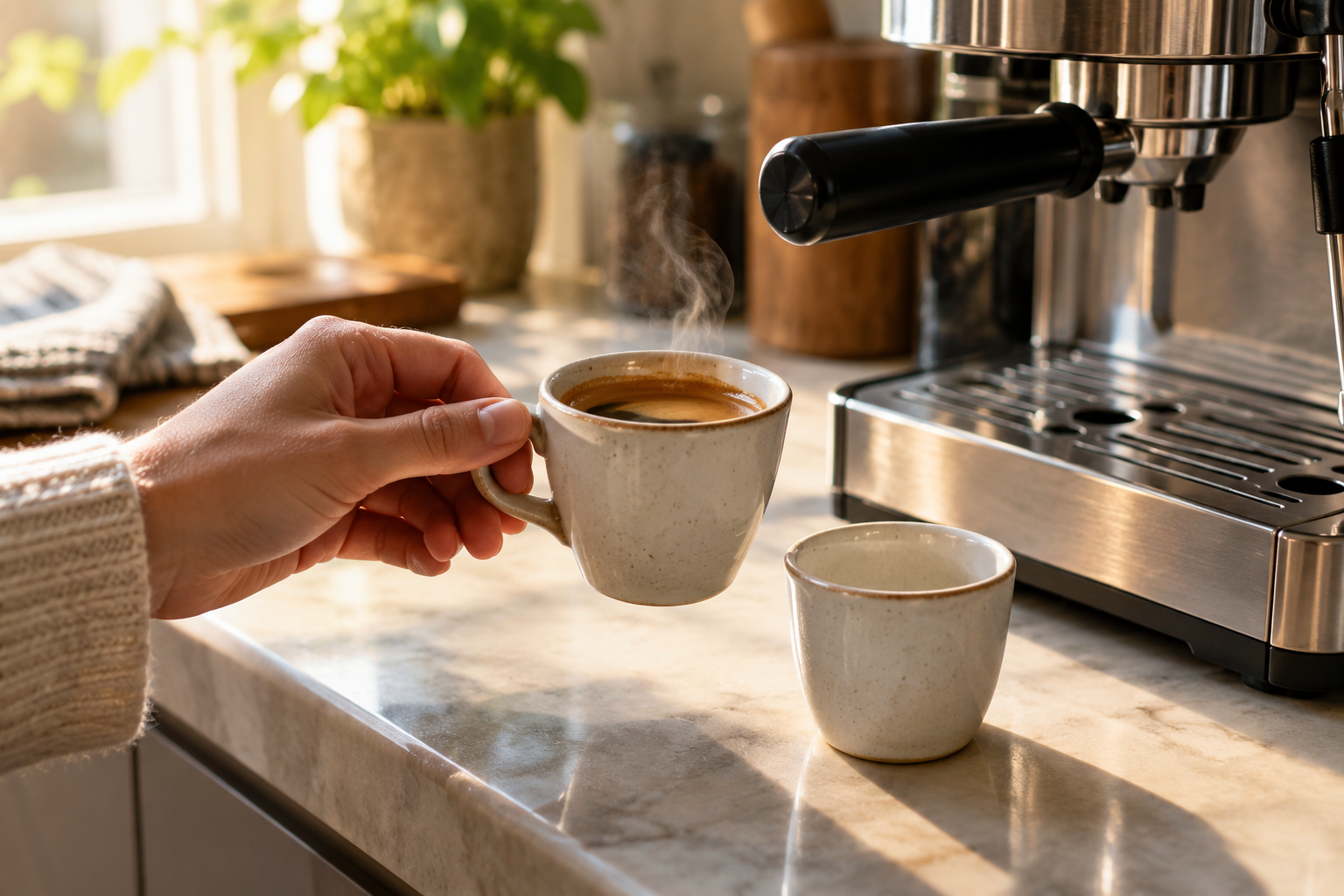
Price differences usually track back to material density, glaze quality, and whether the design is licensed art (like illy's rotating collection) or simple production ware (like basic Lavazza sets). A $10 Lavazza cup and a $18 illy cup can both hit the correct 2.5 oz capacity and thick-wall standard; the extra cost buys artwork, brand cachet, or a specific glaze finish, not necessarily better heat retention.
Budget tip: buy a set of four to six rather than singles. Per-cup cost usually drops 20 to 30 percent, and you'll want backups for guests anyway.
Best Espresso Cups for Home Use
For home use, the best espresso cups are ones that fit under your machine's portafilter with room to spare, survive the dishwasher, and match the 2.5 to 3.5 oz range for the shots you actually pull. Aesthetics matter less than clearance and durability once the novelty wears off.
Before buying, check the height between your machine's group head and drip tray. Guides warn that a cup too tall can force you to hold it awkwardly during extraction, risking splashing or an uneven pour. Stainless steel and dense ceramic are repeatedly cited as the most durable choices for daily use, standing up to the dishwasher and everyday knocks better than delicate bone china.
A practical home lineup looks like this: one set of 2.5 oz demitasse cups (ACME, illy, or Lavazza) for straight shots, one set of 4 to 5 oz cups for cortados or lungos, and larger mugs for milk drinks. That covers the actual range of drinks most home setups make without buying a dozen mismatched pieces. For dialing in the shots that go into those cups, our guide to advanced espresso brewing fundamentals covers dose and ratio in more detail.
Espresso Cup Size Matcher
Which cup size fits your drink?
A small demitasse cup, tulip-shaped if possible. Preheat before pulling.'” style=”flex:1;padding:10px;background:#1F6B4A;color:#fff;border:none;border-radius:8px;cursor:pointer;font-size:14px;”>Single shot <button onclick="document.getElementById('cg-result').innerHTML='2.5 to 3 oz (75 to 90 ml)
Slightly larger demitasse. Leaves room for crema without extra headspace.'” style=”flex:1;padding:10px;background:#1F6B4A;color:#fff;border:none;border-radius:8px;cursor:pointer;font-size:14px;”>Double shot <button onclick="document.getElementById('cg-result').innerHTML='4 to 5 oz
A cortado or lungo cup, roomier than a straight demitasse.'” style=”flex:1;padding:10px;background:#1F6B4A;color:#fff;border:none;border-radius:8px;cursor:pointer;font-size:14px;”>Cortado or lungo <button onclick="document.getElementById('cg-result').innerHTML='8 to 12 oz
A standard mug, not a traditional espresso cup at all.'” style=”flex:1;padding:10px;background:#1F6B4A;color:#fff;border:none;border-radius:8px;cursor:pointer;font-size:14px;”>Latte
FAQ
What size are most espresso cups? Most quality espresso cups hold 2 to 3.5 oz (60 to 90 ml), with 2 to 2.5 oz sized for a single shot and 3 to 3.5 oz sized for a double.
Do I need to preheat an espresso cup? Yes. A cold cup can shock a hot shot and collapse the crema within seconds. Warm it with hot water for 10 to 30 seconds or set it on your machine's warming tray before pulling.
Is ceramic or glass better for espresso cups? Ceramic and porcelain generally hold heat longer once preheated. Double-wall glass narrows that gap and lets you see the crema, making it a strong middle option.
Are Nespresso View cups different from standard espresso cups? Yes. They're sized around 2.7 oz specifically for capsule extraction volumes, which differ slightly from traditional lever machine shots.
Can I use a regular coffee mug for espresso? You can, but the shot will cool faster and the crema will spread thin across the wider base, which most guides link to a flatter tasting experience.
What's the difference between a demitasse cup and a regular espresso cup? "Demitasse" simply means half-cup in French and refers to the traditional small size, typically 2 to 3 oz, used for both espresso and after-dinner coffee. Most espresso cups sold today are demitasse cups by definition.
Are 4 oz espresso cups too big for a single shot? A 4 oz cup fits a double shot comfortably or a single shot with a splash of water for a longer pour. For a straight single shot alone, a 2 to 2.5 oz cup fits better.
Conclusion
The best espresso cups do a quiet job: they hold the right volume, keep the shot warm long enough to taste properly, and don't fight the crema you worked to pull. Start with size (2 to 2.5 oz for a single, 3 to 3.5 oz for a double), pick a material you'll actually preheat every time, and choose a named brand like ACME, illy, Loveramics, or KINTO once the fundamentals check out. Better Coffee Starts With Better Answers, and in this case the answer is smaller and thicker than most people assume. Grab a set that fits your actual shot size, preheat it before your next pull, and see if the difference is as obvious as the guides claim.
Keep Exploring Coffee Rank IQ
- Coffee Rank IQ home: reviews, brewing guides, and coffee science
- Best Coffee Scale for Pour Over and Espresso…Timer Included
- Best Milk Frother for Lattes at Home: Handheld vs Electric
- Best Espresso Machine for Beginners: 7 Picks That Forgive Mistakes
- Best Espresso Grinder: The Spec That Decides Your Shot
References
- coffeevoila.com/espresso-cups
- netspresso.com/best/best-espresso-cups
- www.coffeeness.de/en/best-espresso-cups
- jlceramics.nl/best-espresso-cup-guide
- www.chefsresource.com/best-espresso-cups
- oakandrowan.com/best-coffee-mugs-espresso-cups
- theespressoreport.com/accessories/espresso-cups
- completehomebarista.com/guides/best-espresso-cups-2026
- www.sarahleeandjohnny.com/best-espresso-cups
- keurigcoffee.blog/best-espresso-coffee-cups