Best Espresso Machine Under 500: Where the Money Actually Goes
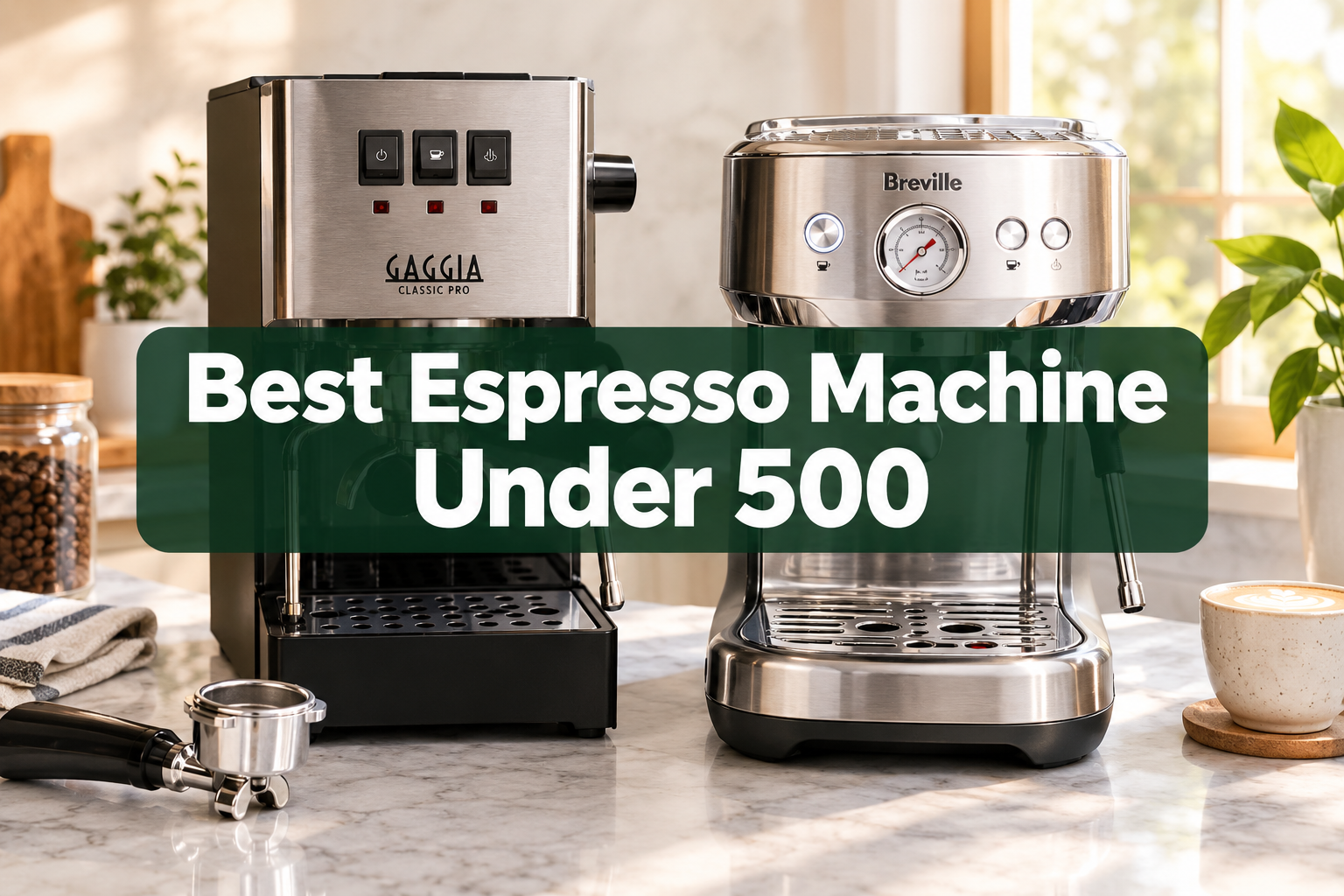
Quick answer: The best espresso machine under 500 for most home buyers in 2026 is the Breville Bambino Plus if milk drinks matter most, or the Gaggia Classic Pro if you want commercial-grade parts and room to grow. Neither machine includes a real grinder, and that's on purpose. Almost every dollar under $500 goes toward the boiler, pump, and steam system rather than convenience features, so budgeting $150 to $250 for a separate burr grinder is part of buying smart, not an afterthought.
Key takeaways
- The best espresso machine under 500 puts its budget into three things: a stable heating system, a real pump, and a steam wand that can hold temperature. Screens, auto-tamping, and built-in grinders usually get cut first.
- The Gaggia Classic Pro uses a 58mm commercial-style portafilter and upgradeable internals, which is why reviewers rate it near the top for anyone who wants to modify their setup later.
- The Breville Bambino Plus trades some depth for speed and milk quality, with a steam system reviewers single out for café-style microfoam in a compact footprint.
- Under $500, a built-in grinder is still rare. The Gevi 20 Bar is one of the few exceptions that tries to fit both a brewing system and a grinder into this price range.
- A separate burr grinder, budgeted at $150 to $250, matters more to your final cup than almost any other single upgrade you can make at this price.
- Machines like the Casabrews CM5418 use 20-bar pumps and pressure gauges to look competitive on paper, even when the surrounding thermal engineering is simpler than pricier models.
- You can pull a decent shot on a $200 machine if you're willing to do more manual work: dialing grind size, timing shots, and adjusting technique yourself.
- Spending more than $500 typically buys you an integrated grinder, PID temperature control, or a dual boiler, not necessarily better-tasting espresso by itself.
Best espresso machine under 500: what changes at each price point
The best espresso machine under 500 dollars is not one machine. It's a decision between three real tradeoffs: build quality and upgradability, speed and milk performance, or a combined grinder-and-brewer setup that sacrifices some polish on both ends.
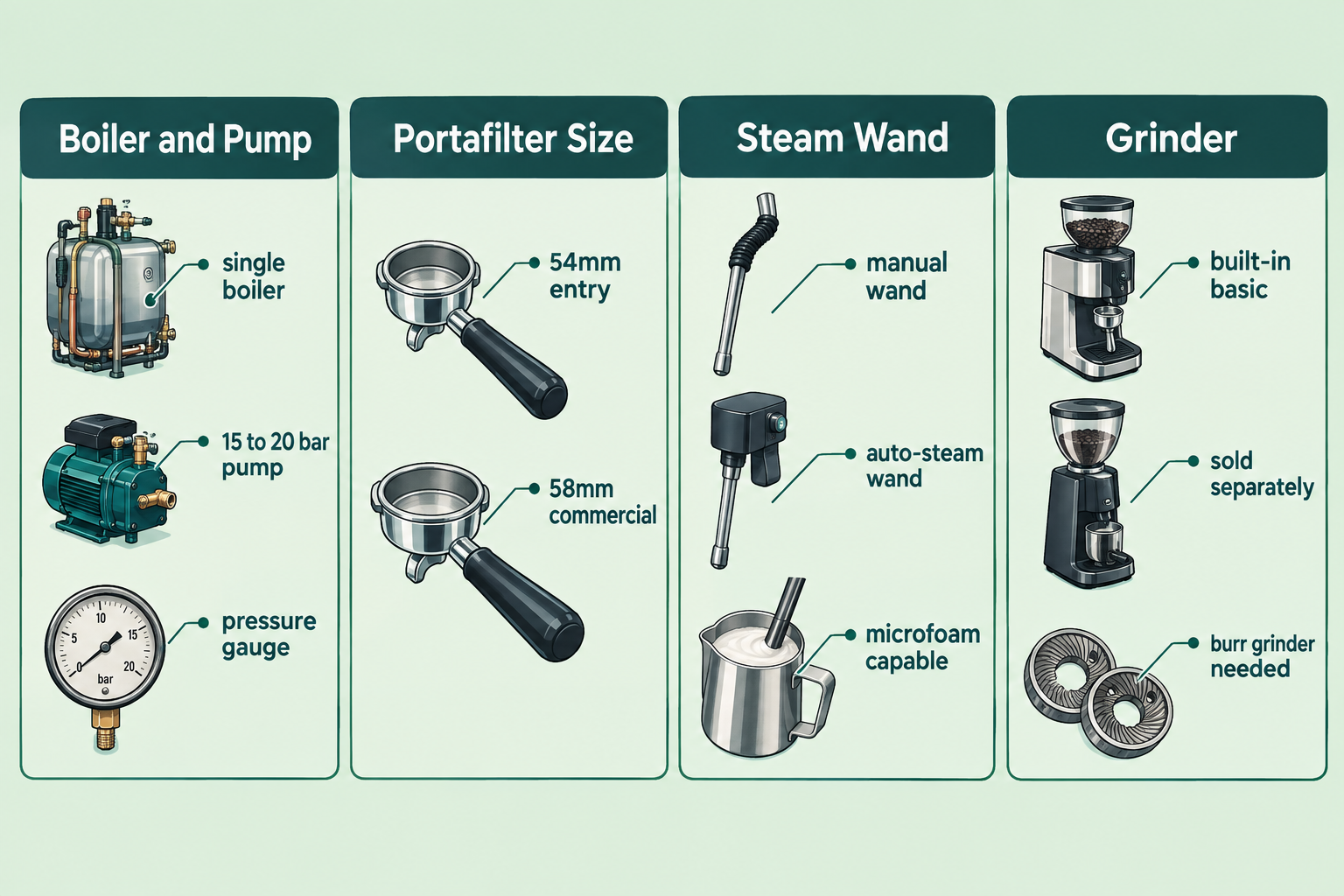
Every espresso machine under $500 has to make choices somewhere. There's a fixed amount of engineering budget, and manufacturers decide where it goes: the boiler, the pump, the steam wand, the portafilter size, or the grinder. None of them get everything. Once you understand that tradeoff, shopping gets a lot faster.
At $200, you're mostly paying for a working pump and a basic steam wand. At $300 to $400, boiler stability and milk texture improve noticeably. Right at $500, you start seeing commercial-style portafilters, better pressure gauges, and steam systems that can hold temperature through two drinks in a row. Cross into the $600 to $800 range and integrated grinders start showing up, along with PID controllers that hold water temperature within a degree or two.
Decision rule: if you drink one or two milk-based drinks a day and want speed, prioritize steam system quality over portafilter size. If you plan to upgrade or modify your machine later, prioritize a 58mm portafilter and commercial internals, even if it means a slower morning routine.
What makes a good espresso machine under 500
A good espresso machine under 500 needs three things working together: consistent water temperature, at least 9 bar of real brewing pressure at the puck, and a steam wand strong enough to texture milk without babysitting it. Everything else, including screens and auto-programs, is a bonus.
Espresso is unforgiving about inconsistency. A shot brewed at 195°F tastes different from one brewed at 205°F, and a pump that surges instead of holding steady pressure will pull an uneven shot every time. That's why the machines that earn a spot on "best under 500" lists in 2026, including the Breville Bambino Plus, Gaggia Classic Pro, Miicoffee Apex V2, and Gevi 20 Bar, are judged first on shot consistency and steaming performance, not on how many buttons they have.
A July 2026 test from Coffee Chronicler, updated in September, called the Miicoffee Apex V2 "the espresso machine to beat" in the $500 range, which says something about how much performance now fits under that number compared to a few years ago.
Common mistake: buying based on pump pressure numbers alone. A machine advertising a 20-bar pump isn't twice as good as one rated at 15 bar. Espresso brews best around 9 bar at the actual puck; anything higher is marketing headroom, not a real performance gain.
Espresso machine under 500 vs expensive models: what's the difference
The gap between a $500 espresso machine and an $800 or $1,200 machine usually comes down to three things: an integrated grinder, tighter temperature control (PID), and a dual boiler that lets you brew and steam at the same time. The espresso itself, at the cup, is closer than the price tag suggests.
Step above $500 and semi-automatic machines with built-in grinders start appearing, while super-automatic machines with automatic milk systems begin around $700 to $800. Forbes' 2026 buying research puts the ideal range for a fully equipped semiautomatic machine at $700 to $1,000, but its experts still call out the Breville Bambino Plus as a notable exception that performs above its price.
Rancilio's Silvia, a longtime enthusiast reference point, sits well above $500 and earns its price through a bigger boiler and heavier steel housing, not a fundamentally different brewing method. If you're comparing a Rancilio to a Gaggia Classic Pro, you're comparing thermal mass and build weight, not a different category of coffee.
Choose the pricier machine if: you want an integrated grinder, faster back-to-back milk drinks for a household of three or more, or PID temperature display. Stay under $500 if: you're fine dialing in your own grind and don't mind a manual steam wand.
Best espresso machines under 500: 2026 comparison and reviews
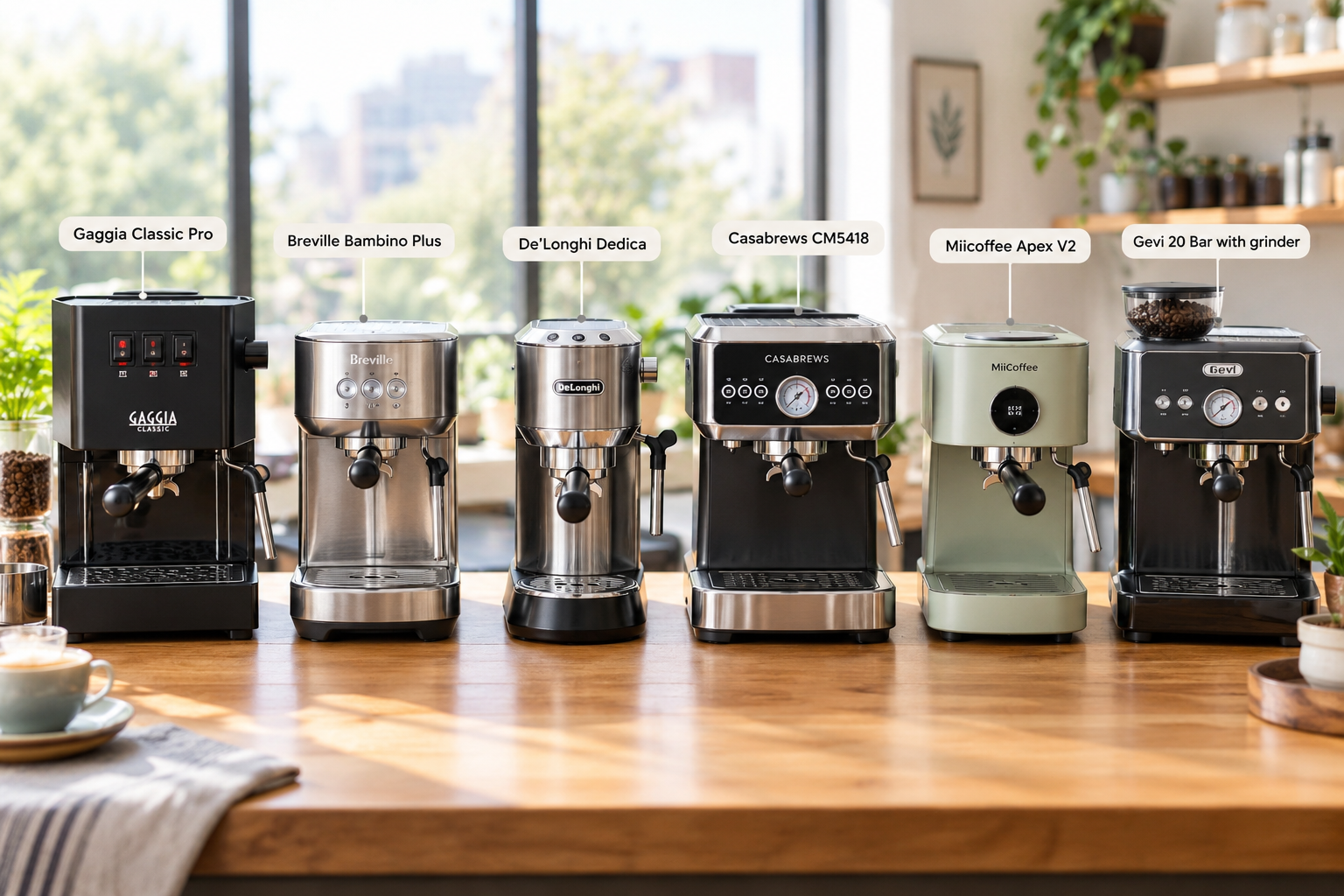
The named machines that consistently show up in fall 2026 roundups are the Breville Bambino Plus, Gaggia Classic Pro, De'Longhi Dedica, Casabrews CM5418, Miicoffee Apex V2, and Gevi 20 Bar with grinder. Each one earns its spot for a different reason, and none of them is the right pick for every buyer.
| Machine | Approx. price | Grinder included | Boiler type | Best for |
|---|---|---|---|---|
| Gaggia Classic Pro | ~$449 | No | Single boiler | Enthusiasts who want to upgrade later |
| Breville Bambino Plus | ~$400-$499 | No | Single boiler, fast heat | Milk drinks, speed, small counters |
| De'Longhi Dedica | ~$200-$250 | No | Single boiler, slim body | Tight kitchens, simple routines |
| Casabrews CM5418 | ~$150-$200 | No | Single boiler | Budget buyers who tinker |
| Miicoffee Apex V2 | ~$450-$499 | No | Single boiler | Shot quality at the top of the range |
| Gevi 20 Bar w/ grinder | ~$300-$400 | Yes (basic) | Single boiler | One-box beginners |
Reviewer consensus in 2026 rates the Gaggia Classic Pro highly for its 58mm commercial-style portafilter and metal internals, with BrewChoices scoring it 4.7 out of 5 largely on the strength of its upgrade path. The Breville Bambino Plus and newer Solis machines get called out repeatedly for steam performance, landing them at the top of lists built around latte and cappuccino drinkers. Mainstream guides from CNN and HGTV note that even simpler machines like a basic Bambino, an entry-level De'Longhi, or a Casabrews can still pull good shots, provided the user is willing to do more manual dialing-in.
For a deeper look at what separates a good machine from a mediocre one at any price, our buyers guide to choosing the best espresso machine for crafting drinks breaks down the same criteria in more depth.
How much should you spend on an espresso machine
Plan to spend $400 to $500 on the machine itself and another $150 to $250 on a dedicated burr grinder if you're serious about the cup, for a realistic total closer to $600 to $750 for your first proper home espresso setup.
That number surprises people who searched for the best espresso machine under 500 expecting the machine to be the whole budget. It isn't. Grind consistency affects extraction more than almost any other variable, and a $30 blade grinder will undercut even the best machine on this list. Several 2026 buying guides say this directly: your total budget "must include a grinder as well," even if that means choosing a simpler machine to leave room for it.
Edge case: if you already own a good burr grinder from a pour-over or drip setup, you can put the full $500 into the machine and skip this tradeoff entirely. If you're starting from zero, split the number.
Manual vs automatic espresso machine under 500
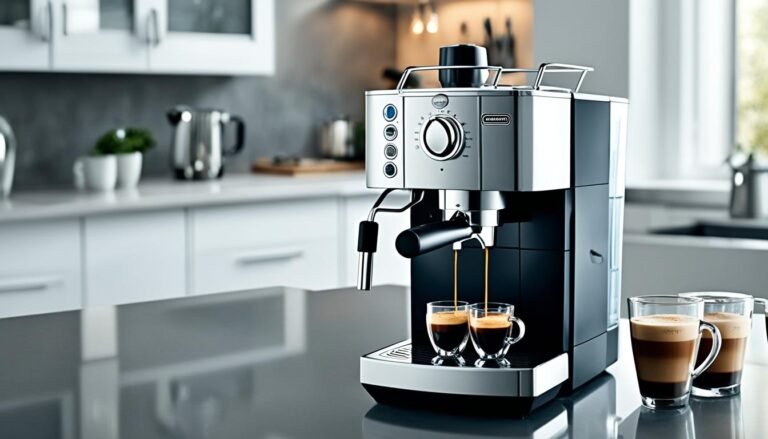
A manual espresso machine under 500, like the Gaggia Classic Pro, requires you to control shot timing, tamping, and steam manually. An automatic model, like the Breville Bambino Plus, automates milk texturing and sometimes shot volume, trading a little control for consistency and speed.
Manual machines reward practice. Once you understand your grinder and your tamp pressure, a manual lever or paddle gives you more room to fix a bad shot mid-pour. Automatic machines shine on a Tuesday morning when you have four minutes and a meeting in ten.
Choose manual if you enjoy the process as much as the drink and plan to read the brewing method closely enough to troubleshoot your own shots. Choose automatic if you want the same good cup every day without thinking about it. Our guide on advanced ways to improve your espresso brewing skills covers the manual side in more detail.
Best espresso machine under 500 for beginners
For a first machine, the best espresso machine under 500 for beginners is one that limits the number of variables you have to manage at once, which usually means the Breville Bambino Plus or the De'Longhi Dedica.
Beginners struggle most with two things: grind size and milk texture. The Bambino Plus automates milk with its built-in steam system, which removes one entire skill from the learning curve. The De'Longhi Dedica trades some steam power for a smaller footprint and a lower price, which suits a first apartment kitchen better than a first serious hobby.
If this is your very first machine and you're still deciding whether espresso at home is a long-term habit, our beginners guide to crafting barista quality espresso drinks walks through the basics before you commit to a grinder purchase too.
Common mistake: buying the Gaggia Classic Pro as a first machine because it's the "serious" pick on every list. It's an excellent machine, but its manual steam wand and lack of guardrails punish inexperience more than the Bambino Plus does.
Espresso machine under 500 grinder included
Very few machines under $500 include a real grinder, and the ones that do, like the Gevi 20 Bar, usually simplify the brewing side to make room for it.
Semi-automatic machines with built-in grinders more commonly start above $500, and super-automatic machines with automatic milk systems tend to start even higher. That's why most of the named machines on this list, including the Bambino Plus, Gaggia Classic Pro, and Casabrews, skip the grinder entirely and let you choose your own.
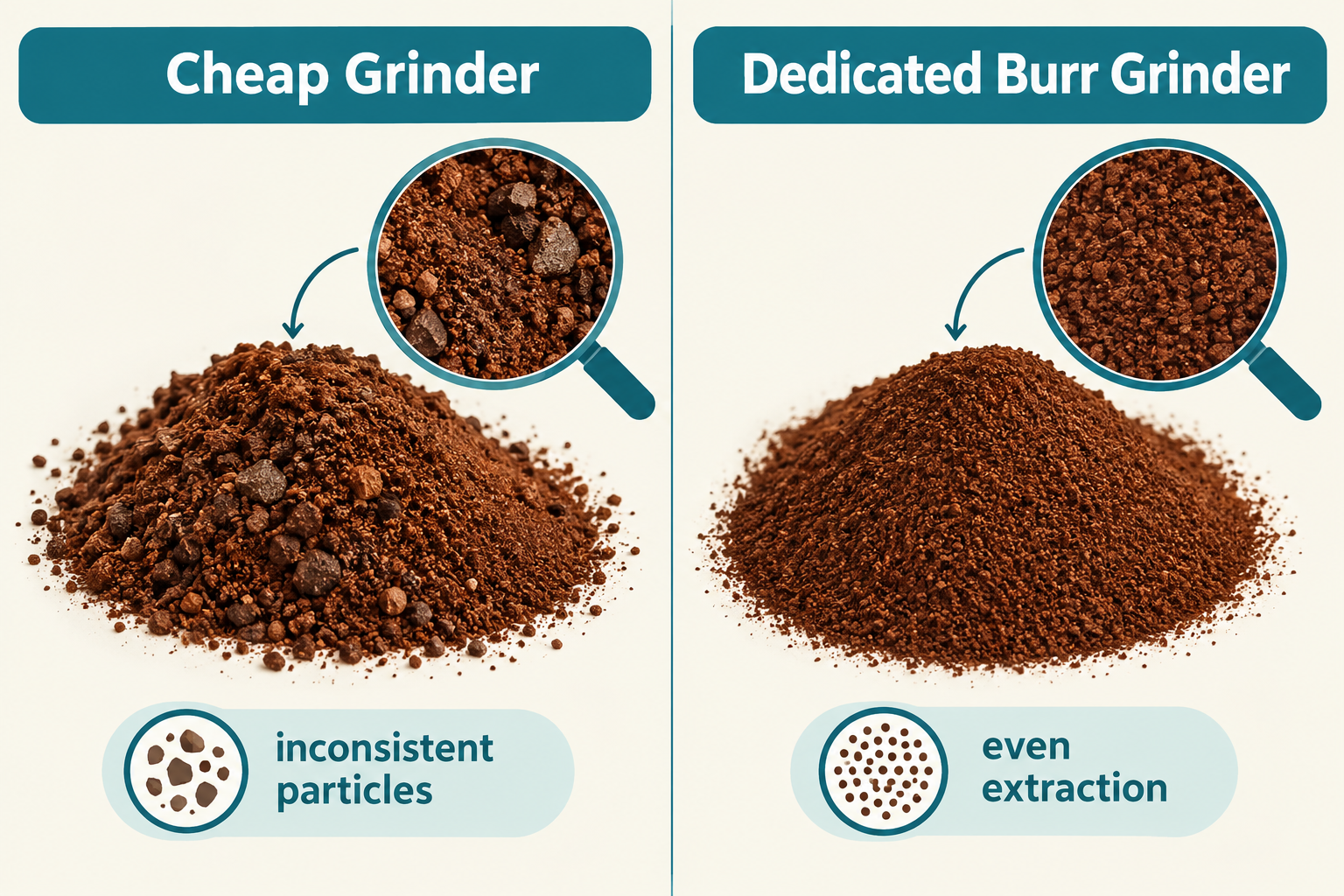
If you go the all-in-one route with something like the Gevi 20 Bar, know what you're trading: the grinder is usually a basic burr unit, not the adjustable, retention-minimizing kind serious buyers eventually want. Read our explainer on what grind size actually works best for an espresso machine before deciding whether a built-in grinder will satisfy you long term.
Can you make good espresso with a cheap machine
Yes. You can make good espresso on a $200 machine if your grind is dialed in and you're willing to adjust dose, tamp, and timing by hand. A cheap machine limits your margin for error; it doesn't make good espresso impossible.
CNN and HGTV's 2026 testing both note that entry-level machines, including a basic Bambino, De'Longhi models, and Casabrews units, can pull respectable shots once the user puts in the manual work of dialing grind and technique. What a cheap machine won't do is forgive a bad grind, an old bag of beans, or a rushed tamp. The best espresso machine under 500 at any price still needs a fresh roast date and the right grind size to reach its ceiling.
Quick example: a $200 De'Longhi Dedica with a properly adjusted $150 burr grinder will often out-perform a $500 all-in-one machine paired with beans that have been sitting open on the counter for three weeks.
Espresso machine under 500 or should you save up
Buy under $500 now if you're new to espresso and want to learn on real equipment before committing more money. Save up past $500 if you already know you want an integrated grinder, PID control, or a dual boiler, because those specific features rarely appear below that price line.
There's no prize for waiting if waiting just means drinking worse coffee for six more months. The best espresso machine under 500 dollars will teach you your own preferences, your grind habits, and your milk technique, all of which make a future upgrade smarter instead of a guess.
Decision rule: save up only if you can name the exact feature you're saving for. "A nicer machine" isn't a plan. "PID display and a 58mm group head" is.
Espresso machine under 500 easy to clean and maintain
Look for a removable drip tray, a portafilter that backflushes with standard cleaning tablets, and a steam wand you can wipe immediately after use. The Gaggia Classic Pro and Breville Bambino Plus both meet this standard; some budget models make you dig for a screw-in group head that's harder to service at home.
Daily upkeep is short: wipe the wand right after steaming, empty the drip tray, and rinse the portafilter. Weekly upkeep means a backflush cycle with a blind basket and cleaning powder if your machine supports it. Monthly upkeep is descaling, especially if you're on hard water.
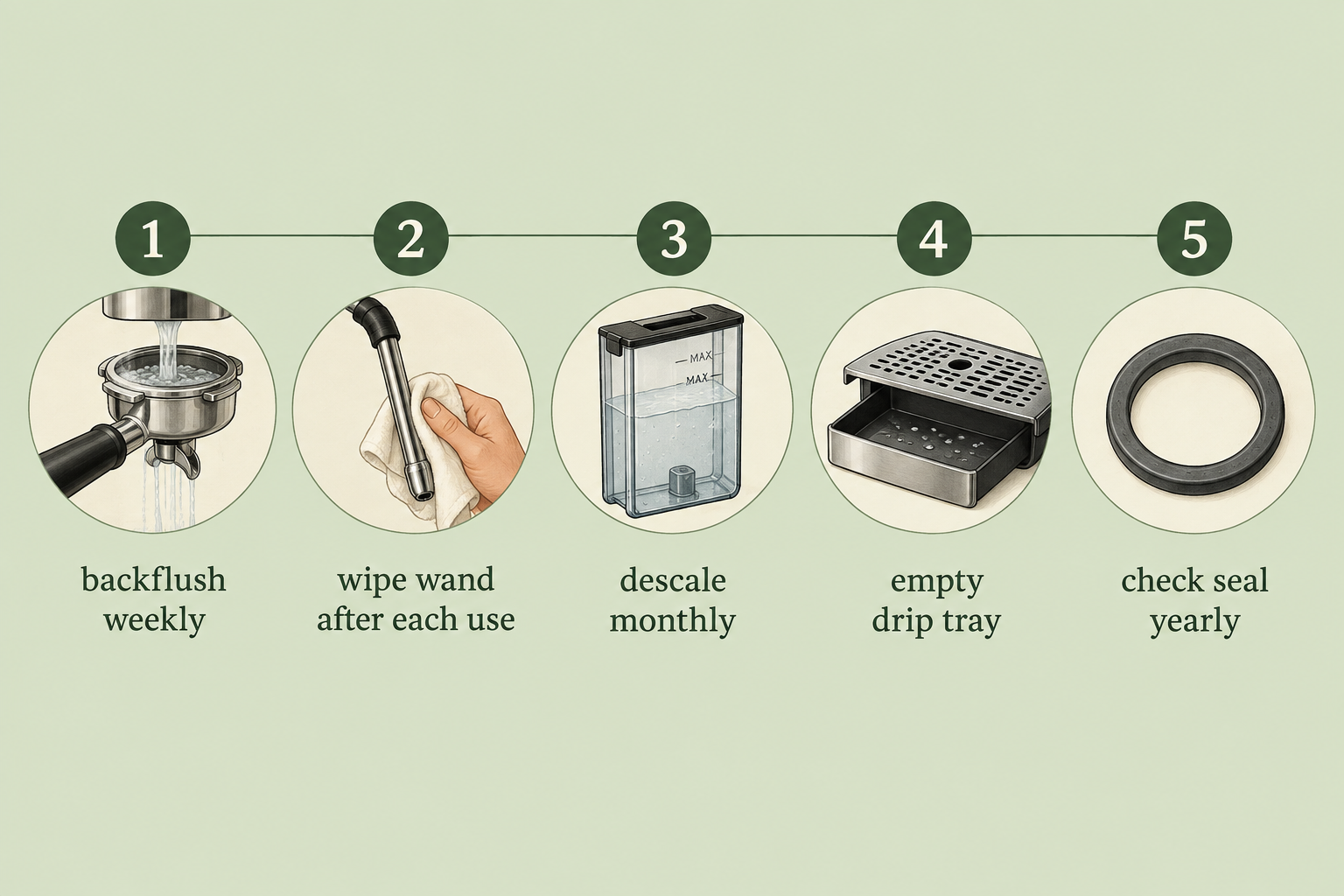
Common mistake: letting dried milk sit inside the steam wand tip overnight. It's the single fastest way to clog a wand, and it happens to almost everyone once. Our advanced espresso machine maintenance tips guide covers the full weekly and monthly routine in more depth.
Espresso machine under 500 common problems and fixes
The most common complaint with budget espresso machines is leaking, usually from the portafilter seal, an overfilled basket, or a worn gasket. Most leaks are a five-minute fix, not a reason to return the machine.
If your machine is leaking around the portafilter during a shot, check three things in order: whether the basket is overfilled past the max line, whether the gasket has hardened or cracked (a $10 to $15 part on most machines), and whether the portafilter is locked in fully before the pump starts. A gasket typically needs replacing once a year on machines used daily.
Other common issues at this price point include weak steam pressure (often a clogged wand tip), inconsistent shot timing (almost always a grind size issue, not a machine defect), and long heat-up times on cheaper single-boiler units. For a full troubleshooting walkthrough, see our advanced espresso machine troubleshooting tips, and if a repair is beyond a seal swap, our guide to advanced espresso machine repairs covers what's worth fixing yourself versus sending in.
Edge case: if a brand-new machine leaks from day one, it's almost always a seated gasket issue, not a manufacturing defect. Reseat the portafilter firmly a few times before assuming the machine is faulty.
Find your best espresso machine under 500
Pick the priority that matters most to your morning, and see which machine on this list fits.
Choose an option above.
FAQ
What is the best espresso machine under 500 in 2026? The Breville Bambino Plus and Gaggia Classic Pro lead most 2026 roundups, alongside the Miicoffee Apex V2, based on shot consistency and steaming performance rather than added features.
Is the Gaggia Classic Pro better than the Breville Bambino Plus? Neither is better overall. The Classic Pro suits buyers who want to upgrade or modify their machine later, while the Bambino Plus suits buyers who want fast, consistent milk drinks with less manual control.
Do I need to buy a grinder separately? Almost always, yes. Very few machines under $500 include a real grinder, and pairing a $400 machine with a dedicated $150 to $250 burr grinder usually beats an all-in-one unit at the same total price.
Can a $200 or $300 espresso machine make good espresso? Yes, if the grind is right. A De'Longhi Dedica or Casabrews unit can produce a good shot when the user dials in grind size and technique, though the margin for error is smaller than on pricier machines.
Why does my espresso machine under 500 keep leaking? Check the gasket for wear, confirm the basket isn't overfilled, and make sure the portafilter is locked in completely before brewing. A cracked gasket, usually $10 to $15, is the most common fix.
Should I save up for a machine over $500 instead? Only if you can name the specific feature you're missing, such as an integrated grinder or PID temperature display. Otherwise, a well-chosen machine under $500 will teach you your preferences before you spend more.
Conclusion
The best espresso machine under 500 isn't a single winner, it's a fit between your morning routine and where a manufacturer chose to spend its engineering budget. If you want upgrade room and commercial-style parts, the Gaggia Classic Pro earns its price. If speed and milk texture matter more, the Breville Bambino Plus does. If you want one box that includes a grinder, the Gevi 20 Bar is the honest exception to a real pattern: under $500, you're paying for the boiler, the pump, and the steam wand, and you should plan to buy your grinder separately. Better coffee starts with better answers, so pick the machine that matches how you actually drink coffee, not the one with the longest feature list. Compare the models above against your own routine, then check the current price before deciding.
Keep Exploring Coffee Rank IQ
- Coffee Rank IQ home: reviews, brewing guides, and coffee science
- Best Espresso Machine for Beginners: 7 Picks That Forgive Mistakes
- Best Super Automatic Espresso Machine: Read the Cleaning Specs First
- Best Semi Automatic Espresso Machine for Real Home Kitchens
- Best Manual Espresso Machine: Flair, Cafelat, and Lever Picks
References
- coffeechronicler.com/gear/espresso-machines/best-under-500
- espressoatlas.com/articles/best-espresso-machines-under-500
- www.propelrc.com/best-espresso-machines-under-500-dollars
- thefurnishedreview.com/guides/best-espresso-machines-under-500
- www.thirstybear.com/best-espresso-machines-under-500
- mydroneauthority.com/best-espresso-machines-under-500
- www.brewchoices.com/espresso-machines/best-espresso-machines-under-500
- www.hgtv.com/shopping/product-reviews/best-espresso-machines
- www.cnn.com/cnn-underscored/reviews/best-espresso-machines
- www.forbes.com/sites/forbes-personal-shopper/article/best-espresso-machine