Peppermint Mocha Recipe: Cafe Taste for $1.50 a Cup
Quick Answer
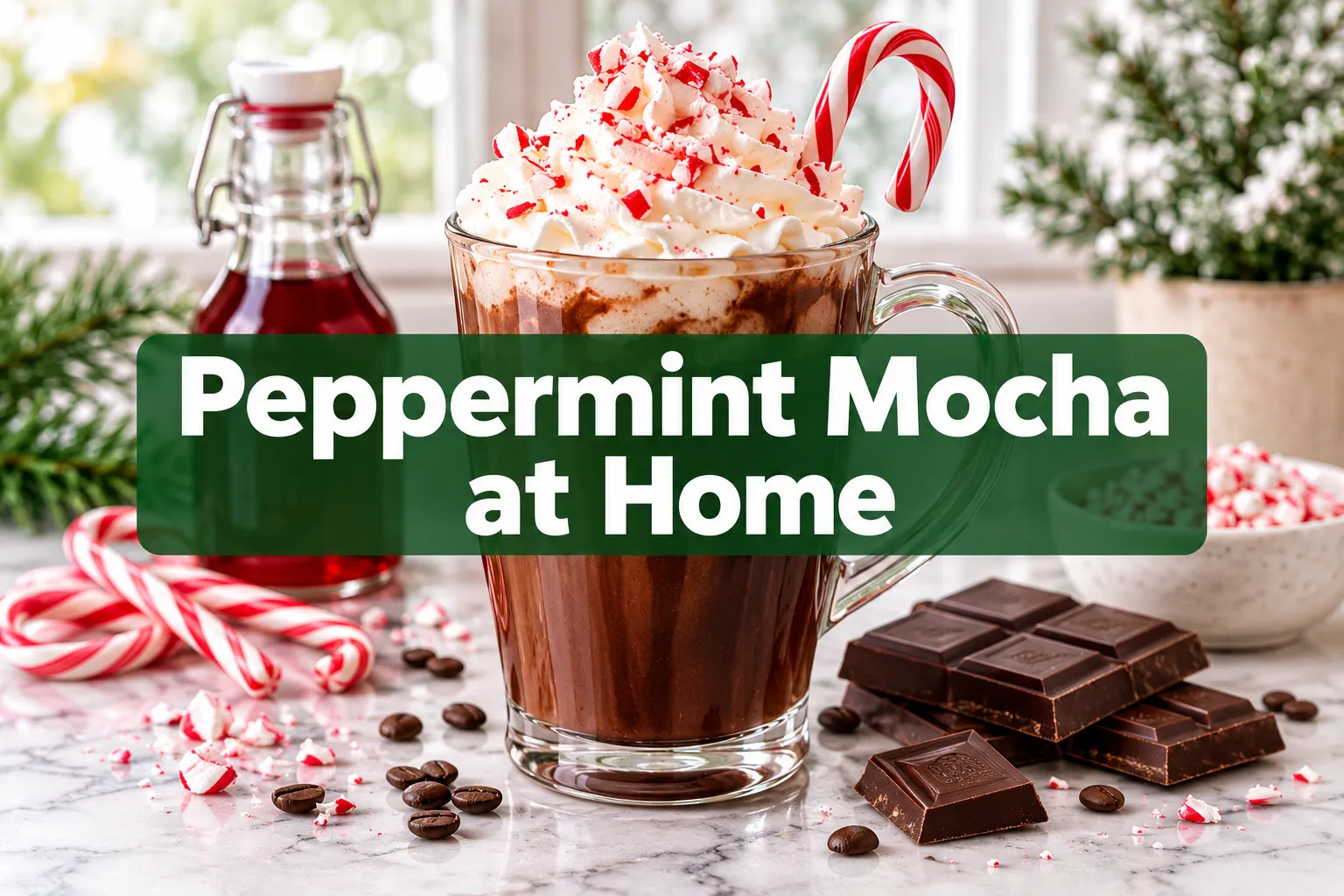
This peppermint mocha recipe makes a cafe-style drink at home for roughly $1.50 a cup, against about $6 to $7 for a grande at a coffee shop. The build is simple: two shots of espresso or 4 oz of strong coffee, 15 g of real chopped dark chocolate, 1 tablespoon of peppermint syrup, 6 oz of steamed milk, whipped cream, and crushed candy cane. Real chocolate instead of syrup alone is what separates it from a sweet mint drink that tastes vaguely of coffee.
Key Takeaways
- Per-cup cost at home lands near $1.50 using ordinary supermarket ingredients: about $0.35 espresso, $0.45 dark chocolate, $0.15 homemade peppermint syrup, $0.35 milk, $0.20 whipped cream and candy cane.
- A 16 oz cafe peppermint mocha runs about $6 to $7 in most US markets, so the homemade version saves roughly $4.50 to $5.50 every time you make one.
- Use 15 g of 60 to 72 percent dark chocolate, chopped fine, melted into the hot espresso before milk goes in. Cocoa powder works but needs sugar and a paste step.
- Homemade peppermint syrup takes 10 minutes: 1 cup sugar, 1 cup water, 1/2 teaspoon peppermint extract, simmered and cooled. It keeps about two weeks refrigerated in a sealed jar.
- No espresso machine required. A Moka pot, AeroPress, French press at a 1:10 ratio, or two teaspoons of instant espresso powder all give enough concentration.
- Peppermint extract is roughly 8 times stronger than syrup. Swap 1 tablespoon of syrup for 1/8 teaspoon of extract plus 2 teaspoons of sugar.
- Starbucks builds its version from espresso, steamed milk, mocha sauce, peppermint syrup, whipped cream and dark chocolate curls. Its own at-home recipe simplifies that to flavored coffee, 1 tablespoon chocolate syrup and 2 tablespoons peppermint mocha creamer .
Peppermint mocha recipe: ingredients and exact amounts
Here is the full build for one 12 oz drink. Weigh the chocolate if you can; volume measures for chopped chocolate vary by 30 percent depending on how finely you cut it.
Makes 1 drink. Active time: 5 minutes.
| Ingredient | Amount | Notes |
|---|---|---|
| Espresso or strong coffee | 2 shots (2 oz) or 4 oz strong brew | 18 g dose, 36 g out, for espresso |
| Dark chocolate, chopped | 15 g (about 1 tbsp packed) | 60 to 72 percent cacao |
| Peppermint syrup | 1 tbsp (15 ml) | Homemade or store-bought |
| Whole milk | 6 oz (180 ml) | Steamed to 140 to 150°F |
| Granulated sugar | 1 tsp, optional | Skip if your chocolate is sweetened |
| Pinch of salt | Tiny | Sharpens the cocoa |
| Whipped cream | 2 tbsp | Lightly sweetened |
| Crushed candy cane | 1/2 tsp | Added at the last second |
A note on the chocolate. Mocha sauce in a cafe is mostly sugar, cocoa powder and water. Chopped chocolate brings cocoa butter, which coats the tongue and carries the peppermint aroma longer. That texture difference is the main reason this peppermint mocha recipe can taste richer than the $6 one.
Cost per cup, itemized
Prices are US supermarket estimates as of November 2026 and will vary by region and brand.
- Espresso, 18 g of beans at $16 per 12 oz bag: $0.35
- Dark chocolate, 15 g from a $4.50 bar of 100 g: $0.45
- Peppermint syrup, 1 tbsp of a homemade batch costing about $1.20 total: $0.08
- Whole milk, 6 oz at $4.20 per gallon: $0.20
- Whipped cream and candy cane: $0.20
- Pinch of salt and optional sugar: $0.02
Total: about $1.30. Call it $1.50 with store-bought syrup or pricier beans. A single-origin bag at $22 pushes espresso cost to roughly $0.48 and the drink to about $1.45.
How do you make this peppermint mocha recipe at home step by step?
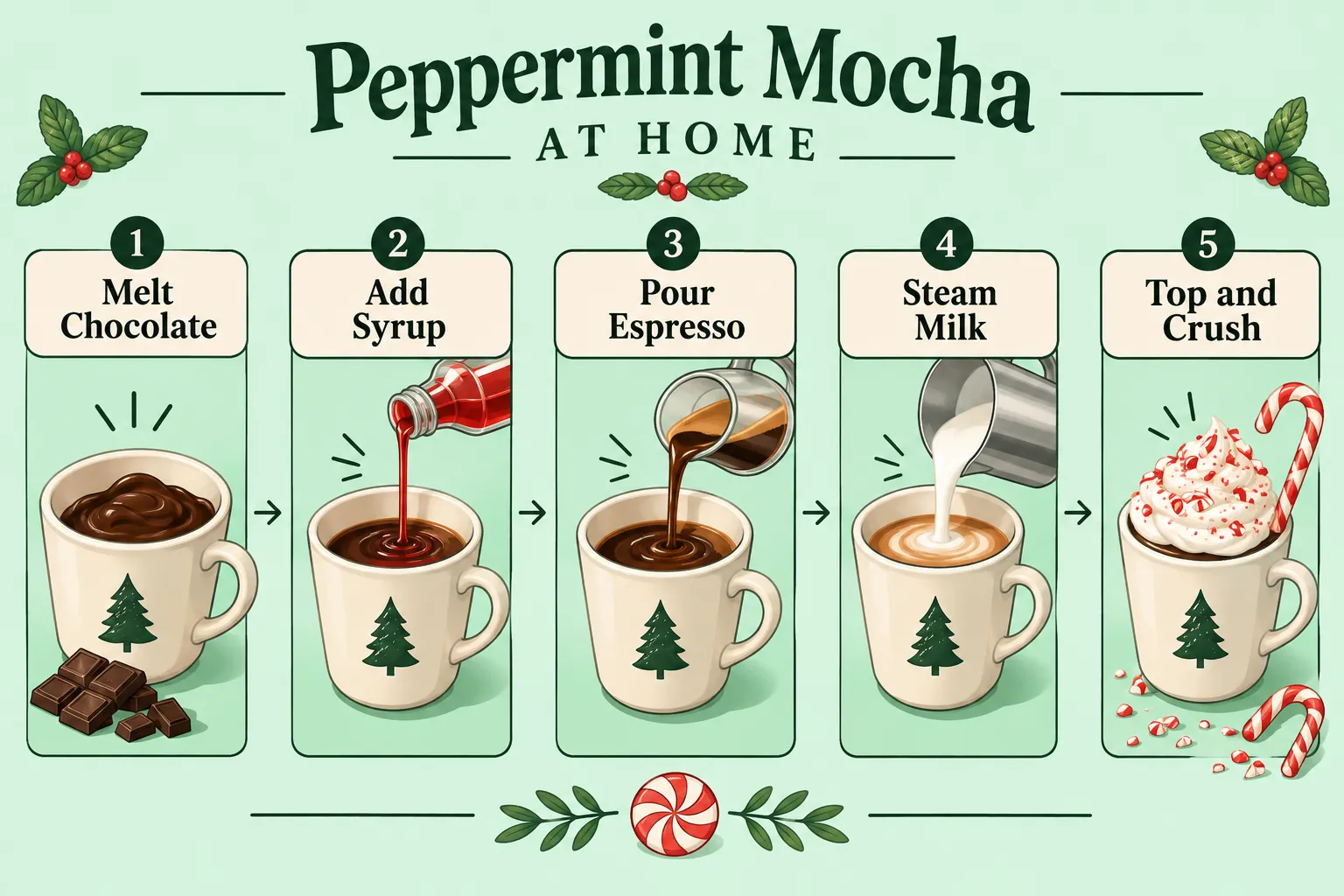
Melt the chocolate into hot espresso first, then add steamed milk. That order matters. Chocolate dropped into a full mug of milky coffee sinks and clumps.
- Chop 15 g of dark chocolate finely and put it in the bottom of a warm 12 oz mug with a pinch of salt.
- Pull 2 shots of espresso directly over the chocolate, or pour 4 oz of very strong hot coffee over it.
- Stir for 20 seconds until the chocolate dissolves completely and the mix looks glossy. No visible flecks.
- Add 1 tbsp peppermint syrup and stir again. Taste the base now. This is your one chance to adjust sweetness before milk dilutes your judgment.
- Steam 6 oz of whole milk to 140 to 150°F with a light texture, not stiff cappuccino foam. No steam wand? Heat the milk and whisk hard, or shake it hot in a sealed jar.
- Pour the milk in slowly, holding back the foam, then spoon the foam on top.
- Add whipped cream, then crush the candy cane and scatter it immediately before serving.
The reason the candy goes on last: peppermint candy is sugar, and sugar on wet cream starts dissolving within about 90 seconds. Crush it while the milk steams and it will be sticky paste by the time you sit down.
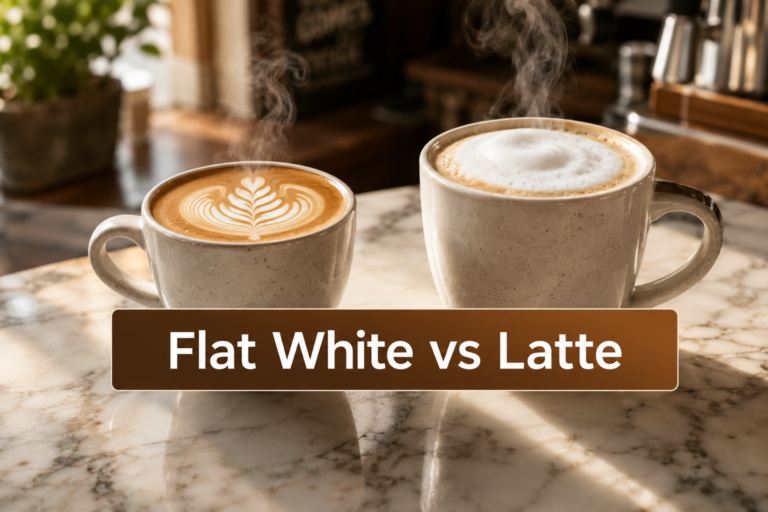
For context on why milk texture changes a drink this much, see the microfoam difference between a flat white and a latte.
Can I make peppermint mocha without an espresso machine?
Yes. Any brewing method that produces concentrated coffee works for this peppermint mocha recipe. You need strength, not pressure, because milk and chocolate will swallow a weak brew.
Ranked by how close they get to espresso body:
- Moka pot. 3 oz of stovetop brew from a 3-cup pot is thick and bitter in the right way. Closest substitute.
- AeroPress. 17 g coffee, 90 g water, fine grind, 90 second steep. Produces about 3 oz of concentrate.
- Instant espresso powder. 2 teaspoons in 3 oz of hot water. Mayo Clinic lists about 62 mg of caffeine in 8 oz of instant coffee, so a double-strength cup lands in a similar range to a shot.
- Strong drip or pour over. Use a 1:10 brew ratio instead of the usual 1:16. That means 20 g of coffee to 200 g of water.
- French press. Same 1:10 ratio, 4 minute steep, pressed gently.
Avoid a standard 1:16 drip cup. At that brew ratio the coffee disappears under the chocolate, and you end up drinking warm mint candy. If your home brews taste thin generally, our guide on how to make coffee taste better covers grind size and ratio fixes that apply here.
Decision rule: choose the Moka pot if you own one, instant espresso powder if you want it done in two minutes, and the AeroPress if you want the cleanest flavor without equipment over $40.
What chocolate works best in this peppermint mocha recipe?
Chopped dark chocolate between 60 and 72 percent cacao gives the best balance. Below 50 percent the drink turns cloying once syrup and whipped cream join. Above 80 percent it goes dry and chalky under peppermint.
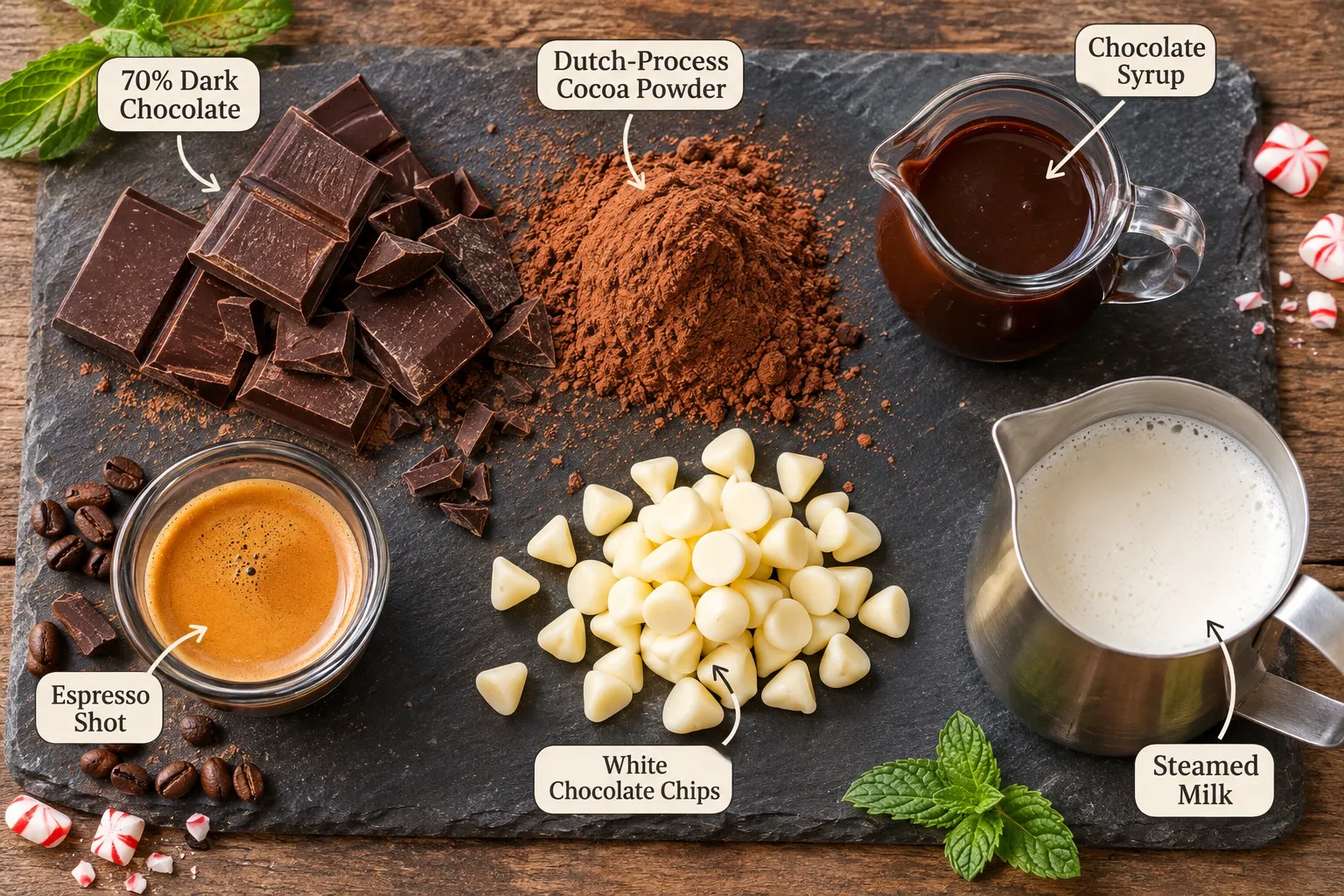
What each option actually does:
- Bar chocolate, 60 to 72 percent. Cocoa butter melts into the espresso and gives the drink weight. Best texture. Needs the most stirring.
- Dutch-process cocoa powder. Darker color, lower acidity, smoother cocoa flavor. Make a paste with 1 tbsp cocoa, 2 tsp sugar and 1 tbsp hot espresso before adding the rest, or it clumps.
- Natural cocoa powder. More acidic and fruity. It can fight with peppermint. Workable, not ideal.
- Chocolate syrup. Fastest, sweetest, thinnest. Starbucks' own at-home recipe uses 1 tablespoon of chocolate syrup for exactly this reason: speed .
- White chocolate. A different drink entirely. See the comparison below.
Best cocoa powder for a peppermint mocha recipe
Dutch-process is the better choice. It has been treated with an alkali to reduce acidity, which makes the cocoa taste rounder and less sharp, and the darker color reads as richer against white milk and cream. Use 1 tablespoon plus 2 teaspoons of sugar per drink.
If you only have natural cocoa, add a slightly larger pinch of salt and a little extra sugar to soften the edge.
The 10 minute homemade peppermint syrup
Making your own peppermint syrup for coffee costs about $1.20 for roughly 12 oz, against $10 to $13 for a commercial bottle. It takes ten minutes, and eight of those are waiting.
Ingredients:
- 1 cup granulated sugar
- 1 cup water
- 1/2 tsp pure peppermint extract (add after cooling begins)
- Optional: 2 or 3 crushed candy canes in place of 1/4 cup of the sugar
Method:
- Combine sugar and water in a small saucepan over medium heat.
- Stir until the sugar fully dissolves, about 3 minutes. Do not boil hard. A rolling boil thickens the syrup and makes it sticky.
- Remove from heat and let it sit 5 minutes.
- Stir in the peppermint extract. Adding extract to boiling syrup drives off the volatile aroma compounds you paid for.
- Pour into a clean sealed jar and refrigerate.
Shelf life: about two weeks refrigerated in a sealed container. Plain sugar syrups at a 1:1 ratio are not shelf-stable at room temperature. If you see cloudiness, stringiness or any smell that is not mint and sugar, pour it out.
Want a longer-lasting batch? Use a 2:1 sugar-to-water ratio instead. The higher sugar concentration slows microbial growth and typically keeps for about a month refrigerated, though it is noticeably sweeter, so drop to 2 teaspoons per drink.
Can I use peppermint syrup instead of extract?
Yes, and syrup is the easier choice because it carries sweetness and flavor together. Going the other direction takes care. Pure peppermint extract is roughly eight times more concentrated than a 1:1 syrup, so 1 tablespoon of syrup equals about 1/8 teaspoon of extract plus 2 teaspoons of sugar.
Starbucks' own iced recipe uses 4 ml of peppermint extract against 200 ml of chocolate milk and two espresso shots, which is a useful reference for how little extract a full-size drink needs .
What can I substitute for peppermint extract?
- Crushed candy canes: 2 canes dissolved in the hot espresso. Adds sugar, so cut other sweetener.
- Peppermint tea: steep one bag in the milk for 4 minutes, then remove. Gentle, clean, no sugar added.
- Fresh mint leaves: muddle 6 to 8 leaves in the hot syrup base and strain. Spearmint is grassier and sweeter than peppermint, so expect a softer drink.
- Crème de menthe: 1 tsp for an adult version. For a cocktail route, read the espresso martini foam technique instead.
Skip peppermint essential oil unless the bottle is explicitly labeled food grade.
How do you make an iced peppermint mocha, and can I use cold brew?
Yes to both. The one rule for an iced peppermint mocha: dissolve the chocolate in something hot first, or it will seize into gritty specks in cold milk.
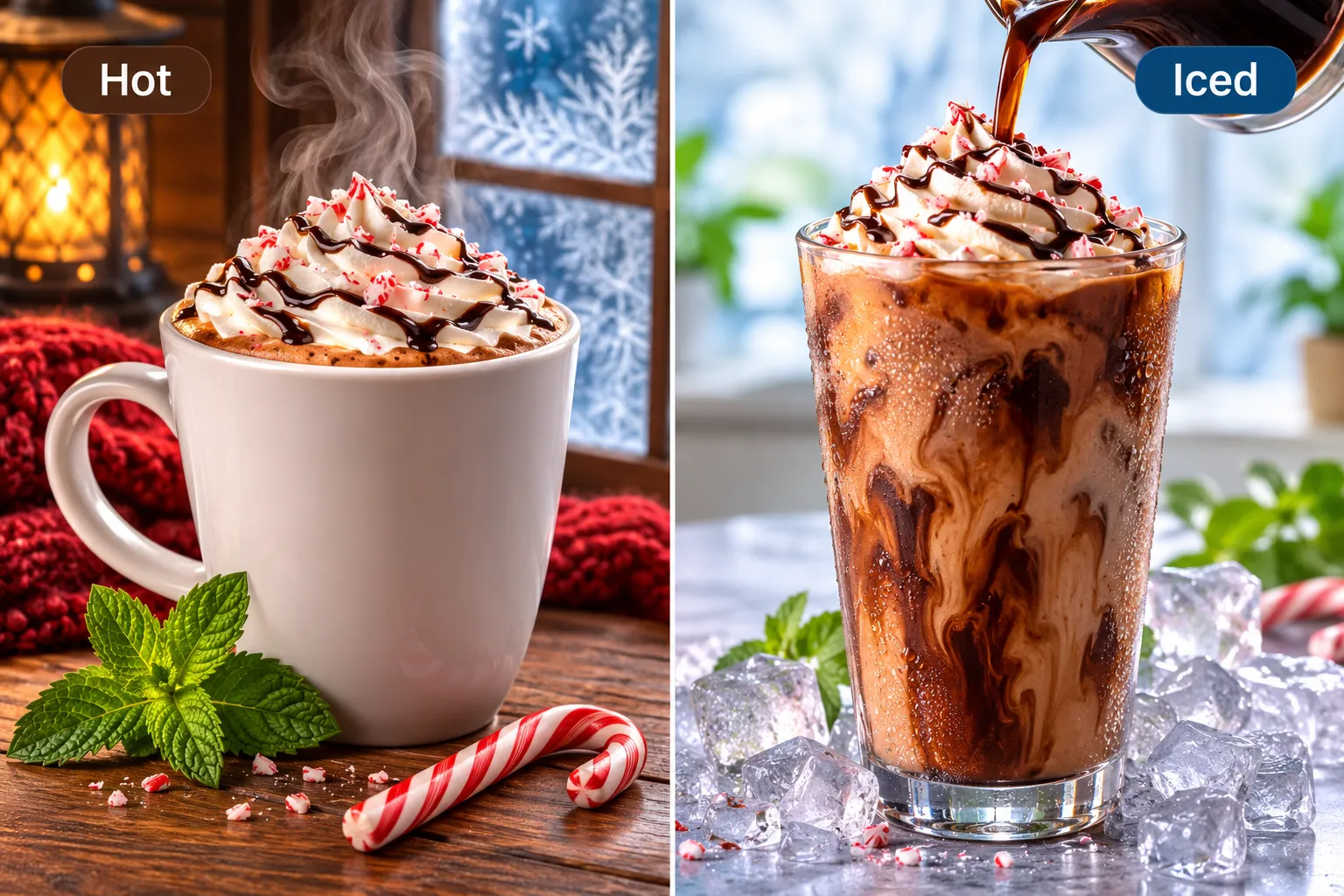
Iced version, 16 oz:
- Melt 15 g chopped chocolate into 2 hot espresso shots. Stir until glossy.
- Add 1 tbsp peppermint syrup. Stir.
- Cool the base for 2 minutes, or pour it over 2 ice cubes and stir until they melt.
- Fill a 16 oz glass with ice. Add 8 oz cold milk.
- Pour the chocolate-coffee base over the top. Stir, or leave it layered for the photo.
- Whipped cream and crushed candy cane.
Cold brew version: replace the espresso with 5 oz of cold brew concentrate, but make a chocolate paste separately. Melt the 15 g of chocolate with 1 tbsp of just-boiled water in a mug, stir smooth, then add the cold brew and syrup. Cold brew is lower in perceived acidity, so the drink tastes rounder and often needs about 25 percent less syrup. Reduce to 2 teaspoons and taste.
For more cold coffee builds, browse our coffee recipes collection.
How do I make peppermint mocha taste like Starbucks, and how is white chocolate different?
To match the cafe profile, copy the structure rather than the ingredients. Starbucks builds its drink from espresso, steamed milk, mocha sauce, peppermint-flavored syrup, whipped cream and dark chocolate curls, in that order: bitterness, body, sweetness, cooling aroma, fat, texture.
Four adjustments that close the gap on a starbucks peppermint mocha copycat:
- Use a dark roast. Cafe chains roast dark for consistency and for a cocoa-forward, low-acid cup that stands up to milk. A light Ethiopian single origin will taste odd here.
- Sweeten more than feels right. A grande peppermint mocha is a sweet drink. If yours tastes "almost like it, but drier," add 2 more teaspoons of syrup.
- Steam the milk to about 150°F, not 170°F. Scalded milk loses sweetness and picks up a cooked note.
- Finish with shaved dark chocolate on the cream, not just candy cane. That aroma hits before the first sip.
Peppermint mocha vs white chocolate the drink
The difference is the chocolate, and it changes the whole drink.
| the drink | White chocolate the drink | |
|---|---|---|
| Chocolate | Dark, 60 to 72% cacao | White chocolate, cocoa butter and milk solids, no cocoa solids |
| Flavor | Cocoa bitterness, roasty, balanced against mint | Vanilla, creamy, distinctly sweeter |
| Sweetness | Moderate | High, needs less added syrup |
| Color | Deep brown | Pale cream |
| Best for | Drinkers who want coffee to stay visible | Drinkers who want dessert |
Starbucks publishes both a peppermint white chocolate coffee and a muddled mint white chocolate mocha in its at-home recipe range, which suggests the white chocolate variant has a real following . If you make it, cut the peppermint syrup to 2 teaspoons. White chocolate brings its own sugar.
Why does my the drink taste too bitter or too sweet?
Bitterness almost always comes from the coffee, not the chocolate. Sweetness almost always comes from stacking three sweet ingredients without counting them.
Too bitter, in order of likelihood:
- Over-extracted espresso. Grind too fine, shot ran too long. Target 36 g of liquid from 18 g of coffee in 25 to 30 seconds.
- Scorched chocolate. Chocolate heated above roughly 115°F on direct heat turns grainy and sharp. Melt it into hot espresso off the stove, never in a pan.
- Cacao percentage too high. 85 percent chocolate plus dark roast coffee is a lot of bitterness in one mug.
- Burnt milk. Over 160°F, milk proteins change and sweetness drops.
- Fix fast: a pinch of salt. It suppresses bitter perception at low concentration and costs nothing.
Too sweet:
- Count your sugar sources. Sweetened chocolate, syrup, whipped cream and candy cane is four.
- Switch to 70 percent chocolate or unsweetened cocoa and keep the syrup.
- Drop the syrup to 2 teaspoons and add 1/8 teaspoon more extract to keep the mint intensity without the sugar.
- Use unsweetened whipped cream.
- Go up a milk size: 8 oz instead of 6 oz dilutes sweetness without touching the recipe.
If you are curious why bitterness reads as a defect at all in a drink that is naturally bitter, our piece on whether coffee is meant to taste good is worth a read.
Dairy-free, keto, and meal prep versions
Dairy-free the drink recipe
Oat milk is the best dairy-free choice for this drink. Barista-formulated oat milk steams into stable foam and its natural sweetness complements cocoa. Use 6 oz, steamed to 150°F, and pick a dairy-free dark chocolate (most bars above 70 percent contain no milk solids, but check the label for milk fat).
- Oat: creamiest, foams well, slightly sweet. Best overall.
- Soy: highest protein, strong foam, faintly beany against dark chocolate.
- Almond: thin body, can separate in hot acidic coffee. Add it to the chocolate base slowly.
- Coconut: heavy and distinctly coconut-flavored. Works if you like that combination.
Top with coconut whipped cream from a chilled can of full-fat coconut milk, whipped with 1 teaspoon of sugar.
Keto the drink recipe
Swap three things and the carb count drops hard:
- Syrup: make the 10 minute syrup with allulose or a monk fruit and erythritol blend instead of sugar. Allulose resists crystallizing in the fridge; erythritol often recrystallizes, so shake before use.
- Chocolate: 15 g of 90 percent cacao, or 1 tbsp unsweetened cocoa powder with sweetener.
- Milk: unsweetened almond milk, or 2 oz heavy cream plus 4 oz water for a richer cup.
- Topping: unsweetened whipped heavy cream. Skip the candy cane or use a sugar-free peppermint, crushed.
Is this the drink recipe good for meal prep?
Partly. Prep the components, not the finished drink. A fully assembled the drink separates, the foam collapses, and reheating milk coffee usually makes it taste flat.
What stores well:
- Peppermint syrup: about 2 weeks refrigerated at 1:1, about a month at 2:1.
- Chocolate base concentrate: melt 150 g chocolate into 10 oz hot espresso with 1/2 cup syrup, jar it, refrigerate. Keeps about 5 days. Use 3 tbsp per drink.
- Cold brew concentrate: 7 to 10 days refrigerated.
How long does homemade the drink last in the fridge?
A mixed the drink containing dairy keeps about 2 days refrigerated in a sealed container, and it is best cold rather than reheated. The milk will separate; shake before drinking. Discard anything left at room temperature for more than 2 hours.
Homemade vs cafe the drink: the honest comparison
| Factor | Homemade (this recipe) | Cafe, 16 oz |
|---|---|---|
| Cost per cup | About $1.30 to $1.50 | About $6 to $7 plus tip |
| Annual cost, 4 per week | About $300 | About $1,350 |
| Sugar control | Full. You measure every gram | Pump counts only |
| Time per drink | 5 minutes, no travel | 10 to 20 minutes with the queue |
| Customization | Chocolate %, milk, mint strength, size | Milk and syrup pumps |
| Consistency | Varies until you settle your ratios | High, by design |
| Cleanup | Mug, pitcher, portafilter | None |
One honest caveat: the $1.50 figure excludes equipment. If you are buying a $700 espresso setup specifically for this, the break-even against a daily $6.50 cafe habit lands somewhere near 140 drinks, which is about five months. If you already own a Moka pot, you break even today.
What to watch out for
Scorching the chocolate. The single most common failure. Never melt chocolate in a dry pan or microwave it at full power. Pour hot espresso over chopped chocolate instead and let residual heat do the work. Grainy, dull chocolate cannot be rescued.
Oversweetening by accident. Sweetened chocolate plus syrup plus whipped cream plus candy stacks up fast. Taste the espresso and chocolate base before the milk goes in.
Candy cane timing. Crush it while the milk steams, add it at the table. Added early it melts into pink syrup streaks on the cream within two minutes.
Peppermint overdose. Extract is unforgiving. Start at 1/8 teaspoon per drink and work up. Too much tastes like toothpaste and there is no fix.
Milk temperature. Pull the pitcher at 150°F. Milk steamed past about 160°F tastes noticeably less sweet.
Caffeine math. Two shots of espresso is roughly 126 mg of caffeine, based on Mayo Clinic's estimate of about 63 mg per 1 oz shot. The FDA describes up to 400 mg a day as an amount not generally associated with negative effects in healthy adults, so three of these is a reasonable ceiling for most people. Sensitivity varies with medication, body weight and health conditions.
As an Amazon Associate, Coffee Rank IQ earns from qualifying purchases.
FAQ

Conclusion
A the drink recipe built on real chopped chocolate, a ten minute syrup and properly strong coffee costs about $1.50 and takes five minutes. The chocolate is the variable most home versions get wrong, so start there before spending money on anything else.
Three variations worth trying next:
- White chocolate the drink: swap to 20 g white chocolate and cut syrup to 2 teaspoons.
- the drink cold brew: chocolate paste, 5 oz concentrate, 25 percent less syrup.
- Mint chip: stir 1/2 teaspoon of cacao nibs into the finished drink for texture.
Equipment next step: if you are deciding what to buy, order your upgrades by impact. A burr grinder changes your coffee more than a new machine does, because grind size controls extraction and nothing else fixes an uneven grind. After that, an espresso machine with a usable steam wand, then a milk thermometer that costs under $12 and will save more drinks than either. Compare the models that fit your counter and your morning before you commit the budget.
Better Coffee Starts With Better Answers. Make this one twice, write down what you changed, and you will have a house version by the third cup.