Coffee Bar Cabinet: Measure These 4 Things First
A coffee bar cabinet has to fit your machine before it fits your decor, and most buyers find that out after the box is already open.
Quick Answer
Before buying a coffee bar cabinet, measure four things: cabinet depth against machine depth, outlet placement against cord reach, vertical clearance for lifting the water tank or filling the bean hopper, and steam clearance under any upper shelf. A 24-inch-deep base cabinet with a 36-inch counter height is the common starting point for a full-size espresso setup, and cabinet guidance recommends an 18 to 22 inch gap between counter and upper shelf depending on how your machine loads . Budget cabinets start near $60, mid-range units with built-in outlets run about $117, and large hutches reach roughly $285 (Amazon prices checked November 5, 2026).
Key Takeaways
- Measure with everything open. Cabinet specialists recommend measuring with the lid raised, hopper open, water tank extended, and the cord plugged in, then adding several inches of hand clearance .
- 24 inches deep is the practical baseline for a full-size espresso station; shallow 14 to 16 inch units leave the drip tray hanging over the front edge .
- Counter width: 24 to 36 inches handles one machine plus a grinder. 48 to 60 inches gives you a full coffee bar with mugs, beans, and prep space .
- Counter height: 36 inches is standard. Drop to 34 or 35 inches if you tamp espresso daily, since the lower surface puts your forearm over the portafilter .
- Vertical gap: 18 inches is the kitchen default, but 20 to 22 inches is safer for top-loading tanks and hoppers .
- Weight matters. A Breville Barista Express runs about 23 lb and 13.9 inches deep. A Gaggia Classic is around 20 lb. Add a grinder and beans and a thin particleboard shelf is carrying 40 lb or more.
- Prices checked November 5, 2026 on Amazon: farmhouse coffee bar cabinet $59.99 (690 reviews), VASAGLE baker's rack with LED lighting and a power outlet $116.99 (1,325 reviews), HOSTACK 75-inch kitchen hutch $284.99.
Coffee bar cabinet: the 4 measurements that decide everything
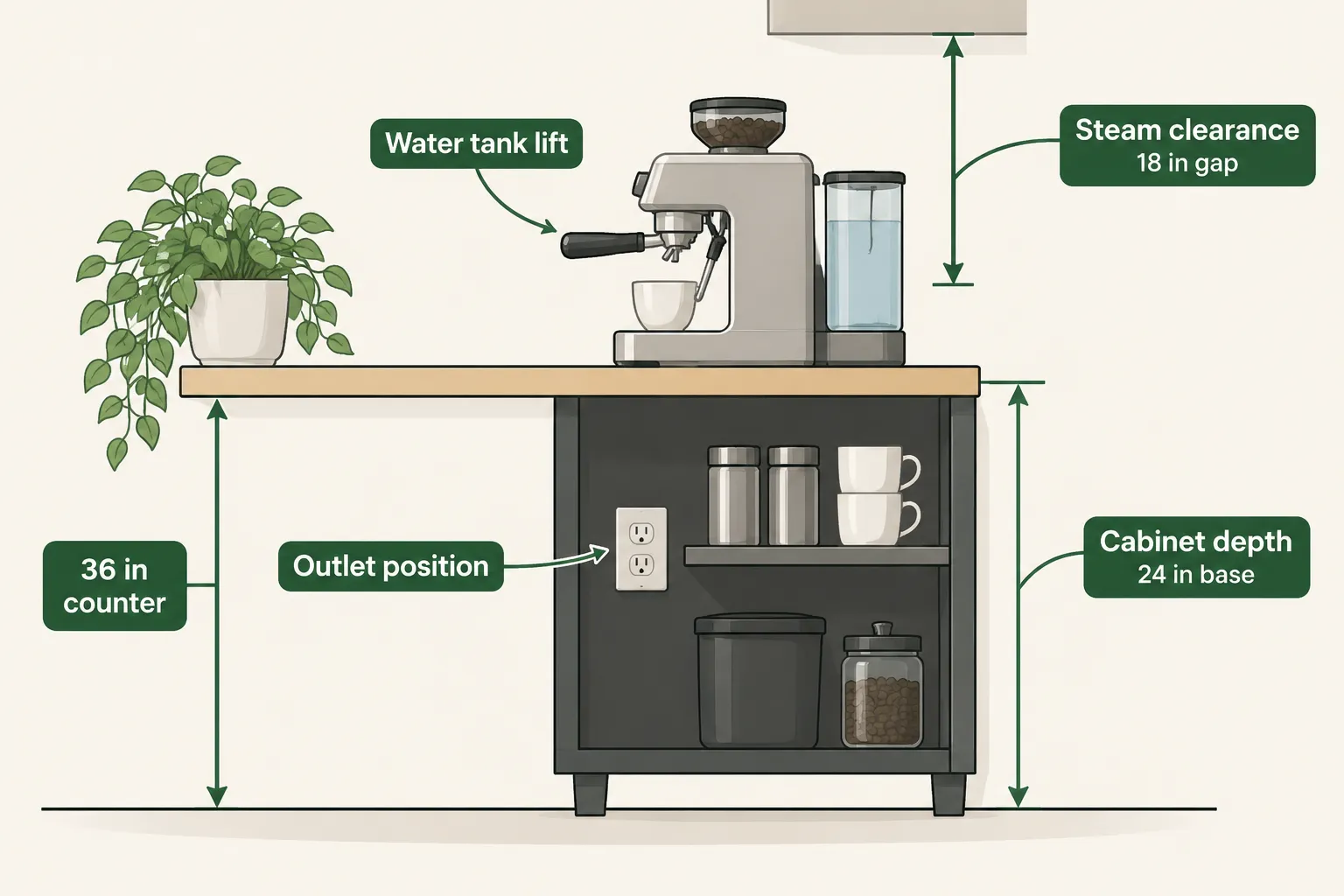
Four numbers decide whether a coffee bar cabinet works or annoys you daily: usable depth, outlet position relative to cord length, vertical lift clearance for the water tank and bean hopper, and steam clearance under the shelf above. Get those right and the rest is styling.
)
Here is the order to take them in.
1. Usable depth. Not the listed depth. Pull a tape across the actual surface, then subtract anything that eats space: a lip, a backsplash, a mounted power strip. Compare that number to your machine's depth with the cord plugged in and bent, which adds 1 to 3 inches behind most machines.
2. Outlet position and cord reach. Most home espresso machines ship with a cord between 30 and 40 inches. Measure from the machine's cord exit, around the cabinet interior, to the nearest outlet. If the number is tight, you need a cabinet with a built-in outlet or a cord pass-through.
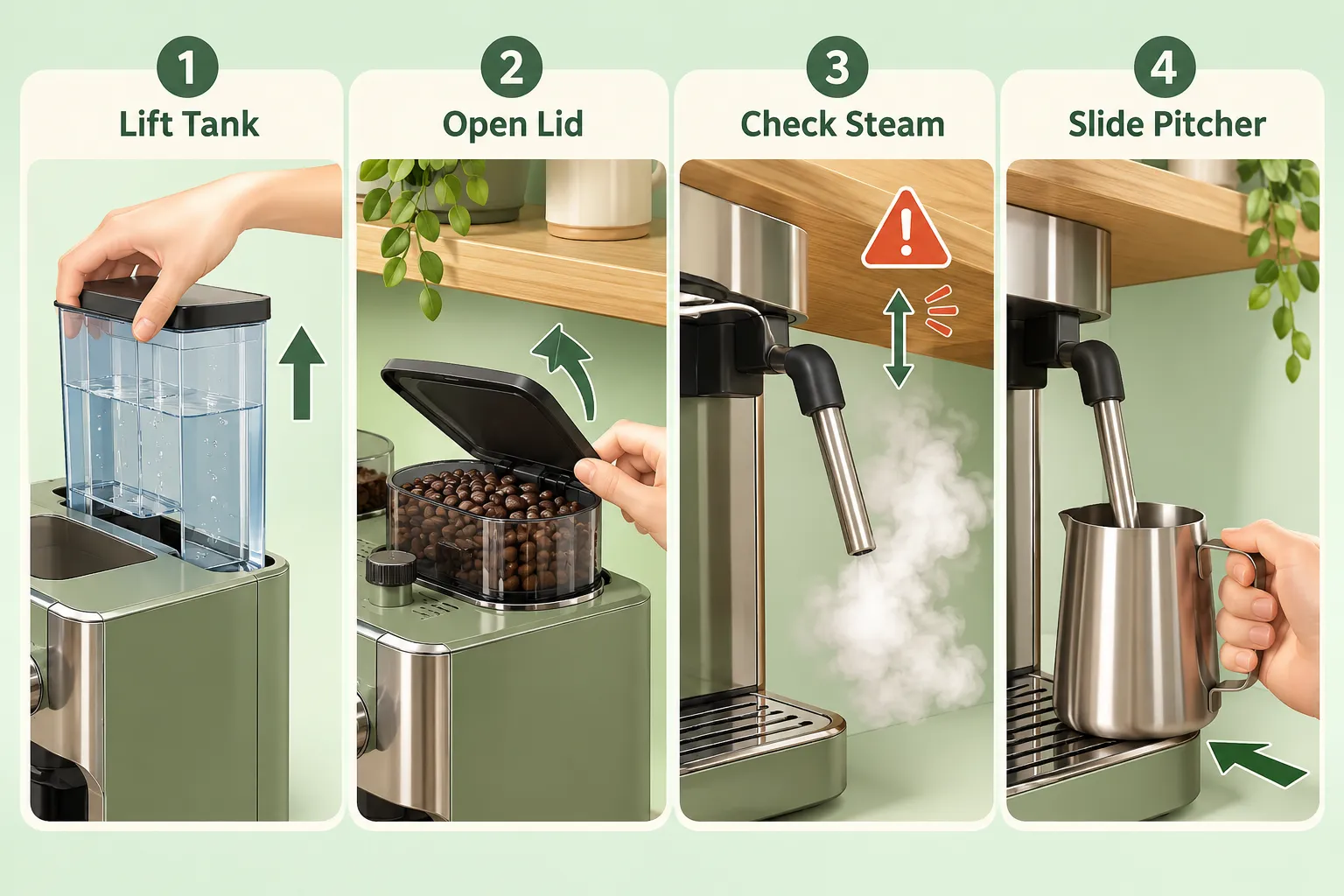
3. Vertical lift clearance. Many water tanks load from the top or lift out from the back. Open the tank, measure the height from the counter to the top of the lifted tank, add three inches for your knuckles.
4. Steam clearance. If the machine has a steam wand, it needs room to swing and room to vent. Mounted shelves directly above a steam wand collect moisture, and over months that softens particleboard edges and lifts veneer.
Measure the machine as it behaves in use, not as it sits in a product photo.
How deep does a coffee bar cabinet need to be for an espresso machine?
A coffee bar cabinet should be about 24 inches deep for a full-size espresso machine and grinder, matching a standard kitchen base cabinet . Pod machines and single-serve brewers can live on 16 to 18 inches, but anything with a portafilter wants the extra room.
The math is simple. A Breville Barista Express is roughly 13.9 inches deep. That sounds like it fits a shallow shelf until you add a plugged-in cord, a few inches for the tamping mat, and the drip tray you slide out twice a day. A 16-inch cabinet leaves you working at the very front lip with the machine pressed against the wall and no space to set a cup.
Depth guide by setup:
| Setup | Minimum usable depth | Notes |
|---|---|---|
| Pod or single-serve brewer | 14 to 16 in | Check lid swing height, not depth |
| Drip machine plus mugs | 18 in | Carafe needs front clearance |
| Semi-automatic espresso plus grinder | 24 in | Standard base cabinet depth |
| Espresso, grinder, scale, knock box | 24 in deep, 48 to 60 in wide | Full coffee bar composition |
Decision rule: if your machine is deeper than 12 inches or has a portafilter, skip anything under 20 inches of usable depth. You will resent the extra reach every morning.
Common mistake: buying by exterior dimensions. A 20-inch-deep cabinet with a 1.5-inch back panel and a decorative lip gives you about 17.5 inches to work with.
Where should the outlet be in a coffee bar cabinet?
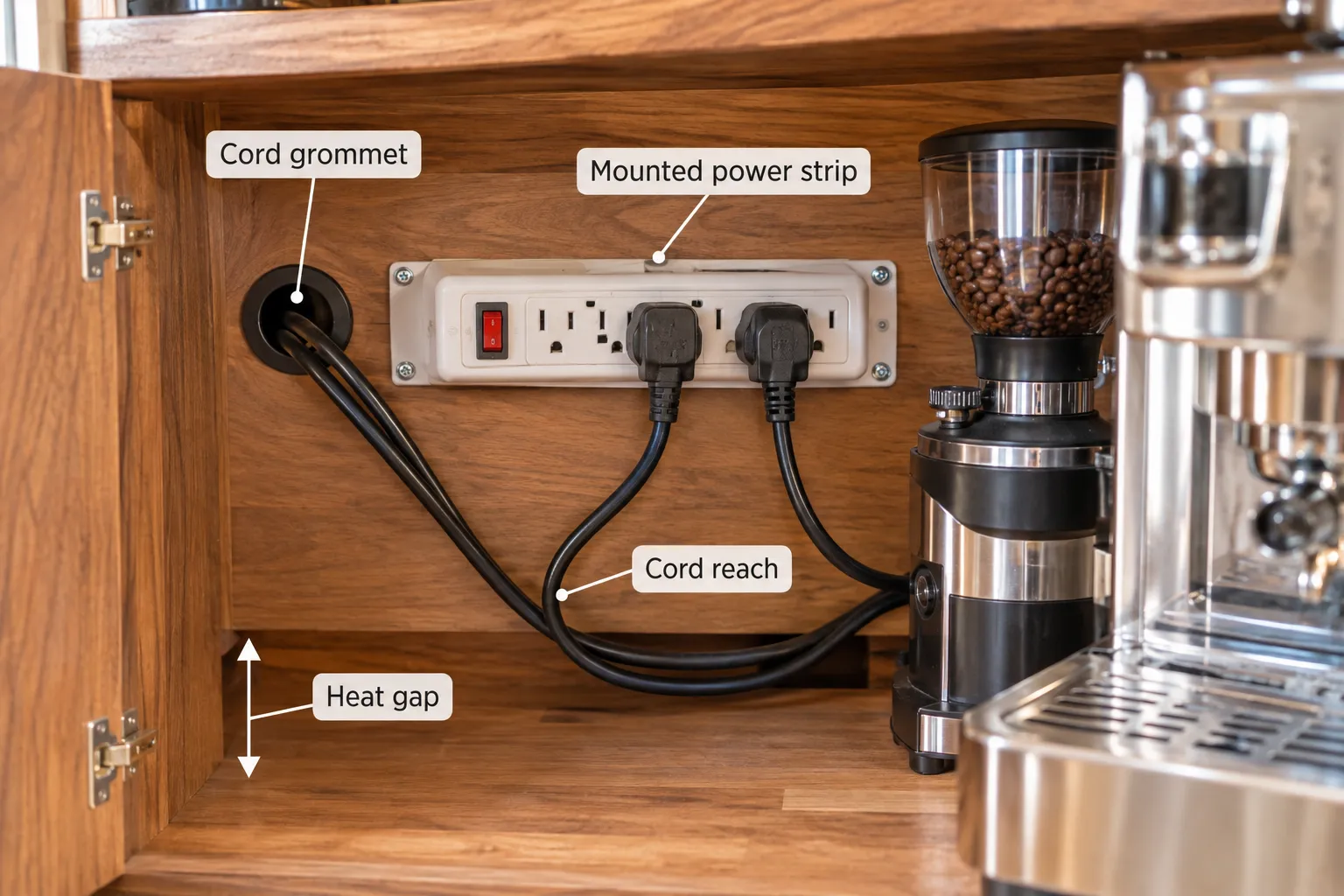
Put the outlet to the side of the machine, not directly behind it. Professional built-in guidance from Miele recommends locating electrical and water supplies in adjacent cabinetry rather than behind the appliance, and warns that rear-mounted utilities may demand additional cabinet depth. Behind-the-machine outlets force the cord into a hard bend and push the whole unit forward.
)
A coffee bar cabinet with outlet access built in solves most of this. The VASAGLE baker's rack at $116.99 (Amazon, checked November 5, 2026) includes a power outlet strip and LED lighting, which is the single most practical feature at that price. Otherwise you are running an extension cord along a baseboard, and that cord will catch the cabinet leg every time you move it.
Power checklist before you buy:
- Measure the machine's cord from where it exits the body, not from the plug.
- Count your draw. An espresso machine plus a grinder plus a kettle on one 15-amp circuit can trip a breaker when two heat elements run at once.
- Look for a rear cord cutout at least 2 inches wide. Many budget cabinets have none, and cutting one into a laminate back panel chips the finish.
- Keep the power strip mounted high on the interior wall, away from the drip tray and any water tank you carry across the cabinet.
Edge case: if your coffee nook sits on an exterior wall with no nearby outlet, a licensed electrician adding a dedicated receptacle is cheaper than the second cabinet you will buy after the first one fails.
How much clearance does a water tank and steam wand need?
Give a top-loading water tank 20 to 22 inches of vertical clearance from counter to the underside of any shelf above, and keep a steam wand at least 10 inches clear of any surface it can breathe moisture into. The usual 18-inch kitchen gap is not automatically enough .

Here is the sequence that catches people out. The machine fits. The cabinet looks great. Then you go to refill the tank on day two and discover you have to drag the whole 23-pound machine forward to lift the lid.
Three clearance numbers to take with your tape:
- Tank lift height. Counter to the top of the fully removed tank, plus 3 inches for hands.
- Hopper fill height. If you have a built-in grinder, the lid swings up. Measure that arc. A bag of beans needs tipping room above it.
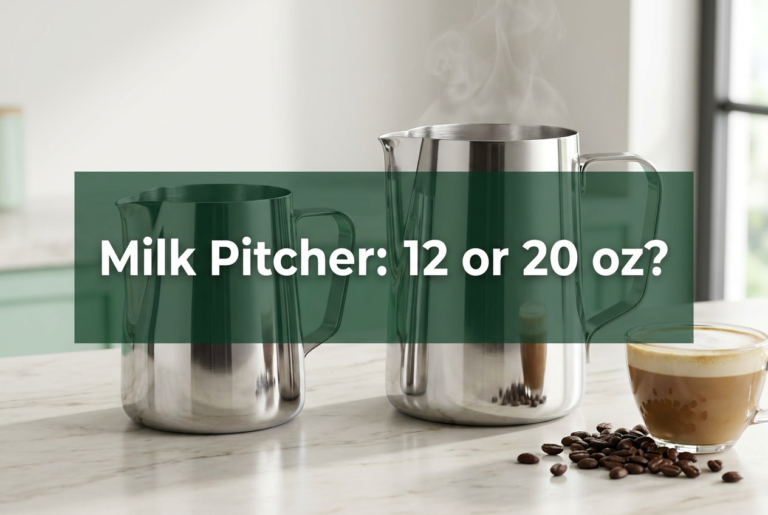
- Steam wand swing and pitcher height. A 20 oz milk pitcher is about 6 inches tall. The wand must clear it with room to purge.
Steam itself is a slow problem rather than a sudden one. Vented moisture rising into a closed shelf condenses on the underside. Over a year, particleboard swells at the edges and glass doors fog and spot. You do not need mechanical ventilation for a home coffee bar cabinet, but you do need air. A pull-out shelf that rolls the machine forward before steaming solves the problem better than any extractor.
)
Five features worth paying for in a coffee station cabinet
The features that earn their price are the ones you touch daily. Decoration is cheap. Function is where the money goes.
Built-in outlets. Removes the extension cord entirely and keeps the cabinet movable. Found on the VASAGLE unit at $116.99.
Pull-out shelves. Roll the machine forward to fill, steam, and clean. This single feature fixes water tank access and steam clearance at the same time. It is the most useful thing on this list.
LED lighting. Sounds cosmetic until you are grinding at 5:40 a.m. with the kitchen lights off. Strip lighting under an upper shelf makes dose-checking and milk pouring far easier.
Closed storage. Coffee degrades with oxygen, light, and heat. Doors keep bags shaded and keep grinder dust off everything else. Pay attention to the roast date on the bag and store the bag closed inside the cabinet rather than decanting into a clear jar on display.
Adjustable shelves. Machines change. Your next grinder will be a different height. Pin-adjustable shelving at 1-inch increments costs almost nothing extra and saves you a rebuild.
What to watch out for before you buy
Three problems account for most coffee bar cabinet complaints: shelves rated below the machine's weight, particleboard sag, and glass doors sitting in a steam path.
Shelf weight ratings. Many budget shelves are rated for 20 to 40 lb spread across the span. A Breville Barista Express at 23 lb plus a Baratza-class grinder at 7 lb plus mugs puts you right at the limit, concentrated over a small footprint. Check the manufacturer's per-shelf rating, not the total unit rating.
Particleboard sag. A 3/4-inch laminated particleboard shelf spanning 30 inches with 35 lb on it will bow visibly inside a year. Fixes: shorten the span with a center support, flip to a solid wood or plywood shelf, or place the heaviest item directly over a vertical panel.
Glass doors and steam. Attractive, and they show water spots within a week if your steam wand points at them. If you want glass, put the espresso machine on an open or pull-out section and keep the glass front for mugs and beans.
Also check: adjustable leveling feet. A wobbling cabinet makes tamping inconsistent, and an off-level machine drains unevenly through the drip tray.
Coffee bar cabinet comparison: four options by depth, outlet, and price
Prices below were checked on Amazon on November 5, 2026 and change often. Coffee Rank IQ earns affiliate commission on some purchases, which does not change what gets recommended here.
.cg-cbc-wrap{font-family:system-ui,-apple-system,”Segoe UI”,Roboto,sans-serif;background:#F5FAF8;padding:14px;border-radius:10px;color:#23372F} .cg-cbc-wrap h3{margin:0 0 4px;color:#14231D;font-size:17px} .cg-cbc-note{font-size:12px;color:#1F6B4A;margin:0 0 10px} .cg-cbc-tbl{width:100%;border-collapse:collapse;font-size:14px;background:#fff} .cg-cbc-tbl th{background:#1F6B4A;color:#fff;text-align:left;padding:8px;font-size:13px} .cg-cbc-tbl td{padding:8px;border-bottom:1px solid #E8F2EE;vertical-align:top} .cg-cbc-tbl tr:nth-child(even) td{background:#E8F2EE} @media(max-width:560px){.cg-cbc-tbl th,.cg-cbc-tbl td{font-size:12px;padding:6px}}Coffee bar cabinet options compared
Amazon prices checked November 5, 2026. Verify before buying.
| Option | Depth | Outlet | Price | Best for |
|---|---|---|---|---|
| Farmhouse coffee bar cabinet (690 reviews) | Shallow, approx 14 to 16 in | No | $59.99 | Pod brewers, renters, first coffee nook |
| VASAGLE baker’s rack, LED (1,325 reviews) | Mid, approx 16 in | Yes, built in | $116.99 | Drip plus grinder, no free wall outlet |
| HOSTACK 75-inch kitchen hutch | Mid to deep | Varies by model | $284.99 | Full coffee bar, mugs, beans, overflow |
| Standard 24-inch base cabinet run | 24 in | Add adjacent receptacle | Install cost varies | Semi-automatic espresso, built in coffee station |
Can I use a regular kitchen cabinet for a coffee bar setup?
Yes, and a standard 24-inch base cabinet is usually the best option you have, because the depth and the 36-inch counter height already match what an espresso station needs . You are mostly adding power and clearance, not furniture.
What you change:
- Add a receptacle in the adjacent cabinet or sidewall rather than directly behind the machine.
- Raise the upper cabinet, or remove one section, to reach a 20 to 22 inch gap if your tank loads from the top .
- Fit a pull-out shelf or a sliding appliance tray so the machine rolls clear of the uppers for steaming and refilling.
- Consider lowering a dedicated espresso section to 34 or 35 inches if you tamp every day .
Choose a built in coffee station if you own the home, brew espresso daily, and want the machine to stop competing with meal prep. Choose standalone furniture if you rent, move often, or your coffee setup may change within two years.
Where is the best place to put a coffee bar in a kitchen?
Put the coffee bar outside the main cooking triangle, within a few steps of the sink, and near a circuit that is not already loaded with the microwave and toaster. Kitchen entry walls, the end of a run, a butler's pantry, and a dining room sideboard all work.
The practical test: stand where the machine would sit and walk the full routine. Fill water. Grind. Tamp. Pull. Steam. Rinse. If any of those steps makes you cross in front of the stove or the dishwasher door, move the station.
Good small coffee bar ideas for tight kitchens:
- A 24-inch-wide section at the end of a counter run, enough for one machine and one grinder .
- The top of a 30-inch-wide sideboard in the dining room, with the uppers left off entirely.
- A closed cabinet near a doorway, so morning traffic never meets cooking traffic.
Edge case: if the only spot is under a window, measure the sill height. Window trim often sits at 38 to 42 inches, which kills top-loading tank access on a 36-inch counter.
Open shelving or closed coffee cabinets: which is better?
Closed cabinets protect coffee and hide clutter. Open coffee bar shelves give you faster access and better steam ventilation. Most workable setups use both: open at the machine level, closed above or below.
| Open shelving | Closed cabinet | |
|---|---|---|
| Steam and moisture | Vents freely | Traps humidity, can warp |
| Coffee storage | Exposed to light | Protects bags from light |
| Dust and grinder chaff | Collects on everything | Contained |
| Access speed | Fastest | One extra motion |
| Visual clutter | Needs discipline | Forgiving |
Decision rule: if you steam milk daily, keep the machine zone open or on a pull-out. Store beans, filters, and syrups behind doors.
Is a coffee bar cabinet worth it for a small kitchen?
In a small kitchen, a coffee bar cabinet is worth it when it replaces counter clutter rather than adding furniture. A 24-inch-wide unit that absorbs the machine, grinder, mugs, and bean bags usually frees more prep surface than it occupies.
Where it is not worth it: if you brew pods once a day and own three mugs, a shelf and a drawer organizer do the job for under $30. The cabinet earns its space when you have gear. That means a burr grinder, a scale, filters, two or three bean bags, and a knock box all competing for the same square foot.
cabinet vs bar cart vs countertop station
cabinet Pros: closed storage, weight capacity, outlet options, looks permanent. Cons: fixed location, needs floor space, $60 to $285 and up.
Coffee bar cart Pros: rolls to where you need it, cheap, good for renters and small coffee bar ideas. Cons: thin shelves, low weight ratings, wobbles when you tamp, cord always trailing.
Countertop station Pros: zero added furniture, uses existing power and depth. Cons: permanent counter loss, no hidden storage, grinder chaff spreads across prep space.
Choose the cart if you move often or need the machine to relocate for parties. Choose the cabinet if you tamp espresso and want a stable 24-inch surface. Choose the countertop station if your kitchen already has a 36-inch dead zone near an outlet.
What should you actually keep in a cabinet?
Keep what you touch within 30 seconds of brewing. Everything else belongs in a lower drawer or the pantry.
Top tier, at arm's reach:
- The machine and grinder
- Current bean bag, closed, out of light
- Tamper, scale, timer
- Two to four daily mugs
- Microfiber cloth and a knock box
Second tier, behind doors:
- Backup beans and filters
- Pods for guests
- Syrups, cocoa, sweeteners
- Descaling solution and cleaning tablets, kept away from food items
Skip the decorative canisters holding beans you never drink. Freshness beats styling, and a bag with a one-way valve holds flavor longer than an open glass jar.
Coffee bar vs beverage station: what is the difference?
A coffee bar is built around one hot workflow: grind, brew, steam, clean. A beverage station serves multiple drink types and usually includes a small refrigerator, glassware, and space for tea, cocoa, or soda. The difference shows up in plumbing, power, and shelving.
If you add a fridge, you need a dedicated outlet and ventilation clearance per that appliance's manual. If you add glassware, you need taller shelf spacing than mugs require. A pure coffee hutch can stay shallower and simpler.
Common mistakes people make setting up a cabinet
- Measuring the machine closed. Lid down, tank in, no cord. Then nothing opens once it is installed .
- Ignoring cord exit direction. A side-exit cord needs lateral space a rear-exit cord does not.
- Trusting listed shelf depth. Subtract back panels and lips to get usable depth.
- Putting glass doors above the steam wand. Spots, fog, and swollen edges.
- Overloading one shelf. A 23 lb machine plus grinder plus beans on a 30-inch particleboard span will bow.
- Forgetting the knock box and drainage. Spent pucks and rinse water need somewhere to go that is not the sink across the room.
- Skipping the lighting. Dark cabinets make dialing in grind size guesswork.
- Buying the cabinet before the machine. Pick the machine, then size the cabinet to it.
FAQ

Conclusion: your measurement checklist
Before you add anything to a cart, write down four numbers.
- Usable depth of the cabinet surface, minus lips and back panels, compared with your machine's depth plus 3 inches for the cord.
- Outlet distance from the machine's cord exit to the receptacle, routed the way the cord will actually run.
- Vertical lift clearance from counter to the top of a fully raised water tank or open bean hopper, plus 3 inches for hands. Target 20 to 22 inches of counter-to-shelf gap if either loads from the top .
- Steam clearance around the wand, with room for a 6-inch milk pitcher and nothing absorbent directly overhead.
Then match those numbers against the cabinet listing, not the photo. If the listing does not state usable depth or per-shelf weight, assume the worst and size up.
Next step: pick the machine first. The cabinet is a container for a decision you have not made yet. Start with how to choose the right coffee maker for your home, then size the the cabinet to the machine you actually want to live with. Better Coffee Starts With Better Answers.
Affiliate disclosure: Coffee Rank IQ may earn a commission from purchases made through links on this page. Prices listed were checked November 5, 2026 and change frequently. Check the current price before buying.