Kalita Wave 185 Recipe: Grind, Ratio and a Pulse Pour Schedule
In “How To Use The Kalita Wave 185 Dripper For Perfect Coffee,” you will discover a step-by-step guide to mastering this popular coffee brewing method. This complete article provides you with all the essential details, from choosing the right coffee beans to the precise pouring techniques required for achieving a balanced and flavorful cup. Whether you are a coffee connoisseur or a novice, this guide will equip you with the knowledge and skills to improve your brewing experience using the Kalita Wave 185 Dripper.
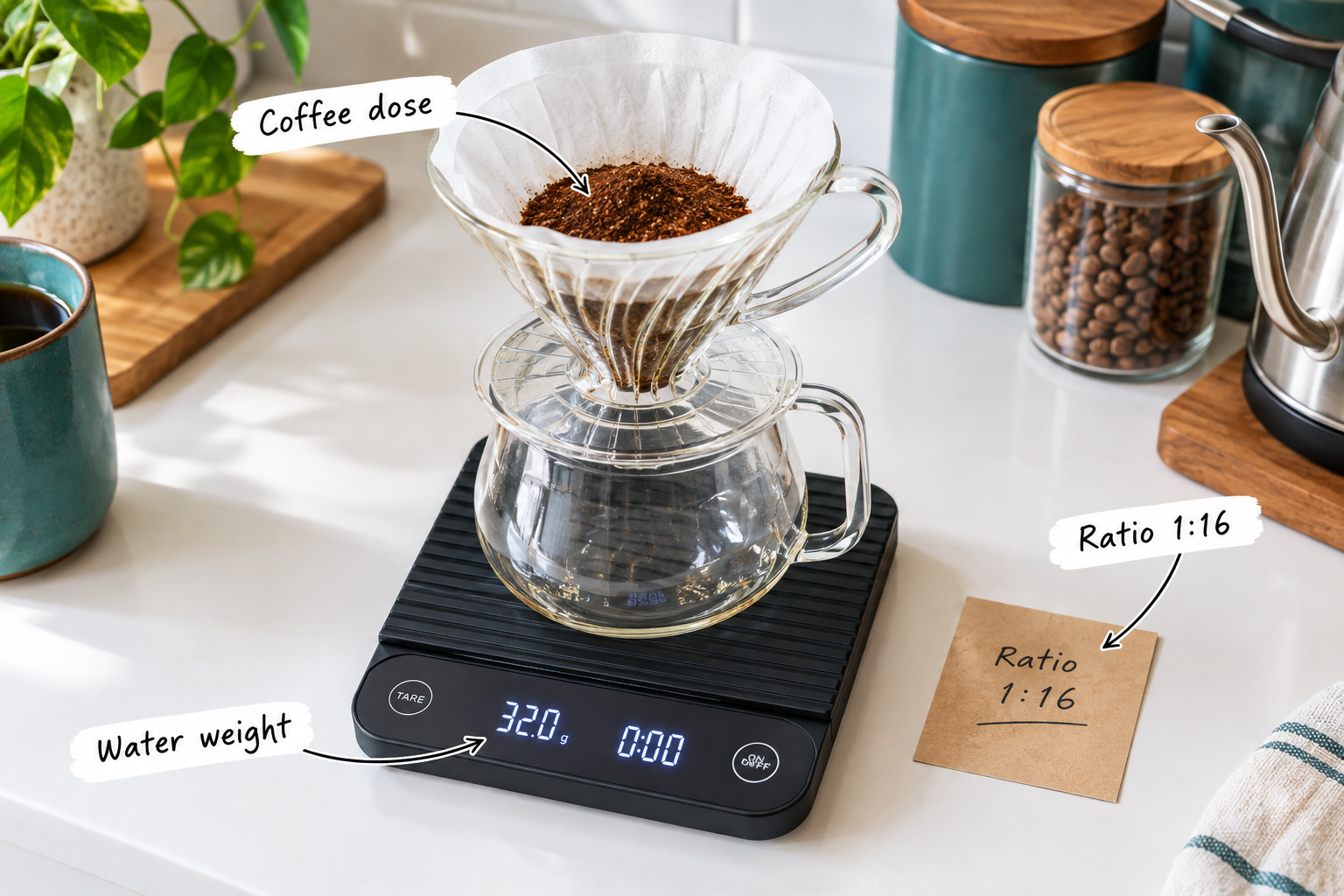
A reliable Kalita Wave 185 recipe uses 20 grams of medium-ground coffee and 320 grams of water at about 200°F, a 1:16 ratio. Bloom with 40 grams for 40 seconds, then pour in short pulses every 30 seconds until you reach 320 grams. The brew should finish draining in about 3 to 3.5 minutes.
How To Use The Kalita Wave 185 Dripper For Perfect Coffee
Have you ever wondered how to make the perfect cup of coffee using the Kalita Wave 185 dripper? If so, you’re not alone. Many coffee fans are turning to this popular brewing method for its consistency and exceptional flavor. With its flat-bottom design and wave filters, the Kalita Wave 185 can deliver a clean and balanced cup of coffee that rivals even the best coffee shops.
In this article, you will find a complete guide to using the Kalita Wave 185 dripper to brew the perfect cup of coffee. From understanding the equipment and ingredients, to the step-by-step brewing process, and troubleshooting common issues, we will cover all the essential elements you need to know. By the end of this guide, you will be well-equipped to impress yourself and others with your coffee brewing skills.
Understanding the Kalita Wave 185 Dripper
Before looking at the brewing process, it’s essential to understand what makes the Kalita Wave 185 unique and why it’s favored by coffee enthusiasts.
Design and Construction
The Kalita Wave is distinguished by its flat-bottom design with three small holes. This design promotes an even coffee extraction, as water can disperse more consistently through the coffee grounds. The dripper is made from a variety of materials, including stainless steel, glass, and ceramic, giving you options based on your aesthetic and functional preferences.
Wave Filters
One of the key components of the Kalita Wave system is its proprietary wave filters. These filters are designed to fit perfectly into the dripper and have a particular wave shape that helps maintain an even coffee bed, reducing channeling and promoting even extraction.
Benefits of Using the Kalita Wave 185
The Kalita Wave 185 offers several benefits:
- Consistent Extraction: The flat-bottom design and wave filters work together to provide a uniform extraction.
- Flexibility: Suitable for both beginners and expert home brewers.
- Control: Gives you significant control over brewing variables like water temperature, grind size, and pour rate.
Essential Equipment and Ingredients
To make the best coffee with your Kalita Wave 185, you’ll need a few essential pieces of equipment and high-quality ingredients.
Equipment
Here’s a table summarizing the necessary equipment for using the Kalita Wave 185 dripper:
| Equipment | Description |
|---|---|
| Kalita Wave 185 Dripper | The main piece of equipment, available in stainless steel, glass, or ceramic |
| Kalita Wave Filters | Special wave-shaped filters designed to fit perfectly into the Kalita Wave 185 dripper |
| Gooseneck Kettle | Allows for precise control over the pour rate and water distribution |
| Coffee Scale | Ensures accurate measurement of coffee and water, vital for consistency |
| Grinder | A burr grinder is recommended for a consistent grind size |
| Digital Thermometer | Helps monitor the water temperature, key for optimal extraction |
| Hot Water | Clean, filtered water heated to the optimal brewing temperature (195-205°F or 90-96°C) |
Ingredients
Using fresh, high-quality ingredients will improve the flavor of your coffee. Here’s what you need:
| Ingredient | Description |
|---|---|
| Coffee Beans | Freshly roasted beans, preferably single-origin for complexity |
| Water | Clean, filtered water with no impurities that could affect taste |
The Optimal Grind Size
The grind size significantly impacts the extraction and, consequently, the flavor of your coffee. For the Kalita Wave 185, a medium grind size is recommended. The texture should be similar to coarse sand.
Adjusting Grind Size
If your coffee tastes too bitter or over-extracted, try a coarser grind. Conversely, if it tastes too sour or under-extracted, a finer grind may be necessary.
The Brewing Process
Preheat and Prep
-
Preheat the Dripper: Place the Kalita Wave 185 on top of your cup or carafe. Run hot water through the dripper and the filter to preheat everything and eliminate any papery taste from the filter. Discard the rinsing water.
-
Measure Coffee and Water: Weigh out your coffee beans and grind them to a medium consistency. A good starting ratio is 1:16 (1 gram of coffee to 16 grams of water).
Bloom Phase
- Add Coffee Grounds: Place the ground coffee in the preheated and pre-rinsed filter inside the dripper.
- Start the Timer: Begin brewing by pouring a small amount of hot water (twice the weight of the coffee) over the grounds to saturate them evenly. This process is known as the bloom. Allow it to bloom for about 30 seconds. This step releases trapped gases and initiates even extraction.
Main Brew Phase
-
First Pour: After the bloom, continue pouring water in a steady spiral motion. Ensure you pour slowly and consistently, maintaining an even level of water above the coffee bed. Aim to pour around 60-100 grams of water.
-
Wait and Pour Again: Allow the water to draw down slightly before continuing with another pour. Repeat this process until you have poured the total amount of water required for your desired coffee ratio.
Post-Brew Phase
- Complete Extraction: Wait for the water to fully drain through the coffee grounds.
- Remove Dripper: Once the brewing is complete, remove the dripper and discard the used coffee grounds and filter.
Dialing In Your Brew
To achieve the perfect cup, you may need to tweak various brewing parameters. Here’s a breakdown of different variables and their effects:
| Variable | Effect on Flavor |
|---|---|
| Grind Size | Finer grind increases extraction, coarser grind decreases extraction |
| Water Temperature | Higher temp increases extraction, lower temp decreases it |
| Coffee to Water Ratio | More coffee makes for a stronger brew, less coffee for a weaker brew |
| Pour Rate | Faster pour can under-extract, slower pour can over-extract |
Experimenting with Variables
It’s essential to experiment with these variables to find the combination that best suits your taste preferences. Document your brews to understand better how each change impacts the final cup.
Common Issues and Troubleshooting
Even for seasoned baristas, issues can arise. Here are some common problems and potential solutions:
| Issue | Possible Cause | Solution |
|---|---|---|
| Bitter Coffee | Over-extraction or too fine a grind | Use a coarser grind or reduce brewing time |
| Sour Coffee | Under-extraction or too coarse a grind | Use a finer grind or increase brewing time |
| Weak Coffee | Incorrect coffee-to-water ratio | Add more coffee grounds |
| Slow Brew Time | Too fine a grind or clogged filter | Use a coarser grind or ensure proper filter placement |
| Uneven Extraction | Inconsistent pouring technique | Practice more even water distribution and pour control |
Enhancing Your Coffee Experience
Water Quality
Water significantly influences your coffee’s flavor. Always use clean, filtered water. Whole house water softeners and filters can also make a significant difference.
Freshness of Coffee Beans
Freshly roasted coffee beans are key. Beans start losing their flavor a few weeks after roasting, so it’s best to buy in small quantities and store them in an airtight container away from light, heat, and moisture.
Consistent Brewing
Using a scale and timer ensures consistency. Measurements by eye or volume can result in significant discrepancies, impacting the final flavor.
Advanced Techniques
Pulse Pouring
Pulse pouring involves pouring water in stages rather than a continuous stream. This technique can help you control the extraction process more precisely.
Agitation
Some brewers gently stir or swirl the coffee grounds during brewing to ensure even saturation. This can improve extraction uniformity and improve flavor.
Temperature Control
Maintaining a consistent water temperature is key. Some advanced brewers use temperature-controlled kettles to ensure the water stays within the optimal range throughout the brewing process.
Kalita Wave 185 vs 155: Size, Material and Price
Kalita rates the 185 for 2 to 4 cups, and the Kalita USA listing notes the stainless model is made in Japan, dishwasher safe, and takes only Wave 185 filters. The 155 is the smaller sibling for one or two cups. The filters are not interchangeable, so buy the paper that matches the number on your dripper.
| Dripper | Price, September 2026 | Why pick it |
|---|---|---|
| Wave 185 Stainless Steel | $42 at Kalita USA | Hard to break, travels well, holds heat once preheated |
| Wave 185 Glass | $39 at Espresso Parts | Lets you watch the bed drain |
| Wave Tsubame Stainless 185 | $61 at Espresso Parts | The higher-end stainless version, for people who want the nicer finish |
| Wave 155 Stainless Steel | $38 at Espresso Parts | One-mug brewing with a smaller dose |
| Wave 185 Filters, 100 count | $13 at Espresso Parts | The ongoing cost, about 13 cents a brew |
For most home brewers, the stainless 185 is the one to buy. It survives a sink full of dishes, and the 185 size gives you room to brew one large mug or coffee for two without swapping gear.
A 20 Gram Kalita Wave 185 Recipe With Times
This recipe makes one large mug at a 1:16 ratio. Grind medium, roughly like coarse sand, and heat the water to about 200°F. Our guide to coffee brewing temperature explains why that range keeps showing up.
- 0:00: pour 40 g of water to bloom, wetting every ground.
- 0:40: pour in small circles up to 110 g.
- 1:10: pour up to 180 g.
- 1:40: pour up to 250 g.
- 2:10: pour up to 320 g, then give the dripper one gentle swirl to flatten the bed.
- About 3:00 to 3:30: the water should finish draining. If it runs past 4:00, grind coarser. If it finishes before 2:45, grind finer.
Short pulses keep the water level low and steady, which is where the flat bed and three small holes do their best work. A scale with a built-in timer makes the schedule easy to follow. Our best coffee scale picks all include one.
Wave Filter Mistakes That Change the Cup
- Crushing the waves: press the filter flat and the paper hugs the walls, which slows the drain. Handle it by the rim and drop it in gently.
- Rinsing down the sides: pour the rinse water into the center so the pleats keep their shape.
- Pouring on the paper: water poured on the filter edges runs around the coffee instead of through it. Keep the stream inside the bed.
- Using a cheap blade grinder: dust from uneven grinding clogs the three holes. A burr grinder fixes more slow brews than any pour trick. Our best manual coffee grinder guide covers affordable options that grind well for pour over.
FAQ
What grind size is best for the Kalita Wave 185?
A medium grind, close to coarse sand, suits the Kalita Wave 185. Adjust by drain time: aim for about 3 to 3.5 minutes for a 20 gram brew and go coarser if it runs long.
What is the difference between the Kalita Wave 155 and 185?
The 185 is the larger dripper for 2 to 4 cups, while the 155 is sized for one or two cups. Each uses its own filter size, so 155 filters will not fit the 185.
Is the Kalita Wave 185 dishwasher safe?
Yes, Kalita USA lists the stainless steel Wave 185 as dishwasher safe. Rinse off coffee oils soon after brewing so they do not bake onto the steel. More pour over guides live on the Coffee Rank IQ homepage.
Final Thoughts
Mastering the Kalita Wave 185 dripper may take some practice, but the reward is a consistently excellent cup of coffee. By understanding the intricacies of the equipment and the variables that affect flavor, you can tailor each brew to your preferences.
Continue to experiment and refine your technique. The joy of coffee brewing lies in the routine as much as the destination. With the Kalita Wave 185, you’re well on your way to coffee perfection.