How to Adjust Grind Size: Fix Sour, Bitter, and Slow Brews
In “Expert Tips for Customizing Your Coffee Grind,” you will look at the subtle world of coffee grinding and discover how to achieve the perfect grind for your brewing method. This article offers an array of expert recommendations that will ensure your coffee is always matched to your specific taste preferences. From understanding the fundamentals of grind size to mastering advanced techniques, you will gain valuable insights that can transform your daily coffee experience from ordinary to exceptional. Whether you are a seasoned barista or a home coffee enthusiast, these tips will help you to customize your grind with precision and confidence.
How to adjust grind size, in short: The right coffee grind size depends on how long water touches the coffee: the shorter the contact, the finer the grind. Use fine for espresso, medium-fine for AeroPress and cone pour over, medium for drip machines, coarse for French press, and extra coarse for cold brew, then adjust one step at a time.
Expert Tips for Customizing Your Coffee Grind
Have you ever wondered how you could improve the flavor of your morning coffee? The secret lies in the grind. Different grind sizes can significantly impact the flavor, aroma, and overall experience of your coffee. In this article, you’ll discover expert tips for customizing your coffee grind, helping you achieve the perfect brew matched to your taste preferences.
Understanding Coffee Grind Basics
Before looking at the tips and tricks, it’s essential to understand the basics of coffee grinding. The grind size, particle uniformity, and freshness play critical roles in coffee brewing.
Why Grind Size Matters
The size of the coffee grind affects the extraction process. Extraction is the process of dissolving the soluble flavors from coffee grounds into water. Grind size influences how quickly the water extracts flavors from the coffee. Here’s a quick breakdown:
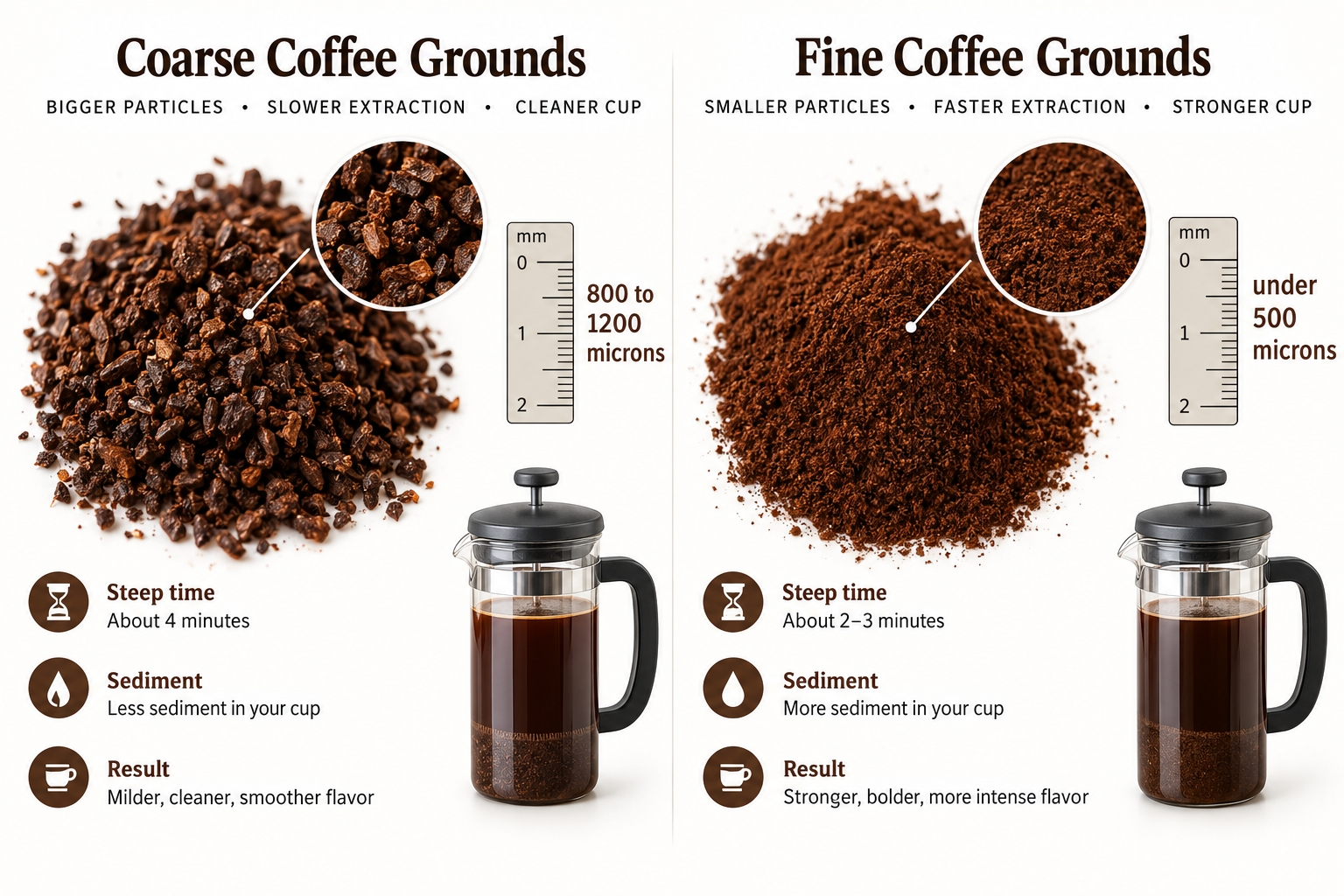
- Coarse Grind: Suitable for French press and cold brew. Water flows more freely, allowing longer brewing time without over-extraction.
- Medium Grind: Ideal for drip coffee makers and siphon brewers. Provides a balanced extraction rate.
- Fine Grind: Perfect for espresso and Aeropress. Water flows slowly, enhancing flavor extraction in a shorter brewing time.
Particle Uniformity
Consistent grind size is key for an even extraction. Inconsistent particle sizes can lead to over-extraction or under-extraction, creating an imbalanced flavor profile. Investing in a quality burr grinder, which offers more uniformity than blade grinders, is highly recommended.
Freshness of the Grind
The freshness of your grind plays a significant role in the flavor of your coffee. Ground coffee loses its freshness rapidly due to exposure to air, light, and moisture. Grinding your coffee just before brewing ensures maximum flavor retention.
Selecting Your Grinder
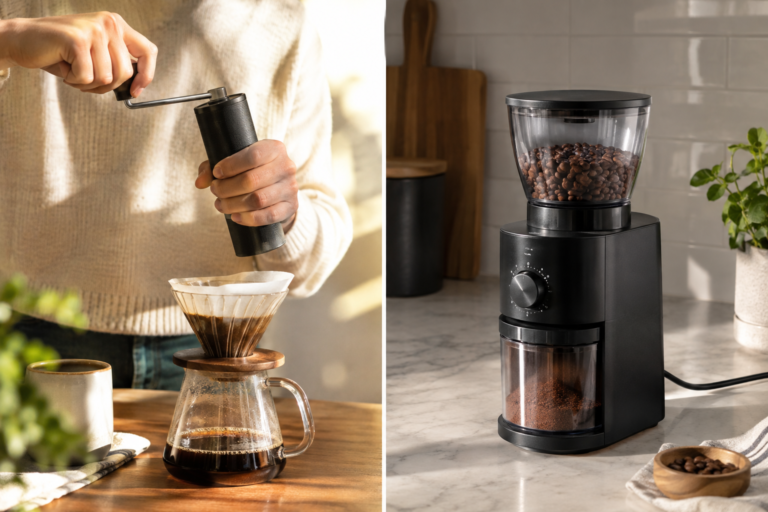
Choosing the right grinder is your first step toward customizing your coffee grind. There are two main types of grinders: blade grinders and burr grinders.
Blade Grinders
Blade grinders use a spinning blade to chop coffee beans. While they are more affordable, they often produce uneven grinds, leading to inconsistent extraction and flavor.
Pros and Cons
| Pros | Cons |
|---|---|
| Affordable | Inconsistent grind size |
| Easy to use | Generates heat, affecting flavor |
Burr Grinders
Burr grinders use two abrasive surfaces (burrs) to crush coffee beans into a uniform grind size. They come in two types: flat burr grinders and conical burr grinders.
Flat Burr vs. Conical Burr
| Criteria | Flat Burr | Conical Burr |
|---|---|---|
| Grind Uniformity | Very consistent | Consistent |
| Price Range | Generally higher | Moderate to high |
| Heat Generation | More heat | Less heat |
Pros and Cons
| Pros | Cons |
|---|---|
| Consistent grind size | Can be expensive |
| Multiple grind settings | Requires maintenance |
| Better flavor preservation | Can be noisy |
Customizing Your Grind by Brewing Method
Different brewing methods require different grind sizes to tune flavor extraction. Here are expert recommendations for various brewing methods:
French Press
French press brewing involves steeping coarse coffee grounds in hot water and then pressing a plunger to separate the grounds from the brewed coffee.
- Recommended Grind Size: Coarse
- Brew Time: 4 minutes
- Tip: Stir the coffee halfway through the brewing process to improve extraction.
Drip Coffee Maker
Drip coffee makers use a medium grind and typically brew coffee through a paper filter.
- Recommended Grind Size: Medium
- Brew Time: 4-6 minutes
- Tip: Ensure the coffee bed is level for an even extraction.
Espresso
Espresso brewing requires a fine grind to extract a concentrated shot of coffee under high pressure.
- Recommended Grind Size: Fine
- Brew Time: 25-30 seconds
- Tip: Adjust the grind size for the perfect balance between bitterness and acidity.
Aeropress
Aeropress is a versatile brewing method that can use various grind sizes. But, it typically works best with a fine to medium grind.
- Recommended Grind Size: Fine to Medium
- Brew Time: 1-2 minutes
- Tip: Experiment with different grind sizes and brew times to find your preferred taste.
Troubleshooting Common Coffee Grinding Issues
Even the most experienced coffee enthusiasts encounter difficulties from time to time. Here are some common issues and solutions:
Over-Extraction
Over-extraction occurs when the coffee grind is too fine or the brewing time is too long, resulting in a bitter flavor.
- Symptoms:
- Bitter taste
- Dry and harsh aftertaste
Solutions:
- Coarsen the grind size.
- Reduce brewing time.
- Lower the water temperature (ideal range: 195°F to 205°F).
Under-Extraction
Under-extraction happens when the coffee grind is too coarse or the brewing time is too short, resulting in a sour or weak flavor.
- Symptoms:
- Sour taste
- Weak and watery taste
Solutions:
- Finer grind size.
- Increase brewing time.
- Ensure water temperature is within the ideal range.
Inconsistent Grind Size
Inconsistent grind size can lead to uneven extraction, affecting the overall flavor of your coffee.
- Symptoms:
- Mixed bitter and sour notes
- Inconsistent brew strength
Solutions:
- Use a burr grinder for evenly sized particles.
- Regularly clean your grinder to remove residual grounds.
- Check for worn-out burrs and replace them if necessary.
Fine-Tuning Your Coffee Grind
Fine-tuning your coffee grind requires a bit of experimentation. Here’s a step-by-step guide to help you perfect your grind:
Step 1: Identify Your Brewing Method
Start by selecting your preferred brewing method (e.g., French press, drip coffee maker, espresso).
Step 2: Choose Your Starting Grind Size
Follow the recommended grind size for your brewing method. Refer to the section above for guidance.
Step 3: Brew and Taste
Brew a batch of coffee and take note of the flavor profile. Is it too bitter, sour, weak, or strong?
Step 4: Adjust Accordingly
Based on your tasting notes, adjust the grind size slightly finer or coarser. Make one adjustment at a time to isolate the variable.
Step 5: Repeat the Process
Repeat Steps 3 and 4 until you achieve the desired flavor profile. Keep in mind, patience is key.
Exploring Advanced Grinding Techniques
Once you’ve mastered the basics, you can explore advanced grinding techniques to further customize your coffee grind.
Dialing-In
Dialing-in involves making minor adjustments to your grind size to perfect your coffee extraction. It is particularly useful for espresso brewing, where small differences can significantly impact the flavor.
Tips for Dialing-In:
- Consistency: Make one adjustment at a time, changing the grind size by small increments.
- Record Keeping: Keep notes of your grind settings and the resulting flavor profiles.
- Patience: It may take several attempts to find the perfect balance.
Pulse Grinding
Pulse grinding involves operating the grinder in short bursts (pulses) instead of continuously. This technique helps reduce heat buildup, preserving the coffee’s flavor and aroma.
How to Pulse Grind:
- Step 1: Fill your grinder with coffee beans.
- Step 2: Press the grinder’s button for 1-2 seconds, then release.
- Step 3: Repeat until you have the desired amount of coffee grounds.
Grind Size Blending
Grind size blending involves mixing different grind sizes to create a unique flavor profile. This technique is often used by baristas to balance different coffee notes.
How to Blend Grind Sizes:
- Step 1: Grind a portion of coffee beans to a coarse size.
- Step 2: Grind another portion to a fine size.
- Step 3: Mix the two grinds together in your brewing device.
Expert Tips for Optimal Coffee Grinding
To help you perfect your coffee grind, here are some expert tips and best practices:
Regular Maintenance
Keeping your coffee grinder clean and well-maintained ensures consistent performance and prolongs its lifespan.
Maintenance Tips:
- Cleaning: Regularly remove coffee grounds and oils using a brush or grinder cleaning tablets.
- Burr Replacement: Replace burrs as recommended by the manufacturer, usually after grinding 300-600 pounds of coffee.
- Calibration: Periodically recalibrate your grinder to maintain consistent grind size.
Use a Scale
Measuring your coffee beans by weight using a digital scale ensures precise and consistent grind size.
Benefits of Using a Scale:
- Accuracy: Eliminates guesswork, providing consistent results.
- Efficiency: Streamlines the grinding process.
Store Coffee Beans Properly
Proper storage of coffee beans maintains their freshness and flavor.
Storage Tips:
- Airtight Containers: Store beans in airtight containers to minimize exposure to air, light, and moisture.
- Cool, Dark Place: Keep containers in a cool, dark place, away from direct sunlight and heat sources.
- Small Batches: Buy coffee beans in small batches to ensure they are used within a few weeks.
Coffee Grind Size Chart by Brew Method
Use this chart as a starting point, then adjust by taste. Grinder dial numbers mean nothing from one brand to the next, so the texture column is the part to trust: pinch some grounds between your fingers and compare.
| Grind | Feels like | Brew methods | Typical contact time |
|---|---|---|---|
| Extra fine | Flour or powdered sugar | Turkish coffee | A few minutes of simmering |
| Fine | Fine sand that clumps when pinched | Espresso, moka pot (a touch coarser) | 25 to 30 seconds for espresso |
| Medium-fine | Fine sand | AeroPress, V60 and other cone drippers | 1 to 3 minutes |
| Medium | Regular sand or table salt | Flat bottom drip machines, siphon | 4 to 6 minutes |
| Medium-coarse | Rough sand | Chemex, Clever Dripper | 4 to 5 minutes |
| Coarse | Kosher salt | French press, percolator | About 4 minutes for a press |
| Extra coarse | Cracked peppercorns | Cold brew | 12 to 24 hours |
Signs Your Grind Is Wrong, Brewer by Brewer
The brewer usually tells you before your tongue does. Watch for these clues and move one step at a time.
- French press: the plunger fights you or the cup is muddy. Go coarser. See our French press coffee ratio guide for the dose that pairs with a coarse grind.
- Pour over: water sits on the bed long after your last pour, or the drawdown runs well past 4 minutes. Go coarser. If it drains in under 2 minutes and tastes thin, go finer.
- Espresso: a double shot gushes out in under 20 seconds. Go finer. If it drips for 40 seconds or more, go coarser.
- AeroPress: you have to lean your full weight on the plunger. Go coarser.
- Drip machine: the basket floods or overflows. Go coarser, or check that the filter has not folded over.
How to adjust grind size: FAQ
What grind size is best for drip coffee?
A medium grind, about the texture of regular sand, suits most flat bottom drip machines. Brewers with cone shaped filters often taste better one step finer, at medium-fine.
Is a burr grinder worth it?
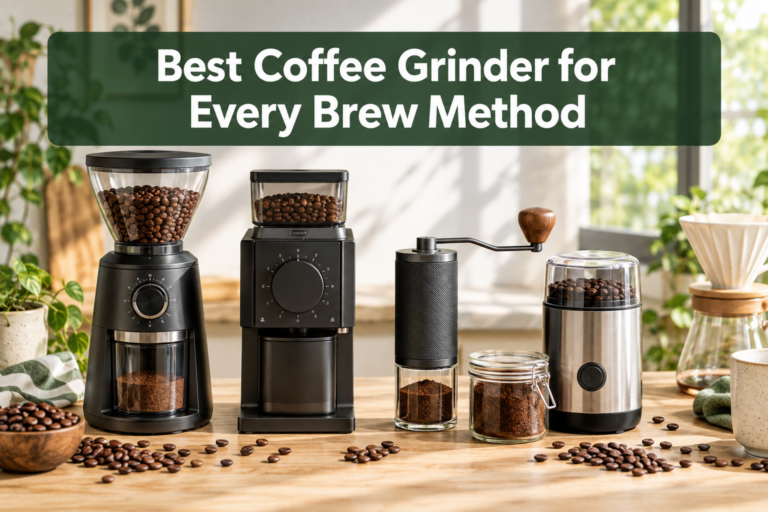
Yes, a burr grinder is worth it if you want consistent coffee, because it cuts beans to a far more even size than a spinning blade. Even particles extract at the same rate, which removes the mix of bitter and sour that blade grinders leave behind. Our best coffee grinder guide covers burr grinders for every brew method and budget.
Should I buy whole beans or pre-ground coffee?
Buy whole beans if you can grind at home, because ground coffee loses aroma much faster than intact beans. Pre-ground coffee also locks you into one grind size, which rules out most of the adjustments on this page. Our whole bean vs ground coffee guide explains how fast that freshness fades, and more brewing guides live on the Coffee Rank IQ homepage.
Conclusion
Customizing your coffee grind is a key step in achieving the perfect cup of coffee. By understanding the basics, selecting the right grinder, and fine-tuning your grind based on your preferred brewing method, you can improve your coffee experience to new heights. Keep in mind to experiment, take notes, and be patient as you master the art of coffee grinding. With these expert tips and techniques, you’ll soon enjoy a brew that is perfectly matched to your taste preferences.
Feel free to revisit this article when needed, and share your newfound knowledge with fellow coffee enthusiasts. Your routine to coffee mastery starts with the grind. Happy brewing!