Best Organic Coffee: What the USDA Seal Tells You and What It Skips
Quick answer: The best organic coffee combines USDA Organic certification with a second layer of proof, either Fair Trade or Rainforest Alliance status, or published lab testing for mold and mycotoxins. Subtle Earth Organic (Don Pablo) is the strongest all around pick for flavor and price, Lifeboost suits drinkers who want documented toxin testing, and Equal Exchange Love Buzz is the top choice for anyone who wants organic and fair trade in one bag. The USDA seal confirms farming inputs, not taste, mold safety, or worker pay.
Key takeaways
- USDA organic coffee means no synthetic pesticides, herbicides, or GMOs, and land free of prohibited substances for at least three years.
- The seal says nothing about mold, mycotoxins, worker wages, or biodiversity, which is why some brands add separate lab testing or Fair Trade certification.
- Subtle Earth Organic (Don Pablo) ranks as a top overall best organic coffee pick for its low acid, chocolatey Honduran Arabica.
- Lifeboost and Purity Coffee market themselves on lab testing beyond the USDA standard, a response to the mold gap in organic certification.
- Equal Exchange and Kicking Horse Three Sisters pair USDA organic with Fair Trade or Fairtrade certification for buyers who want both labels.
- The global organic coffee market is projected to grow from about $8.73 billion in 2026 to $14.12 billion by 2031, a sign that demand for certified organic coffee beans keeps climbing.
- Organic coffee does not have less caffeine. Caffeine content depends on the bean species and roast, not the farming method.
- Shade grown coffee often overlaps with organic coffee but the two labels are not the same thing.
Best organic coffee: quick picks for 7 kinds of buyers
The best organic coffee depends on what you actually drink every morning, not just what the bag promises. Below are seven verdicts built around real buying situations, using published brand information and certification records rather than a single "best of all" claim.
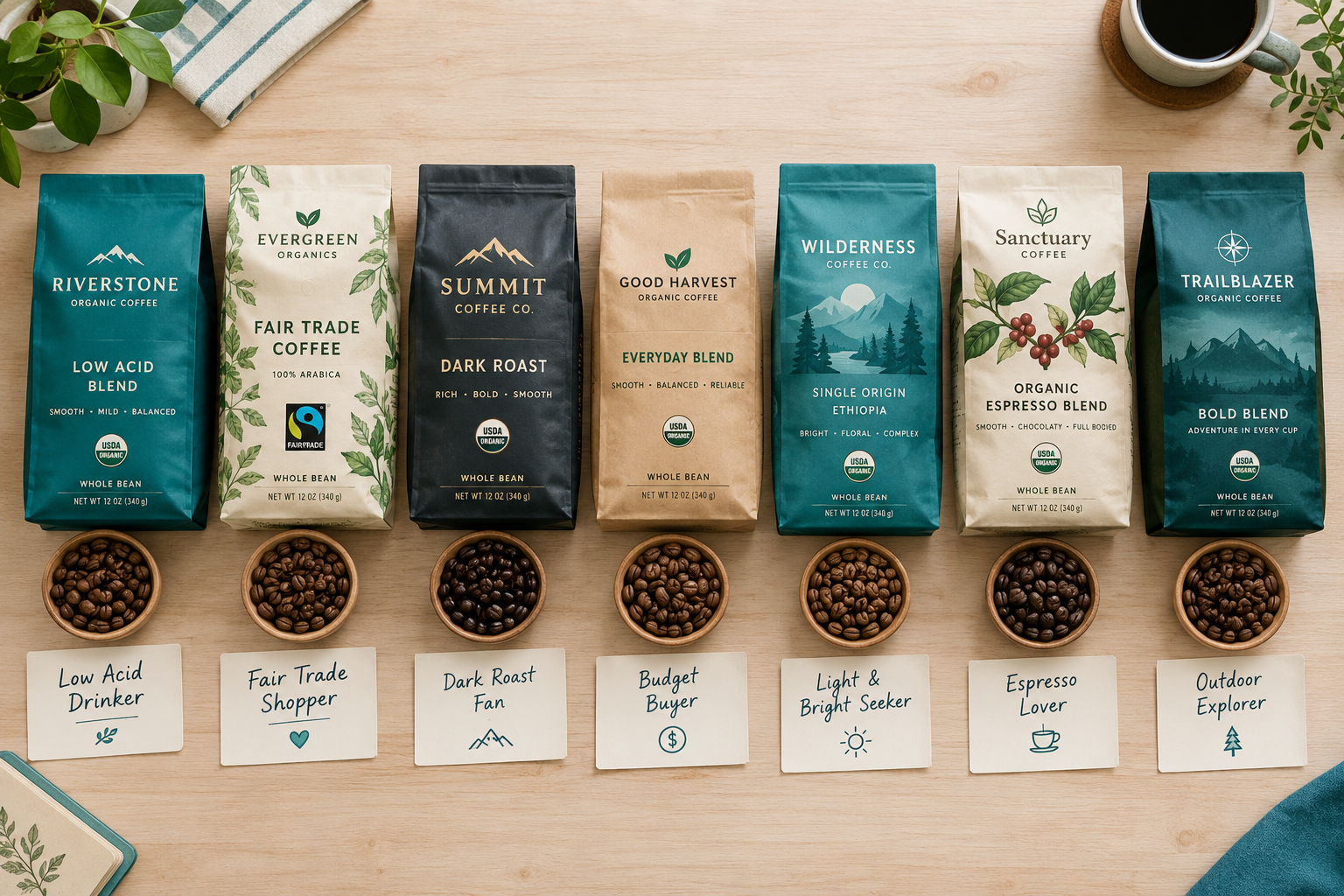
- Best overall: Subtle Earth Organic (Don Pablo). A medium roast Honduran Arabica with low reported acidity and a chocolate forward profile, sold in multiple roast levels.
- Best for sensitive stomachs: Lifeboost. Single origin Nicaraguan beans marketed as tested against more than 450 contaminants, appealing to drinkers worried about mold.
- Best fair trade organic: Equal Exchange Love Buzz. Sourced through farmer cooperatives, blending organic growing standards with Fair Trade wage protections.
- Best bold dark roast: Kicking Horse Kick Ass. A heavy, smoky dark roast for drinkers who want organic without giving up intensity.
- Best organic plus Fairtrade combo: Kicking Horse Three Sisters. Carries both USDA organic and Fairtrade certification on the same bag.
- Best lab tested "clean" coffee: Purity Coffee. Positioned around mycotoxin and pesticide screening on top of organic status.
- Best budget minded organic pick: Café William or Dean's Beans style regional roasters, which keep prices lower through smaller batch, direct sourcing relationships.
Skip Kicking Horse Kick Ass if you dislike smoky, heavy roasts. Skip Lifeboost or Purity if you mainly care about price, since lab testing adds cost. Skip Subtle Earth if you specifically want a certified fair trade label, since Equal Exchange covers that need better.
Compare the models before you commit to a subscription size bag.
What does USDA organic certification actually mean for coffee
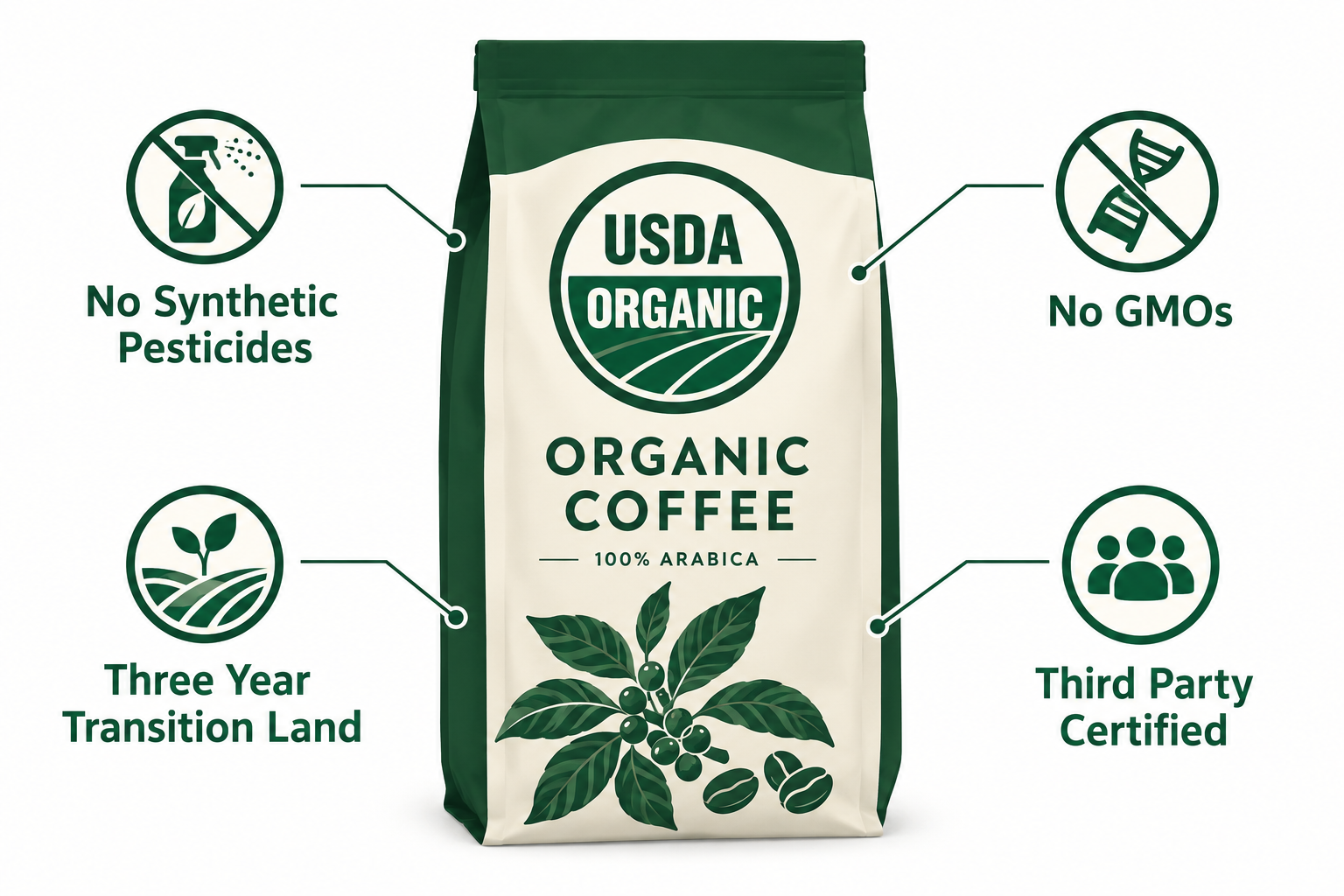
USDA organic coffee means the beans were grown without synthetic pesticides, herbicides, synthetic fertilizers, or genetically modified plants, on farmland that has been free of prohibited substances for at least three years. A certifying agent inspects the farm and the supply chain before the seal can appear on a bag.
That inspection covers farming inputs and handling, not everything a shopper might assume the word "organic" implies.
What the seal actually verifies:
- No synthetic pesticides or herbicides applied to the coffee plants.
- No synthetic fertilizers, only compost, manure, or other approved organic inputs.
- No genetically modified coffee varieties.
- Land history of at least three years without prohibited substances.
- A paper trail from farm to roaster that a certifying body has audited.
Choose organic coffee beans if you want documented input standards. Do not assume the seal alone guarantees mold screening, fair wages, or shade grown farming, because none of those are part of the USDA organic standard.
How is organic coffee different from regular coffee
Organic coffee differs from regular coffee mainly in how the plants were fed and protected, not in the roasting or brewing process. Conventional coffee farms may use synthetic fertilizers and pesticides to boost yield and fight pests, while certified organic farms rely on compost, natural pest management, and approved organic inputs only.
The practical differences a buyer notices:
- Farming inputs: Organic bans synthetic chemicals; conventional coffee allows them within legal limits.
- Price: Organic coffee beans typically cost more because organic farming often produces lower yields and requires certification fees.
- Supply chain paperwork: Organic status requires audited records; conventional coffee usually does not.
- Taste: Not automatically different. Roast level, processing method, and bean origin affect flavor far more than the organic label alone.
Choose organic coffee if avoiding synthetic farm chemicals matters to you personally or for health reasons you have researched. Regular coffee from a reputable roaster with clear sourcing can still be high quality and carefully grown, just without the audited paperwork.
Best organic coffee brands that taste good
The best organic coffee brands that also taste good pair a clean input standard with a specific, describable flavor profile, not just a green seal on the bag. Roasters that publish tasting notes and origin details tend to deliver more consistent cups than brands that lean only on the word "organic."
Here is how several named organic coffee brands compare on paper, based on published brand information and certification listings.
| Brand and product | Roast style | Certifications | Reported price range | Best for |
|---|---|---|---|---|
| Subtle Earth Organic (Don Pablo) | Light to dark, multiple options | USDA Organic | Budget to mid | Overall daily drinker |
| Lifeboost | Medium | USDA Organic | Mid to premium | Low acid, tested purity |
| Equal Exchange Love Buzz | Medium dark | USDA Organic, Fair Trade | Mid | Ethical sourcing focus |
| Kicking Horse Kick Ass | Dark | USDA Organic | Budget to mid | Bold, smoky drinkers |
| Kicking Horse Three Sisters | Medium | USDA Organic, Fairtrade | Mid | Dual certification seekers |
| Purity Coffee | Medium | USDA Organic, lab tested | Premium | Contaminant conscious buyers |
| Dean's Beans | Varies | USDA Organic, Fair Trade | Mid | Small roaster loyalty |
Choose Subtle Earth Organic if you want one dependable bag for daily brewing. Choose Purity Coffee or Lifeboost if published lab testing matters more to you than price. Skip Kicking Horse Kick Ass if you drink mostly pour over and prefer bright, acidic cups, since a heavy dark roast will flatten those notes. For more on matching a bean to a brewing style, read our guide on how do I know what coffee beans to buy.
Is organic coffee worth the extra cost
Organic coffee is worth the extra cost if you specifically want audited proof of chemical free farming or you buy from a brand that adds real value beyond the seal, such as lab testing or direct trade pricing to farmers. It is a weaker value if your only goal is better taste, since roast quality and freshness affect flavor more than farming method.
Reasons the price runs higher:
- Organic certification requires inspection fees and record keeping that get built into the retail price.
- Organic farms often report lower yields per acre than conventional operations, which raises the cost per pound.
- Brands that add mycotoxin or pesticide testing, like Lifeboost and Purity, pass lab costs on to the buyer.
A quick decision rule: choose organic coffee beans if the price gap between organic and conventional at your usual roaster is under 20 percent. At that gap, the certification cost is small relative to what you already pay for good beans. If the gap is much larger, compare the specific brand's roast date and origin transparency before assuming organic status alone justifies the price.
How to tell if coffee is really organic
The only reliable way to confirm coffee is really organic is to check for the USDA Organic seal printed on the bag along with the certifying agent's name, usually in small print near the ingredient list. Marketing words like "natural," "clean," or "pure" carry no legal organic meaning on their own.
Steps to verify a bag:
- Look for the green and white USDA Organic circular seal.
- Find the certifying agent's name, often something like "Certified Organic by [agency name]."
- Check that the bag lists the farm's country or region, since traceable organic coffee usually names its origin.
- Search the certifying agent's public database if you want to confirm the specific batch, since some agencies publish certified operation lists online.
A brand that only says "organic" in large font without a seal or certifying agent name has not proven the claim. That is a common mistake buyers make when they trust packaging language over the actual certification mark.
Organic coffee vs fair trade organic coffee: which is better
Organic coffee and fair trade organic coffee answer different questions, so neither is universally better. Organic certification addresses farming inputs. Fair trade certification addresses the price paid to farmers and cooperative working conditions. A bag can carry one, both, or neither.
| Question | USDA Organic | Fair Trade |
|---|---|---|
| Covers pesticide use | Yes | No |
| Covers farmer wages | No | Yes |
| Covers worker conditions | No | Yes, partially |
| Covers mold or mycotoxin testing | No | No |
Choose fair trade organic coffee, such as Equal Exchange Love Buzz or Kicking Horse Three Sisters, if you want both the input standard and the wage protections in one purchase. Choose organic only if pesticide free farming is your main concern and price is tighter. Skip either label alone if worker pay and chemical inputs both matter to you, and look for a bag carrying both seals instead.
Where to buy organic coffee beans online
You can buy organic coffee beans online directly from roaster websites, general marketplaces, and recurring coffee subscriptions, with roaster websites usually giving the freshest roast dates. Marketplace listings are convenient but roast dates can sit unlisted or outdated.
- Roaster direct websites: Best for roast date accuracy and single origin detail, such as Equal Exchange or Purity Coffee's own storefronts.
- General online marketplaces: Convenient for bundling with other purchases, but check the roast date printed on the bag photo before buying.
- Coffee subscriptions: Useful if you want automatic refills timed to when your current bag runs low. Read our guide on how to choose the best coffee subscription for beginners before committing to a recurring order.
Check the current price on a roaster's own site first, since direct sales often carry the newest roast dates.
Why does organic coffee taste different
Organic coffee does not automatically taste different because of the organic label itself. Reported flavor differences usually come from the specific farm's soil, processing method, and roast level, not from the absence of synthetic chemicals alone.
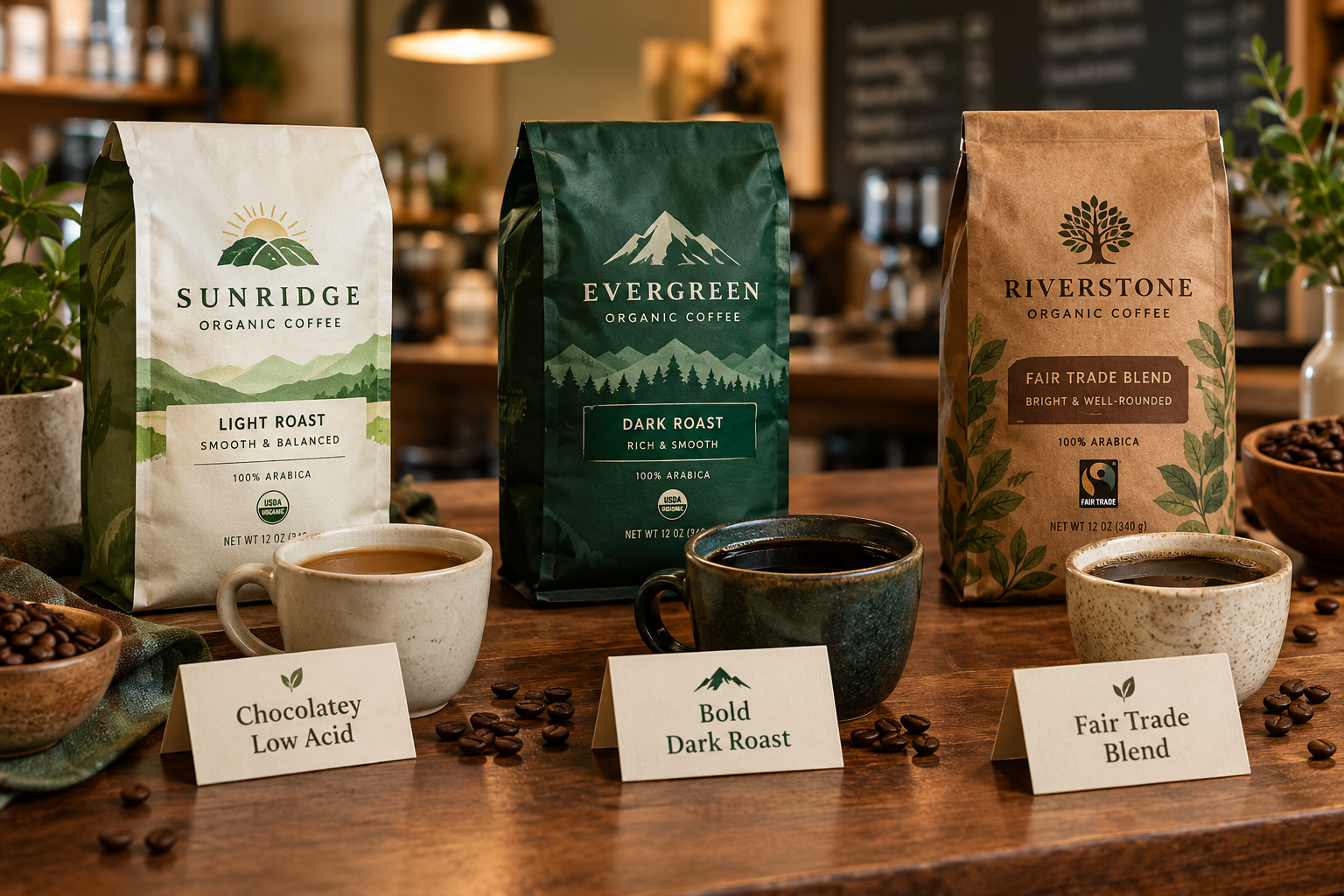
What actually changes taste:
- Processing method: Washed coffee tends toward brighter, cleaner cups; natural process coffee often reads sweeter and fruitier, regardless of organic status.
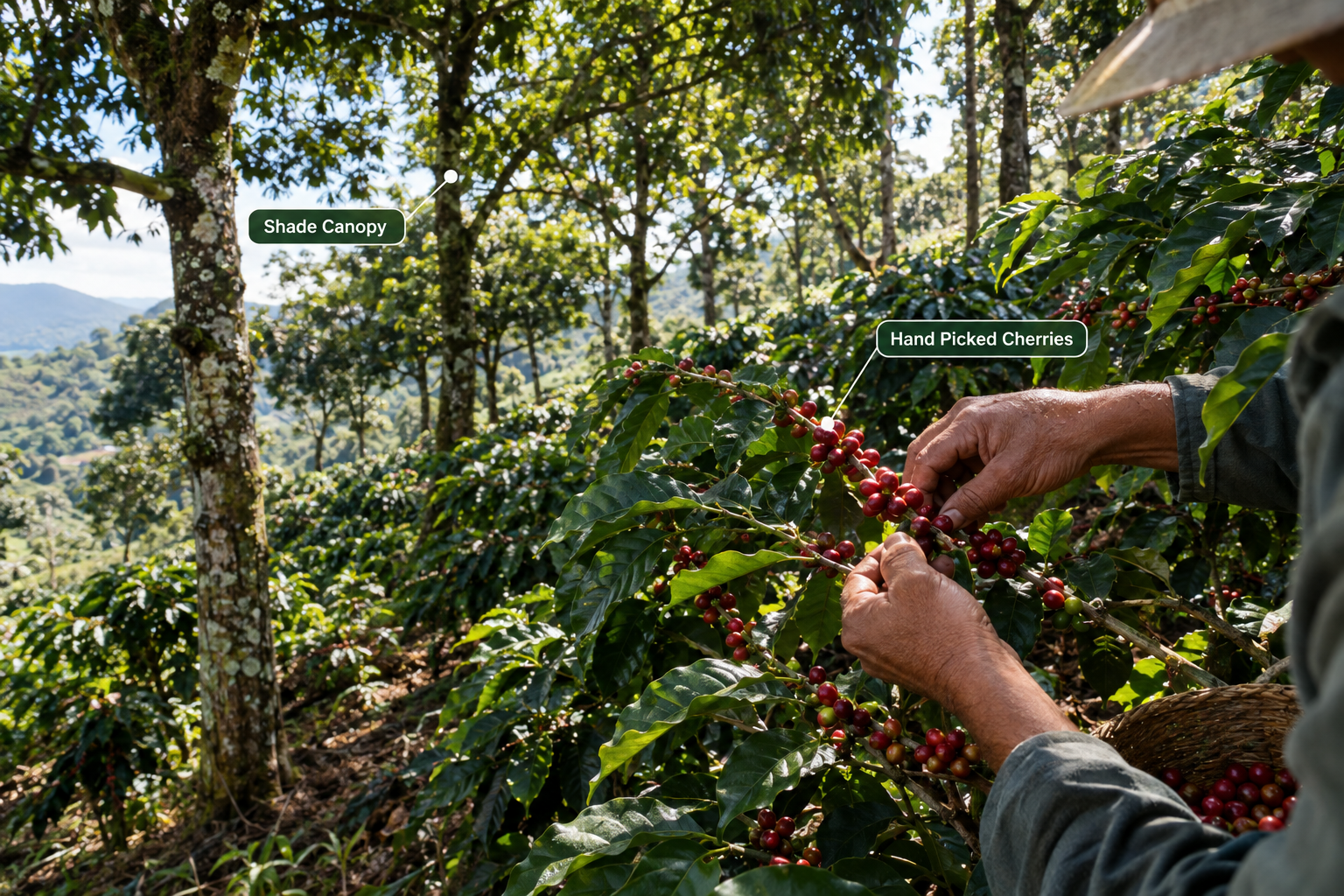
- Soil and shade: Farms using compost and shade canopy management, common on many organic farms, can produce denser cherries that some tasters describe as richer.
- Roast level: A dark roast will taste smoky and bold whether the beans are organic or conventional.
If a roaster reports "chocolatey, low acid" notes for an organic bag, that description reflects the roaster's own tasting panel or packaging copy, not a guaranteed effect of organic farming. For more on how grind and roast affect the cup, see our explainer on what roast of coffee is the healthiest.
Organic coffee brands that are actually affordable
Organic coffee brands that stay affordable usually cut cost through simpler packaging, larger roast batches, or direct sourcing relationships rather than through lower quality beans. Subtle Earth Organic (Don Pablo) and Kicking Horse Kick Ass both sit closer to the budget end while carrying full USDA organic status.
Ways to keep organic coffee spending down:
- Buy whole bean instead of pre-ground, since grinding at home avoids a processing fee built into pre-ground bags.
- Buy larger bags if you drink coffee daily, since per pound cost usually drops with size.
- Watch for direct trade roasters selling smaller batches locally, since they sometimes skip the markup added by big retail distribution.
Choose a budget organic pick if you drink coffee daily and want the input standard without paying for lab testing extras. Skip premium tested brands like Purity or Lifeboost if cost per cup is your main concern, and put that budget toward a better grinder instead. Our guide on which beans are best for coffee can help you match a cheaper organic bag to your usual brew method.
What should you look for when buying organic coffee beans
Look for four things on any organic coffee bag: the USDA Organic seal with a named certifying agent, a printed roast date, a named country or region of origin, and a processing method if the roaster lists one. Bags missing all four are harder to judge on quality, organic status aside.
A practical checklist:
- USDA seal plus certifying agent name. Confirms the organic claim is real, not just marketing text.
- Roast date, not "best by" date. A roast date within four to six weeks of purchase gives you a fresher cup.
- Named origin. Single origin bags let you research the specific growing region's typical flavor profile.
- Processing method. Washed, natural, or honey processed all taste different, independent of organic status.
Common mistake: buying based on the word "organic" alone without checking roast date. A stale organic bag will still taste flat, no matter how clean the farming practices were.
Does organic coffee have less caffeine
No, organic coffee does not have less caffeine than conventional coffee. Caffeine content is determined mainly by the coffee species (Arabica typically has less caffeine than Robusta) and by roast level, not by whether the farm used organic or synthetic inputs.
- Arabica beans: Generally lower caffeine, smoother, more common in specialty organic coffee.
- Robusta beans: Generally higher caffeine, bolder, less common in premium organic lines but increasingly used in organic espresso blends for body and crema.
- Roast level: Darker roasts lose a small amount of caffeine by volume during longer roasting, but the difference is minor for most home brewers.
If you want a lower caffeine cup, choose a lighter roast Arabica and check the brewing ratio rather than searching for an organic label as a caffeine control. Our piece on how do I know if my coffee is Robusta or Arabica explains the bean side of that decision in more detail.
How to store organic coffee beans to keep them fresh
Store organic coffee beans in an airtight container, away from light and heat, and use them within about two to four weeks of the roast date for the best flavor. Organic beans have no special storage requirement beyond what applies to any whole bean coffee.
- Container: An opaque, airtight canister beats the original bag once it has been opened and resealed repeatedly.
- Location: A cool, dark cabinet works better than a spot near the stove or a sunny counter.
- Freezing: Only useful for long term storage of unopened bags. Repeated freezing and thawing of an open bag introduces moisture and speeds staleness.
- Grinding: Grind just before brewing rather than storing pre-ground coffee, since ground coffee loses aroma compounds faster than whole beans.
Read our explanation of the coffee one week rule if you want a simple guideline for how long an opened bag stays at its best.
Organic coffee side effects and health benefits
Organic coffee carries the same general health profile as conventional coffee, since caffeine and antioxidant compounds come from the coffee plant itself, not from the absence of synthetic pesticides. Any reported health benefit or side effect tied to coffee drinking generally applies across both organic and conventional beans.
What is actually documented:
- Coffee, organic or not, contains caffeine and plant compounds that have been studied for effects on alertness and metabolism.
- Side effects like jitteriness or disrupted sleep relate to caffeine dose and personal sensitivity, not organic status.
- The main documented advantage specific to organic certification is reduced dietary exposure to synthetic pesticide residue, since certified organic farms cannot apply those chemicals.
If mold sensitivity concerns you, note that USDA organic certification does not test for mold or mycotoxins. Brands like Lifeboost and Purity Coffee address that separately through their own lab testing programs, which is a different claim than the organic seal itself makes. For a broader look at coffee's documented effects, see our guide on what happens to your body when you drink coffee.
Is all organic coffee actually sustainable
No, not all organic coffee is automatically sustainable in every sense, because the USDA organic standard covers farming inputs and does not certify biodiversity, deforestation avoidance, or carbon impact on its own. Some organic farms are also shade grown and biodiversity friendly, but that overlap is not guaranteed by the organic seal alone.
- Shade grown coffee is grown under a canopy of taller trees, which can support birds and soil health, but a farm can be organic without being shade grown.
- Deforestation risk is addressed by separate rules, such as tightening EU deforestation regulations affecting coffee imports into Europe starting in the mid 2020s.
- Blockchain traceability pilots, launched by a coffee producer consortium in 2025, aim to verify organic claims farm to cup, filling a transparency gap the USDA seal does not close on its own.
- Newer labels, such as the Rainforest Alliance's regenerative certification that Nespresso began rolling out in 2025, are starting to appear alongside USDA organic on shelves in 2026, covering ground the organic seal skips.
Choose a bag labeled organic and shade grown, or organic and Rainforest Alliance certified, if broader sustainability matters to you beyond pesticide use. Skip assuming "organic" alone means "sustainable" in every category, since the two words are not legally interchangeable.
A quick look at organic coffee market growth
The organic coffee category is not a small niche anymore. Analysts project the global organic coffee market to grow from about $8.73 billion in 2026 to $14.12 billion by 2031, a compound annual growth rate near 10 percent. A separate long range estimate puts the wider organic coffee market near $20.7 billion by 2034. That growth is driven by health conscious buyers, demand for traceable supply chains, and expanding direct to consumer subscription sales.
Organic coffee market growth, projected
Source: openpr.com organic coffee market forecast, 2026 to 2031
That demand growth means more roasters will keep adding organic lines. It also means more bags will lean on the word "organic" as a marketing shortcut, which is exactly why checking the seal and the certifying agent still matters more than the packaging copy around it.
Frequently asked questions
What is the best organic coffee for someone who is just starting out? Subtle Earth Organic (Don Pablo) is a reasonable starting point because it offers multiple roast levels at a moderate price with straightforward USDA organic certification. Try a medium roast bag first before committing to a specific roast level.
Does organic coffee cost significantly more than regular coffee? It usually costs somewhat more, often driven by certification fees and lower yields on organic farms. The gap varies by brand, and some budget organic lines keep the difference under 20 percent compared to similar conventional coffee.
Can a coffee be organic but not fair trade, or fair trade but not organic? Yes. The two certifications are separate and cover different things. A bag can carry either label alone, both together, or neither, so check for both seals if both matter to you.
Is shade grown coffee the same as organic coffee? No. Shade grown describes how the coffee plants were grown, under a canopy of taller trees, while organic describes the absence of synthetic chemical inputs. Many farms do both, but neither label guarantees the other.
Does the USDA organic seal test for mold in coffee? No. USDA organic certification covers farming inputs and land history, not mold or mycotoxin testing. Brands like Lifeboost and Purity Coffee address mold concerns through their own separate lab testing programs.
What should I check before buying organic coffee beans online? Check for the USDA Organic seal with a named certifying agent, a printed roast date, and a named origin or region. Skip a bag that only prints the word "organic" in large text without a visible seal.
Conclusion
The USDA Organic seal on a coffee bag tells you something specific and verifiable: no synthetic pesticides, no synthetic fertilizers, no GMOs, and at least three years of clean land history. It does not tell you the beans are mold free, that farmers were paid fairly, or that the farm avoided deforestation. Those questions need a second label or a roaster willing to publish its own testing data.
If you want one dependable bag, start with Subtle Earth Organic (Don Pablo). If mold testing matters to you, compare Lifeboost or Purity Coffee. If fair wages matter as much as clean farming, look for Equal Exchange or Kicking Horse Three Sisters, which carry both organic and fair trade or Fairtrade seals. Read the roast date before you read the marketing copy, store the bag properly once it is open, and match the roast to your usual brewing method. Better coffee starts with better answers, and now you have a clearer picture of what that green seal actually promises.
Keep Exploring Coffee Rank IQ
- Coffee Rank IQ home: reviews, brewing guides, and coffee science
- Best Decaf Coffee That Still Tastes Like Coffee
- Best Coffee Beans I Keep Rebuying…and the Bags I Won't
- Best Dark Roast Coffee That Tastes Bold, Not Burnt
- Best Coffee Storage Container to Keep Beans Fresh Longer
References
- www.cafegrade.com/guides/best-organic-coffee-beans
- www.mordorintelligence.com/industry-reports/organic-coffee-market
- www.openpr.com/news/4625554/organic-coffee-market-size-to-reach-14-12-billion-by-2031-as
- www.sarasotamagazine.com/advantagepoint/2026/09/best-organic-coffee-brands-2026
- straitsresearch.com/report/organic-coffee-market
- www.researchandmarkets.com/reports/5735479/organic-coffee-market-report
- www.verifiedmarketreports.com/product/organic-coffee-market
- www.fluentincoffee.com/best-organic-coffee
- homecoffeeexpert.com/best-organic-coffee