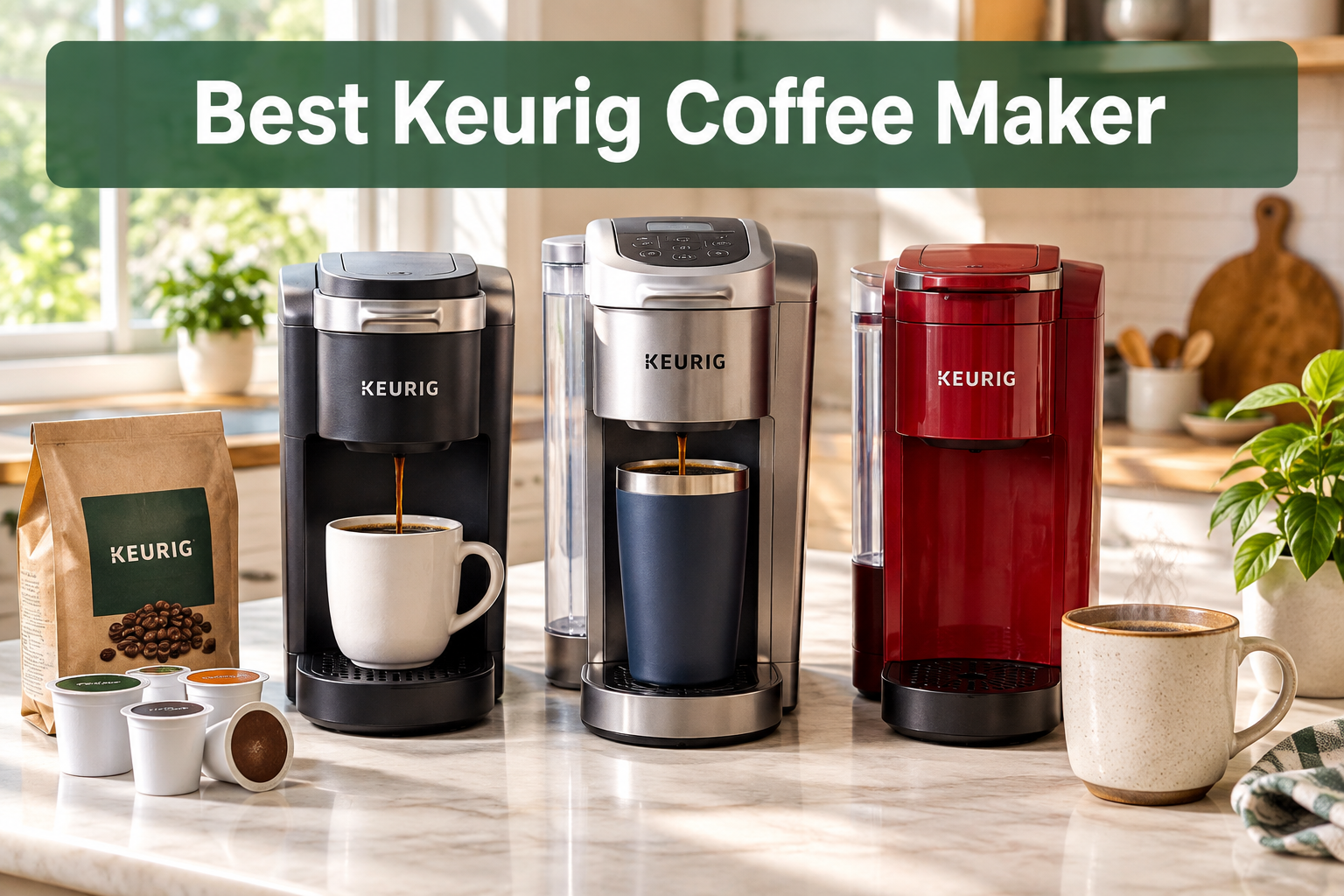
Best Keurig Coffee Maker: K-Supreme, K-Elite, and the Rest
Quick answer: For most buyers, the best Keurig coffee maker is the K-Supreme, thanks to its MultiStream Technology, which pushes water through several small holes in the pod instead of one, for a more even extraction and a fuller cup. If you want a bigger reservoir, a strong-brew button, and an iced coffee setting, the K-Elite earns its higher price for households that brew often and brew big. Neither one replaces a real drip machine or a grinder, but both solve the same problem: a decent cup in under a minute, with almost no cleanup.
Key takeaways
- K-Supreme wins most "best overall" lists for balancing price, speed, and cup quality through MultiStream Technology.
- K-Elite wins on capacity and features: a 75-ounce reservoir (about eight cups), five brew sizes, a strong-brew button, and an iced coffee setting.
- Keurig's brew temperature runs around 187 to 192°F, below the National Coffee Association's recommended 195 to 205°F range, which is one reason pod coffee tastes flatter than a proper pour over.
- A meaningful share of owners report both K-Supreme and K-Elite units failing within a year, according to buyer feedback collected on retail listings.
- The lineup beyond K-Supreme and K-Elite includes K-Mini, K-Duo, K-Cafe, K-Slim, and K-Iced, each built for a different kitchen and a different drink.
- Descaling every three to six months keeps the pump and heating element working and protects your warranty.
- Non-Keurig cups, including reusable filters and third-party pods, work in most Keurig machines and can cut your cost per cup significantly.
Best keurig coffee maker: quick picks for every buyer
There is no single best Keurig coffee maker for everyone. There is a best Keurig coffee maker for your kitchen, your household size, and how you actually drink coffee.
Here is the short version, then the reasoning behind each pick:
| Buyer type | Best pick | Why it fits |
|---|---|---|
| Most people, first Keurig | Keurig K-Supreme | MultiStream Technology, simple controls, strong reviewer consensus |
| Feature seekers, big households | Keurig K-Elite | 75-oz reservoir, strong brew, iced setting |
| Small kitchens, dorms, RVs | Keurig K-Mini | Smallest footprint, no frills |
| Two coffee drinkers with different habits | Keurig K-Duo | Carafe brewing plus single-serve pods |
| Latte and cappuccino drinkers | Keurig K-Cafe | Built-in milk frother |
| Minimal counter space, modern look | Keurig K-Slim | Narrow body, still full-size mug capacity |
| Iced coffee drinkers | Keurig K-Iced | Dedicated cold-brew style setting, not just brew-over-ice |
Choose K-Supreme if you want the safest, most recommended option without paying for features you won't use. Choose K-Elite if you brew coffee for more than one person daily and want the strong-brew and iced settings built in rather than bolted on. Skip both if your household drinks two or three cups a day total; a K-Mini or a manual method will serve you better and cost less to run.
Keurig K-Supreme vs K-Elite: what's the difference and which should you buy
The main difference between Keurig K-Supreme and K-Elite is what each one prioritizes: K-Supreme prioritizes extraction quality through MultiStream Technology, while K-Elite prioritizes capacity and control through a larger reservoir and more brew settings. Reviewers are split on which one is the "best overall," and that split tells you something useful about your own decision.
Tom's Guide's 2026 buying guide names K-Supreme its default pick for most shoppers, pointing to MultiStream Technology's multiple puncture needles, which spread water across the pod instead of piercing it in one spot. That produces a more even cup and, according to their testing, better flavor than older single-needle Keurig designs. TechGearLab's lab testing backs this up with numbers: K-Supreme scored 7.2 out of 10 for taste, 8.8 for brew quality, and 8.0 for brew speed, with testers noting a fuller flavor and consistent results across repeated brews.
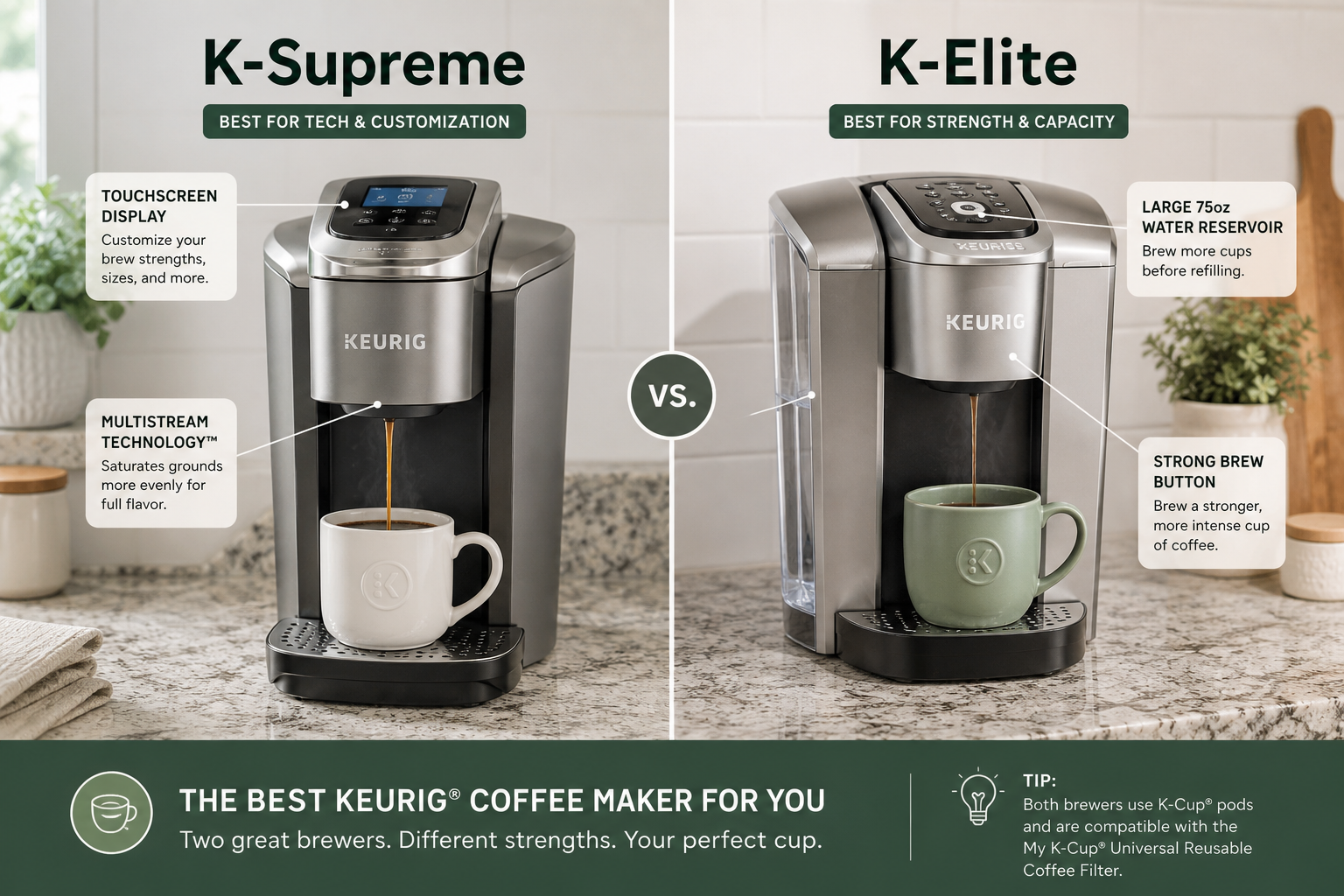
Taste of Home's August 2026 hands-on testing and Reviewed's September 2026 update instead crown K-Elite as the top overall pick, largely on the strength of its extra features rather than raw cup quality. Reviewed also notes K-Elite is the highest-rated Keurig on Amazon, with five brew sizes, a strong-brew button, an iced coffee setting, on-demand hot water, and a removable drip tray that fits a travel mug.
Decision rule: if you brew one mug at a time and want the simplest path to a good cup, buy K-Supreme. If you brew for a household, want a strong-brew option for concentrated coffee, or want on-demand hot water for tea and instant soup, buy K-Elite. Wirecutter's September 2026 review is more skeptical of K-Elite's roughly $170 price tag, arguing its feature set does not fully justify the premium over cheaper models. That is worth remembering before you assume "more expensive" automatically means "better cup."
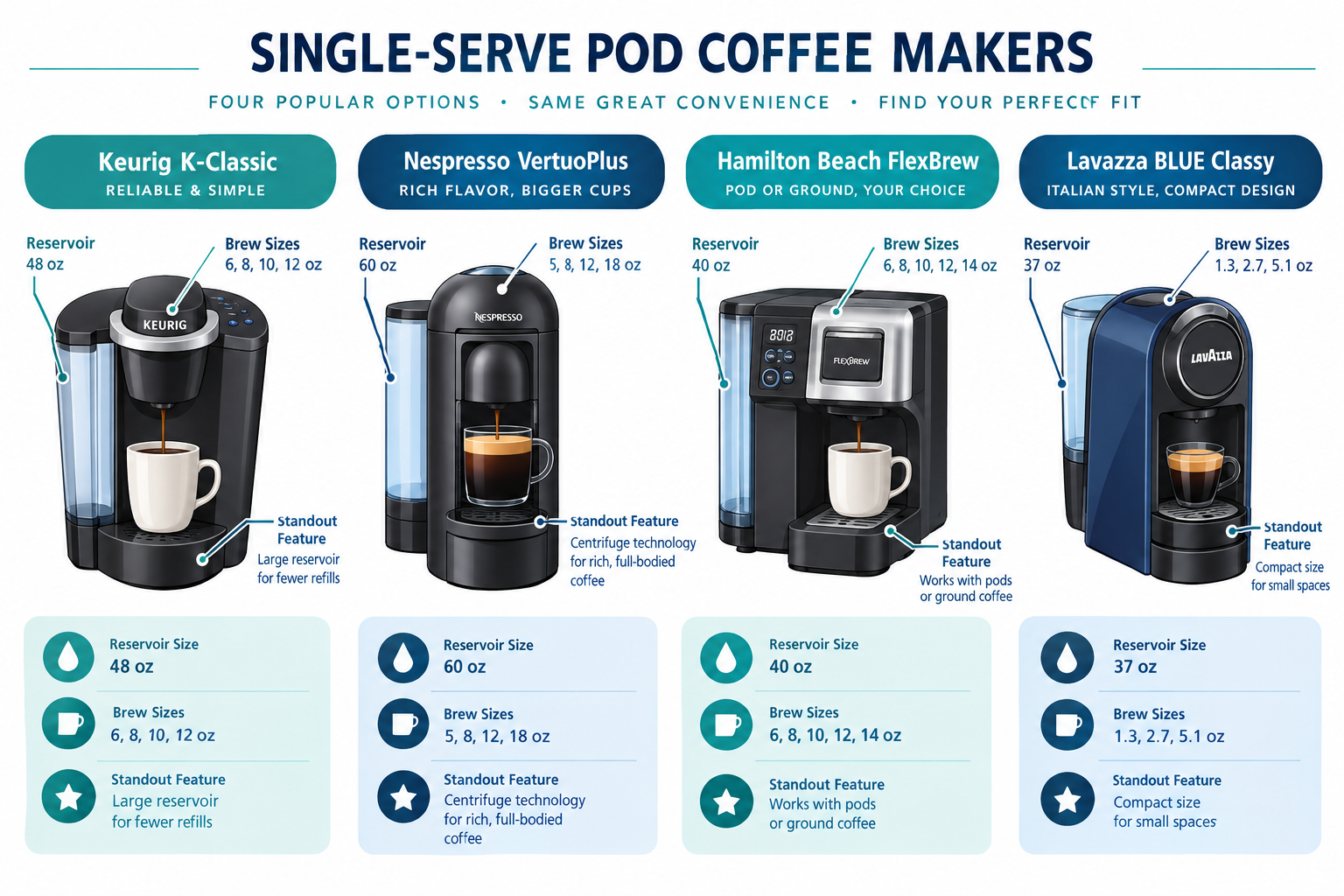
Keurig coffee maker comparison chart
Here is how the current Keurig lineup compares on the details that actually change your daily experience, not just the marketing copy.
| Model | Reservoir | Brew sizes | Standout feature | Best for |
|---|---|---|---|---|
| K-Supreme | 66 oz | 4 sizes | MultiStream Technology | First-time buyers, single drinkers |
| K-Elite | 75 oz | 5 sizes | Strong brew + iced setting | Households, feature seekers |
| K-Mini | 12 oz (single cup) | 1 size | Smallest footprint | Dorms, small counters, travel |
| K-Duo | 60-oz carafe + single cup | Carafe or pod | Two brewing methods in one machine | Mixed households |
| K-Cafe | 60 oz | 3 sizes | Built-in milk frother | Latte and cappuccino drinkers |
| K-Slim | 46 oz | 3 sizes | Narrow 5-inch body | Tight kitchens |
| K-Iced | 60 oz | 4 sizes | Cold-forward brew setting | Iced coffee drinkers |
Common mistake: buying based on reservoir size alone. A bigger reservoir means fewer refills, but it also means a heavier, wider machine that needs more counter clearance above it for lid access. Measure your cabinet space before you decide.
Best keurig for large households and largest water reservoir
The best Keurig coffee maker for a large household is the K-Elite, mainly because of its 75-ounce reservoir, which holds roughly eight cups before a refill. That is currently the largest tank in the mainstream Keurig lineup, ahead of K-Supreme's 66 ounces and K-Cafe or K-Iced at 60 ounces.
For a household of four or more coffee drinkers, that difference matters more than it sounds. A 40-ounce tank might need refilling twice before everyone has had their first cup. K-Elite's tank, combined with its five brew sizes, lets one fill cover a full morning rush.
Edge case: if your household drinks mostly larger mugs (12 ounces or more) rather than standard 8-ounce cups, even K-Elite's tank will drain faster than the "eight cups" figure suggests. Check the actual ounce output per brew size, not just the marketing number.
Best keurig for office or workplace
The best Keurig coffee maker for an office is usually K-Elite or K-Duo, chosen for reservoir size and the ability to serve different preferences without a line forming at the machine. A shared office kitchen has different needs than a home counter: more cups per hour, more people with different tastes, and less patience for troubleshooting.
K-Elite's larger tank reduces refill interruptions during a busy morning. K-Duo adds a carafe option, useful for meetings where several people want coffee at once rather than one pod at a time. If desk space is the constraint rather than volume, K-Slim's narrow body fits a break room counter where a standard machine would not.
Choose K-Elite if: your office has 10 or more coffee drinkers and refill frequency is the main complaint about the current machine.
Choose K-Duo if: you need both a full pot for meetings and single cups for individual preferences.
How much does a good keurig cost
A good Keurig coffee maker typically costs between roughly $80 and $200, depending on the model and features, with K-Elite priced around $170 at major retailers as of late 2026. K-Mini and K-Slim sit at the lower end of that range because they trade features for a smaller footprint. K-Supreme and K-Cafe sit in the middle. K-Elite and K-Duo sit toward the top because of their added hardware, whether that is a bigger reservoir or a carafe system.
Running costs matter more than the sticker price over time. A box of K-Cups typically works out to 60 to 90 cents per cup, compared to roughly 15 to 25 cents per cup for ground coffee brewed by other methods. Over a year of daily coffee, that gap adds up. If cost per cup matters more to you than convenience, read the alternatives section below before you buy.
Do keurigs make good coffee or is it just convenient
Keurig machines make acceptable coffee, not exceptional coffee, and the honest reason is water temperature. Keurig brews around 187 to 192°F, below the National Coffee Association's recommended 195 to 205°F window for full extraction, which is why pod coffee often tastes thinner than a well-made pour over.
Some enthusiast Keurig owners go further, pointing to commercial Keurig models like the K150 and B150, which brew with noticeably hotter water and, in their experience, produce a better cup than typical home models. That is a real tradeoff worth naming plainly: a Keurig buys you speed and zero cleanup, not the ceiling of what coffee can taste like.
If you already own beans you love and want to compare what a Keurig gets you against a manual method, our guide on choosing the right coffee maker for beginners walks through the tradeoffs side by side. And if the "just convenient" argument bothers you, a beginner's guide to pour over brewing shows what a few extra minutes actually buys you in the cup.
Decision rule: choose a Keurig if your priority is speed and consistency across users. Choose a manual method if your priority is flavor ceiling and you're willing to spend three extra minutes.
Meet the rest of the lineup: K-Mini, K-Duo, K-Cafe, K-Slim, and K-Iced
Keurig's lineup beyond K-Supreme and K-Elite is built around specific use cases rather than being "smaller versions" of the flagship models. Each one solves a narrower problem well.
- K-Mini: the smallest Keurig made, with a single-cup reservoir you refill before every brew. Built for dorms, RVs, and desks where footprint beats capacity.
- K-Duo: combines a traditional carafe with single-serve pod brewing. Good for a household where one person wants a pot and another wants exactly one cup.
- K-Cafe: adds a built-in milk frother, closing the biggest gap in the K-Elite, which has no frothing function at all. Best single-serve coffee maker with pods for anyone who wants lattes without buying a separate machine.
- K-Slim: a narrow 5-inch body that fits counters where a standard Keurig simply will not, without giving up full-size mug output.
- K-Iced: built around a genuine cold-brew style setting rather than the disappointing "brew over ice" button found on older models, which mostly just dilutes hot coffee with melting ice.
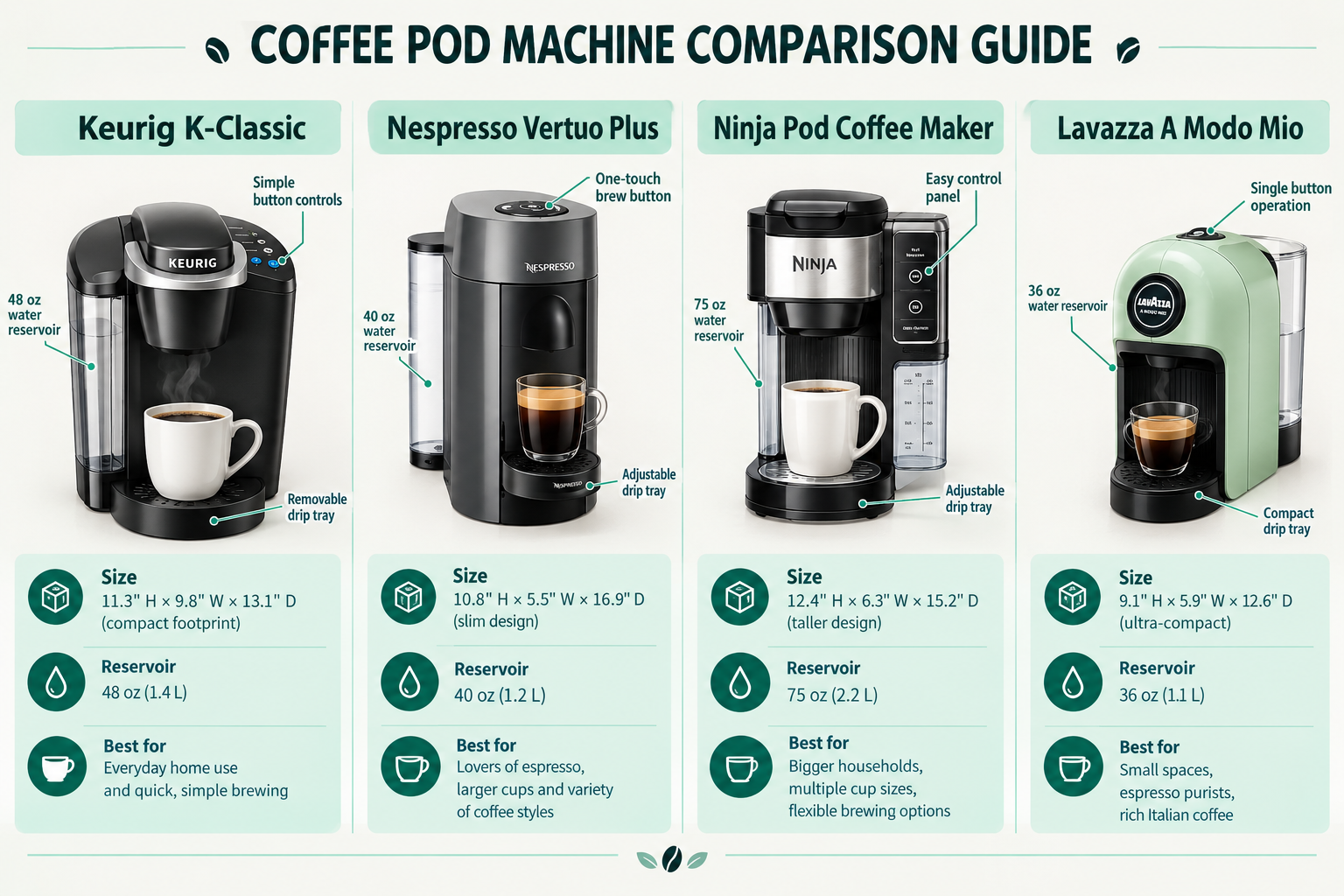
Broader testing across the category, including a 2024 comparison of 30 Keurig machines by People.com, has named newer cold-drink-focused models like the K-Brew + Chill as top overall picks, a sign that Keurig's newest development is happening in iced and specialty drinks rather than classic hot single-serve coffee. If iced coffee is your main use case, that shift matters more than which flagship hot-brew model you choose. For technique beyond the machine, our guide to making the best iced coffee and our cold brew coffee method both work with beans you already have, no pod required.
Best keurig alternative to save money
The best Keurig alternative to save money is a reusable pod filter paired with your own ground coffee, or switching to a manual brewer entirely, such as a pour over dripper or a French press. Both cut your cost per cup by roughly 70 to 80 percent compared to boxed K-Cups, based on typical per-cup pricing differences between pods and bagged ground coffee.
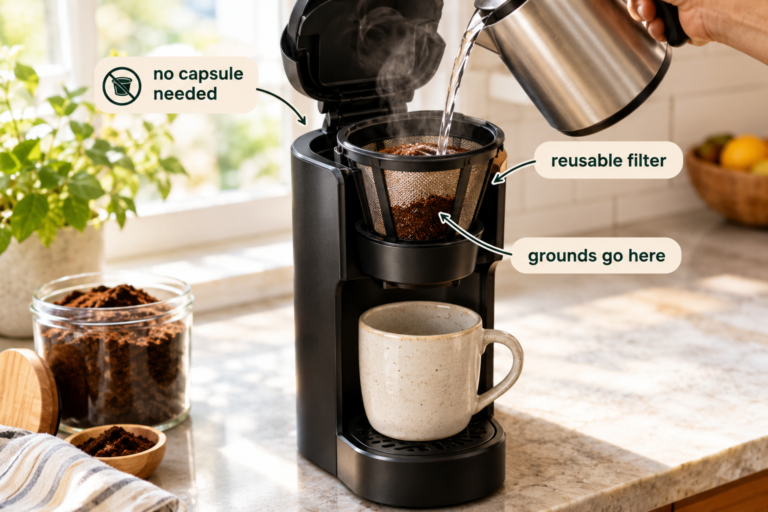
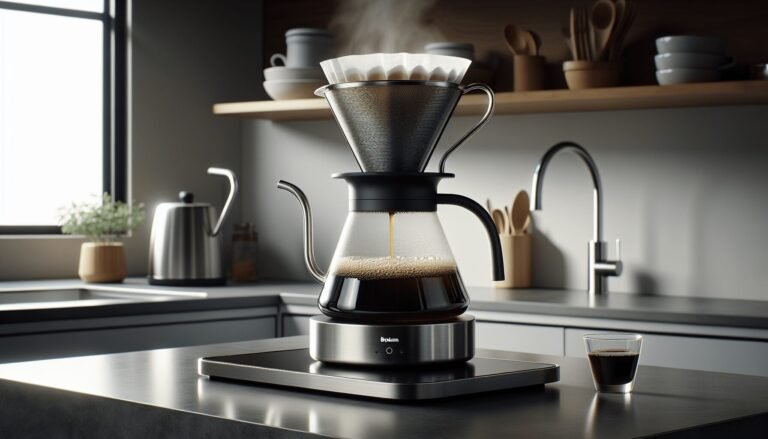
A reusable filter (often sold as a "My K-Cup" style insert) fits most Keurig machines, including K-Supreme and K-Elite, and lets you brew any ground coffee you already own. It costs a few extra seconds of scooping and rinsing per brew. If you're ready to skip pods altogether, a manual pour over setup costs less upfront than most Keurig models and produces a fuller-bodied cup, since you control both grind size and water temperature. Our beginner's guide to pour over brewing covers the exact steps.
Choose a reusable filter if: you already own a Keurig and don't want to replace it, just cut the running cost.
Choose a manual method if: you're buying new equipment anyway and flavor matters more than speed.
Keurig compatible pods besides official K-cups
Most Keurig machines accept third-party pods beyond official K-Cups, including store brands from major grocery chains and independent roasters that package coffee in K-Cup-compatible pods. This works because the K-Cup shape became a de facto standard once Keurig's original pod patents expired.
Reusable filters go a step further, letting you use any ground coffee, including single origin beans from a roaster that doesn't sell pods at all. If you're building a bean rotation for a reusable filter, our guide on choosing coffee beans for home brewing explains what to look for on the bag, including roast date and grind size.
Common mistake: assuming all third-party pods brew at the same strength as official K-Cups. Fill weight varies by brand, so a lighter-fill pod will taste thinner even with the same brew size selected.
Keurig descaling: how often and why
Descale your Keurig every three to six months, or sooner if you notice slower brewing, a sputtering pump, or a "descale" light on the display. Descaling removes mineral buildup (mostly calcium and magnesium from tap water) that coats the heating element and narrows the internal tubing over time.
Skipping this step is the single biggest cause of slow brews and machines that quit early. Hard water areas need to descale closer to every three months. Soft water or filtered water users can often stretch to five or six months. Use a descaling solution made for Keurig machines, or a white vinegar and water mix, run through an empty water reservoir according to the manufacturer's cycle. Our beginner's guide to cleaning a coffee maker covers the full process step by step, and it applies to pod machines as much as drip brewers.
Keurig troubleshooting: not brewing properly and k-elite not heating water
If your Keurig isn't brewing properly, the most common causes, in order of likelihood, are a clogged needle, mineral scale in the internal lines, or an air bubble in the water line. If a K-Elite specifically won't heat water, the issue is almost always scale buildup on the heating element or a reservoir that isn't seated correctly on its base contacts.
Try this order before assuming the machine is dead:
- Check the needle. Open the pod holder and clean the entrance needle with a paperclip or the tool that shipped with the machine. Coffee grounds clog this more often than people expect.
- Run a rinse-only brew with no pod to clear air from the lines.
- Reseat the water reservoir. A tank that isn't fully clicked into place can break the electrical contact that triggers heating.
- Descale. If the machine brews slowly or the water never gets hot, scale is the most likely cause, especially past the three to six month mark.
- Check the power connection and outlet if the display won't turn on at all.
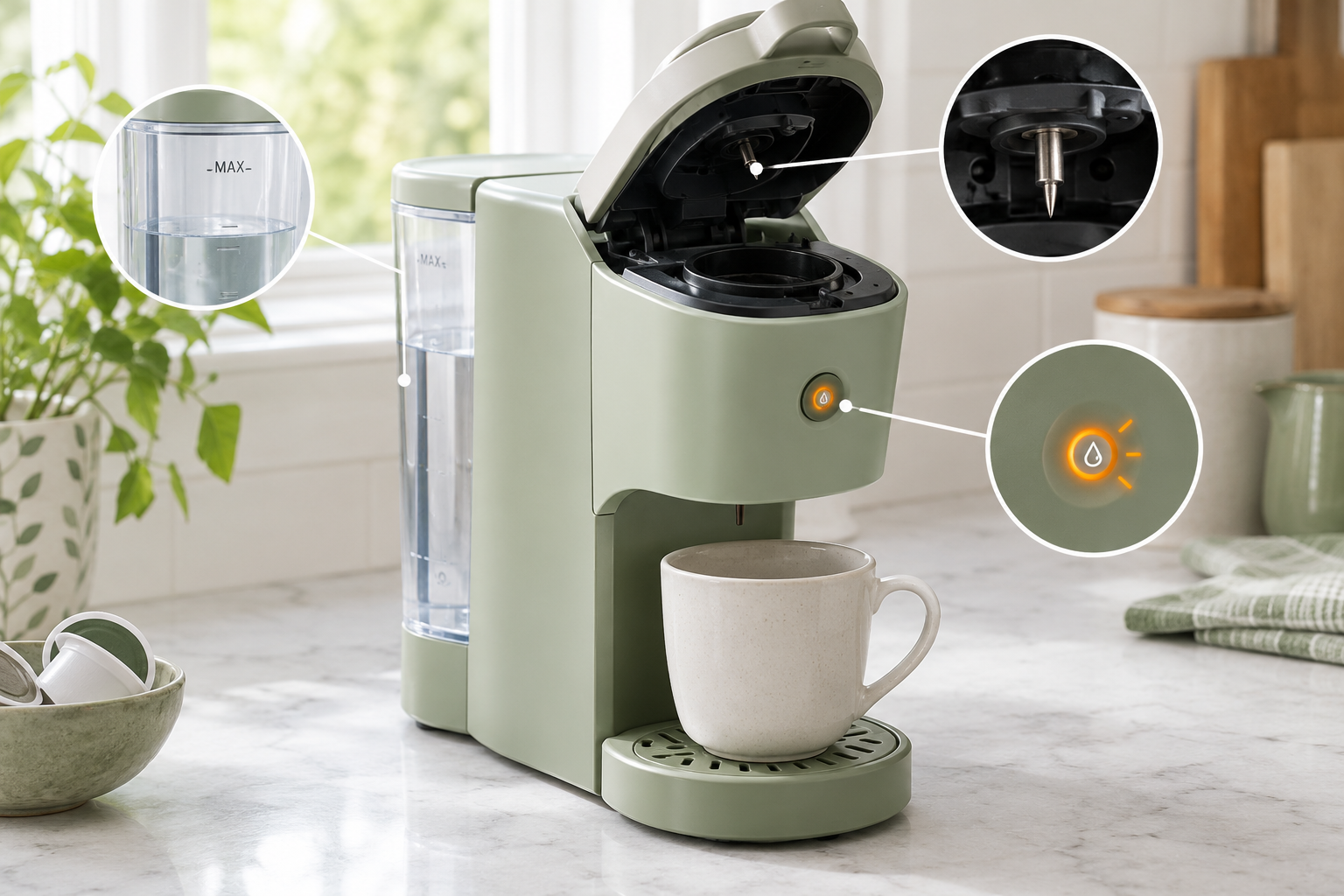
Keurig coffee maker problems that persist after these steps, especially a unit under a year old, point toward a hardware failure rather than user error, and that's common enough to plan around.
Are keurigs worth it? what reddit and reviewers actually say
Keurigs are worth it for people who value speed, consistency, and low cleanup over the last 10 percent of flavor a manual method can deliver, but reliability complaints are common enough to take seriously before you buy. Retail listings for both K-Supreme and K-Elite include a recurring pattern of buyer feedback describing units that failed within a year of purchase, alongside plenty of reviews praising the same models for daily convenience.
On coffee-focused Reddit threads, some experienced Keurig owners argue that even the best home models compromise on water temperature compared to commercial units like the K150 and B150, which brew hotter and, in their experience, produce a noticeably better cup. That doesn't make home Keurigs bad. It means "worth it" depends on what you're comparing against. Against a $4 coffee shop run every morning, a $150 Keurig pays for itself in weeks. Against a $30 pour over dripper and a bag of good beans, the math and the flavor both favor the manual method.
Decision rule: Keurig is worth it if your alternative is buying coffee out daily. It's a harder sell if your alternative is a manual brewer you'd actually use every morning.
Frequently asked questions
What's the difference between Keurig K-Supreme and K-Elite? K-Supreme uses MultiStream Technology for more even extraction and costs less. K-Elite has a larger 75-ounce reservoir, five brew sizes, a strong-brew button, and an iced coffee setting, at a higher price.
Which Keurig has the largest water reservoir? K-Elite currently has the largest reservoir in the mainstream lineup at 75 ounces, roughly eight cups before a refill.
Do Keurig machines make good coffee? They make acceptable, consistent coffee at a lower brewing temperature (187 to 192°F) than the National Coffee Association recommends for full extraction, so flavor is good but not exceptional compared to manual methods.
How often should I descale my Keurig? Every three to six months, sooner in hard water areas or if you notice slow brewing or a descale warning light.
Can I use non-Keurig pods in my machine? Yes. Most third-party and store-brand pods fit standard Keurig machines, and reusable filters let you brew any ground coffee you already own.
Are Keurigs reliable long term? Reliability varies by unit. Retail reviews for both K-Supreme and K-Elite show a recurring share of buyers reporting failures within a year, so consider a retailer with an easy return policy.
Conclusion: the practical next step
If you want one answer: buy the K-Supreme for the best balance of price, speed, and cup quality, or step up to the K-Elite if your household needs the bigger reservoir and the strong-brew and iced settings. Skip both and look at K-Mini, K-Duo, or K-Cafe if your situation is more specific than "average household," since each of those solves one problem the flagship models don't.
Whichever model you pick, plan to descale on a schedule and keep the needle clean, since that maintenance step decides more about your day-to-day experience than the badge on the front of the machine. And if flavor ceiling matters more to you than a 60-second brew, it's worth testing a manual method against your Keurig once before you commit. Better coffee starts with better answers, not just a bigger reservoir.
Find your match: quick Keurig picker
Keep Exploring Coffee Rank IQ
- Coffee Rank IQ home: reviews, brewing guides, and coffee science
- Best Single Serve Coffee Maker With or Without Pods
- Best Nespresso Pods for Lattes, Iced Drinks, and Straight Shots
- Best Nespresso Machine: Vertuo vs Original, Model by Model
- Best Decaf K Cups That Taste Like Real Coffee
References
- www.reddit.com/r/keurig/comments/18bxrhh/best_keurig_machine
- www.tomsguide.com/best-picks/the-best-keurig-coffee-makers
- www.tasteofhome.com/collection/best-keurig-coffee-makers
- www.nytimes.com/wirecutter/reviews/best-keurig-machine
- www.techgearlab.com/topics/kitchen/best-keurig-coffee-maker
- www.target.com/p/keurig-k-supreme-single-serve-k-cup-pod-coffee-maker-black/-/A-79962008
- www.target.com/p/keurig-k-elite-single-serve-k-cup-pod-coffee-maker-with-iced-coffee-setting-brushed-slate/-/A-53205836
- www.target.com/p/keurig-k-elite-single-serve-k-cup-pod-coffee-maker-with-iced-coffee-setting-silver/-/A-53205904
- people.com/best-keurig-coffee-makers-8752970
- www.reviewed.com/cooking/best-right-now/best-keurig-coffee-makers