Best Percolator for Camping, Stovetops, and Countertops
Quick Answer
The best percolator depends on where you use it. For campsites, the Coletti Bozeman and GSI Outdoors Enamelware Percolator lead on durability and group-size capacity. For home countertops, the Presto 02811 and Cuisinart PRC-12N win on convenience with keep-warm settings, while stovetop fans still reach for a Farberware percolator or a compact Bialetti Venus. Pick based on your heat source, your group size, and how much bitterness you can tolerate.
Key Takeaways
- A percolator forces boiling water up a center tube and repeatedly recirculates it through grounds, which is why the coffee runs stronger than drip.
- Stovetop percolators work on camp stoves, gas ranges, and open flame; electric percolators need an outlet but add keep-warm convenience.
- The Coletti Bozeman scores well with campers because it's all stainless steel with no plastic parts to melt or crack.
- The GSI Outdoors Enamelware Percolator is a strong pick for group camping, with 8-cup and 12-cup sizes weighing about 21 to 26 ounces.
- Electric models like the Presto 02811 and Cuisinart PRC-12N add signal lights and automatic keep-warm modes for entertaining.
- A good starting brew ratio is about two tablespoons of grounds per six ounces of water.
- Most percolator bitterness comes from over-perking, too fine a grind, or leaving the pot on heat after the first strong bubble.
- Stainless steel percolators generally outlast aluminum ones because they resist corrosion and don't develop a metallic taste over time.
What Is a Percolator and How Does It Work
A percolator is a coffee pot that boils water in a bottom chamber, pushes it up a center stem, and lets it rain down repeatedly over grounds held in a basket. That cycle repeats for several minutes, which is why the result tastes bolder and heavier than drip coffee.
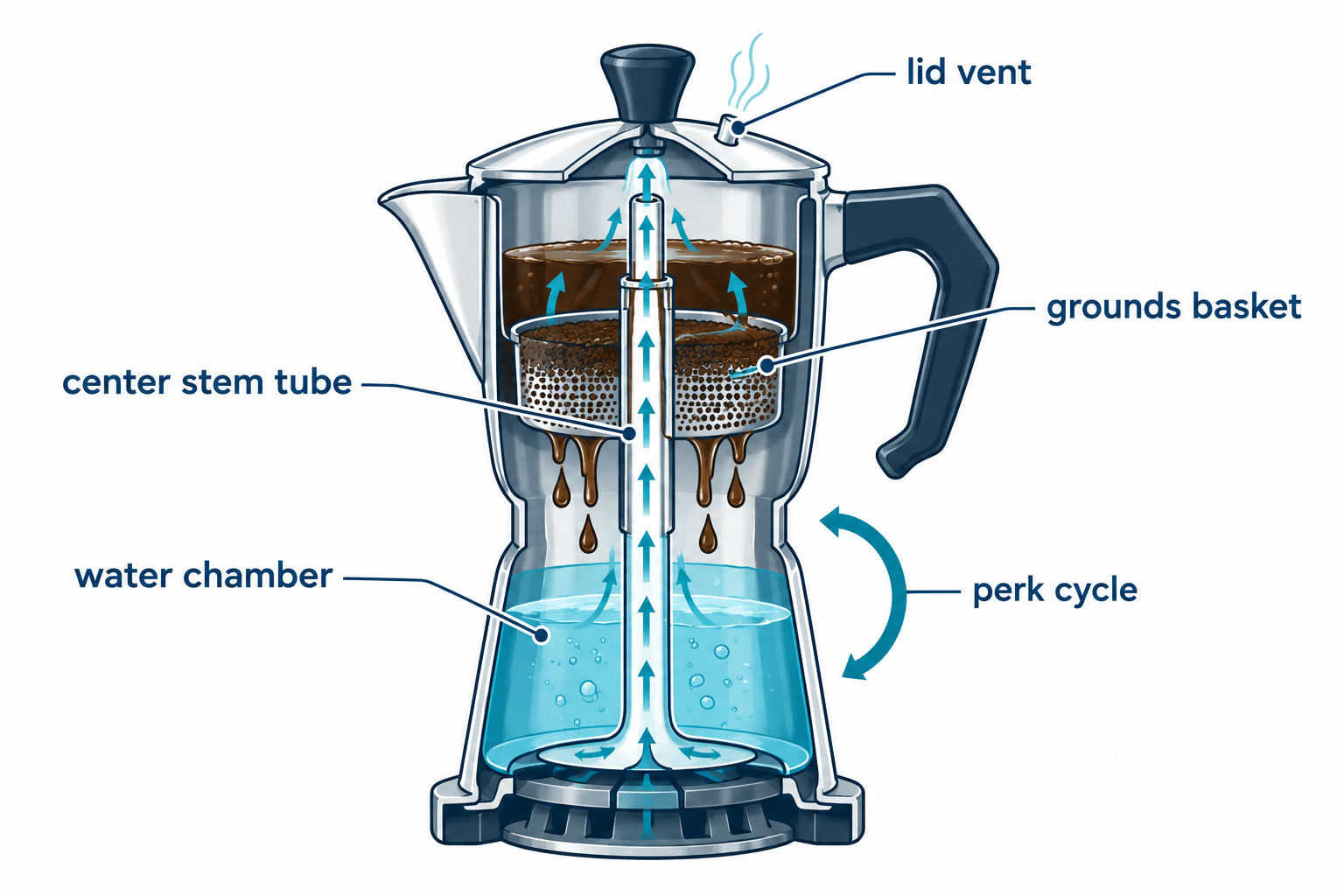
Here's the mechanical path in plain terms:
- Water sits in the bottom chamber and heats to a boil.
- Pressure from the rising steam pushes water up the hollow center stem.
- Water sprays out through a small cap over the grounds basket.
- Gravity pulls the water back down through the grounds and back into the pot.
- The cycle repeats until you remove the pot from heat.
That last step matters. Every extra minute on the burner means another few cycles through the same coffee, and each cycle pulls more bitter compounds out of the grounds. A beginner's guide to using a percolator walks through timing in more depth, but the short version is this: pull the pot the moment you see a steady, dark stream through the glass knob on top, not five minutes later.
Percolators predate drip machines by decades and were standard camp and diner equipment before automatic brewers took over home kitchens. That history explains why so many campers still reach for one: it needs no filter, no power, and no fragile parts, just heat and grounds.
Best Percolator for Camping, Stovetops, and Countertops: Quick Picks by Buyer
The best percolator for most buyers splits into two camps: an all-metal stovetop model for camping and range use, or an electric countertop unit for home convenience. Below are named picks for seven common buyer types, based on published testing and product specifications.
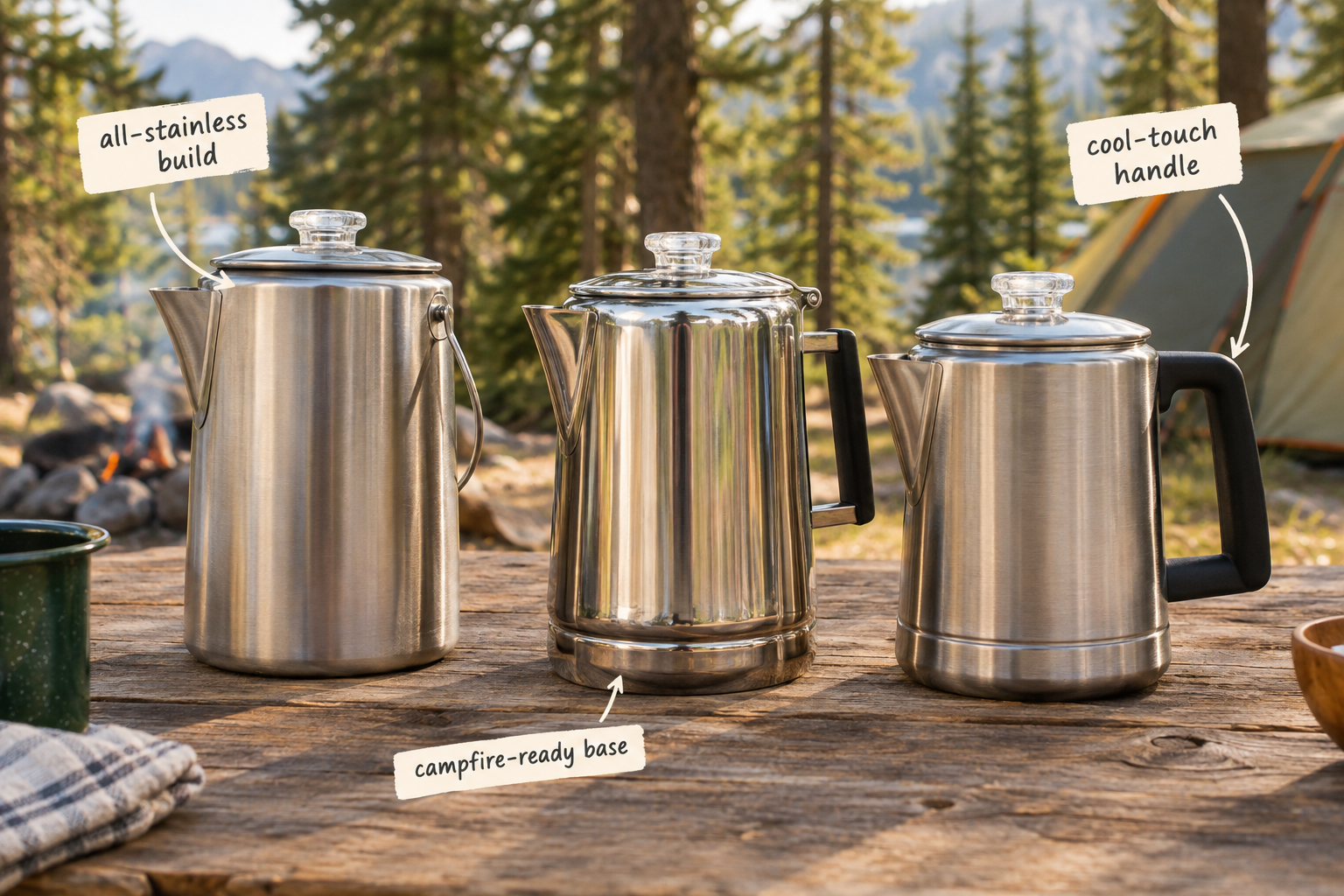
- Car campers who cook over a burner or stove: Coletti Bozeman. All stainless steel with no plastic parts, built to take repeated heat cycles at a campsite.
- Groups camping with a larger crew: GSI Outdoors Enamelware Percolator. Comes in 8-cup and 12-cup sizes and works directly over a campfire or a camp stove.
- Home cooks who want stovetop nostalgia: a classic Farberware percolator. The stainless design is simple to maintain and moves between a home range and a camp stove without changing habits.
- Campfire-direct brewing: Stanley Adventure percolator. Built for open flame use with a handle designed to stay cooler to the touch.
- Countertop convenience seekers: Presto 02811. A presto electric coffee percolator with an automatic keep-warm function and a simple plug-in design.
- Entertaining or large households: Cuisinart PRC-12N. A 12-cup electric percolator with a signal light and keep-warm mode built for serving a crowd.
- Small kitchens or induction cooktops: Bialetti Venus 4-cup stainless steel percolator, sized for tight counters and rated for induction use.
Comparison table: named percolator models
| Model | Power source | Capacity | Material | Best for |
|---|---|---|---|---|
| Coletti Bozeman | Stovetop/campfire | 9 cup | All stainless steel | Frequent campers |
| GSI Outdoors Enamelware | Stovetop/campfire | 8 or 12 cup | Enamelware over steel | Group camping |
| Farberware Yosemite-style | Stovetop | 8 cup | Stainless steel | Home and camp use |
| Stanley Adventure | Campfire/stovetop | 6 cup | Stainless steel | Open flame brewing |
| Presto 02811 | Electric | 12 cup | Aluminum body, steel basket | Everyday countertop |
| Cuisinart PRC-12N | Electric | 12 cup | Stainless steel | Entertaining, large groups |
| Hamilton Beach percolator | Electric | 12 cup | Stainless steel | Budget electric option |
| Bialetti Venus | Stovetop/induction | 4 cup | Stainless steel | Small kitchens |
A quick rule: if you don't have a reliable outlet where you brew, skip anything electric no matter how many features it has. If you're brewing for one or two people every day, a 12-cup capacity is overkill and you'll get better results from a smaller pot.
Percolator vs French Press vs Pour Over: Which Is Best
There's no single best brewer, but percolators win specifically for volume, durability, and no-filter simplicity, while French press and pour over win for cup clarity and control. The right pick depends on how many cups you need and how much bitterness you're willing to accept.
| Method | Strength | Cleanup | Best for |
|---|---|---|---|
| Percolator | Strong, bold, some sediment | Rinse basket and stem | Groups, camping, no filters |
| French press | Full body, some sediment | Wash mesh filter | Small batches, rich cup |
| Pour over | Clean, bright, low sediment | Toss paper filter | Single origin flavor detail |
| Drip machine | Balanced, consistent | Rinse carafe and filter | Everyday convenience |
Percolator vs drip coffee comes down to extraction time. A percolator keeps recirculating water through hot grounds, pulling out more bitter compounds and oils. Drip coffee passes water through the bed once, which gives a cleaner, lighter cup. If you like a cup that tastes closer to French press but sturdier for outdoor use, a percolator is the better fit. If you want a lighter, more subtle cup that shows off a specific bean's tasting notes, read the brewing method for pour over technique instead.
Grind size matters across all four methods. Percolators need a coarser grind than drip machines because the repeated water contact will over-extract fine grounds fast, turning the cup bitter and muddy.
Best Percolator for Camping Trips
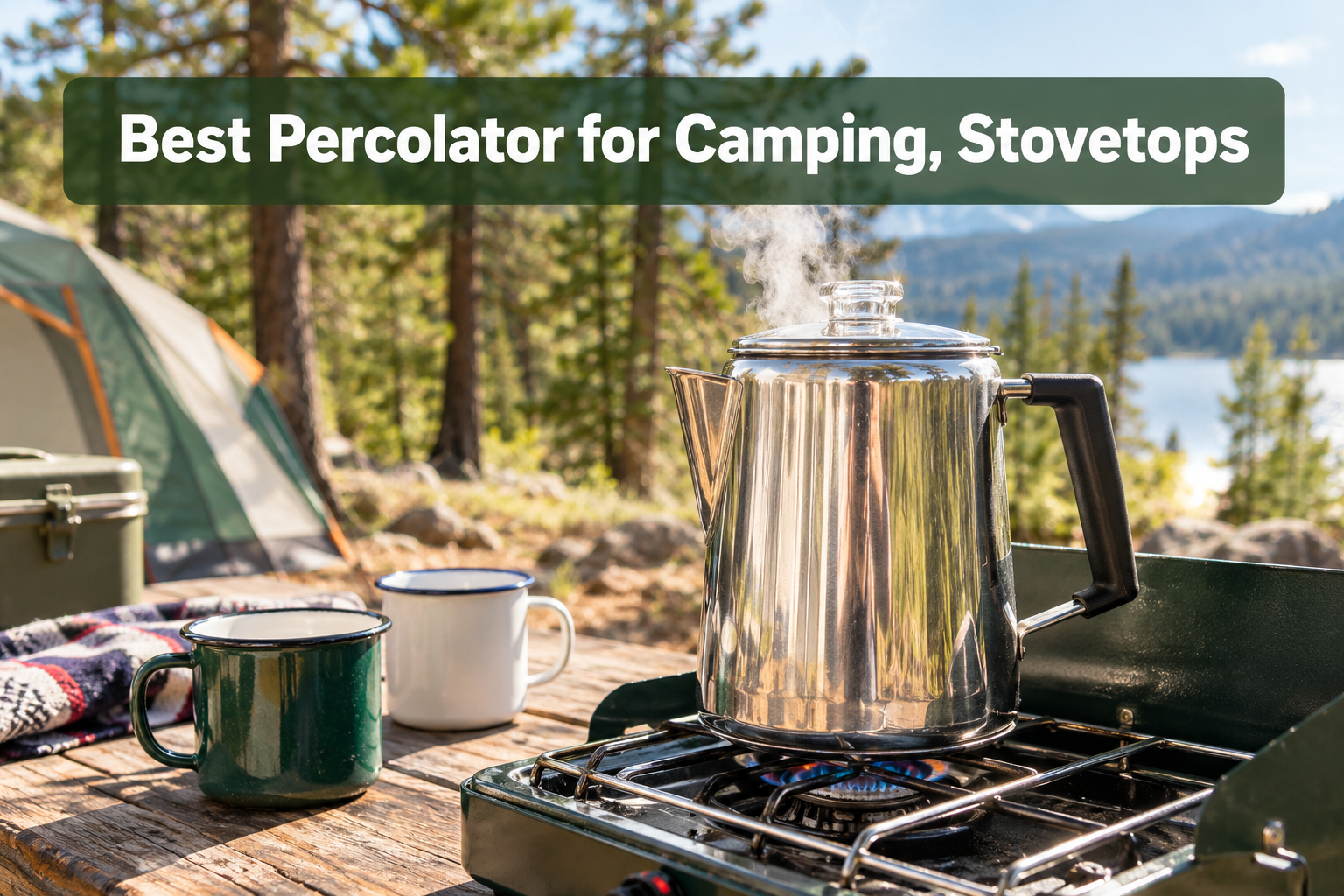
The best percolator for camping is an all-metal stovetop model that can sit directly on a camp stove burner or near open flame without melting parts or corroding after repeated use. The Coletti Bozeman and GSI Outdoors Enamelware Percolator both fit that description with published testing behind them.
What separates a good coffee percolator for camping from a home model:
- No plastic components. Heat-safe stainless steel or enamel over steel handles direct flame better than aluminum with plastic knobs.
- A sturdy handle. Look for a handle that stays cool enough to lift without a glove, especially for campfire use.
- A packable size. An 8-cup GSI Outdoors model weighs around 21 ounces, light enough to carry without dominating a pack list.
- A basket that seats securely. A loose basket lets grounds escape into the pot, which means grit in every cup.
Camping Coffee Percolator: How to Use It
Fill the bottom chamber with water to the marked line, add coarse grounds to the basket (roughly two tablespoons per six ounces of water is a solid starting ratio), and set the pot over medium heat. Watch through the glass knob on the lid. Once the stream turns dark and steady, usually after 6 to 10 minutes depending on your heat source, pull the pot off the flame right away. Letting it sit on heat longer just adds more bitterness, not more coffee.
If you're also weighing other camp brewing gear, the cowboy coffee pot method is a simpler no-basket alternative worth comparing, and a portable espresso setup is worth a look if you want a smaller shot instead of a full pot.
Percolator for RV or Outdoor Camping
For RV use, an electric percolator works fine if you're plugged into shore power or running a generator, but a stovetop model is the safer default because it works whether or not you have electricity. REI's camp coffee guidance treats percolators as a solid choice for traditional car camping and RV trips, though it notes they're bulkier than ultralight backpacking gear and work best with a stable heat source. If your trips mix RV parking with tent nights, a stovetop percolator that also works over a campfire covers both situations without buying two pots.
Stovetop Percolator vs Electric Percolator
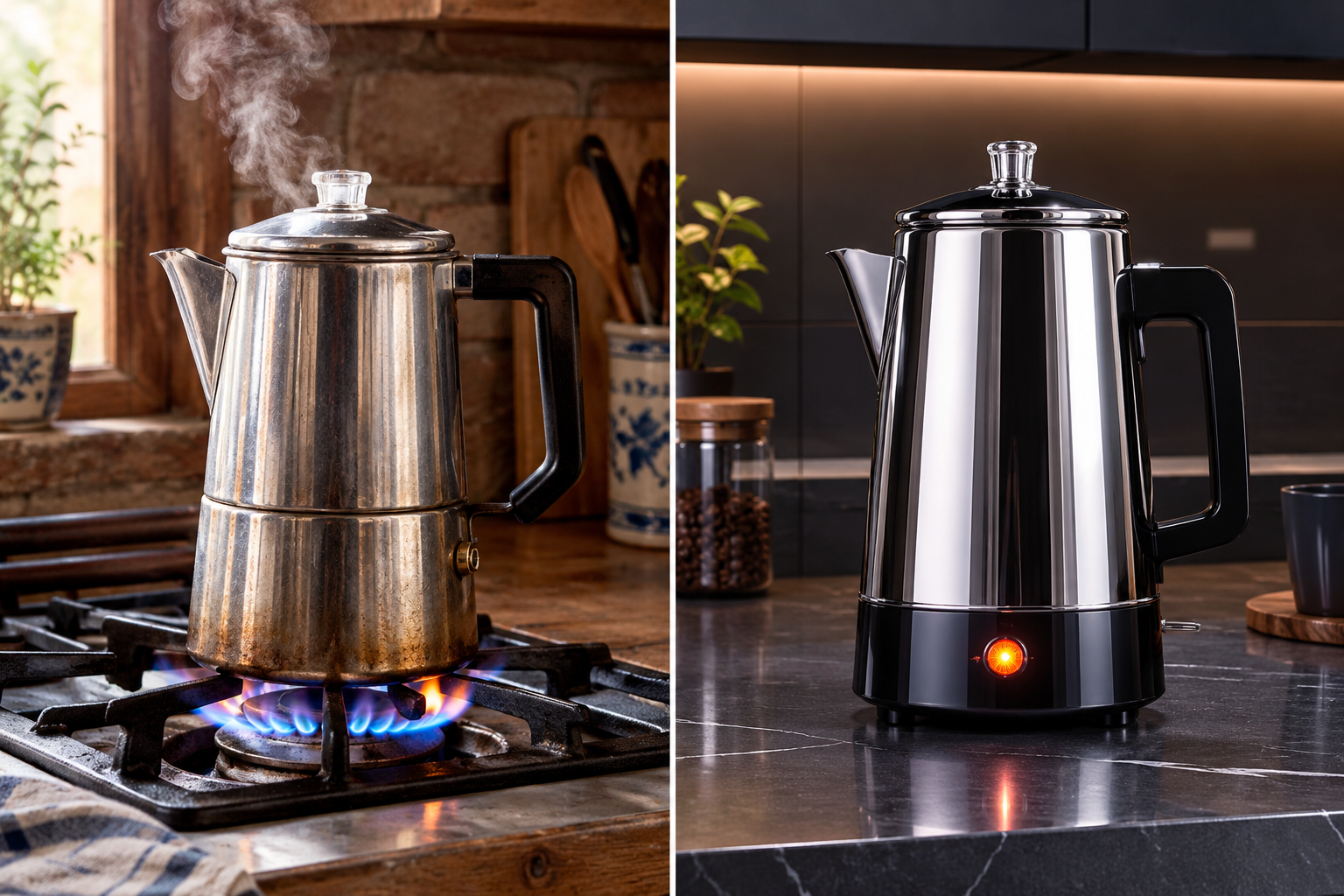
A stovetop percolator wins on durability and works anywhere you have a flame, while an electric percolator wins on convenience with automatic shut-off and keep-warm features. Roughly half of home buyers pick each style, according to one comparison of eight percolator models.
Stovetop percolators:
- Work on gas, electric coil, propane, and some induction cooktops
- Have fewer mechanical parts, so there's less to fail
- Move between home and camping without a second purchase
- Require you to watch the pot and pull it manually
Electric percolators:
- Plug in and brew without supervision
- Often include a signal light and keep-warm mode, as seen on the Presto 02811 and Cuisinart PRC-12N
- Need an outlet, which rules out most campsites
- Tend to have more parts (heating element, cord, thermostat) that can eventually wear out
Can You Use a Percolator on an Electric Stove
Yes. Stovetop percolators work on electric coil and glass-top ranges as well as gas burners, as long as the base sits flat against the heating element. Aluminum bases conduct heat fast on electric coils, so keep the heat at medium rather than high to avoid scorching grounds against the bottom of the basket. Stainless steel bases heat a little slower but hold temperature more evenly once they get there.
Stainless Steel vs Aluminum Percolator: Which Lasts Longer
Stainless steel percolators generally last longer than aluminum ones because steel resists corrosion, pitting, and the metallic taste that aluminum can develop with age. A stainless steel electric percolator or stovetop model may cost more upfront, but it holds up to years of daily boiling better than lighter aluminum bodies.
One 2026 review of a stainless steel percolator recorded a 4.6 out of 5 style rating, with testers noting the coffee came out bold and flavorful with minimal sediment and no metallic off-taste, a common worry with older aluminum pots. That same review pointed out that grind size and brew time matter just as much as the metal, since a too-fine grind causes sediment regardless of what the pot is made from.
Choose stainless if you plan to use the pot for years across camping and home use. Aluminum is lighter and cheaper, which can matter for backpackers counting ounces, but expect a shorter service life and a small risk of developing a metallic taste over repeated brews.
How Much Does a Good Percolator Cost
A reliable percolator typically runs from around $25 for a basic stovetop pot up to roughly $80 to $100 for a full-featured electric model with keep-warm settings and a larger capacity. Paying much more than that usually buys brand recognition and finish quality rather than a dramatically different cup, according to comparisons across electric and stovetop models.
Rough cost bands to expect:
- Entry stovetop pots (6 to 9 cup): budget aluminum or basic stainless models
- Camping-grade stovetop pots (Coletti Bozeman, GSI Outdoors): mid-range pricing for all-metal construction built to survive campfire heat
- Entry electric percolators (Hamilton Beach, Presto): mid-range pricing with basic keep-warm functions
- Full-featured electric percolators (Cuisinart PRC-12N): higher pricing for larger capacity and stainless construction
Check the current price before buying, since percolator pricing shifts with material costs and seasonal camping demand.
Best Percolator for 12 Cups or More
For households or campsites serving a crowd, a 12-cup capacity is the practical ceiling before a pot gets too heavy to lift safely once full. The Cuisinart PRC-12N and GSI Outdoors 12-cup Enamelware Percolator both hit that mark with published specs to back the claim.
Match capacity to your actual group, not your biggest gathering of the year:
- 1 to 2 people: a 4 to 6 cup stovetop pot like the Bialetti Venus
- 3 to 6 people: an 8-cup model, stovetop or electric
- 7 or more people: a 12-cup electric percolator with keep-warm, or a 12-cup GSI Outdoors model for camp groups
A common mistake is buying the largest pot available "just in case." A 12-cup pot brewed for two people means the last cups sit and stew on the warming plate, getting more bitter by the hour.
Percolator Keeps Making Bitter Coffee: How to Fix It
Bitter percolator coffee almost always traces back to three causes: too fine a grind, too much time on heat, or too much coffee for the water volume. Fix any one of these and the bitterness usually drops fast.
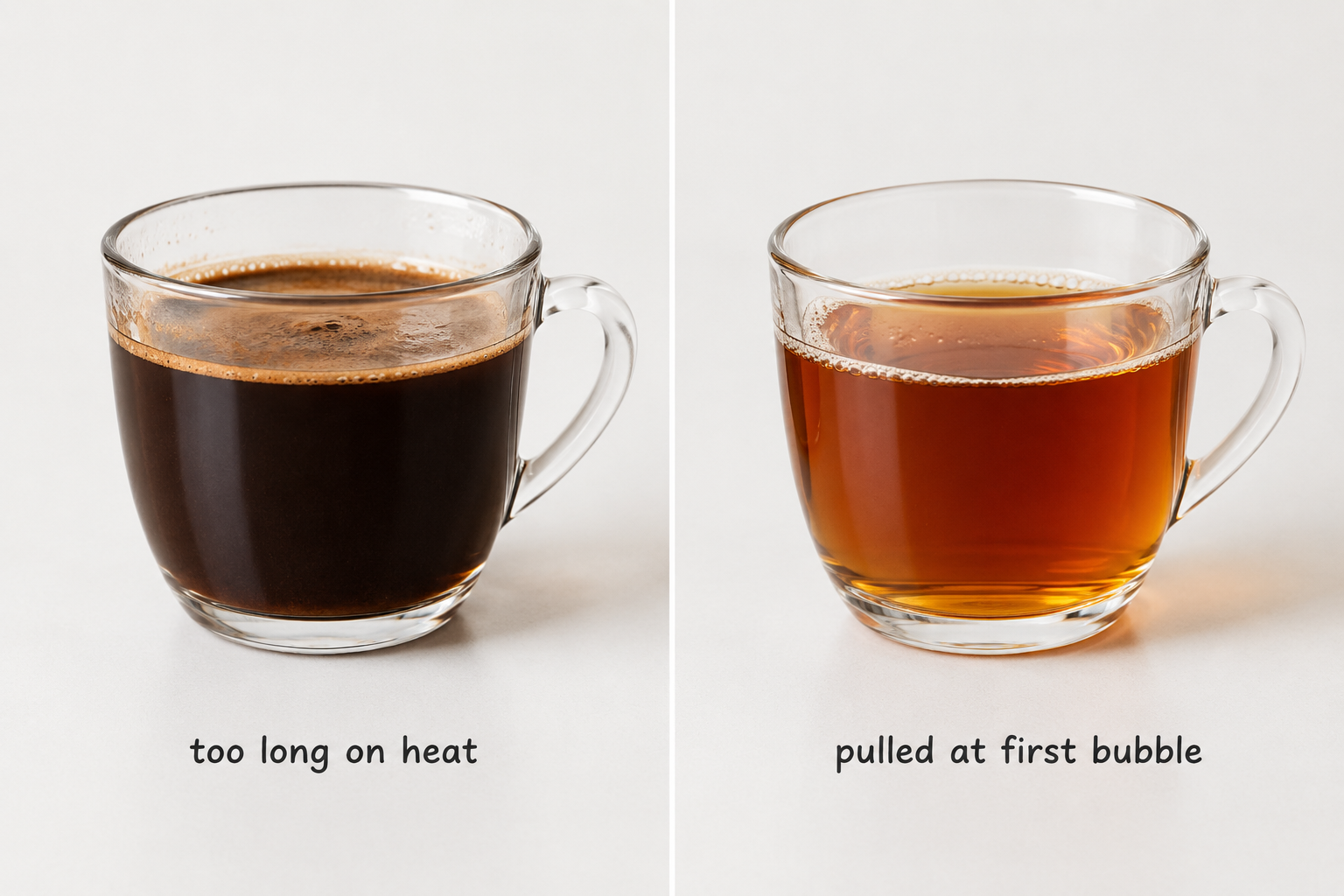
The fix, step by step:
- Switch to a coarse grind, similar to what you'd use in a French press.
- Watch the glass knob and pull the pot as soon as the stream turns dark and steady, not after it's been running for ten extra minutes.
- Check your ratio. Around two tablespoons of grounds per six ounces of water is a reasonable starting point.
- Rinse the basket and stem after every use so old coffee oils don't turn rancid and add bitterness to the next pot.
Common Percolator Mistakes Beginners Make
The most common beginner mistake is treating a percolator like a "set it and forget it" appliance the way a drip machine works. A percolator needs attention:
- Leaving it on heat too long. Every extra minute adds more bitter extraction.
- Using a fine or espresso grind. Fine grounds slip through the basket and over-extract fast.
- Overfilling the basket. Too many grounds packed tight blocks water flow and creates uneven brewing.
- Skipping the rinse. Old coffee oil residue turns rancid and taints the next pot.
- Ignoring the manufacturer's fill line. Overfilling the water chamber can force grounds up into the stem.
If you want a deeper walkthrough of timing and ratios, the percolator basics guide for beginners covers the process step by step, and a routine cleaning guide for coffee makers helps keep the metal parts free of built-up residue between trips.
Percolator Alternatives If You Don't Have One
If you don't own a percolator, a French press, moka pot, or cowboy coffee method can all produce a similarly strong cup without the specific equipment. Each trades off differently on convenience and cleanup.
- French press: closest in strength and body, needs a mesh filter and a few minutes of steeping.
- Moka pot: produces a concentrated, espresso-like shot on the stovetop; see the moka pot guide for beginners for the process.
- Cowboy coffee: grounds go straight into boiling water with no basket at all, a genuine no-equipment camping option.
- Drip machine: the easiest daily alternative, though it produces a noticeably lighter cup than a percolator.
None of these need special grounds beyond a coarse grind, and picking the right beans for home brewing matters more for flavor than which of these methods you choose.
Who Should Use a Percolator and Who Should Skip It
A percolator suits people who want a strong, no-filter cup for a group, especially outdoors, and who don't mind a little sediment in the bottom of the cup. It's not the right pick for anyone chasing a light, clean, single-origin flavor profile.
Use a percolator if you:
- Camp regularly and want equipment that survives open flame and rough handling
- Brew for a group rather than one cup at a time
- Prefer a bold, strong cup over a delicate one
- Want a pot with almost nothing that can break
Skip a percolator if you:
- Prefer light, bright, single-origin flavor detail that shows off specific tasting notes
- Backpack ultralight and count every ounce
- Dislike any sediment at the bottom of the cup
- Want hands-off brewing without watching a pot
Multiple 2026 camping gear roundups agree that percolators remain a strong choice for groups and car camping specifically, even as lighter pour-over style brewers gain ground among backpackers who prioritize weight over volume.
FAQ
What is the best percolator for someone camping with a group of six or more? The GSI Outdoors 12-cup Enamelware Percolator is built for that scale and works directly over a campfire or camp stove.
Is a Farberware percolator good for home stovetop use? Yes. A classic Farberware percolator uses a simple stainless design that works on gas or electric ranges and travels well to a camp stove too.
Can I use an electric percolator while camping? Only if you have reliable shore power or a generator. Without electricity, a stovetop model is the practical choice.
How long should I let a percolator run before it's done? Around 6 to 10 minutes on medium heat is typical, but the real signal is a dark, steady stream through the glass knob on the lid, not the clock.
Does a stainless steel electric percolator taste different than an aluminum one? Testing on a stainless steel model found bold flavor with minimal sediment and no metallic taste, a common complaint with older aluminum percolators over time.
Why does my percolator coffee taste bitter every time? Check your grind first. A grind that's too fine over-extracts fast in a percolator, and leaving the pot on heat past the first strong perk makes it worse.
Conclusion
The best percolator for you comes down to where you'll actually use it. Campers and RV owners should lean toward all-stainless stovetop models like the Coletti Bozeman or GSI Outdoors Enamelware Percolator, since they handle open flame and rough handling without a power source. Home cooks who want countertop convenience should look at the Presto 02811 or Cuisinart PRC-12N, both of which add keep-warm features that a stovetop pot can't match. Whichever style you pick, the coarse grind, a watched pot, and a rinse after every brew will do more for your cup than any brand name on the box.
Next step: match your pick to your grind. Check the current price on a coarse burr grinder if you're switching from a drip setup, since a fine drip grind will turn any percolator bitter fast.
Keep Exploring Coffee Rank IQ
- Coffee Rank IQ home: reviews, brewing guides, and coffee science
- Best Cold Brew Coffee Maker: 6 Picks for Smooth Batches at Home
- Best Manual Coffee Grinder for Pour Over, Espresso, and Travel
- Best French Press: Why the Filter Matters More Than the Glass
- Best Pour Over Coffee Maker: Drippers vs Machines Compared
References
- www.treelinereview.com/gearreviews/best-camping-coffeemakers
- www.cleverhiker.com/camping/best-coffee-makers
- cookcraftandcreate.com/best-percolators
- upscontentcentre.com/best-percolators-for-camping
- www.cleverhiker.com/camping/alpine-mountain-gear-stainless-steel-percolator-review
- www.rei.com/learn/expert-advice/best-camp-coffee-makers.html
- chefscheck.nl/beste-percolator
- theairfryerinsider.com/best-coffee-percolator
- www.ofzenandcomputing.com/best-camping-coffee-makers