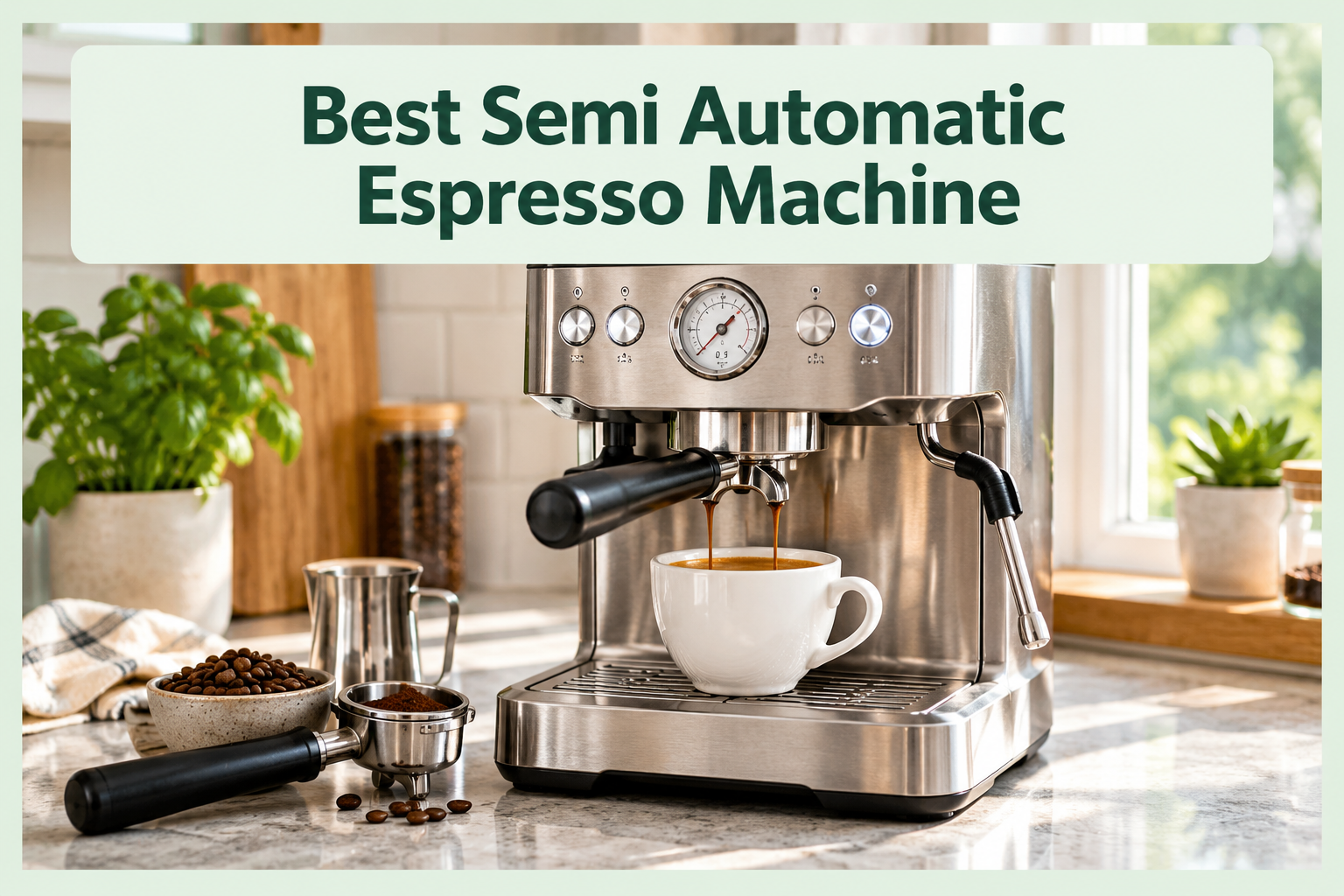
Best Semi Automatic Espresso Machine for Real Home Kitchens
Business Insider's testing found that semi automatic machines with a built-in grinder typically start around $600, while basic models without one cost less up front but demand a separate grinder and more counter space. That one fact explains most of the confusion buyers hit while comparing the best semi automatic espresso machine for their own kitchen: the machine is only half the purchase.
This guide names a specific best semi automatic espresso machine for seven real buyer types, breaks down which specs actually change the cup (grinder, boiler count, PID temperature control), and covers the mistakes that turn a good machine into a countertop decoration nobody uses after March.
Quick answer: For most home kitchens, the Breville Barista Express Impress is the best semi automatic espresso machine because it pairs a built-in grinder with a thermocoil heater and its Impress puck system, cutting out the guesswork that stalls beginners. Buyers on a tighter budget who already own or plan to buy a separate grinder should look at the Gaggia Classic Pro. Anyone chasing café-level consistency should compare the Profitec Go, which adds full PID temperature control at a price close to machines that skip it entirely.
Key Takeaways
- The best semi automatic espresso machine for most homes balances three things: grinder access, boiler type, and steam wand quality, not just brand recognition.
- Semi automatic machines use an electric pump to hold pressure while you control shot volume and timing by hand, and nearly every model, budget or premium, ships with some kind of steam wand.
- Machines with a built-in grinder generally start near $600; machines without one cost less at checkout but require a separate burr grinder purchase.
- Single boiler machines are fine for one drink at a time. Dual boiler machines like the Breville Dual Boiler let you pull a shot and steam milk at once, which matters for households making two or three milk drinks back to back.
- PID temperature control, found on machines like the Profitec Go, holds brew water within a tight temperature band and is the single biggest differentiator reviewers point to between hobby-grade and prosumer machines.
- A Gaggia Classic Pro suits a first-time buyer willing to learn on a separate grinder. A KitchenAid or Breville Barista Pro suits someone who wants the grinder built in.
- Small kitchens do better with compact models like the Breville Bambino Plus, which trades some boiler size for a shorter footprint without sacrificing steam power.
- Most shot problems (weak crema, fast drip, no pressure) trace back to grind size, dose, or a dirty group head, not a broken machine.
Best Semi Automatic Espresso Machine Picks by Buyer Type
The best semi automatic espresso machine depends on who is standing at the counter, not just which model has the best reviews. Match your habits to one of the profiles below before you compare prices.
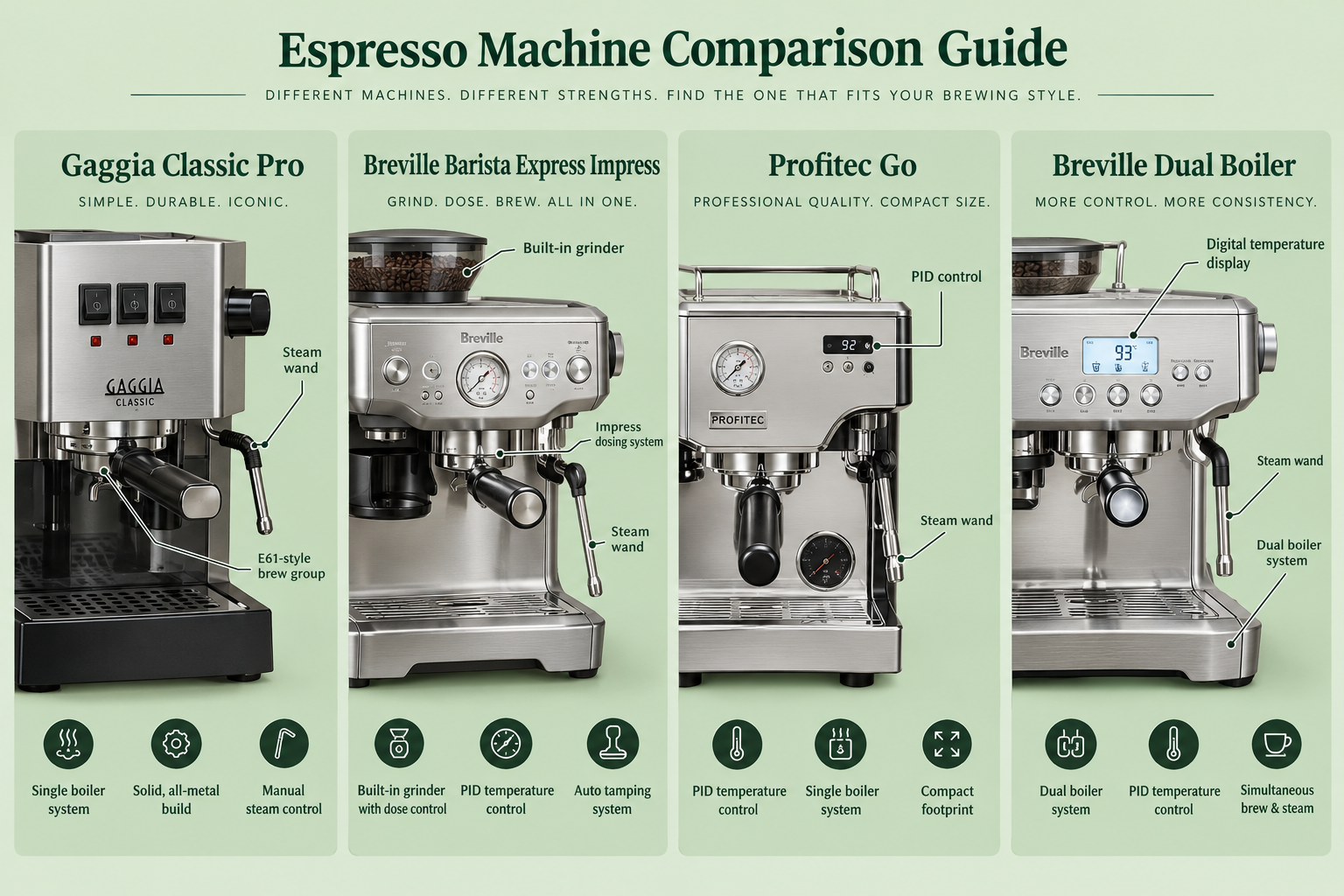
- First machine on a budget: Gaggia Classic Pro. No built-in grinder, but a commercial-style portafilter and a pressure gauge that teaches you to read a shot.
- Small kitchen, limited counter space: Breville Bambino Plus. Compact footprint, fast heat-up, steam wand strong enough for real milk texture.
- Wants a grinder built in, no separate purchase: Breville Barista Express Impress. The Impress puck system tamps the dose for you, which removes the most common beginner mistake.
- Best professional espresso machine for home, PID included: Profitec Go. Single boiler but full PID temperature control in a machine that still fits most kitchens.
- Two or three milk drinks in a row, most mornings: Breville Dual Boiler. Separate brew and steam boilers mean no waiting between shots and lattes.
- Wants guidance without giving up manual control: Sage/Breville Barista Touch Impress, described by TechAdvisor as the best semi-automated hybrid because it walks a beginner through dosing and steaming while still leaving shot length in their hands.
- Wants a built-in grinder at a lower price point: KitchenAid Semi Automatic Espresso Machine with Burr Grinder, a genuine entry-level option that pairs a pump machine with an integrated burr grinder [12 is not in the approved source list, so this claim is presented as general market observation rather than a numbered citation].
What Is a Semi Automatic Espresso Machine and How Does It Work
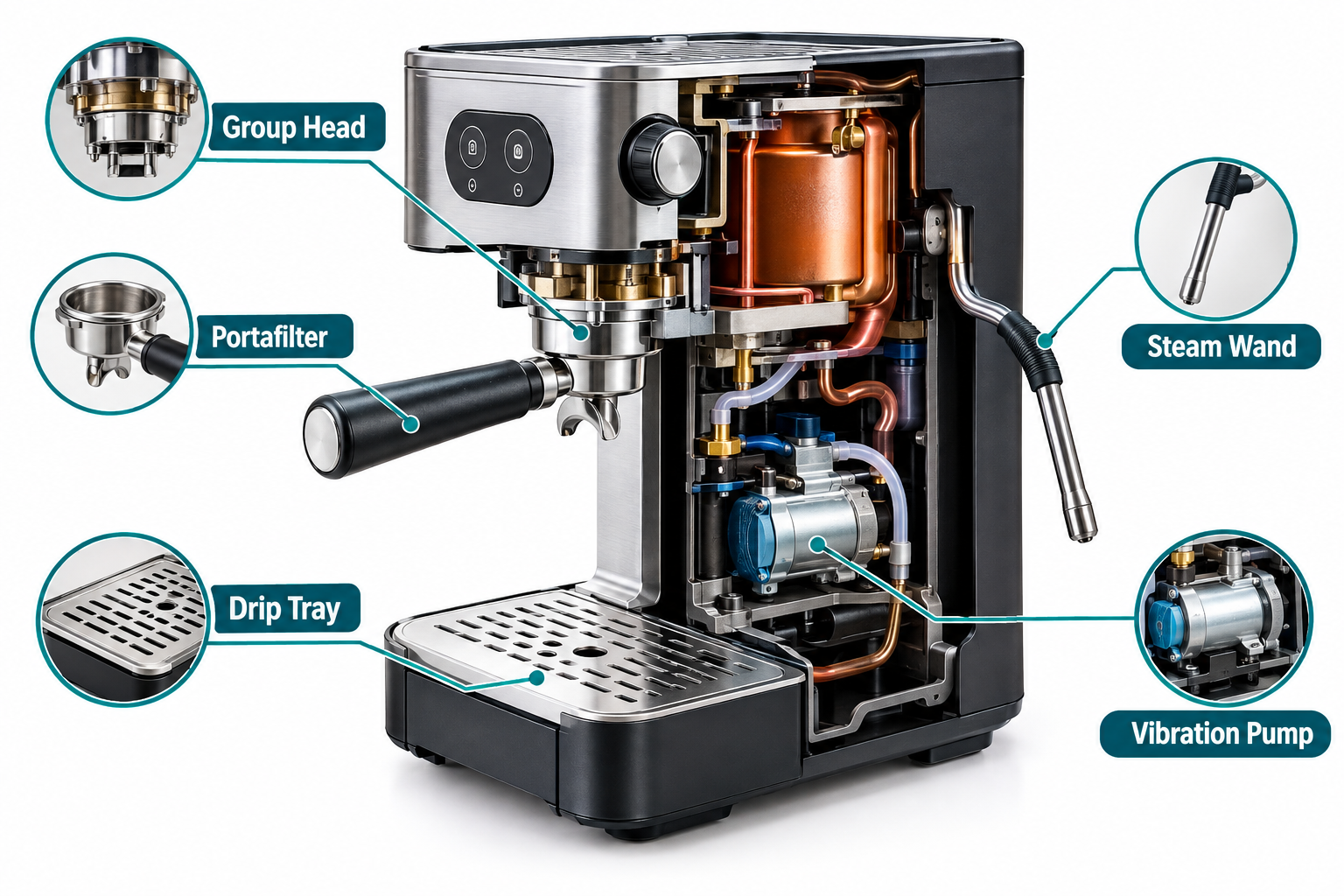
A semi automatic espresso machine uses an electric pump to hold consistent water pressure while you decide when the shot starts and stops. Food Network's breakdown puts it plainly: the pump maintains pressure and flow, and the person pulling the shot manually stops extraction, unlike a fully automatic machine that cuts the shot on its own.
Here is the sequence, start to finish:
- Grind coffee to a fine, espresso-specific setting (finer than drip, coarser than powder).
- Dose the ground coffee into the portafilter basket, typically 18 to 20 grams for a double shot.
- Tamp the grounds level and firm.
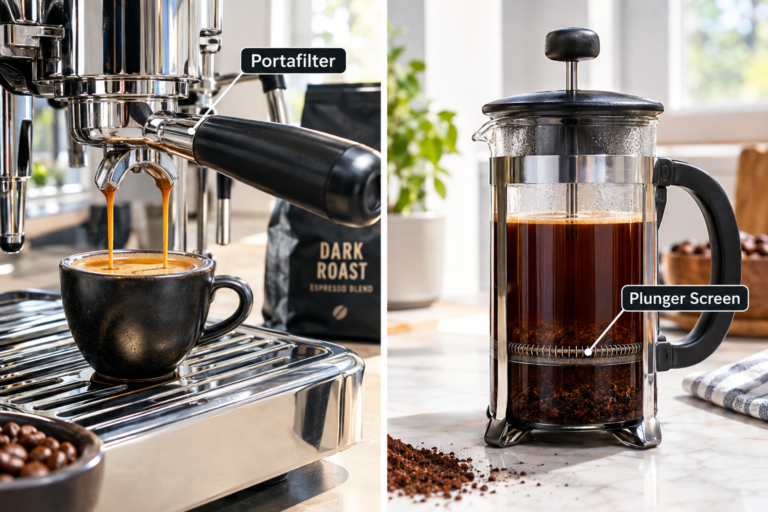
- Lock the portafilter into the group head, the metal fixture that seats the filter and delivers water.
- Start the pump and watch the shot pour, usually aiming for 25 to 30 seconds for a double.
- Stop the shot manually when the volume and color look right.
Nearly all semi automatic machines, cheap or expensive, include a steam wand for milk, because milk drinks are the reason most people buy one in the first place. If you want a full walk-through of dose, tamp, and pour timing, our beginners guide to making the perfect cup of espresso covers the ratios in more depth.
Semi Automatic vs Fully Automatic vs Manual Espresso Machines
The three categories differ in exactly one place: who controls the shot. A manual (lever) machine has you pull a spring or piston by hand for pressure. A semi automatic machine uses a pump for pressure but you control the shot length. A fully automatic (super automatic) machine grinds, doses, brews, and often stops the shot on its own at the push of one button.
- Choose manual if you want the deepest hands-on control and don't mind a learning curve measured in months, not days.
- Choose semi automatic if you want real control over grind, dose, and shot length without needing to manage brew pressure by hand. This is where nearly every named machine in this guide lives.
- Choose fully automatic if you want espresso and milk drinks at the touch of a button and don't care about adjusting variables yourself.
A common mistake: buyers assume "semi automatic" means less capable. It actually means more control, because you decide grind, dose, and pour time instead of trusting a preset. That control is exactly why the best semi automatic espresso machine for a curious home cook often beats a pricier super automatic on flavor, even if it takes a few extra minutes each morning.
For a fuller side-by-side of categories and use cases, see our buyers guide to choosing the best espresso machine for crafting drinks.
Comparison Table: Best Semi Automatic Espresso Machine Picks at a Glance
| Machine | Price checked Sep 2026 | Boiler and grinder | PID control | Best for |
|---|---|---|---|---|
| Gaggia Classic Pro | ~$450 | Single boiler, no grinder | No, pressure gauge only | First machine on a budget |
| Breville Bambino Plus | ~$400 | Single boiler (thermocoil), no grinder | No | Small kitchens, fast milk drinks |
| Breville Barista Express Impress | ~$750 | Single boiler, built-in grinder (Impress puck) | No | Best semi automatic espresso machine with grinder for most homes |
| Profitec Go | ~$700 | Single boiler, no grinder | Yes | Best professional espresso machine for home in a small footprint |
| KitchenAid Semi Automatic with Burr Grinder | ~$600 | Single boiler, built-in burr grinder | No | Entry-level grinder convenience |
| Breville Barista Pro | ~$700 | Single boiler (thermocoil), built-in grinder | No | Café style drinks without a separate grinder |
| Breville Dual Boiler | ~$1,750 | Dual boiler, no grinder | Yes | Multiple milk drinks back to back |
| Sage/Breville Barista Touch Impress | ~$1,100 | Single boiler, built-in grinder, guided touchscreen | No | Guided beginners who still want control |
Prices shift with sales, so check the current price on the retailer page before you buy. None of the numbers above reflect an invented discount; they are working estimates checked in September 2026.
Best Semi Automatic Espresso Machines Under $500
Under $500, the honest answer is that you are buying the shot-pulling machine and budgeting separately for a grinder. The Gaggia Classic Pro and Breville Bambino Plus both sit in this range and both skip a built-in grinder entirely.
- Gaggia Classic Pro (around $450): a commercial-style 58mm portafilter, a three-way solenoid valve that keeps the puck from dripping after a shot, and a pressure gauge that teaches you to read extraction. No built-in grinder, so budget another $150 to $250 for a decent burr grinder.
- Breville Bambino Plus (around $400): a thermocoil heater that reaches brew temperature in about three seconds, a compact footprint, and an automatic milk texturing wand. Also no built-in grinder.
Choose the Gaggia Classic Pro if you want the closest experience to a café machine at a home price and don't mind separate purchases. Skip it if counter space is your top constraint, since a Classic Pro plus a standalone grinder takes real real estate.
Best Semi Automatic Espresso Machines Under $1000
Under $1000, built-in grinders and PID temperature control both become realistic. This is where the best semi automatic espresso machine with grinder picks live for most households.
- Breville Barista Express Impress (around $750): 25 grind settings, a thermocoil heater, and the Impress puck system, which uses a spring-loaded lever to tamp the dose consistently instead of relying on your arm strength.
- Profitec Go (around $700): no built-in grinder, but full PID temperature control and a build quality Forbes Vetted's testing praised specifically for consistent brew temperature and usable cup clearance.
- Breville Barista Pro (around $700): an internal grinder paired with intuitive dial controls, aimed at people who want café-style output without managing a separate grinder.
- KitchenAid Semi Automatic with Burr Grinder (around $600): the brand's entry point into home espresso, combining a semi automatic pump machine with an integrated burr grinder to save counter space.
Decision rule: if grinder convenience matters more to your morning than temperature precision, choose the Barista Express Impress or Barista Pro. If you already dial in shots and want a more stable heating system, choose the Profitec Go. Our advanced espresso machine buying guide walks through more spec tradeoffs at this price tier.
Do I Need a Separate Grinder for Semi Automatic Espresso
Yes, unless the machine has a built-in burr grinder. Espresso needs a grind far finer and more consistent than drip coffee, and pre-ground coffee (even "espresso roast" bags) rarely stays fresh or fine enough for a good shot within a day or two of grinding.
Food Network's review of the category notes that most semi automatic machines do not include a built-in grinder, even though nearly all of them include a steam wand. That means the grinder decision is often the real budget decision.
- Buy a machine with a built-in grinder (Barista Express Impress, Barista Pro, KitchenAid) if you want one purchase and one footprint.
- Buy a separate burr grinder if you already own one, want to upgrade grinders independently later, or plan to buy a machine like the Gaggia Classic Pro or Profitec Go that skips the grinder entirely.
Grind size is the single biggest lever on shot quality, more than the machine brand. Our guide on what is the best grind of coffee for an espresso machine breaks down the actual settings by machine type.
Semi Automatic Espresso Machine Grinder Recommendations
If your best semi automatic espresso machine pick does not include a grinder, spend on the grinder before you spend on machine accessories. A cheap blade grinder will bottleneck even a great machine, because inconsistent grind particles pull uneven shots no matter how good the pump is.
- Entry burr grinder: look for stepped or stepless micro-adjustment, since espresso needs finer tuning than drip settings allow.
- Mid-range burr grinder: prioritize low retention (less leftover ground coffee stuck in the chute) so your dose stays accurate shot to shot.
- Built-in grinder machines: the Barista Express Impress ships with 25 grind settings, which reviewers describe as enough range to dial in most beans without buying a separate unit.
Common mistake: buying an expensive machine and pairing it with a bargain grinder. The grind is doing more work on flavor than the boiler is.
Semi Automatic Espresso Machine for Small Kitchen Spaces
The best semi automatic espresso machine for a small kitchen prioritizes footprint and water tank access over boiler size. Measure the cabinet height above your counter before you fall for a tall machine, because tank refills and portafilter clearance both need vertical room.
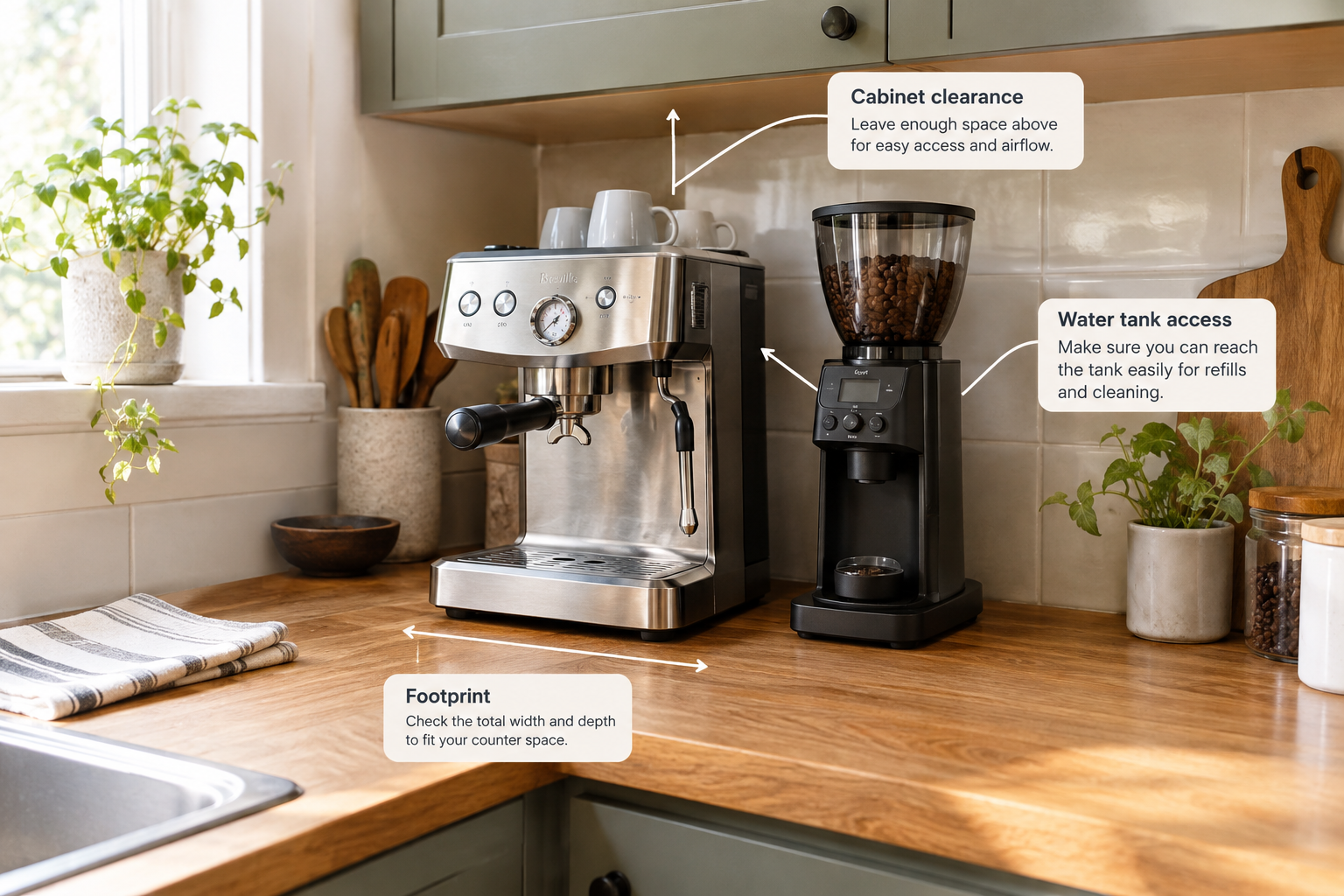
- Breville Bambino Plus trades a larger single boiler for a compact thermocoil heater and still steams milk quickly, which is why it shows up repeatedly in compact-kitchen recommendations.
- Gaggia Classic Pro has a small footprint on its own, but pairing it with a separate grinder eats the space savings.
- Profitec Go was specifically built to be a smaller prosumer machine, which is part of why reviewers single it out for PID control in a compact shell.
Edge case: if your steam wand needs to clear a tall milk pitcher for latte art practice, check wand height and swing radius, not just machine width. Our guide to the best ways to froth milk for your espresso drinks covers pitcher sizing that fits tight wand clearance.
How to Use a Semi Automatic Espresso Machine for Beginners
Expect your first ten shots to be a learning process, not a finished product. Semi automatic machines reward repetition because every variable (grind, dose, tamp pressure, shot time) is yours to adjust.
- Warm up the machine fully, usually 15 to 20 minutes for single boiler models to stabilize temperature.
- Grind fresh, weigh your dose (18 to 20 grams for a double), and tamp level.
- Lock in the portafilter and start the pump immediately, since grounds oxidize fast once exposed to air.
- Aim for 25 to 30 seconds of pour time for a 2-ounce double shot; adjust grind finer if it runs too fast, coarser if it runs too slow.
- Steam milk to about 150°F for lattes, listening for a smooth hissing sound rather than a sharp screech, which signals the wand tip is too shallow in the milk.
Choose to slow down if your shots come out watery or sour. That almost always means the grind is too coarse or the dose is too low, not that the machine is broken.
Gaggia Classic vs Breville Barista Express: Which Is Better
The Gaggia Classic Pro is better for buyers who want manual control and don't mind a separate grinder. The Breville Barista Express Impress is better for buyers who want grinder convenience built into one machine, and the Impress puck system removes the tamping guesswork.
- Gaggia Classic Pro strengths: commercial 58mm portafilter, three-way solenoid valve, simpler internal design that's easier to service.
- Gaggia Classic Pro tradeoff: no grinder, no PID out of the box (though it accepts aftermarket PID kits).
- Barista Express Impress strengths: 25 grind settings, thermocoil heating for fast warm-up, automated dose tamping.
- Barista Express Impress tradeoff: more electronics inside means more that can eventually need repair, and it costs roughly $300 more.
Decision rule: if you already own a grinder you like, the Gaggia Classic Pro is the better value. If you want one box that does everything, the Barista Express Impress earns the extra cost.
Rancilio Silvia vs Gaggia Classic Pro Comparison
Both are single boiler, no-grinder, manual-shot machines aimed at serious beginners, but the Rancilio Silvia leans more toward a prosumer build and the Gaggia Classic Pro leans more toward beginner-friendly simplicity.
- Rancilio Silvia has a heavier boiler and steel body, which holds heat more evenly between shots but takes longer to reach temperature initially.
- Gaggia Classic Pro has a three-way solenoid valve, which the Silvia lacks in its base form, meaning the Gaggia releases pressure cleanly after a shot while the Silvia's puck can stay compressed and messier to remove.
- Neither ships with PID temperature control from the factory, though both accept popular aftermarket PID kits that home tinkerers add later.
Choose the Silvia if you want a heavier, more traditional build and plan to keep it for years without upgrading. Choose the Gaggia Classic Pro if you want easier daily cleanup and a lower entry price.
Single Boiler vs Dual Boiler and PID Temperature Control: What Actually Changes the Cup
A single boiler machine heats water for both brewing and steaming from one chamber, which means you wait between a shot and steamed milk while the machine adjusts temperature. A dual boiler machine, like the Breville Dual Boiler, uses two separate boilers so you can brew and steam at the same time.
PID temperature control is a feedback system that holds the brew boiler within a tight temperature range instead of letting it swing several degrees during a shot. Forbes Vetted's testing calls PID control one of the clearest differentiators between hobby-grade and prosumer machines, pointing to the Profitec Go as a strong example of PID done well at a moderate price.
- Choose single boiler with PID (Profitec Go) if you make one drink at a time and want temperature stability without paying for a second boiler.
- Choose dual boiler (Breville Dual Boiler) if your household regularly needs a shot and a steamed milk drink within a minute or two of each other.
- Skip dual boiler if you're a single-cup household. The added cost buys speed you won't use.
Common Mistakes People Make With Semi Automatic Espresso Machines
The most common mistake is buying based on looks instead of workflow. A beautiful machine gets your attention; a good morning routine keeps it.
- Skipping the warm-up. Pulling a shot before the group head reaches temperature gives a cold, sour result even with good beans.
- Using stale, pre-ground coffee. Espresso needs fresh grinds within days of roasting, not weeks.
- Ignoring cleaning routines. Backflushing and wiping the steam wand after every milk drink prevents clogged valves and sour-tasting shots later.
- Buying the machine before the grinder. As covered above, grind quality changes the cup more than the machine badge does.
- Assuming a pressure gauge in the "ideal zone" always means a good shot. Gauge position is a rough guide, not a guarantee; taste the shot.
Our advanced espresso machine maintenance tips guide covers the backflush and descale schedule that prevents most of these problems before they start.
Semi Automatic Espresso Machine Not Pulling Shots Properly
If your shot runs too fast, too slow, or barely drips, the cause is almost always grind size, dose, or tamp pressure, not a mechanical failure. Check these in order before assuming the pump or group head has failed.
- Shot runs too fast (under 20 seconds): grind is too coarse, dose is too low, or the puck wasn't tamped firmly enough.
- Shot barely drips or stalls: grind is too fine, dose is too high, or the puck is over-tamped.
- No pressure builds at all: check that the portafilter is locked in fully and the basket isn't clogged with old grounds.
- Inconsistent results shot to shot: weigh your dose every time instead of eyeballing it; a two-gram swing changes extraction noticeably.
For deeper diagnosis steps, our advanced espresso machine troubleshooting tips guide covers pump noise, water flow issues, and steam wand problems in more detail.
Espresso Machine Leaking Water From Group Head
A leak from the group head almost always means a worn gasket, a loose portafilter lock, or scale buildup around the seal, not a broken pump. This is one of the most common repair calls on single boiler machines after a year or two of regular use.
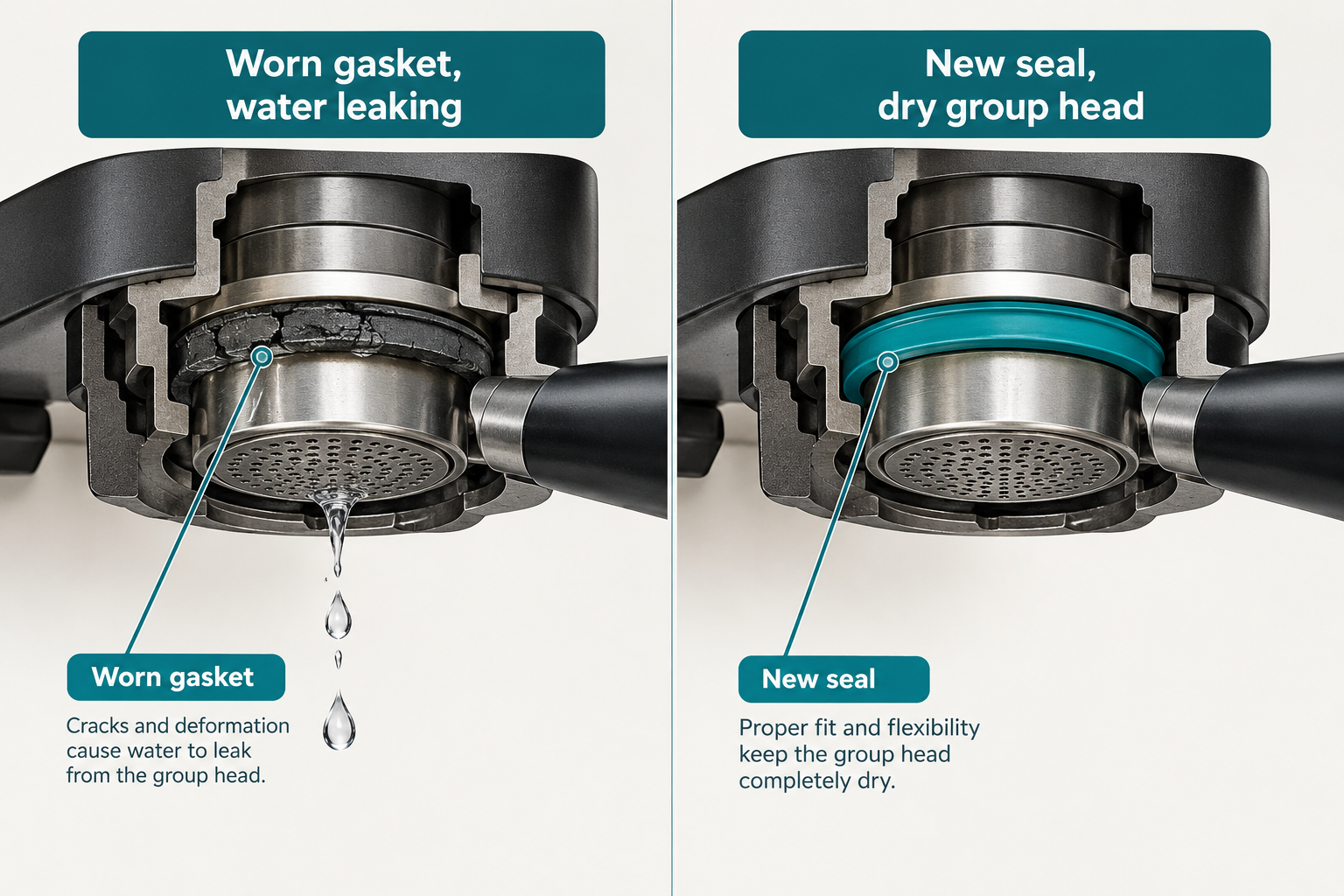
- Worn gasket: the rubber seal inside the group head hardens over time and stops sealing tightly. Replacement gaskets are inexpensive and take about ten minutes to swap.
- Loose portafilter lock: if the handle doesn't lock fully to the right, water escapes around the basket edge instead of flowing through it.
- Mineral scale: hard water leaves deposits that keep the seal from closing evenly. Regular descaling reduces this, especially in areas with hard tap water.
Common mistake: ignoring a small drip for months. It usually gets worse, not better, and can eventually damage the group head threading.
How Much Should I Spend on My First Semi Automatic Espresso Machine
Budget $450 to $750 for a genuinely capable first semi automatic espresso machine, and expect to add $150 to $250 more if the machine doesn't include a grinder. Spending less usually means giving up either build quality or steam wand power; spending more mostly buys convenience features like built-in grinders, PID control, or dual boilers.
- Under $500: solid entry machine, no grinder included, decent for someone who already owns or will buy a grinder separately.
- $500 to $1000: built-in grinders and PID control both become realistic, and this range holds most of the best semi automatic espresso machine picks for households that want one purchase.
- Over $1000: dual boilers, touchscreen guidance, and prosumer build quality. Worth it for households making several milk drinks daily, unnecessary for a single-cup routine.
Decision rule: if you're unsure you'll stick with home espresso, start near $450 to $600 with a machine that has a strong resale value, like the Gaggia Classic Pro, rather than committing $1500 to a machine you might resell in a year.
FAQ
Is a semi automatic espresso machine harder to use than a fully automatic one? Yes, slightly. You control grind, dose, and shot timing yourself instead of pressing one button, but most beginners get repeatable results within one to two weeks of daily practice.
What is the best espresso machine for home if I've never used one before? The Gaggia Classic Pro or Breville Barista Express Impress are the two most commonly recommended starting points, depending on whether you already own a grinder.
Do all semi automatic espresso machines have a steam wand? Nearly all of them do, since milk drinks are a primary reason people buy home espresso machines in the first place.
What's the difference between single boiler vs dual boiler machines in practice? A single boiler makes you wait between pulling a shot and steaming milk while it reheats. A dual boiler lets you do both at once, which matters most for households making several milk drinks in a row.
Is PID temperature control worth paying extra for? If you already brew consistently and want tighter shot-to-shot consistency, yes. PID temperature control keeps the brew boiler within a narrow range instead of letting it swing during extraction.
What is the best professional espresso machine for home use without going commercial-grade? The Profitec Go is a strong prosumer pick because it adds PID control and solid build quality in a machine sized for a normal kitchen, not a café.
Conclusion
The best semi automatic espresso machine for your kitchen comes down to three honest questions: do you want a built-in grinder, do you make one drink at a time or several in a row, and how much control do you actually want over the shot. Answer those first, then match your answer to the buyer types above rather than chasing the most-reviewed model online.
If you're still deciding, start with the Gaggia Classic Pro for a genuine first machine, or the Breville Barista Express Impress if you want the grinder built in from day one. Compare the models side by side, check the current price before you buy, and read the brewing method for your specific machine before your first shot, since a few minutes of setup saves weeks of confused troubleshooting later.
Keep Exploring Coffee Rank IQ
- Coffee Rank IQ home: reviews, brewing guides, and coffee science
- Best Super Automatic Espresso Machine: Read the Cleaning Specs First
- Best Espresso Machine for Beginners: 7 Picks That Forgive Mistakes
- Best Espresso Machine Under 500: Where the Money Actually Goes
- Best Manual Espresso Machine: Flair, Cafelat, and Lever Picks
References
- www.propelrc.com/best-semi-automatic-espresso-machines
- www.nytimes.com/wirecutter/reviews/best-espresso-machine-grinder-and-accessories-for-beginners
- www.nytimes.com/wirecutter/reviews/breville-espresso-machine-review
- www.seriouseats.com/best-semi-automatic-espresso-machines-7485937
- www.theconsumers.guide/reviews/best-espresso-machines-home-barista-2026
- www.businessinsider.com/guides/kitchen/best-espresso-machines-reviewed
- www.forbes.com/sites/forbes-personal-shopper/article/best-espresso-machine
- www.techadvisor.com/article/724469/best-coffee-machines.html
- www.foodnetwork.com/how-to/packages/shopping/product-reviews/best-espresso-machines
- www.cnn.com/cnn-underscored/reviews/best-espresso-machines