Drip Coffee vs Espresso: Caffeine, Flavor, and the Real Difference
A single espresso shot has less caffeine than a mug of drip coffee. Most people never learn that fact because espresso feels stronger in the mouth, and that sensory jolt gets mistaken for a caffeine jolt. The drip coffee vs espresso debate is really two separate arguments wearing one coat: a concentration argument and a caffeine argument, and they point in opposite directions.
Quick answer
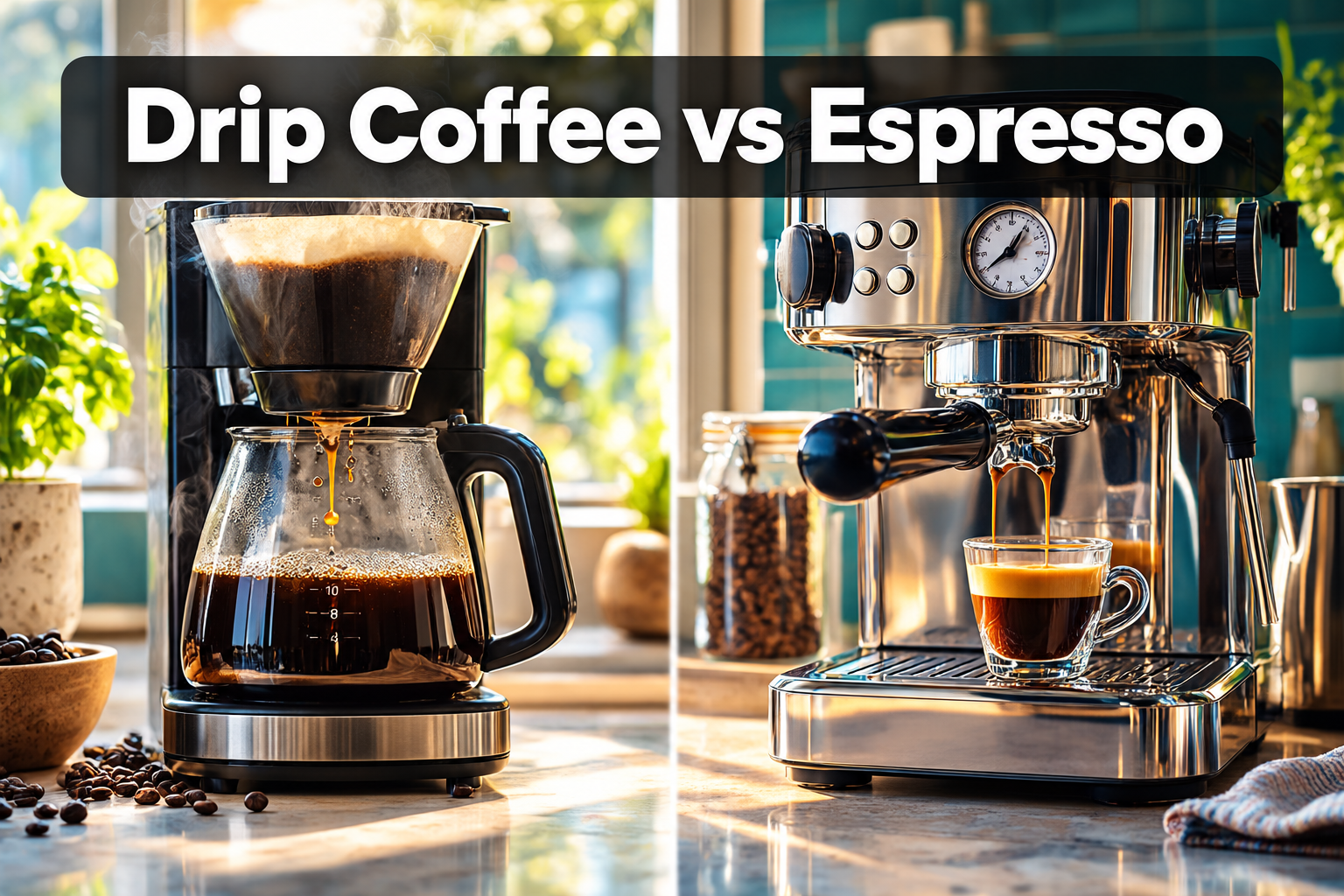
Drip coffee and espresso differ in brewing pressure, time, grind size, and serving size, not in the type of bean. Espresso uses about 9 bars of pressure to force hot water through finely ground coffee in 25 to 30 seconds, producing a concentrated 1 to 2 ounce shot. Drip coffee uses gravity to pull hot water through a coarser grind over 4 to 6 minutes, producing a diluted 8 to 12 ounce cup. Ounce for ounce, espresso has more caffeine. Cup for cup, an average mug of drip coffee usually delivers more total caffeine than a single shot.
Key takeaways
- Espresso is more concentrated per ounce, but drip coffee's larger serving size often wins on total caffeine.
- Brewing method, not the bean, drives the difference. The same roasted coffee can become either drink.
- Grind size and time change extraction. Espresso needs a fine grind and short contact time; drip needs a coarser grind and longer contact time.
- Flavor differs because of concentration and crema, the tan foam layer created by pressure and trapped CO2.
- Filtered drip coffee removes more oil-based compounds than unfiltered espresso, which matters for cholesterol research.
- Espresso machines cost more upfront because of the engineering needed to hold pressure and temperature steady.
- You can approximate espresso without a machine using a moka pot or an Aeropress, though the result differs from true pump-driven espresso.
- An americano is diluted espresso, not drip coffee, even though the two can taste similar in a to-go cup.
Drip coffee vs espresso: what's the real difference
The real difference between drip coffee and espresso comes down to pressure, time, and ratio. Espresso forces hot water through packed, finely ground coffee under about 9 bars of pressure in under 30 seconds. Drip coffee lets gravity pull hot water through a coarser bed of grounds over several minutes, with no added pressure.
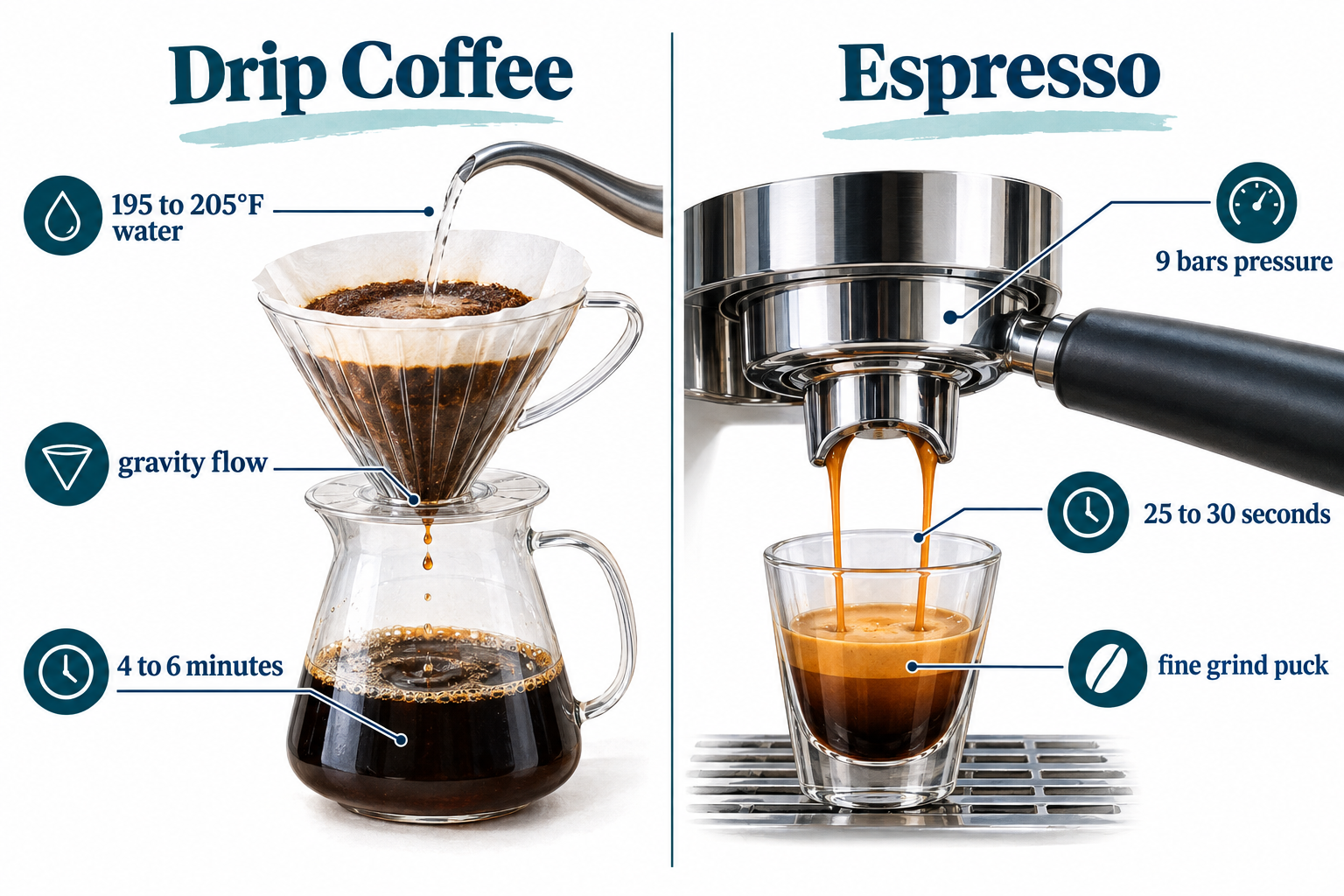
That mechanical difference changes almost everything downstream:
| Factor | Drip coffee | Espresso |
|---|---|---|
| Grind size | Medium to coarse | Fine, almost powder-like |
| Brew time | 4 to 6 minutes | 25 to 30 seconds |
| Pressure | None (gravity) | About 9 bars |
| Typical serving | 8 to 12 oz | 1 to 2 oz |
| Water to coffee ratio | About 16:1 | About 2:1 |
| Crema | None | Present, tan foam layer |
Espresso beans and coffee beans are usually the same beans. Espresso beans vs coffee beans is mostly a marketing distinction: roasters label some bags "espresso roast" because a slightly darker roast and specific grind size perform better under pressure, but any properly roasted bean can be brewed either way. The grind size, the best grind of coffee for an espresso machine, and the brew ratio matter more than the bag's label. This is the core of drip coffee vs espresso: same starting material, two very different machines, two very different cups.
Does espresso have more caffeine than drip coffee?
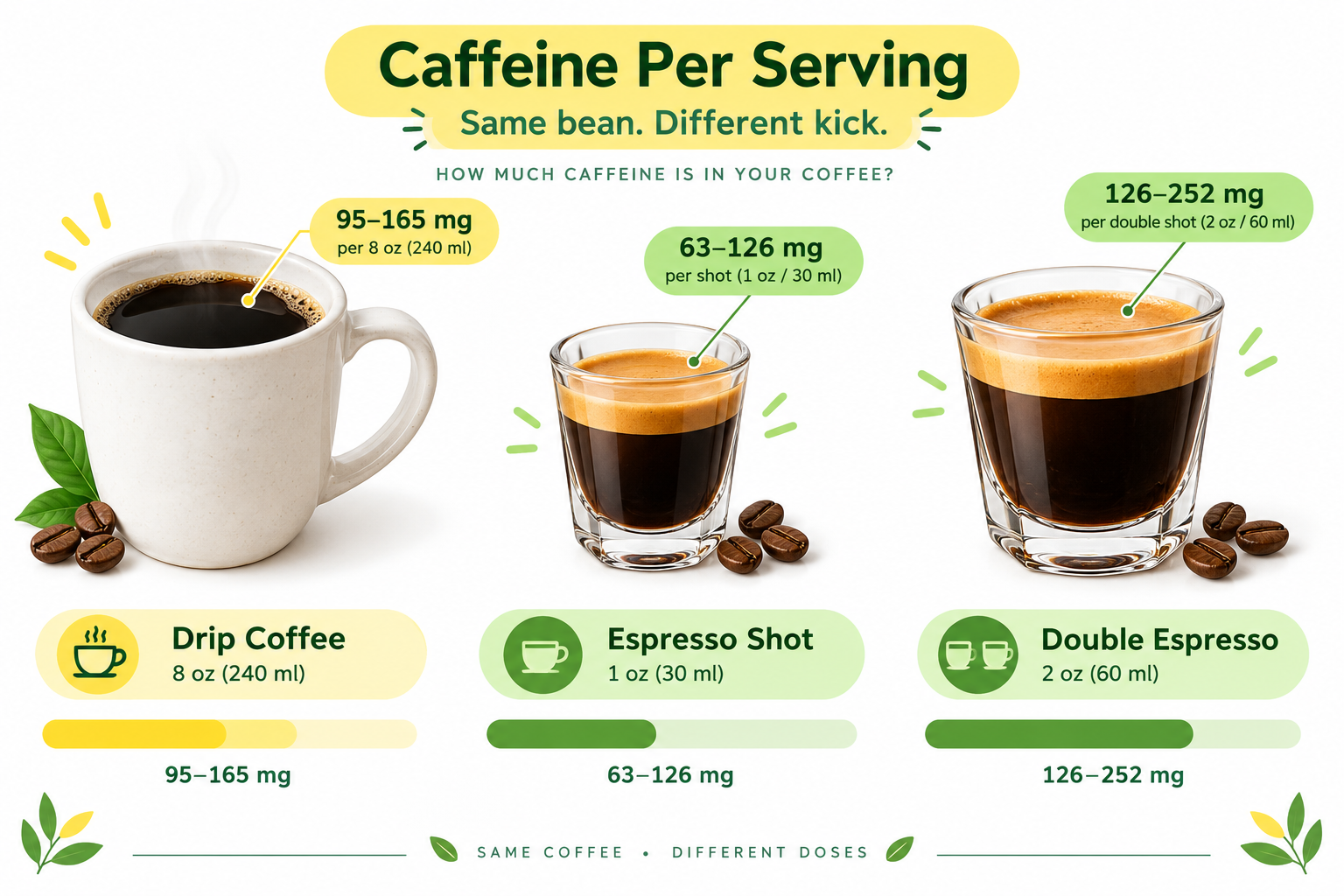
Ounce for ounce, yes. Cup for cup, usually no. A typical 1 ounce espresso shot runs around 63 milligrams of caffeine, while a typical 8 ounce cup of drip coffee runs around 95 milligrams, according to figures widely cited in coffee and nutrition guides. That means drip coffee's larger serving size usually delivers more total caffeine than a single shot, even though the shot is far more concentrated.
This is the heart of drip coffee vs espresso caffeine confusion. People assume the drink that hits harder in flavor must hit harder in caffeine. It doesn't work that way once you account for volume.
- Choose espresso if you want a fast, small, concentrated caffeine hit you can finish in two sips.
- Choose drip coffee if you want a larger volume you can sip over 20 minutes, with more total caffeine by the bottom of the mug.
- Common mistake: ordering "just an espresso" to cut caffeine, then drinking three shots across the morning, which adds up to more caffeine than one large drip coffee would have delivered in the first place.
For a deeper breakdown of milligrams by drink size, read how much caffeine is in a cup of coffee vs espresso.
How much caffeine is in a shot of espresso vs a cup of drip coffee
A single espresso shot averages roughly 63 milligrams of caffeine. A double espresso, the more common cafe order, runs closer to 125 to 140 milligrams. A standard 8 ounce cup of drip coffee averages around 95 milligrams, though brewed strength and bean type push that range from about 70 to 200 milligrams depending on the roast and brew ratio used.
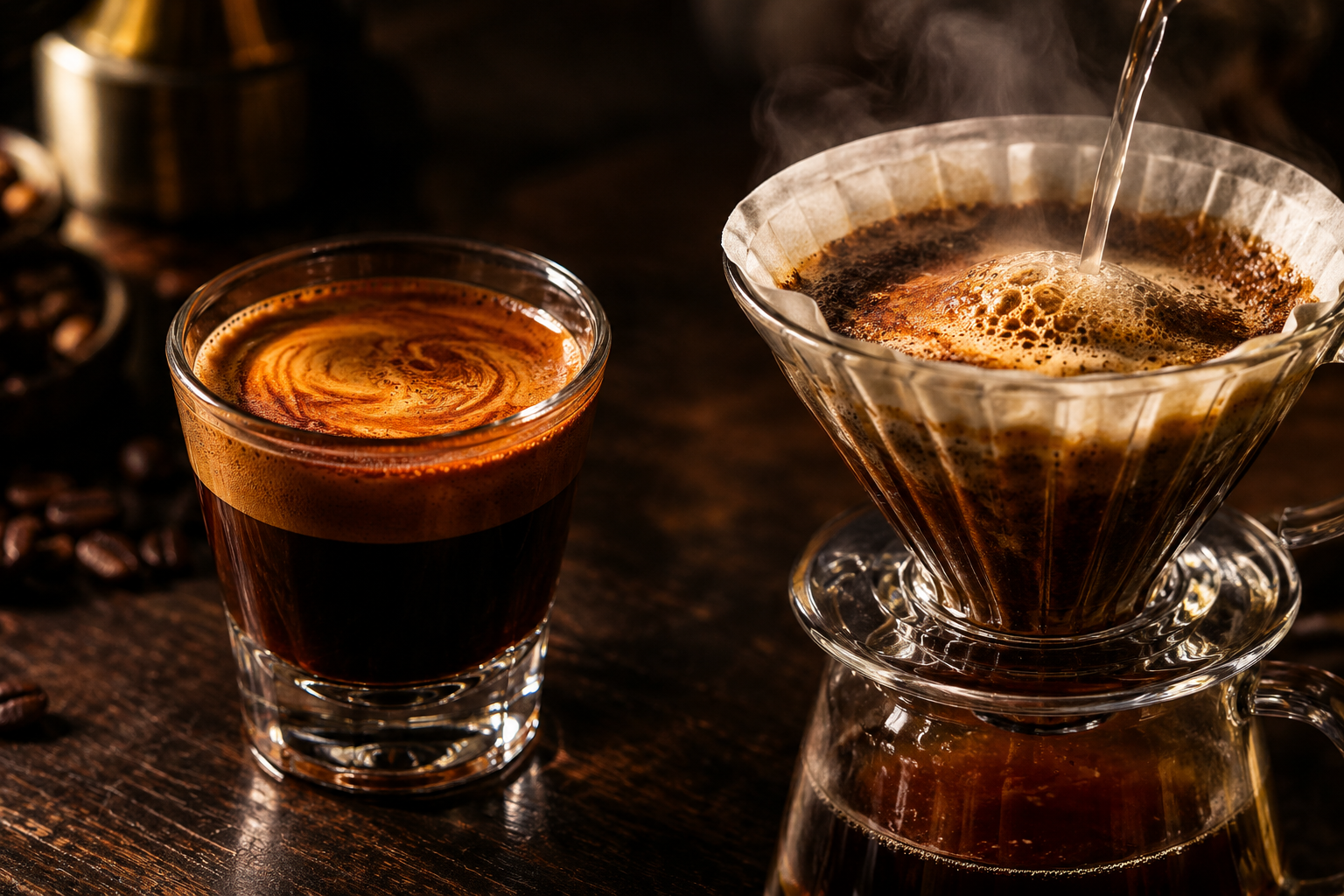
So how much caffeine is in a double espresso compared to how much caffeine is in a cup of coffee? They land close together, with the double shot sometimes edging ahead once you account for a strong drip brew. That makes drip coffee vs espresso less of a caffeine contest and more a question of format: small and fast, or large and paced out.
Drip coffee caffeine content also shifts with the roast. Contrary to a popular myth, darker roasts do not have less caffeine by weight; roasting affects flavor compounds far more than caffeine content. Bean variety matters more: robusta beans carry roughly twice the caffeine of arabica beans, so a robusta-heavy blend changes the math regardless of brew method.
If you want exact shot-to-cup conversions, see how many espresso shots equal a cup of coffee caffeine.
Why does espresso taste different from drip coffee
Espresso tastes different because pressure extracts more oil, sugar, and solid particulate into a small volume, producing crema and a syrupy body that drip coffee never develops. Drip coffee's longer, gentler extraction pulls flavor more evenly across a larger water volume, giving a lighter body and more separated tasting notes.
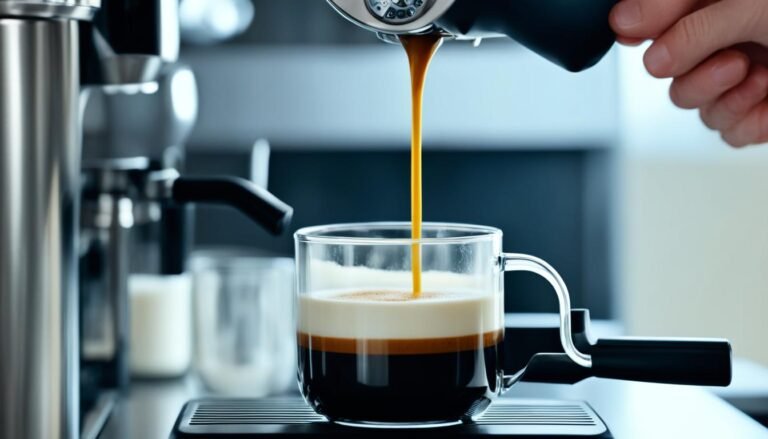
Crema is the tan foam on top of a fresh shot, formed by CO2 gas trapped in tiny bubbles by the pressurized water. It carries aroma compounds and adds a slightly bitter, toasted layer that some drinkers love and others find heavy.
Extraction, the process of pulling flavor compounds out of ground coffee into water, behaves differently under pressure versus gravity:
- Espresso pulls oils and fine particulate along with dissolved solids, creating a thicker mouthfeel and concentrated sweetness or bitterness depending on the shot's pull time.
- Drip coffee filters most oils and particulate through paper, leaving a cleaner, lighter cup where individual tasting notes such as citrus, floral, or cocoa (as roasters commonly list on packaging) come through more distinctly.
- Edge case: a badly pulled espresso shot (too fast, under 20 seconds) tastes sour and thin. A badly brewed drip coffee (water too cool, under 195°F) tastes flat and underdeveloped. Same principle, different failure mode.
This is also why an espresso vs coffee tasting side by side surprises new drinkers: it isn't a stronger version of the same flavor, it's a different extraction profile from the same beans.
Which one is better for you, health wise?
Neither drink is clearly healthier across the board. The health difference comes down to filtration, serving size, and how much you drink in a day, not the drink category itself.
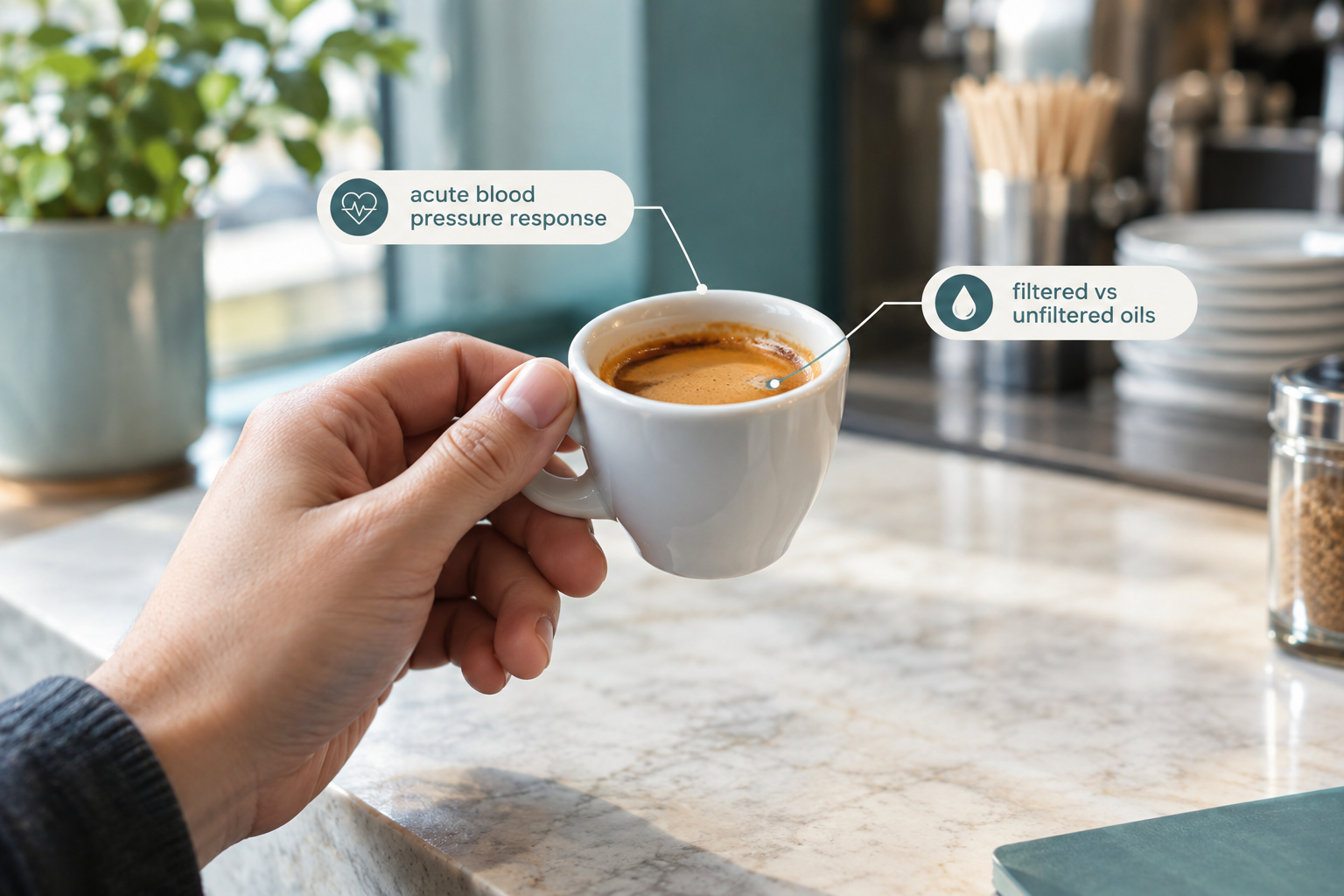
Filtered drip coffee removes more of the oil-based compounds cafestol and kahweol than an espresso shot does, because paper filters trap those diterpenes while espresso's metal filter basket lets more through. Research from Chalmers University examined how brewing method changes the levels of these compounds passed into the cup, and separate research has linked higher intake of unfiltered coffee oils to modest increases in serum cholesterol. If cholesterol is a personal concern, filtered drip coffee gives you a small, identifiable advantage over espresso on that specific measure.
On blood pressure, research examining acute cardiovascular response found that espresso consumption can produce a short-term rise in blood pressure and arterial stiffness in some study participants, an effect that appeared more pronounced in occasional drinkers than in habitual daily drinkers. That points to tolerance building over regular use rather than a permanent risk from a single cup.
Broader cardiovascular research on coffee drinking patterns, including recent analysis published in the European Heart Journal, has associated moderate coffee consumption with favorable cardiovascular outcomes rather than harm in most healthy adults. Separate 2024 research examined coffee intake against biological aging markers and found associations worth further study, though the authors were clear that association is not the same as proof of cause.
- Choose drip coffee if cholesterol management is a specific concern, since filtration removes more of the relevant oils.
- Choose either for general cardiovascular health, since the current evidence favors moderate coffee drinking overall rather than picking sides between brewing methods.
- Limitation: none of this research supports unlimited intake. Moderate is typically defined in these studies as roughly 3 to 5 cups a day of standard strength coffee, not high-dose energy-drink territory.
Read the full comparison in is espresso better for you than coffee.
Can I make espresso at home without a machine?
You can get close to espresso without a dedicated machine using a moka pot or a manual device like an Aeropress with a fine grind, though neither reaches the full 9 bars of pressure a pump-driven machine produces. The result is a strong, concentrated cup, just not technically espresso by the strict definition.
- Moka pot: heats water in a lower chamber, forcing steam pressure up through packed grounds. It reaches roughly 1 to 1.5 bars, far below true espresso pressure, but produces a strong, dense shot close in character.
- Aeropress: a manual plunger method using a fine grind and short steep, capable of a concentrated "espresso-style" shot when brewed with less water.
- Stovetop or manual lever devices: some manual lever espresso makers do reach closer to real pressure ranges, at a higher price and with more technique required.
Decision rule: if you want a genuine crema layer and true espresso texture, budget for a machine. If you want espresso-strength flavor for an Americano or a milk drink at home without the counter space or cost, a moka pot or Aeropress gets you most of the way there. Full method notes are in can you make espresso with regular coffee without machine.
How long does it take to make drip coffee vs espresso?
Espresso is faster per drink: about 25 to 30 seconds to pull a shot once the machine is heated and the grinder is dialed in. Drip coffee takes longer per batch, typically 4 to 6 minutes for the water to pass through the grounds, though it produces more cups at once.
The full time cost looks different once you count setup:
- Espresso: machine warm-up (several minutes if cold), grinding, dosing, tamping, then a 25 to 30 second pull. Fast per cup once the machine is hot, but each shot needs individual attention.
- Drip coffee: grinding and loading take a minute or two, then the machine runs unattended for 4 to 6 minutes and can produce 4 to 12 cups in that single cycle.
Practical example: making espresso for four people means four separate pulls and roughly four separate grind-and-tamp cycles. Making drip coffee for four people means one load and one brew cycle. For a household serving multiple people fast in the morning, drip coffee vs espresso often comes down to this batching difference more than raw speed per cup.
What's the best coffee maker for drip coffee?
The best drip coffee maker for most home drinkers is one with a showerhead that saturates the entire grounds bed evenly and a heating element that holds water between 195°F and 205°F through the whole brew, the temperature range the Specialty Coffee Association identifies as ideal for extraction.
Look for these specific features rather than brand name alone:
- Even saturation: a pulsing or rotating showerhead avoids channeling, where water finds one path and leaves dry pockets of grounds.
- Temperature stability: cheaper machines dip below 195°F mid-brew, leaving coffee under-extracted and flat.
- Brew basket size and filter compatibility: confirm it takes standard flat-bottom or cone filters before buying replacements.
- Thermal carafe vs hot plate: a thermal carafe holds heat without cooking the coffee on a hot plate, which prevents the burnt flavor that develops after 30 minutes on some basic machines.
If you already lean toward manual pour-over control instead of an automatic drip machine, see is drip coffee healthier than pour over for how the two compare on filtration and flavor.
Why is espresso so expensive compared to drip coffee?
Espresso costs more because it needs more expensive equipment, more skilled labor per drink, and more precise, freshly ground coffee for each single serving. A cafe espresso machine holding stable pressure and temperature costs far more to build and maintain than a drip brewer, and that cost shows up in the price of every cup.
The specific cost drivers:
- Equipment: commercial espresso machines with dual boilers and precise pressure regulation cost thousands of dollars, versus a few hundred for a commercial drip brewer.
- Labor per drink: pulling a shot, steaming milk, and building a drink takes a trained barista 1 to 3 minutes of hands-on attention. A drip brewer runs unattended for a whole pot.
- Bean freshness demands: espresso is far more sensitive to stale grounds and inconsistent grind size than drip coffee, which pushes cafes toward more frequent, smaller-batch grinding.
- Smaller serving size, same overhead: a $4 to $5 espresso drink uses less coffee by weight than a $3 drip coffee, but carries the same rent, labor, and equipment cost per transaction.
That combination is why home espresso setups also carry sticker shock. The machine, grinder, and tamping accessories add up fast compared to a basic drip machine and a bag of pre-ground coffee.
Can you make drip coffee with an espresso machine?
Not directly, and not well. Espresso machines are built to force water through a small, tightly packed puck of fine grounds under high pressure for a short time; they are not designed to slowly filter a large volume of water through a coarser bed the way a drip machine does.
Some espresso machines include a hot water spout meant for Americanos or tea, and you could theoretically pour that hot water over grounds in a manual dripper to improvise a pour-over. But you would be using the machine's water heater, not its brewing mechanism, and the result depends entirely on your manual pour-over technique rather than anything the espresso machine itself is doing.
Bottom line: buy the machine that matches the drink you actually want most days. If you want both espresso drinks and full mugs of drip coffee regularly, plan for two separate brewing tools rather than expecting one machine to do both jobs well.
Which coffee should I drink if I want more energy?
Drip coffee usually delivers more total caffeine per serving, so it's the better choice if the goal is sustained energy over a longer period. Espresso delivers caffeine faster in a smaller volume, which suits a quick, short-lived boost rather than a long stretch of focus.
- Choose drip coffee for a morning where you want caffeine spread across 20 to 30 minutes of sipping, with a higher total dose by the time you finish the mug.
- Choose a double espresso for a fast hit before a short task, like a workout or a quick meeting, since the caffeine hits your system quickly in a small volume.
- Drip coffee vs Americano matters here too: an Americano is espresso diluted with hot water, so its caffeine content matches the shots used to build it, not the larger cup size. A 12 ounce Americano built on two shots carries roughly the same caffeine as those two shots, not a full 12 ounces of drip-strength coffee.
For shot-to-cup math on this exact question, see how much caffeine is in an espresso shot compared to coffee.
Does espresso have more acidity than drip coffee?
Espresso often tastes less acidic than drip coffee, even though both drinks contain similar acid compounds from the same beans. The higher body and crema in espresso mask perceived acidity, while drip coffee's lighter body lets sharper, brighter acid notes stand out more clearly on the tongue.
This is a perception effect more than a chemical one. Roast level changes actual acid content more than brew method does: lighter roasts retain more chlorogenic acid and taste brighter regardless of whether they're pulled as espresso or brewed as drip coffee. If stomach sensitivity to acidity is the concern, a darker roast brewed either way will usually feel gentler than a light roast brewed either way.
What's the cheapest way to get into espresso?
The cheapest real path into espresso is a manual moka pot or an Aeropress with a fine grind, both well under $50, rather than a pump-driven machine that starts closer to $150 for anything reliable.
Budget order, cheapest to most capable:
- Aeropress ($30 to $40): manual, fast, produces a strong, espresso-style concentrate with no electricity.
- Moka pot ($20 to $60 depending on size): stovetop pressure brewing, strong flavor, no crema, no electricity.
- Entry-level pump espresso machine ($150 to $300): real 9-bar pressure, basic steam wand, requires a separate grinder for good results.
- Semi-automatic machine with built-in grinder ($300 to $600): removes the guesswork of dialing in a separate grinder.
Common mistake: buying a cheap espresso machine and skipping the grinder. Pre-ground "espresso roast" coffee from the grocery store is rarely fine enough or fresh enough to pull a real shot, and the machine gets blamed for a grind problem. If you're ready to spend real money on a machine, compare models first in the espresso machine buying guide before you check the current price on any single unit.
Caffeine estimator
See the drip coffee vs espresso math for your own routine.
Drip Coffee vs Espresso Caffeine Estimator
Estimates use ~95mg per 8oz drip cup and ~63mg per 1oz espresso shot, common industry averages. Actual caffeine varies by bean, roast, and brew ratio.
FAQ
Is espresso stronger than coffee? Espresso is stronger by concentration, meaning more caffeine and flavor compound per ounce. Drip coffee is usually stronger by total dose, since a full mug contains more liquid and often more total caffeine than a single shot.
What's the difference between drip coffee and espresso in one sentence? Espresso forces hot water through fine grounds under pressure in seconds; drip coffee lets gravity pull hot water through coarser grounds over several minutes.
Is a double espresso more caffeine than a cup of coffee? It's close. A double espresso runs roughly 125 to 140 milligrams of caffeine, while an 8 ounce drip coffee runs roughly 95 milligrams, though strong drip brews can match or exceed a double shot.
Does drip coffee vs Americano taste the same? No. An Americano is espresso diluted with hot water, keeping espresso's concentrated flavor and crema residue, while drip coffee is brewed slowly with grounds the entire time, giving a different, less syrupy body.
Are espresso beans different from regular coffee beans? Usually not the bean itself. Espresso beans vs coffee beans mostly describes roast level and marketing, since roasters label some bags for espresso because a slightly darker roast performs well under pressure, but most beans work for either method.
Can I use my drip coffee grounds to make espresso? Not well. Drip coffee grind size is too coarse for an espresso machine's short brew time, producing a thin, weak, under-extracted shot. Espresso needs a much finer grind ground specifically for the machine.
Conclusion
Drip coffee vs espresso isn't a contest with one winner. It's a choice between two brewing mechanics that turn the same beans into two genuinely different drinks. Espresso rewards precision: fine grind, short time, high pressure, a small concentrated payoff. Drip coffee rewards patience: coarser grind, longer contact, a larger, gentler cup.
If your morning needs speed and a strong hit in two sips, espresso earns its counter space. If you want a full mug you can sip while you get ready, drip coffee wins on both volume and, most days, total caffeine. Either way, the grind size, water temperature, and roast date matter more to your final cup than the machine's price tag. Better coffee starts with better answers, and now you have the ones that actually explain your cup.
Keep Exploring Coffee Rank IQ
- Coffee Rank IQ home: reviews, brewing guides, and coffee science
- Best Manual Coffee Grinder for Pour Over, Espresso, and Travel
- Best Coffee Scale for Pour Over and Espresso…Timer Included
- Best Medium Roast Coffee for Drip, Pour Over, and Espresso
- Best Drip Coffee Maker: 7 Brewers Worth the Counter Space
References
- academic.oup.com/eurheartj/article/46/36/3546/8193215
- link.springer.com/article/10.1007/s11357-024-01262-5?error=cookies_not_supported&code=f242dd1d-db85-4f10-ad3e-32b8cecb0cf1
- link.springer.com/article/10.1007/s11357-024-01262-5?error=cookies_not_supported&code=a03d52c4-95c3-493b-aa6a-375e995fece7
- coffee.foodnutrify.com/guides/espresso-vs-coffee
- pmc.ncbi.nlm.nih.gov/articles/PMC10262944
- pmc.ncbi.nlm.nih.gov/articles/PMC4422699
- coladakulture.co/espresso-bar-vs-drip-coffee
- research.chalmers.se/publication/545621/file/545621_Fulltext.pdf