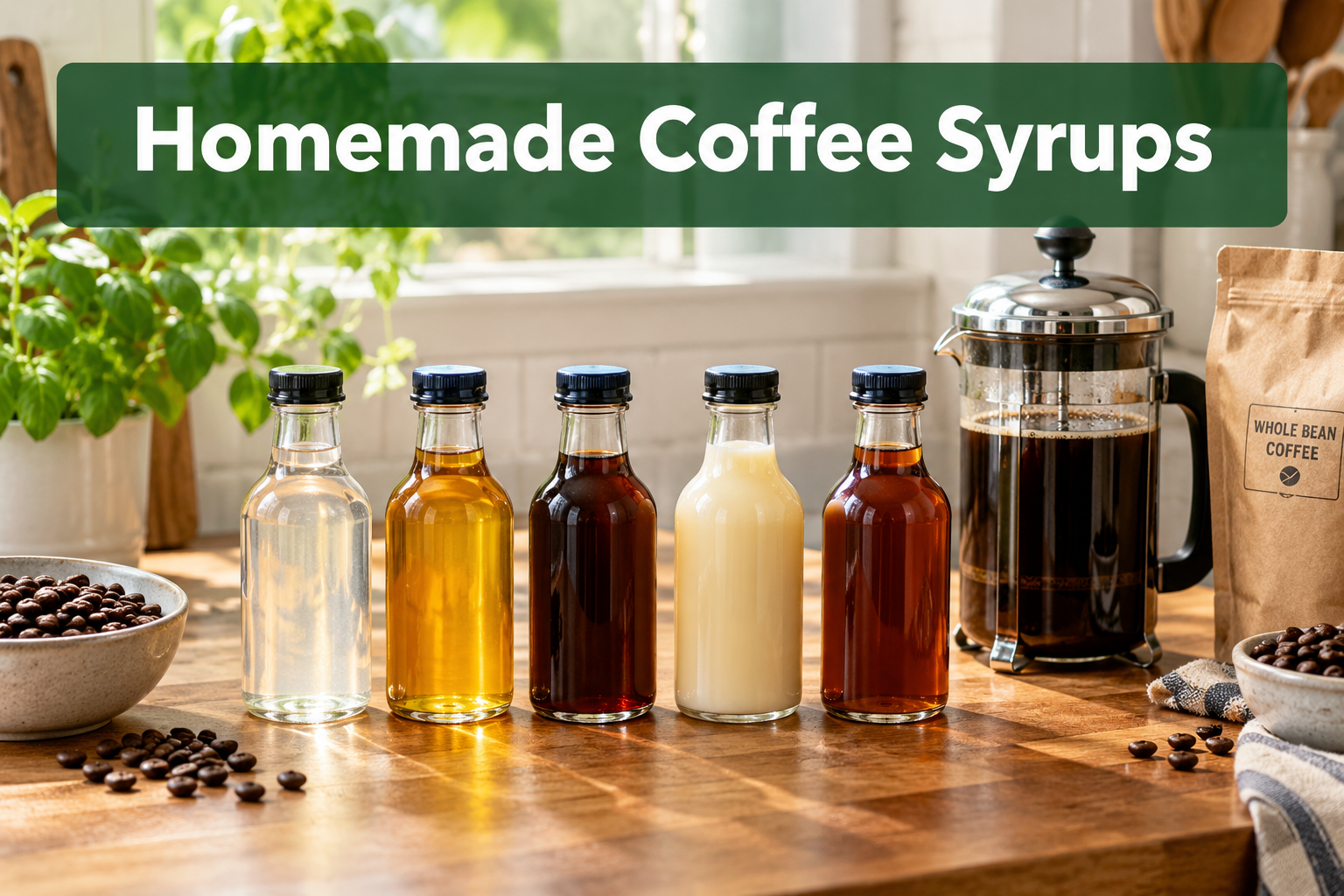
Homemade Coffee Syrups: 6 Recipes and How Long They Keep
Quick answer
Homemade coffee syrups last anywhere from 1 to 8 weeks in the fridge, depending on the sugar ratio and what you add to the base. A plain 1:1 simple syrup holds for about 2 to 4 weeks, a rich 2:1 syrup can stretch past 6 weeks, and anything with dairy, fruit, or fresh flowers should be used within 1 to 2 weeks. Sugar concentration, not the flavor itself, is the biggest factor in how long a coffee syrup recipe stays safe to drink.
Key takeaways
- Classic 1:1 simple syrup: 2 to 4 weeks refrigerated, sometimes close to a month if the jar stayed sterile.
- Rich 2:1 simple syrup: 6 to 8 weeks refrigerated, thanks to a higher sugar concentration that resists mold and bacteria.
- Vanilla, hazelnut, and caramel syrup made without dairy: about 2 to 3 weeks in the fridge.
- Coffee-infused or espresso syrups: 1 to 3 weeks, since brewed coffee adds moisture and organic material that spoils faster than sugar alone.
- Fruit, floral, or cream-based syrups have the shortest life, often just 1 to 2 weeks.
- A clean glass bottle, a tight lid, and cold storage matter more than any single ingredient.
- Freezing extends most homemade coffee syrups by several months, though texture can change slightly after thawing.
- A splash of vodka or bourbon (about 1 tablespoon per cup of syrup) can add a few extra weeks of shelf life for the curious home bartender-barista.
- Cloudy liquid, a sour smell, or fizzing means the syrup should go in the trash, not the coffee.
Homemade coffee syrups: how they work and why they're worth making
Homemade coffee syrups are just sugar dissolved in water (or another liquid) at a controlled ratio, then flavored and cooled for pouring into coffee, lattes, or cold brew. The sugar acts as a preservative and a sweetener at the same time, which is why the ratio you choose changes both the taste and the shelf life.
Store shelves are full of flavored syrup bottles that promise vanilla, caramel, or hazelnut in a squeeze. Most of them work fine. But a bottle of commercial syrup usually contains stabilizers, citric acid, and sometimes artificial color to keep the flavor consistent for months at room temperature. Homemade coffee syrups skip all of that. You control the sugar, the water, and the flavoring, which means you also control what actually ends up in your cup.
That control comes with a tradeoff. A homemade coffee syrup recipe will never sit unrefrigerated on a counter for six months the way a bottle from the grocery store can. It needs a fridge, a clean container, and a realistic use-by date. For a home coffee drinker who already dials in grind size and brew ratio for a better cup, that same attention to detail applies to syrup.
What's the difference between homemade and store-bought coffee syrups?
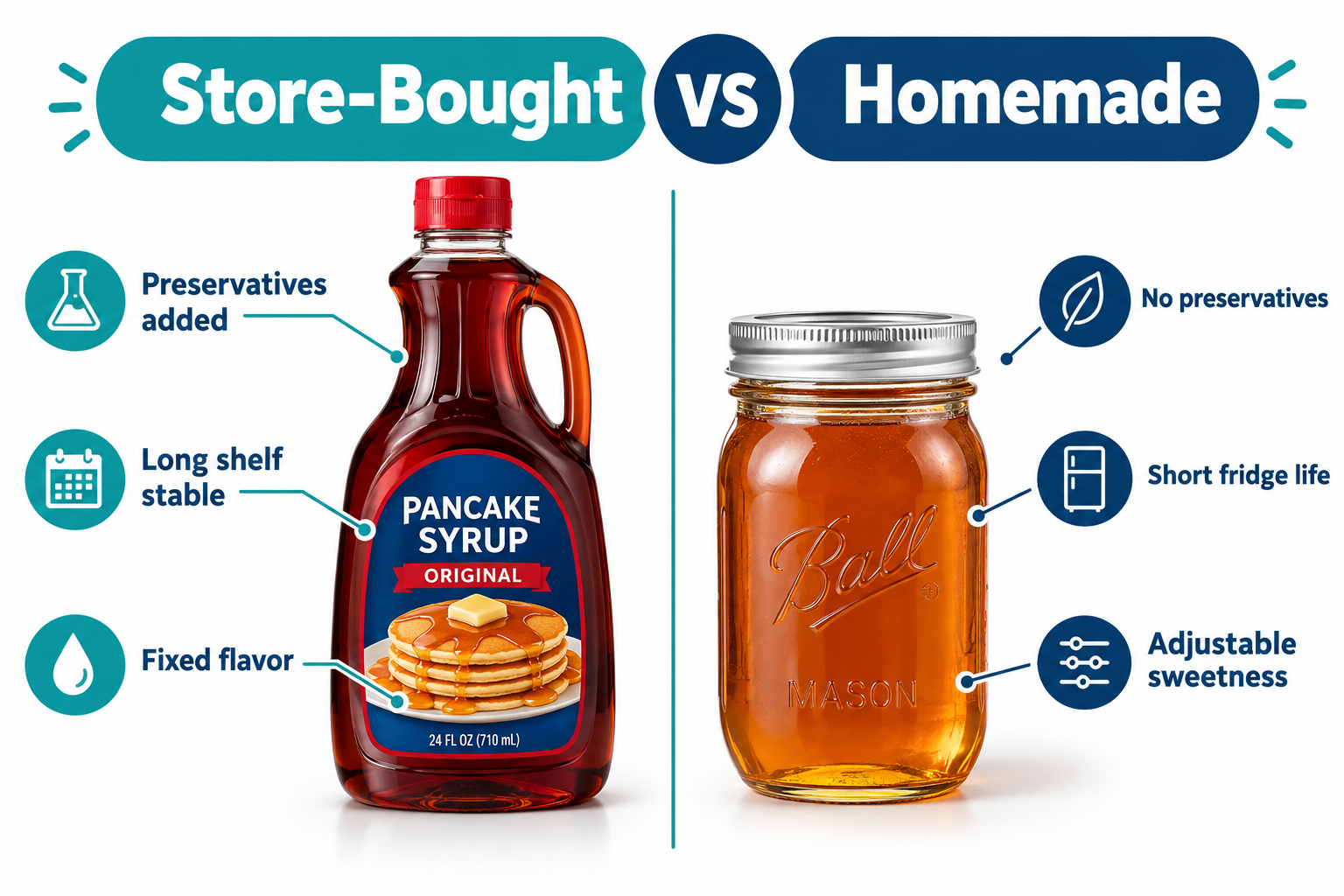
The main difference is preservatives and sugar concentration. Store-bought syrups use added stabilizers and a very high sugar ratio to sit at room temperature for months, while homemade coffee syrups rely on sugar alone and need refrigeration within days.
Commercial syrup brands like Torani and Monin build their formulas around shelf stability first, flavor consistency second. That's a fair engineering choice for a coffee shop pouring the same bottle for weeks. A home cook making a small batch does not need that kind of shelf life, and skipping the preservatives usually means a cleaner, less syrupy-sweet taste. The tradeoff: homemade syrup needs a fridge and a shorter mental calendar.
| Feature | Store-bought syrup | Homemade coffee syrup |
|---|---|---|
| Shelf life unopened | 12 to 24 months, room temperature | Not applicable, made fresh |
| Shelf life opened | 2 to 6 months, refrigerated | 1 to 8 weeks, refrigerated |
| Preservatives | Usually citric acid or potassium sorbate | None, unless you add one |
| Flavor control | Fixed recipe | Fully adjustable |
| Cost per batch | Higher per ounce | Lower, using pantry sugar |
Choose homemade if you want to control sweetness and skip additives. Choose store-bought if you want a syrup that survives a cross-country move in a cardboard box.
What ratio of sugar to water should you use for coffee syrup?
The two standard ratios are 1:1 (equal parts sugar and water by volume) for a lighter, less sweet syrup, and 2:1 (double the sugar to water) for a thicker, longer-lasting syrup. Most coffee syrup recipes for lattes and cold brew use the 2:1 "rich" version because it pours better over ice and lasts longer in the fridge.
Here's why the ratio changes shelf life. Sugar binds water molecules, making them unavailable for mold and bacteria to use for growth. A 2:1 syrup has less free water per teaspoon than a 1:1 syrup, so it resists spoilage longer. This is the same principle that keeps jam and honey stable for months.
Quick decision rule:
- Use 1:1 if you want a lighter sweetness for iced drinks and plan to use the batch within two weeks.
- Use 2:1 if you're making a bigger batch to last a month or want a thicker pour for espresso-based drinks.
6 homemade coffee syrup recipes and how long each one keeps
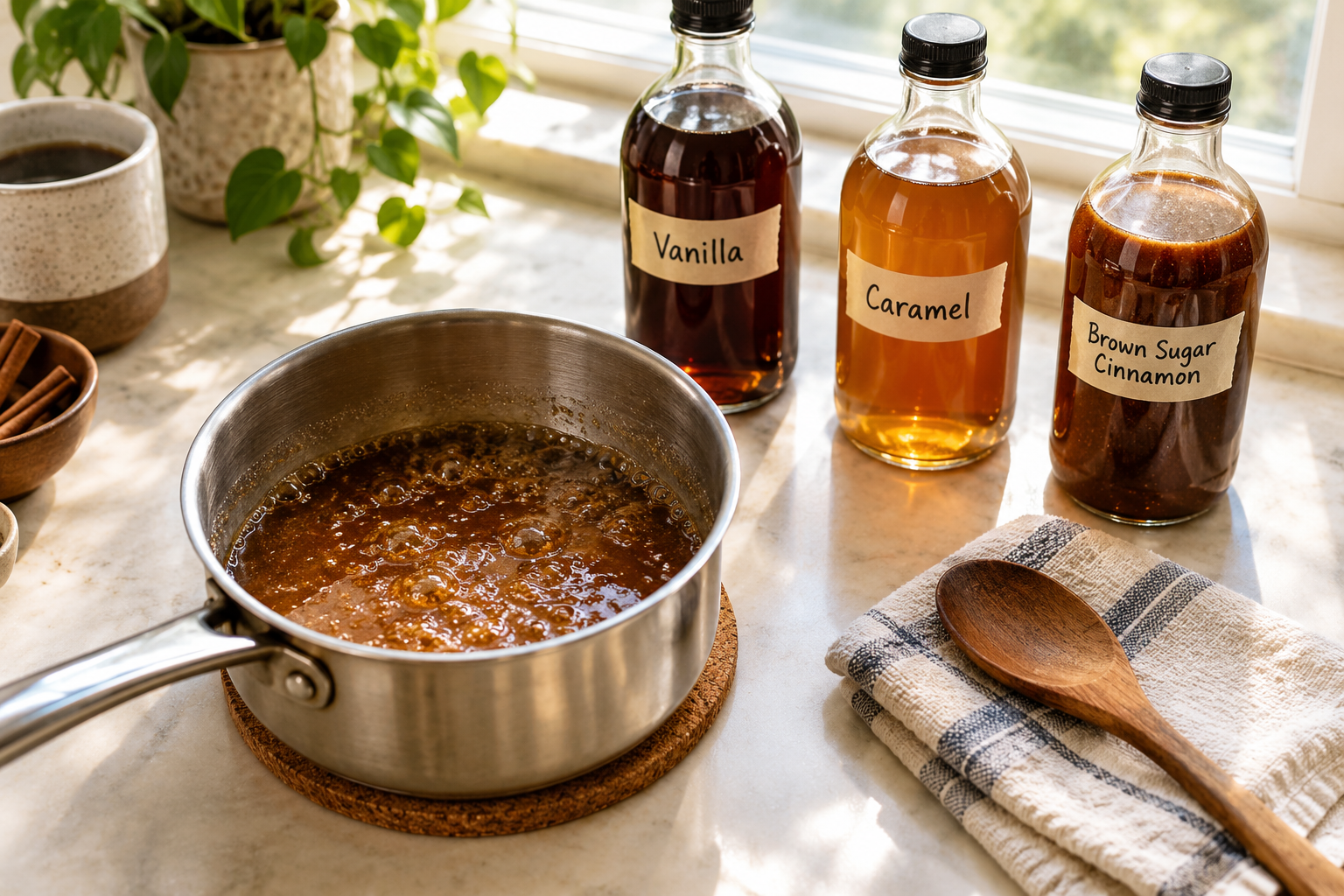
These six recipes cover the most requested flavors for home coffee drinkers, from a plain sweetener to a bakery-style spiced pour. Each one uses stovetop heat, basic pantry ingredients, and keeps for a specific window once bottled and chilled.
1. Classic simple syrup (1:1)
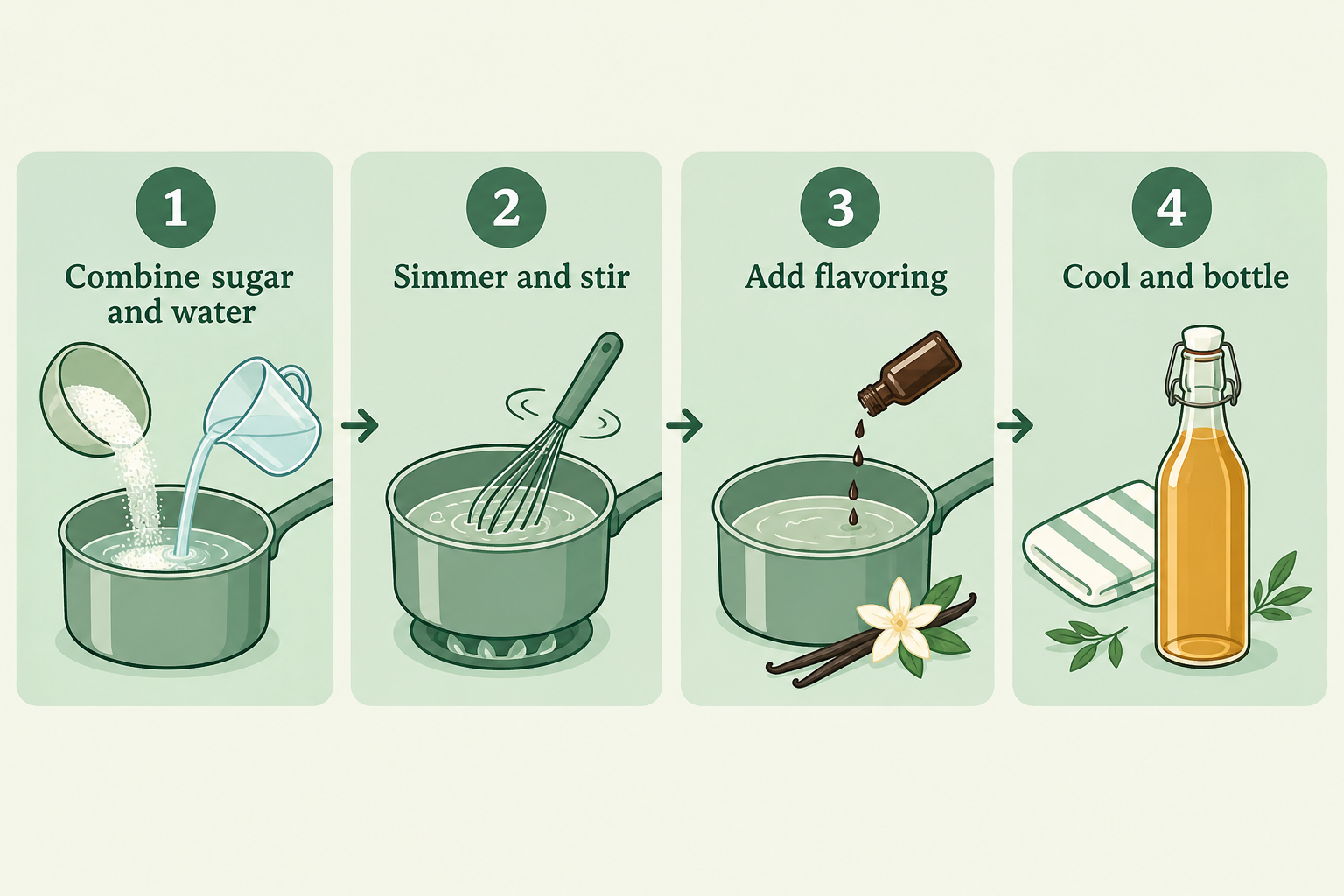
Ratio: 1 cup sugar to 1 cup water. Method: Warm the water, stir in sugar until dissolved, no need to fully boil. Cool and bottle. Shelf life: 2 to 4 weeks refrigerated, sometimes close to a month with a very clean jar.
This is the easiest homemade coffee syrup recipe to start with. It sweetens without adding any flavor, so it's the base for iced coffee, cold brew, and any drink where you just want less bitterness without cream.
2. Simple brown sugar syrup recipe (2:1, rich)
Ratio: 2 cups packed brown sugar to 1 cup water. Method: Simmer gently, stirring until fully dissolved, about 3 to 5 minutes. Cool completely before bottling. Shelf life: 6 to 8 weeks refrigerated.
Brown sugar adds a light molasses note that plain white sugar doesn't have, which pairs well with dark roast espresso. The higher sugar concentration is also why this batch outlasts the classic version by weeks.
3. Homemade vanilla syrup for coffee
Ratio: 1 cup sugar, 1 cup water, 1 whole vanilla bean (split) or 2 teaspoons pure vanilla extract. Method: Simmer sugar and water, add the split vanilla bean, steep off heat for 20 minutes, strain, bottle. Shelf life: 2 to 3 weeks refrigerated.
Vanilla is the most requested flavor for lattes for a reason: it works in hot and cold drinks without fighting the coffee's natural flavor. Using real vanilla bean instead of extract gives a rounder, less alcohol-forward taste, based on how the flavor develops during steeping.
4. Caramel syrup for iced coffee and lattes
Ratio: 1 cup sugar, 1/4 cup water, 1/2 cup hot water (added after caramelizing), pinch of salt. Method: Melt sugar dry in a saucepan until deep amber, carefully add hot water (it will steam and bubble), stir until smooth, cool. Shelf life: 2 to 3 weeks refrigerated.
This is the trickiest of the six because dry caramelizing sugar can burn fast. Watch the color, not the clock. The moment it turns deep amber, pull it off the heat and add the water. This caramel syrup for iced coffee works especially well poured over ice before adding cold brew, since the dense syrup sinks and creates a layered look.
5. Homemade hazelnut syrup
Ratio: 1 cup sugar, 1 cup water, 1/4 cup toasted chopped hazelnuts, 1/2 teaspoon vanilla extract. Method: Simmer sugar, water, and hazelnuts for 10 minutes, steep off heat for 30 minutes, strain through a fine sieve or cheesecloth, bottle. Shelf life: 2 to 3 weeks refrigerated.
Straining matters here. Skip it and small nut particles will settle at the bottom of the bottle and clog a pour spout.
6. Brown sugar cinnamon coffee syrup recipe
Ratio: 1 cup packed brown sugar, 1 cup water, 2 cinnamon sticks, 1/4 teaspoon ground nutmeg (optional). Method: Simmer sugar, water, and cinnamon sticks for 8 minutes, remove sticks, cool, bottle. Shelf life: 2 to 3 weeks refrigerated.
This one tastes like a spiced bakery drink without the seasonal price markup. It works in both hot lattes and iced coffee, and the cinnamon sticks can steep a second time in a fresh batch if you want to stretch the spice cost.
| Syrup | Ratio | Fridge life |
|---|---|---|
| Classic simple syrup | 1:1 | 2 to 4 weeks |
| Brown sugar rich syrup | 2:1 | 6 to 8 weeks |
| Vanilla syrup | 1:1 + flavor | 2 to 3 weeks |
| Caramel syrup | Dry caramelized | 2 to 3 weeks |
| Hazelnut syrup | 1:1 + nuts | 2 to 3 weeks |
| Brown sugar cinnamon syrup | 1:1 + spice | 2 to 3 weeks |
For more drink ideas that pair well with these bottles, our guide to the top 10 coffee recipes at home covers how to layer syrups into lattes and iced drinks step by step.
How long do homemade coffee syrups last in the fridge?
Most homemade coffee syrups last between 1 and 8 weeks in the fridge, with the exact number depending on sugar concentration and added ingredients. A plain 2:1 rich syrup sits at the long end near 6 to 8 weeks, while anything with dairy, fresh fruit, or brewed coffee sits at the short end near 1 to 2 weeks.
Coffee-based and espresso syrups specifically fall in the 1 to 3 week range, since brewed coffee introduces extra moisture and organic compounds that support faster spoilage than a plain sugar solution. That's a shorter window than the flavor-only syrups above, so if you're making a coffee-flavored simple syrup for iced lattes, treat it like fresh dairy rather than pantry sugar.
Common mistake: assuming every homemade coffee syrup behaves the same way. A rich brown sugar syrup and a coffee-infused syrup are not on the same clock, even if they sit in the same fridge door.
Edge case: syrups stored in a warm fridge (above 40°F) or one that gets opened constantly will spoil faster than these ranges suggest, regardless of the recipe.
Can you freeze homemade coffee syrup?
Yes. Freezing homemade coffee syrup in an airtight container or ice cube tray extends its life by several months, well past the fridge-only window. The sugar content is high enough that most syrups won't freeze completely solid, so they thaw quickly.
A few practical notes:
- Use ice cube trays for portioned syrup you can drop straight into iced coffee.
- Leave a little headspace in any sealed container, since liquid expands slightly as it cools.
- Expect a small texture change after thawing. Give it a stir before using.
- Dairy-based or cream syrups don't freeze well, since the fat and water separate on thawing.
Decision rule: freeze a rich 2:1 syrup or any dairy-free flavored syrup if you know you won't finish it within the fridge window. Skip freezing for cream-based versions and just make a smaller batch instead.
Do homemade coffee syrups need preservatives?
No, homemade coffee syrups don't need added preservatives if you use them within their normal fridge window and store them properly. The sugar itself acts as a natural preservative, and a clean bottle plus cold storage covers most home use cases.
That said, a shelf stable coffee syrup recipe is possible with two adjustments: raise the sugar ratio to 2:1 or higher, and add a small amount of high-proof alcohol (about 1 tablespoon of vodka or bourbon per cup of finished syrup). The alcohol lowers water activity further and adds a few extra weeks of safe storage, though it will add a faint flavor note. This is a home kitchen approach, not a commercial-grade preservation method, so it still belongs in the fridge rather than on a room-temperature shelf.
How to store homemade coffee syrup to keep it fresh longer
Store homemade coffee syrup in a clean glass bottle with a tight lid, in the coldest part of the fridge, and always use a clean utensil or pour spout to avoid introducing bacteria. Container choice and hygiene affect shelf life as much as the recipe itself.
Practical storage checklist:
- Sterilize the bottle with boiling water or a run through the dishwasher before filling.
- Cool the syrup fully before sealing, since trapped steam creates condensation that speeds spoilage.
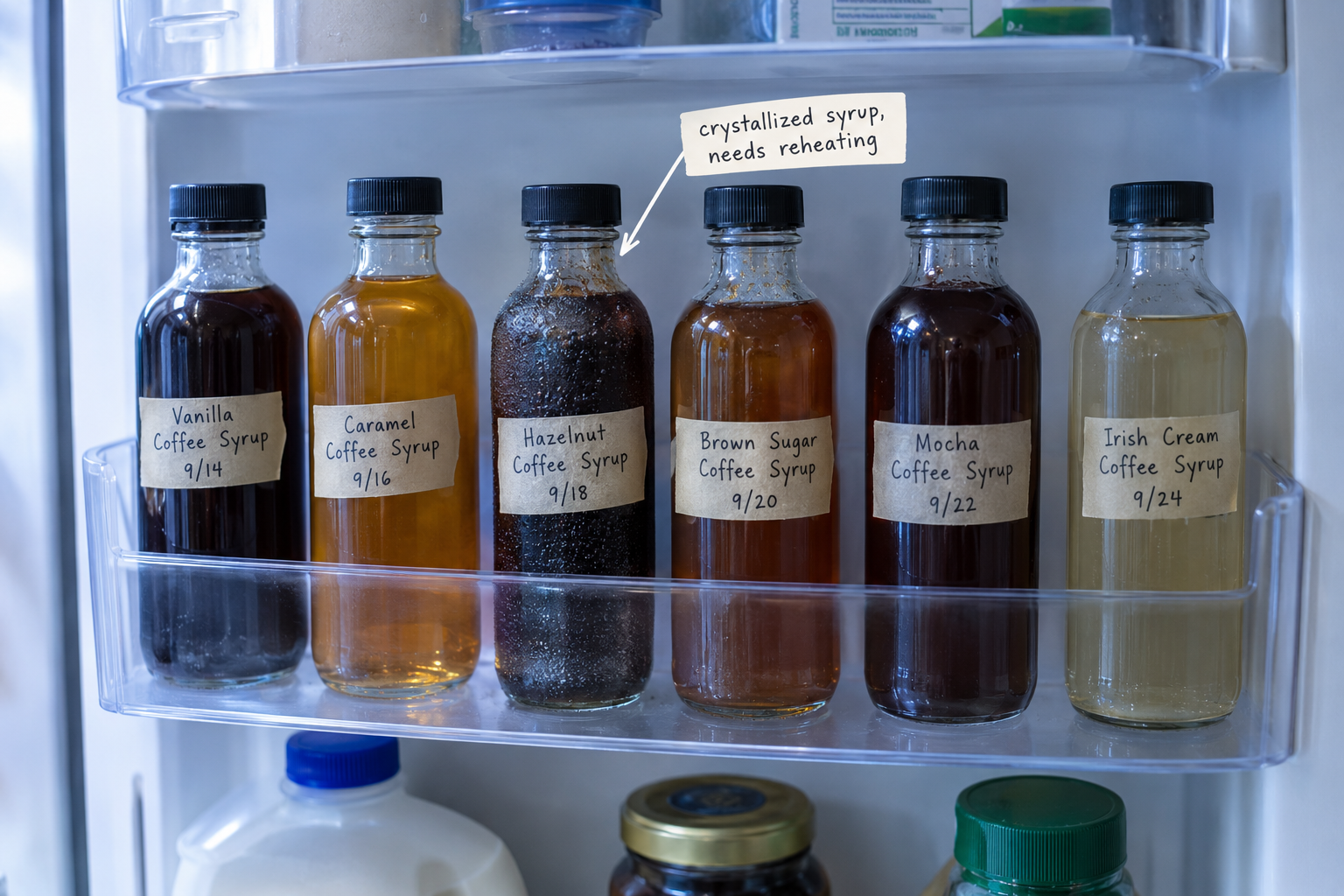
- Label the bottle with the make date. It's easy to lose track of six bottles that all look similar.
- Store in the fridge door only if your fridge keeps that shelf below 40°F; otherwise use a main shelf.
- Pour, don't dip. A spoon that touched your mouth or the counter introduces bacteria every time.
For readers building out a full home setup, our advanced coffee storage and preservation guide covers the same hygiene principles applied to beans and grounds.
Homemade coffee syrup crystallizing? Here's the fix
Crystallized syrup usually means too much sugar dissolved too fast, or sugar crystals clinging to the side of the pan during cooking. The fix is gentle reheating with a small splash of water, stirred until the crystals dissolve again.
To prevent it next time:
- Stir gently while heating, and avoid scraping down the sides of the pan once sugar starts dissolving.
- Add a small splash of lemon juice or corn syrup (about 1/2 teaspoon per cup) which interferes with crystal formation.
- Avoid disturbing the syrup once it starts simmering; let it dissolve on its own heat.
Quick example: if your brown sugar cinnamon coffee syrup recipe comes out gritty after a week in the fridge, warm the bottle in a bowl of hot water and shake gently rather than microwaving it directly, which can overheat one spot and scorch the sugar.
Can you use honey instead of sugar in coffee syrup?
Yes, honey can replace sugar in most coffee syrup recipes, though it changes both the flavor and the shelf life slightly. Honey has its own natural antibacterial properties, which can help a healthy coffee syrup stay stable, but it also carries more moisture than granulated sugar, so a honey-based syrup often needs closer attention to mold.
Practical notes for a healthier coffee syrup:
- Use a 1:1 swap of honey for sugar by volume, and warm gently rather than boiling, since high heat can dull honey's flavor.
- Expect a shorter shelf life than a 2:1 sugar syrup, closer to 1 to 2 weeks refrigerated, since honey doesn't concentrate water activity the same way granulated sugar does at high ratios.
- Maple syrup and agave work similarly if you're trying to make a homemade coffee syrup without refined sugar entirely.
Choose honey if you want a natural sweetener with a distinct flavor. Choose maple syrup if you want a milder, less floral sweetness that pairs well with brown sugar cinnamon coffee syrup recipes.
Our buyers guide to choosing the right coffee beans for your recipes covers how a bean's natural sweetness can reduce how much syrup you need in the first place.
Homemade flavored syrups for cold brew vs hot coffee
Homemade coffee syrups work in both cold brew and hot coffee, but cold brew needs a syrup that dissolves without heat, which usually means a thinner 1:1 syrup rather than a thick 2:1 version. Hot coffee can carry a thicker syrup since the heat helps it blend on contact.
Practical differences:
- Cold brew: use a 1:1 simple syrup or a syrup with extra water added, since cold liquid dissolves sugar more slowly than hot liquid.
- Hot coffee and lattes: a 2:1 rich syrup or a caramel syrup for iced coffee works fine, since the steam and heat help it mix evenly.
- Iced lattes: pour syrup into the glass first, then add coffee, so the syrup doesn't sit at the bottom unmixed.
For readers building out a full iced drink routine, the beginners guide to making perfect iced coffee walks through the pour order that keeps syrup from clumping at the bottom of the glass.
Homemade hazelnut syrup vs buying it premade
A premade hazelnut syrup from a brand like Torani or Monin will taste more consistent bottle to bottle and last months unopened, while a homemade hazelnut syrup gives a fresher, less artificially sweet flavor but only lasts about 2 to 3 weeks refrigerated.
The real tradeoff is nut flavor intensity. Homemade versions steep actual toasted hazelnuts, which gives a rounder, slightly earthy taste that most commercial syrups replicate with flavor extracts instead. If you already keep a bag of hazelnuts in the pantry, making your own costs less per batch and avoids the corn syrup base many commercial bottles use.
Choose homemade if you want real nut flavor and don't mind the shorter fridge window. Choose premade if you want a bottle that survives months in the pantry without a second thought.
If you're building out a full syrup habit alongside other coffee upgrades, check our buyers guide to the essential ingredients for top 10 coffee drink recipes for a broader list of pantry staples worth stocking.
Homemade coffee syrups shelf life lookup
Use the tool below to check the fridge life for each of the six recipes covered in this guide.
Homemade Coffee Syrup Shelf Life Lookup
Pick a syrup to see how long it keeps in the fridge.
Tip: use a sterilized glass bottle and label the make date.
FAQ
How long does homemade coffee syrup last overall? Most homemade coffee syrups last 1 to 8 weeks refrigerated. Plain sugar syrups last longest, coffee-infused and dairy syrups last shortest.
What's the easiest homemade coffee syrup recipe for a beginner? Classic 1:1 simple syrup is the easiest. It's just equal parts sugar and water, warmed until dissolved, with no flavoring steps to manage.
Can I use a coffee syrup recipe with flavored extracts instead of fresh ingredients? Yes. Extracts work well for vanilla and hazelnut and simplify the process, though fresh vanilla bean or toasted nuts usually give a rounder flavor based on how the ingredients steep in the hot syrup.
Is a shelf stable coffee syrup recipe actually possible at home? Not in the commercial sense. A 2:1 sugar ratio plus a small amount of alcohol can extend fridge life by a few weeks, but home syrups still need refrigeration, unlike store-bought bottles built with preservatives.
Do homemade coffee syrups need to be strained? Any syrup with solid pieces, like hazelnuts or cinnamon sticks, should be strained before bottling. Plain sugar syrups and extract-based flavors don't need straining.
Can you make a healthy coffee syrup with less sugar? Yes, though reducing sugar also reduces shelf life, since sugar concentration is what slows spoilage. A lower-sugar batch should be treated as a 1 to 2 week fridge item rather than a longer-lasting rich syrup.
A useful next step
Homemade coffee syrups reward a little planning more than a lot of skill. Pick one recipe from this list, make a small batch, label the bottle with the date, and use it within its window instead of guessing. Once you've got the ratio down, the rest is just flavor experiments in your own kitchen.
Better coffee starts with better answers, and sometimes that answer is as simple as sugar, water, and a clean jar.
Keep Exploring Coffee Rank IQ
- Coffee Rank IQ home: reviews, brewing guides, and coffee science
- Best Iced Coffee Maker: Brew-Over-Ice and Cold Brew Picks Compared
- Best Sugar Free Coffee Syrup: Torani, Monin, ChocZero Ranked
- Breve Coffee: The Half and Half Latte Nobody Explains
- How to Make Whipped Coffee: Dalgona in 5 Minutes
References
- www.thirstybear.com/homemade-flavored-coffee-recipes
- myhomebarista.com/guides/coffee-syrup-recipes
- drink4good.com/can-coffee-syrup-go-bad
- www.cremacanvas.com/2025/11/stop-throwing-out-your-flavored-coffee.html
- coffeenerds.co.uk/pages/how-to-make-coffee-syrup-at-home-uk
- roaffee.com/how-to-make-coffee-syrup
- eathealthy365.com/the-definitive-guide-to-simple-syrup-shelf-life-storage
- eathealthy365.com/coffee-syrup-shelf-life-does-it-go-bad
- myespressolab.com/how-long-is-coffee-syrup-good-for
- summerstirs.com/how-long-are-coffee-syrups-good-for-after-opening