Espresso Roast Isn’t What Most People Think It Is
Quick Answer
Espresso roast is not a fixed roast level or a legal category. It is a roaster's label for beans they believe hold up under high pressure extraction, and depending on the roaster, it can mean light, medium, or very dark beans. The real identity of an espresso shot comes from the brewing method (pressure, dose, and time), not from how dark the beans look in the bag.
Key Takeaways
- Espresso roast has no official definition. Any roaster can put the words on a bag, and the beans inside can range from light to very dark.
- Espresso is a brewing method, not a bean type or a color. It describes 25 to 35 ml of concentrated coffee pulled at 9 to 10 bar of pressure.
- Dark roast and espresso roast are not the same thing, even though decades of grocery store marketing trained people to think they are.
- Starbucks alone sells three different roast levels under the espresso name, including a light Blonde Espresso.
- Any bean can go into an espresso machine. Grind size, dose, and tamp matter more than the roast label printed on the bag.
- Specialty roasters now think in profiles, not colors, designing separate espresso, filter, and omni roasts for the same beans.
- The best espresso roast for beginners is usually a medium roast with a printed roast date, not the darkest bag on the shelf.
What Is Espresso Roast Coffee, Actually?
Espresso roast coffee is simply coffee that a roaster has processed with espresso brewing in mind. It is not a government standard, a specific temperature, or a single flavor. It is a recommendation printed on a bag.
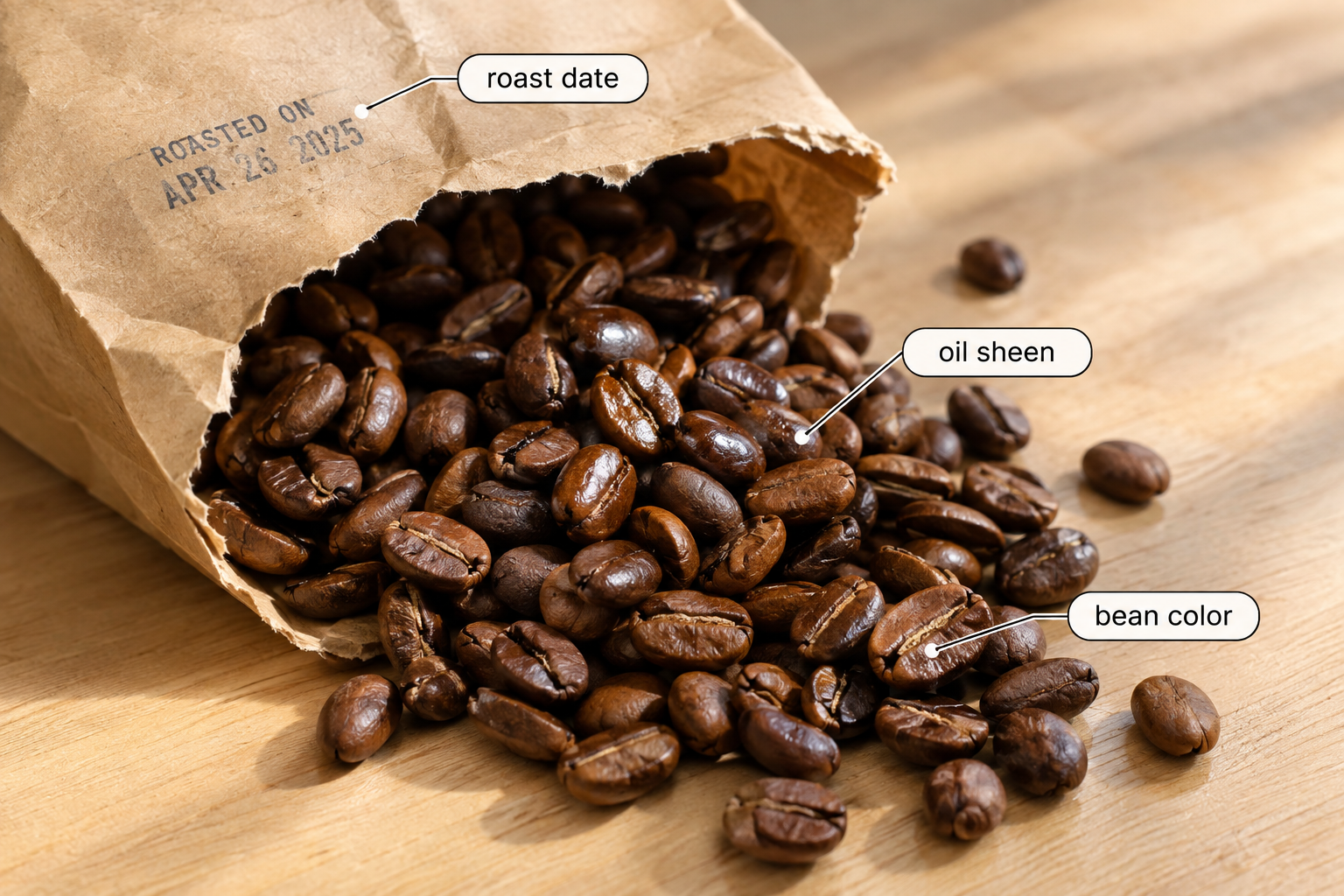
That recommendation used to mean something narrow. For most of the 20th century, "espresso roast" meant beans roasted past second crack, the point where sugars caramelize hard and the surface starts to look shiny with released oil. Coffee Review's glossary still describes this older, darker style as the traditional espresso and continental roast approach, built for lower acidity and a bittersweet, after-dinner character.
But walk into a specialty shop in 2026 and you will find espresso roast beans that look almost blonde. Third-wave roasters increasingly design what they call an "espresso profile," a roast curve built to hit specific solubility and extraction targets, and that profile can sit anywhere on the color spectrum. The bag still says espresso roast. The beans inside do not have to be dark.
If you are shopping for beans specifically to feed an espresso machine at home, the grind size and freshness matter more than the label. Our guide to what kind of coffee to use for an espresso machine breaks down what actually changes the shot.
Espresso Roast: A Roast Level, a Blend, or Just a Label?
Espresso roast is a label, not a roast level or a required blend. A roaster can apply it to a single origin bean or a blend, and to a roast anywhere from medium to very dark.
This confuses people because espresso used to be sold almost exclusively as dark, oily, blended beans in grocery stores. That history is real. But it described one common business decision, not a rule of physics. A recent LinkedIn breakdown of coffee marketing practices makes the same point directly: espresso describes the brewing method, and the roast level attached to the name is a choice the roaster makes, not a definition baked into the word.
Why do people think espresso roast means dark roast? Three reasons explain most of the confusion:
- Grocery chains standardized on dark roasts for decades because dark beans mask defects in lower grade robusta and arabica blends, and the flavor reads as "strong" to casual buyers.
- Old Italian espresso bars really did prefer darker roasts, because dark roasting reduces acidity and produces a heavier body that cuts through milk in a cappuccino.
- Marketing language never corrected the assumption. Brands kept the name "espresso roast" on dark bags for so long that the two ideas fused in most shoppers' minds.
The result is a gap between the word and the reality. Espresso roast beans today can be light, medium, or dark. The tasting notes on the bag will tell you more than the words "espresso roast" ever will.
Is Espresso Roast Darker Than Other Roasts?
Not automatically. Some espresso roasts are darker than a typical drip blend, but plenty of specialty espresso roasts sit at medium, and a small but growing number are roasted light.
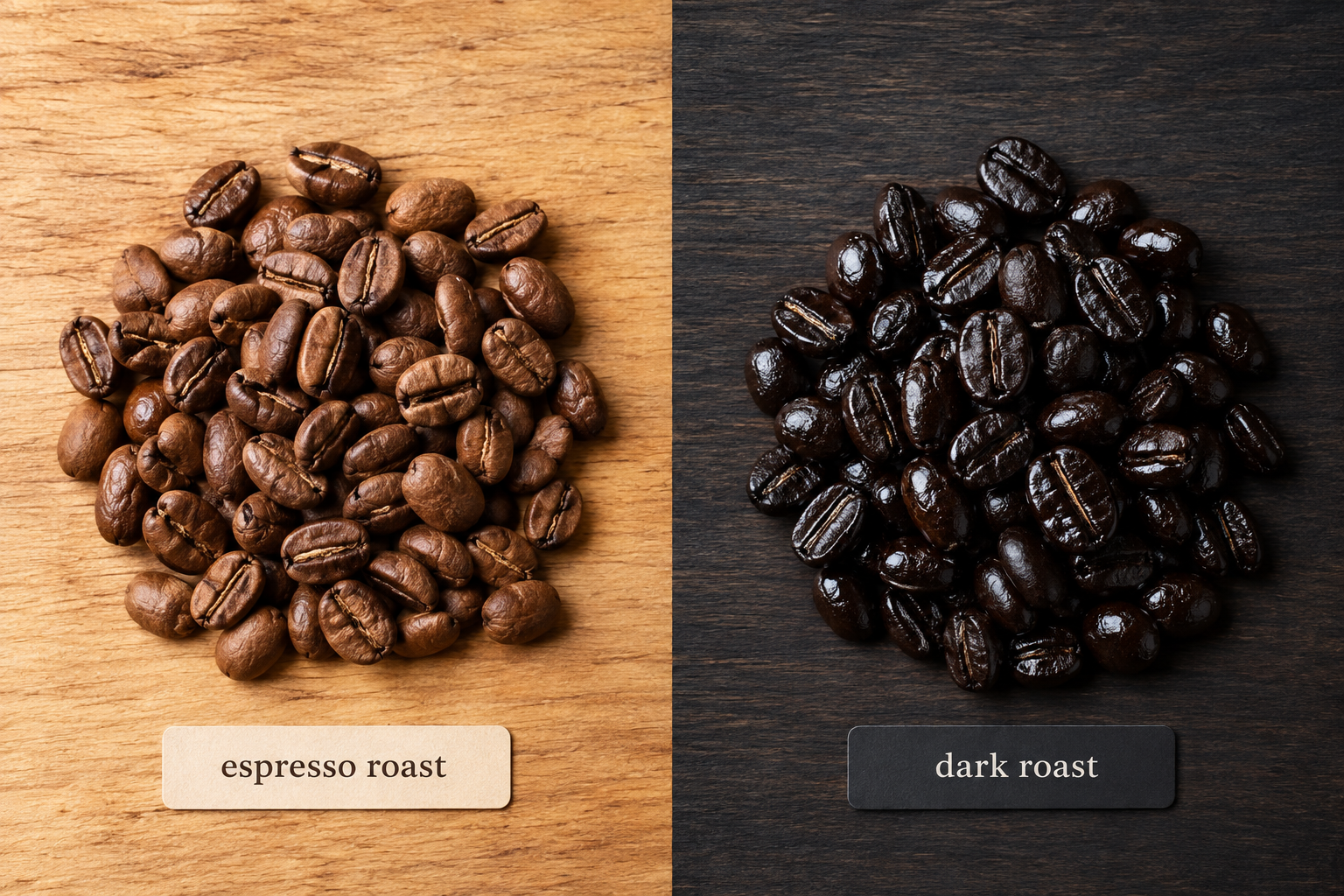
Traditional espresso roasting guides describe extended roast time at higher finishing temperatures, often in the range of 425 to 445 degrees Fahrenheit, carried close to or just past second crack, with an Agtron color reading (a standardized scale roasters use to measure bean color) around 35 to 45. That reading sits in the darker third of the roast color spectrum.
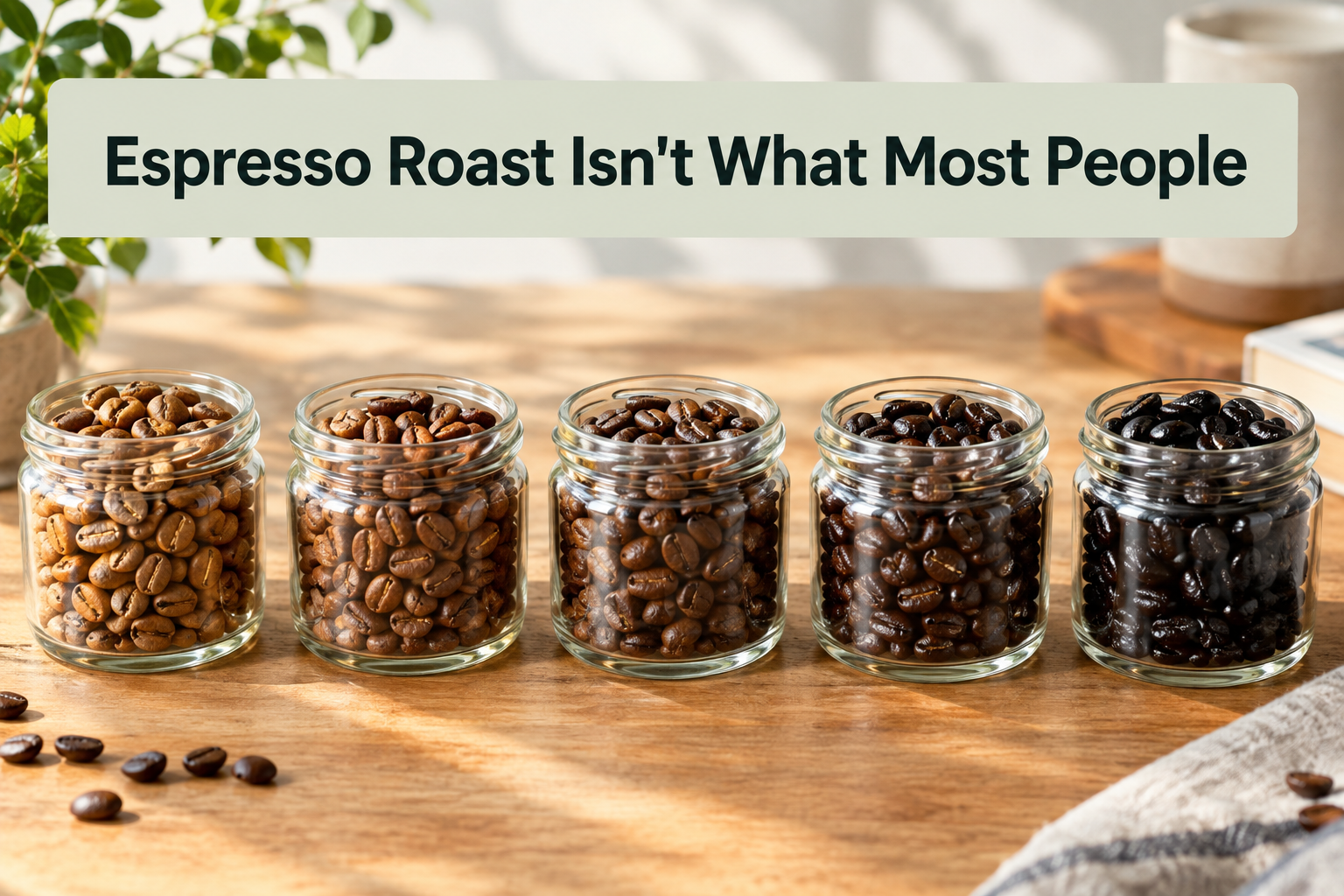
But that is a convention, not a requirement. A light espresso profile might finish well before second crack, closer to a light filter roast, chosen specifically to preserve fruit and floral character under pressure. Compare two bags side by side and you can find a genuine spread:
- Darker espresso roast: deep brown, slight surface sheen, lower acidity, heavier body.
- Lighter espresso roast: matte light to medium brown, higher acidity, brighter fruit notes, lighter body.
Decision rule: if you like your coffee bright and fruity, do not assume you need a dark bag just because it says espresso roast. Read the roaster's tasting notes instead.
Espresso Roast vs Dark Roast: What Actually Changes
Espresso roast and dark roast describe two different things and they overlap only sometimes. Dark roast is a color and flavor category. Espresso roast is a brewing intention. A bag can be both, one, or neither.
Is espresso roast the same as dark roast? No. Plenty of dark roasts are sold for drip brewers and French presses, never touching an espresso machine. And plenty of espresso roasts today are medium, built to keep sweetness and acidity that a very dark roast would burn away.
Here is the practical difference that matters at the counter:
| Factor | Dark roast (generic) | Espresso roast (specialty, 2026) |
|---|---|---|
| Color goal | Very dark, often oily | Varies, roaster-specific |
| Design intent | Bold flavor for any brew method | Built to hold up under 9 to 10 bar pressure |
| Acidity | Low, sometimes flat | Depends on profile, can be moderate to bright |
| Best equipment | Drip, French press, or espresso | Espresso machines, moka pots, some pour over |
A dark roast will usually work fine in an espresso machine because dark roasting increases solubility, meaning more flavor compounds dissolve quickly during a short, high pressure shot. That is one real reason dark and espresso got linked historically. It is a compatibility fact, not proof that espresso requires dark beans.
Espresso Roast vs Medium Roast vs French Roast vs Italian Roast
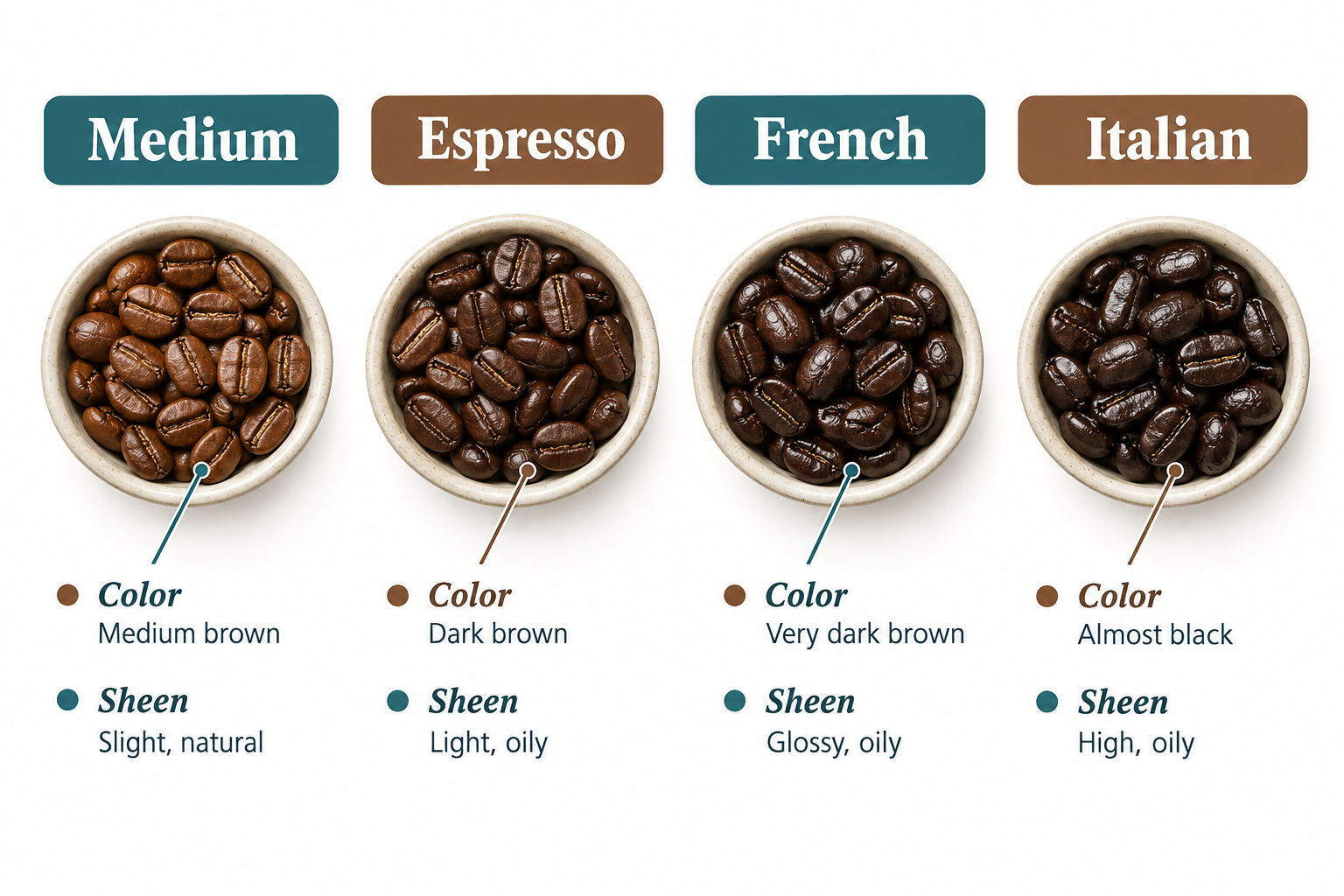
Espresso roast can be medium, and medium roast espresso often tastes more balanced than French or Italian roast, which push flavor toward smoke and char. Which one is "better" depends entirely on what you want in the cup.
Here is what actually separates these labels:
- Medium roast: Agtron color typically higher (lighter) than dark styles. More origin character survives. Good acidity and sweetness. Works in espresso machines if ground fine and dosed correctly.
- Espresso roast (specialty): a design target, not a fixed color. Often medium to medium-dark today, chosen to balance body and sweetness under pressure.
- French roast: very dark, roasted well past second crack, oily surface, smoky and slightly bitter, minimal origin character remaining.
- Italian roast: the traditional darkest commercial style, similar to French but sometimes pushed even further, built for very low acidity and heavy body.
Espresso roast vs French roast is really a question of restraint. French roast chases maximum darkness on purpose. A modern espresso roast chases a specific extraction result, and darkness is only one tool among several.
Espresso roast vs Italian roast follows the same logic. Italian roast almost always means very dark. Espresso roast might land there, or it might stop two shades earlier to keep more sweetness.
Decision rule: choose French or Italian roast if you want maximum boldness and do not mind losing origin character. Choose a specialty espresso roast if you want body plus some brightness. Choose medium roast for espresso if you enjoy a livelier, more acidic shot and don't mind a slightly thinner crema.
Can You Use Any Roast for Espresso, or Does It Have to Be Espresso Roast?
You can use any roast level for espresso. Nothing about the machine requires beans labeled "espresso roast." What changes is how the shot tastes and how forgiving the process is.
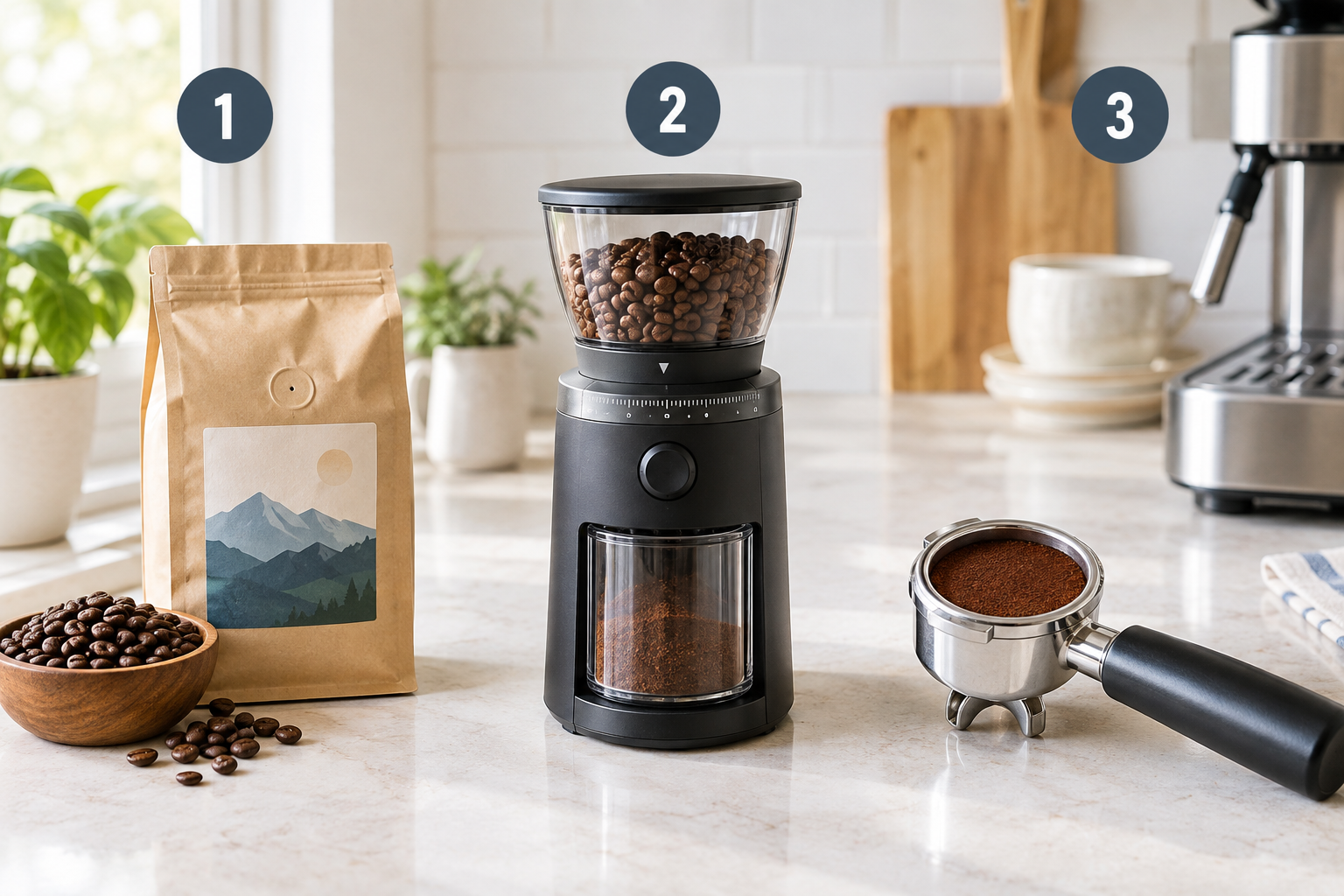
Espresso is a brewing method: hot water forced through finely ground, tightly packed coffee at high pressure for 20 to 30 seconds, producing a small, concentrated shot with crema on top. That method works with light roast, medium roast, dark roast, single origin coffee, or a blend.
Can you make espresso with light roast coffee? Yes, and many competition baristas prefer it. Light roasts hold onto more acidity and origin flavor, which can make a shot taste closer to fresh fruit than to chocolate. The tradeoff is that light roasts are denser and less soluble, so they often need a finer grind size, a higher dose, or a longer extraction to avoid tasting sour or thin.
What roast should you use for an espresso machine? Use this as a starting point:
- New to espresso: medium roast, labeled for espresso, with a recent roast date.
- Want bold, syrupy shots for milk drinks: medium-dark to dark roast.
- Chasing bright, complex, single origin flavor: light to medium roast, expect to fine tune grind size and dose.
If you want to compare this against other brew methods on the same beans, our guide on how to properly roast coffee at home for beginners explains what roast level does to extraction across pour over, cold brew, and espresso alike.
Espresso Beans vs Coffee Beans: Is There a Real Difference?
There is no separate plant or bean type called an "espresso bean." Espresso beans vs coffee beans is a labeling difference, not a botanical one. Any arabica or robusta bean can become an espresso bean depending on how it is roasted and brewed.
What changes between a bag marked "espresso" and a bag marked "coffee" usually comes down to three things:
- Roast level choice, made by the roaster for the brewing method they expect you to use.
- Blend design. Many espresso bags are blends built for consistency and body, while single origin coffee bags lean toward pour over or drip.
- Marketing intent, not a difference you can verify by looking at a raw bean.
The processing method (how the coffee cherry was turned into a dried, roastable bean, such as washed, natural, or honey process) has more effect on final flavor than whether the bag says "espresso" or "coffee." Coffee Rank IQ's breakdown of what type of bean is used in most coffee covers how arabica and robusta actually differ, which matters far more than the word on the bag.
Espresso Roast Common Misconceptions and How to Tell If Coffee Is Actually Espresso Roast
The biggest espresso roast misconception is that darker automatically means "more espresso." The second is that the label guarantees a specific flavor. Neither is true, and there is no lab test that confirms a bag is "really" espresso roast, because the term isn't regulated.
Common misconceptions worth retiring:
- "Espresso roast is always dark." False. Coverage from allpress and other roasters in 2026 explicitly calls this out as a marketing simplification.
- "Any coffee needs a special espresso bean to work in the machine." False. The machine cares about grind size and dose, not the label.
- "Espresso roast is stronger in caffeine." False. Dark roasting slightly reduces caffeine by mass, and espresso servings are small, so per-cup caffeine depends more on shot size than roast color.
- "If it says espresso roast, it will taste bitter." Only true if it is also roasted dark. A medium espresso roast can taste sweet and balanced.
How do you actually tell if coffee is suited to espresso? Skip the front label and check three things on the bag:
- Roast date. Fresh espresso needs beans roasted within the last two to four weeks for reliable crema.
- Tasting notes. Words like "syrupy," "chocolate," or "low acid" suggest a heavier profile built for milk drinks. Words like "citrus" or "floral" suggest a lighter, brighter shot.
- Recommended grind or brew method printed by the roaster, which is often more honest than the roast name itself.
Best Espresso Roast for Beginners
The best espresso roast for beginners is a fresh, medium roast, single origin or simple blend, with a printed roast date and clear tasting notes. It forgives small grind and dose mistakes better than very light or very dark beans.
Medium roast beans sit in a forgiving middle zone. They are soluble enough to extract cleanly without an expert dial-in, and they still carry enough sweetness to taste good if your grind size is slightly off on your first few attempts.
Starbucks espresso roast is a useful real-world example of how wide this category has become. As of 2026, Starbucks sells at least three distinct roast levels under the espresso name: the original very dark Espresso Roast, the medium Pike Place based blend used in many bar drinks, and Blonde Espresso, a light roast sold specifically for a lighter, less bitter shot. Three different roast levels, all marketed as legitimate espresso options, from one company.
For beginners shopping for the best coffee beans for espresso, here is a simple checklist:
- Roasted within the last four weeks.
- Roast level: medium, unless you already know you prefer bold or bright flavor.
- Clear tasting notes on the bag, not just the word "espresso."
- Ground fresh at home with a burr grinder rather than pre-ground, since a burr grinder produces a more even particle size than a blade grinder, which directly affects extraction consistency.
If your machine and grinder combination still isn't giving you a good shot, check grind size first. Our guide to the best grind of coffee for an espresso machine walks through the adjustment. And if you're shopping for a machine to pair with your beans, compare the models before you buy.
Does Espresso Roast Taste Different Than Other Roasts?
Yes, but the difference comes from roast level and extraction, not from the word "espresso" itself. Two bags both labeled espresso roast can taste noticeably different from each other if one is medium and one is dark.
What actually drives flavor in an espresso shot:
- Roast level: darker beans taste heavier, less acidic, more chocolate and caramel. Lighter beans taste brighter, fruitier, more acidic.
- Grind size: too coarse and the shot runs fast and sour. Too fine and it runs slow and bitter.
- Brew ratio: the ratio of dry coffee dose to liquid shot weight changes strength and sweetness balance.
- Water temperature: hotter water extracts more quickly and can push bitterness forward if the beans are already dark roasted.
A dark espresso roast will almost always taste bolder and less acidic than a light one, simply because the roasting process itself breaks down acids and builds bitter compounds over time. That is a roasting effect, not something unique to the espresso label. You'd get the same shift brewing the same two roast levels as pour over or cold brew.
If you want to build real tasting vocabulary around these differences, our guide to advanced espresso tasting methods explains how to separate roast character from brewing mistakes.
FAQ
Is espresso roast just a marketing term? Largely, yes. Espresso roast describes a roaster's intended use for the beans, not a regulated color or flavor standard. The same words appear on light, medium, and dark bags depending on the brand.
Can I use dark roast coffee in an espresso machine? Yes. Dark roast is one of the most common choices for espresso because higher solubility from extended roasting extracts quickly under pressure, producing a bold, low acid shot.
Can I use light roast coffee in an espresso machine? Yes, though it usually needs a finer grind, a higher dose, or a longer shot time to avoid tasting sour, since light roasts are denser and less soluble than dark ones.
Is espresso roast the same as dark roast? No. Espresso roast describes intended brewing use. Dark roast describes color and flavor. A bag can be both, but modern specialty espresso roasts are often medium.
What is the difference between espresso roast and Italian roast? Italian roast almost always means very dark, roasted for maximum boldness with minimal acidity. Espresso roast is a wider category that can be medium, medium-dark, or dark depending on the roaster's goal.
Why does Starbucks sell more than one espresso roast? Because espresso roast is not one fixed profile. Starbucks offers a very dark original Espresso Roast, a medium blend used in many bar drinks, and a light Blonde Espresso, showing that the espresso label spans the full roast spectrum.
Conclusion
Espresso roast tells you what a roaster hopes you will brew with their beans. It does not tell you the color, the acidity, or the strength, and it never guaranteed dark. The next time you're shopping, skip the roast name on the front of the bag and check the roast date, the tasting notes, and your grinder's dial instead. Those three details will change your cup far more than the word "espresso" ever will.
Better Coffee Starts With Better Answers, and that starts with reading the label the right way. If you're upgrading your setup, check the current price on a machine that matches how you actually drink coffee, and read the brewing method before you change anything else in your routine.
.cg-espresso-tool{font-family:system-ui,-apple-system,”Segoe UI”,Roboto,sans-serif;max-width:680px;margin:0 auto;background:#F5FAF8;padding:16px;border-radius:10px} .cg-espresso-tool h3{color:#14231D;margin:0 0 10px;font-size:18px} .cg-espresso-tool table{width:100%;border-collapse:collapse;background:#fff;border-radius:6px;overflow:hidden} .cg-espresso-tool th{background:#1F6B4A;color:#fff;padding:8px;font-size:13px;text-align:left} .cg-espresso-tool td{padding:8px;font-size:13px;color:#23372F;border-bottom:1px solid #E8F2EE;cursor:pointer} .cg-espresso-tool tr:hover td{background:#E8F2EE} .cg-espresso-tool p{margin-top:10px;font-size:13px;color:#145037;min-height:18px}Espresso Roast Quick Reference
| Roast style | Typical color | Flavor lean | Good for |
|---|---|---|---|
| Light espresso profile | Cinnamon brown | Bright, fruity | Third-wave shots |
| Medium espresso roast | Medium brown, matte | Balanced, sweet | Everyday shots, lattes |
| Traditional espresso roast | Dark brown, slight sheen | Bold, bittersweet | Milk drinks |
| French or Italian roast | Very dark, oily | Smoky, bitter | Big, bold flavor lovers |
Tap a row to see a quick brewing tip.
Keep Exploring Coffee Rank IQ
- Coffee Rank IQ home: reviews, brewing guides, and coffee science
- Best Espresso Beans for Lattes, Straight Shots, and Budgets
- Best Medium Roast Coffee for Drip, Pour Over, and Espresso
- Best Espresso Machine for Beginners: 7 Picks That Forgive Mistakes
- Best Espresso Grinder: The Spec That Decides Your Shot
References
- eathealthy365.com/espresso-beans-explained-from-roast-to-your-perfect-shot
- www.linkedin.com/posts/vincescian_is-your-marketing-company-doing-this-for-activity-7439354311005896705-yD2B
- colipsecoffee.com/blogs/coffee/roast-levels
- mtpak.coffee/2021/02/filter-roast-vs-espresso-roast-coffee
- colipsecoffee.com/blogs/coffee/espresso-roast
- koffienoob.nl/koffiebonen/espressobonen/starbucks-espresso-roast
- allpress.com/coffee-guides/espresso-roast-vs-filter-roast-whats-the-difference
- www.coffeereview.com/coffee-glossary/e
- www.hibrew.com/blogs/brew-guides/different-coffee-roasts