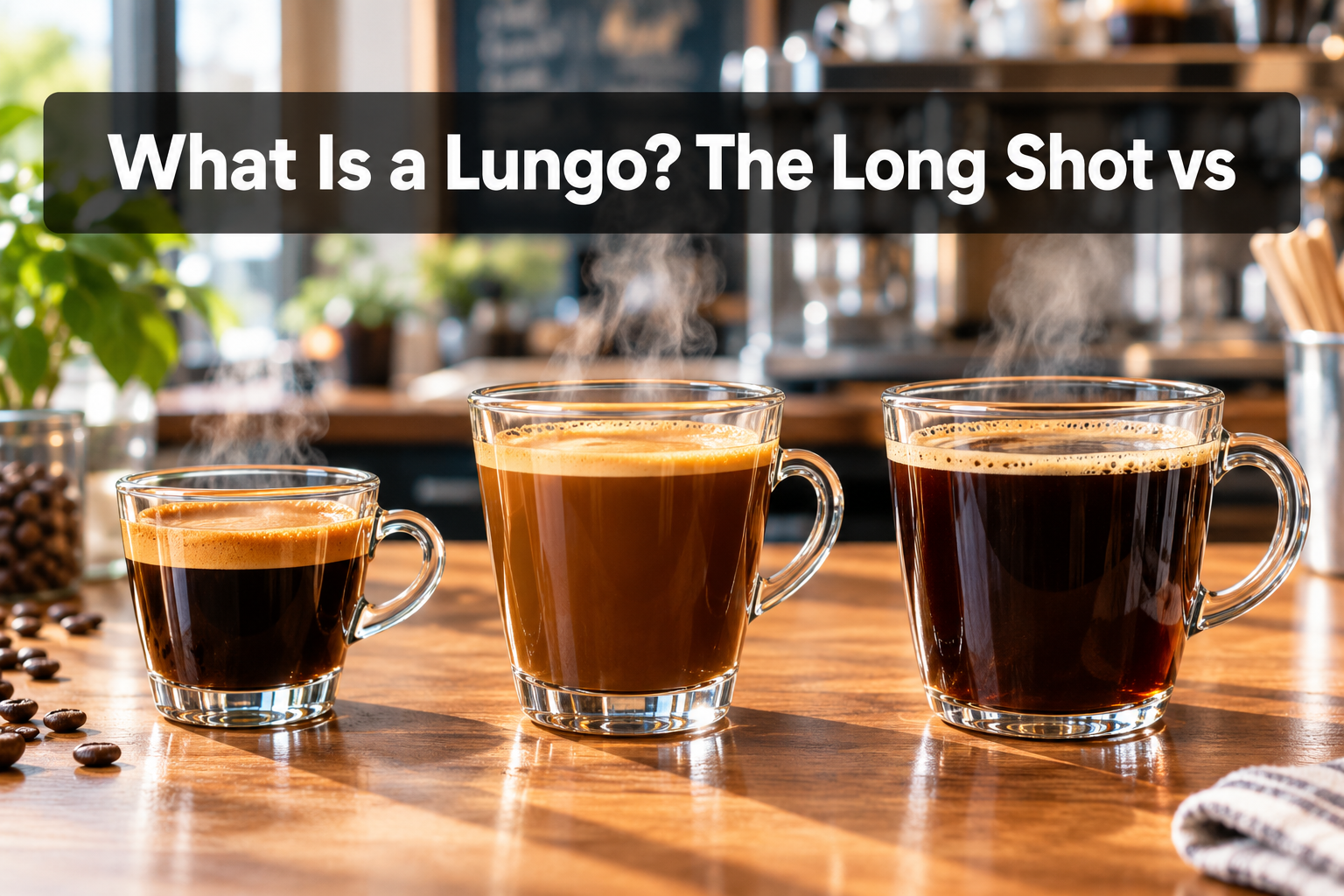
What Is a Lungo? The Long Shot vs Espresso and Americano
Quick Answer: A lungo is an espresso shot pulled with roughly double the water through the same dose of ground coffee, which stretches the extraction time and produces a taller, lighter, more bitter cup than a standard espresso. It sits between espresso and an americano in strength and volume, and the term comes from the Italian word for "long." If you are wondering what is a lungo compared to a long black or a double espresso, the short version is that they are all longer drinks made differently, and the difference changes what lands in your cup.
Key takeaways
- A lungo uses the same coffee dose as an espresso but roughly double the water, around 3 to 4 ounces compared to espresso's 1 to 1.5 ounces.
- Extraction runs about 45 to 60 seconds, close to twice the 25 to 30 second pull time of a standard espresso.
- A lungo is not the same as an americano. An americano adds hot water after the espresso is pulled, while a lungo pulls extra water through the grounds itself.
- A lungo is also different from a long black, where hot water goes into the cup first and espresso is poured on top.
- Caffeine in a lungo is close to a standard espresso shot, since the extra water dilutes strength but does not remove much extra caffeine.
- Nespresso markets its own Lungo capsules at a standard 110 milliliter pour, distinct from its 40 milliliter Espresso capsules.
- Over-extraction is the most common lungo mistake, which is why the drink can taste more bitter than a shorter shot.
What Is a Lungo
A lungo is an espresso-based drink made by running about double the water through the same amount of ground coffee used for a standard espresso shot. The word "lungo" is Italian for "long," and it describes the length of the pull, not the size of the cup you drink it from.
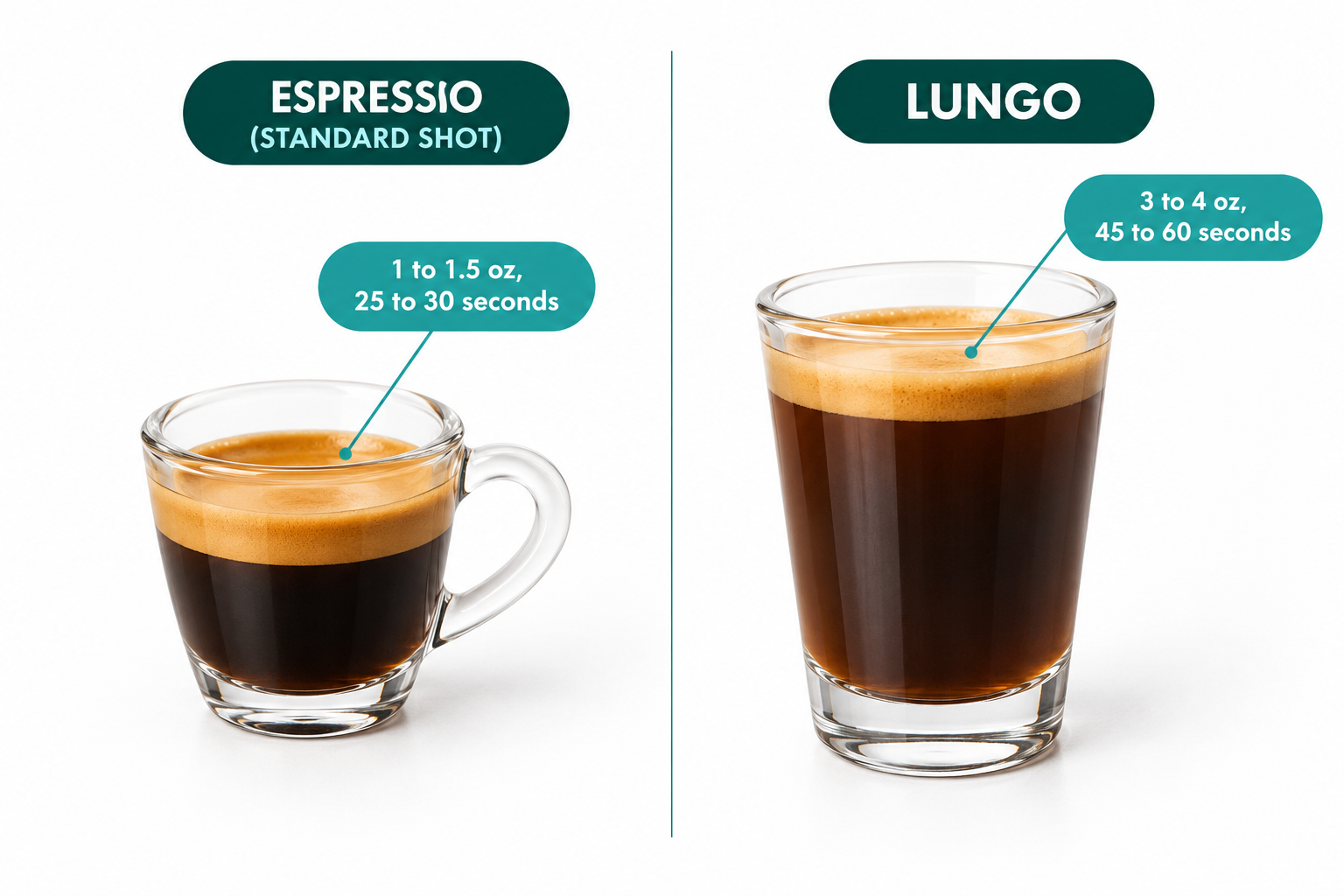
Where a standard espresso pulls somewhere between 1 and 1.5 fluid ounces, a lungo runs closer to 3 to 4 fluid ounces through that same 7 to 9 gram dose. The machine keeps pushing hot water through the puck of coffee for longer, so more of the coffee's soluble compounds end up in the cup. That includes the pleasant stuff early in the extraction and the more bitter, harsher compounds that come out later.
This single mechanical change (more water, same grounds, longer time) is the entire story behind what is a lungo. Everything else, the taste, the caffeine level, the crema, follows from that one adjustment. Coffeeness, a coffee education resource, describes the lungo as a longer-pulled relative of the standard shot rather than a separate brewing method.
If you're comparing machines and want to understand what kind of coffee you use for an espresso machine before you try longer pulls, that grind and roast choice affects a lungo just as much as it affects a normal shot.
What's the Difference Between Lungo and Espresso
The difference between lungo and espresso comes down to water volume and time. Both start with the same coffee dose and the same fine grind, but a lungo lets roughly twice as much hot water pass through the puck, which pulls the shot for close to twice as long.
That extra contact time changes three things:
- Volume. Espresso finishes around 1 to 1.5 ounces. A lungo lands around 3 to 4 ounces from the same dose.
- Strength per ounce. A lungo tastes less concentrated because the same amount of coffee solids is spread across more liquid.
- Bitterness. The later stage of extraction pulls more bitter compounds, so a lungo can taste sharper even though it is technically weaker in body.
A decision rule worth remembering: choose lungo vs espresso based on how much dilution you want without adding plain water. A lungo dilutes through the machine itself, so the flavor compounds stay tied to the coffee, not to a separate splash of hot water. That is the core mechanical answer to what is a lungo versus a normal shot, and it is the detail most guides skip.
For readers building out a home bar and comparing shot styles, our guide on what a single shot of espresso is called is a useful companion piece before you start experimenting with longer pulls.
Lungo vs Americano and Long Black: Which Is Stronger
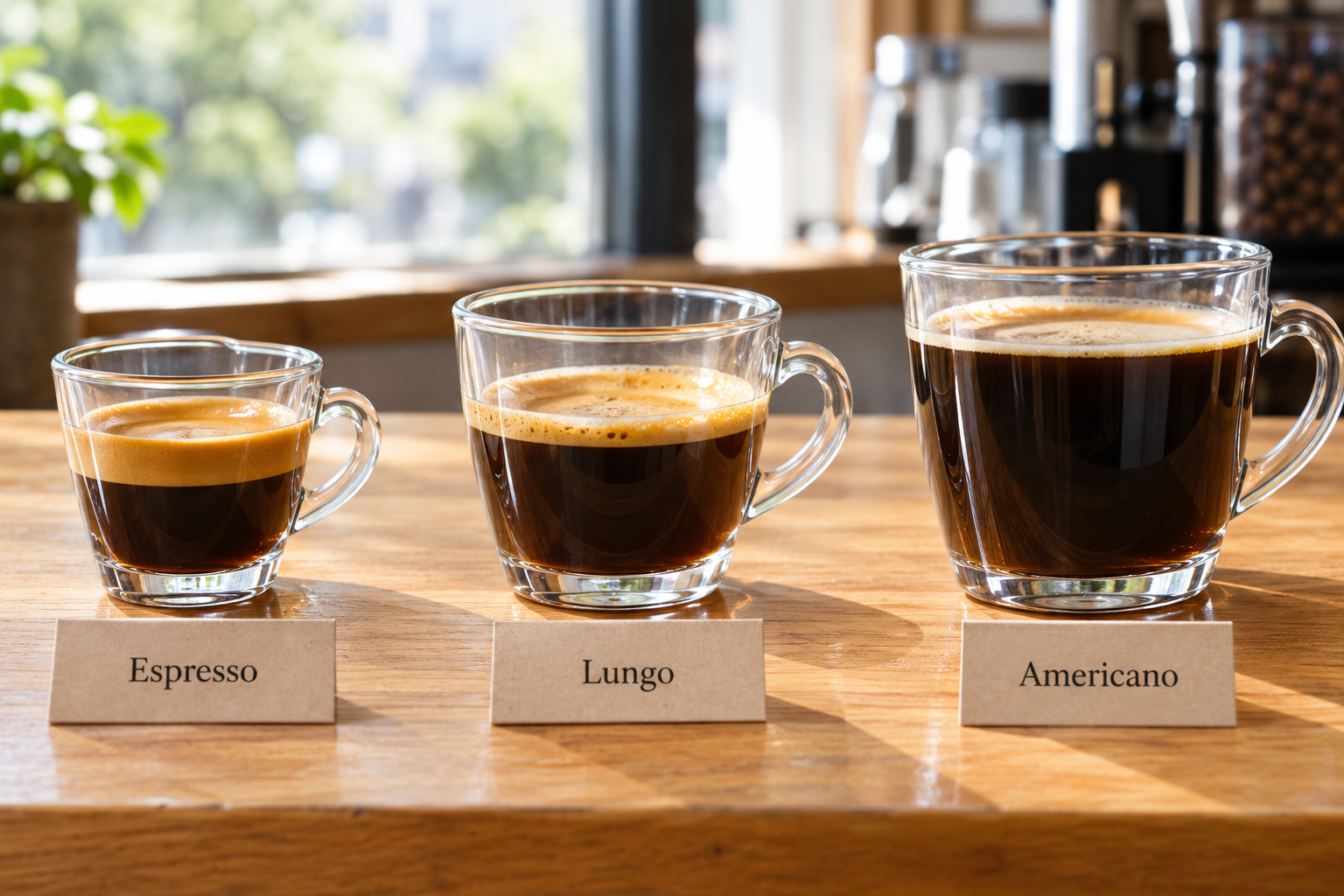
An americano is generally stronger in body than a lungo because the espresso base stays fully concentrated before hot water gets added on top. A lungo is weaker per ounce than a straight espresso shot but often tastes more bitter, since it pulled longer through the same grounds.
The mechanical difference matters here:
- Lungo: extra hot water is pushed through the coffee puck inside the machine, extending extraction time.
- Americano: a normal espresso shot is pulled first, then hot water is added afterward in the cup, with no extra contact between water and grounds.
Because the americano's hot water never touches the coffee grounds, it dilutes the drink without pulling additional bitter compounds. A lungo pulls those extra compounds directly from the coffee, which is why many tasters find it sharper despite being lower in overall coffee concentration.
Is a long black the same as a lungo? No. A long black is made by pouring a normal espresso shot over hot water already in the cup, keeping the crema intact on top. Order matters: hot water first, espresso poured over it. A lungo never involves adding water after the fact. It is one continuous, longer extraction.
| Drink | How it's made | Typical volume | Relative strength |
|---|---|---|---|
| Espresso | Standard pull, 25 to 30 seconds | 1 to 1.5 oz | Most concentrated per ounce |
| Lungo | Same dose, extended pull, 45 to 60 seconds | 3 to 4 oz | Weaker per ounce, more bitter edge |
| Americano | Espresso plus hot water added after | 6 to 8 oz | Diluted, smoother |
| Long black | Espresso poured over hot water | 5 to 7 oz | Diluted, crema preserved |
If you like iced americano-style drinks in warmer months, our roundup of popular iced americano recipes shows how that dilution method plays out cold.
What Is a Ristretto Shot, and How Does a Long Shot Compare
A ristretto shot is the opposite of a lungo. It uses the same coffee dose but stops the extraction early with less water, producing a shorter, more concentrated, sweeter pour. A "long shot" is simply another common name for a lungo, since both terms describe stretching the espresso pull past its normal stopping point.
Baristas sometimes use "long shot" and "lungo" interchangeably, though "long shot" is more common in American cafe language while "lungo" is the term you'll see on European machines and capsule menus. Both describe the same mechanical idea: more water, more time, same grounds.
Here's where a lungo vs double espresso comparison gets confusing. A double espresso (sometimes called a doppio) uses double the coffee dose and roughly double the water in the same short extraction window, keeping the concentration similar to a single shot. A lungo keeps the dose the same as a single shot and only stretches the water and time. So a double espresso is about more coffee; a lungo is about more water through the same coffee.
Quick reference:
- Ristretto: less water, shorter pull, more concentrated and sweeter.
- Espresso: standard water and time, the baseline.
- Lungo / long shot: same names, same idea, more water and longer pull through the same dose.
- Double espresso (doppio): double the dose and double the water, similar strength to a single shot, just more of it.
For a deeper explanation of shot terminology, see our guide on what a single shot of espresso is called, and check how much a shot of espresso is equal to if you're comparing shot math across drink sizes.
How Do You Make a Lungo Coffee
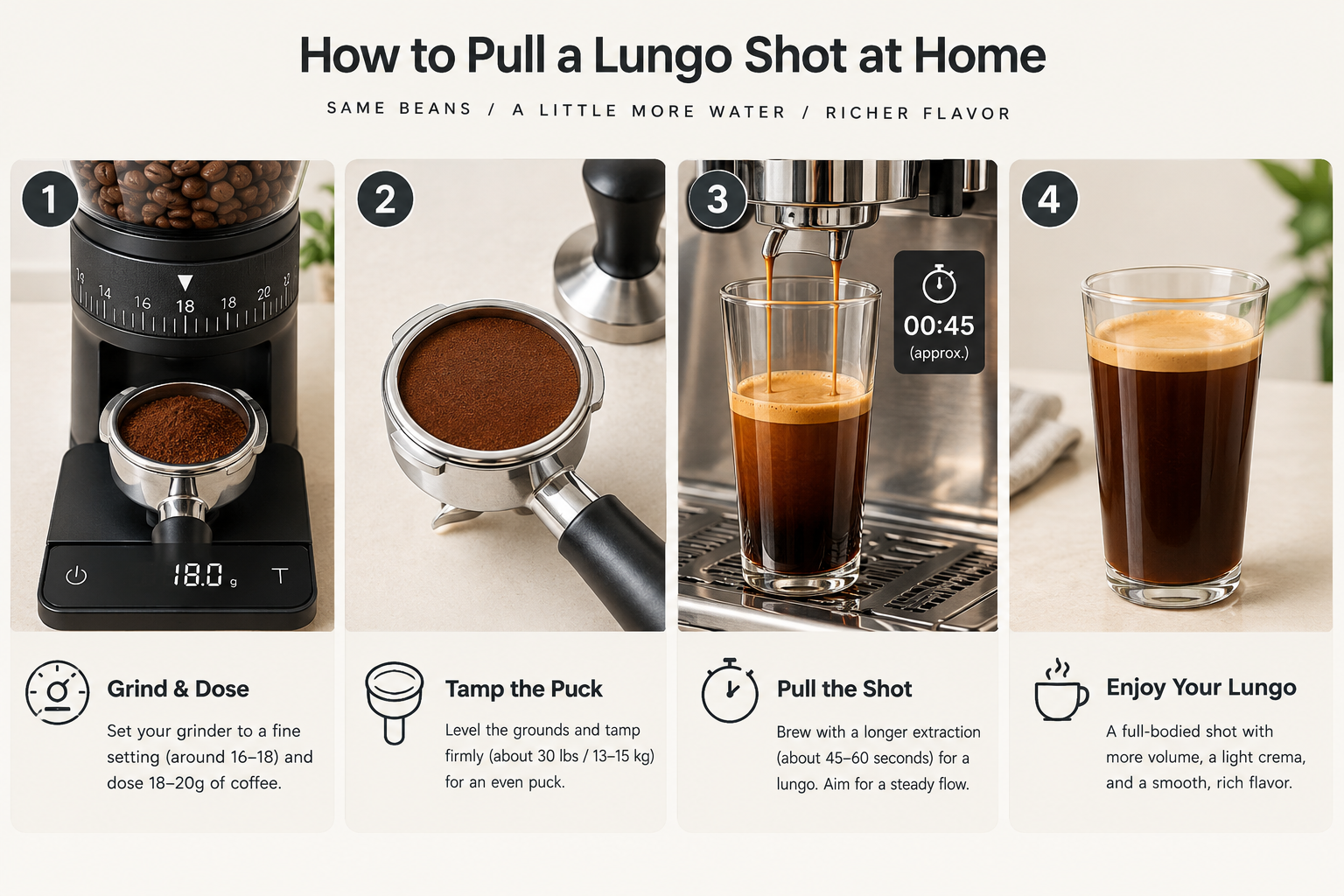
You make a lungo by grinding and dosing coffee exactly as you would for a standard espresso, then letting the machine run water through the grounds for roughly double the normal time, producing about 3 to 4 ounces instead of 1 to 1.5 ounces.
Steps for a manual espresso machine:
- Dose and tamp 7 to 9 grams of finely ground coffee, the same as a standard shot.
- Start the pull as you normally would.
- Let it run past the point where you'd usually stop a standard espresso, until the cup reaches roughly double the volume.
- Stop around 45 to 60 seconds, watching for the stream to thin and lighten in color, which signals the flavorful compounds are mostly extracted and bitterness is climbing.
Lungo shot pull time and water ratio
A standard espresso runs 25 to 30 seconds for 1 to 1.5 ounces. A lungo runs closer to 45 to 60 seconds for 3 to 4 ounces, using the same 1:2 dose-to-output ratio doubled in both time and volume. The brew ratio effectively shifts from around 1:2 (coffee to water by weight) toward 1:3 or 1:4, depending on your machine and grind.
How long does a lungo take to pull
Expect 45 to 60 seconds total contact time, roughly double a standard shot's pull. If your machine finishes closer to 30 seconds even on a lungo setting, the grind is likely too coarse, letting water pass through faster than it should.
Can you make a lungo with a regular coffee maker
Not really, at least not one that matches the espresso method. A drip coffee maker uses gravity and a coarser grind, brewing at lower pressure over several minutes, so it can't replicate the fine-grind, high-pressure extraction that defines a lungo. You can approximate the volume and strength with a strong pour-over cut with a little less water, but it won't have the same crema or mouthfeel as a machine-pulled lungo.
How Much Caffeine Is in a Lungo
A lungo contains caffeine similar to a standard espresso shot, generally in the 63 to 75 milligram range per single dose, because most of the caffeine extracts early in the pull. The extra water mostly adds volume and bitterness, not a large caffeine increase.
Caffeine solubility works fast: a large share pulls into the first ounce of water. Running additional water through the same grounds for a lungo does extract a bit more, but the increase is modest compared to the volume increase. That's a useful thing to know if you're choosing a lungo thinking it will hit twice as hard as an espresso; it won't, though it will feel less intense sipped as a bigger drink.
For a closer look at shot-by-shot caffeine numbers, our breakdown of how much caffeine is in a single shot of espresso gives you the baseline a lungo builds from.
Lungo calories and nutrition facts
Black coffee, including a lungo, carries close to zero calories on its own, typically under 5 calories per serving before milk or sugar. Calories only climb once you add cream, milk, flavored syrup, or sugar, the same as with any other coffee-based drink. If you're tracking intake, the lungo's calorie count stays negligible; what changes your nutrition math is what you pour into it.
Lungo Coffee Taste Profile: What to Expect in the Cup
A lungo tastes less intense than a standard espresso but often carries more bitterness, since the longer pull draws out later-stage compounds along with the sweeter, brighter ones extracted early. Roasters and coffee educators generally describe the flavor as more diluted in body but sharper on the back end.
What that means in practice:
- Body: thinner than espresso, since the same coffee solids spread across more water.
- Sweetness: less pronounced than a short shot, because sweetness peaks early in extraction and gets diluted by the added volume.
- Bitterness and acidity: can be more noticeable, since extended extraction pulls compounds that a shorter shot leaves behind.
- Crema: thinner and less stable than a standard espresso's crema, because crema depends on pressure and oils that thin out as more water passes through.
A lungo made from a lighter roast tends to show more of that late-extraction bitterness, since lighter roasts already carry brighter acidity that intensifies under longer contact. A darker roast can hide some of that edge, which is part of why many cafe menus default to darker blends for lungo pours.
Best Coffee Beans and Machine Settings for a Lungo
The best beans for a lungo are medium to dark roasts with lower acidity, since the longer extraction amplifies brightness and bitterness that a lighter roast already carries. Brands like Lavazza and illy, both known for balanced Italian-style espresso blends, are common choices for lungo pulls because their darker profiles hold up under extended extraction.
Starbucks' darker espresso roast can also work for a lungo-style pour at home, though its espresso is generally built around standard shot volumes rather than the longer pull.
What is a lungo Nespresso, and what is Nespresso lungo size
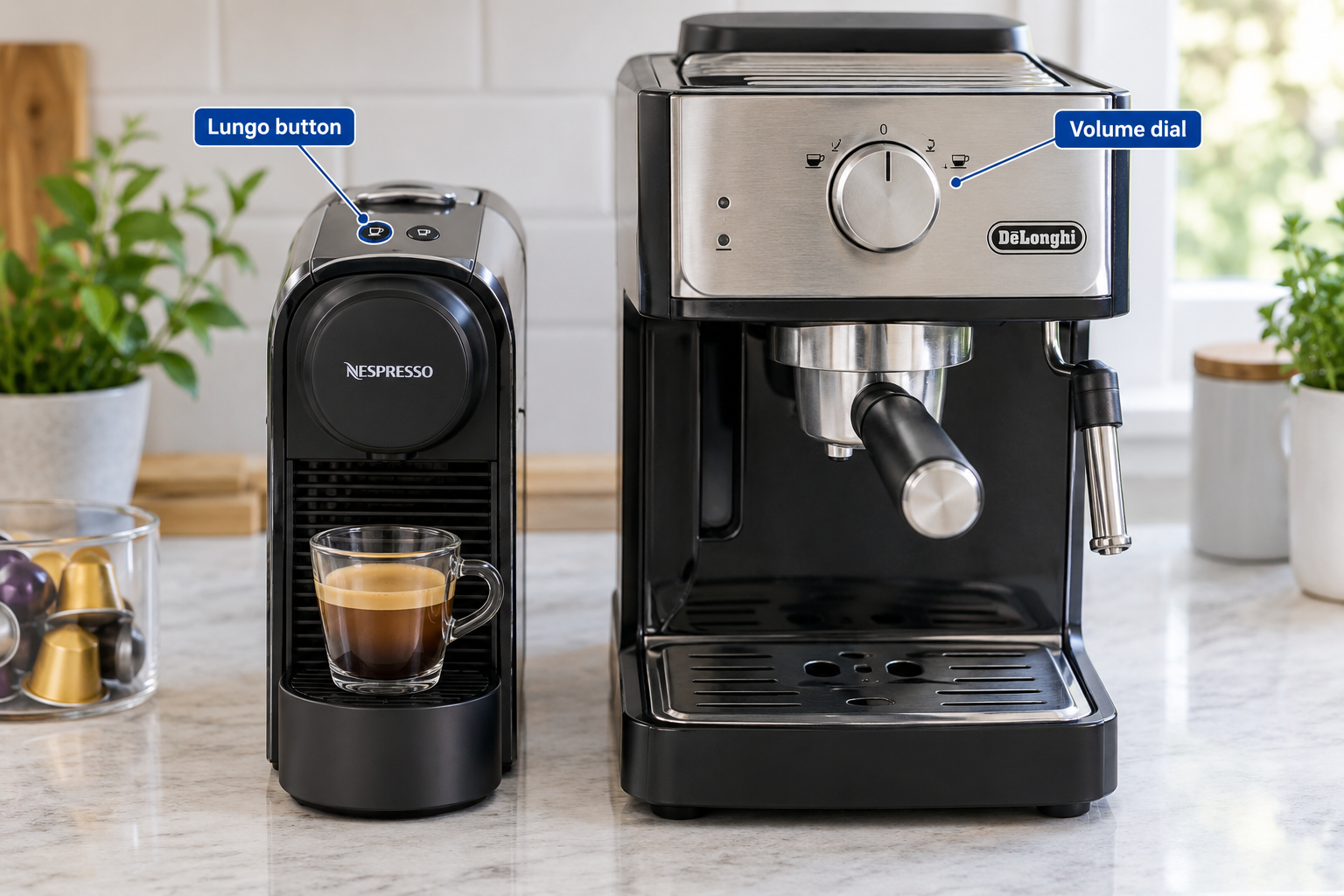
Nespresso sells a dedicated Lungo line of capsules built for a standard 110 milliliter pour, roughly double its 40 milliliter Espresso capsules. This is a fixed capsule category, not a setting you adjust manually. When people ask what is a lungo Nespresso, they usually mean this capsule line specifically, made with a blend and grind tuned for that larger, single-button pour.
Lungo machine settings: Nespresso, DeLonghi, and others
- Nespresso machines: select a Lungo capsule and press the labeled Lungo button, which is pre-programmed for the 110 milliliter pour.
- DeLonghi and other manual machines: adjust the volume dial or programmed button to a longer shot setting, typically double the standard espresso volume, and expect the pull to take noticeably longer to finish.
- Manual lever or portafilter machines: you control this by hand, stopping the shot once it reaches roughly double a standard pour.
For grind and dose guidance that applies across all of these machines, see our guide on the best grind of coffee for an espresso machine, and our deeper look at extraction and crema if you want to understand why longer pulls change crema stability.
Why Is My Lungo Too Bitter or Watery
A bitter lungo usually means the grind was too fine or the pull ran too long past the ideal 60-second mark, pulling excess bitter compounds. A watery lungo usually means the grind was too coarse, letting water rush through before it could extract enough flavor.
Troubleshooting checklist:
- Too bitter: shorten the pull time slightly, or switch to a slightly coarser grind so water moves through a bit faster.
- Too watery or sour: grind finer, or check that your dose (7 to 9 grams) hasn't drifted low, since an under-dosed puck lets water through too fast.
- Weak crema: normal for a lungo compared to espresso, since the extended water flow naturally thins crema. If crema disappears almost immediately, check that your beans are fresh, since stale beans lose the gas needed to form stable crema.
- Machine runs too fast even on lungo setting: the grind is likely too coarse for the extended volume; adjust finer and test again.
Is Lungo Coffee Good for Beginners
A lungo can be a reasonable starting point for beginners who find straight espresso too intense, since it delivers a similar caffeine dose in a larger, less concentrated drink. It is a gentler introduction to espresso-style coffee without the added milk of a latte or cappuccino.
Choose a lungo if you want:
- A stronger cup than drip coffee without a full-size mug.
- An espresso-adjacent drink you can sip slower than a quick shot.
- A capsule-machine option (like Nespresso's Lungo line) that requires no manual technique.
Choose a standard espresso or ristretto instead if you want the most concentrated flavor in the smallest volume, or an americano if you specifically want a smoother, less bitter dilution.
FAQ
What is a lungo in simple terms? A lungo is an espresso shot pulled with about double the water through the same coffee dose, making it taller, lighter in body, and often more bitter than a standard espresso.
Is a lungo stronger than an americano? No. An americano generally tastes smoother and less bitter than a lungo, since its hot water is added after the espresso is pulled instead of being pushed through the grounds.
What's the difference between a lungo and a long shot? Nothing meaningful. "Long shot" and "lungo" describe the same extended espresso pull, with "lungo" being the more common term on European machines and capsule menus.
How much caffeine is in a lungo compared to espresso? Caffeine levels are similar, generally 63 to 75 milligrams per shot, since most caffeine extracts early in the pull regardless of the extra water added afterward.
Can I make a lungo without an espresso machine? Not accurately. A drip coffee maker or pour-over can approximate the strength and volume, but it won't replicate the pressure-based extraction and crema of a machine-pulled lungo.
Is a Nespresso lungo the same as a cafe lungo? They're built on the same idea, a longer pour from the same coffee dose, but Nespresso's Lungo capsules are a fixed 110 milliliter product line rather than a manually adjusted cafe pull.
Conclusion
The next time a menu or a capsule box uses the word "lungo," you'll know exactly what changed: same coffee, more water, longer time. That single adjustment explains the bigger cup, the softer crema, and the sharper edge of bitterness compared to a standard shot. If you're deciding between machines, capsules, or bean styles, use the water ratio and pull time as your compass rather than the label alone. Try pulling a lungo and a standard espresso side by side with the same beans. That direct comparison will teach you more about what is a lungo than any description can, and it's the kind of small experiment that makes Better Coffee Starts With Better Answers more than a slogan.
Keep Exploring Coffee Rank IQ
- Coffee Rank IQ home: reviews, brewing guides, and coffee science
- What Is a Cortado? The Small Drink Baristas Quietly Love
- What Is a Doppio? The Double Shot Explained Simply
- What Is a Red Eye Coffee? Black Eye and Green Eye Too
- What Is an Americano? Espresso, Water, and One Big Myth
References
- coffeeteaculture.com/guides/americano-vs-lungo
- www.lorespresso.com/en_gb/cp/blog/what-is-lungo-coffee
- www.expertcafe.be/en/guides/americano-vs-lungo-vs-long-black
- www.coffeeness.de/en/americano-coffee
- www.themanual.com/food-and-drink/types-of-espresso
- www.kitchenaid.com/countertop-appliances/pinch-of-help/types-of-espresso-drinks
- lifeboostcoffee.com/blogs/news/espresso-lungo-vs-americano
- en.wikipedia.org/wiki/Lungo
- www.nespresso.com/ca/en/nespresso-blog/types-of-coffee
- www.themanual.com/food-and-drink/what-is-lungo