Coffee Gut Microbiome Link: What a 2024 Study Found
Quick Answer
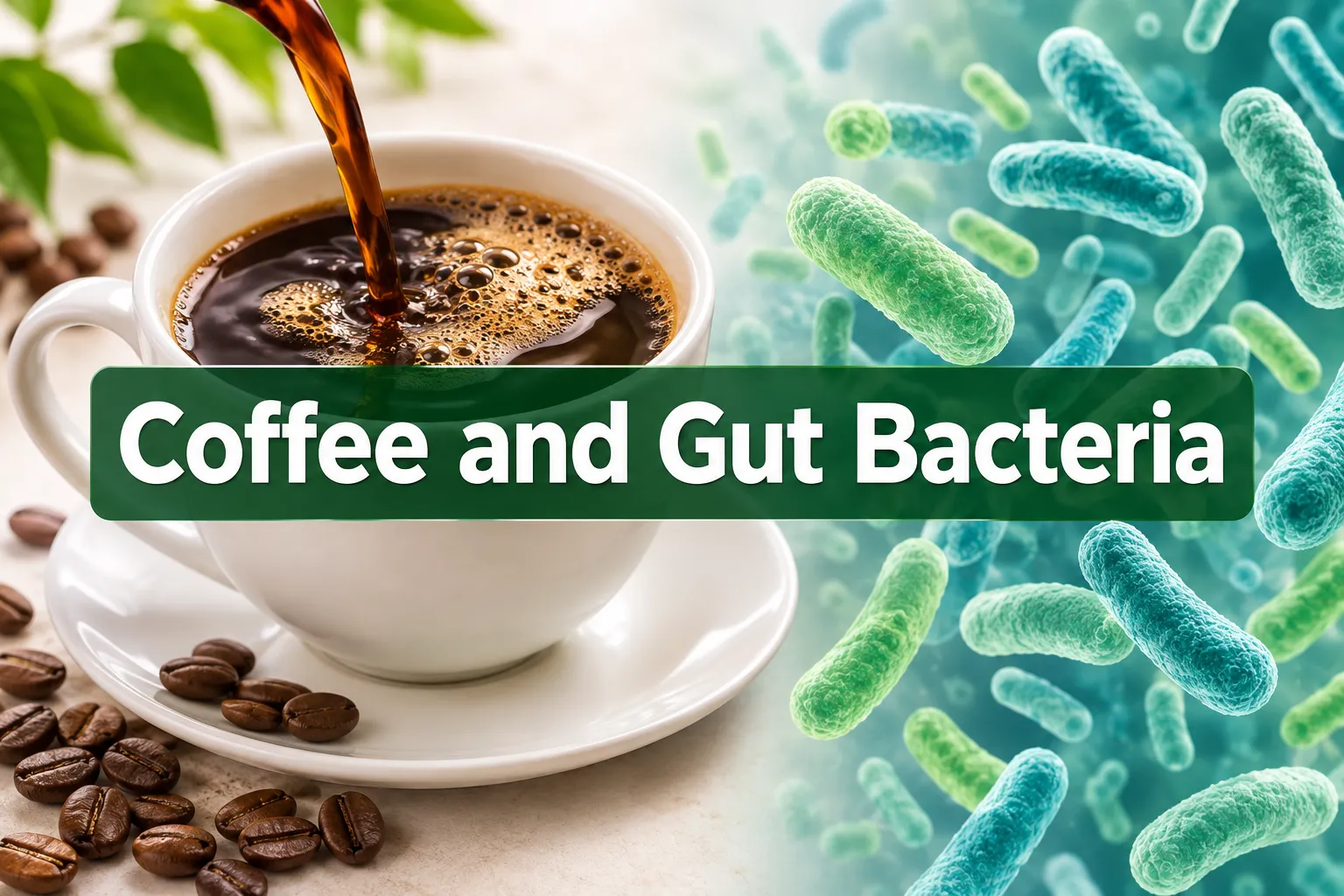
A 2024 Nature Microbiology study of more than 22,000 metagenomes found that coffee drinkers carry far more of one gut bacterium, Lawsonibacter asaccharolyticus, than non-drinkers, and that microbiome data could tell the two groups apart with roughly 0.89 accuracy (AUC) . The coffee gut microbiome signal held up in decaf drinkers too, which points at compounds other than caffeine. This is an association, measured across populations, not proof that coffee improves anyone's health.
Key Takeaways
- 22,000+ metagenomes. Paolo Manghi and colleagues analyzed more than 22,000 stool metagenomes across US and UK cohorts including ZOE PREDICT, published in Nature Microbiology on November 18, 2024 .
- 115 microbial species were positively associated with coffee intake, making coffee one of the strongest single dietary predictors of gut composition in the dataset .
- AUC ≈ 0.89. Microbiome data separated coffee drinkers from non-drinkers with substantial accuracy across independent cohorts .
- Decaf counts. The Lawsonibacter asaccharolyticus link remained in decaffeinated coffee drinkers, though weaker, which shifts attention to chlorogenic acids, trigonelline and roasting products .
- It grew in a dish. Coffee exposure increased growth of the bacterium in liquid culture, supporting plausibility without proving a health benefit .
- A 2026 trial of 62 Irish adults (31 habitual drinkers, 31 non-drinkers) at University College Cork and the University of Parma found species-specific shifts after 21 days of coffee, with no consistent change in overall diversity .
- No treatment claim exists. A September 2026 review in Metabolites concluded human evidence does not yet show microbiota changes mediate better glucose control, weight or liver outcomes .
Coffee Gut Microbiome: What the 2024 Nature Microbiology Study Found
The 2024 paper is the anchor for every headline you have read since. Paolo Manghi and colleagues pooled more than 22,000 metagenomes, a metagenome being the full genetic census of microbes in a stool sample, from several US and UK cohorts including ZOE PREDICT, the Mind-Body Study and the Men's Lifestyle Validation Study. It was described at publication as the largest look yet at the coffee gut microbiome relationship .

Three findings matter.
One. Coffee was among the strongest dietary predictors of microbiome composition in the whole dataset. 115 species-level features were positively associated with intake . Diet usually leaves a messy fingerprint. Coffee left a legible one.
Two. The dominant signal was a single species, Lawsonibacter asaccharolyticus. Coffee consumers carried it at higher prevalence and higher abundance than non-consumers. Secondary reporting has put the gap at roughly 4.5 to 8 fold between heavy drinkers and non-drinkers, with moderate drinkers landing in between. Read those as cohort-level averages of relative abundance, not a number you personally will hit.
Three. The model generalized. Using microbiome data alone, the researchers distinguished coffee drinkers from non-drinkers with an area under the ROC curve near 0.89, reproduced across separate cohorts . That is a strong, repeatable pattern for a nutrition study.
The study tells you coffee drinkers have different gut bacteria. It does not tell you those bacteria make them healthier.
The team also went beyond observation. In vitro, meaning in a laboratory culture rather than a person, coffee exposure increased growth of L. asaccharolyticus. Blood metabolomics linked coffee intake to compounds including quinic acid and trigonelline-related metabolites . Biologically plausible. Still not a health outcome.
What the study did not establish
No cause. No benefit. No dose you should hit. The design was observational, with a culture experiment attached. People who drink four cups a day also tend to differ in sleep, fiber, alcohol and exercise, and no statistical adjustment fully removes that.
A 2026 Nature Medicine analysis extended the picture, reporting enrichment of butyrate-producing bacteria in coffee drinkers and an association between L. asaccharolyticus and lower inflammatory bowel disease risk in mediation analyses. Mediation analysis is still not causality, and that paper also found the bacterium correlated with 64.5% of analyzed species, suggesting it may be a marker of a wider microbial community rather than a solo actor.
What Does Coffee Actually Do to Your Gut Bacteria?
Coffee appears to favor a specific set of microbes rather than making your gut broadly "more diverse." The clearest named effect is more Lawsonibacter asaccharolyticus .
The 2026 intervention trial from University College Cork and the University of Parma tested this directly. 62 healthy Irish adults: 31 habitual drinkers who normally had 3 to 5 cups a day, and 31 non-drinkers. Drinkers abstained for 14 days, then took caffeinated or decaffeinated instant coffee for 21 days .
What separated the groups at baseline:
- Habitual drinkers: higher Cryptobacterium curtum, Eggerthella species, and Firmicutes CAG:94
- Non-drinkers: higher Veillonella species and Haemophilus parainfluenzae
What did not change much: alpha diversity, the count of different species within one person's gut. It stayed broadly stable through withdrawal and reintroduction . So the honest summary of coffee and gut bacteria is targeted, not sweeping.
The misconception worth correcting: people keep reading "coffee changes your microbiome" as "coffee boosts gut diversity." Across both the 2024 and 2026 studies, that diversity boost is not what showed up. Specific organisms moved. The overall headcount mostly did not.
Common mistake: treating L. asaccharolyticus as a scoreboard. There is no validated healthy range for it, no home test worth buying, and no evidence that raising it on purpose does anything for you.
Is Decaf Coffee Better for Gut Health Than Regular?
Neither is established as better. The 2024 study found the coffee gut microbiome association persisted in decaf drinkers, though more weakly than in caffeinated drinkers . That is the single most interesting detail in the whole literature.
If caffeine were the driver, decaf should show nothing. It showed something. Attention turns to the rest of the cup:
- Chlorogenic acids, the main polyphenols in coffee, largely survive digestion and reach the colon where microbes metabolize them. Polyphenols gut health research across foods leans on exactly this pathway.
- Trigonelline, an alkaloid that partly converts to niacin during roasting.
- Melanoidins, the brown, large molecules formed by roasting, which behave somewhat like dietary fiber.
- Soluble polysaccharides from the bean cell walls.
The Cork trial supports this. Both caffeinated and decaf instant coffee shifted the strains that differed between drinkers and non-drinkers. Veillonella parvula rose significantly in the decaf group, and a Veillonella strain rose in both groups by day 21 .
Choose decaf if caffeine disrupts your sleep, raises your heart rate uncomfortably, or you are cutting back for pregnancy or a medication reason. You keep the polyphenols. Decaf gut health is not a downgrade on the compounds that appear to matter most for microbes.
Choose regular if you want the alertness and tolerate it well. Caffeinated coffee carried the stronger microbial signal in 2024 .
One practical note: water-process and CO2-process decafs differ in flavor, not in any demonstrated microbiome effect. If you want a readable breakdown of styles and strengths, our guide to the healthiest coffee to drink covers brew and bean choices.
Does Caffeine Help or Hurt Your Coffee Gut Microbiome?
Caffeine is probably not the main character. Decaf drinkers showed the same directional association, and the 2026 trial saw microbial shifts in both arms .
Caffeine does do things to your digestive tract, separate from bacteria. It speeds colonic motility in many people, which is why a morning cup reliably sends some drinkers to the bathroom. Faster transit alone can change which microbes thrive, because it shortens fermentation time in the colon.
A September 16, 2026 review in Metabolites by Lei Yang, Chaowei Wang, Liangyu Cui and colleagues went through caffeine, chlorogenic acids, trigonelline, melanoidins, polysaccharides and diterpenes. Plausible mechanisms exist via short-chain fatty acids, phenolic acid metabolites, barrier signaling, bile acids and gut-liver communication. The review stated plainly that human studies have not shown those microbiota changes produce better glucose control, weight outcomes or liver health .
So: caffeine is a motility and alertness compound with a modest microbial role. The polyphenols look more interesting for your gut.
Can Coffee Cause Stomach Upset, and Should You Drink It on an Empty Stomach?
Yes, coffee can cause stomach upset, and that is a separate mechanism from the microbiome. Coffee stimulates gastric acid secretion and speeds gut transit. For most healthy adults, drinking it on an empty stomach is fine. For people with reflux, gastritis or an ulcer, it often is not.

What actually drives discomfort, in rough order of how often readers report it:
- Acidity and acid stimulation. Both caffeinated and decaf coffee prompt acid release.
- Volume and temperature. 16 ounces of hot liquid on a hollow stomach moves things.
- Additives. Lactose from milk, sugar alcohols from flavored syrups, and oat milk gums cause more trouble than the coffee for some people.
- Brew style. Unfiltered methods like French press and espresso keep more diterpenes and oils; paper-filtered pour over strips most of them.
Decision rule: if your discomfort starts within 20 minutes of the first sip, look at acid, additives and timing. If it is bloating hours later, additives and total fiber intake are more likely suspects than the coffee.
Quick fix to try first: eat something with fat or protein before the cup, switch from a dark roast to a medium, and use a paper filter for two weeks. Cold brew is also commonly lower in titratable acidity than hot brewed coffee, which some sensitive drinkers find easier.
Is Coffee Bad if You Have IBS or Sensitive Digestion?
Coffee is a recognized trigger for a subset of people with irritable bowel syndrome, usually because of its effect on gut motility rather than anything microbial. It is not universally off-limits, and the evidence does not support banning it for everyone with IBS.
If you have a diagnosed condition, inflammatory bowel disease, IBS, chronic gastritis, reflux or anything else, talk to the clinician who manages it before changing your intake based on a study. The 2026 Nature Medicine finding on L. asaccharolyticus and lower IBD risk came from mediation analysis in observational data. That is a lead for researchers, not a treatment plan.
A reasonable self-test, if your doctor agrees:
- Remove coffee entirely for 14 days. Note symptoms daily.
- Reintroduce one cup of filtered, black, medium roast coffee with food.
- Hold at one cup for a week before adding a second.
- Change one variable at a time: milk, brew method, roast, timing.
Most people who think "coffee" is the problem find it is the 20 ounces of sweetened milk drink, not the coffee. Our basic coffee drinks guide is useful for identifying exactly what is in your usual order.
What's the Best Coffee to Drink for Gut Health, and How Much Per Day?
No coffee has been shown to be the best for gut health. Based on the compounds that carried the coffee gut microbiome signal, plain brewed coffee with minimal additives is the most sensible default. For intake, the Cork study participants were habitual drinkers at 3 to 5 cups per day, which is the range most observational work treats as moderate .
| Coffee type | Polyphenol delivery | Studied in microbiome work? | Best for |
|---|---|---|---|
| Filtered brewed (pour over, drip) | High, oils removed | Yes, dominant in the 2024 cohorts | Daily drinking, sensitive stomachs |
| Espresso | High per ounce, oils retained | Included in general intake data | Small volume, strong flavor |
| Decaf | High, caffeine removed | Yes, weaker but present association | Evening cups, caffeine sensitivity |
| Instant | Moderate to high | Yes, used in the 2026 Cork trial | Convenience, study-matched dosing |
| Sweetened café drinks | Diluted by milk and sugar | Not separated out | Enjoyment, not a gut strategy |
Practical defaults, if you want them:
- 2 to 4 cups a day of brewed coffee, which sits inside the ranges studied.
- Black, or with a splash of whatever milk agrees with you.
- Fresh grind where possible. A burr grinder gives even particle size, which gives even extraction, which mostly matters for taste rather than biology.
- Watch the roast date. Stale coffee tastes flat and nothing in the research rescues it.
Caffeine ceilings still apply. Most health authorities put 400 mg a day as the general adult limit, roughly four 8 ounce cups of drip coffee, lower during pregnancy. Microbiome findings do not change that.
Does Everyone's Coffee Gut Microbiome React the Same Way?
No. The association was strong at population level, and individual responses in the 2026 trial varied considerably. Two people drinking identical coffee can end up with different microbial profiles.
Why responses differ:
- Starting community. If L. asaccharolyticus is absent from your gut, coffee cannot increase something that is not there.
- Baseline fiber and plant intake. Polyphenols need microbes capable of metabolizing them.
- Transit speed, genetics, medications, especially recent antibiotics, which reshape the gut far more than any beverage.
- Age and geography. The 2024 cohorts were largely US and UK adults . Generalizing to other populations is a guess.
Edge case: someone who has taken a course of broad-spectrum antibiotics in the past three months should expect their microbiome to be in flux for reasons entirely unrelated to their cup.
Is Tea Better Than Coffee for Gut Bacteria?
Neither has been shown to be better. Tea also carries polyphenols, mainly catechins in green tea and theaflavins in black, and both drinks are routinely picked up as dietary predictors in microbiome datasets. The difference is the strength of the specific signal: coffee produced a named, reproducible, single-species association across 22,000+ metagenomes . Tea has no equivalent flagship finding at that scale.

If you drink both, you are not hedging a bet. You are getting two different polyphenol profiles. Among gut microbiome foods with real evidence behind them, fermented foods and plant fiber variety still outrank both beverages by a wide margin.
How Long Does It Take Coffee to Affect Your Microbiome, and Can You Get the Benefits Without the Gut Problems?
Measurable shifts appeared within weeks, not days. In the Cork trial, participants abstained for 14 days and then drank coffee for 21 days, with strain-level changes recorded by day 21 . Treat a month as the realistic window.
On keeping the upside without the heartburn, these adjustments target discomfort without removing the polyphenols:
- Switch to a paper filter. Removes most diterpenes and oils. Chlorogenic acids stay.
- Drop one cup, not all of them. The 2024 data showed a dose-related pattern, with moderate drinkers in between .
- Pair with food. Reduces acid-related symptoms for most people.
- Try decaf after noon. You keep the compounds, lose the sleep disruption.
- Go lighter on roast, not on strength. Lighter roasts retain more chlorogenic acid; roasting degrades it.
- Audit the additives before the coffee. Syrups, sugar alcohols and some plant milk gums cause more bloating than the brew.
If you want to compare how brew style changes what ends up in the cup, our brewing methods comparison walks through filtration, contact time and body.
What Are the Best Alternatives to Coffee for Gut Health?
If you are leaving coffee, the alternatives with better microbiome evidence are foods, not drinks. Replacing a cup of coffee with a cup of something else is unlikely to do much on its own.
Stronger moves, ranked by evidence quality:
- Fermented foods: yogurt with live cultures, kefir, sauerkraut, kimchi, miso. The best-supported dietary lever for microbial change.
- Fiber variety: aim for different plants across the week rather than more of one. Legumes, oats, berries, nuts.
- Green or black tea: polyphenols, lower caffeine, gentler on the stomach for many.
- Chicory root drinks: contain inulin, a prebiotic fiber. Fair warning, inulin causes gas in a lot of people.
- Cocoa: a polyphenol source with its own small body of microbiome research.
Skip the mushroom coffee marketing claims unless the specific product cites a human trial. Most do not.
FAQ

Interactive: Compare Your Cup
Does the research cover your coffee habit?
Based on the 2024 Nature Microbiology study and the 2026 Cork trial. Educational only, not medical advice.
‘);o.style.display=’block’; });
Conclusion: What This Means for Your Daily Cup
Your coffee habit is leaving a readable mark on your gut bacteria. That is a real, replicated finding from 22,000+ metagenomes, and the decaf detail makes it more interesting, not less, because it points at polyphenols rather than caffeine . What the coffee gut microbiome research does not give you is a reason to drink more coffee, a target bacterium to chase, or a health claim worth repeating at the kitchen table.
Keep drinking what you enjoy, at a dose you tolerate. If you want your cup to do more work for your gut, the better lever is the rest of your plate: fiber variety and fermented foods have stronger evidence than any beverage.
One next step: for the next two weeks, drink your coffee black and brewed, with a paper filter, and note how your stomach feels. If discomfort disappears, the problem was never the coffee gut microbiome story, it was the oils or the additives. Then go back to enjoying your cup properly. Better Coffee Starts With Better Answers.
For bean choices worth the money, read our comparison of whole bean versus ground coffee and keep an eye on the roast date.