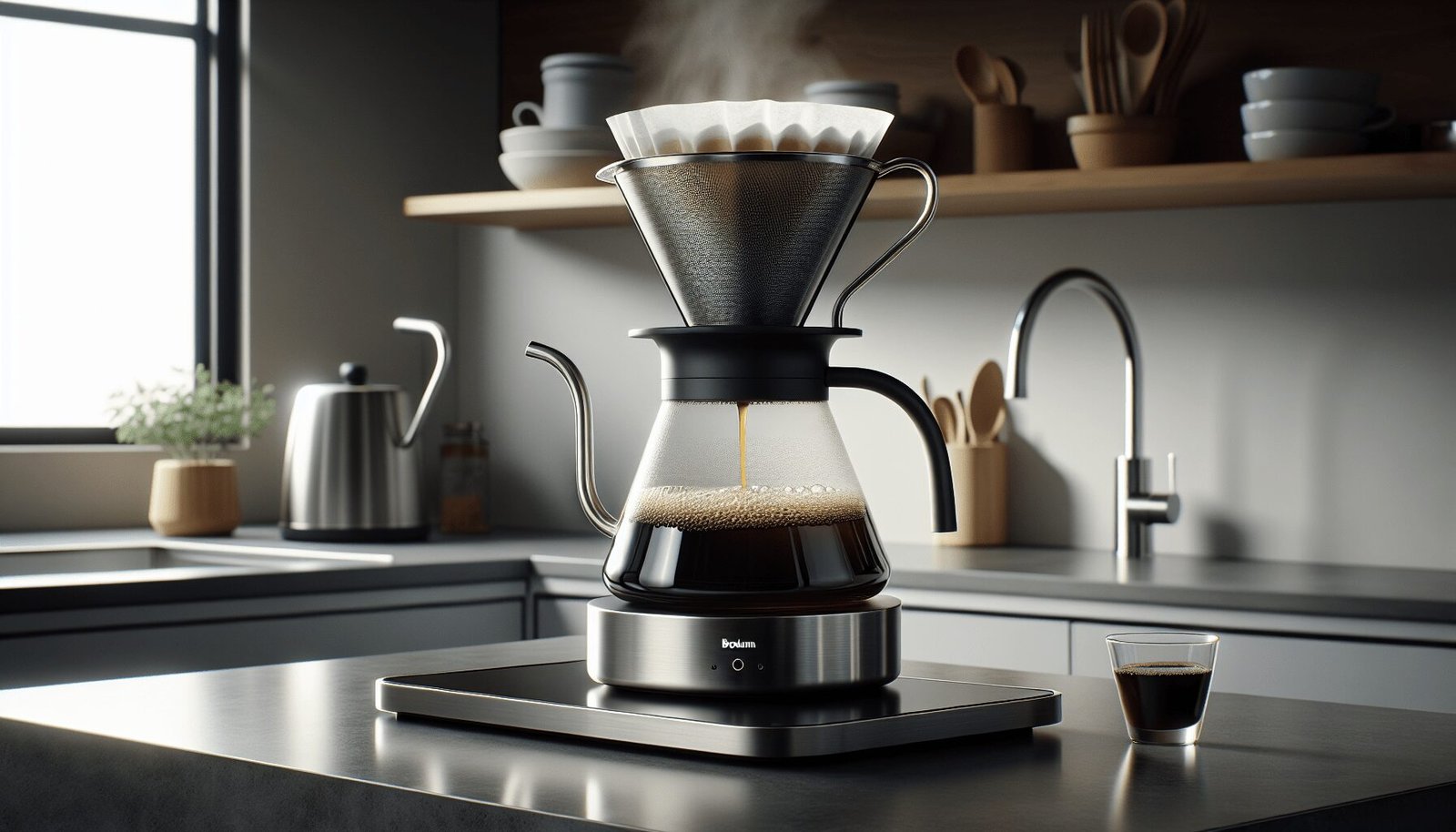
Bodum Pour Over Recipe: Ratios by Carafe Size and Pour Timing
In the “Complete Guide to Using the Bodum Pour Over Coffee Maker with Permanent Filter,” you will find complete, step-by-step instructions for preparing the perfect cup of coffee. This guide carefully details each phase of the brewing process, from the initial setup to the fine-tuning of grind size and water temperature. By following these expertly curated tips, you will maximize the rich, subtle flavors that this innovative coffee maker can deliver. Whether you are a seasoned barista or new to pour-over brewing, this guide equips you with the expertise needed to improve your coffee-making experience to professional standards.
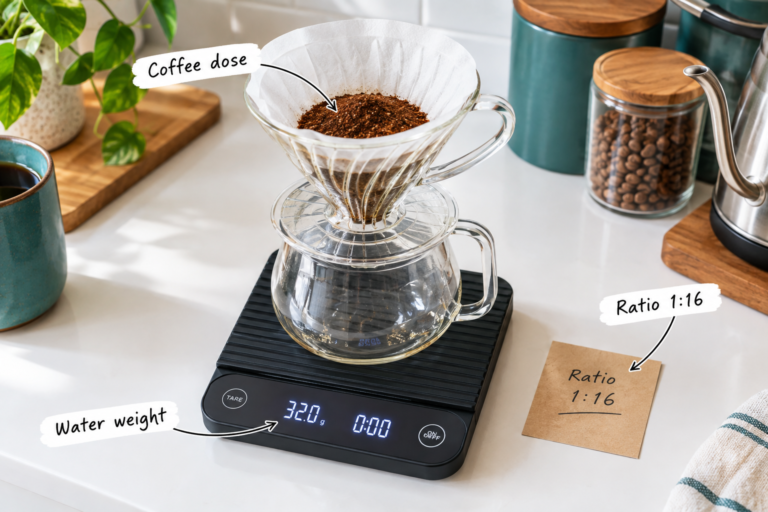
A reliable Bodum pour over recipe uses a 1:16 ratio: 30 grams of medium-coarse coffee to 480 grams of water at 195°F to 205°F. Bloom with 60 grams for 45 seconds, then pour the rest in slow circles in three stages. The metal filter drains fast, so the brew finishes in about 3 minutes.
Complete Guide To Using The Bodum Pour Over Coffee Maker With Permanent Filter
Have You Ever Wondered How to Perfectly Brew Coffee at Home?
If you’re a coffee enthusiast looking to improve your home brewing game, the Bodum Pour Over Coffee Maker with a permanent filter is a fantastic piece of equipment to have in your kitchen. This guide aims to walk you through every aspect of using it so you can brew the perfect cup of coffee every time.
The Bodum Pour Over Coffee Maker is not just about brewing coffee; it’s about experiencing the art of coffee making. By mastering this tool, you’ll not only enjoy richer flavors but also the process itself becomes a delightful daily ritual.
The Basics: What is a Bodum Pour Over Coffee Maker?
Before delving into the details on how to use the Bodum Pour Over Coffee Maker, it’s essential to understand what it is. Pour-over coffee makers are designed to give you greater control over the brewing process compared to traditional drip coffee makers. The Bodum model comes with a reusable permanent filter made from stainless steel, which not only reduces waste but can also improve the coffee’s flavor profile.
Key Features
Here are some of the main features that make the Bodum Pour Over Coffee Maker an excellent choice:
- Permanent Filter: Made from stainless steel, which saves you money and is environmentally friendly.
- Borosilicate Glass Carafe: High-quality, heat-resistant glass ensures durability.
- Cork or Silicone Band: Simplifies handling, adding a layer of safety when pouring.
Benefits
- Cost-Effective: No need for paper filters.
- Eco-Friendly: Reduces waste produced by disposable filters.
- Flavor Preservation: The metal filter allows essential oils to pass through, enriching the flavor.
Preparing Your Bodum Pour Over Coffee Maker
Before you begin the actual brewing process, some preparations are necessary for a smooth experience.
Unboxing and Initial Cleaning
When you first unbox your Bodum Pour Over Coffee Maker, give it a quick wash to remove any manufacturing or packaging residues.
- Disassemble: Remove the filter and any other detachable parts.
- Clean: Wash all parts with warm soapy water.
- Rinse: Make sure to thoroughly rinse to remove soap residue.
- Dry: Let the parts air-dry or use a soft cloth.
Assembling the Coffee Maker
After cleaning, reassemble the coffee maker:
- Place the Filter: Insert the stainless steel filter into the top of the carafe.
- Attach the Band: Secure the cork or silicone band around the neck of the carafe for safe handling.
Grinding Coffee Beans
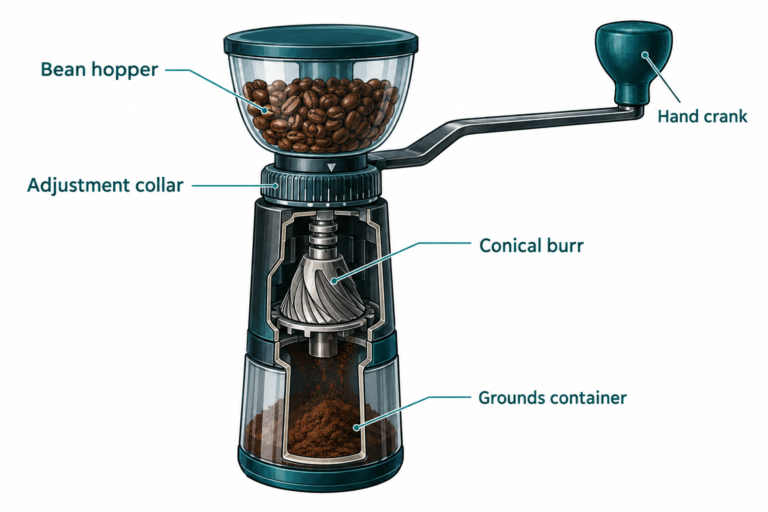
The grind size is key for pour-over coffee. For the Bodum, a medium-coarse grind works best. This grind size strikes a balance, allowing for optimal extraction without clogging the filter.
Here’s a quick guide on grind sizes:
| Type | Description | Example Use |
|---|---|---|
| Coarse Grind | Very chunky, like sea salt | French Press |
| Medium-Coarse | Less chunky, like flaky salt | Pour Over (Bodum) |
| Medium Grind | Similar to sand | Drip Coffee Makers |
| Fine Grind | Slightly finer than table salt | Espresso Machines |
Brewing the Perfect Cup
Now that your Bodum Pour Over Coffee Maker is clean, assembled, and you have your medium-coarse ground coffee, you are ready to brew.
Measuring the Coffee and Water
The coffee-to-water ratio is another key element in the brewing process. A general rule of thumb is 1:15 to 1:17. For every gram of coffee, use 15-17 grams of water.
| Coffee Amount | Water Amount | Coffee-to-Water Ratio |
|---|---|---|
| 20 grams | 300 – 340 ml | 1:15 – 1:17 |
| 30 grams | 450 – 510 ml | 1:15 – 1:17 |
| 40 grams | 600 – 680 ml | 1:15 – 1:17 |
Boiling Water
Boil water to a temperature of around 195-205°F (90-96°C). Using water at this temperature ensures optimal extraction of flavors. You can use a thermometer to measure the temperature accurately.
The Brewing Process
Follow these steps to brew the perfect cup:
- Pre-Wet the Filter: Pour hot water over the stainless steel filter to pre-wet it. This step also heats the carafe.
- Add Coffee Grounds: Place your medium-coarse ground coffee into the filter.
- Pour Water in Circles: Slowly pour the hot water over the coffee grounds in a circular motion, starting from the center and working your way outward.
- Bloom Phase: After pouring the first bit of water, allow the coffee to ‘bloom’ for about 30 seconds. This step releases trapped gases, improving flavor.
- Continue Pouring: Gradually pour the remaining water over the grounds in a steady, circular motion.
- Wait: Allow the water to completely pass through the coffee grounds and filter into the carafe. The entire process should take around 3-4 minutes.
Tips for the Best Brewing Experience
While the basic steps outlined above will get you started, there are several tips and tricks that can help you master the art of using the Bodum Pour Over Coffee Maker.
Using Fresh Coffee Beans
Always use fresh coffee beans for the best flavor. Coffee begins to lose its freshness soon after it’s ground, so grind only what you need just before brewing.
Water Quality
Water quality can significantly impact the taste of your coffee. Use filtered water to eliminate impurities that could affect the flavor.
Consistent Pour
Maintain a steady, controlled pour to avoid disrupting the coffee grounds’ even saturation. A gooseneck kettle can be particularly useful for achieving this.
Experiment with Ratios
Feel free to experiment with different coffee-to-water ratios to find your perfect cup. Everyone’s taste is unique, and what works best for you may not align with standard recommendations.
Cleaning and Maintenance
Proper maintenance will ensure that your Bodum Pour Over Coffee Maker lasts a long time and continues to make excellent coffee.
Daily Cleaning
After each use, clean the coffee maker:
- Disassemble: Remove the filter and discard the used coffee grounds.
- Rinse and Wash: Rinse the filter and carafe thoroughly with warm water. Occasionally use mild dish soap.
- Dry: Air-dry all parts before reassembling.
Deep Cleaning
Perform a deep clean once a month to prevent oil build-up and maintain optimal performance.
- Soak Filter: Soak the stainless steel filter in a mixture of 1 part water and 1 part vinegar for 30 minutes.
- Scrub: Use a soft brush to scrub the filter gently, then rinse thoroughly.
- Clean Carafe: Clean the carafe with warm soapy water, taking care to rinse thoroughly to remove any soap residue.
Troubleshooting Common Issues
Sometimes things don’t go as planned. Here are some common issues faced and how to resolve them:
Coffee Tastes Bitter
- Issue: Over-extraction often causes bitterness.
- Solution: Use a coarser grind size or reduce the brewing time.
Coffee Tastes Sour
- Issue: Sour flavors typically signal under-extraction.
- Solution: Use a finer grind size or increase the brewing time.
Slow Drip
- Issue: Water passing through the coffee grounds too slowly.
- Solution: Ensure the grounds are not too fine and the filter is clean.
Bodum Pour Over Recipes by Carafe Size
Bodum still sells the Pour Over in 0.5 liter and 1.0 liter (34 oz) versions, plus a double wall 1.0 liter model. The ratio stays the same across all of them: start at 1:16, then adjust by taste. The grounds soak up roughly twice their weight in water, so you always get less coffee in the carafe than you poured.
| Batch | Coffee | Water | Coffee in the carafe, about |
|---|---|---|---|
| One large mug | 20 g | 320 g | 280 ml |
| 0.5 liter carafe, full | 28 g | 450 g | 395 ml |
| 1.0 liter carafe, half | 30 g | 480 g | 420 ml |
| 1.0 liter carafe, full | 55 g | 880 g | 770 ml |
A kitchen scale makes these numbers repeatable. Scoops vary with roast and grind, grams do not. Our pour over coffee ratio guide explains how to move between 1:15 and 1:17 once you know which way your cup needs to go.
A Timed Pour Schedule for the Metal Filter
The stainless mesh drains faster than paper, so the pour does more of the work. Split the water into stages and the bed stays evenly wet instead of channeling down one side. This schedule uses 30 g of coffee and 480 g of water.
- 0:00: Pour 60 g of water to bloom, making sure every ground is wet. Give the carafe a gentle swirl.
- 0:45: Pour slowly in small circles up to 200 g total.
- 1:15: Pour up to 340 g, keeping the stream in the middle of the bed and away from the mesh walls.
- 1:45: Pour the rest, up to 480 g.
- About 3:00 to 3:30: The drawdown finishes. Lift the filter out and set it on a saucer.
A slow, thin stream is the difference between an even bed and a crater. A gooseneck kettle gives you that control. A regular kettle dumps water in bursts that the mesh lets straight through.
Metal Filter vs Paper: What Changes in the Cup
| What matters | Bodum stainless mesh | Paper filter cone |
|---|---|---|
| Body | Fuller, closer to a French press | Lighter and cleaner |
| Coffee oils | Pass into the cup | Mostly held back by the paper |
| Fine sediment | A little at the bottom | Almost none |
| Ongoing cost | None after purchase | A box of filters every few weeks |
| Cleanup | Knock out the grounds and rinse the mesh | Bin the filter |
If you love clarity in a light roast, a paper cone will suit you better. If you want a heavier, rounder mug and hate buying filters, the Bodum earns its spot. Our best pour over coffee maker guide compares drippers from both camps.
When the Bodum Cup Goes Wrong
- Sludge at the bottom of the mug: Grind a step coarser and leave the last splash in the carafe. Fines settle there.
- Drawdown finishes in under 2 minutes and tastes thin: Grind finer or pour more slowly in the middle stages.
- The mesh drains slower every week: Coffee oil is clogging the holes. Vinegar is better at mineral scale than oil, so soak the filter in hot water with a coffee equipment cleaner or baking soda, then scrub with a soft brush.
- Coffee cools fast in the glass: Rinse the carafe with hot water first, or look at the double wall version.
For more brewing guides and gear picks, visit the Coffee Rank IQ homepage.
FAQ
What is the best coffee to water ratio for a Bodum pour over?
Start at 1:16, which is 30 grams of coffee to 480 grams of water. Go to 1:15 for a stronger cup or 1:17 for a lighter one. Change the ratio only after your grind size is dialed in.
What grind size works with the Bodum permanent filter?
Use medium-coarse, a little coarser than you would for a paper cone. The stainless mesh has larger openings than paper, so a fine grind pushes silt into your mug and can slow the drain.
How long should a Bodum pour over take?
Plan on about 3 to 4 minutes from the first bloom pour to the end of the drawdown. If it finishes much faster, grind finer or pour more slowly. If it runs past 4 minutes, grind coarser or give the filter a deep clean.
Conclusion
The Bodum Pour Over Coffee Maker with a permanent filter is a versatile, sustainable, and efficient tool for brewing delicious coffee. By getting the basics right (preparation, grind size, ratio and a steady pour), you can enjoy café-quality coffee at home.
Taking the time to understand and improve your coffee-making skills will definitely pay off, not just in the taste but in the satisfaction gained from the process. Whether you’re a novice or a seasoned coffee enthusiast, using the Bodum Pour Over Coffee Maker elevates both your brewing technique and the coffee experience.
By following this guide, you have all the essential knowledge to make the most of this exemplary coffee maker. Enjoy your brew!