DeLonghi La Specialista: Grinder and Machine in One
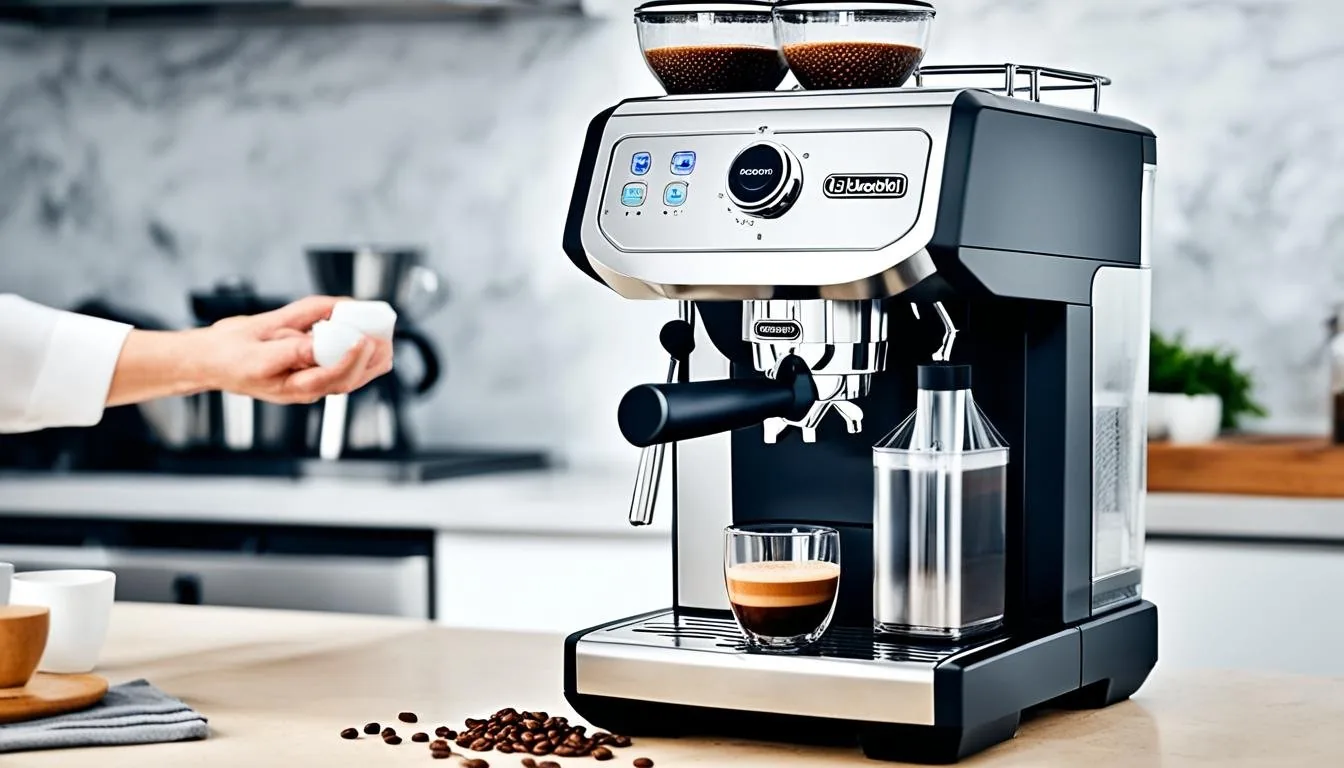
The DeLonghi La Specialista solves the most annoying part of starting espresso at home: buying a grinder, a machine, a tamper and a dosing funnel separately, then working out why they do not get along. Every model in the family puts a burr grinder, a 51 mm portafilter and a steam wand on one chassis. You grind straight into the portafilter, tamp, lock in and brew, all without leaving the footprint of one appliance.
The catch is that the name covers a whole range. The original model from 2019 has a tamping lever and sensor grinding. The Arte is the simpler entry point with a hand tamper. The Arte Evo and Opera add cold drinks, the Maestro adds automatic milk, and the Touch adds a screen. They share an idea and differ in the details that decide your mornings. Below: the lineup, who each machine suits, how the workflow runs, the settings that get you a good first shot, milk, cleaning, the flaws, and the machines worth comparing.
Quick Answer
The DeLonghi La Specialista is a semi-automatic espresso machine with a built-in burr grinder, a 51 mm portafilter and a manual steam wand. The original EC9335M adds sensor grinding, a Smart Tamping Station lever and two heating systems; the Arte keeps the grinder and wand with a hand tamper; the Opera moves to 15 grind settings and cold extraction; the Maestro adds automatic milk. Buy a DeLonghi La Specialista if you want café-style shots and real steamed milk without a separate grinder. Skip it if you plan to chase very light roasts, where its small number of grind steps gets in the way.
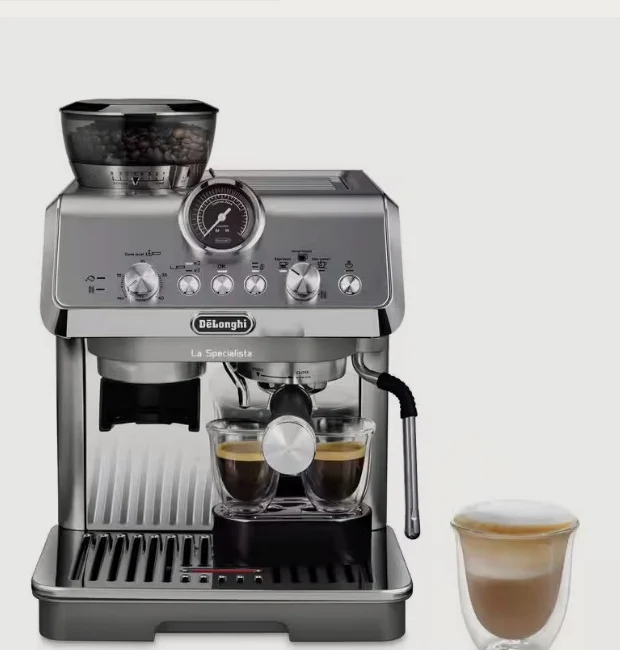
DeLonghi La Specialista Lineup at a Glance
| Model | Grinder | Tamping | Temperature | Milk | Worth knowing |
|---|---|---|---|---|---|
| La Specialista (EC9335M) | 6 settings with sensor grinding | Smart Tamping Station lever | Active Temperature Control, two heating systems | Advanced Latte System wand with FLAT and FOAM | 19 bar pump, separate hot water spout, 2 L tank |
| La Specialista Arte (EC9155) | Conical steel burrs, 8 settings | Separate hand tamper | 3 infusion temperatures | My LatteArt wand | Dosing funnel included, 1.7 L tank, 250 g hopper |
| La Specialista Arte Evo (EC9255) | 8 settings | Separate hand tamper | 3 infusion temperatures | My LatteArt wand | Cold Extraction for Cold Brew and Espresso Cool |
| La Specialista Prestigio (EC9355M) | Sensor grinding | Smart Tamping Station lever | 3 temperature profiles | Manual steam wand | Pre-infusion that adjusts to the dose, 51 mm brass portafilter |
| La Specialista Opera (EC9555) | 15 settings | Built-in tamping lever | Low, medium, high | Manual steam wand | Cold Brew and Espresso Cool, 2 L tank |
| La Specialista Maestro (EC9665) | 8 settings, two dosing sensors | Smart Tamping Station lever | 5 infusion profiles | LatteCrema automatic system plus manual wand | 6 drink selections |
| La Specialista Touch (EC9455) | Bean Adapt Technology | Automatic tamping | Preset recipes | Automatic steaming | 3.5 inch touchscreen, 10 recipes |
Specs from DeLonghi’s EC9335M product page and instruction manual, Whole Latte Love’s Arte listing, Seattle Coffee Gear’s Touch listing, and the Tom’s Coffee Corner Opera test. Model names and features vary slightly by country, so check the model number on the box.
Who Should Buy the DeLonghi La Specialista
Buy one if you want to make espresso and milk drinks with your own hands but you do not want a counter covered in separate gear. The family suits the person who drinks two or three milk drinks a day, likes medium and darker roasts, and wants the shot to come out the same on Tuesday as it did on Sunday. The lever models are especially kind to beginners, because tamping is the step most new owners get wrong and the lever takes it out of your hands.
It also suits a household where two people make coffee differently. One person can grind, tamp and steam by hand. The other can lean on the presets on the Maestro or the Touch. Both use the same beans and the same machine.
Skip it if you already own a good grinder. You would be paying for a second one inside the machine. A standalone machine such as the DeLonghi Dedica Deluxe paired with the grinder you have will cost less and give you finer grind control. Skip it too if your favorite coffee is a pale, floral Ethiopian roast. Those beans want tiny grind adjustments, and six or eight steps can leave you stuck between a sour shot and a choked one. The Opera’s 15 steps narrow that gap. If light roasts fill your shelf, the DeLonghi La Specialista Opera is the model in the range to look at first.
How the Machine Works
The workflow follows the same four moves on every model. Beans sit in a hopper on top. You lock the portafilter into the grinder cradle and the burrs grind straight into the basket. You tamp. You move the portafilter to the group head and press a button.
The details are where the models split. On the original EC9335M, the Prestigio and the Maestro, sensor grinding watches the grind and stops when the dose is complete, and the Smart Tamping Station is a lever on the side of the machine. Pull it down and it presses the grounds in the basket with consistent force. The force is printed on the lever, and a light confirms the tamp. On the Arte and Arte Evo, you grind into a dosing funnel and tamp by hand on the included tamping station. The Touch goes further and tamps for you.
Behind the group head, the original model runs two independent heating systems. A thermoblock heats water for extraction, and a second system heats for steam. That means you can pull a shot and go straight to steaming milk without waiting for one system to swing between temperatures. A pressure gauge on the front shows the shot passing through a pre-infusion zone and into an optimal zone, which gives you a quick visual check before you taste anything.
On the original DeLonghi La Specialista, a separate hot water spout sits next to the group head, so an Americano does not require moving the cup or swapping attachments. The Arte keeps Americano and hot water presets of its own.
Setup and Your First Dial-In
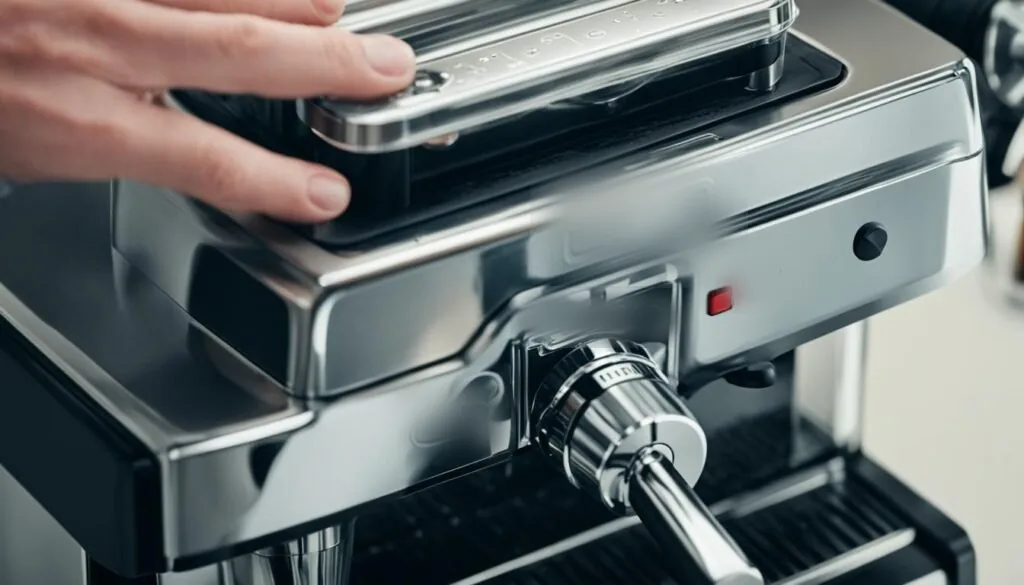
DeLonghi’s manual for the original model lays out a first-use routine that applies across the range. Wash the portafilter, baskets and pitcher. Fill the tank to MAX and switch on. Run hot water through the system until it primes, then rinse the internal circuit with at least a litre of water before you make any coffee. The manual also warns that the first four or five coffees will be inconsistent while the grinder settles in, so do not judge the machine on its first espresso.
- Start at the factory grind. The original model has six grind settings, from 1 (finest) to 6 (coarsest), and ships at 3. The Arte has eight and ships at 5.
- Set the dose. On the original, start the dose dial at “min” and turn it a little at a time until the grounds reach the grey sector in the basket. On the Arte, dose to the raised line inside the filter basket. The numbers on the dial are reference marks once the dose is right, not grams.
- Tamp. Pull the tamping lever fully on the lever models, or tamp level by hand on the Arte. Loose grounds left on the rim after tamping do not affect the shot, according to DeLonghi’s Arte guide.
- Brew and watch the gauge. The needle should pass through pre-infusion and settle in the optimal zone.
- Adjust one thing at a time. DeLonghi says to move the grinder one step and make at least five coffees before you change it again. Tasting after a single shot makes you chase noise.
Weighing your shot helps too. A small scale under the cup tells you whether a change in taste came from the grind or from a heavier pour. Our guide on how to dial in espresso covers ratios and timing in more depth.
Settings That Work, by Roast
DeLonghi’s quick start guide for the Arte maps each roast to a grind range and an infusion temperature. The three temperature levels sit between roughly 92°C and 96°C, measured as the water in the thermoblock rather than the drink in your cup.
| Roast | Arte grind setting | Infusion temperature | What to taste for |
|---|---|---|---|
| Light | 3 to 4 | MAX | Sweet acidity with no sharp, sour edge |
| Medium and medium dark | 4 to 5 | MAX or MED | Caramel and chocolate, a syrupy body |
| Dark | 5 to 6 | MIN | Cocoa and smoke without ashy bitterness |
On the original model, start at grind 3 and adjust from there. The manual’s own rule is simple: weak, watery shots with thin crema mean the grind is too coarse or the dose is too low, so grind finer or add coffee. Bitter, astringent shots mean the grind is too fine or the dose is too high, so go coarser or take coffee away. If the gauge needle swings into the red over-pressure zone, clean the filter and check the dose is not above the mark.

Steaming Milk
The original machine uses what DeLonghi calls the Advanced Latte System: a wand with a ring you set to FLAT for hot milk with little foam, or FOAM for cappuccino. It is forgiving, close to a Panarello wand, and you do not need technique to get usable foam. DeLonghi’s manual puts ideal milk temperature at 60°C, or 140°F.
The Arte and Arte Evo use the My LatteArt wand, which behaves more like a café wand. Whole Latte Love lists a stainless wand with two steam holes on the Arte, and Coffeeness judged it close to commercial grade in its review. That gives you more control and more room to mess up. The routine that works:
- Purge the wand into the drip tray for a second to clear condensed water.
- Fill a cold pitcher with cold milk to just below the spout. A 12 oz pitcher suits one or two drinks and leaves room for the milk to grow.
- Put the tip just under the surface and open the steam. Listen for a gentle tearing sound for a few seconds while the milk grows.
- Sink the tip a little deeper and tilt the pitcher so the milk spins.
- Stop when the pitcher is too hot to hold comfortably, around 140°F. Wipe the wand with a damp cloth and purge again.
The Maestro adds the LatteCrema System, an automatic milk unit with three foam levels that pours milk and coffee in the right order for six drinks. It is the only model in the family where you can make a cappuccino without touching a wand, and the manual wand stays available for the days you want to pour latte art.
Cleaning and Maintenance
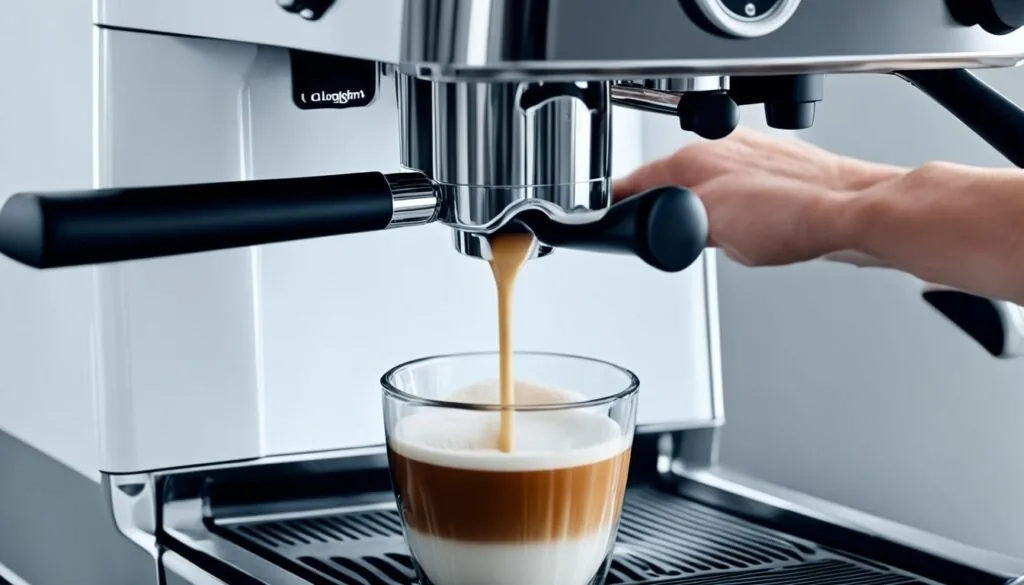
Daily cleanup on a DeLonghi La Specialista takes two minutes. Knock out the puck, rinse the basket and portafilter, wipe and purge the steam wand right after every drink, and empty the drip tray before it overflows. Milk that dries on the wand bakes on within minutes, so the wipe is the step that matters most. On the Maestro, the LatteCrema unit detaches for rinsing.
Descaling. The descale light comes on at an interval set by your water hardness. Test the water with the strip in the box, which reads 1 for soft, 2 for medium and 3 for hard, and set that level in the menu so the reminder fits your tap. DeLonghi’s manual calls for its own descaler: one 100 ml packet poured into the tank up to level A, then topped up with water to level B. Remove any water softener filter and the portafilter first, put a container under the spouts, turn the dial to the descale position and start the cycle. Rinse the tank and run a full tank of clean water through afterward. Our coffee machine descaling guide explains why hard water shortens the interval.
Grinder care. Oils and fines build up on the burrs and slowly change the grind. The manual’s routine for the original model:
- Empty the bean hopper and run the grinder until no coffee comes out.
- Switch the machine off and remove the bean container.
- Turn the grind selector counterclockwise to REMOVE and lift out the upper burr by its handle.
- Brush the burr and vacuum the grinding chamber.
- Refit the burr, set your grind level and pull the handle to confirm it is seated.
Keep oily, very dark beans out of the hopper if you can. They glue fines to the burrs faster. Worn burrs can be replaced by an authorized DeLonghi service center.
Five Features We Love
- The grinder lives inside the machine. One plug, one footprint, and no grounds tracked across the counter between two appliances.
- The tamping lever. On the lever models, tamping becomes a pull of the arm. Level, consistent pucks without practice.
- A gauge with zones. Pre-infusion and optimal zones tell you a shot went wrong before you taste it.
- Two heating systems on the original. Shot, then steam, with no waiting in between.
- A standard 51 mm basket. The Arte ships with non-pressurized baskets, and the size accepts aftermarket baskets and tampers. Our portafilter size guide lists what fits.
What to Watch Out For
- Few grind steps. Six on the original and eight on the Arte and Maestro. Coffeeness named the eight levels as the Arte’s main limit, and light roasts can fall between two settings.
- Pressurized baskets on the original. The EC9335M shipped with double-wall baskets. They forgive a bad grind, and they also cap how good a shot can get. Buy 51 mm single-wall baskets once you are dialed in.
- Grinder noise. Coffeeness recorded the Arte’s grinder at 80.4 dB. Early risers in apartments should know that before the first 6 a.m. shot.
- Cup clearance. The Arte’s space under the spouts is limited, so tall travel mugs may not fit.
- A gauge without numbers. The Opera reviewer at Tom’s Coffee Corner noted the gauge shows zones but no bar markings, and that the Opera’s bean hopper does not lift out.
- A smaller accessory market. 51 mm gear is common, but the best tampers and puck screens arrive in 58 mm first.
Pros and Cons
| Pros | Cons |
|---|---|
| Burr grinder, machine and steam wand in one footprint | Only 6 or 8 grind steps on most models |
| Tamping lever removes the hardest beginner step | Original ships with pressurized baskets |
| Pressure gauge with clear zones | Gauge has no bar numbers |
| Two heating systems on the original for shot then steam | Grinder is loud by reviewer measurement |
| Models from fully manual Arte to automatic Touch | Model names and features vary by country |
DeLonghi La Specialista vs the Alternatives
| Option | Best for | Trade-off |
|---|---|---|
| La Specialista Arte | Manual control in one compact machine | Hand tamping and 8 grind steps |
| Breville Barista Express Impress | Assisted tamping with a 54 mm portafilter | Different workflow, larger footprint |
| Breville Barista Pro | Fast heat-up and a digital screen | No tamping help |
| DeLonghi Dedica plus a separate grinder | Narrow counters, owners who already have a grinder | Two appliances to clean and power |
| DeLonghi Magnifica Evo | One-button drinks with no grinding or tamping skills | Less control over the shot |
The closest rival is Breville. The Breville Barista Express Impress also puts a grinder and tamping help on one machine, and the Breville Barista Pro trades tamping help for speed. Our DeLonghi vs Breville comparison picks a winner at each price tier. If you would rather press one button and walk away, the DeLonghi Magnifica Evo is the super-automatic in the same brand family. For more side-by-side machine verdicts, browse the Coffee Rank IQ espresso machine reviews before you settle on a setup.
As an Amazon Associate, Coffee Rank IQ earns from qualifying purchases.
The Verdict
The DeLonghi La Specialista earns its counter space by removing two purchases and two skills. The grinder is already in the chassis, and on the lever models the tamp is a pull of the arm. You still decide the grind, the dose and the milk, so the coffee stays yours. Pick the original or the Prestigio if you want help tamping, the Arte if you want the most hands-on version, the Opera for light roasts and cold drinks, and the Maestro if two people in the house want cappuccinos without learning a wand. If you already own a good grinder or live on light Ethiopian roasts, spend the money on a standalone machine and a grinder with finer steps instead.
DeLonghi La Specialista FAQ
Keep reading
- Best Espresso Machine With Grinder Built In: 7 Picks
- DeLonghi vs Breville: A Winner at Every Price
- How to Dial In Espresso: Grind, Ratio, Time, and Taste
- Coffee Machine Descaling: How Often and What to Use
- DeLonghi Dedica Deluxe Buyer’s Guide
Start from the Coffee Rank IQ homepage for more guides.
DeLonghi La Specialista: The Short Version
The DeLonghi La Specialista puts a burr grinder, a 51 mm portafilter and a steam wand in one machine, and the lever models tamp for you. Start at the factory grind, change one step at a time, and descale when the light says so. Choose the DeLonghi La Specialista model by how much help you want: Arte for hands-on, the original or Prestigio for tamping help, Opera for cold drinks, Maestro for automatic milk.