How to Make Cold Foam at Home…No Starbucks Line Required
Quick answer
Cold foam is cold milk (or cream) aerated with a frother, blender, jar, or French press until it thickens into a pourable, silky layer that floats on iced coffee without melting into it. Learning how to make cold foam at home takes under two minutes, costs a few dollars per batch, and needs no espresso machine, no steam wand, and no heat at all.
I've made a version of this most mornings for the past year, mostly because paying $1.25 extra for a Starbucks add-on started to feel like a tax on my own kitchen.
Key takeaways
- How to make cold foam boils down to trapping air bubbles in cold liquid, using a frother, blender, jar, or French press instead of steam.
- Heavy cream isn't required. Whole milk, 2% milk, or a barista-style oat milk can all foam with the right fat content and technique.
- A 3:2:1 ratio of heavy cream, milk, and vanilla syrup is the closest home match to Starbucks-style sweet cream cold foam.
- Cold foam only works cold. Heat breaks the protein structure that holds the bubbles, so it deflates fast in hot coffee.
- Homemade cold foam lasts about 1 to 2 hours on top of a drink before it flattens, and up to 2 to 3 days refrigerated if unwhipped.
- A $10 to $15 handheld frother, like a Zulay handheld frother, does the job as well as a $100 Nespresso Aeroccino for this specific task.
- Cold foam and whipped cream look similar but behave differently: one pours and blends into the drink, the other sits stiff on top.
How to make cold foam at home
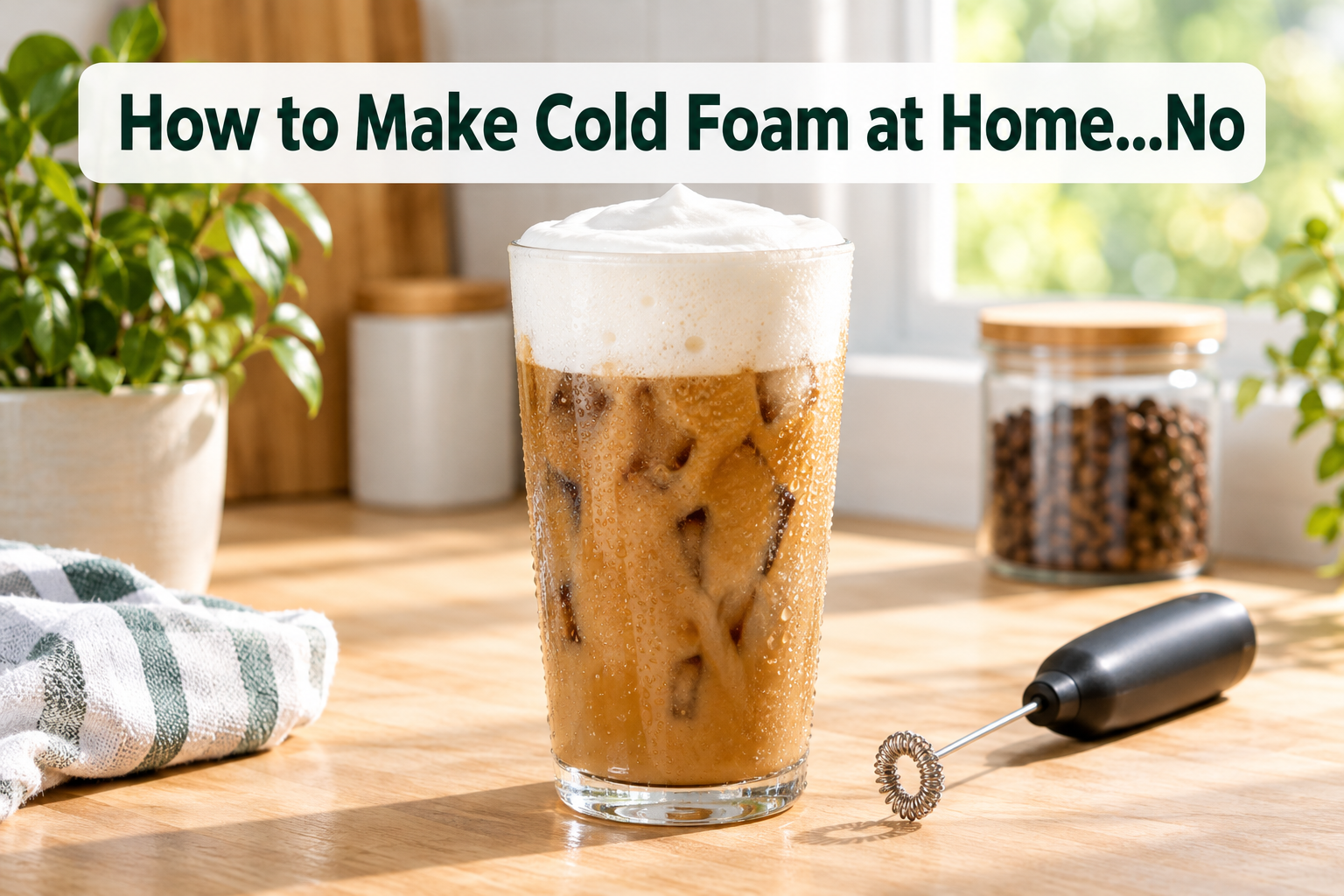
The direct answer: pour very cold milk or a milk-and-cream blend into a jar or frother cup, add sweetener if you want it, then aerate for 15 to 30 seconds until the mixture roughly doubles in volume and turns pale and glossy. That's the entire mechanism behind every version of how to make cold foam you'll find, from a $1.25 Starbucks upcharge to a $120 machine.
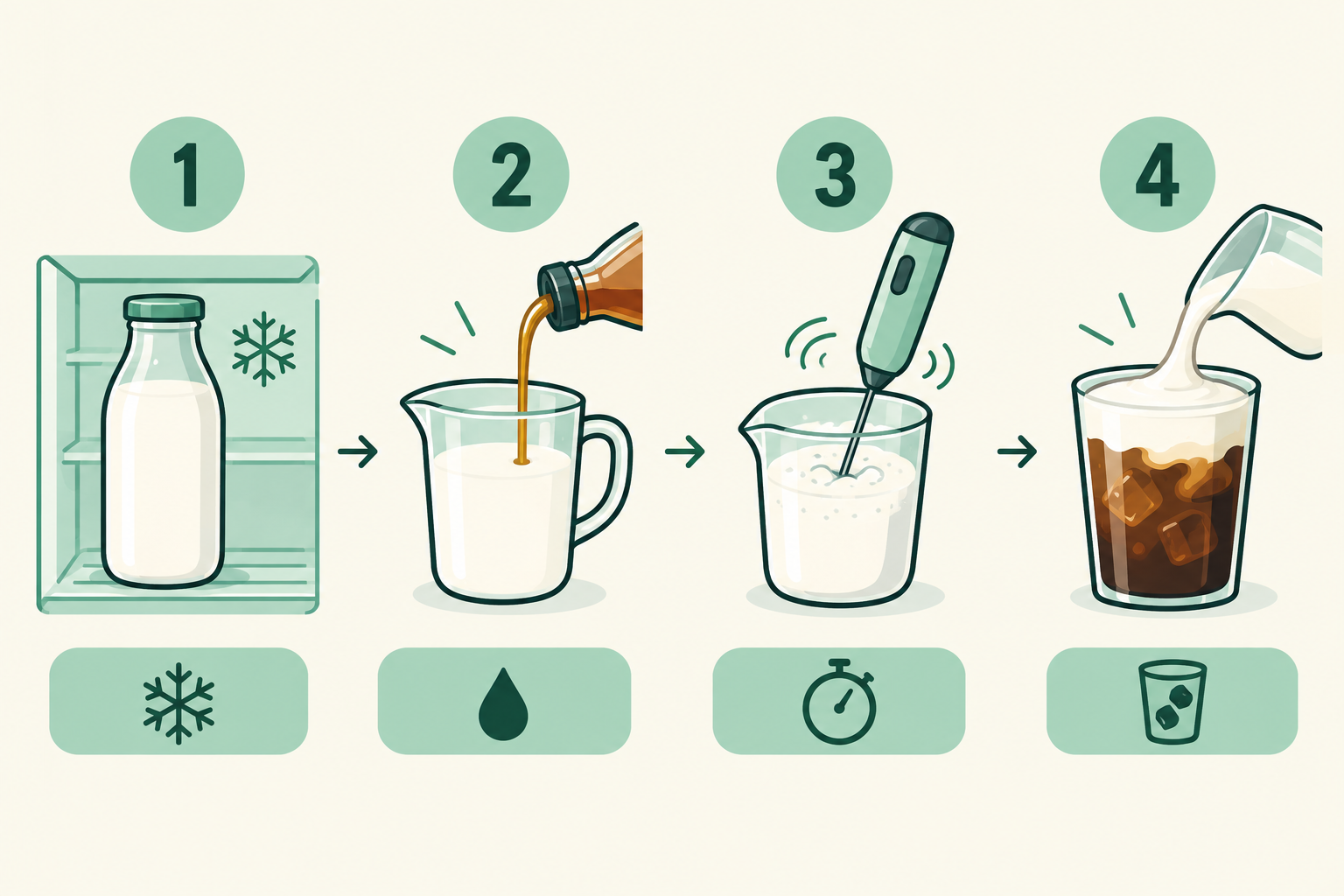
Here's the basic method, the one I use most days:
- Chill your milk or cream. Cold liquid holds air bubbles longer than room-temperature liquid because the fat stays firm instead of collapsing.
- Pour 2 to 4 tablespoons into a small jar, frothing cup, or French press.
- Add sweetener now if you're using one. Sugar and syrup dissolve better before aeration than after.
- Froth for 15 to 30 seconds, depending on your tool. A handheld frother does it fastest; a jar shake takes about a minute.
- Pour the foam over iced coffee or cold brew. It should sit on top, not sink in.
That five-step version scales to every recipe below. If you already own a milk frother for lattes, you already own everything you need. Our guide to frothing milk for homemade lattes covers the same tool from the hot-milk side, which is worth reading if you're building out a full home espresso setup.
What is cold foam made of
Cold foam is almost always some combination of cold milk or cream, air, and optional sweetener. Nothing about the ingredient list is complicated; the texture comes entirely from how much air gets folded into the fat and protein.
Starbucks' own version, introduced in 2014, started as plain 2% milk aerated until velvety, then expanded into sweetened and flavored variations across the menu. At home, most 2026 recipes settle on one of two builds:
- Sweet cream style: heavy cream, milk, and a flavored syrup (roughly 3 tablespoons, 1 tablespoon, and 1 tablespoon), frothed until thick but still pourable.
- All-milk style: 2 tablespoons of milk or light cream, a few drops of vanilla extract, and a pinch of salt, frothed the same way.
Both versions get their body from fat and casein protein trapping air, not from any thickener or gum. If a recipe calls for cornstarch or gelatin, that's a stabilizer trick, not how cafes actually make it.
Can you make cold foam without a milk frother
Yes. A mason jar, a French press, or a blender all aerate cold milk without a dedicated frother, though each takes longer and produces a slightly different texture. This is the cheapest way to make cold foam at home if you don't want to buy another gadget.
Mason jar method: Fill a jar one-third full with cold milk and syrup, seal it, and shake hard for 60 to 90 seconds. The foam is looser and needs a few seconds to settle before it holds a shape.
French press method: Pour cold milk into the carafe, then pump the plunger up and down rapidly for 30 to 45 seconds without pressing it all the way down. This gets closest to the aerated texture of a cafe frother.
How to make cold foam with a blender: Add cold milk and any syrup to a blender or a milk-frothing attachment on an immersion blender, then blend on high for 20 to 30 seconds. A blender tends to produce the thickest, most stable foam of the no-frother options because the blade moves faster than a hand shake.
Choose the jar if: you want zero new equipment and don't mind foam that settles in a couple of minutes. Choose the blender if: you already own one and want foam that holds its shape closer to a cafe pour.
If you decide the frother route is worth it anyway, a $10 to $15 Zulay handheld frother wand or a countertop Nespresso Aeroccino both work, though the Aeroccino is built for hot milk first and cold foam second, so check the settings before buying one just for this.
Best milk for cold foam at home
Whole milk and heavy cream foam the most easily because their fat content gives bubbles something to hold onto, but 2% milk, oat milk, and even plain water-based syrups can produce usable foam with the right technique. The fat percentage changes how thick and long-lasting the foam is, not whether foam forms at all.
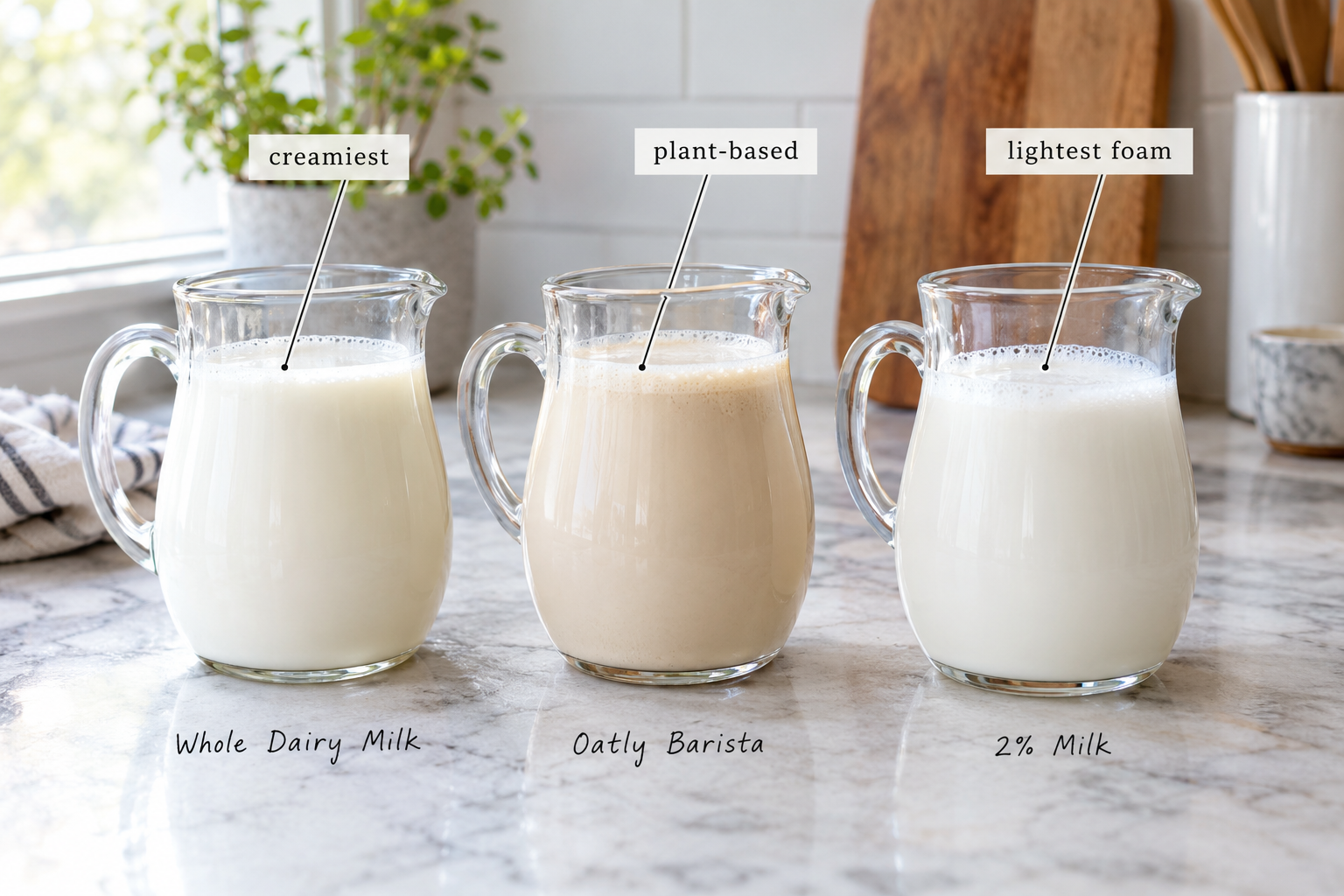
| Milk type | Foam thickness | Best for |
|---|---|---|
| Heavy cream + milk | Thickest, most stable | Sweet cream cold foam |
| Whole milk | Medium-thick | Everyday cold foam |
| 2% milk | Medium | Starbucks-style lighter foam |
| Oat milk (barista blend) | Medium, slightly looser | Dairy-free cold foam |
| Skim milk | Thin, deflates fastest | Not recommended alone |
Can you make cold foam with oat milk? Yes, and it's now mainstream enough that Starbucks lists nondairy vanilla sweet cream cold foam on its own menu. The key is using a barista-formulated oat milk rather than a standard carton. Oatly Barista is built with extra fat and protein specifically so it foams like dairy, which regular oat milk usually can't do well.
Can you make cold foam with just milk? Yes. Plain milk with no cream and no syrup will foam if it's cold and you froth it long enough, though it won't be as thick or long-lasting as a cream-based version. This is the simplest possible answer to how to make cold foam for coffee when you don't want to measure anything.
Cold foam recipe with vanilla syrup (Starbucks-style sweet cream)
The most requested home version is vanilla sweet cream cold foam, built to copy the Starbucks add-on using a roughly 3-to-2-to-1 ratio of heavy cream, milk, and vanilla syrup. This is the recipe worth bookmarking if you're chasing that specific cafe flavor.
Ingredients:
- 3 tablespoons heavy cream
- 1 tablespoon milk, any fat level
- 1 tablespoon vanilla syrup
Method:
- Combine all three in a small jar or frothing cup, cold from the fridge.
- Froth or shake for 15 to 25 seconds until light and foamy but still pourable, not stiff.
- Pour over iced coffee or cold brew, leaving room at the top of the glass.
Multiple 2026 recipe write-ups converge on this same ratio, and copycat versions shake it together in a jar for closer to 1 to 2 minutes if a frother isn't available. This is functionally the same recipe Starbucks scaled into products, including caramel and other seasonal versions sold at retail.
How to make cold foam without heavy cream
Skip the cream entirely and use 2 tablespoons of milk or light cream with a few drops of vanilla extract and a pinch of salt, frothed the same 20 to 30 seconds as the cream version. This produces a lighter, less rich foam that still holds its shape on top of a cold drink.
Food and beverage editors specifically recommend this simplified build for home use, since it skips a separate carton of heavy cream that might otherwise go unused. Starbucks' own consumer-facing recipe leans this direction too: ¼ cup 2% milk, 1 tablespoon powdered sugar, and ¼ teaspoon vanilla extract, frothed until velvety. If your goal is closer to the in-store lighter foam than the richer sweet cream version, this is the build to use.
Cold foam vs whipped cream: what changes the texture
Cold foam is thin enough to pour and blends slightly into the drink as you sip; whipped cream is stiff enough to hold a peak and sits on top without mixing in. The difference comes down to how much air gets folded in and for how long.
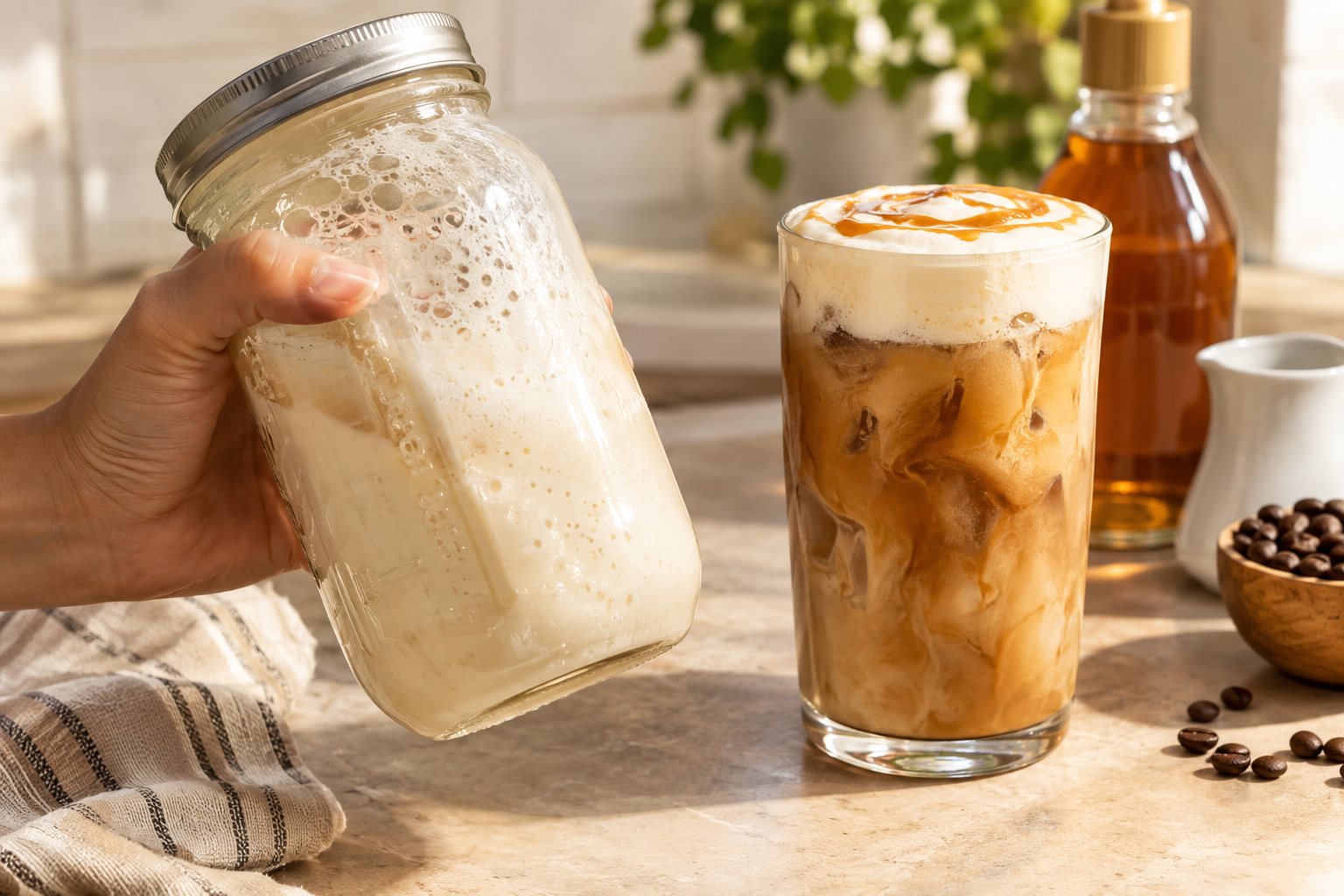
Whipped cream is aerated until it roughly triples in volume and the fat structure locks into a stable, spoonable texture. Cold foam is aerated for a fraction of that time, just enough to double in volume while staying liquid enough to pour through a straw. If you froth cold foam too long, you'll accidentally make whipped cream, and it will stop behaving like a floating layer and start behaving like a topping you need a spoon for.
Common mistake: over-frothing past 30 seconds trying to get "more" foam. Past a certain point, the mixture stiffens and stops pouring the way cafe cold foam does.
Why isn't my cold foam staying fluffy
Cold foam usually collapses because the milk wasn't cold enough, the fat content was too low, or it sat too long before being frothed. Fix the temperature and fat level first; that solves most flat-foam problems.
Quick troubleshooting list:
- Foam disappears in under a minute: milk was too warm going in, or you used skim milk with almost no fat.
- Foam is thin and watery: frothing time was too short. Give it the full 20 to 30 seconds.
- Foam separates into liquid at the bottom of the glass: the drink underneath was warm, and heat is dissolving the bubble structure from below.
- Foam won't form at all with oat milk: you're using a non-barista carton. Switch to a barista-blend oat milk like Oatly Barista, which is formulated with more protein for exactly this job.
Edge case: frothing very fresh, very cold heavy cream for too long turns it into soft whipped cream instead of foam. If that happens, thin it back out with a splash of cold milk and a quick re-shake.
How long does homemade cold foam last (and can you make it ahead)
Homemade cold foam holds its shape on top of a drink for roughly 1 to 2 hours before it starts flattening, but the unwhipped mixture keeps in the fridge for 2 to 3 days if you froth it fresh right before serving. Make the base ahead; froth it at the last minute.
If you're prepping for guests or a busy week, mix your cream, milk, and syrup in a sealed jar and refrigerate it unwhipped. Give it a quick 15 to 20 second froth right before pouring instead of frothing the whole batch in advance. Pre-frothed foam that sits in the fridge overnight will have mostly collapsed by morning, since the air bubbles escape over time even in cold storage.
Does cold foam work in hot coffee or just cold
Cold foam only works as designed on cold drinks. In hot coffee, the heat breaks down the protein structure holding the air bubbles, so the foam deflates within seconds instead of floating on top.
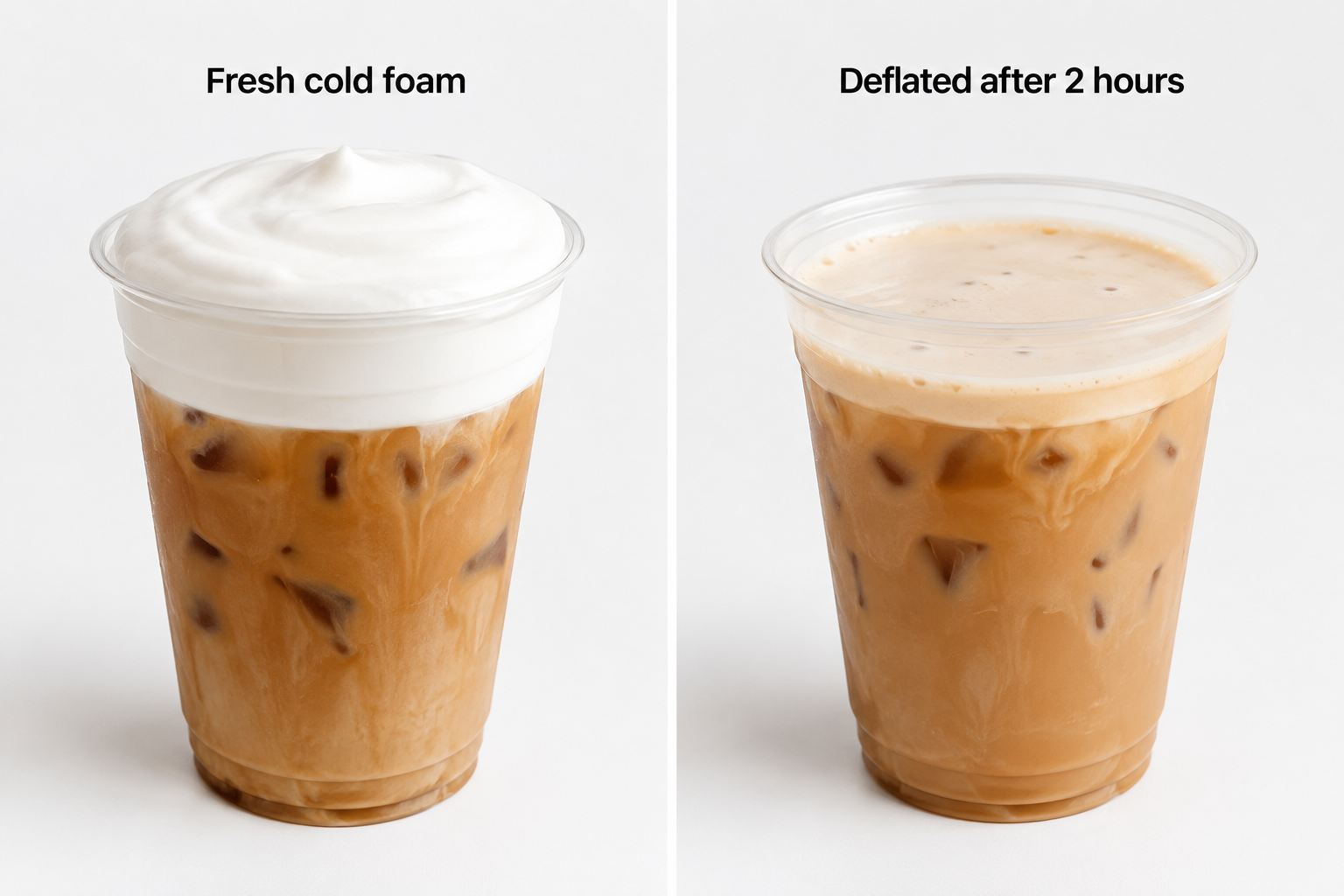
This is a mechanism issue, not a taste issue. The same milk that holds a stable foam cap on iced coffee for an hour will collapse into a thin film on hot coffee almost immediately, because warm liquid destabilizes the fat and protein network that trapped the air. If you want a similar foam effect on a hot drink, that's a job for steamed milk microfoam, which uses heat on purpose and a different technique. Our guide to the perfect espresso drink at home covers that hot-side foam separately.
Cold foam vs cold brew: what's the difference
Cold brew is a coffee concentrate steeped in cold water for 12 to 24 hours; cold foam is a milk topping poured on top of it or on iced coffee. One is the drink, the other is the finish.
People sometimes use the two terms interchangeably because Starbucks pairs them so often on the menu, like "Cold Brew with Vanilla Sweet Cream Cold Foam", but they're unrelated processes. Cold brew's flavor comes from long, low-agitation extraction at room temperature or below, explained in detail in our guide to making the best cold brew coffee. Cold foam's texture comes from air, not extraction. You can put cold foam on iced coffee, cold brew, or even plain iced milk; it changes the topping, not the base drink. For readers building out both, our advanced cold brew methods guide and our beginner's guide to iced coffee pair naturally with any cold foam recipe here.
Is cold foam unhealthy compared to regular milk
Cold foam isn't inherently unhealthy; it's the same milk or cream you started with, just aerated, plus whatever sweetener you add. The health difference comes entirely from the added syrup and the ratio of cream to milk, not from the foaming process itself.
A tablespoon of vanilla syrup adds sugar the same way it would in a latte. A cream-heavy 3:2:1 build adds more saturated fat than an all-milk version. If you're watching sugar or fat intake, the all-milk cold foam recipe or a barista oat milk version gets you the texture without the extra cream. For a broader look at trimming sugar and fat from typical coffee orders, see our guide on making your coffee order healthier.
Cheapest way to make cold foam at home
The cheapest way to make cold foam at home uses a mason jar you already own, cold milk from your fridge, and nothing else, which brings the cost to whatever a splash of milk costs you. No frother purchase required.
If you're going to make cold foam regularly, though, a $10 to $15 Zulay handheld frother pays for itself within a couple of weeks compared to a $1.25 Starbucks add-on charged every visit. That's the practical tradeoff: free with a jar and some arm effort, or a few dollars in equipment for faster, more consistent results every morning.
FAQ
Does cold foam need special milk to work? No. Standard whole milk, 2% milk, or a barista-blend oat milk like Oatly Barista will all foam. Lower-fat milks foam thinner and collapse faster than cream-based mixes.
Can I use the same frother I use for hot lattes? Yes. A handheld frother, an Aeroccino, or a French press all work for both hot and cold foam. Only the milk temperature changes.
What's the actual ratio for Starbucks-style sweet cream cold foam? Roughly 3 tablespoons heavy cream, 1 tablespoon milk, and 1 tablespoon vanilla syrup, frothed 15 to 25 seconds.
Will cold foam work on drip coffee instead of espresso or cold brew? Yes, as long as the drip coffee is iced or cold. The foam doesn't care what's underneath; it only cares about temperature.
Why does my cold foam taste watery even though it looks thick? You likely used skim or low-fat milk. Switch to whole milk, 2%, or add a small amount of heavy cream to the mix.
Is store-bought cold foam different from homemade? Packaged versions, including retail cold foam and flavored cold brews, use the same basic milk-and-air structure but are stabilized for shelf life. Homemade versions taste fresher but need to be frothed right before serving.
Conclusion
How to make cold foam at home isn't a technique cafes are hiding from you; it's cold milk or cream, aerated for under 30 seconds, poured over an iced drink. The variables that actually matter are milk fat, temperature, and frothing time, not the price of the equipment. Start with the jar-shake method if you're testing the idea, move up to a $10 handheld frother if you like it enough to make it a habit, and keep the vanilla sweet cream ratio (3:2:1, cream to milk to syrup) on a sticky note near your fridge. The next useful step is deciding what's underneath the foam: try it on a batch of homemade cold brew this weekend and see which base you actually prefer.
Keep Exploring Coffee Rank IQ
- Coffee Rank IQ home: reviews, brewing guides, and coffee science
- How to Make an Iced Latte at Home Without Watery Regret
- How to Make Whipped Coffee: Dalgona in 5 Minutes
- Best Espresso Beans for Lattes, Straight Shots, and Budgets
- Best Milk Frother for Lattes at Home: Handheld vs Electric
References
- www.reddit.com/r/starbucks/comments/py4y1o/single_serve_cold_foam_recipe_former_barista
- www.hummingbirdhigh.com/2022/08/vanilla-sweet-cream-cold-foam-a-copycat-starbucks-recipe.html
- myeverydaytable.com/how-to-make-sweet-cream-cold-foam
- about.starbucks.com/press/2026/how-cold-foam-is-bringing-new-flavors-into-coffee-at-starbucks
- www.acouplecooks.com/how-to-make-cold-foam
- www.target.com/s/starbucks+cold+foam
- www.foodandwine.com/cold-foam-at-home-12063832
- www.starbucks.com/menu/product/2123880/iced
- www.businessinsider.com/what-is-starbucks-cold-foam-vanilla-sweet-cream-iced-coffee-2023-8
- www.tastingtable.com/1283852/starbucks-cold-foam-flavors-ranked-worst-best