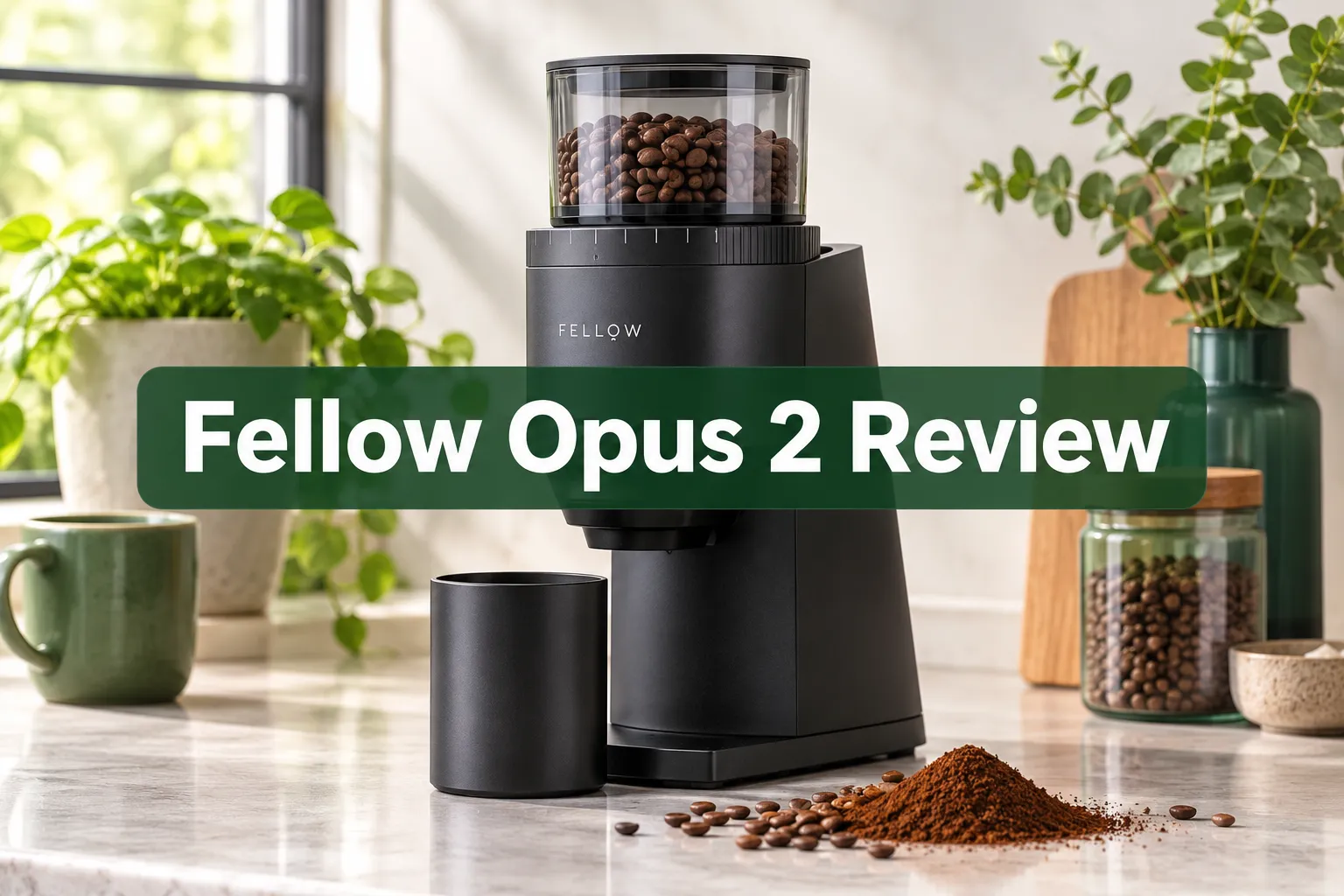
Fellow Opus 2 Review: One $199.95 Grinder, Every Brew
Quick Answer
The Fellow Opus 2 is a $199.95 electric conical burr grinder with 48 mm burrs, a stepless adjustment dial, an integrated ionizer for static, and near-zero grounds retention. It suits a one-grinder household that moves between espresso and pour over in the same week. Buyers who only brew filter coffee and chase maximum clarity should spend the extra on a flat-burr grinder instead.
Key Takeaways
- The Fellow Opus 2 lists at $199.95 for matte black on Fellow's own site, checked November 6, 2026; wood and metal colorways run $249.95 .
- It moved from the original Opus's 40 mm burrs to 48 mm conical burrs with a single stepless dial replacing two separate controls .
- Fellow's product page showed 4.5 out of 5 from 143 reviews on November 6, 2026, with 107 of those at five stars .
- Bon Appétit's 2026 grinder testing, summarized by Cafe & Crema, named it their overall pick and reported no more than 0.1 g of retained grounds at fine, medium and coarse settings.
- The Coffee Chronicler measured roughly 0.1 to 0.2 g retention and a nine-second 18 g espresso dose on a 220-volt sample (September 29, 2026).
- Barista Bench scored it a provisional 7.7/10 on October 1, 2026, flagging that the Baratza Encore ESP at the same $199.95 is stepped but user-repairable .
- Fellow's Ode Gen 2 at $399.95 uses 64 mm flat burrs and is the better pick if you brew filter only.
Affiliate disclosure: Coffee Rank IQ earns a commission if you buy through links on this page. Prices were verified November 6, 2026 and change without notice. This review is based on published specifications, manufacturer data, and documented third-party testing, not on hands-on testing by our team.
Fellow Opus: what the grinder actually is and who it is for
The fellow opus line is Fellow's electric all purpose grinder family, and the Opus 2 is the 2026 revision that began shipping around October. It grinds for espresso, pour over, drip, AeroPress, French press, and cold brew from a single stepless dial .
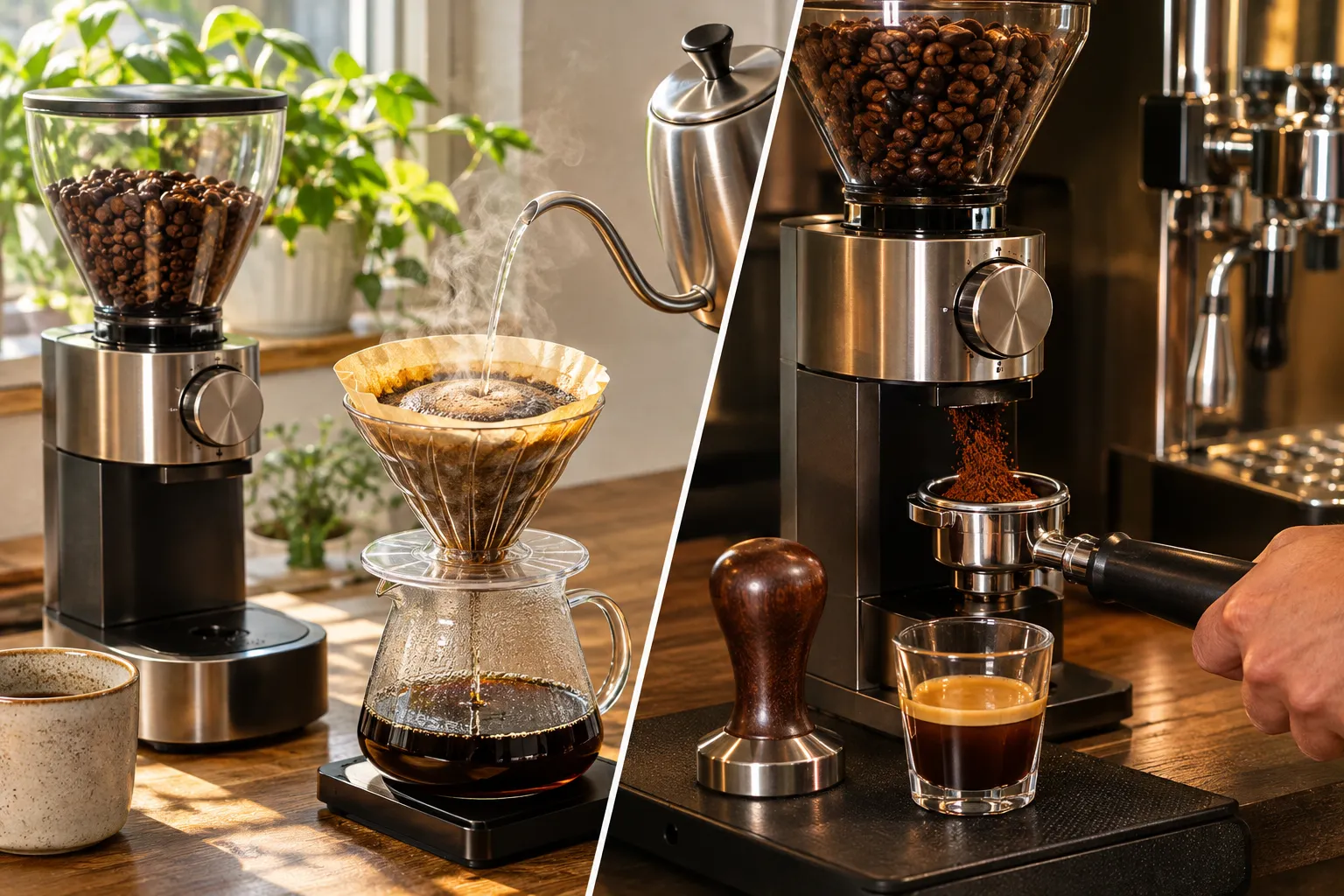
The buyer it fits is specific. You own one grinder. On Tuesday you pull a double into a 54 mm or 58 mm portafilter. On Saturday you brew a V60 for two people. Owning separate machines for both is the purist answer, and it costs $600 or more. The Opus 2 is the compromise that Fellow priced at $199.95.
What changed from the first Opus matters, because the original drew steady complaints about espresso range and static. Fellow's own comparison lists the second-generation changes: larger 48 mm conical burrs, one dial instead of separate coarse and fine adjustments, an integrated ionizer, automatic shutoff, and two magnetic catch cups so you can swap between a grounds bin and direct portafilter dosing .
A grinder earns its counter space twice: once when it tastes good, and again every morning when it does not make a mess.
Two honest limits before anything else. Availability was tight at launch. Fellow's product page showed the Opus 2 sold out or backordered on November 6, 2026, with some colorways listed for December or January shipment . And the review base is young. A product that shipped in October 2026 cannot yet tell you how its burrs perform in year four.
What grind settings does the Fellow Opus 2 have?
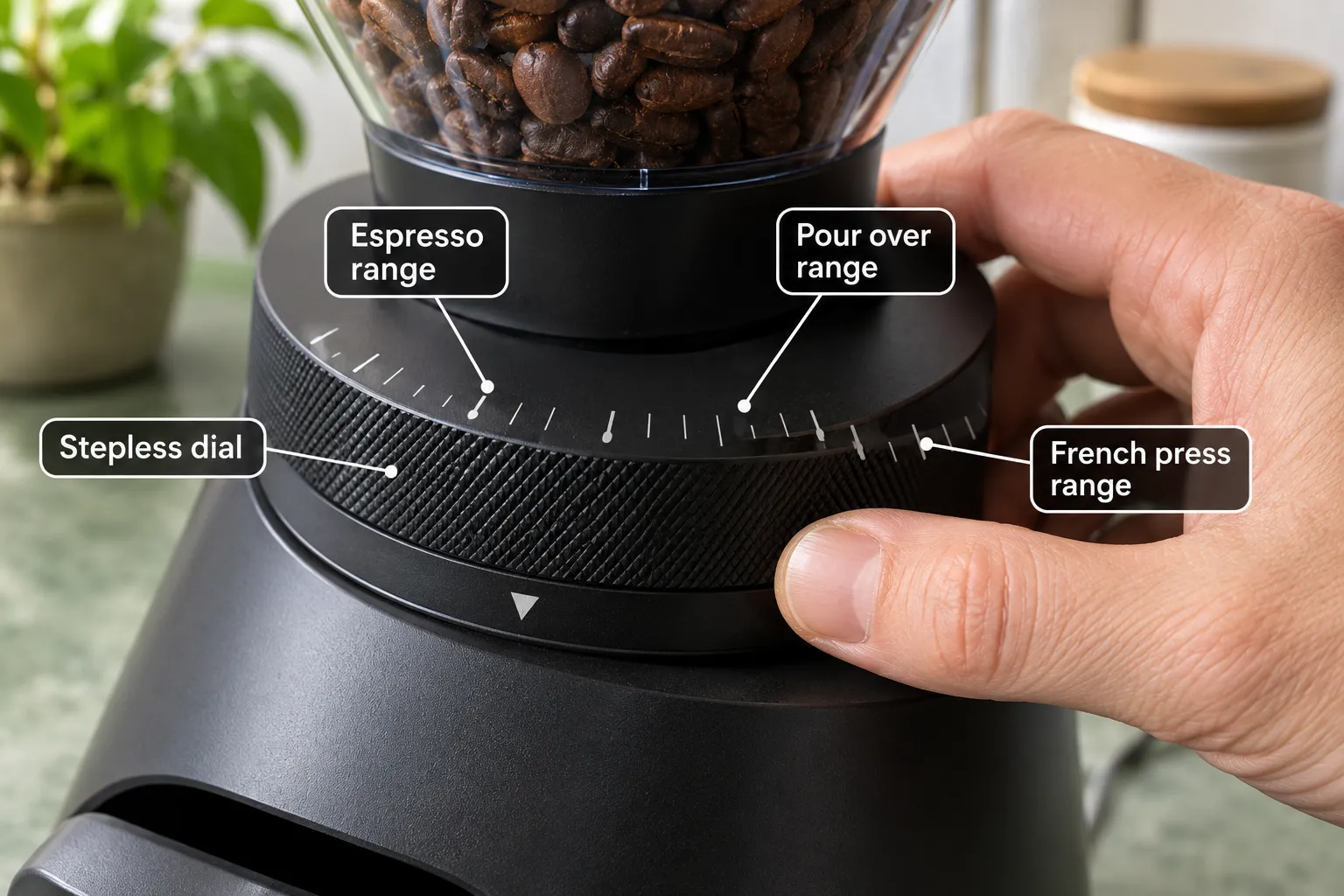
The Opus 2 uses a stepless adjustment dial, meaning the burrs move continuously rather than clicking into fixed positions. Fellow marks the range with 41 reference settings across espresso through cold brew, but you can park the dial anywhere between two marks .
That distinction changes how you dial in. A stepped grinder gives you setting 7 or setting 8 with nothing in between. If your shot runs 22 seconds at one click and 38 seconds at the next, you are stuck. Stepless lets you split the difference.
| Brew method | Rough dial zone | What to adjust if it tastes off |
|---|---|---|
| Espresso | Finest third | Shot too fast and sour, go finer by a hair |
| AeroPress | Fine to medium | Harsh and bitter, go one mark coarser |
| Pour over | Middle | Drawdown over 4 minutes, coarsen slightly |
| Drip machine | Medium to medium-coarse | Weak and watery, go finer |
| French press | Coarse | Muddy cup, coarsen and shorten the steep |
| Cold brew | Coarsest marks | Thin after 16 hours, go finer or extend time |
Decision rule: if you are new to espresso, stepless adjustment is a feature you will use within the first week. If you only brew drip and French press, stepped resolution would have been fine and you are paying for range you may never touch. Our guide to coffee brewing methods compared walks through which methods actually need fine control.
Common mistake: treating the printed numbers as absolute. Grind setting is not transferable between grinders or even between coffees. A light Ethiopian washed lot needs a different setting than a dark Brazilian from the same bag weight. Start from the printed zone, taste, then move.
Is the Fellow Opus 2 actually worth $200?
For a household running both espresso and filter coffee from one machine, yes. For filter-only brewing, the money is better spent elsewhere. The value case rests on three documented things: retention, range, and workflow.
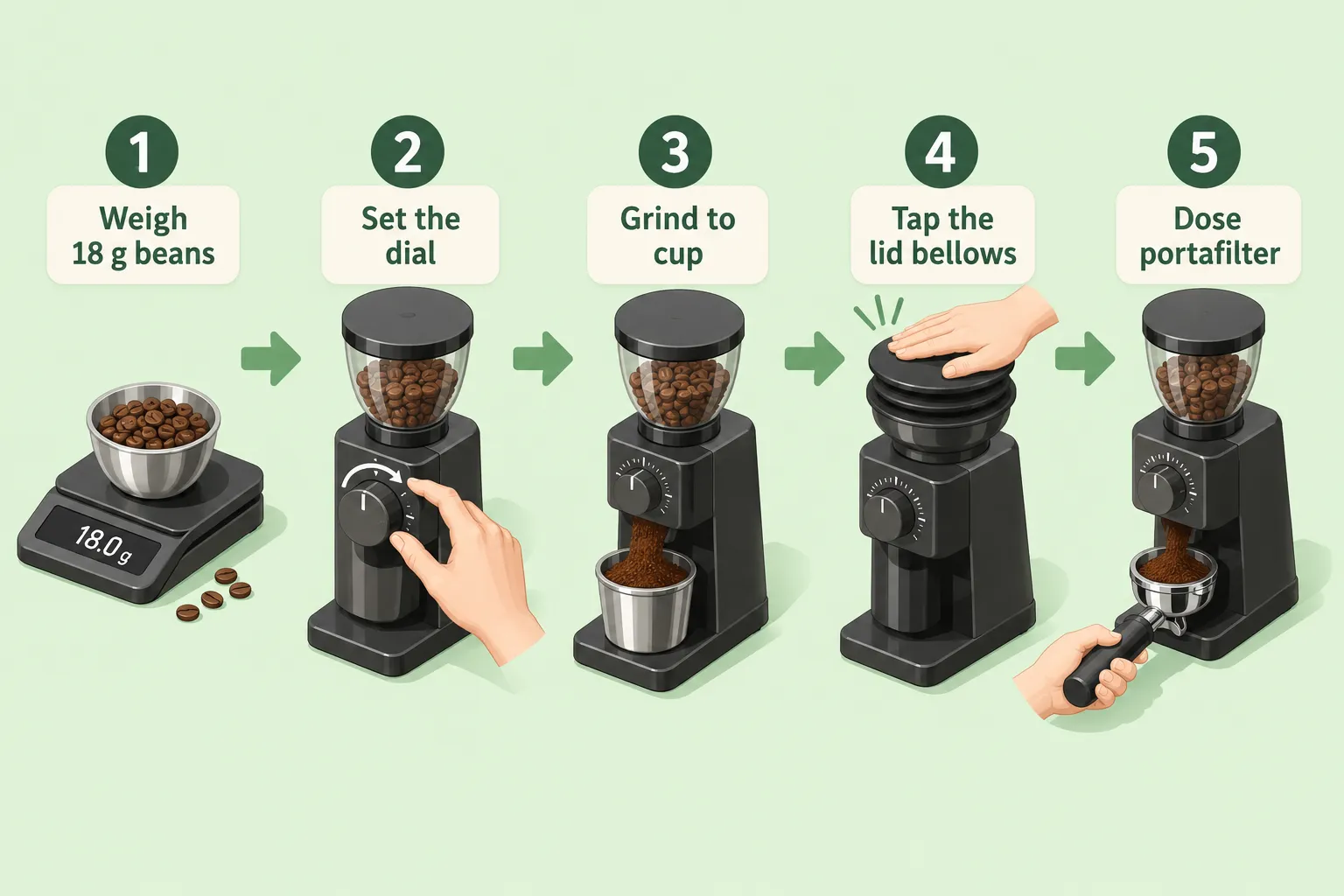
Retention is the clearest. Grounds left inside a grinder go stale and contaminate the next dose. Bon Appétit's 2026 testing, as summarized by Cafe & Crema, recorded no more than 0.1 g retained at fine, medium and coarse settings. The Coffee Chronicler independently measured roughly 0.1 to 0.2 g on his unit, improving toward 0.1 g when he used the lid as a bellows to puff the chamber clear. Two separate testers, similar result. At $199.95 that is unusual.
Range is the second. The 48 mm conical burr set covers espresso fine through cold brew coarse without a burr swap.
Workflow is the third and the most underrated. Automatic shutoff means the grinder stops when the chamber empties. Magnetic catch cups mean the grounds go where you aim them. The ionizer neutralizes the static charge that makes fine grounds cling to plastic and leap onto the counter.
Where it is not worth it: if you drink one French press a day and nothing else, a good manual grinder at $80 to $120 does the same job for less noise and less money. Our manual coffee grinder picks cover that case.
Fellow Opus vs Baratza Encore ESP: which is better?
Both sell for $199.95. Choose the fellow opus 2 for stepless adjustment, better anti-static, lower retention and faster workflow. Choose the Baratza Encore ESP for repairability, a longer track record, and a parts pipeline you can count on in 2031.
Barista Bench framed the tradeoff cleanly in its October 1, 2026 review: stepless adjustment and single dosing on the Opus 2 versus stepped but repairable on the Encore ESP . The Encore ESP uses 40 mm M2 conical burrs with finer increments in the espresso zone and coarser jumps for filter.
| Grinder | Price (Nov 6, 2026) | Burrs | Adjustment | Best for |
|---|---|---|---|---|
| Fellow Opus 2 | $199.95 black / $249.95 premium | 48 mm conical | Stepless, 41 marks | One grinder, espresso plus filter |
| Baratza Encore ESP | $199.95 | 40 mm M2 conical | Stepped | Long-term repairability |
| Fellow Ode Gen 2 | $399.95 | 64 mm flat | Stepped, filter range | Filter clarity, no espresso |
Decision rule: if you keep appliances for a decade and want to replace a burr set yourself, the Encore ESP wins. If you want the cleanest daily workflow and the widest single-dial range, the Opus 2 wins. Compare the models against the full field in our best coffee grinder guide.
Can you use the Fellow Opus 2 for espresso?
Yes. Espresso is the area where independent reviewers rate the Opus 2 most favorably. The stepless dial gives you the fine resolution espresso demands, and the second catch cup doses straight into a portafilter.
The Coffee Chronicler reported grinding an 18 g espresso dose in about nine seconds on his sample. That is quick for a grinder at this price. Conical burrs at 48 mm produce a broader particle distribution than large flat burrs, which generally reads in the cup as body and sweetness rather than sharp separation of flavors. For milk drinks that is an advantage.
What it will not do is behave like a $900 single-dose espresso grinder. Shot-to-shot consistency at very fine settings on a $199.95 machine is good, not immaculate. Expect to make small dial corrections as a bag ages and degasses.
Edge case: pressurized portafilters that ship with many entry machines mask grind differences. If you are using one, you will not see the Opus 2's espresso range properly. Switch to a non-pressurized basket first. Our notes on advanced espresso brewing methods explain why that basket change matters more than most upgrades.
What type of burrs are in the Fellow Opus 2, and will they last?
The Opus 2 uses a 48 mm conical burr set, up from 40 mm in the original Opus . Conical burrs are two cone-shaped steel pieces, one inside the other; beans fall through the gap and get cut progressively finer as they travel down.
Larger burrs cut each bean in fewer passes, which usually means faster grinding and less heat buildup per dose.
On lifespan, the honest answer is that nobody knows yet for this model. The grinder shipped in October 2026. Steel conical burrs in home grinders of this class commonly run many years of daily single-household use before dulling becomes audible or visible in the cup, but that is a general pattern, not a measured figure for the Opus 2.
Two things that are documented and relevant to longevity:
- Plastic grind chamber. The Coffee Chronicler flagged this as a build-quality concern in his September 29, 2026 review. Plastic is lighter and cheaper than metal, and it is the part most likely to show wear or scratching.
- Serviceability is unproven. Baratza built its reputation on selling replacement parts. Fellow has not established the same track record for Opus burr sets. Barista Bench treated this as the main reason to prefer the Encore ESP for ten-year buyers .
Fellow Opus 2 burrs getting hot: is that a problem?
Any grinder generates friction heat. Heat becomes a flavor problem when it drives off aromatic compounds before brewing or when it makes grounds clump. Grinding a 20 g dose in roughly ten seconds, as reported for this machine, leaves little time for meaningful heat soak.
If your burrs feel genuinely hot, you are probably grinding back-to-back batches for a crowd. Give it 30 seconds between doses. Single-dose users will not encounter this.
Why is my Fellow Opus 2 making so much noise?
All electric burr grinders are loud, and conical grinders with a plastic chamber amplify the rattle of beans against the housing. Expect a short, sharp burst of noise, not a quiet hum.
Noise that sounds wrong rather than merely loud usually has one of these causes:
- A stone or foreign object in the beans. Stop immediately. A sharp metallic crack is not normal. Empty the hopper and inspect.
- The grinder set too fine with no beans flowing. Burrs rubbing with nothing between them makes a high whine and wears the steel. Never run it empty at espresso settings.
- An unsecured catch cup. The magnetic cup rattling against the base is a common and harmless rattle. Reseat it.
- Grounds packed in the chute. Tap the lid bellows, which is the same trick the Coffee Chronicler used to clear retention.
- An uneven counter. Shift it to a flat, solid surface. A grinder vibrating against a tile seam sounds twice as loud.
One reported quirk worth knowing: Bon Appétit's 2026 testing, per Cafe & Crema's summary, found the adjustment wheel moved during grinding on an initial sample. Fellow identified it as an early-unit issue and a replacement did not repeat it. If your dial drifts mid-grind, contact Fellow rather than fighting it.
Does the Fellow Opus 2 grind consistently, and is it good for French press?
For French press and cold brew, yes, with a caveat about the coarse end. Conical burrs at 48 mm produce a usable coarse grind with a reasonable amount of fines, but no conical grinder at this price matches a large flat burr for a tight coarse distribution.
French press punishes excess fines. Too many and you get sludge in the bottom of the cup plus a bitter edge from over-extracted dust. The Opus 2's coarse settings are fine for everyday plunger coffee. If you are a French press purist who weighs sediment, a 64 mm flat burr grinder will serve you better.
Cold brew is more forgiving because the water is cold and extraction is slow. The Opus 2's coarsest marks work well here. If you are building a cold brew routine, start with our cold brew ratio guide and adjust grind from there.
On filter consistency, the reviews are mixed in a useful way. Fellow's own comparison page positions the Ode Gen 2 with its 64 mm flat burrs as the filter specialist, marketed for greater sweetness and separation. The Coffee Chronicler, testing the Opus 2, said his filter coffee lacked some sweetness and development. Same conclusion from two directions.
Fellow Ode vs Opus, Wilfa Svart, and other grinders under $200
Here is how the realistic alternatives sort out.
Fellow Ode Gen 2 ($399.95). Flat 64 mm burrs, filter only, no espresso range. Buy it if you brew pour over and drip exclusively and want clarity. The fellow ode vs opus decision is almost entirely about whether espresso is in your future. If it is, the Ode is the wrong tool at twice the price.
Baratza Encore ESP ($199.95). The direct rival. Stepped, repairable, proven. See the comparison table above.
Wilfa Svart / Uniform series. Wilfa's grinders are filter-focused Scandinavian designs with a strong reputation for pour over and drip. US pricing and model availability shift, so check current listings before committing. The short version: if you want filter coffee and clean looks and will never pull a shot, Wilfa deserves a look. If you need espresso, the Opus 2 is the answer in this pair.
A quality hand grinder ($80 to $150). Slower, silent, and often better burrs per dollar. Fine for one or two cups. Painful for espresso doses every morning.
Espresso-specific grinders. If espresso is 90 percent of your brewing, skip the all purpose grinder entirely and read our best espresso grinder picks.
Do you really need an expensive grinder like the Fellow Opus 2?
If you buy whole beans and brew more than one cup a day, a burr grinder is the single upgrade that changes the cup most. Whether you need a $199.95 one depends on what you brew.
Blade grinders chop beans into random fragments. Large pieces under-extract and taste sour and thin; dust over-extracts and tastes bitter. You get both in the same cup. Burr grinders cut to a set gap, producing a far narrower range of particle sizes. We cover the mechanism in detail in burr vs blade grinders.
The spending tiers, plainly:
- Drip or French press only, casual drinker. A $60 to $100 entry burr grinder is enough.
- Pour over, light roasts, you taste the difference. $200 to $400 buys real gains in clarity.
- Espresso at home. $200 is the realistic floor. Below that, dialing in a shot is guesswork.
- Both espresso and filter, one machine. This is where the Opus 2 lives.
Grind matters more than the brewer for most people. A $40 pour over setup with a good grinder beats a $400 machine with pre-ground coffee.
What kind of coffee beans work best with the Fellow Opus 2?
Fresh whole beans within two to four weeks of the roast date, medium to medium-light roast, from a single origin or a quality blend. That is the range where a conical burr grinder at this size performs best.
Specifics that help:
- Check the roast date, not a best-by date. Coffee roasted five months ago will taste flat no matter how well you grind it.
- Medium roasts are the forgiving zone. Very dark, oily beans can smear inside a plastic chamber and increase clumping. Very light Nordic roasts are hard and dense, and the Opus 2 handles them but will not match a 64 mm flat burr for separating their delicate acidity.
- Processing method shifts your dial. Natural-process coffees often taste best slightly coarser than washed ones at the same brew ratio. Worth a test.
- Buy in amounts you can finish. A 12 oz bag in two weeks beats a 2 lb bag in two months.
If you are not sure what to buy, our notes on choosing coffee beans for home brewing narrow it down by brew method.
Five features worth the money
- Stepless dial with 41 reference marks. You can land between settings, which is the difference between a drinkable shot and a good one.
- 48 mm conical burrs. A 20 percent jump over the original Opus, with reported espresso doses of 18 g in about nine seconds.
- Integrated ionizer. Static makes fine grounds jump onto the counter and stick inside the chute. The ionizer neutralizes the charge, which is why retention measured so low in independent tests.
- Two magnetic catch cups. One for grounds, one for direct portafilter dosing. Swapping takes a second and nothing spills.
- Automatic shutoff. The motor stops when the chamber clears. Small thing, but it means you can walk away and heat water.
What to watch out for
- Plastic grind chamber. Flagged by The Coffee Chronicler, September 29, 2026. It works, it just does not feel like $199.95 of metal.
- Filter clarity is good, not exceptional. Same review found filter coffee lacking some sweetness and development versus flat-burr grinders.
- Early adjustment-wheel reports. Bon Appétit's initial sample had a dial that moved during grinding; Fellow called it an early-unit issue. Confirm your unit grinds at a stable setting.
- Availability. Sold out or backordered on Fellow's site November 6, 2026, with some colorways pushed to December or January .
- Unproven serviceability. No established replacement-parts record yet, unlike Baratza.
- Color premium. Wood and metal variants cost $50 more for cosmetics only .
Pros and cons
Pros
- Stepless adjustment at $199.95
- Retention measured at 0.1 g or lower by two independent testers
- Covers espresso through cold brew on one dial
- Ionizer genuinely reduces counter mess
- Named Bon Appétit's overall grinder pick in 2026 testing
- 4.5 out of 5 from 143 reviews on Fellow's site, November 6, 2026
Cons
- Plastic grind chamber
- Filter coffee trails 64 mm flat burr grinders
- No long-term reliability data yet
- Parts availability unproven
- Stock constrained at launch
- Loud, as all electric conical grinders are
Who should buy the Fellow Opus 2, and who should skip it
Buy it if: you own one grinder, pull espresso during the week and brew pour over or French press on weekends, and you want the mess and setup time cut down. That buyer is the clear winner here.
Buy the Baratza Encore ESP instead if: you intend to keep this grinder for a decade and want to replace burrs and parts yourself.
Buy the Fellow Ode Gen 2 at $399.95 instead if: you brew filter coffee only, prefer light roasts, and want sweetness and separation in the cup.
Buy a hand grinder instead if: you make one or two cups a day, live with thin walls, or want better burrs per dollar and do not mind the effort.
Skip electric grinders entirely if: you brew with a machine that has one built in. See our coffee makers with grinders roundup.
Check the current price and compare the models before you commit, since launch stock has been moving.
FAQ

Conclusion
The fellow opus 2 earns its $199.95 for one specific buyer: the household running espresso and filter coffee off a single machine that needs to stay tidy. Two independent testers measured retention at or below 0.2 g, the stepless dial solves the espresso resolution problem that dogged the first Opus, and Bon Appétit made it their overall 2026 pick. The plastic chamber, the unproven parts pipeline, and the filter clarity gap against 64 mm flat burrs are real and worth weighing.
Next step: write down what you actually brewed in the last seven days. If espresso appears even once alongside pour over or French press, the Opus 2 is the grinder to compare. If the list is all filter, read our Baratza Encore ESP coverage and the wider grinder field before spending.
Better Coffee Starts With Better Answers.