Is Coffee Anti Inflammatory? What Blood Markers Show
Quick answer
Is coffee anti inflammatory? The best available numbers say "mildly, and mostly in people who already drink it black." A 2024 systematic review and meta-analysis of 11 cross-sectional studies covering 66,691 participants found coffee intake linearly associated with lower C-reactive protein, with a standardized mean difference of -0.09 at about 2.5 cups a day and -0.14 at about 4.5 cups a day . That is an association measured in blood, not proof that your mug lowered anything.
Key takeaways
- The Choi and Je 2024 meta-analysis (Nutrition, Metabolism and Cardiovascular Diseases) pooled 66,691 adults and found lower log-CRP with higher coffee intake, p = 0.002 for the linear trend .
- A 2023 analysis of 9,337 Korean adults aged 19 to 64 found 2 to 3 cups a day linked to 17% lower odds of elevated hs-CRP (OR 0.83, 95% CI 0.69 to 0.99) .
- Black coffee did better: 39% lower odds at 2 to 3 cups a day (OR 0.61, 95% CI 0.45 to 0.84). Coffee with sugar or cream showed no significant link (OR 0.92) .
- A 2026 review in Molecules of 159 studies reported roughly 16.6% lower CRP, 8.1% lower IL-6 and 9.3% higher adiponectin among higher consumers across heterogeneous observational data.
- A February 2026 randomized crossover pilot at the Technical University of Munich (10 people, 130 mg caffeine per arm) found pure caffeine suppressed cytokines more sharply than coffee did.
- The American Council on Exercise, reviewing this field in June 2026, called the findings interesting but insufficient to conclude that coffee reduces inflammation .
Is coffee anti inflammatory according to blood markers?
Measured in blood, habitual coffee drinkers tend to show lower inflammatory markers than non-drinkers, and the effect size is small. The question "is coffee anti inflammatory" has a cleaner answer in observational data than in randomized trials, which is exactly the problem.
The strongest quantitative synthesis is Sooyeun Choi and Youjin Je's 2024 systematic review and meta-analysis in Nutrition, Metabolism and Cardiovascular Diseases. They screened 13 studies, included 11 cross-sectional ones, and pooled 66,691 participants. Coffee consumption tracked linearly with lower log-transformed CRP: -0.09 standardized mean difference at a median 2.5 cups per day, -0.14 at 4.5 cups, both compared with the lowest-intake group. The test for a J-shaped curve came back non-significant at p = 0.13 .
Two limitations matter. Cross-sectional studies measure coffee and blood at the same moment, so they cannot tell you which came first. And people who drink four cups of black coffee daily often differ from non-drinkers in body weight, smoking, income and diet. Statistical adjustment helps. It does not erase the issue.
Lower CRP in coffee drinkers is a real, repeated measurement. "Coffee lowers your CRP" is a different claim, and the evidence does not support it yet.
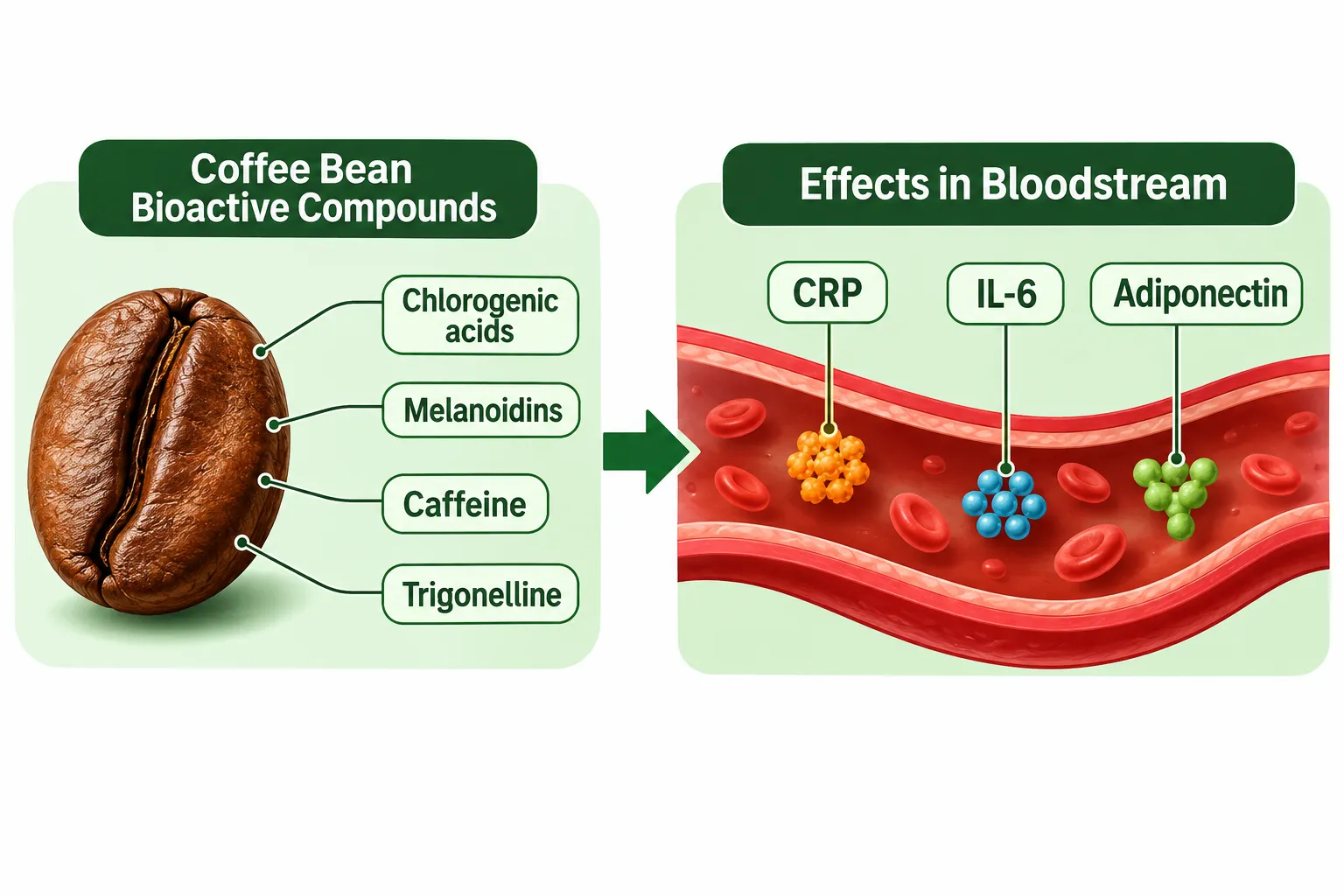
The proposed mechanism is chemistry, not caffeine. A review published April 23, 2026 in Molecules synthesized about 200 papers from 2020 to 2025, with 159 in the final narrative, and pointed to chlorogenic acids, melanoidins, caffeine and trigonelline acting on oxidative stress, Nrf2 signaling and gut microbial metabolites. That review also cites roughly 16.6% lower CRP, 8.1% lower IL-6 and 9.3% higher adiponectin among higher consumers, figures that summarize mixed observational work rather than one trial. If you want the composition side, the coffee polyphenols and minerals story is covered in our look at the healthiest coffee to drink.
What blood markers show inflammation levels?
Doctors mostly look at high-sensitivity C-reactive protein (hs-CRP), interleukin-6 (IL-6), tumor necrosis factor alpha (TNF-α) and adiponectin. These are the same markers used in nearly every coffee and inflammation study.
| Marker | What it is | Why coffee research uses it |
|---|---|---|
| hs-CRP | A liver protein that rises during inflammation | Cheap, stable, the main outcome in the 66,691-person meta-analysis |
| IL-6 | A signaling protein that triggers CRP production | Reported ~8.1% lower in higher coffee consumers across observational studies |
| TNF-α | A cytokine involved in chronic inflammation | Measured in the Munich crossover trial alongside eight others |
| Adiponectin | A fat-tissue hormone with anti-inflammatory action | Reported ~9.3% higher in higher consumers |
| IL-10 | An anti-inflammatory cytokine | Tracked in acute trials; direction varies by study |
The 2023 Korean study used hs-CRP ≥ 2.2 mg/L as its "elevated" cutoff . Labs and studies set different thresholds, so a number without its reference range means little.
Decision rule: if you want to know your own baseline, ask for hs-CRP at a routine blood draw. One reading is noisy. Infections, injuries and a hard workout the day before all push it up.
How much coffee should you drink for anti-inflammatory benefits?
The observational sweet spot sits around 2 to 4 cups a day. In the 2023 Korea National Health and Nutrition Examination Survey analysis of 9,337 adults, 2 to 3 cups a day was associated with 17% lower odds of elevated hs-CRP compared with no coffee, after adjusting for demographics, lifestyle, metabolic and dietary factors (OR 0.83, 95% CI 0.69 to 0.99) .
The 2024 meta-analysis found no reliable threshold where benefit stopped, with the nonlinearity test at p = 0.13 . That is not permission to drink eight cups. It means the data could not detect a turning point, partly because few people in these cohorts drank that much.
- 1 cup a day: too small an intake to show a clear CRP signal in most cohorts. Our take on whether one cup a day is enough covers the wider picture.
- 2 to 3 cups: where the strongest associations appear, especially black.
- 4 to 5 cups: still associated with lower CRP in the pooled data, but sleep and anxiety costs climb for many drinkers.
- Occasional drinkers: the research measures habitual intake, so weekly coffee was never really tested here.
Common mistake: counting a 20 oz café drink as "one cup." Study cups are typically 6 to 8 oz of brewed coffee.
Does adding milk or sugar to coffee reduce the anti-inflammatory effects?
Based on the 2023 Korean data, yes, the association weakens sharply. Black coffee at 2 to 3 cups a day was linked to 39% lower odds of elevated CRP (OR 0.61, 95% CI 0.45 to 0.84). The same intake with sugar or cream gave OR 0.92 (95% CI 0.74 to 1.14), which was not statistically significant .
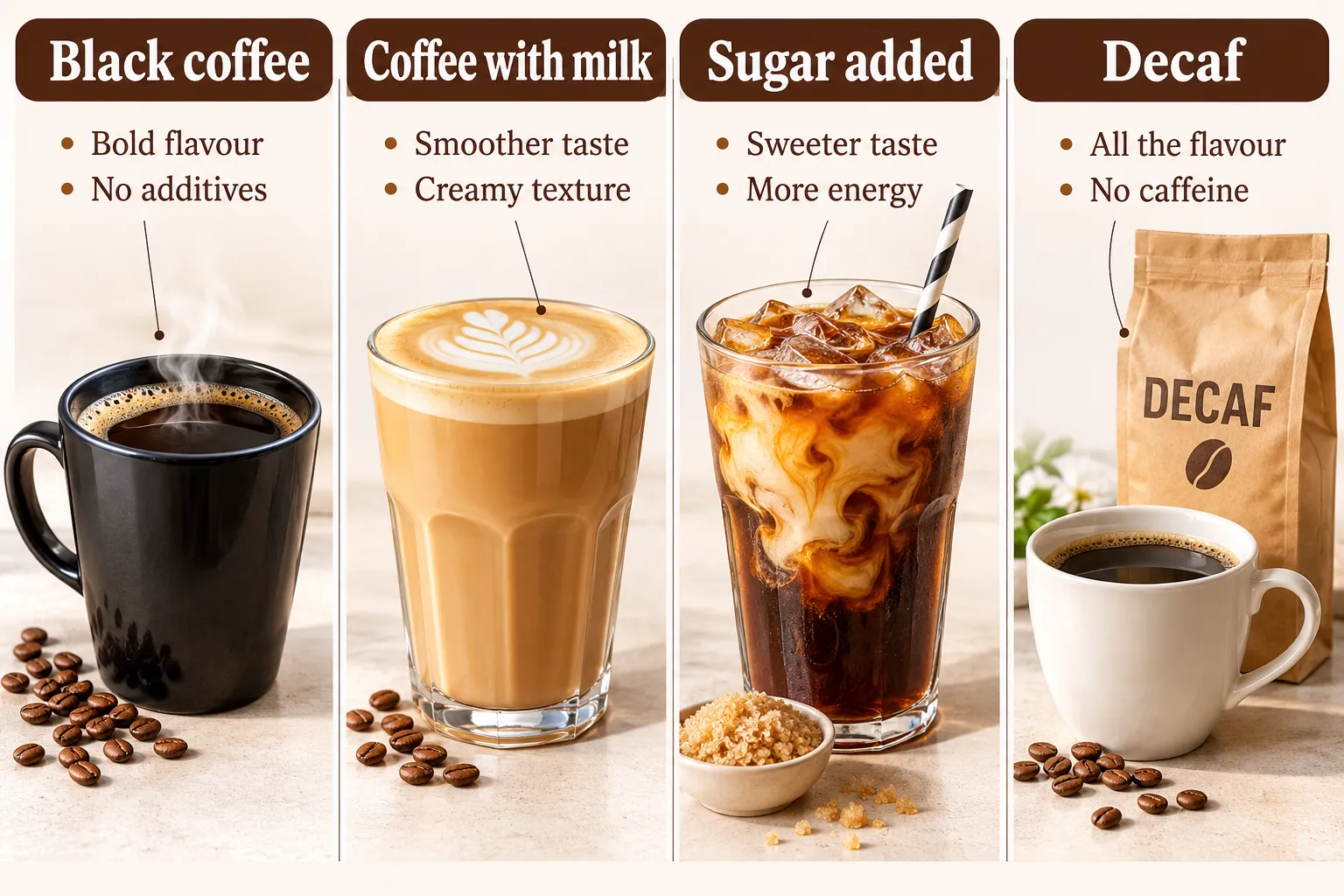
Three explanations sit on the table, and the study authors could not separate them: added sugar drives its own inflammatory response, total calories increase, and people who sweeten their coffee tend to eat differently overall. Milk alone was not isolated from sugar in that analysis, so "a splash of milk ruins it" overstates the finding.
If you want the drink and the cleaner result, a cortado or an Americano carries far less sugar than a flavored syrup latte. Our guide to making a coffee order healthier breaks down the swaps.
Is decaf coffee anti-inflammatory, or does it have to be regular?
Decaf keeps most of the chlorogenic acids and melanoidins that the mechanistic research points to, so it is plausibly in the same category, but the CRP studies rarely separated it cleanly. The honest answer is that decaf has not been tested well enough for a confident number.
One February 2026 result complicates the caffeine assumption. Melanie Bleffgen, Roman Lang, Veronika Somoza, Thomas Skurk and colleagues at the Technical University of Munich ran a randomized crossover pilot published in European Journal of Nutrition. Ten healthy habitual coffee drinkers took 100 mL coffee, an aqueous caffeine solution, or water, each delivering 130 mg caffeine, and nine cytokines were measured. Pure caffeine produced the stronger acute suppression: at four hours, IFN-γ fell to 0.649 of baseline, IL-12p70 to 0.616, IL-2 to 0.683, IL-10 to 0.478. Coffee's cytokine response looked closer to water.
Odd twist from the same trial: coffee delivered higher caffeine exposure than the matched caffeine solution, with area under the curve of 41.76 versus 33.85 µM·h over four hours. The authors suggest chlorogenic acids and diterpenes may change absorption.
The limitation is large. Ten healthy adults, one acute dose, biomarkers rather than disease outcomes. It tells you the whole coffee matrix behaves differently from isolated caffeine. It does not tell you decaf is better or worse. If you drink decaf for sleep reasons, our decaf roundup compares the options.
Dark roast or light roast, hot or cold brew: which coffee is most anti-inflammatory?
Light roast retains more chlorogenic acid; dark roast develops more melanoidins. No human trial has compared roast levels on CRP, so any ranking is chemistry-based reasoning, not a measured outcome.
| Type | Compound profile | What the evidence says |
|---|---|---|
| Light roast filter | Highest chlorogenic acid retention | No CRP trial by roast level; mechanism favors it |
| Dark roast | More melanoidins, less chlorogenic acid | Melanoidins named as relevant in the 2026 Molecules review |
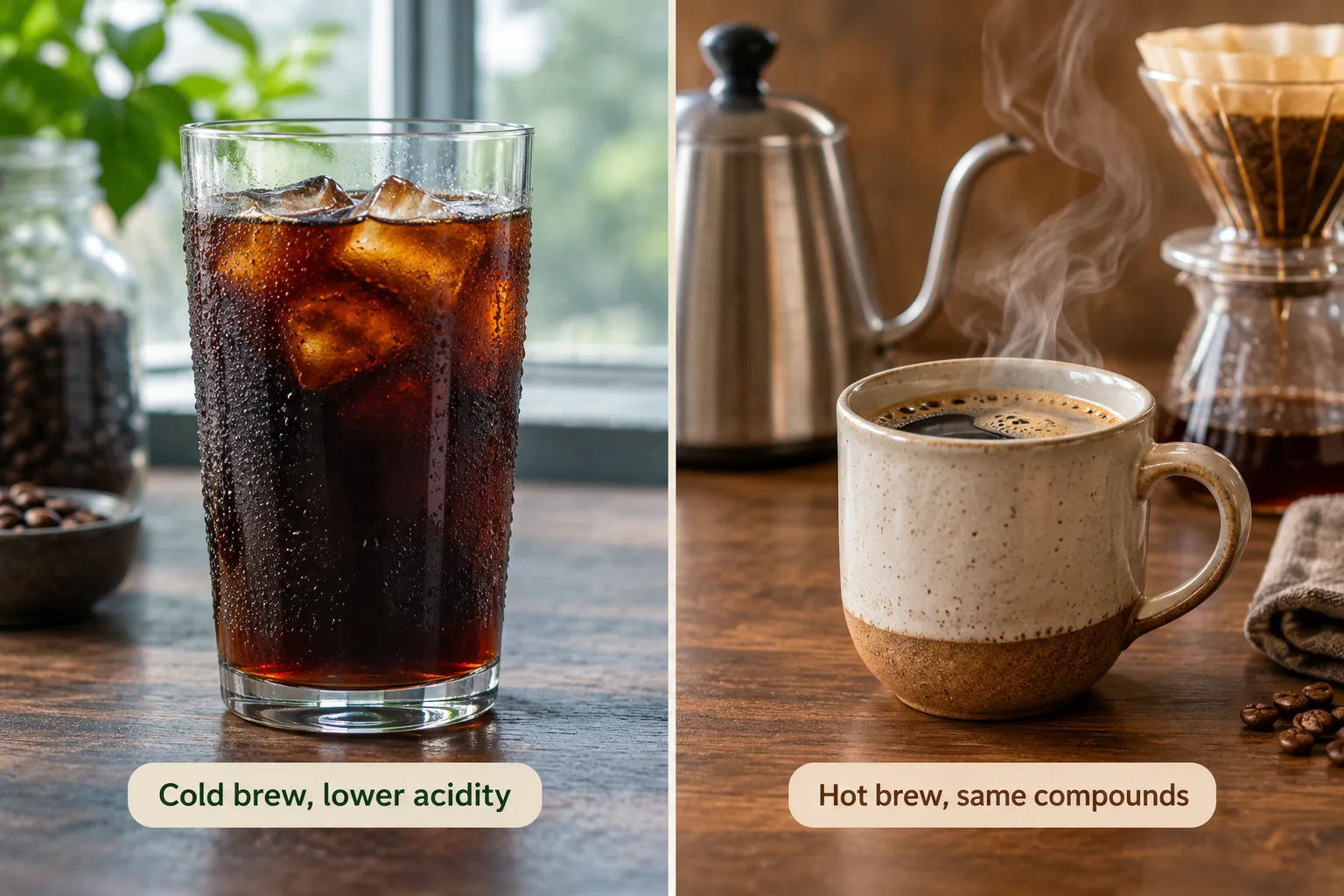
| Cold brew | Similar compounds, lower titratable acidity | No evidence of extra anti-inflammatory effect |
| Espresso | Concentrated, often unfiltered diterpenes | Unfiltered coffee raises LDL in other research |
| Instant | Retains some chlorogenic acids | Included in cohort data, rarely analyzed separately |
Cold brew's reputation here comes from comfort, not immunology. It is gentler on the stomach for some drinkers, which is a real reason to choose it. If that is you, our home cold brew method gets the ratio right.
Practical rule: roast choice matters less than whether you drink it black and how consistently. Pick the roast you enjoy enough to drink without sugar.
Can coffee cause inflammation instead of reducing it?
For some people, yes, indirectly. Poor sleep is reliably linked to higher inflammatory markers, and caffeine too late in the day costs sleep. Acute caffeine also raises cortisol and blood pressure in sensitive drinkers.
Genetics play a part. CYP1A2 variants change how fast caffeine clears, which is one reason two people drinking the same 2 cups report entirely different experiences.
Watch for these:
- Caffeine within 8 hours of bed, which shortens deep sleep
- Sweetened coffee drinks adding 30 to 50 g sugar
- Reflux or gut discomfort pushing you toward poor eating later
- Unfiltered brewing methods if your LDL cholesterol is already high
Also relevant: the May 11, 2026 media reports describing a withdrawal-and-reintroduction experiment, where habitual drinkers quit for two weeks. Coverage said baseline coffee drinkers had lower CRP and higher IL-10, and some markers rose during abstinence . The accessible reporting does not give sample size, effect sizes, or clear peer-review status, so treat it as a lead, not a result.
Is coffee anti inflammatory for everyone, or does it depend on the person?
It depends heavily on the person. The averages in these studies hide wide individual variation, and asking "is coffee anti inflammatory for me" is a different question from asking what a 66,691-person average showed.
Factors that change the answer: caffeine metabolism genetics, baseline inflammation level, body weight, smoking status, sleep quality, medications, and whether you drink it black. The Korean analysis only found significance in the black coffee group .
If you have a diagnosed inflammatory condition, talk to your doctor before changing your intake. Caffeine interacts with several medications, and some conditions come with their own caffeine guidance. No article replaces that conversation.
Can coffee help with rheumatoid arthritis or joint inflammation?
There is no good evidence that coffee treats, prevents or improves rheumatoid arthritis or any joint condition. Studies linking coffee to RA risk have produced conflicting results, and none of them tested coffee as a therapy.
The CRP and IL-6 findings discussed above come from mostly healthy general populations, not patients. Biomarkers are not disease outcomes. The American Council on Exercise made this exact point in its June 2026 professional review, noting the relevant studies were small, done in healthy adults, and measured biomarkers rather than clinical endpoints .
If you have joint pain, coffee is a beverage preference, not part of your treatment plan. Your rheumatologist decides the plan.
What is the difference between inflammatory and anti-inflammatory foods?
"Inflammatory" and "anti-inflammatory" are dietary pattern labels, not properties a single food owns. They describe how a whole diet tends to shift markers like CRP and IL-6 over time.
- Associated with higher markers: refined sugar, refined grains, processed meat, high total calorie excess
- Associated with lower markers: vegetables, legumes, fatty fish, olive oil, nuts, tea and coffee
- Misconception to drop: that one anti-inflammatory food cancels an inflammatory meal. The research measures patterns across months and years, not single servings.
Coffee lands in the second group mostly because of its polyphenol load, which is substantial in a typical Western diet. That is a composition fact, not a prescription.
Is green tea or coffee better for reducing inflammation, and how fast does it work?
Neither has been shown superior in a head-to-head trial measuring CRP. Both appear in anti inflammatory drinks research for the same reason: polyphenols. Green tea contributes catechins, coffee contributes chlorogenic acids and melanoidins.
On timing, the honest answer is that nobody has pinned it down. Acute studies like the Munich crossover measure cytokine shifts within four hours, and those are not the same as sustained CRP change. The CRP associations come from people with established habits measured over years. If you start drinking coffee black today, do not expect a readable blood change next week.
Reasonable expectation: if a dietary effect on hs-CRP exists at all, studies in nutrition generally look at 8 to 12 weeks minimum before retesting. Ask your doctor whether retesting is even worth it.
What are the best anti-inflammatory coffee brands to buy?
No coffee brand has been tested for anti-inflammatory effects, and any brand marketing itself that way is making a claim the research does not support. Buy on freshness and brewing control instead.
What actually corresponds to the compounds in the research:
- A recent roast date printed on the bag, not a "best by" date.
- Whole bean, ground fresh. A burr grinder keeps extraction even.
- A brew method you will repeat daily. Pour over, drip, or French press all work.
- Black-friendly flavor. A sweet, clean single origin is easier to drink without sugar than a harsh blend.
Disclosure: Coffee Rank IQ earns affiliate commissions on some product links. That does not change what the studies say. Compare the models before you buy, and skip anything sold on health claims.
How strong is each coffee and inflammation finding?
Evidence strength rated by study design and sample size, not by effect size.
Sources: Choi & Je 2024 meta-analysis; KNHANES 2016-2018 analysis; Molecules review 2026; TUM crossover pilot 2026.
FAQ
Conclusion
Here is what this means for your actual cup. Asking "is coffee anti inflammatory" gets you a modest yes from observational blood-marker data, a shrug from the small randomized trials, and a clear caution from the American Council on Exercise that biomarkers are not health outcomes . Two to three cups, black, sits where the strongest associations live. Nothing in this research justifies drinking more coffee than you enjoy or tolerate.
One next step: for the next two weeks, drink your first cup black and see whether you actually miss the sugar. Brew something sweet enough to make that easy, and read the brewing method if your current cup needs the sugar to be drinkable. If you have a diagnosed inflammatory condition, bring the question to your doctor rather than your grinder.
Better Coffee Starts With Better Answers.