Does Coffee Raise Cholesterol? Filters Decide
Quick answer
Does coffee raise cholesterol? Only if the brewing method lets the oils through. A 2025 Swedish analysis measured a median of 11.5 mg/L of cafestol in home paper-filtered coffee versus about 86.8 mg/L in French press . Cafestol, a compound in coffee oil, is the thing that nudges LDL upward. The paper filter catches most of it, which is why the same bean can behave very differently in two different brewers.
Key takeaways
- Caffeine is not the culprit. The American Heart Association's scientific statement on caffeine and cardiovascular disease, published July 21, 2026, points to cafestol, a diterpene in coffee oil, as the compound randomized trials link to higher LDL .
- Paper filters strip most of it. Orrje and colleagues (2025, Nutrition, Metabolism and Cardiovascular Diseases) measured 11.5 mg/L cafestol and 8.2 mg/L kahweol in home paper-filtered coffee, against roughly 86.8 and 68.7 mg/L in French press .
- Boiled coffee is the heavyweight. A 2025 lab test found boiled coffee at 939 mg/L cafestol, dropping to 28 mg/L after fabric filtration .
- Some office machines are closer to French press than to drip. Swedish researchers found certain bean-to-cup workplace machines using metal filtration delivered far more diterpenes than ordinary paper-filtered drip .
- The AHA's general ceiling is 400 mg of caffeine a day, roughly 3 to 5 eight-ounce cups of black coffee for most healthy adults. That is a caffeine guideline, not permission for five French presses .
- Instant coffee is low in diterpenes, which is why Harvard's Rob van Dam has recommended paper-filtered or instant coffee for people with elevated LDL.
- If your LDL is already high or you take a statin, talk to your doctor before changing anything. Brew method is a small lever, not a treatment.
Does coffee raise cholesterol?
Does coffee raise cholesterol? The accurate answer is that regularly drinking enough unfiltered coffee can raise LDL cholesterol, while paper-filtered coffee generally has little or no meaningful effect on it. The bean does not decide this. The filter does.
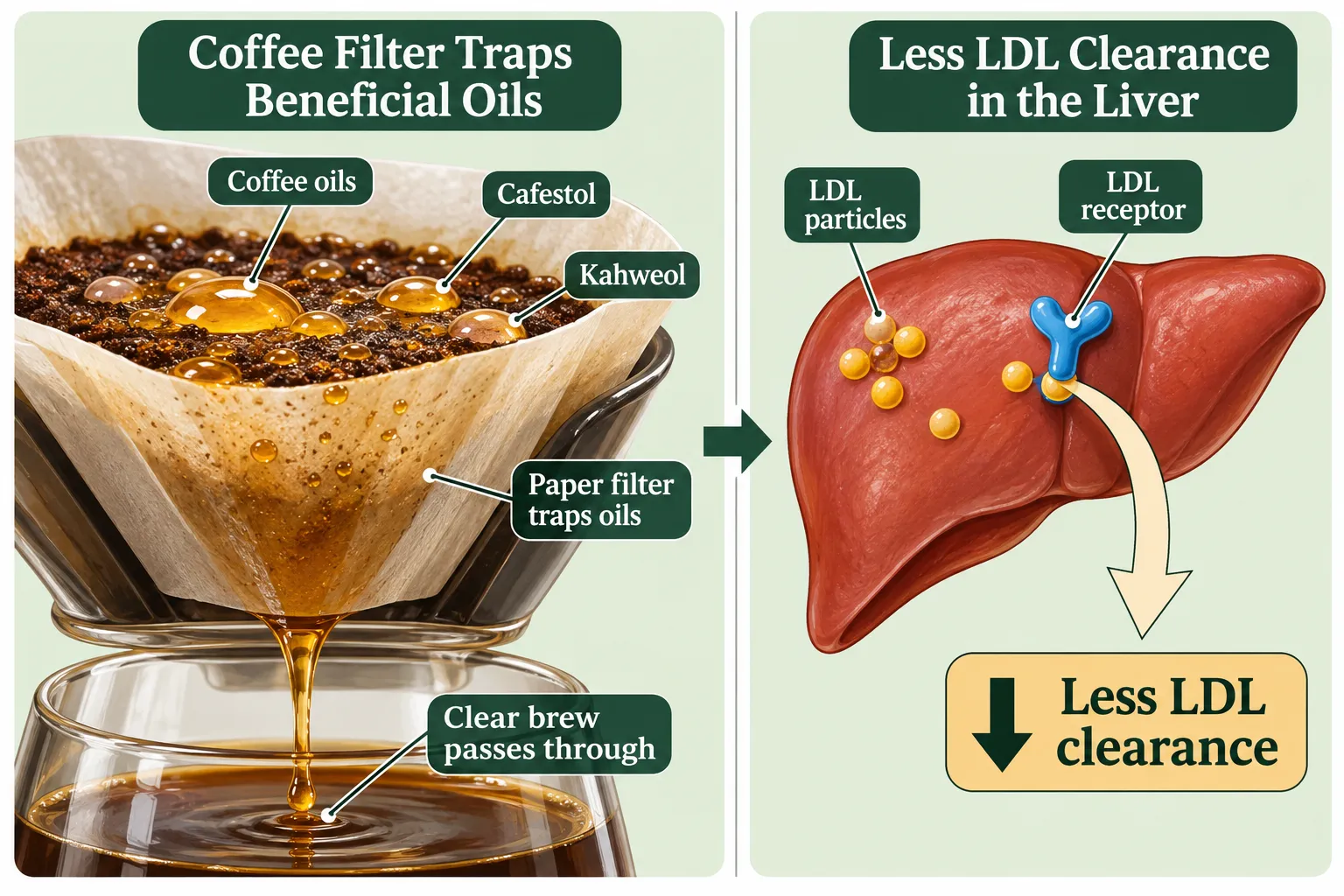
Two fat-soluble compounds, cafestol and kahweol, live in the oily fraction of brewed coffee. Both are diterpenes, a class of plant oil compound. When they reach your liver in enough quantity, they appear to interfere with the liver's handling of cholesterol, reducing how efficiently it clears LDL from your blood. Harvard nutrition researcher Rob van Dam has described cafestol as one of the most potent dietary stimulators of LDL known.
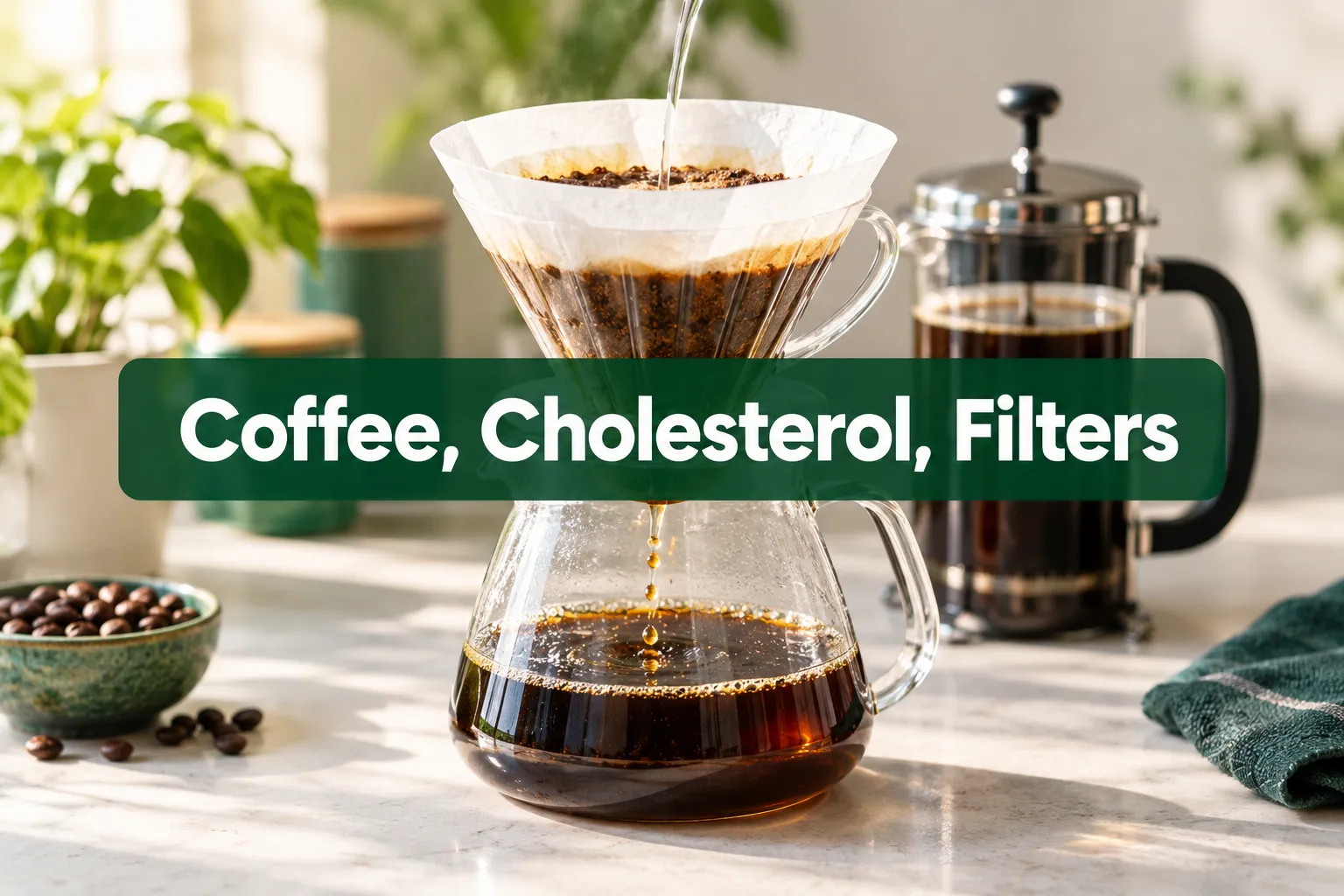
Here is the part most headlines skip. Cafestol does not survive a paper filter. The cellulose fibers hold the oil back while the water-soluble flavor and caffeine pass into the cup. So "does coffee raise cholesterol" is really a question about equipment, not about coffee as a food.
Mayo Clinic updated its coffee guidance on September 22, 2026, stating plainly that coffee made without a filter, French press included, has been linked to a small rise in cholesterol. Cleveland Clinic frames it similarly, adding the moderation most coverage drops: for many people drinking ordinary amounts, the effect is small, while French press, Turkish and espresso can raise LDL more than filtered coffee.
The honest version of the headline: unfiltered coffee can raise LDL. Coffee cannot, on its own, be blamed.
What's in coffee that affects cholesterol levels?
Cafestol and kahweol, the two main diterpenes in coffee oil, are the compounds that affect cholesterol levels. Caffeine, chlorogenic acids and melanoidins do not raise LDL.
A quick glossary, because these words get thrown around loosely:
- Cafestol: a diterpene concentrated in coffee's oil fraction. Randomized feeding trials, summarized in the AHA's July 2026 statement, link it to higher LDL .
- Kahweol: cafestol's structural cousin, present in similar proportions and usually measured alongside it.
- Diterpene: a plant-derived oil compound. Fat-soluble, which is exactly why a paper filter catches it and a metal mesh does not.
Both compounds are present in the roasted bean regardless of origin or roast. Robusta carries less kahweol than arabica, but that difference is small next to the difference between a mesh plunger and a paper cone. Your choice of beans matters for flavor. For cholesterol, the brewer matters more.
Common mistake: switching to a lighter roast or a decaf bean to manage LDL while still using a French press. Neither change touches the oil fraction.
Why do coffee filters remove cholesterol raising compounds?
Paper filters trap cafestol and kahweol because those compounds travel in suspended oil droplets and fine particles, and bleached cellulose paper has pores small enough to hold them back while letting dissolved flavor through.
Think of what you see on the surface of a fresh French press: a faint rainbow sheen. That sheen is the oil. Pour the same coffee through a paper cone and the sheen disappears, along with most of the body. That textural loss people complain about in pour over is, chemically speaking, the same thing as the cholesterol benefit.
Mesh and metal behave differently. A stainless or gold-tone screen filters grounds, not oils. That is a real tradeoff, not a flaw, and it is worth understanding before buying a reusable gold-tone basket filter for a drip machine you were using with paper. The cup gets heavier and sweeter in texture. The diterpene load goes up.
Paper grade matters a little too. Thicker papers such as the ones used in flat bottom drip baskets and cone brewers are what the published measurements were taken on.
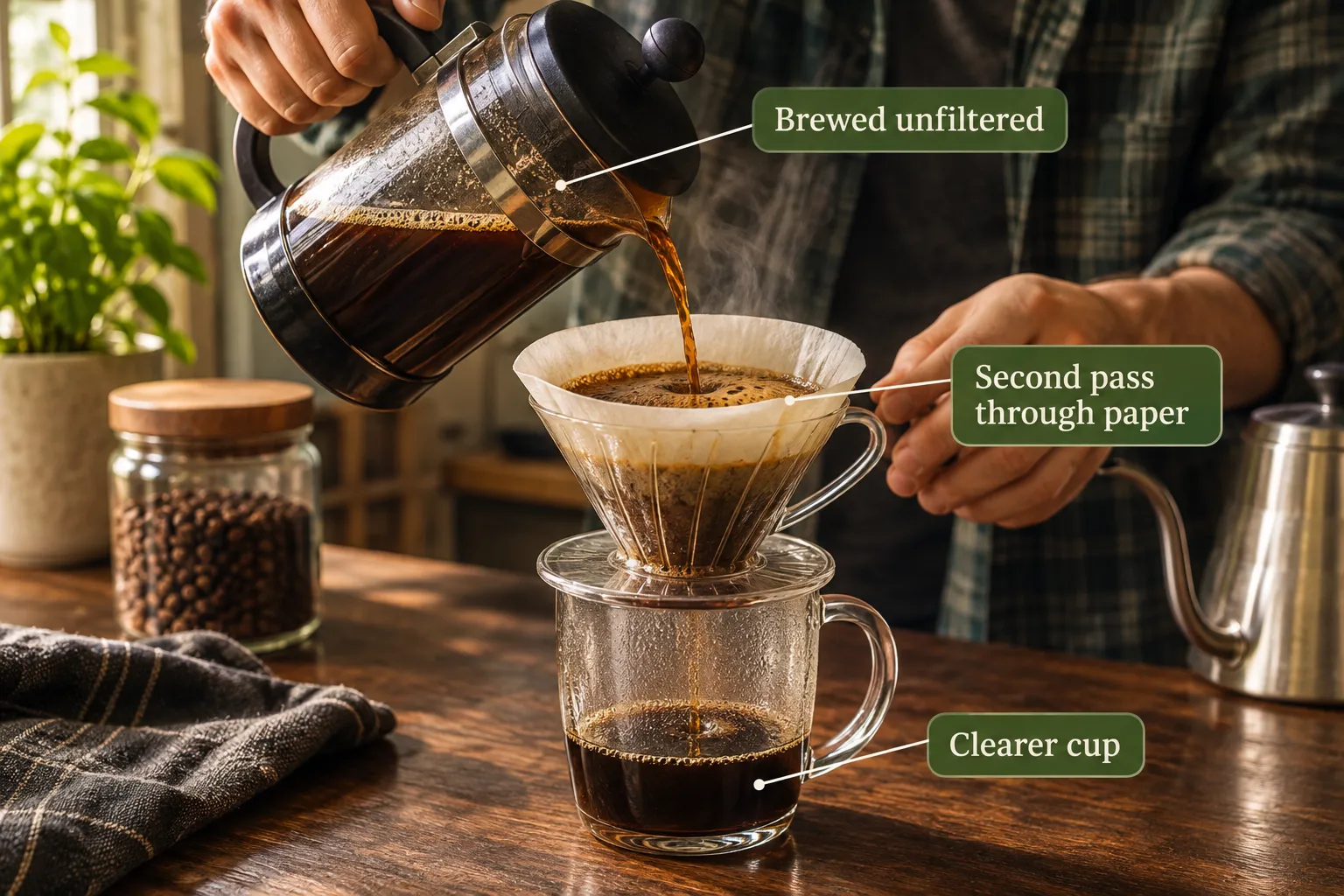
A practical trick covered in recent medical media: pour already-brewed French press or cold brew through a paper filter before drinking. Sports cardiologist John P. Higgins, MD, of UTHealth Houston told Verywell Health this should capture much of the oily fraction, while noting the residual cafestol level after post-brew filtering has not been established . The 2025 lab figures give a sense of scale: fabric filtration cut boiled coffee from 939 mg/L cafestol to 28 mg/L and kahweol from 678 to 21 mg/L . A large reduction, though not as low as a properly used paper filter.
Does filtered coffee raise cholesterol, or just unfiltered?
Paper-filtered coffee shows little to no clinically meaningful LDL effect in the published evidence. Unfiltered coffee does, and the gap is measured in multiples, not percentages.
The Orrje group's 2025 measurements put home paper-filtered coffee at a median 11.5 mg/L cafestol and 8.2 mg/L kahweol. French press landed near 86.8 and 68.7 mg/L, roughly seven to eight times higher . Boiled coffee sits in another category entirely at 939 mg/L in the 2025 lab test .
The largest population data point comes from the Tromsø Study in Norway, analyzed by Svatun and colleagues and published in Open Heart in 2022, covering more than 508,000 person-observations. Brew method tracked with both cholesterol levels and mortality associations. Two limitations to hold onto: it is observational, so it shows association and not cause, and Norwegian brewing habits include boiled coffee at rates you will not find in a US kitchen.
Decision rule: if your coffee has visible oil on the surface, assume diterpenes. If it is clear and thin, assume very few.
If you want the texture comparison from the cup side rather than the lab side, our look at drip coffee versus pour over covers how paper thickness and flow rate change body.
Is French press coffee bad for cholesterol?
French press is the highest-diterpene method most Americans use daily, at roughly 86.8 mg/L cafestol in the 2025 Swedish measurements, about seven times home paper drip . For someone with normal lipids drinking one cup a day, that is a small input. For someone with elevated LDL drinking four, it is worth reconsidering.
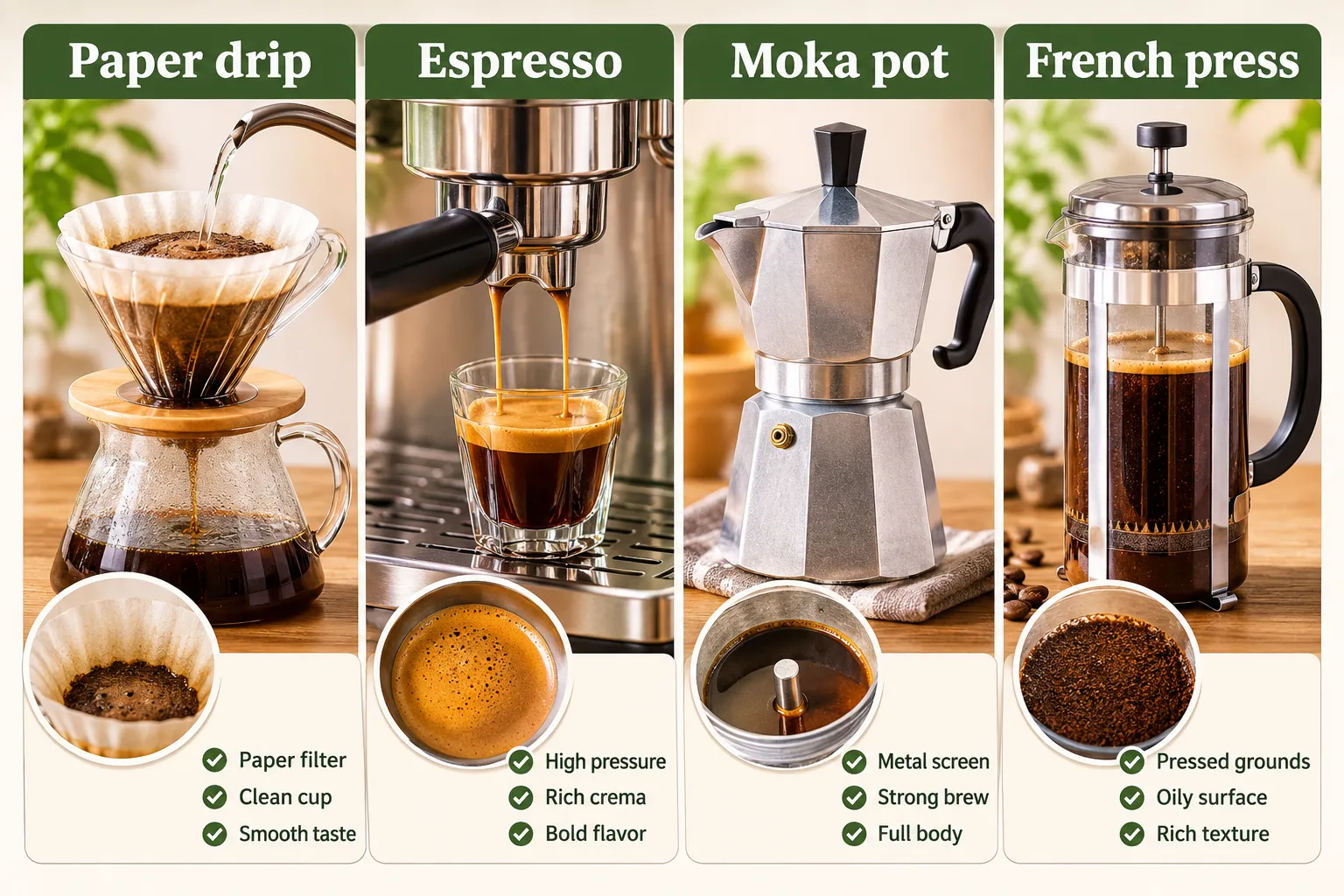
Nothing about the French press is dangerous. It is a metal mesh over a glass jar, and the mesh is doing exactly what it was designed to do: hold grounds, pass oils. The result is a heavier, rounder cup. The Espro P7 press uses a double micro-filter that removes more fines than a standard screen, though published cafestol measurements for double-screen presses specifically were not identified.
Three ways to keep the press and lower the oil load:
- Pour the finished coffee through a paper filter before drinking, per Dr. Higgins' suggestion in Verywell Health .
- Drop the frequency. One press cup on weekends instead of three a day.
- Switch weekdays to paper drip and keep the press as the weekend cup.
Does espresso raise cholesterol more than drip coffee?
Yes, per serving volume espresso carries more cafestol than paper-filtered drip, because espresso has no paper filter and pressure pulls oil straight into the cup. But the serving is small, which keeps the total dose lower than a full mug of French press.
The AHA's July 2026 statement lists espresso among unfiltered coffees relevant to the cholesterol question, alongside French press, Turkish and boiled . The practical math matters: a single 30 ml espresso delivers a fraction of what a 350 ml plunger pot does, even at a higher concentration. Three or four doubles a day, or large flat whites built on double shots, changes that arithmetic.
Moka pot sits in the same middle band. Metal filter, no paper, modest serving size.
If you are weighing the two formats for daily drinking, our breakdown of drip coffee vs espresso covers the extraction differences that drive both flavor and oil content.
Which coffee brewing method is best for your cholesterol?
Paper-filtered pour over and paper-filtered automatic drip are the lowest-diterpene methods, followed closely by instant coffee. Here is how the named methods compare using published measurements where they exist.
| Method | Filter type | Cafestol level | Best for |
|---|---|---|---|
| Paper drip / pour over | Bleached paper | ~11.5 mg/L median | Anyone watching LDL |
| Instant coffee | Processed out | Essentially none | Travel, office, high LDL |
| Espresso | Metal basket, pressure | Middle band, small serving | 1 to 2 shots daily |
| Moka pot | Metal screen | Middle band | Occasional drinking |
| French press | Metal mesh | ~86.8 mg/L | Normal lipids, moderate use |
| Boiled / Turkish | None | up to 939 mg/L (lab) | Occasional, by tradition |
| Bean-to-cup office machine | Often metal | Higher than paper drip | Check the machine |
Edge case worth knowing: the office machine. Orrje and colleagues found that some workplace bean-to-cup units use metal filtration and produce substantially more diterpenes than ordinary paper drip . People assume the office pot is harmless drip. Sometimes it is not.
If you are moving to paper, the mechanics are simple and our pour over beginner's guide covers grind size, bloom and brew ratio so the switch does not cost you flavor.
Daily cafestol estimator
Rough daily cafestol intake using published median concentrations.
Estimate only, based on Orrje et al. 2025 and 2025 lab boiled-coffee figures. Not medical advice.
Does cold brew or instant coffee raise cholesterol like regular coffee?
Instant coffee contains essentially no cafestol, per the AHA's July 2026 statement, making it one of the lowest-diterpene options available . Cold brew depends entirely on how it is strained.
Cold brew made in a mesh basket or steeped and poured through a metal screen keeps its oils. Cold brew finished through a paper filter does not. The temperature is irrelevant to the chemistry here. Extraction time and filtration are what change the result. If you brew in a Hario Mizudashi style cold brew pot with a fine mesh insert, running the finished concentrate through a paper cone before dilution is a one-minute fix.
Canned ready-to-drink cold brew is a question mark. Manufacturers rarely disclose filtration, and published cafestol measurements for commercial RTD products were not identified in the sources reviewed.
Is decaf coffee better for cholesterol?
Not inherently. Decaffeination removes caffeine, which was never the problem. A decaf French press still delivers the diterpenes.
What matters is how the decaf is made and served. Decaf instant is low in cafestol for the same reason regular instant is. Decaf paper drip is low because of the filter. Decaf pressed in a plunger is not. If you are drinking decaf specifically for heart reasons, read our piece on how much caffeine decaf actually contains first, because the milligram numbers surprise most people.
How much coffee can I drink if I have high cholesterol?
If you have diagnosed high cholesterol, this is a question for your doctor, not an article. What the published guidance supports: the AHA considers up to 400 mg of caffeine daily, roughly 3 to 5 eight-ounce cups of black coffee, generally safe for most healthy adults . That is a caffeine ceiling. It says nothing about cafestol.
A reasonable framework while you wait for your appointment:
- Normal lipids: brew method is a minor variable. Drink what tastes good.
- Borderline LDL: shift the daily cups to paper filter and keep unfiltered coffee as an occasional pleasure.
- Elevated LDL or on a statin: Harvard's Rob van Dam has recommended paper-filtered or instant coffee for this group. Confirm with your physician.
Gregory M. Marcus, MD, MAS, who chaired the AHA statement writing group, makes a point that applies here: there is no universal caffeine prescription, because responses vary with age, medication, genetics and health status . The same caution applies to diterpenes.
How long does it take coffee to raise cholesterol, and can you reverse it?
Diterpene effects on LDL show up over weeks of consistent intake, not after a single cup, and the published feeding-trial pattern suggests LDL drifts back down when unfiltered coffee is removed. This is not a permanent change and it is not a disease state.
What is not established: exactly how fast the reversal happens in any individual, or how large the change will be for you specifically. The research describes group averages in controlled trials. Your liver, genetics, diet and medications all sit between the average and your number.
Practical approach: switch to paper filter, keep everything else in your diet steady, and ask your doctor whether a lipid panel in 8 to 12 weeks makes sense. Changing three things at once tells you nothing about which one worked.
Can you drink coffee while on cholesterol medication?
Ask your prescriber. Statins and coffee are commonly taken together without issue for many people, but drug interactions, caffeine sensitivity and individual conditions vary enough that a general article cannot answer this for you.
What the brewing evidence suggests is simpler. If you are taking medication to lower LDL, drinking several cups of unfiltered coffee daily is working against the goal, in a small way. Moving the daily cups to paper filter costs nothing and removes the variable.
The misconception this article corrects
The misconception: "coffee raises cholesterol."
The correction: regular intake of sufficiently unfiltered coffee can raise LDL. Paper-filtered coffee generally has little or no clinically meaningful LDL effect.
The second misconception is nearly as common: that caffeine is responsible. The randomized trial evidence summarized in the AHA's July 2026 statement separates the two cleanly. Caffeine is not implicated in the LDL effect . So does coffee raise cholesterol in decaf form? If it is unfiltered, yes, on the same mechanism.
A third one, quieter but costly: people buy reusable mesh filters to cut paper waste and unknowingly move their daily drip coffee into a higher-diterpene category. Worth knowing before you make the swap. If paper is your choice, our guide to basket filters for 8 to 12 cup machines covers sizing and fit.
FAQ
Conclusion
Does coffee raise cholesterol? Unfiltered coffee can. Paper-filtered coffee, by the published numbers, mostly does not. The difference between 11.5 mg/L and 86.8 mg/L of cafestol is a sheet of paper, not a different bean, roast or origin .
For most healthy drinkers, this is interesting rather than urgent. For anyone with elevated LDL, it is a free adjustment with no downside beyond a lighter cup.
Your next step: look at what you drank this week and count the unfiltered cups. If the number is above seven, move your weekday coffee to paper drip or pour over for the next two months, keep everything else the same, and bring the change up at your next appointment. If you have a diagnosed lipid condition or take a statin, talk to your doctor before making changes based on this or any article. Better Coffee Starts With Better Answers, and this one is answered by your filter.